Growing up I noticed how people saw homeless as an annoyance and inconvenience where they were asking for help outside grocery stores or train stations. I grew up with discussions on the ban of begging and sleeping in public spaces. Movies displayed homelessness as a dystopian, dirty world, fueled with narcotics. In my later years I learned about Hostile Design – where benches are designed in such a way where one can’t comfortably sleep on them. Everywhere homelessness would be seen as a problem. A distance between “us” and “them” was created, a divided community.
This summer I travelled across the ocean to enjoy Irish folk music, while Cillian sang his heart out on the street to earn enough for today’s meal. I paid to watch a sheepherding demonstration in the Irish countryside, while Molly was begging for money on O’Connell Street to feed her dog. I paid well over a hundred euro to sleep in the dorms of Trinity College, while Dublin is undergoing a shelter crisis. As I am learning to think on my own I am also learning to see everyone for who they are, simply humans trying to get by. I would like to help those that are less privileged, those who make themselves so vulnerable because they have no other option.
What I wish to focus on in my research is how design can help tighten the local communities – the relationship between the homeless and those who are not, which then also can result in a stronger feeling of dignity and independence for the homeless. Research questions could include:
- How can Positive Design and Interaction Design be used to create/improve a service/product that …
- strengthens the local community?
- creates a stronger sense of dignity and independence for the homeless?
Existing Design
Several services and products exist or are being developed today to make the days pass by more easily for those who are sleeping rough. Help stations provide services like food stations where meals are prepared or groceries can be picked up. In the United States there is a program called SNAP where homeless are given a card that can be used to buy their own groceries, while also providing other helpful services (United States Department of Agriculture, n.d.).
Previous research includes researching and creating UX design for applications aiding the homeless (Burrows et al., 2019) and those working for organizations providing shelters to the homeless (Pratt, 2024). Other various designs that can aid the homeless in their daily life that have been researched are small shelters and lockers to keep them and their belongings safe (Makris, 2024). Maps have been distributed that include an overview of important resources (Kennedy, 2016), and in some countries one can find trash bins with spaces for cans to be placed so that they can more easily collect “pfand” to earn some money to get by.
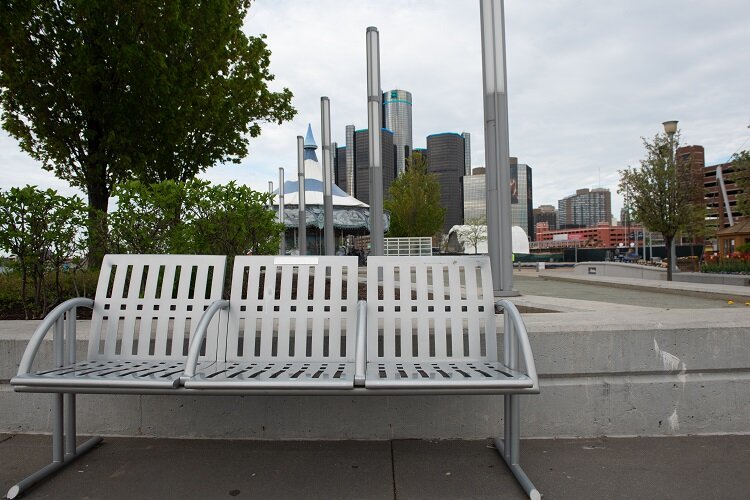
Figure 1: Example image of Hostile Design (Davison, 2023)
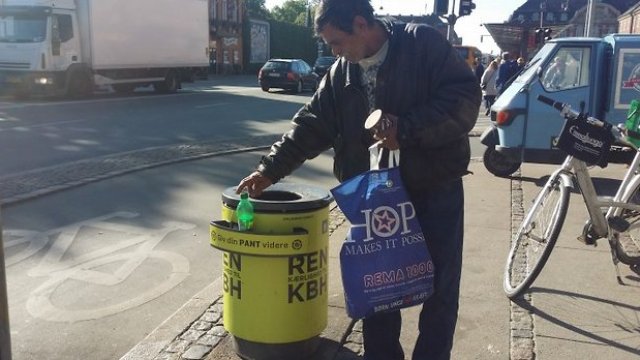
Figure 2: Example image of trash can with space for “pfand” (KBH Pant, 2015)
Relevance for the Design Fields
Positive design has a goal to increase the happiness and well being of individuals. It’s about designing for pleasure – to design comforting and joyful experiences, to design for personal significance – to design for goals and aspirations, and design for virtue – to design for good behaviour (Desmet & Pohlmeyer, 2013). These are all qualities that are important to keep in mind when you are designing a service or product for a community that is meant to bring joy, to inspire and promote good behaviour.
When it comes to focusing on the particular target group of the ones sleeping rough I find it important to design fields as one to this day still finds hostile design in our infrastructure, and it can be hard to know where and how to provide the best help. In the light of the topic of inclusivity, the homeless, alongside other groups, have their own specific needs that should be put into consideration when designing for the general population.
Future research process
In the first phase of the research I will have to go deeper into exploring the topic, I will need to gain a better understanding of the different problems and needs of the target groups (both the homeless, and those who are not) and to look at and categorise various approaches. From here I can try to narrow down the problems, and choose an approach to focus on. This might include some changes to the research question and sub-questions. A literature review could also be helpful thereafter to find relevant papers. Eventually I will have a more clear goal and can move to the phase of the research process where I can gather some data.
When gathering data both qualitative and quantitative information gathering may be useful in order to understand perspectives and outlooks on the problem within a community. This could be done with one to one interviews or surveys with open ended questions (qualitative) or a typical survey with close ended questions (quantitative). As I aim to look at the problem from a community based outlook the target groups include both the homeless and those who are not.
When researching and gathering data there are several institutions that could be helpful to use or get in contact with. Besides looking for research papers through Google Scholar, there are various organizations both in Austria and Norway that could be contact points. Caritas, Red Cross/Røde Kors, Erlik, Asfalt and International Network of Street Papers, could be some.
Research Challenges
As I see it the first challenge will be to limit the research scope and questions. Later comes problems related to data gathering. Here the main challenge will be communication with the target group, the homeless. First of all I do not speak German well which can cause communication barriers. Secondly, it’s a vulnerable group that lacks the safety most of us take for granted and are always exposed to various kinds of exploitation, communication should therefore be done in a space in which they feel safe and comfortable.
Sources
- Burrows, R., Mendoza, A., Sterling, L., Miller, T., & Pedell, S. (2019). Evaluating ask izzy: A mobile web app for people experiencing homelessness. In Proceedings of 17th European conference on computer-supported cooperative work. European Society for Socially Embedded Technologies (EUSSET). DOI: https://doi.org/10.18420/ecscw2019_ep17
- Desmet, P. M., & Pohlmeyer, A. E. (2013). Positive design: An introduction to design for subjective well-being. International journal of design, 7(3). URL: https://www.ijdesign.org/index.php/IJDesign/article/view/1666%C3%A2%E2%82%AC%C5%93
- Kennedy, C. M. (2016). Designing for equality: how a social design approach can make a difference. International Journal of Arts and Technology, 9(3), 187-198. DOI: https://doi.org/10.1504/IJART.2016.078608
- Makris, Z. (2024). Design of a shelter and storage space for homeless people. (Master thesis). URL: https://www.diva-portal.org/smash/record.jsf?dswid=-347&pid=diva2%3A1881764
- Pratt, C. (2024). Technology and Homelessness: How Website Design and Blockchain Technology Could Impact the Unhoused. (Undergraduate Theses, Capstones, and Recitals. 38.) https://digitalcommons.du.edu/undergraduate_theses/38
- United States Department of Agriculture (n.d.). Are you homeless? You might be able to get food help from SNAP! URL: https://fns-prod.azureedge.us/sites/default/files/resource-files/Homeless_QA.pdf
- Figure 1: Davison, K.S. (2023) [Photograph]. Model D. Detroit. https://modeldmedia.com/voynyla/
- Figure 2: KBH Pant (2015). [Photography]. Nyheter24. https://nyheter24.se/nyheter/goda-nyheter/815776-genial-soptunna-gor-det-lattare-for-hemlosa
