[DesRes 2 @KaterinaSedlackova] Pitch Transcript – DesRes 2

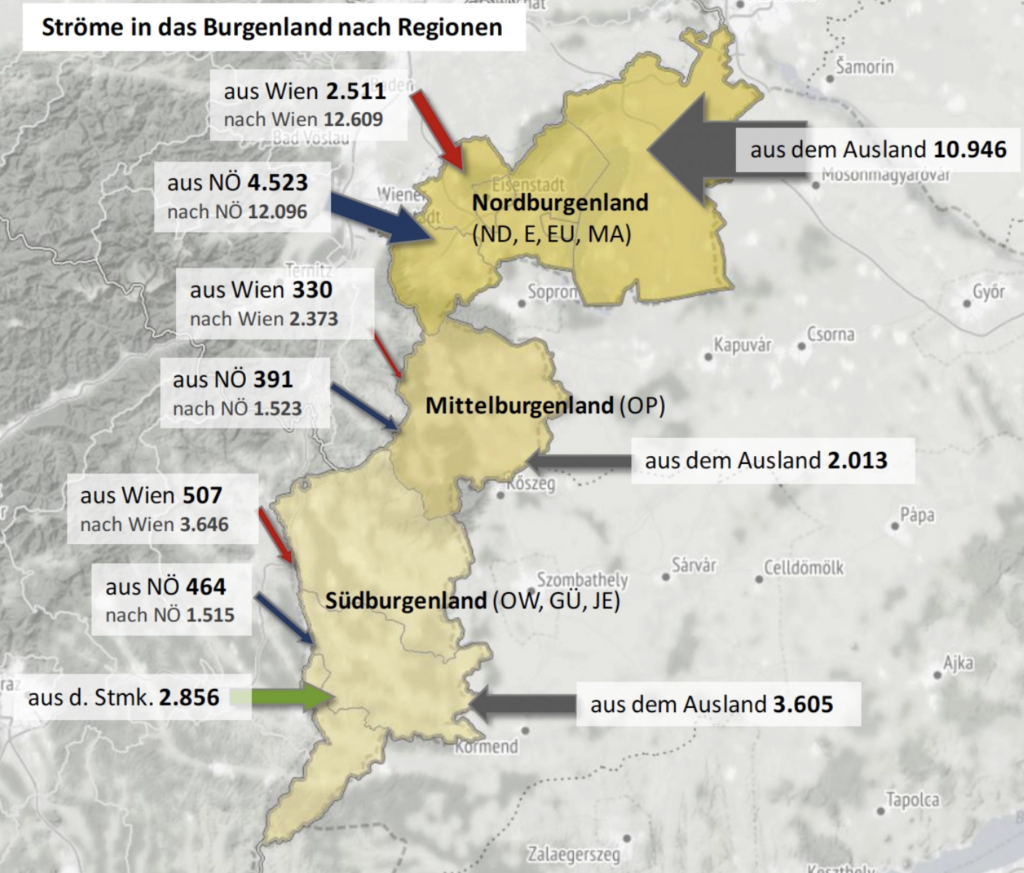
Two thirds of Austrian employees commute to work by car.

To guarantee a sustainable future this must change.

  • It is difficult to leg to of habits. How do we convince car drivers to consider alternatives?
  • one could argue that there’s plenty of possible alternatives – but are these said alternatives always tangible?
  • Once you live and work in a city you might have a simple one: Just use public transport! But not everyone has a bus stop right in front of their door-step. Therefore, we must also think about the obstacles are people on the countryside are facing.
  • And last but not least, one important question remains:  How much responsibility should be carried upon employers?

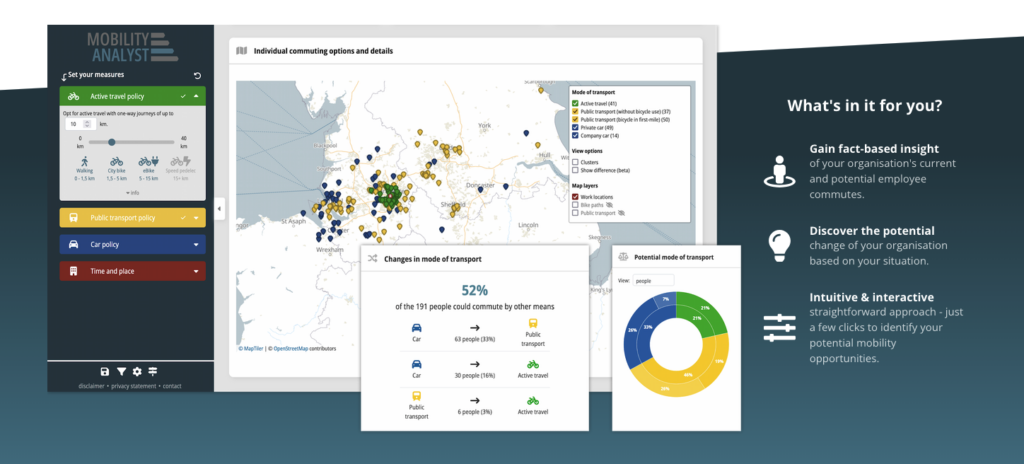
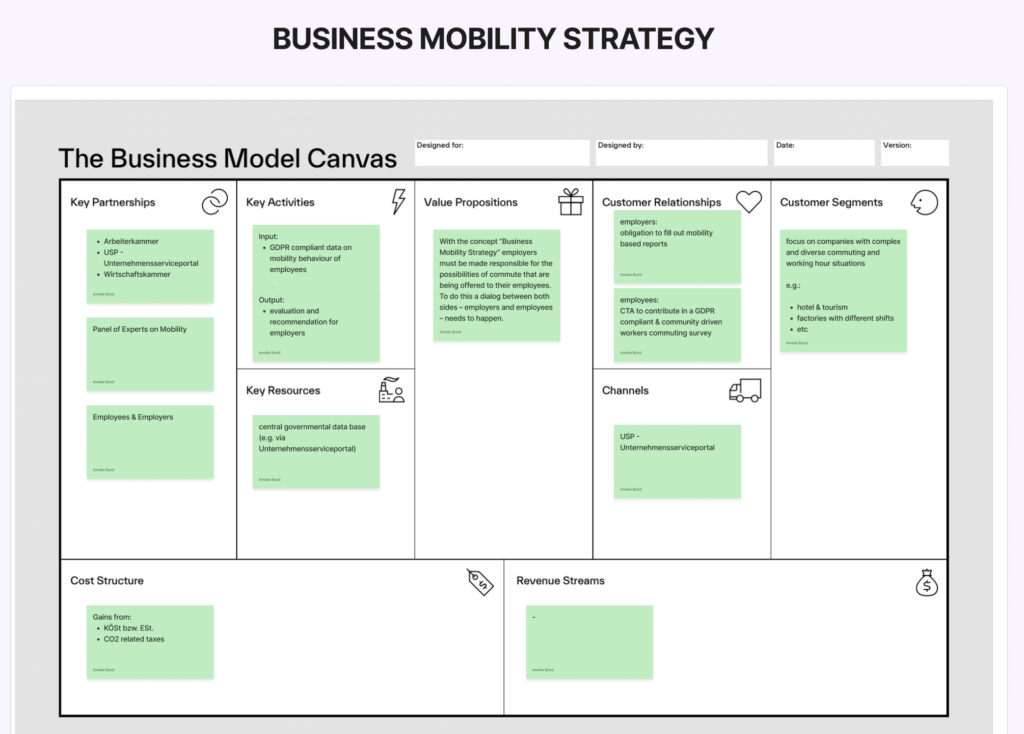
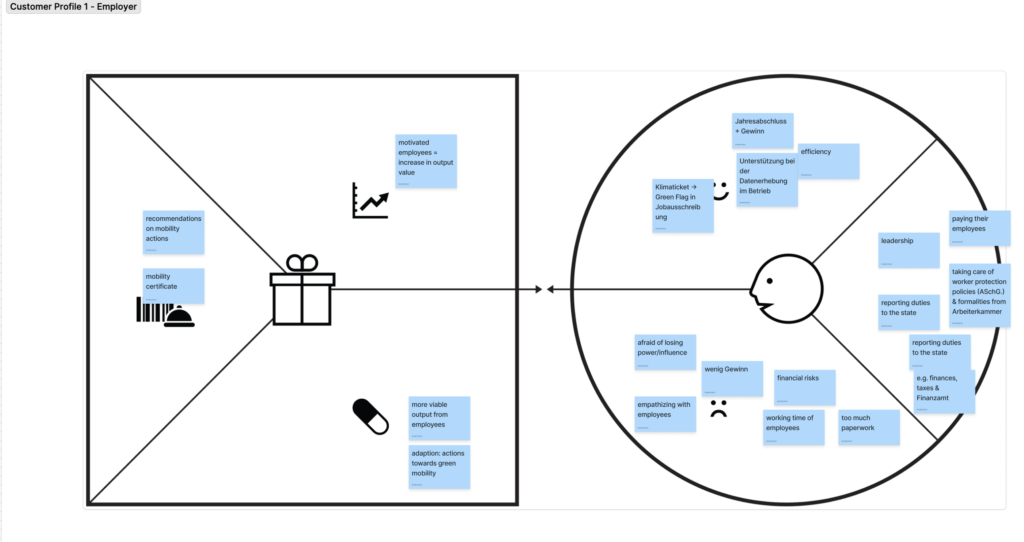
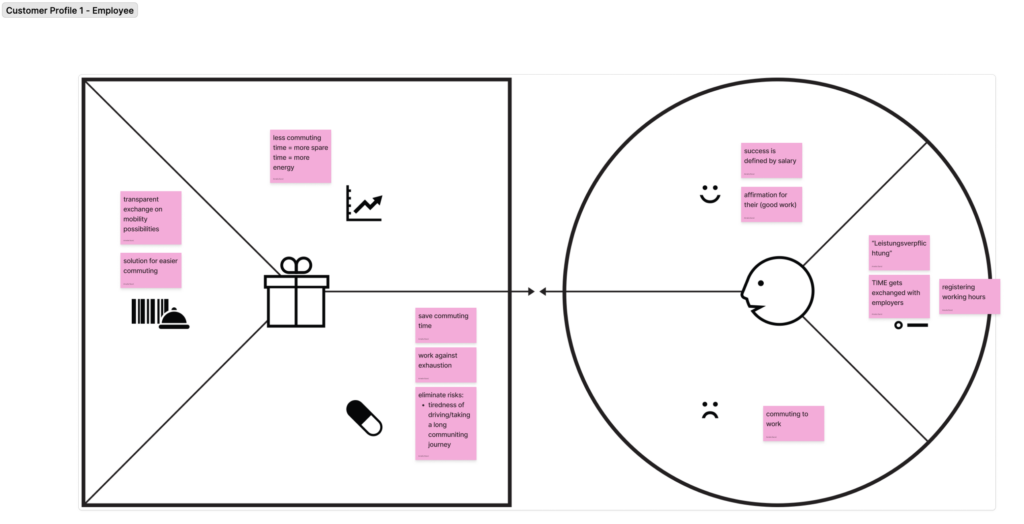
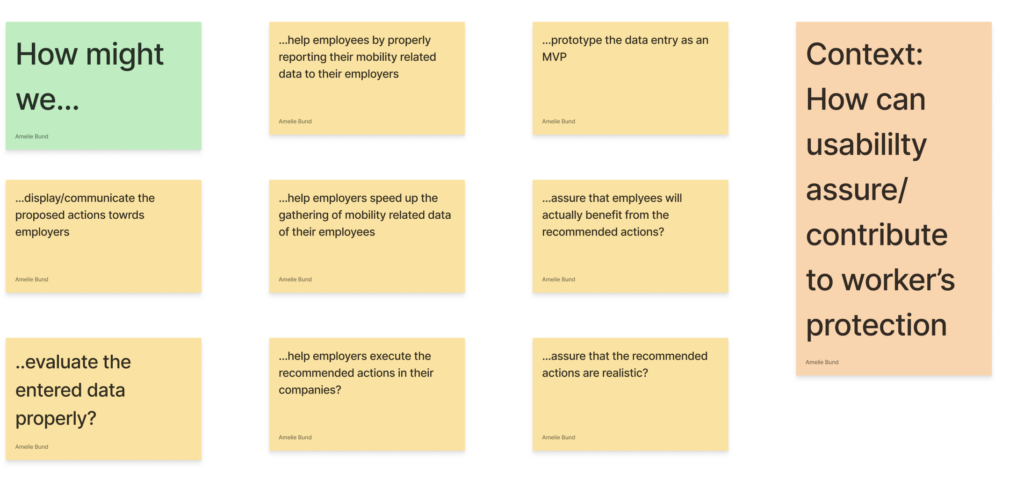
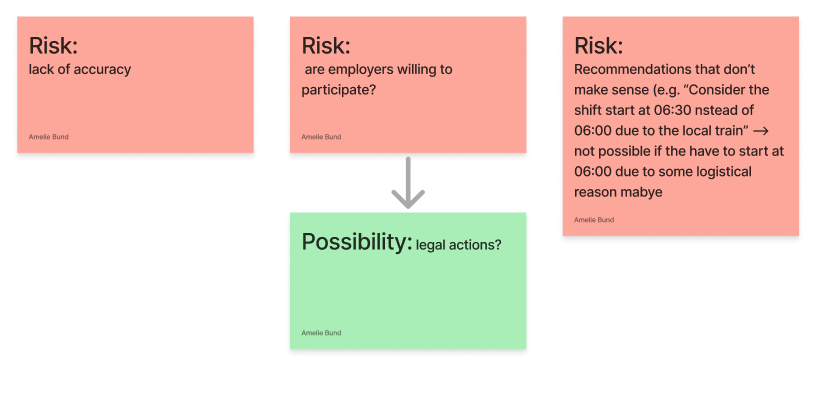
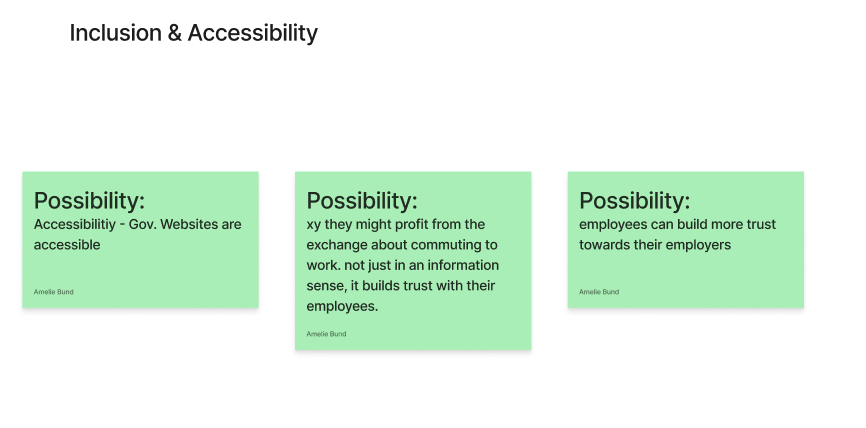
Together with legal experts I have develop a concept surrounding the topic of “Business Mobility Strategy” which seeks to make employers responsible for the possibilities of commute that are being offered to their employees. To do this a dialog between both sides – employers and employees – needs to happen.

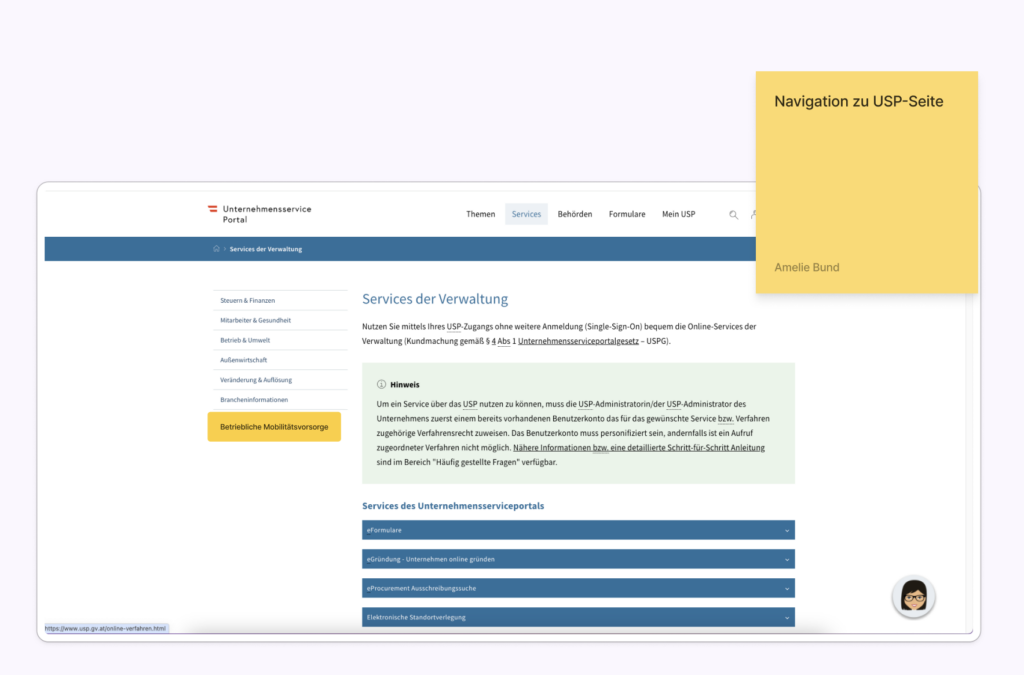
A service will be implemented in the “USP – Unternehmensserviceportal” where employers must enter data such as the distance to the nearest bus station or the amount of parking space available for employees. Business owners are constantly exposed to endless and redundant paperwork. Efficient UX practices will assure a seamless and viable end-to-end experience.

DesRes2 @SeppoGruendler “NIME”

I chose the paper “Appropriating Technology for Interactive Media in Theatre:
Design Strategies and Aesthetic Insights” because I have some personal experience with this topic.

Personal Experience

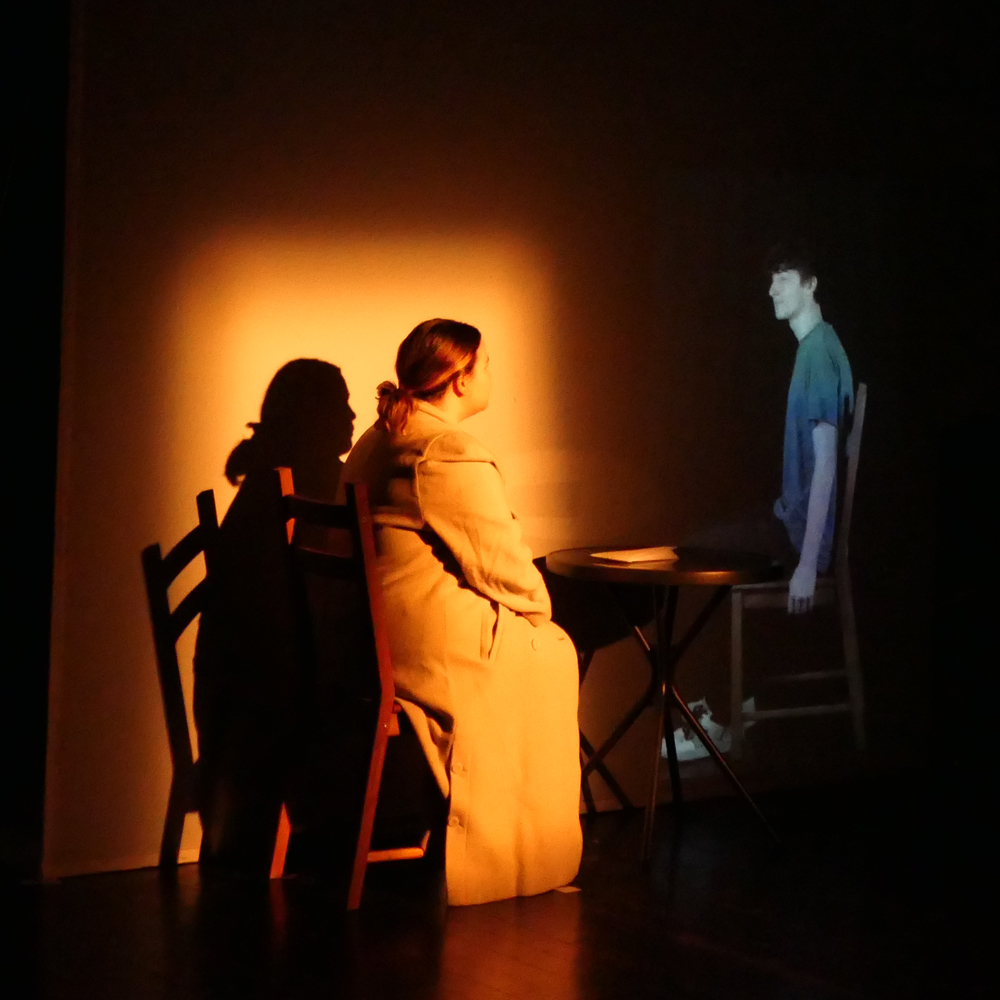
I have identified the potential of including animations in theatre plays a few years ago for a project in my local theatre club.

Due to the budget as well as technical restrictions we only ever played a static animations which the actors had to make movements along with it. This was challanging for them, because they always had to know the animated videos by heart. I realised that they were missing visual cues on when to, for example, raise their arm to “trigger” a certain movement.

If we had an x-box availble this would have been easier.

Source: Theaterzentrum Deutschlandsberg

[DesRes 2 @BirgitBachler] Entry 01: Employee and Consumer Protection

New semester – new me. More or less, at least. While I was extremely confident about my chosen research topic last semester “Creating User-Centered Strategies that align with Business and IT Goals in an innovative Agile Environment. Use Case: Self Checkout Terminals in Supermarkets” the tables have turned.

Rewind – initial idea

Reason No. 1: I initially chose this topic because ever since my internship at Bosch last year I’ve realized how important it is to keep all three feasibility, viability and desirability in mind .

Reason No. 2: The specific use cases of Self Checkout terminals in supermarket seemed like a reasonable extension to the topic, since it aligns with my tasks at my student job. On top, my company would’ve be interested in a collaboration for the thesis.

Long story short: I have gotten to realize that theses matters are already researched through and through.

Motivation – Focusing on employees and/or consumer protection

Instead I would like to contribute something that’s actually innovative and has a social and ethical impact on top. Over the past few years topics such as protection of employees and consumer protection have been on my mind frequently.

Possible idea + 1st Prototype

About two years ago I had the opportunity to participate in an interdisciplinary project called Legal Design Sprint endorsed by the Chambor of Labour Vienna. The project of my team (topic “Mobility”) was even awarded by a team of experts.


Topic Mobility – How do people commute to work?

To guarantee a sustainable future this must change. There is a set of alternatives, such as riding the bike to work or using public transport. Nevertheless, these options are limited and raise a few pain points:

  • How much responsibility should be carried upon employers?
  • Which obstacles are people on the countryside facing?
  • How do we convince car drivers to let go of their habits?
  • Are possible alternatives tangible?

Our Solution

With our concept “Business Mobility Strategy” employers must be made responsible for the possibilities of commute that are being offered to their employees. To do this a dialog between both sides – employers and employees – needs to happen.

  1. Interface: The service will be implemented in the “USP – Unternehmensserviceportal” (= the major online service for Austrian businesses).
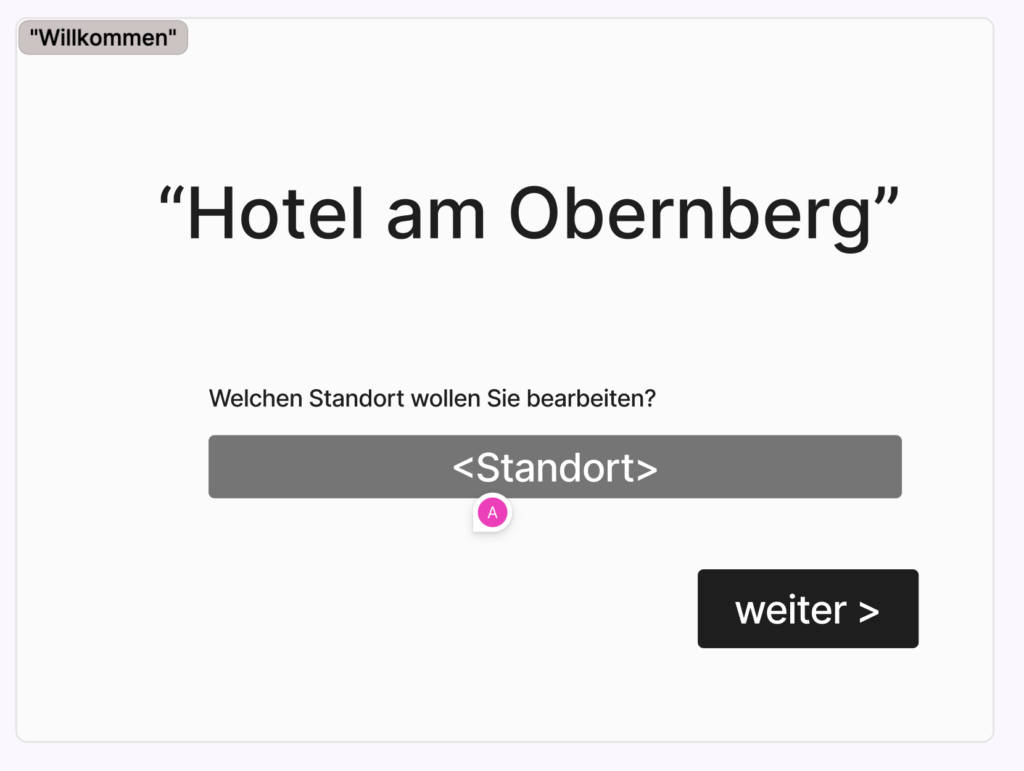
  2. Data collection: Employers must enter data such as the distance to the nearest bus station or the amount of parking space available for employees.
  3. Less Red Tape: Business owners are constantly exposed to endless and redundant paperwork. Usability Tests will assure a seamless and viable end-to-end experience.
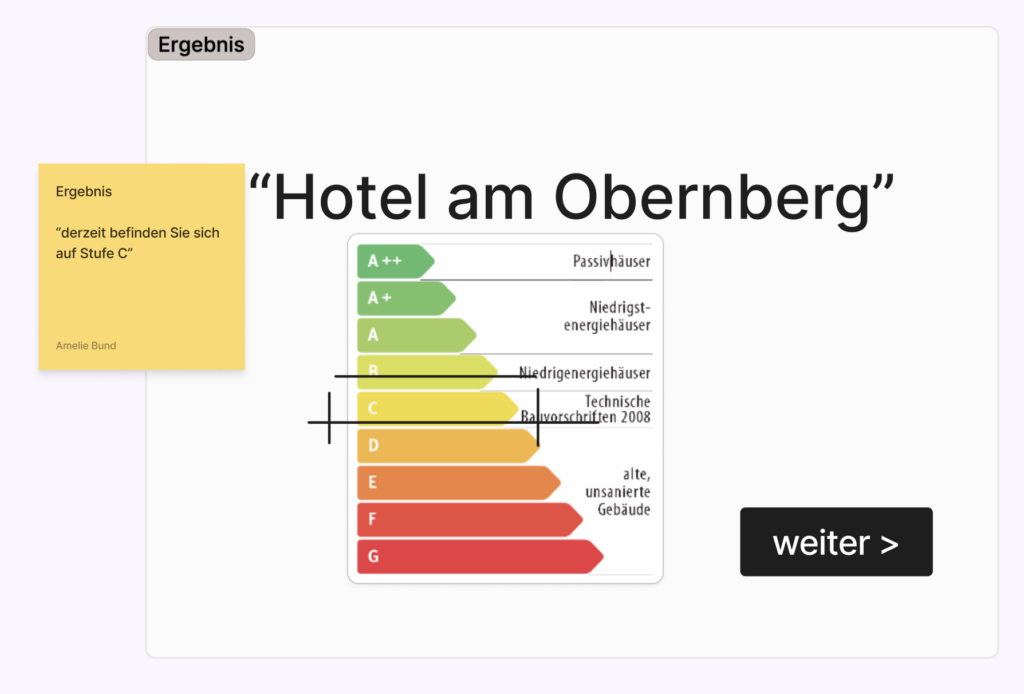
  4. Data Evaluation: Once all the information is submitted the businesses approach and actions towards sustainability in mobility will be graded. This assessment scheme will be defined by experts to guarantee transparency.
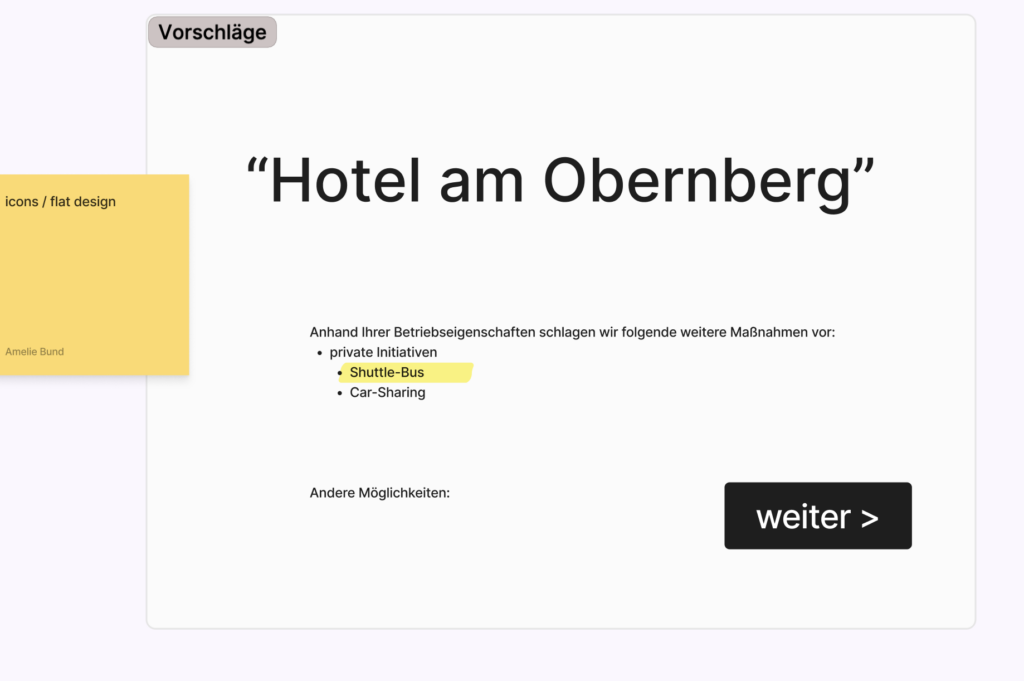
  5. Recommended Actions: The evaluation also provides businesses with an answer on how to improve in the topic of sustainable mobility.‍ Employers can set these recommendations as goals to improve rating and help their employees with commuting to work.
  6. Spot Checks: An independent institution will make sure the businesses have submitted their mobility data correctly.

Alternative options:

  • dark patterns in fast fashion e-commerce (e.g. SHEIN)
  • user centered interaction of the “Arbeitnehmer:innenveranlagung”


Reference

[1] G. Kovacic, Cristian Andronic, and S. Kirchmayr-Novak, ÖV-Erreichbarkeit großer Arbeitsplatzstandorte in Österreich. 2022.

[DesRes 1] Agile_x_SelfCheckout No. 10: Next Steps

No. 10: Next steps

After one semester I’m still happy with my chosen topic, or rather say topics (plural). I still believe that my thesis will make sense by combining the agile topic with the use case of cash registers. As one might already tell, simply by looking at blog entries, I had some struggle outlining and combining these two perspectives. Overall I think the working title Agile_x_SelfCheckout is a good approach to sum up what I’m working on.

Dividing the topics more clearly

For the future I have decided to cover each topic separately in my research. So for example in the first half of the next semester I will cover the “agile” perspective, and in the second half it will be all about the findings concerning the cash registers.

Collaboration with REWE Digital

I have started my student job at REWE Digital some weeks ago. I already have a better perspective now on my responsibilities at work. The biggest benefit of collaborating with this company is that I have the access to the test systems and could perform detailed user tests, even including pseudo payments.

Disclosure and sensitive information

As for the blog entries this means that I have to be really careful about what information I am allowed to include in each entry. I have to make sure not to expose disclosed information that is to be kept a secret within the company.

Self Checkout or Served Solutions

So far I have put a lot of focus on self checkout solutions. However, it depends on my specific tasks and goals as an employee of REWE digital, which prototypes I will get to work on.

One things remains: whatever artifact I will be working on, I know that I will have the possibility to cover something relevant to the whole service design process.

Accessibility?

The topic of accessibility remains my biggest concern. I would love to cover it, but once again, due to the possibilities within my employment, it still needs to be decided wether or not, this is a relevant topic or not.

Next Semester

I am looking forward to continuing working on this project and increase my expertise concerning agile project management, as well as getting a better understanding of the struggles users of both served as well as self checkout registers are exposed to.

I will kick off the next semester by adapting my research question to open more possibilities.

[DesRes 1] Agile_x_SelfCheckout No. 9: Mental Models & Informal User Research

Mental Models

Mental Models are a powerful way to describe what is going on inside user’s brains. It gives us more cues about how they perceive certain things so we can empathize with their experiences [1]. Viable cues concerning mental models can be identified via different methods. A popular one is card sorting, it is especially relevant for challenges concerning information architecture. Furthermore, we can get a better understanding of user’s processes by observing how they interact and act in their current environment. Specifically in the grocery and retail context so called “PLU-lists” are a major artifact.

PLU-List

Every customer of a supermarket has already been exposed to this code – wether they know it or not. A PLU number is an international code, that defines products like fruits and vegetables. The PLU code for a banana typically begins with the number 4. Additional information, like country of origin of the product can also be identified through this code. Sometimes employees know this number, or at least specific selected numbers, by heart. In case they have to look it up, they have to take a look at a list – this is also where the name stems from: PLU stands for price-look-up code. [2]

Possibilities for informal user research with high value and impact

I’m aware this might be a bold move, but I believe that a lot of online forums, especially via reddit, can be an interesting way to observe user’s and customer’s behaviour. This works for both – in a market research as well as a design related user research way. While this is obviously an informal way of researching something, I strongly believe it is of high value. It gives you first hand impressions of customers, and possibly even employees.

Subreddit “Target”

Down below I have found a picture, this is an example from Target that I found via Reddit. It was attached to a post, where an employee reached out to the forum in the r/Target subreddit, because they were curious about which codes are popular and commonly used.

Source: Reddit | r/Target | User: csrlrnz

Subreddit “schei**aufnbilla”

While this subreddit has a rather extrem title, it definitely opens a new horizon concerning honest opinions of angry customer’s.

Reviews

In contrast to reddit google reviews covers a larger range of customers. Clicking through various stores on google maps quickly gives you a good overview of different challenges customers and sometimes even employees face. This works efficiently via google maps, because they also give you options to filter the different reviews (e.g. by keywords)


Sources

[1]

M. Chan, “Mental Models and User Experience Design,” Nielsen Norman Group, Jan. 26, 2024. https://www.nngroup.com/articles/mental-models/

[2]

Bayerischer Rundfunk, “Lebensmittel Code entschlüsseln: Was bedeutet der PLU-Code auf Lebensmitteln?,” Www.br.de, Mar. 11, 2024. https://www.br.de/radio/bayern1/lebensmittel-code-entschluesseln-100.html (accessed Jan. 30, 2026).