Creating User-Centred Strategies that align with Business and IT Goals in an innovative Agile Environment – Focus Cash Registers – Part 4

This week I have come across a paper by Christina C. Mendat and Christopher B. Mayhorn [1] from the North Carolina State University outlining Human Factors as well as ergonomics in terms of self-checkout registers. Even though the entry discusses the topic within 3 simple pages only I could get more insights and tangible data on the topic that opened new possibilities and perspectives to me. With that being said, I would like to mention that the paper was published in 2007. I’m aware that this was almost twenty years ago. Needless to say, it has to be noted that Self-Checkout Registers gained popularity in American supermarkets, a long time before they did so in Austria.

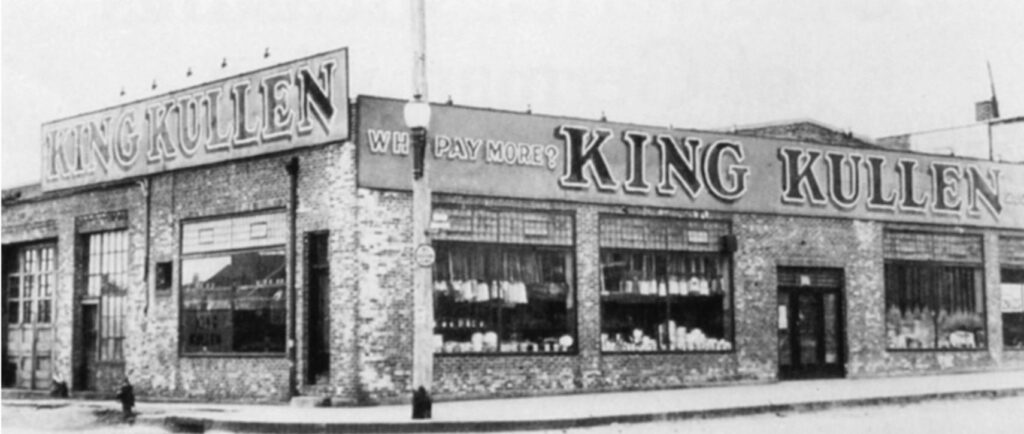
The most surprising fact that I found out comes from a historic point of view. It turns out that libraries were the first enabler for what we are now referring to as self-checkout registers. It allowed librarians to focus more on e.g. reorganizing the bookshelves instead of making sure the counters are frequently occupied.

Furthermore, the paper discusses the top issues related to self-checkout cash registers, uncovered through a survey. The top two issues are:

  • Barcodes and scanning: certain products are more difficult to scan than other products*
  • Chain reactions: a lot of the participants mentioned that they have experienced slower customers in front of them, which resulted in them having to wait longer.

*simply judging from what I’ve seen in my personal daily life, there has been a lot of improvement on this topic. Let alone the fact, that certain stores nowadays are known for being so fast, you might not be able to catch up with putting the purchased items into your shopping bag. I’m interested

Planning a research plan & focus groups

While these issues, that have already been uncovered, are of course of relevance, my goal is to uncover more insights, specific to Austrian supermarkets and costumers.

I’m planning on doing first observations in different supermarkets. With the Christmas holidays ahead though, I fear that this might not be as easy, as the stores are sometimes packed to the limit.

Furthermore, I will be using the informal gatherings with friends and family during the holidays to open conversations concerning cash registers. I might already conduct a first survey or focus group (at least to test the first draft of questions).

A few thoughts on accessibility

Additionally, I am planning on having a discussion about this topic with an ambulatory wheelchair user to get a first grasp of her challenges.

Outline of the first research questions/goals:

  • What are the biggest obstacles when using a self-checkout register in a supermarket? How does it differentiate between different supermarket chains?
  • What needs to be considered in terms of accessibility? What’s the general experience of wheelchair users in a supermarket?
  • Did the process of paying via the self-checkout register ever take longer than paying via the typical checkout lane. if yes: how did this inconvenience happen?
  • Technology of Scanning **

** this topic is simply interesting for general purposes

References

[1] Mendat, Christina & Mayhorn, Christopher. (2007). An Evaluation of Self-Checkout Systems. Proceedings of the Human Factors and Ergonomics Society Annual Meeting. 51. 1011-1014. 10.1177/154193120705101703.

Creating User-Centered Strategies that align with Business and IT Goals in an innovative Agile Environment (Part 03)

As mentioned in my last blog entry I will continue by doing a first literature screening. Today I have focused on the book Management 3.0 [2]. In order to get insights from lots of different types of sources I have also decided to listen to various podcasts every now and then. The first podcast episode I will share my insights of will be NNgroup – Episode Nr. 27. Customer Journey Management. [1]

Management 3.0  – Basics

For now, I have decided not to do an explicit deep dive into the literature. I started out by simply reading the introduction part of the book Management 3.0 and scanning the table of contents.

Jurgen Appelo, the author, points out that management is the number one enabler for successful transformation to an agile culture. There are in total six different perspectives on the concept of management 3.0 that are being explained within the chapters of the book. A significant part of the book is also about the value of leadership.

Furthermore, it has to be mentioned, that the book and the structure behind it are called Management 3.0 for a reason. Management 1.0 in contrast heavily relies on hierarchy in organisations and deals with the arc between the people in top positions and those with less responsibility. By simply adding a few more methods Management 2.0 was defined. Management 3.0 however promises to adapt its concept innovatively. While hierarchies clearly exist within organisations Management 3.0 also points out that networks and the social complexity in organisations must also be considered.

All in all, I have gotten the impression that this book is a trustworthy source I feel confident using. I highly appreciate the way the author combines theory and reality. A topic is usually combined and broken down into two chapters. The first explains everything theoretically and in detail while the follow up chapter displays practical approaches and methods. The authors methods and expertise are often based on what he has found out via an online forum via his blog.

Customer Journey Management

In this podcast the host Therese Fessenden has invited Kim Salazar, a fellow colleague from the Nielsen Norman Group, and Jochem van der Veer, CEO at TheyDo. In the episode the three experts put a lot of emphasize on the reason why Customer Journey Mapping is being done in the first place: to make things tangible and therefore visible. It is a powerful tool to detect, communicate and most of all set the status quo on user interactions. This is the case not just when working in a team but especially when working within the whole business context. It’s an effective way to attract stakeholders’ attention and drive their understanding of certain topics and issues. What I have found interesting is how all of them shared a common opinion of how important it is to view Customer Journey Maps within a larger context. A user experience isn’t necessarily linear and might be influenced by a lot of outside factors. Especially considering the fact that a lot of these experiences are happening on smartphones nowadays. While someone might buy a ticket for a concert while reading a book at home they might receive the notification reminder via email during their working hours in the office.

On that account it is essential to manage different journey maps and similar artefacts accordingly. In this context the host and her guests also discussed that the way teams are organized plays a significant role in this exchange of data. Last but not least, the importance of building bonds with allies in the company (most likely stakeholder’s and other decision makers) was emphasized by the guests.

Although I only check out this specific episode of the podcast because I wanted to gain more perspectives on Customer Journey Mapping the host and the guests often mentioned how and why this tool is being integrated in company workflows. This gives me approval that I am conducting my research efficiently.

References:

[1]

NNgroup, “27. Customer Journey Management (ft. Kim Salazar and Jochem van der Veer),” YouTube, Oct. 02, 2023. https://www.youtube.com/watch?v=LN6DtdSu8sc (accessed Dec. 08, 2025).

‌[2]

Jurgen Appelo, Management 3.0. Pearson Education, 2010.

Creating User-Centered Strategies that align with Business and IT Goals in an innovative Agile Environment (Part 02)

In my first blog post I explained my motivation on the topic of Creating User-Centered Strategies that align with Business and IT Goals in an innovative Agile Environment.

Within the post I already mentioned that I might have the possibility to collaborate with a company for my thesis topic. Now I have gotten the confirmation from REWE Digital to support them during my studies as a working student. I will be working on various projects concerning the design and UX of cash registers and the checkout strategy of POS registers.

As off today it seems my focus will be on the development of the design and UX. I am excited to see what the projects have to offer for me and how I can use my skills and grow. The specific path of my thesis will therefore heavily depend on what’s going to happen at my future workplace, where I will start in January.

In the interview sessions and meetings I already discussed my tasks. However, as the line between confidential and public information is still a bit difficult to grasp I will try to stay as general as possible. One major aspect of the work in the UX Team is “aligning business, IT and UX goals” – so exactly what I want to focus on in my thesis. While this is not a specific topic the company is working on, it is one of the top priorities.

Concerning my next steps of action I will do deep dives into the topic Agile and Management. Here are some of the resources and literature I am planing on having a look at:

  1. Appelo, Jurgen. Management 3.0 : Leading Agile Developers, Developing Agile Leaders. 1. ed.., 2010.

2. Cooper, et al. About Face 3 : The Essentials of Interaction Design. Completely rev. and Updated., 2007.

3. Boston Consulting Group. Flores, Yu. Placing Desirability at the Center of Innovation. 2024  Flyvbjerg, Gardner. How Big Things Get Done: The Surprising Factors That Determine the Fate of Every Project, from Home Renovations to Space Exploration and Everything in Between. 2023

4. Laloux, u. a. Reinventing Organizations „visuell“ : ein illustrierter Leitfaden sinnstiftender Formen der Zusammenarbeit. 2017.

Source Nr. 1 was recommended to me by the Chief Agile Manager at my previous internship. I am looking forward to discover more about Agility – as off today I’m only familiar with this topic on the surface. I would like to gain deeper knowledge. Furthermore, I might consider some of the Lean UX and Lean StartUp Principles. I am excited to start my first literature screening sessions. I will outline my results and key points as well as findings in the next blog entry.

Concerning the cash registers I will stay curious whenever I go grocery shopping. I want to get a better grasp about different kinds of checkout possibilities in supermarkets. I might as well do some benchmarking and observations by myself.

Creating User-Centered Strategies that align with Business and IT Goals in an innovative Agile Environment (Part 01)

Designers are empathetic visionaries seeking to find the right answer to their user’s desires. Besides breaking down Desirability designers are also responsible for building bridges towards Viability and Feasibility. In business context designers are therefore forced to view challenges holistically within the larger business scale. In order to succeed they need to adapt to business language. By integrating their human-first approach new opportunities and possibilities open up. Their scope of work increases: driving processes and communication, breaking down silos and avoiding risks are suddenly part of their daily work.

The major goal of this project is to identify and collect methods that could be used by designers to build trust with allies in the company.

Value of Human Centred Design

The number of companies understanding the value of human centred design is constantly increasing.

AirBnB: back in 2008 when the booking platform was first introduced, the visionaries of AirBnB were exposed to different challenges, such as the one to offer trust for guests towards their hosts. A major design enabled this by emphasising on more transparency. This was done by adding verified profiles and allowing feedback of other guests to be displayed. (Vishal Peshne, “UX Case Study: The Success of Airbnb’s User-Centered Approach,” Medium, Jan. 26, 2025. https://medium.com/@vishal.peshne/ux-case-study-the-success-of-airbnbs-user-centered-approach-7557f3d769b9)

Juicero: this example of an American start-up perfectly describes, why a good solution is worth nothing without the right problem statement, and it’s influence on financial aspects. Juicero allows its customers to buy an electrical juice-squeezer that operates by simply putting a pre-made bag of juice in the machine. However, quickly users figured out, that in order to open the said bag, they don’t need the machine at all. You can simply do so with your bear hands. (“TOOLS FOR TOMORROW,” Tools for Tomorrow, 2024. https://www.tomorrow.tools/ (accessed Nov. 10, 2025).

Image by Trenton Schulz

My Motivation

During my bachelor’s I was working as a UI & UX at a local start up. I was enthusiastic and motivated to start. As the first ever UX designer at the company I was quickly challenged with a number of obstacles:

Explaining what UX is about

We need to put emphasise on iteration and process driven outcomes. Stakeholders often seek deliverables. It can be difficult to define a specific deliverable, as artifacts such as Prototypes might suffer from a lack of granularity.

User Centred Mindset

UX-Professionals must always push their agenda to sensitize why it’s important to develop a product according to user needs. Ideas for products must constantly be challenged, whether they will deliver actual value for users and/or customers. This is also why problem statements should be focused on precisely before jumping to conclusions too quickly.

Integrating UX in an agile Environment

The company already had existing processes, most of them closely related to agile ways of working. UX and agile do go hand in hand. However, I once attended a talk, where the speaker mentioned, in her early years of agile training, there was no word of UX yet to be heard. Therefore, it can be challenging to spread awareness on the topic.

Relevance for Designers

As product designer in order to cooperate with our stakeholders and team members we must adapt to their language. In terms of human centred design, it is no good to distance yourself as a designer from other disciplines (e.g. Engineering, Business, Dev-Teams and most of all users).

We must be willing to collaborate, especially with our close colleagues from Product Management. This may include gaining trust with the Product Owner one has to report to.

Recherche Weg

In order to get a grasp of this complex topic I would like to perform two expert interviews with UX professionals with a lot of experience. I could imagine this becoming a bit difficult, as they won’t most likely be able to disclose any confidential information within their companies.

Furthermore, I am planning on attending a few talks from UX professionals (e.g. UX Graz, or some online alternatives for networking) to get an understanding of UX designer’s agenda in companies of all kinds. As of right now, I can imagine focusing on larger corporations and enterprises.

Possibility to Collaborate with a Business

At the WUC 2025 I had the opportunity to connect with Ines Lindner, a UX-Strategist at REWE International. Her responsibility is to tangle the challenge of merging enterprise architecture with human-centred values. In her talk she dives through the different processes that were enabled by Ines and her colleagues to ensure a smooth collaboration between the different parties from Design, Business and IT. One approach introduced by the speaker are so called “fusion teams”. These are teams, consisting out of employees from these mentioned parties. It allows them more freedom in collaboration and especially communication between departments. This is an essential step for breaking down silos, for which Ines has come up with a unique metaphor. Instead of bluntly referring to the different departments as “silos”, as it’s often done in business context, she uses the terms “city” and “houses”.  If I’m lucky I have a chance for collaborating with REWE for my thesis topic. In this case however, the whole topic would be connected to the use case of cash registers in the stores such as BILLA, BIPA, Penny etc.

Image by REWE Group

If the possibility of connecting with REWE doesn’t work out, I might reach out to BOSCH Sicherheitssysteme, where I did my internship.


References

Jurgen Appelo, Management 3.0. Pearson Education, 2010.

‌A. Cooper, R. Reimann, and d D. Cronin, About face 3 : the essentials of interaction design. Indianapolis, Ind.: Wiley, 2007.

S. Flores and N. Yu, “Placing Desirability at the Center of Innovation,” BCG Global, Jan. 16, 2024. https://www.bcg.com/x/the-multiplier/placing-desirability-at-center-of-innovation

B. Flyvbjerg and D. Gardner, How Big Things Get Done. Currency, 2023.

F. Laloux, Reinventing organizations: A guide to creating organizations inspired by the next stage of human consciousness. Nelson Parker, 2014.