Let’s take a look at how to raise awareness on light pollution through gamification.

Nienke Aal, wildlife management student at Van Hall Larenstein University of Applied Sciences did an internship at the DARKER SKY Project. It is an Interreg North Sea project, funded by the European Regional Development Fund, which aims at reducing light pollution and increasing biodiversity and ecological connectivity. In her report about the experience, Nienke describes the creative and collaborative approach of the project. In fact, it involved designers, ecologists, and storytellers, who all contributed to create a nature-friendly night.
Students of the minor Design for Complex Problems from NHL Stenden, the Netherlands developed interactive sessions with stakeholders to inform and encourage reflection and behavioural change. They showed them different pictures of artificial lighting and asked them to rate them as either “good” or “bad”. They approached the activity with an open mind and showed that listening is equally important as designing.
Students from the course Communication and Multimedia Design (CMD) also from NHL Stenden created a board game and an animation to raise awareness about light pollution. The game took players through four different habitats, each with a different light. Light was the villain in the game, causing difficulties to players and ultimately leading them to lose. The animation on the other hand showed the effects of light pollution on animals, but translated to humans. With light, the character felt more and more exhausted. At the end, the curtains close and the relief can be felt with the help of music. After watching the animation, five out of nine people who had not worried about light pollution before admitted that they felt concerned about the future of biodiversity.
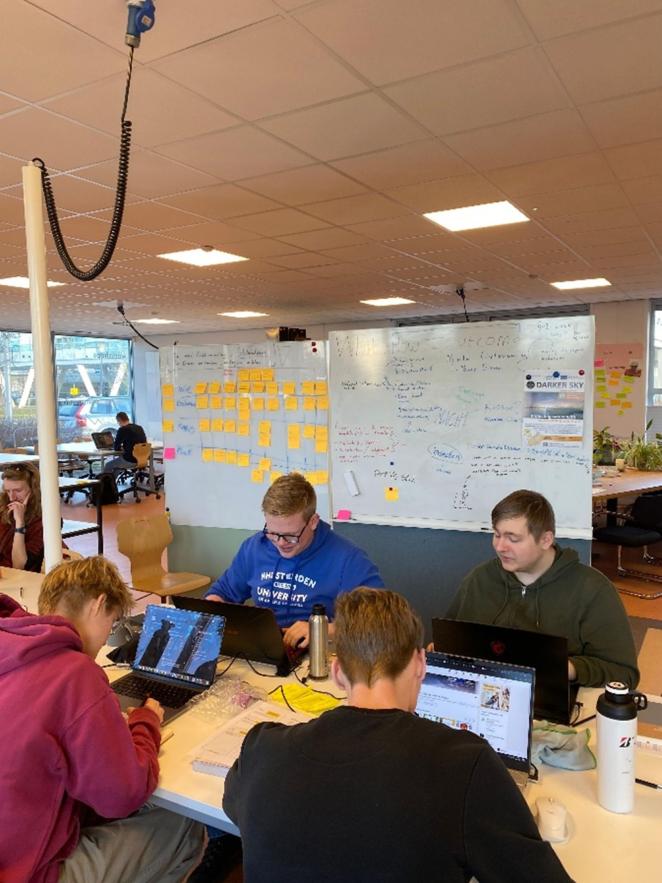
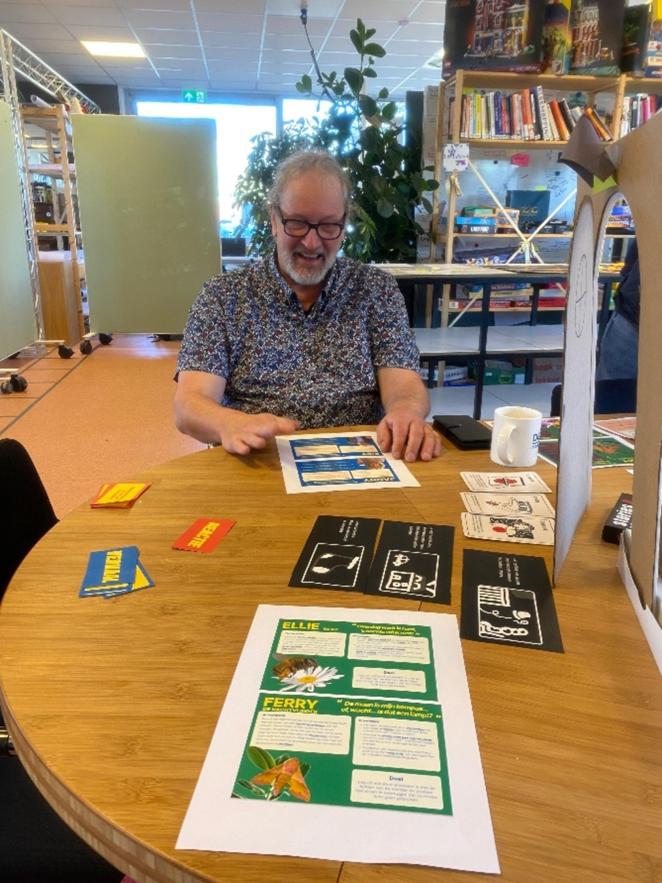
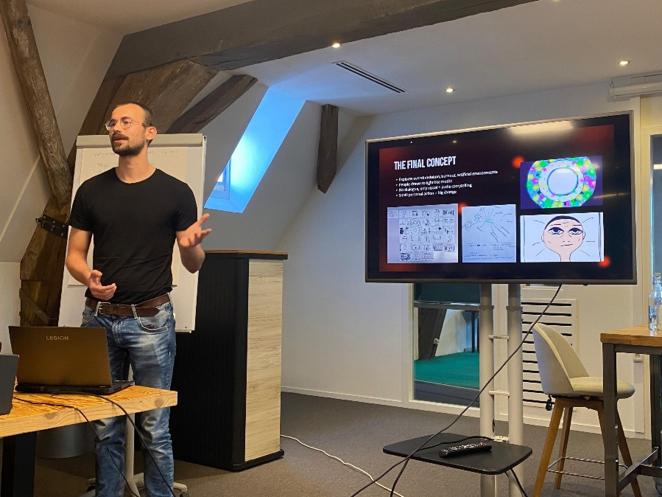
These photos were all taken by Nienke Aal for DARKER SKY. Unfortunately I could not find any close-up pictures. Nevertheless, reading about them was inspiring and made me realise that design, interdisciplinarity and non-formal education can really tackle complex issues.
Another example of interaction design for awareness I found is the videogame Lux, developed at the University of Quebec at Chicoutimi in Canada. It is designed to promote better lighting practices among the population and show the impact light pollution has on animals. Although games about light pollution are not very common, they are usually educative and serious, while this one wants to give a playful twist to the issue.
The story is set in a North American city plagued by light pollution. In the game, the player is Lux, a cat that has the mission to save small animals incapacitated by the dazzle. Lux performs different tasks, including replacing blue light bulbs with warmer ones and correcting their orientation. A drone, which represents the enemy, emits a light that disorients the protagonist.

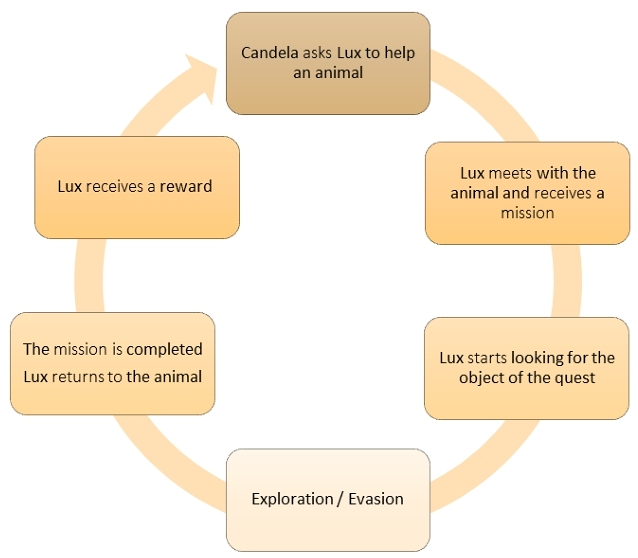
The description gives us detailed information about the UI, the design method used and character design. The UI introduces icons and bold words in the text bubbles to help the player skim through the speech bubbles. The Lux game was developed using a user-centered design approach and the Agile method, where playtesting had an essential part.
All animals are native to the northern American environment and are named after light or energy references, such as Candela, Joule, Étincelle and Lumen.
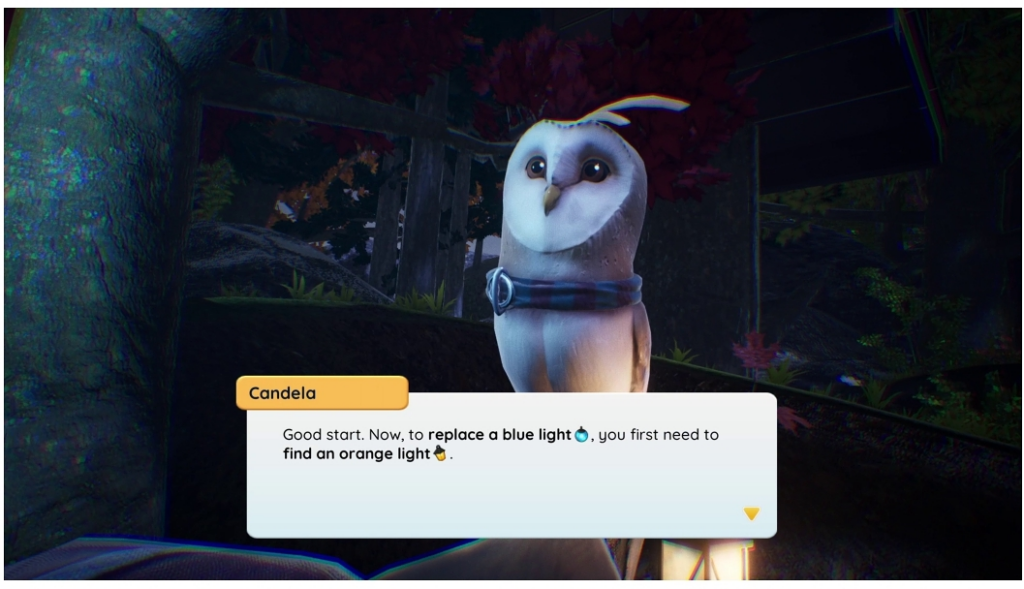
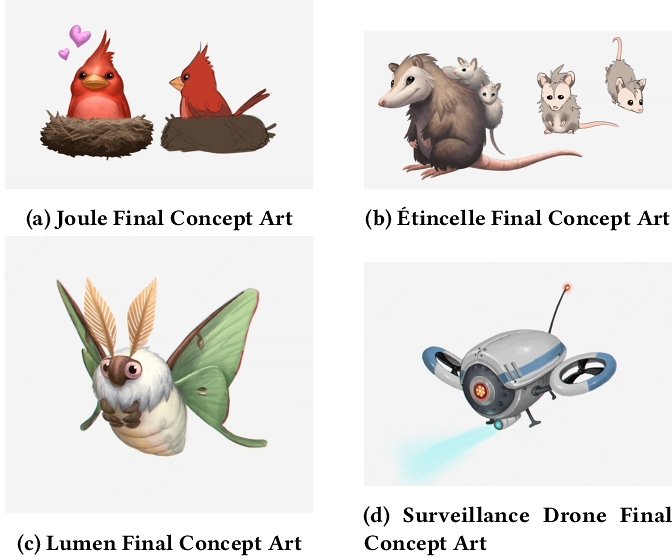
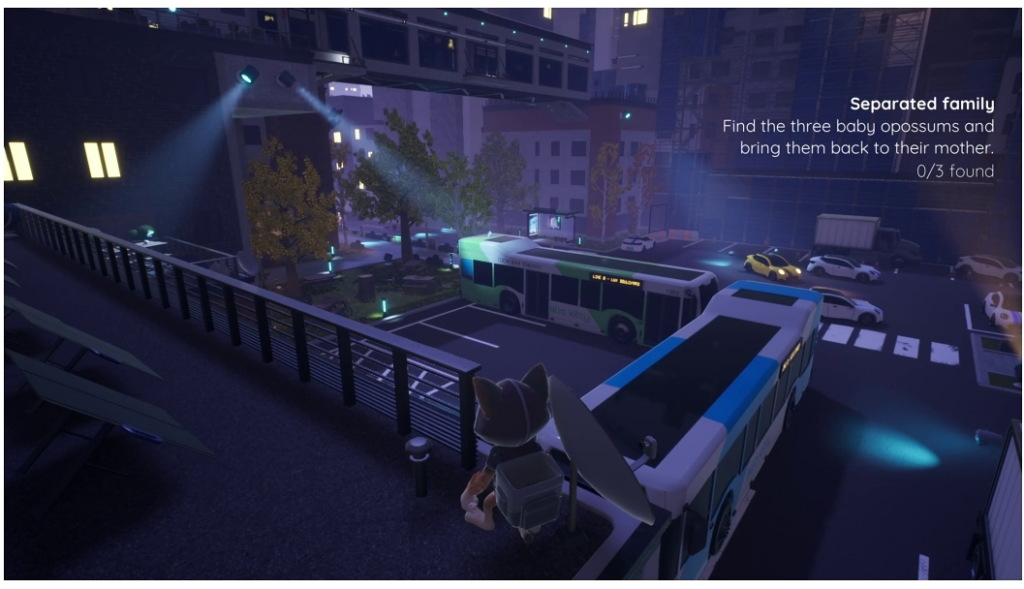
Lux wants to play with contrast: light seems necessary for humans, but it can be harmful for animals. Through this game, players can easily learn good practices that are friendly to fauna and can recognise problematic lighting in their environment.
I really recommend you to read the whole game description, I think it is a masterpiece because every detail is carefully selected, plus the characters are adorable.
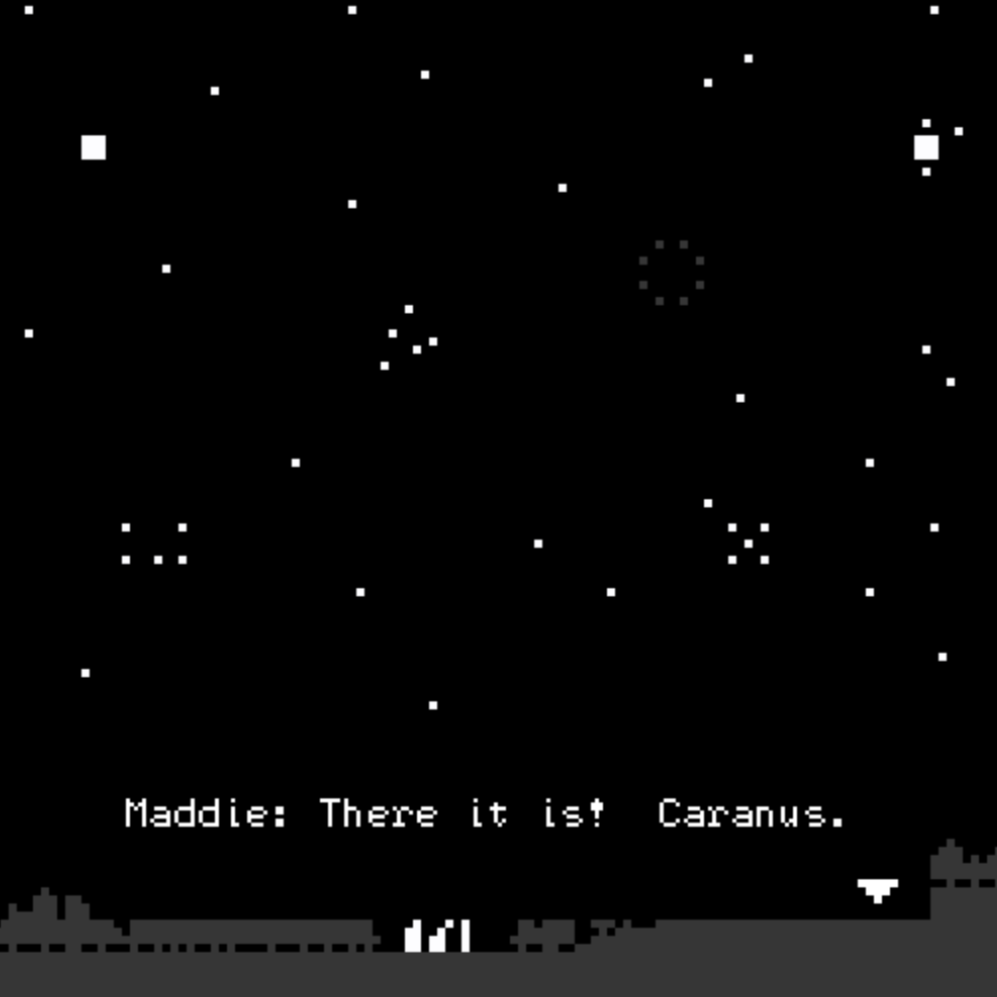
I also found a short game that depicts a quiet moment, Growing Light by Space Owl. In it, some campers observe the stars at night. The player can use arrow keys or the touch screen to search the night sky with the telescope and follow the campers’ conversation. The author’s motivation behind this minigame is showing that we are missing out on a chunk of the human experience if we’re deprived of our view of the night sky. It is very short and simple: as a player, you only move the telescope and make the characters speak. Still, the simplicity of the plot, the minimal interaction and the dark colours were able to transmit me serenity.
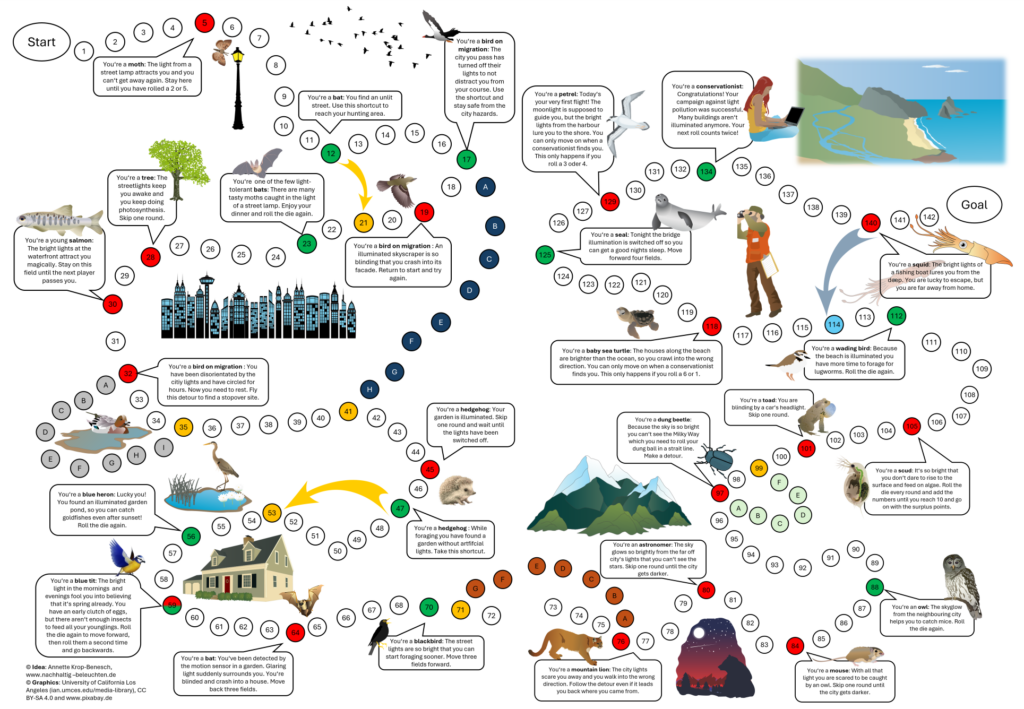
I am ending this article about gamification with an analogue example called Journey through a Bright Night. It is a board game developed by a mother and her two children, who wanted to educate their classmates about light pollution. It is an open source game that can be downloaded, printed on a sheet of paper and played with just a dice and playing pieces. While moving forward on the path, players face the same challenges that animals of different species encounter due to light pollution. The game’s format already exists, but it is educational thanks to detailed explanations.
Researching games about light pollution has been fascinating. I discovered a whole genre that I did not know existed. Unfortunately they are not very popular because environmental causes rarely are a reason for profit and this one is still a niche. I hope some day light pollution will get as much attention as plastic in the oceans, fast fashion, greenhouse emissions and deforestation, and maybe design can help make that happen.