5 rules for friendly luminaires

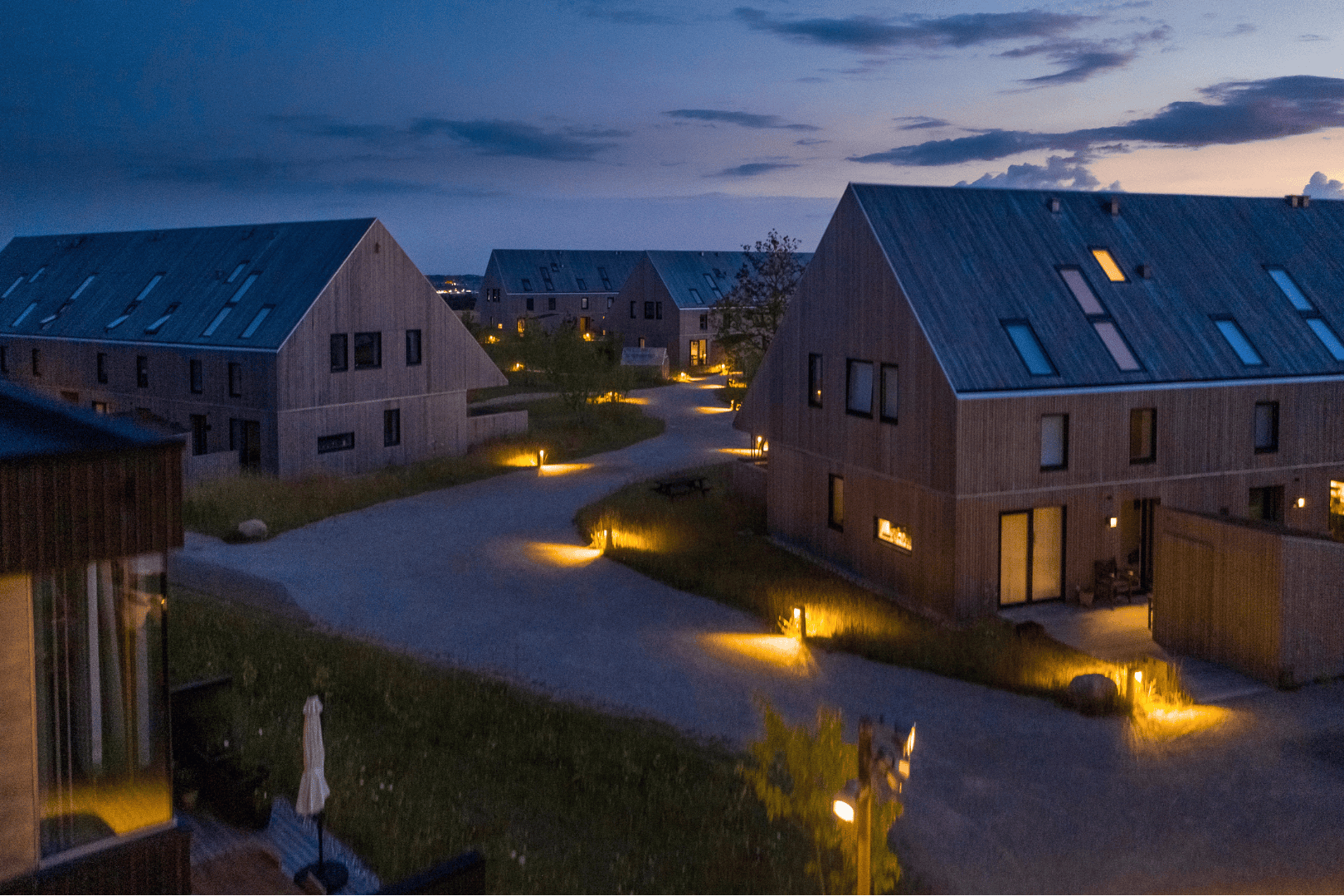
a street with shielded luminaires
Credit: Lampas / Photo by Torben Eskerod, from DarkSky

DarkSky International has published guidelines for environmentally friendly fixtures. They were developed by lighting engineers and designers to reduce glare and light trespass, while mantaining maximal functionality and safety. If a fixture respects these Five Principles of Responsible Outdoor Lighting, it earns the DarkSky Approved seal.
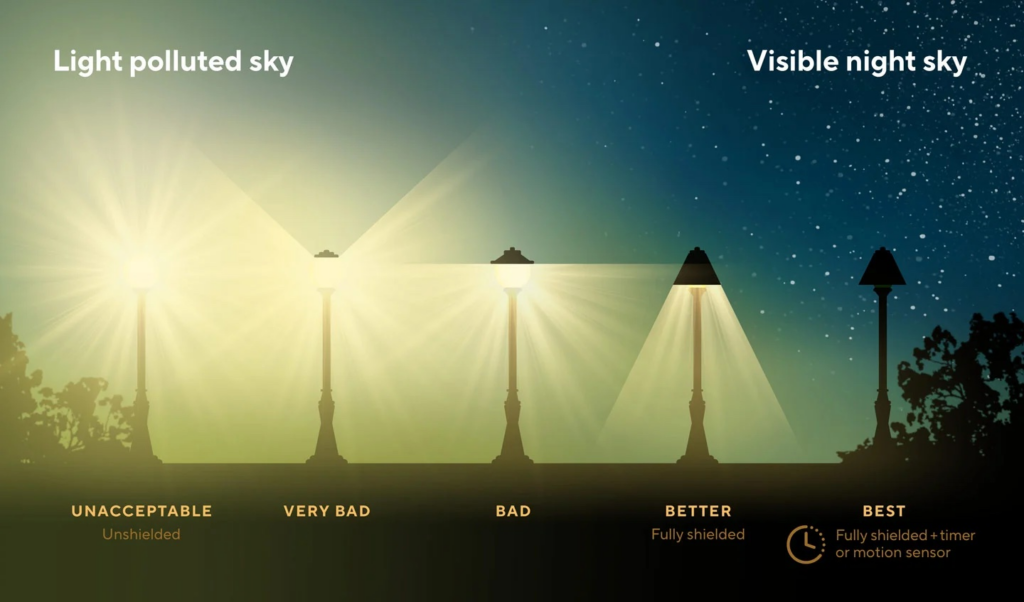
different examples from unshielded to shielded luminaires
Shielding can make a big difference in avoiding light spills, Utah State University
  1. Useful — fixtures should only be installed where they are needed;
  2. Targeted — the light beam should point downward and be appropriately shielded to avoid spills;
  3. Low level — the brightness should be as low as possible and reflection from bright surfaces should be taken into account;
  4. Controlled — timers, motion detectors and dimmers should be used, so that the light only stays switched on when it is needed, dimmed when possible, and turned off when not needed;
  5. Warm-colored — shorter wavelength (blue-violet) light should be limited, as it scatters much more intensely in the atmosphere than longer wavelength lights (red/yellow) and causes visual discomfort.
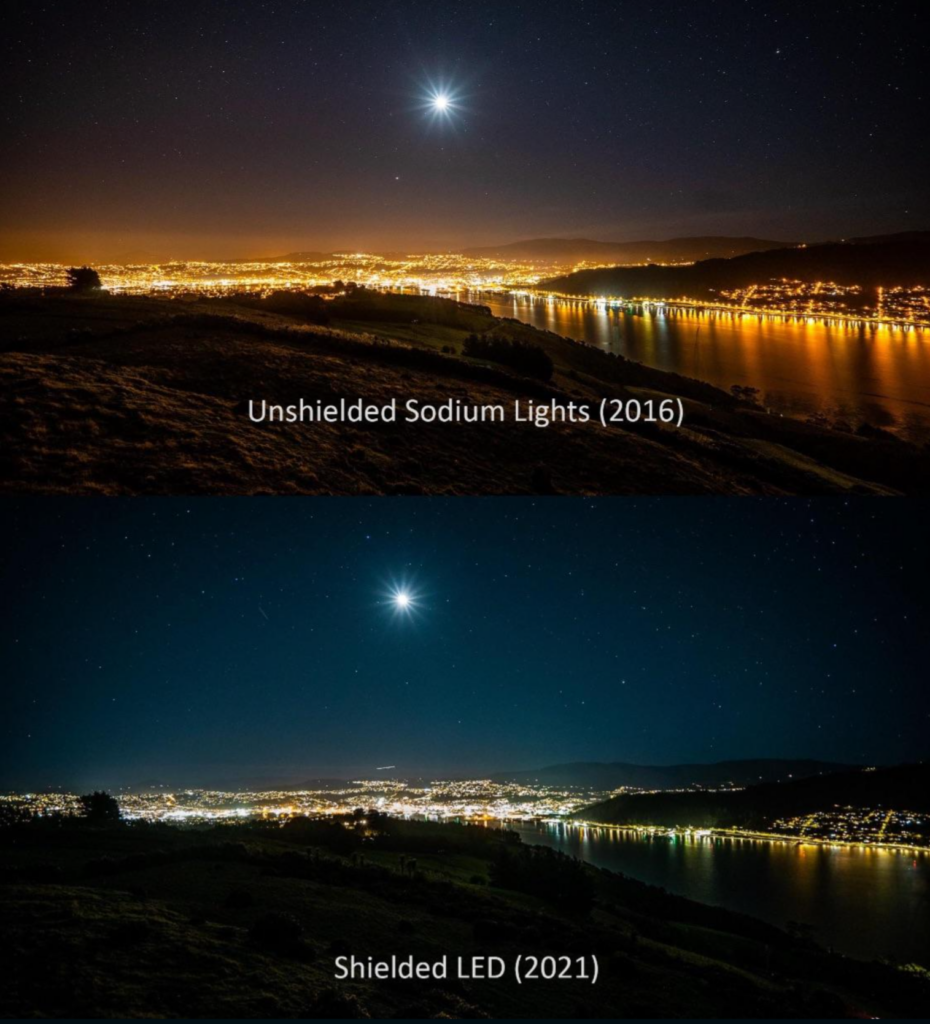
comparison between unshielded sodium lights (2016) and shielded LED (2021) in Dunedin, New Zealand
The effect of shielded vs. unshielded street lights on light pollution in Dunedin, New Zealand, Reddit

Apta Lighting Design Studio recommends a color temperature below 3000 K. They also state that LEDs and Compact Fluorescent Lights (CFLs) are better alternatives to conventional incandescent bulbs, thanks to their low luminance that does not compromise visibility. These bulbs also consume less energy.
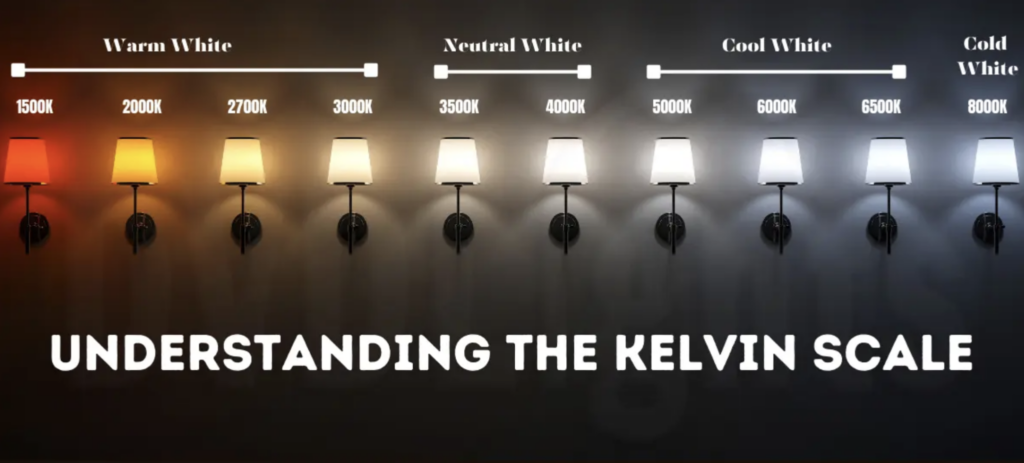
Understanding the Kelvin scale, different colours and temperatures
A colour temperature below 3000 K is recommended, My Planet Led

There are four categories of luminaires, depending on location and purpose:

  • Residential Luminaires, for homes
  • Commercial Luminaires, for business properties and public buildings (schools, hotels, and government buildings)
  • Pedestrian Comfort Luminaires, which create a more comfortable experience for pedestrians
  • Sea Turtle Sensitive Luminaires, which do not disrupt the natural navigation system of turtles

As Sea Turtle Conservancy explains, sea turtles are disturbed by artificial light because babies are driven towards the brightest light source after hatching. The brightest horizon used to be the one on the side of the ocean as opposed to the dark sand dunes, but due to artificial lighting they are mislead.
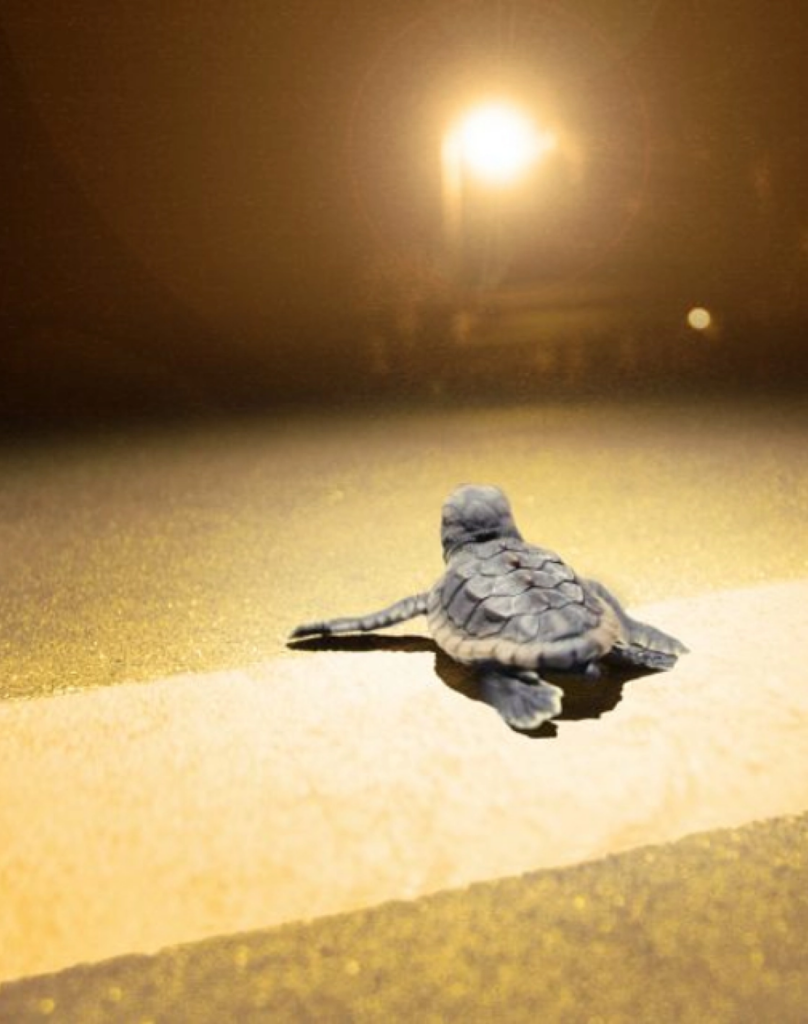
a baby turtle crawling toward artificial light
Hatchlings crawl toward light sources; if these are artificial, they get disoriented, Sea Turtle Conservancy

Producers can apply to receive the DarkSky approval by filling out a form on their website. The list of approved fixtures can be found on their website, with the option to filter them based on usage, technical properties and brands.
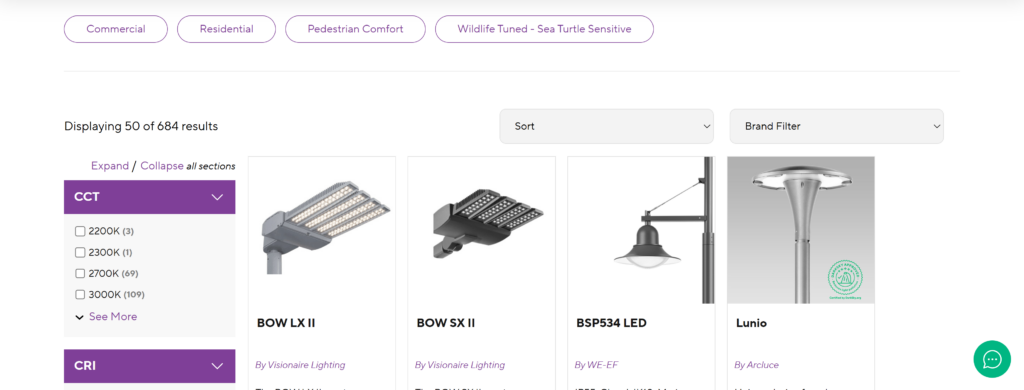
screenshot of the DarkSky approved luminaires page
DarkSky approved luminaires

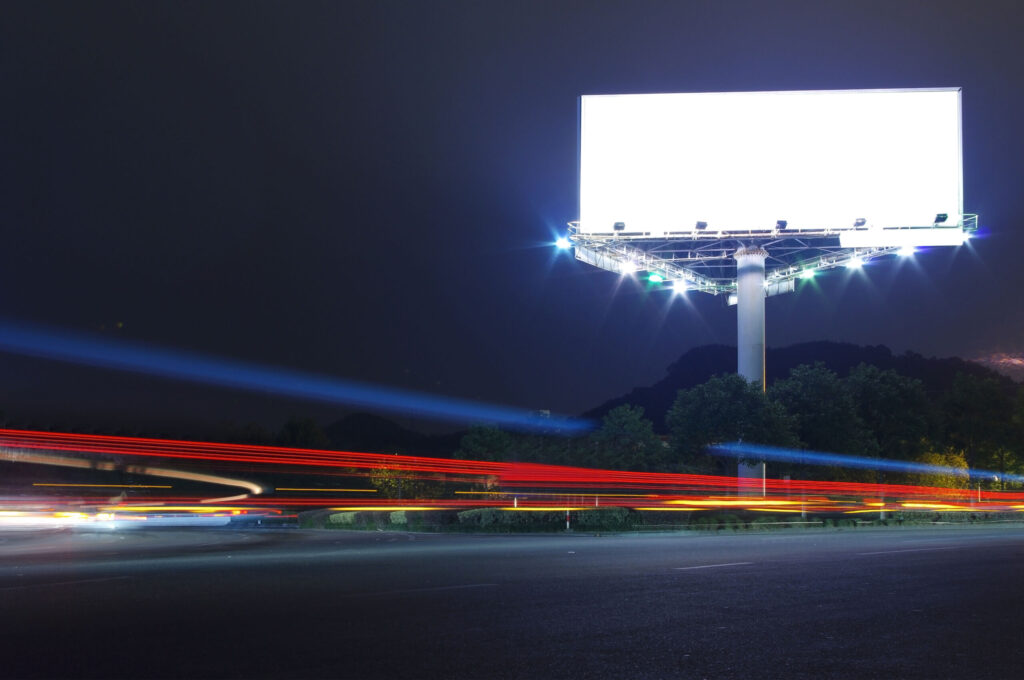
Can smart design limit the glare of billboards?

a bright billboard on a street at night
Billboards cannot be shielded, as opposed to other fixtures, DarkSky

Electronic billboards, also called electronic message centers (EMC) can be up to ten times brighter than traditionally lit billboards, therefore harming the nighttime environment. Unlike light fixtures, they cannot be shielded and due to the horizontal disposition of LEDs, light is also emitted laterally and upward, into the sky. Light from EMCs can cause glare (a visual condition where intense light reduces vision and causes discomfort) and be a dangerous distraction to drivers. Other than that, it can affect breeding, foraging, and orientation in wildlife.

Due to the impossibility to shield EMCs, design can only slightly mitigate their glare. What is most important is careful operation, programming, and location of this technology.

The DarkSky Technical Committee developed EMC guidelines to provide planners, lighting designers, architects, biologists, government officials, and the general public with solutions for EMC related harm. The guidelines were published in January 2019 and include:

  1. Best practices for the amount of light emitted for urban, suburban, and rural areas
  2. A Curfew when EMCs should be switched off completely, from 11:00 p.m. or 30 minutes after the close of business (for on-premises signs) until one hour before sunrise 
  3. Best management practices to decrease or eliminate negative impacts on the environment and improve safety for drivers and pedestrians

The best management practices consist in 6 points:

  1. Monitoring — The EMC should continuously be monitored by its owner 
  2. Sensitive area setback — EMCs should not be placed within or close to natural areas, beaches, wetlands, state and national parks, wildlife refuges and residential areas
  3. Distraction limitation — Messages should minimise distraction to drivers and pedestrians by setting a minimum message duration, a maximum transition time between messages, and maintaining adequate spacing between EMCs
  4. Gradual brightness reduction — EMC luminance levels should gradually dim between daytime and nighttime modes 
  5. Size limits — Larger EMCs should be avoided
  6. Density limits — The number or combined size of signs permitted for a given road or area could be limited

Unlike other types of lighting, which are quantified by their illuminance (how much light falls upon a surface), EMCs are quantified by thor luminance (the luminous intensity leaving the sign). For this reason, a standard luminance meter should measure the white screen at the moment of installation.

This being said, design also plays a role in light pollution. Sustainability directory states that bright, saturated colours and high contrast also increase light pollution. To protect the night sky designers should opt for darker backgrounds and minimise the overall illuminated area.

International Dark Sky Places

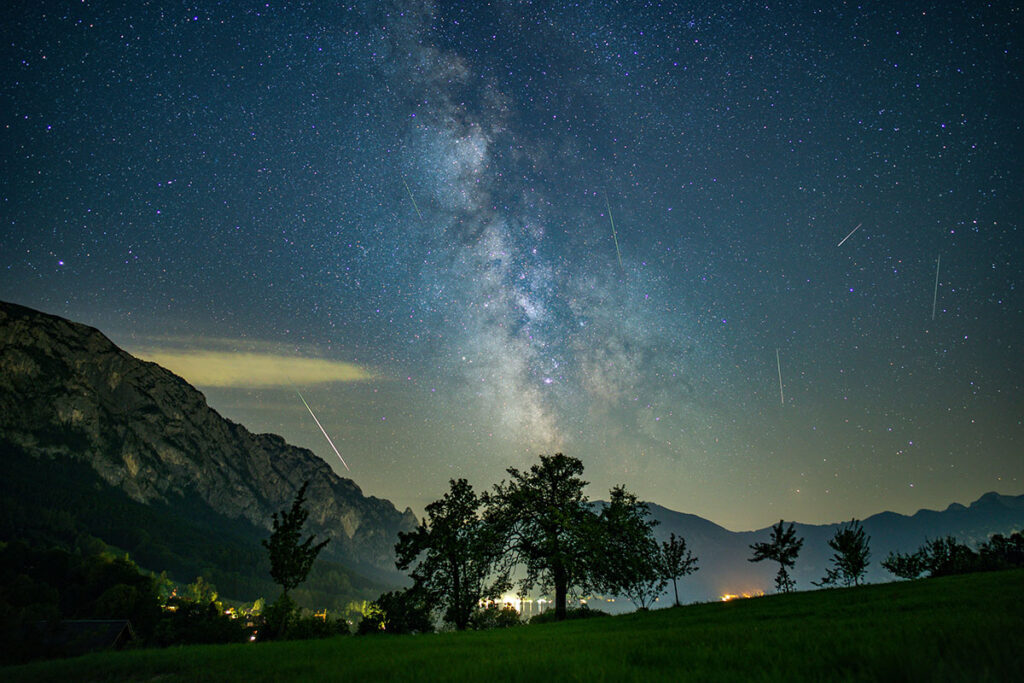
picture of the night sky with Milky Way and mountain landscape
The Attersee-Traunsee Nature Park in Upper Austria, photo from their website

DarkSky is a worldwide organisation combating light pollution. It offers certifications for protected areas and facilities that preserve dark skies through responsible lighting policies and public education. The existence of dark areas allows us to stay connected with nature and protect ecologically sensitive zones.

It all started when Flagstaff, Arizona, was named the first International Dark Sky City in 2001. Now there are over 200 places in 22 countries of the world and a total of 160,000 square kilometers of protected land certified by the International Dark Sky Places (IDSP) program.

The certifications DarkSky confers are six: International Dark Sky Parks, International Dark Sky Sanctuaries, International Dark Sky Reserves, Urban Night Sky Places, International Dark Sky Communities and DarkSky Approved Lodging. Additionally, they also have a list of approved luminaires and retailers, together with outdoor sports lighting guidelines.

To request a certification, there is an application process consisting in an initial inquiry, a formal application finally a certification if all criteria are met.

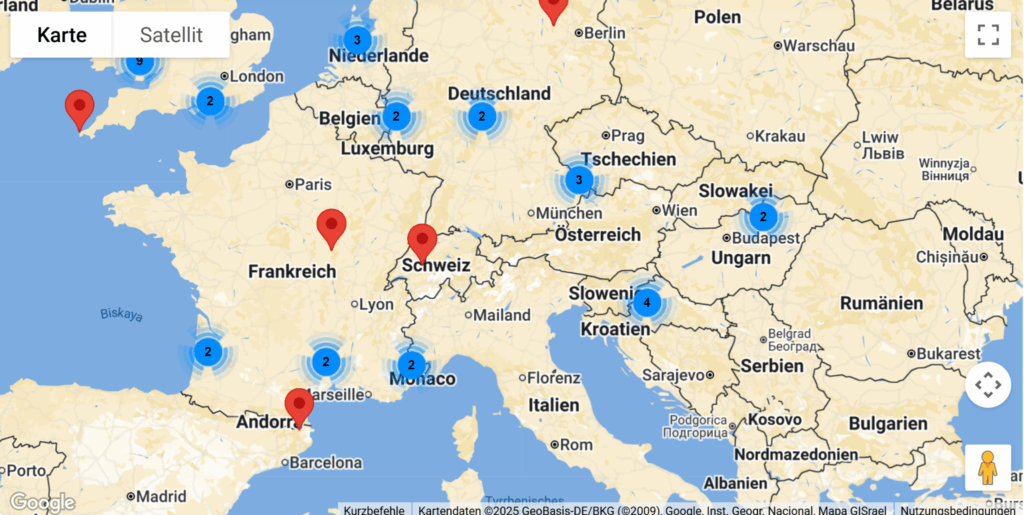
I used DarkSky’s map to find International Dark Sky Places in my countries, Austria and Italy. I found Naturpark Attersee-Traunsee in Upper Austria, but was surprised to find out that there are none in Italy

An overview of International Dark Sky Places in Europe, from DarkSky

In fact, according to an article published in the magazine Science Advances in 2016, Italy and South Korea are some of the countries of G20 with the brightest night skies, with the Pianura Padana being the most polluted Italian area. Efforts have been made to certify dark areas such as South Tyrol, Maremma (Tuscany), and the Saint-Barthélemy valley (Aosta Valley), but without any results.

The Attersee-Traunsee Nature Park is the largest natural park in Upper Austria with some of the darkest night skies remaining in central Europe. With the size of 77 square kilometers, it lies between the lakes Attersee and Traunsee and spans across the eponymous Traun and Atterseer Flysch Mountains. It was certified as International Dark Sky Park in 2021. On its website the certification is not mentioned, but there is a separate one dedicated to the “star park“.