During my previous research, I stumbled across Ankünder, the company that manages outdoor advertising in Graz. Allegedly this company is switching off their illuminated billboards at night, and I searched their website for further information relevant to interaction design and light pollution.
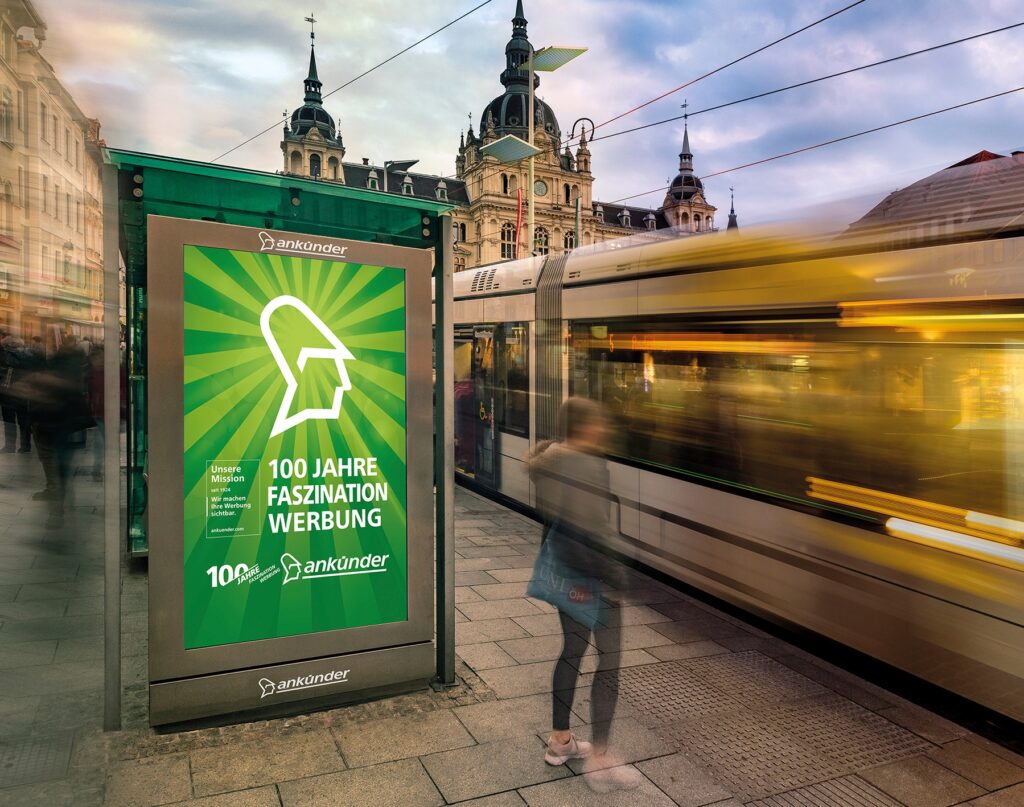
I found information about their rolling advertising media “Poster Lights” and its advantages. It consists of backlit rolling (switching) posters. According to Ankünder, this method is effective due to its high visibility on the road. In addition, the rolling movement draws even more attention than the traditional billboard. They are intended to be used in combination with classic posters and are supposed to transmit high impact, recall and recognition values to the viewer.
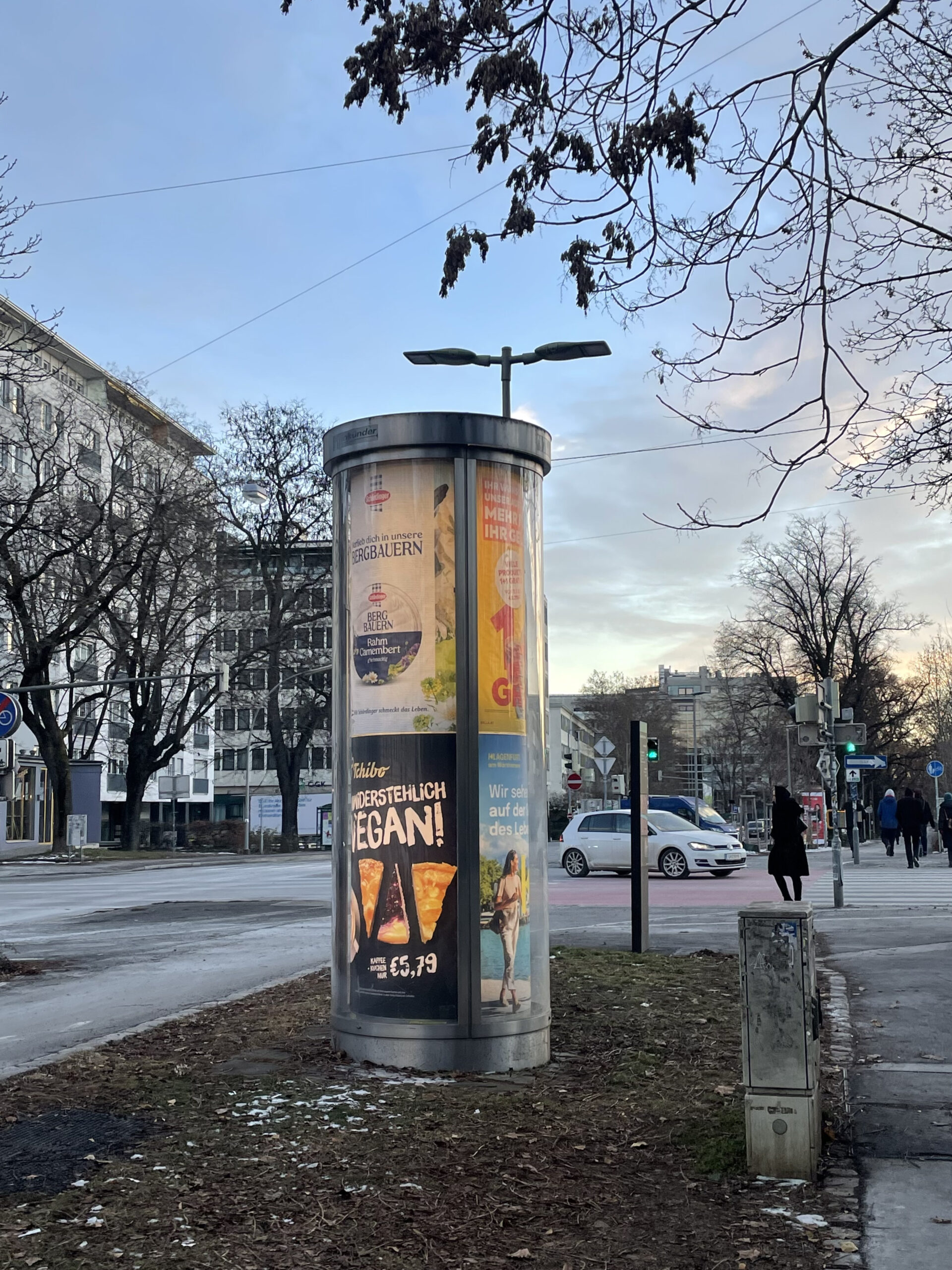
I then decided to find out more about the different types of billboards and how they are related to interaction design and light pollution.
According to the billboard service Blindspot, there are different types of billboards:
- Static billboards, which are usually located on the side of highways and can be illuminated by another light source at night;
- Digital billboards, which use LED or LCD screens to rotate multiple ads or display animated graphics;
- Mobile billboards, placed on vehicles, which have the ability to reach strategic locations.
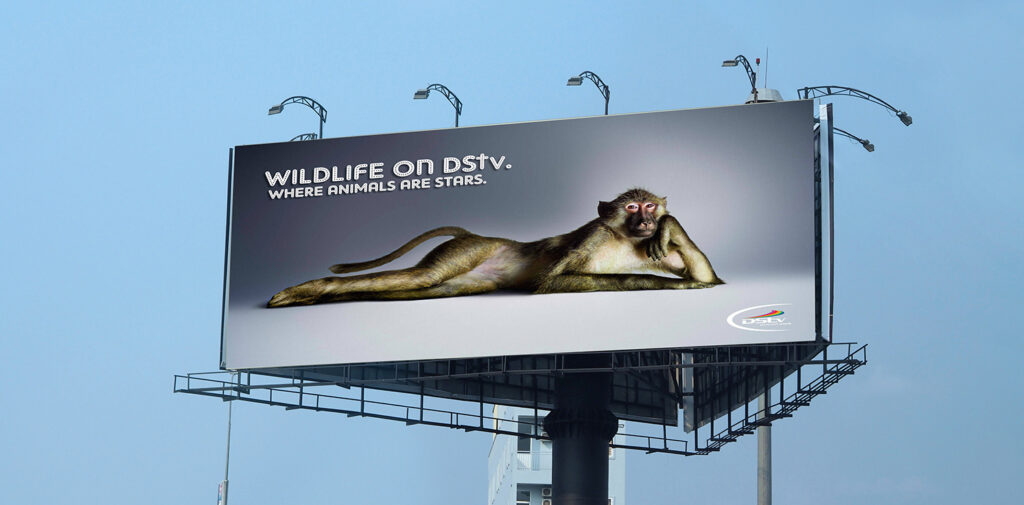
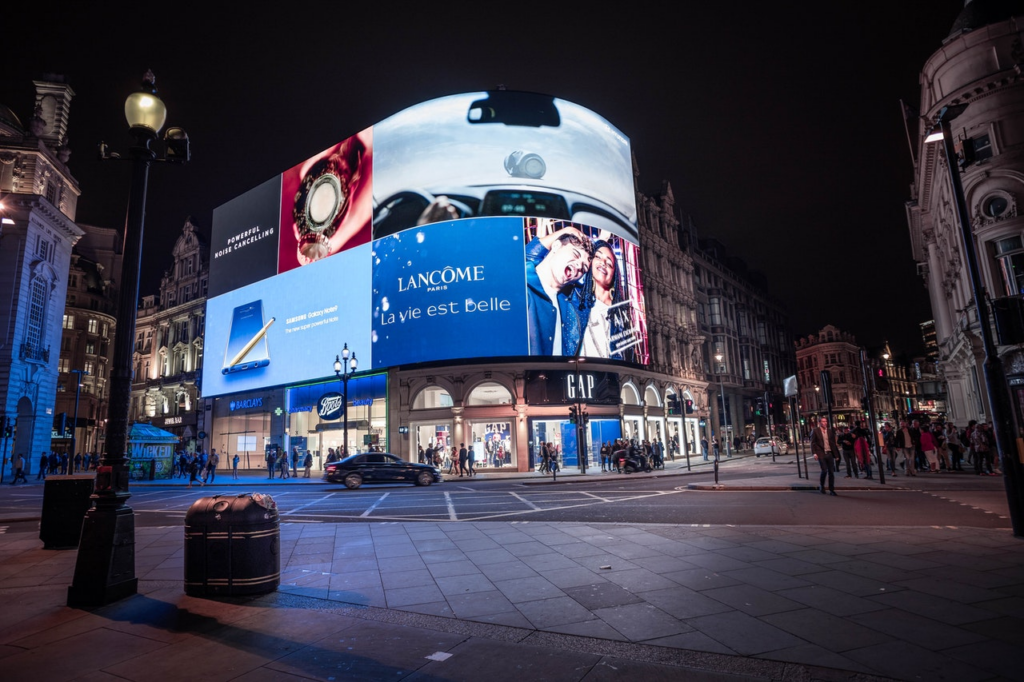
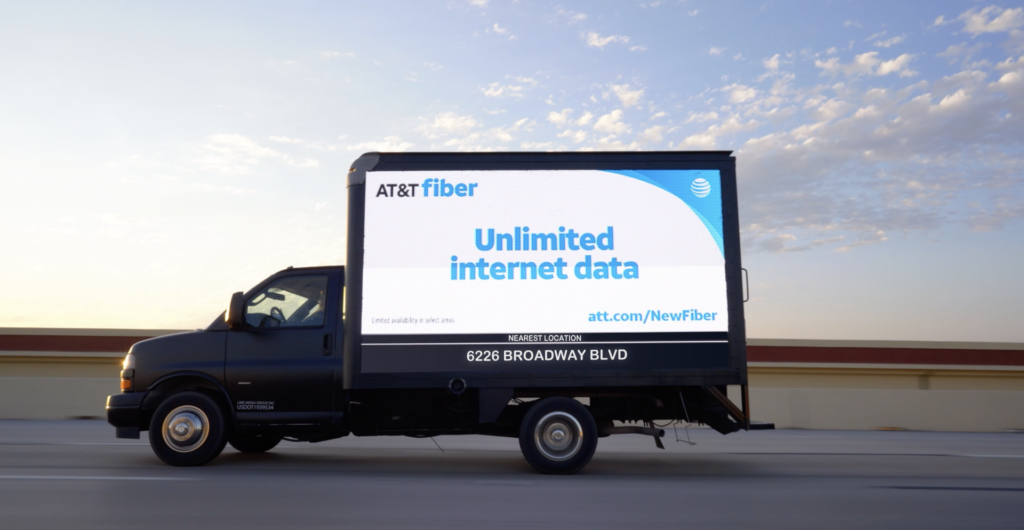
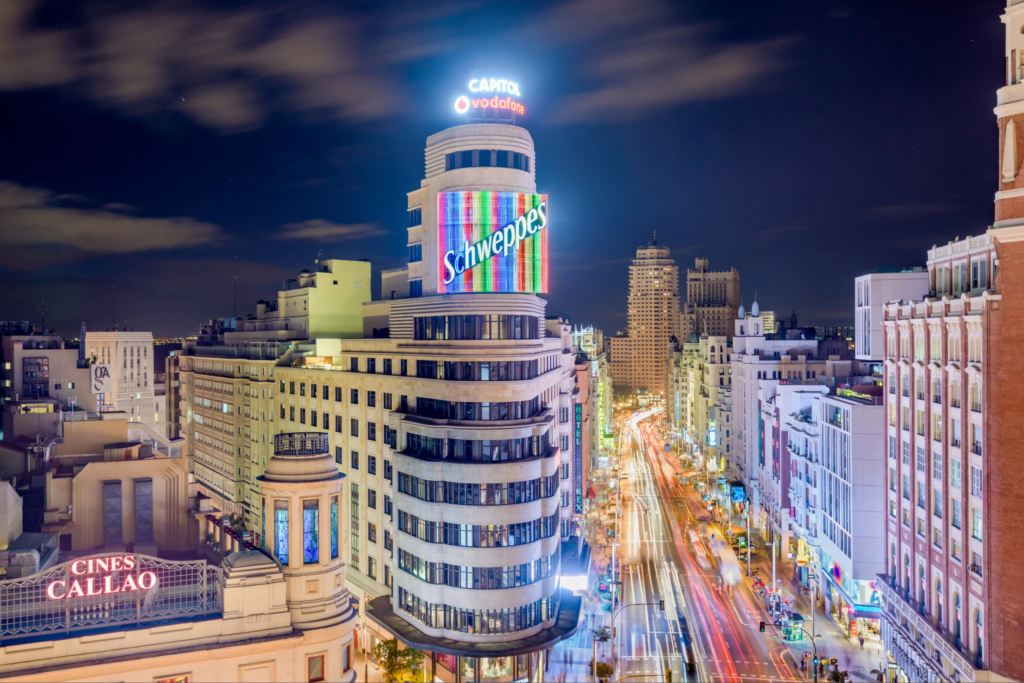
What changes between a digital and a static billboard is budget and flexibility. While LED or LCD billboards are more expensive, they allow content scheduling and catch more attention due to motion and bright colours. On the other hand, static billboards have higher installation costs, but they always occupy the same position, building brand familiarity. One example is the iconic Schweppes neon sign in Madrid’s Gran Vía, which is officially protected as a Monument of Cultural Interest.
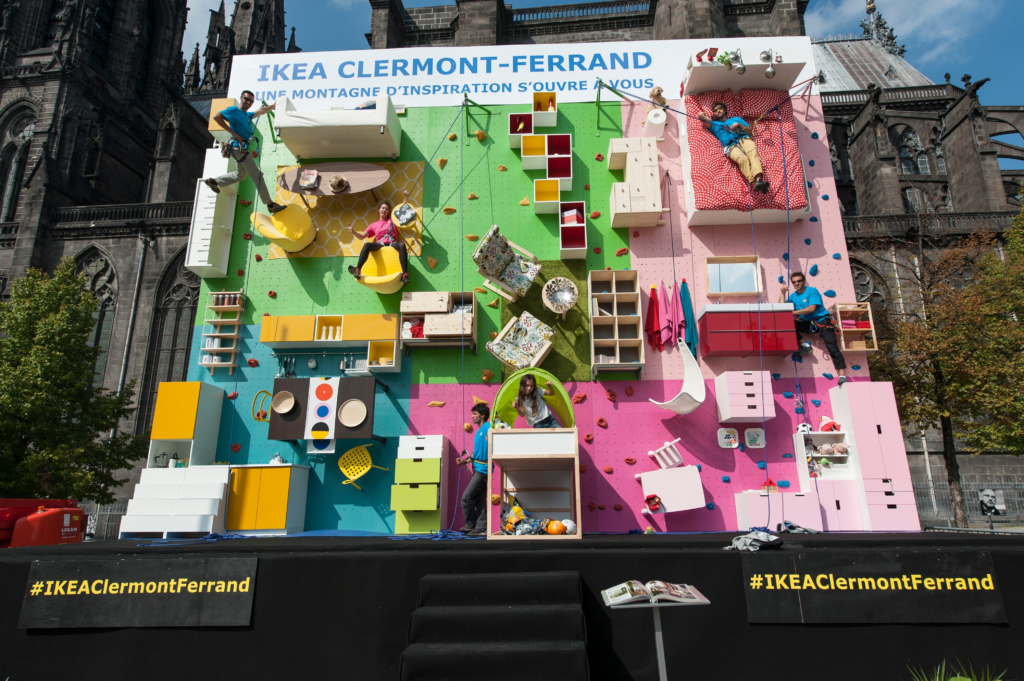
What caught my attention were interactive billboards. These use technology or analogue methods to create engagement with the viewer. Some methods are touchscreens, motion sensors, QR codes, and VR (in combination with one’s phone), but on another service called Media Venue I also read about scented billboards, a billboard that is a rock-climbing wall, or a company that gave its public the chance to vote on social media for the billboard to be displayed.