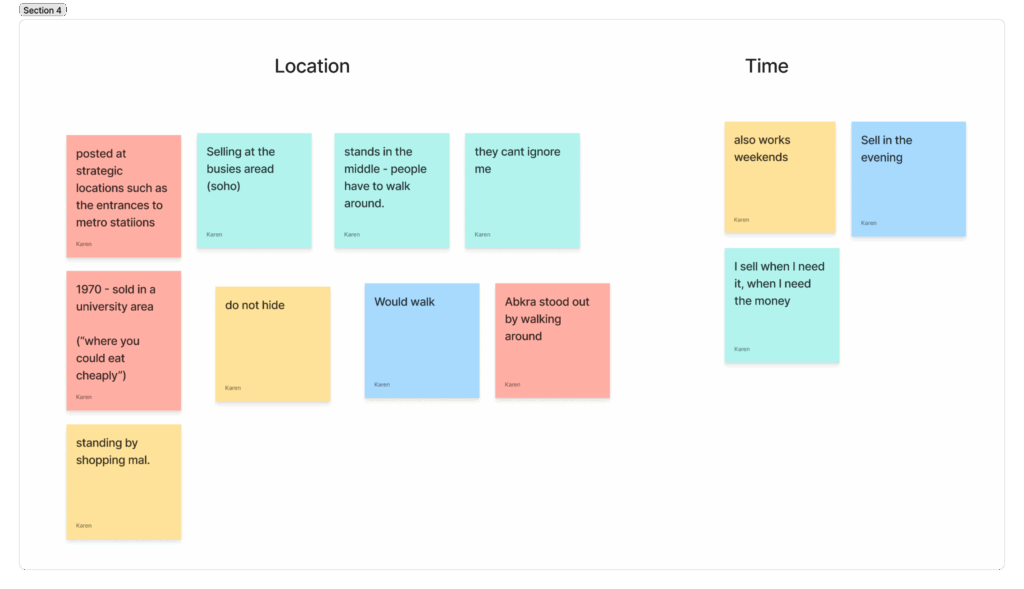
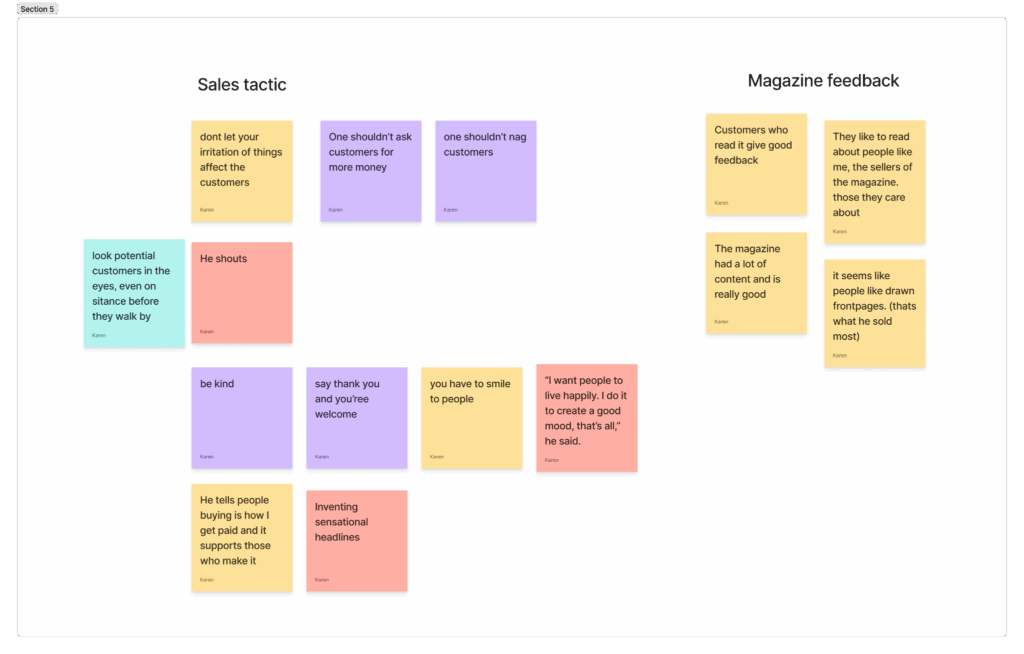
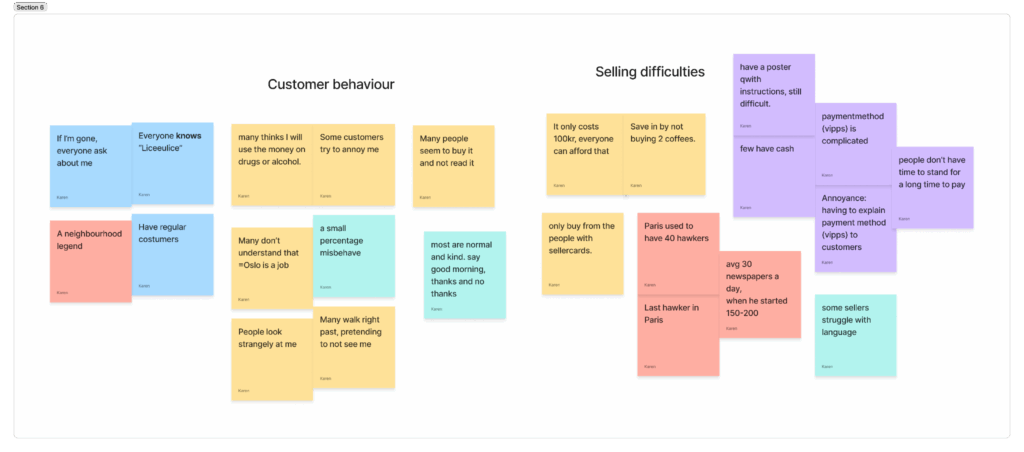
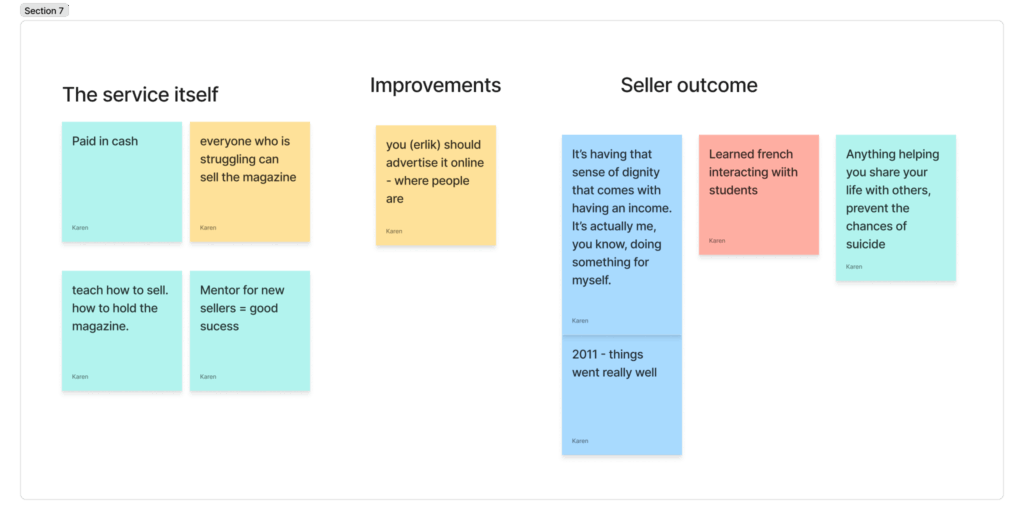
Last week we looked at interviews from street magazine sellers, identifying their experience with selling the magazine, their habits, location and interactions. This week we will look at possible customer behaviours. In order to investigate this I created a survey that I spread on platforms such as discord and WhatsApp, and the survey was open for a time period of five days. The survey only had one demographic question (nation), and consisted of only multiple choice, but with the option of answering “other” where it was deemed natural.
The survey involved the following questions:
- Where are you based/located?
- Have you bought one or more Street newspapers where you are located?
- (If yes)
- Why did you buy it/them?
- Where did you buy it/them?
- Did you read the magazine(s)?
- Did you enjoy its/their content?
- (if yes) What did you enjoy about them?
- (If no)
- Why not?
- Where do you mostly pass Street Newspaper sellers+
- What would you like to see and read about in a Street Newspaper?
- Does the design of the cover impact whether or not you consider buying a magazine? (any magazine)
- Have you ever bought a magazine purely because of the cover? (any magazine)
Limitations
One limitation with the survey were the few demographic questions.
Results
There were a total of 13 submissions. The participants were located in Norway (n=6) and Austria (n=7). Out of the 13 submissions, only one participant had bought at least one Street Newspaper where they are located, this participant is currently located in Norway. The participant bought the magazine(s) due to two reasons; “I wanted to help/support” and “The seller was friendly”, but the participant did not read the magazine(s). The magazine(s) were bought “Outside the metro/trainstation/etc.”, “Outside a grocery store” and “On a busy street”.
As for the rest of the participants who have yet not bought a Street Newspaper, the number one reason was that “I am not interested in reading magazines” (n=6). Reasons number two were “Don’t know” (n=3) and “The magazines do not look interesting” (n=3). Following up is the answers “I never have time to stop” (n=2) and two replies to “Other” were that they had not noticed or been approached by a seller, “I am not sure who gets the money” (n=2), and “I felt annoyed” (n=2). Lastly we have “I am not sure what they will use the money on” (n=1), and one answer to “Other” being that they were scared by the people selling them “especially the drug addicts”. Most of these participants pass Street Newspaper sellers “Outside the metro/trainstation/etc.” (n=7) or “Outside a grocery store” (n=4). Others were “Outside a mall” (n=3), “On a busy street” (n=2), “Near a tourist attraction” (n=2), “outside of university” (n=1), and “Don’t remember” (n=2).
Getting to the results of the participants’ thoughts we will first look at what they would like to see and read about. Most would like to read about “Art & Culture” (n=6), following up with “Hobbies” (n=4) and “Posters to rip out” (n=4). Others were “The people selling the magazines” (n=3), “Nature” (n=2), “News & Politics” (n=2), “All of the above” (n=2), “Sports” (n=1), and one participant said they “wouldn’t”. Nine of the participants said the design impacts whether or not they consider buying a magazine, while eight also said they have bought a magazine purely because of its cover.
Discussion
The results of the participant who bought the magazine aligns with some of what was said in one of the interviews that were discussed last week. This comes to show that some people do in fact buy magazines purely to support the seller, but do not actually read the magazines themselves.
When it comes to participants’ reasons to not buy a Street Newspaper, the primary reason was that they were not interested in reading magazines. What the reason for this is is not clear, there could be many reasons, for example general uninterest or a reflection of the decline in reading for fun (Lee, 2025). Some weren’t sure who gets the money, which displays a general lack of knowledge about the Street Magazines. A few also mentioned some uncertainty about where the money would be spent or fear from the sellers, which could have a connection to the lack of knowledge discussed in previous blog posts that can be associated with homeless and drug users (Barse, 2017). Two participants also felt annoyed, which could be a result of sales tactics, or personal frustration. An interviewee from the previous blogpost mentioned the importance of not nagging the potential customers (Skyrud, 2025b). One interesting answer was that the magazine did not look interesting, assuming they did not take the time to do more than look at the cover. We could link this to the last two questions regarding the thoughts around magazine buying behaviour. Over half of the participants said the cover impacted their consideration of buying a magazine or directly made them purchase a magazine. In the previous blogpost it was also mentioned how one seller noticed a magazine with a hand drawn cover sold better than the others (Skyrud, 2025a).
The participants of this survey would preferably like to read about art and culture in Street Newspapers, with hobbies following closely and some would also like some posters to rip out. Only three participants would like to read about the people who actually sell the magazines, which may differ from the experience of one of the interviewees in the previous blogpost who had received feedback that people enjoyed reading about the sellers of the magazine (Skyrud, 2025a).
Most participants would pass Street Newspaper sellers outside of public transport, hotspots and grocery stores. These are typically crowded places or where there are a lot of passerbys, aligning with the different location tactics mentioned in the previous blogpost.
In short, to conclude, there does not seem to be much interest in reading magazines and if they were to read one it would be preferred for it to be about arts and culture. We see some similar observations from the interviews from last week and this week’s survey. One example being that it seems like the design of the magazine itself could have an impact on the number of sales. This tells us that the part of the service that could be focused on is the design of the magazine itself. There also seems to be a little lack of awareness behind the lack of interest in buying, which could also possibly be improved by focusing on creating awareness of what the service is and who the sellers are through other communication channels.
References
- Barse, M (2017, 16. August). Spør en forsker: Hva skal jeg gjøre når jeg møter en hjemløs? Forskning.no. https://www.forskning.no/sosiologi-spor-en-forsker-kultur/spor-en-forsker-hva-skal-jeg-gjore-nar-jeg-moter-en-hjemlos/328855#:~:text=Ekstremt%20stressende%20%C3%A5%20v%C3%A6re%20boligl%C3%B8s,kan%20gj%C3%B8re%20mye%2C%20sier%20han.
- Lee, B. (2025, August 20). This article is more than 3 months old ‘Deeply concerning’: reading for fun in the US has fallen by 40%, new study says. The Guardian. https://www.theguardian.com/us-news/2025/aug/20/reading-for-pleasure-study
- Skyrud, E. (2025a, Juni 12) I trappa: Reidar. Erlik. https://www.erlik.no/i-trappa-reidar-2/
- Skyrud, E. (2025b, March 7) I trappa: Nicolae. Erlik. https://www.erlik.no/i-trappa-nicolae/