We’ve taken a look at life on earth in the future, but what did the past look like? And more importantly, how were we able to piece it all together?
How Do We Know How Extinct Animals Looked and Lived?
Rough patches and flanges on bone can be used as a guideline for where muscles, cartilage and ligaments used to lie. Scratches and wear patterns on teeth can tell about the diet and possible feeding habits of the animal. Cutting thin sections through bones and putting them under the microscope, helps to determine the age of these animals and how fast they would grow up. Skeletons are only the starting point of our understanding, however.


There are a lot of things that can be inferred from preserved gut contents, eggs, nests, footprints, skin impressions and as well as fossilised feces. These can tell us about the diet, size, life cycle, habitat and etc. of these animals. Comparisons with living species is also key. Parallels can be drawn between living and extinct lifeforms with similar features and be studied in real time.
Reconstruction
Although the accumulation of discoveries has given palaeologists a pretty clear image on some extinct animals, many are still reconstructed with a rule-of-the thumb methodology. Things like soft tissue as well as integument, colour and behavioural elements are not often taken into account. This approach would look bizarre when applied to modern animals, but would need a certain degree of speculation when being applied. Which is why these shortcomings haven’t been addressed until recent years.
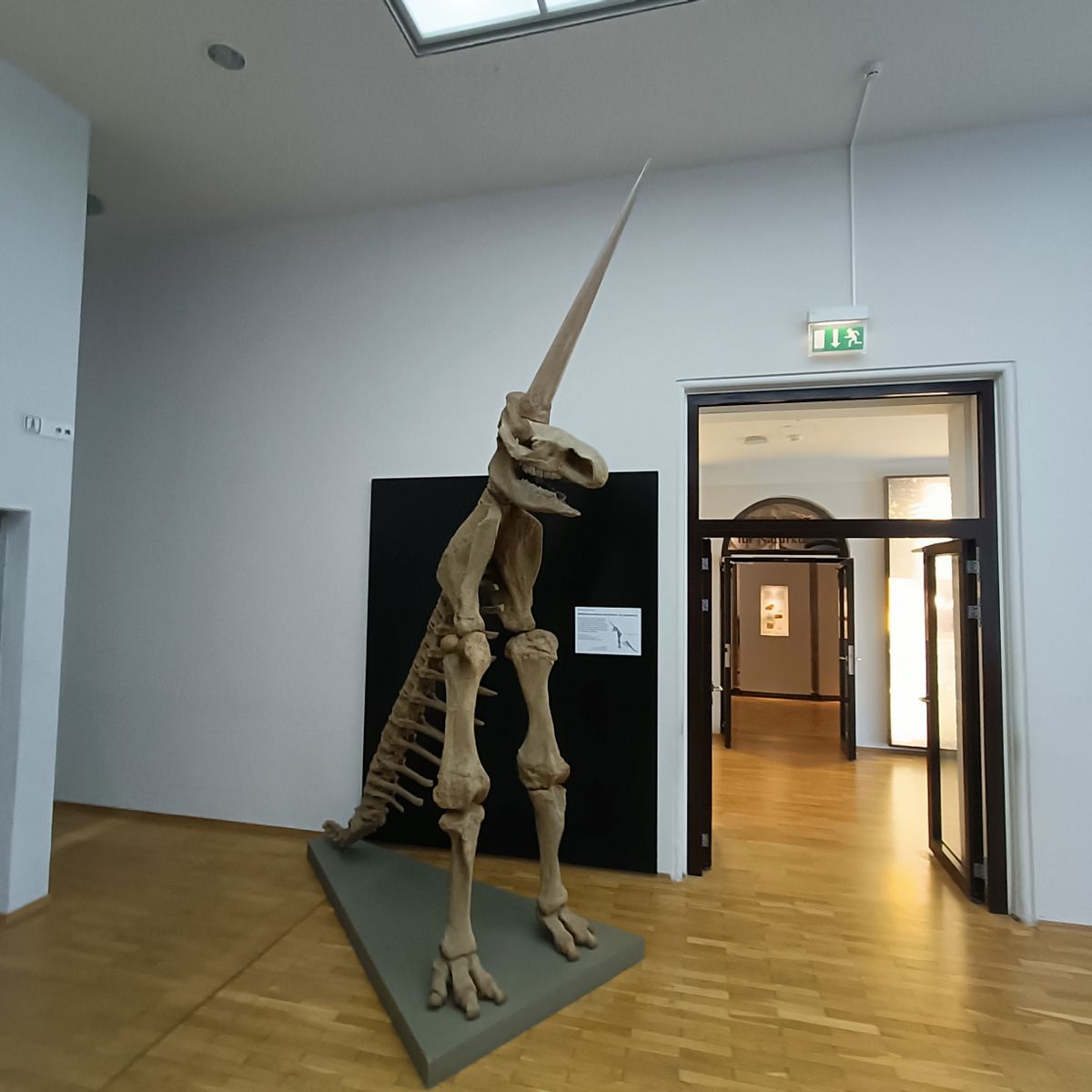
The Magdeburger Unicorn – a famously bad reconstruction
Filling in the Blanks
One problem with older reconstructions would be “Shrink-Wrapping”. Hereby prehistoric animals are stripped of any kind of soft tissue, showing every muscle and bone ridge and thus turning them into strange, skin-and-bone creatures.

How future historians might imagine a horse when lacking any kind of context about the animal and just going off its skeleton.
If soft tissue can’t get preserved, neither can skin, feathers or fur. This often makes reconstructions, especially of dinosaurs, lacking in any kind of plumage.
Cartilage is another point of discussion; it won’t get preserved, but can tell us about how an animal held themselves. Do they hold their necks up horizontally? Like a giraffe would? Or closer to the ground? Like a rabbit? And what can we conclude about their feeding habits through this?
Though even here lies uncertainty. Given that many fossils are incomplete, we tend to fill the missing parts with whatever closest relative we can find. These won’t always be correct and maybe even give us false ideas about an animal. Anatomy based on what seems familiar and therefor logical to us can shape our image of these long dead animals and settle in as fact. And we could never know what’s the actual truth.
Developments
The recognition that birds are dinosaurs has played a major role in the reconstruction of dinosaurs in the last 20 years. Not only in physical aspects and behaviour, they carry a direct genetic legacy of their dinosaurian ancestry. They possess genes that can transform bird beaks back into more dinosaur-like snouts, or stimulate chickens to form teeth.
These efforts in genetics have already produced some impressive findings and I imagine they will continue to do so in the future. While a lot of questions about prehistoric life will probably never be answered, we are closer than ever to understanding more about it.
Sources
- Barrett, Paul. Hendry, Lisa: Beyond Jurassic World: what we really know about dinosaurs and how. In: Natural History Museum O.D., https://www.nhm.ac.uk/discover/what-can-scientists-learn-about-dinosaurs-and-how.html (zuletzt aufgerufen am 19.12.2025)
- Conway, John. Kosemen, C.M. . Naish, Darrren: All Yesterdays. Unique and Speculative Views of Dinosaurs and Other Prehistoric Animals. UK: Irregular Books 2012
