Design & Research | Master Thesis Log 03
There is a common phrase repeated in tech reviews today: “Everyone is a photographer.”
The logic goes like this: We all have 200-megapixel sensors in our pockets. We have stabilization that defies gravity and Night Modes that turn midnight into noon. Therefore, because the output is technically high-quality, the act must be photography.
I disagree. In fact, for my thesis, I am proposing the opposite: As cameras get “better,” photography is getting worse.
We are not witnessing a renaissance of creativity; we are witnessing the rise of “Zombie Formalism”—images that look alive (sharp, colorful, perfectly exposed) but are internally dead because they lack human intent.
The Flusser Trap: Are You the Master or the Servant?
To understand why this is happening, I turned to the media philosopher Vilém Flusser. In his seminal work Towards a Philosophy of Photography [1], Flusser distinguishes between the “tool” and the “machine.”
A tool (like a paintbrush) serves the human. The human decides every stroke.
A machine (like a camera) has a “program.” It has pre-set rules.
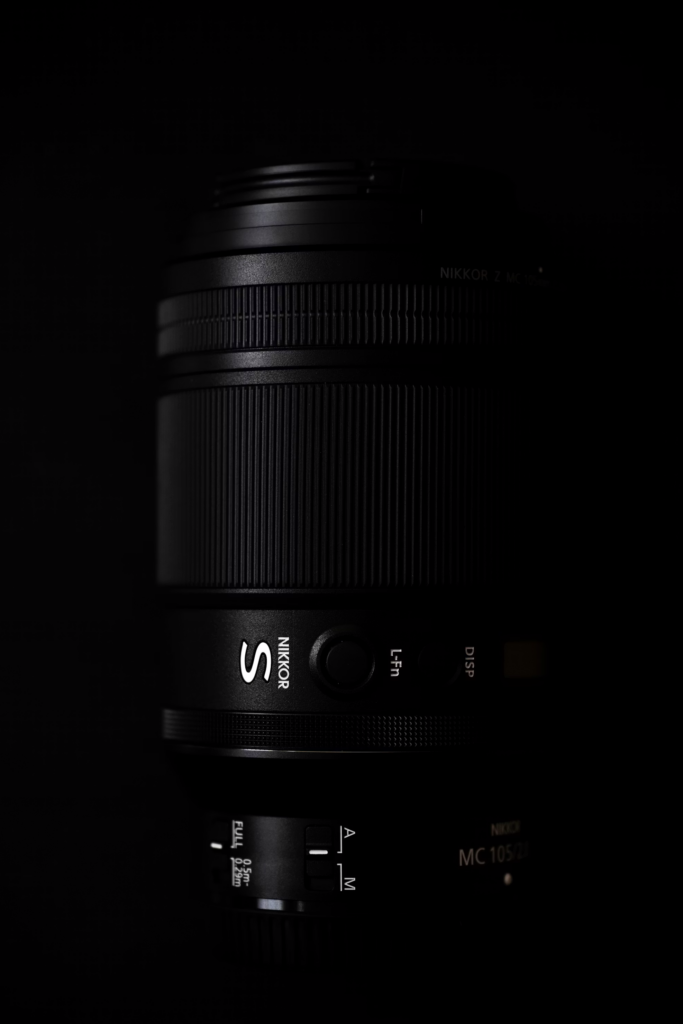
Flusser argues that most photographers are not artists; they are “Functionaries.” They simply press a button to trigger the machine’s program. In 2025, this is more true than ever. When I lift my phone to take a picture of a sunset, the AI:
- Identifies the scene (“Sunset”).
- Balances the exposure (HDR).
- Sharpens the edges.
- Boosts the saturation.
I did not make those choices. The algorithm did. I simply authorized the calculation.
The Aesthetic of “Least Resistance”

The result of this automation is a homogenization of our visual culture. We are drowning in what I call the “Aesthetic of Least Resistance.”
Look at Instagram. The images are stunningly clear, but they all look the same. They lack the “friction” of reality. In Interaction Design, we are taught to remove friction—to make things seamless. But in art, friction is essential.
Film photography was full of friction. You had to measure light. You had to focus manually. You could fail. And because you could fail, your success meant something.
Wim Wenders recently critiqued this phenomenon, noting that the inflation of images leads to a deflation of meaning [2]. When a camera cannot take a “bad” picture, the “good” picture loses its value. It becomes a commodity, not a memory.
Reframing the Approach
In my initial research plan, I considered conducting a visual audit of smartphone interfaces this week. However, as I dove into Flusser’s theories, I realized that analyzing the surface of the interface (the icons and buttons) is premature if we don’t first question the structure beneath it.
The core issue isn’t just how the buttons look, but how they shape our thinking. If modern AI cameras are designed to provide answers, my research is now shifting to understand how we can preserve the user’s ability to ask questions.
Closing Thought: The Search for Friction
We are building cameras that solve problems we didn’t have. The problem of “focus” was never just technical; it was artistic. When we remove the struggle, we remove the satisfaction.
As I continue this research, I am looking for the “sweet spot”—where the tool helps us, but doesn’t replace us. The goal isn’t to destroy the technology, but to find the human heartbeat buried underneath the algorithm.
References (IEEE)
[1] V. Flusser, Towards a Philosophy of Photography. London: Reaktion Books, 2000.
[2] W. Wenders, “The Act of Seeing,” in The Pixels of Paul Cézanne: And Reflections on Other Artists, 2018.
AI Declaration: This blog post was drafted with the assistance of an LLM to structure the theoretical analysis. The research selection, case study choice, and final arguments regarding ‘Indexicality’ are my own.
