Primary areas of interest
To continue this project, my next step is to define the primary areas of focus more clearly. By narrowing down the scope, I aim to clarify the overall goal of the project and establish a stronger foundation for the next research phase. This will include conducting interviews, initially with people in my immediate surroundings and later with travelers directly at train stations.
Problem zone train station
In 2024, six of the lowest-ranked train stations in Europe were located in Germany. According to the annual train station ranking published by the international Consumer Choice Center (CCC), the bottom six positions out of 50 evaluated stations were occupied by Bremen Hauptbahnhof, Munich-Pasing, Berlin Zoologischer Garten, Berlin-Gesundbrunnen, Berlin Ostkreuz, and Essen Hauptbahnhof. The ranking evaluates criteria such as information management, the availability of elevators and escalators, and overall accessibility (Gang, 2024). These aspects are essential for a positive user experience, yet they remain insufficiently addressed at many German train stations. As a result, Germany continues to perform poorly in European-wide comparisons, highlighting the urgent need for improvement in this area.
Fokus area
Given the scope, time constraints, and available resources of this project, it would not be realistic to redesign every aspect of a train station. Concentrating on a specific area allows for deeper analysis and more meaningful outcomes. Based on my recent observations in Hamburg and Augsburg, I identified train platforms, along with their entry and exit points, as the areas where the highest number of recurring pain points and challenges occur. Therefore, this project will primarily focus on the user experience of train platforms, while still considering the broader station context in which they are embedded.
Current status
Today, passengers can access a wide range of information about their train both before and during their journey. Prior to arrival at the station, users can consult platforms such as Bahnhof.de, which provide details about train stopping positions, carriage formations, and onboard equipment. Travelers can see where specific carriages will be positioned on the platform, including family compartments, bicycle areas, wheelchair-accessible spaces, priority seating, dining cars, first-class sections, and sleeping cars. Additional information such as the availability of air conditioning, Wi-Fi, or onboard services is also provided (DB, 2025).
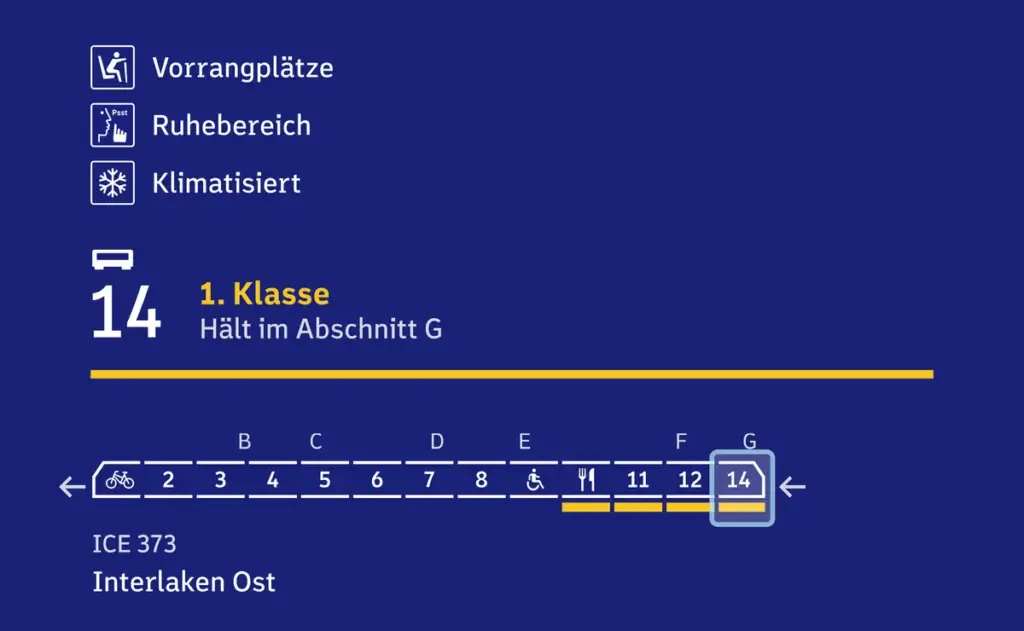
DB. (2025). See the stopping position, train formation and train equipment at a glance. Von DB: https://www.bahnhof.de/entdecken/wagenreihung abgerufen
Upon arrival at the station, further guidance is available. Large information boards in entrance areas indicate the platforms assigned to each train, while digital displays on the platforms themselves provide updates on arrival times, delays, and platform changes. This information can also be accessed via the DB Navigator app or through Deutsche Bahn’s online portals. Platform sections where trains are expected to stop are typically displayed on boards, online, or in the app. In addition, many platforms feature carriage plans that show which trains will stop there and where individual carriages will be located. However, this analog system works best for regularly scheduled trains and often fails in cases of last-minute platform changes (Wagner, 2022).
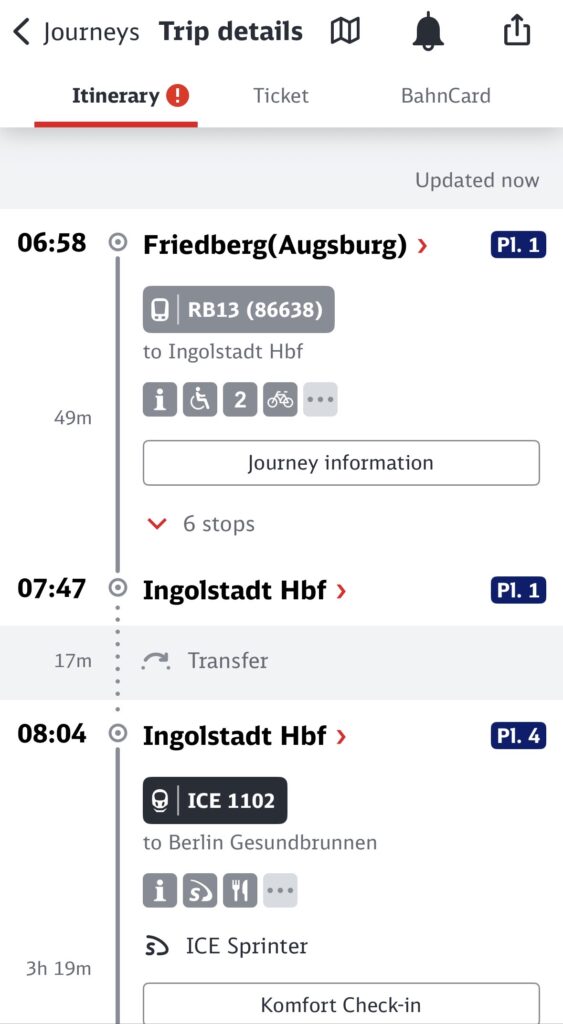
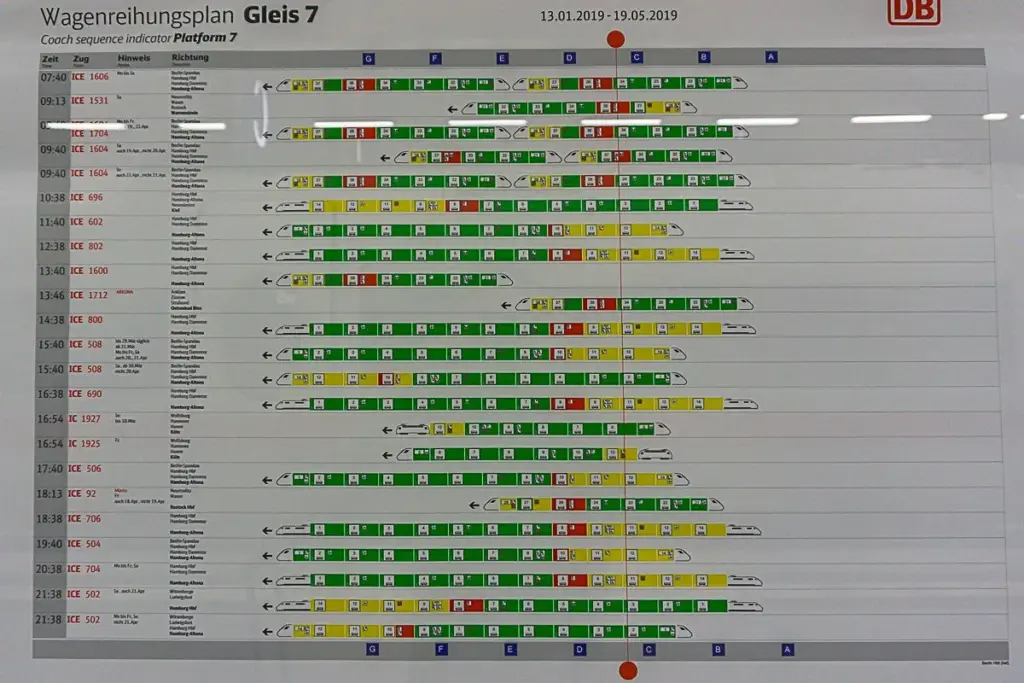
Wagner, J. B. (2022). An Easy Guide to Deutsche Bahn – Navigating German Train Travel. Von Hamburg Beyond: https://hamburgandbeyond.com/an-easy-guide-to-deutsche-bahn-navigating-german-train-travel/ abgerufen
Overall, a large amount of information is already available to help make train travel more structured and predictable. However, a major challenge is that many travelers are unaware of these resources or do not know how to use them effectively. Another issue is the inflexibility of certain systems, which can quickly become confusing or ineffective when schedules change. While digital platforms are more adaptable, they can still be outdated or incomplete. Existing information systems therefore need to be communicated more clearly and made more accessible to all users.
Information Gathered
Through this blog post, I clarified which areas of the train station I want to focus on and gained a better understanding of the current status quo at many German stations. This forms a solid foundation for the next phase of the project.
Next Steps
The next phase will involve designing and preparing surveys to be conducted in January. This includes selecting appropriate locations, defining participant groups, and developing targeted questions. Once the survey results are collected, I will combine them with the insights gathered so far and begin developing concepts aimed at improving the user experience at German train stations.
References
DB. (2025). See the stopping position, train formation and train equipment at a glance. Von DB: https://www.bahnhof.de/entdecken/wagenreihung abgerufen
Gang, M. (01. January 2024). Die sechs schlimmsten Bahnhöfe Europas sind alle in Deutschland. Von 24 Rhein : https://www.24rhein.de/leben-im-westen/verkehr/bahn-schlechtesten-bahnhoefe-europas-deutschland-ranking-bremen-hbf-berlin-essen-hbf-nrw-deutsche-92713050.html abgerufen
Wagner, J. B. (2022). An Easy Guide to Deutsche Bahn – Navigating German Train Travel. Von Hamburg Beyond: https://hamburgandbeyond.com/an-easy-guide-to-deutsche-bahn-navigating-german-train-travel/ abgerufen
