Design & Research 2 | For: Katerina Sedlackova
After spending a lot of time mapping out the “system,” I’ve finally landed on a solid plan for what this project actually is and how it works as a business. Here is the breakdown of the Photography Co-Pilot.
The Big Idea
What’s the problem?
Cameras today are too much. You either have a professional DSLR with 100 confusing menus, or a smartphone that does everything for you. This “Automation Gap” means people never actually learn how to take a real photo. They just push a button and hope the AI makes it look good.
Why should we care?
Photography is an art. If the computer does everything, the “human” part of the art dies. Plus, so many young people are buying old cameras because they want that “analog” feel, but they give up because the settings are too hard to learn. We’re losing the craft.
The Solution: An AI Co-Pilot
Think of it as a bridge. Instead of the AI fixing the photo for you, it talks to you. It looks at what you’re trying to shoot and gives you a simple 1-2-3 checklist (on your phone or in the viewfinder). It says: “To get this look, turn this physical dial to f/2.8.” You still do the work; the AI just points the way.
Who is this for?
The main users are students and hobbyists (like the Gen Z “analog” crowd). The people who will actually pay for this are the big camera brands like Nikon or Sony who want to make their gear easier for new people to use.
The Impact
We move from being “Passive Button-Pushers” to “Active Pilots.” It turns frustration into that “Aha!” moment when you finally get a manual shot right.
How does it make money?
We license the “Logic” to camera brands so they can put a “Learning Mode” in their cameras. We also have a pro version of our app for people who want even more advanced guides.
Customer Profiles
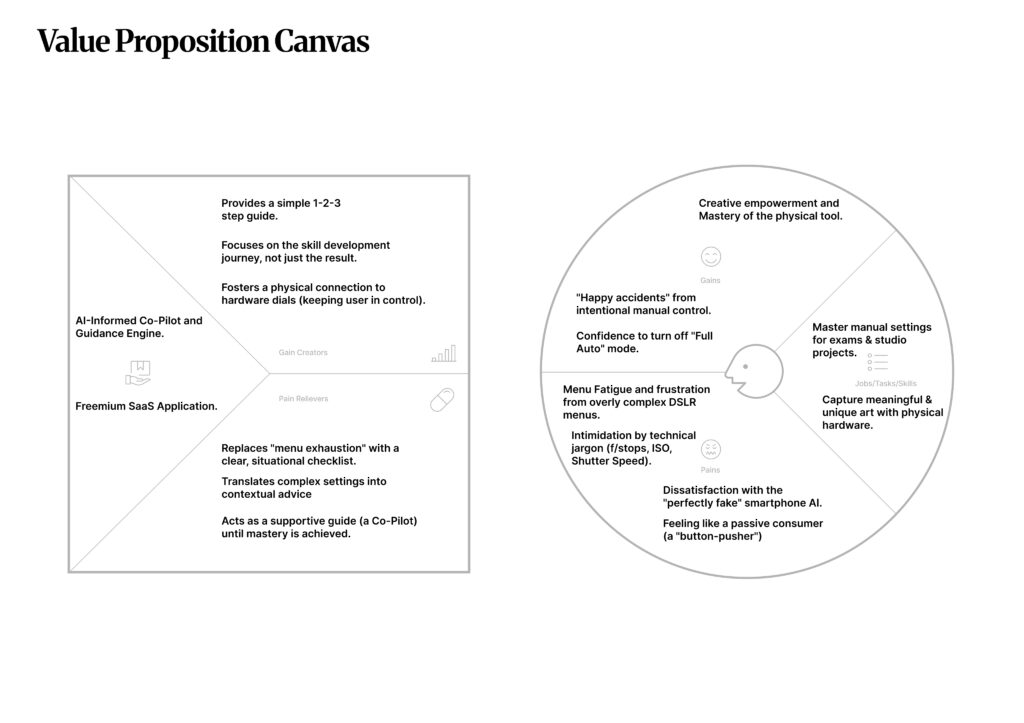
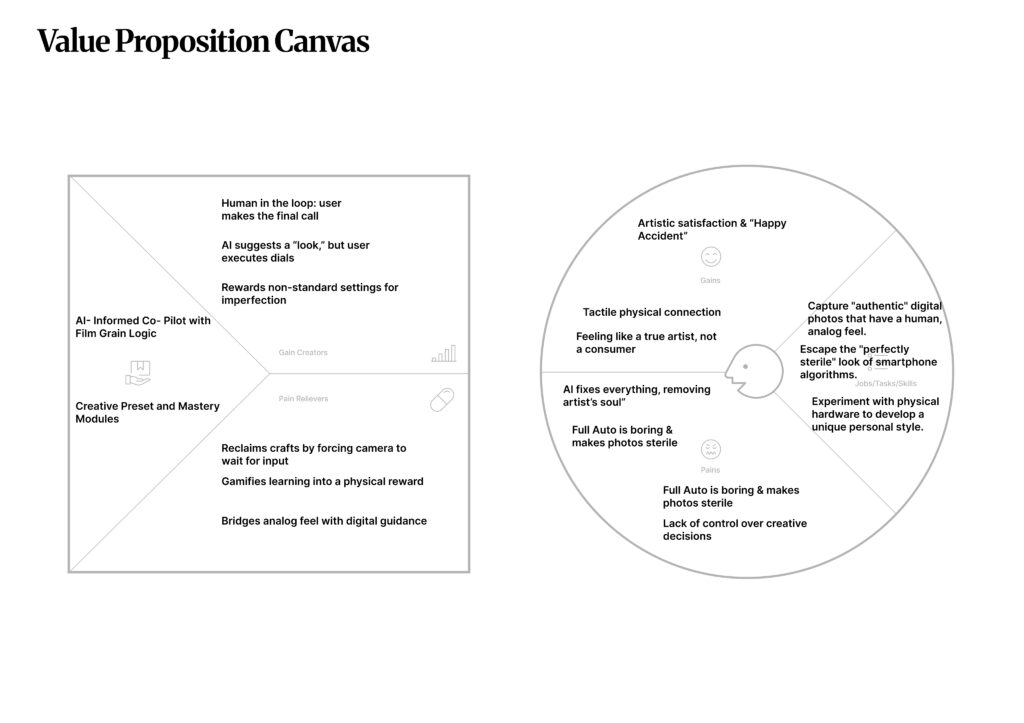
To make sure this actually works, I looked at two types of people who really need this help.
Sarah: The Student
Lukas: The Nostalgic Hobbyist
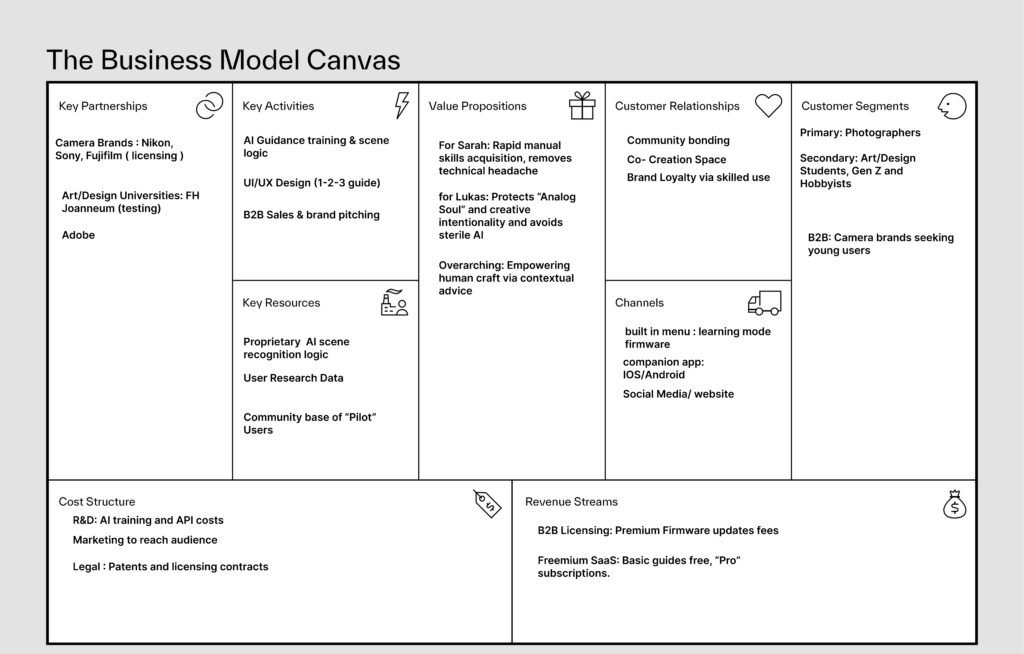
Business Model Canvas
This is the “behind-the-scenes” look at how the project stays sustainable. To make this a real-world product, I’ve mapped out a strategy that involves partnering with the big players in the industry while keeping the focus on the student community.