For my next blog post, I wanted to find out which games already combine analog and digital elements. It seemed obvious to me to search for the term “hybrid games,” but all I found were digital games that are a mixture of several game genres or a mixture of story and game. So I asked Gemini what games that are a mix of analog and digital are called, and came across the term “phygital games.”
Phygital Games
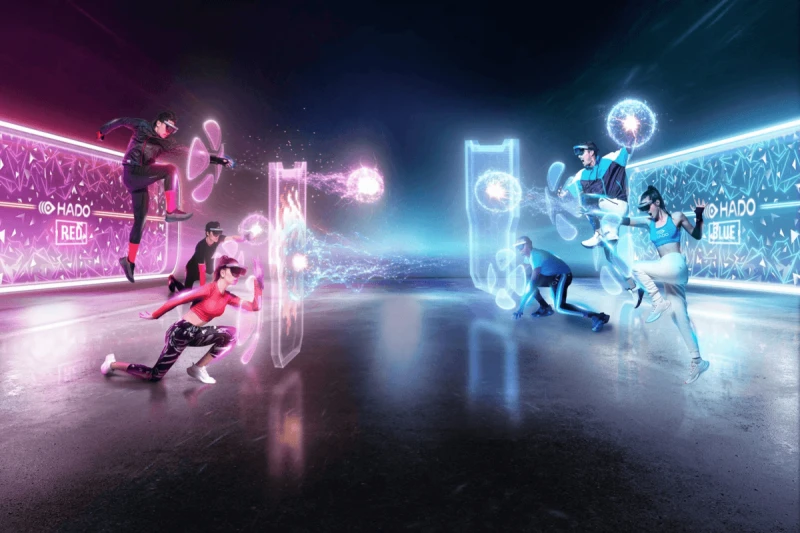
During a Google search on this topic, I came across Phygital Games of the Future, an event featuring competitions in esports and real sports. In the sport of phygital basketball, players first compete against each other on a digital basketball court in a video game and then, after a 5-minute break, play against each other on a real basketball court. I found the concept quite interesting, but I had hoped that digital and analog would happen more simultaneously and that the digital features would take the analog game to the next level – which I assumed due to quite misleading images on the website [1]. Unfortunately, this is not the case with this event, as the two worlds are separated from each other. Since this was the only approach I found to Phygital Games, I ended my research on the topic at this point and focused on the use of digital media in physical education.

Video games in physical education
This led me to an article about a university project at the Ludwigsburg University of Education in which students from various teaching disciplines worked with a primary school class at Rosensteinschule. The aim of the project was to transfer well-known video games into the real world and use them in physical education. On various project days, the games Super Mario, Pacman, SuperTuxCart, Angry Birds, Temple Run, Moorhuhn, and Townsmen were brought to life. The selection criteria for the games were their level of popularity, so that already familiar game principles could be built upon, their popularity among schoolchildren and students, as well as their design and educational potential and youth media protection requirements.
The concept was developed as follows: After selecting a suitable game, it was analyzed in terms of its underlying storyline, intention, basic activities, strategy, and communication. The use of media was then designed and planned to determine the extent to which children could be given the opportunity for creative participation and independent activity.
Use of media
To integrate digital games into the lessons, one or more digital devices were used depending on the game, including tablets, projectors, green screens, GoPro, Nintendo Labo, and Makey Makey.
For the Super Mario game, for example, a tablet was used as a panel to play sounds from the game. The children had to perform a specific movement depending on the sound and had to recognize the sounds from the game to do so.
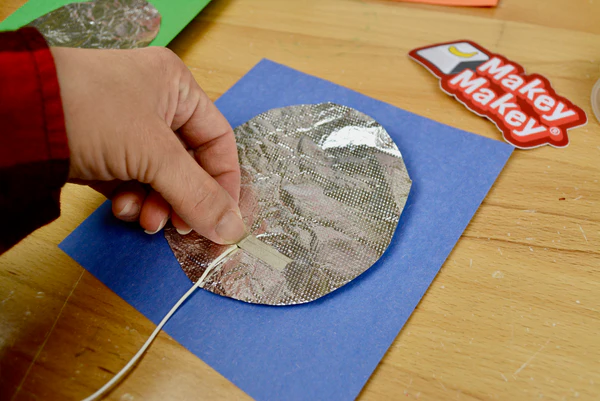
Some games used a buzzer or controller built with Makey Makey. In most cases, the game itself or a live broadcast from the current player’s GoPro was also projected onto the gym wall using a projector.
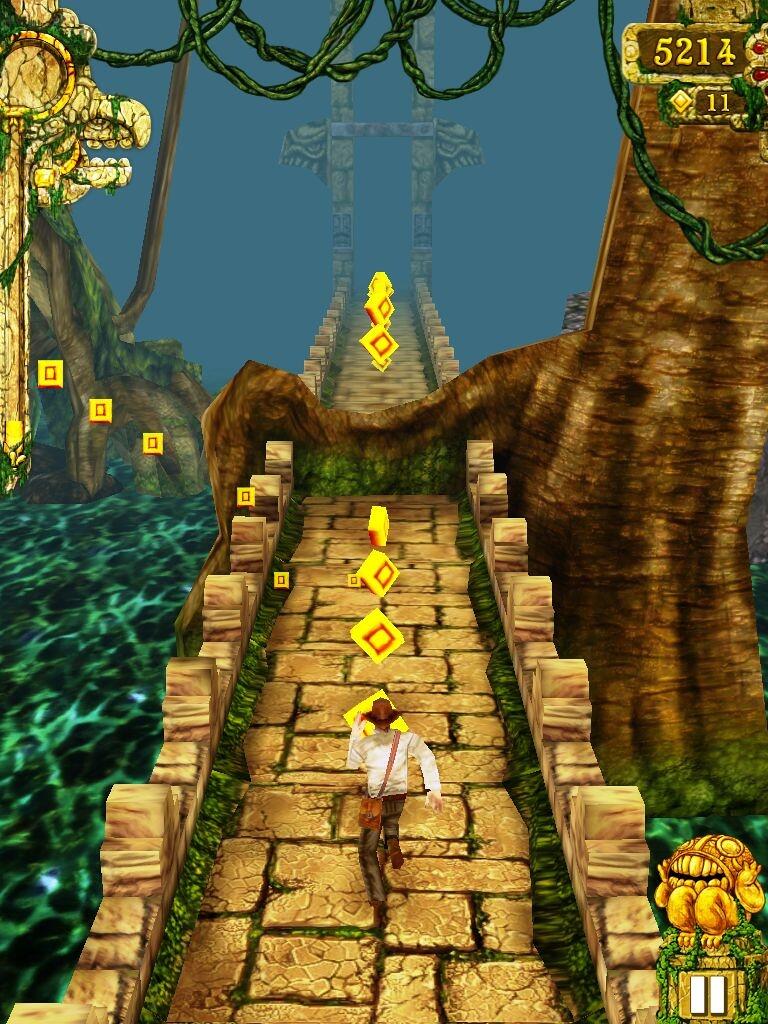
A green screen enabled immersion in the jungle world of the game Temple Run. Each student’s run was recorded and could be watched live by the other students or analyzed afterwards by the student themselves. In this game, there was a scene in which the students had to swing on a trapeze (= vine) through a fire. A still image of this scene was later printed out as a photo so that the students could take it home with them. However, the students observed that the pupils were bothered by the fact that the trapeze was visible in the photo – they had high expectations for a realistic representation of the situation. During the design phase, the students considered this circumstance to be negligible, which shows how different the expectations of pupils and students can be. [2]

Advantages of digitally supported physical education
The use of digital games in physical education opens up opportunities for immersion and involvement. They create “access to children’s inner perception (…) through the forms of expression of movement, play, storytelling, and imagination in a kind of symbolic transfer (…) of interpersonal communication” (Marquardt, Anja: Gaming im Sportunterricht, p. 107. Translated to english with DeepL Translator). Students slip into new roles, embody avatars, and identify with their character traits and strengths. This creates a new perspective that goes hand in hand with newly gained self-confidence, a strong urge to move, and new body movements. It can also help students find their identity and promote self-efficacy. For example, students observed that a rather shy student suddenly dared to climb over a high obstacle.
Digital games also make it easier to use neglected or feared sports equipment such as the trapeze or the vaulting horse. Creative reinterpretations of the equipment as a “mountain,” “coin,” or obstacle alienate the equipment and can thus alleviate students’ fears. [2]

Conclusion
I found this article particularly helpful as inspiration for the use of media, but I also enjoyed seeing that the concept was well received by the students and was able to break old patterns. I also found the principle of role-playing and the associated benefits very convincing. I wonder why I didn’t come across the article sooner.
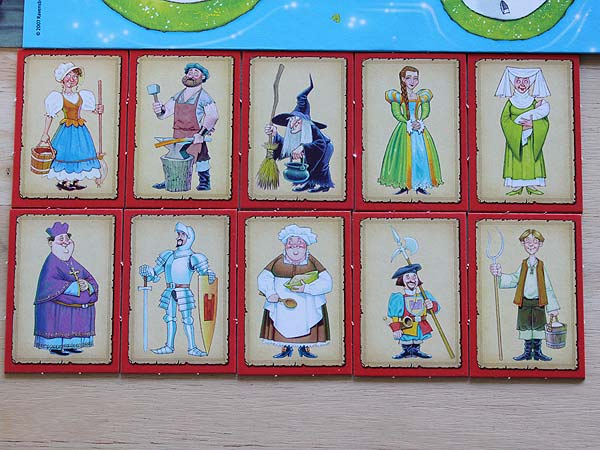
For my own concept, I could well imagine incorporating numerous sports equipment items as artifacts for building the world or the playing field, in addition to digital media, and offering students the opportunity to contribute creatively to the design of the world. Collaboration with other subjects such as art or crafts/creative design would also be conceivable. For example, students could design certain materials they need, such as the thief or food cards in the “Who did it?” game, themselves, thus giving them a more personal connection to the game.
Sources
[1] Phygital Games of the Future: Disciplines. URL: https://gofuture.games/disciplines/, last opened 09.02.2026
[2] Marquardt, Anja (2019): Gaming im Sportunterricht – virtuelle Bewegungsräume schaffen reale Bewegungsanlässe. In: Junge, Thorsten/Niesyto, Horst (Hrsg.): Digitale Medien in der Grundschullehrerbildung. Erfahrungen aus dem Projekt dileg-SL. Schriftenreihe Medienpädagogik interdisziplinär, Band 12. München: Verlag kopaed, S. 103-116.
Found under this URL: https://www.ph-ludwigsburg.de/fileadmin/phlb/hochschule/fakultaet1/erziehungswissenschaft/medienpaedagogik/12-Abgeschlossene_Projekte/dileg_SL/dileg-SL-2019-Marquardt_-_Gaming_im_Sportunterricht.pdf
Images
1) https://gofuture.games/uploads/media/20250305205658010396e8c78a06451049908879175521d/medium.webp
2) https://cdn.shopify.com/s/files/1/0162/8612/files/wireto_foil_600x600.jpg?v=1643832686
4) https://encrypted-tbn0.gstatic.com/images?q=tbn:ANd9GcSmyKITKwqVT7P4zXrPL–okZ4rOcgfsAQHpA&s
5) https://www.brettspiele-report.de/images/w/wer_wars/wer_wars_beispiel_12.jpg