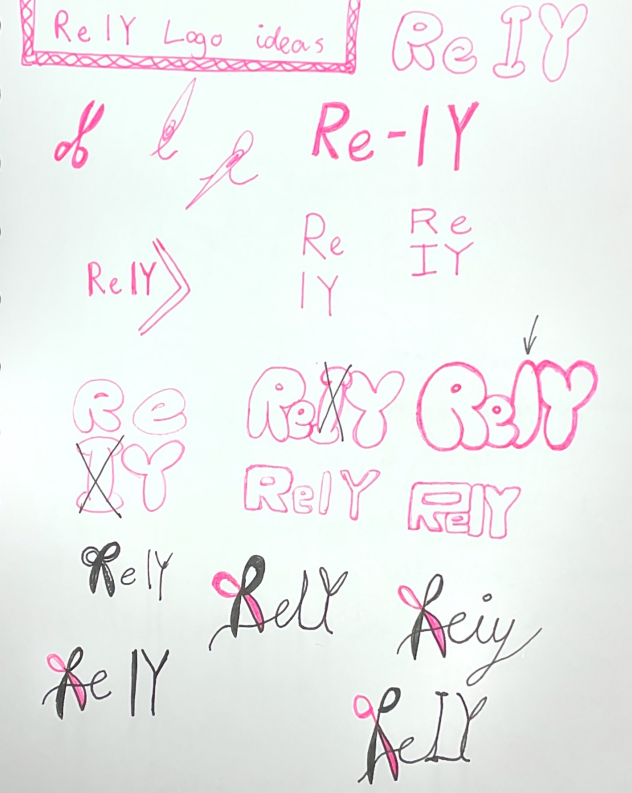
Since the last blog post, I have been working on the branding of my concept. I came up with a name for my website: ReIY. My focus has been on redesigning, reusing, and recycling materials, kind of “re-loving” your old clothes, so I wanted to include “Re” as part of the name.
The point of the website is also that you can use it as a tool to help yourself fix your problem, doing it yourself. Therefore, I thought about using the common phrase DIY (Do It Yourself). That’s how I came up with ReIY: redesign, reuse, and recycle it yourself.
I have been trying to develope the concept for ReIY and figure out what features would actually make sense for the website. And I also had the one-to-one feedback session with Birgit, which helped me think about the project from some new perspectives.
AI or not?
One of the biggest things we talked about was AI. Earlier in the project, I was thinking a lot about having AI as the main feature. being used for things like generateing custom sewing patterns based on measurements etc. While I still think that could be interesting, I started questioning whether AI really needs to be such a big part of the website.
My project is mainly about helping people redesign, reuse, and repair things they already own, and promotes sustainability. It is also about encouraging people to spend less time passively consuming content online and instead spend more time creating things themselves. Because of that, I don’t want AI to become the focus of the platform.
At the same time, AI is something people expect from digital products today, and without it I feel like the website can quickly be outcompeted by other websites. My current idea is therefore to make it an optional feature rather than the main attraction. Instead of generating lots of new content, AI could help users find relevant tutorials, patterns, and projects based on their skill level, available tools, materials, and what they are trying to make or repair.
Sources
Another thing I have been thinking about is where the content on the website should come from. At first, I imagined creating most of the tutorials myself, but after the feedback session I started exploring the idea of making the platform more community-driven.
One comparison that came up was Stack Exchange, where people can ask questions and share knowledge. I like the idea of users being able to post their own solutions, tutorials, and project results. If this were implemented, there would probably need to be some kind of review system to make sure the information is useful and trustworthy.
I have also been trying to narrow down what kinds of problems the website should help people solve. Right now, I am leaning towards focusing on common situations, such as repairing ripped pants, fixing holes in socks, altering clothes, or finding creative ways to reuse old textiles. These are things many people encounter, but often don’t know how to fix themselves.
At the moment, some features I am considering include:
- Search filters for skill level, available tools, materials, and time needed
- Sewing tutorials and repair guides
- Community posts and project sharing
- Reviews and ratings of tutorials
- Tips and tricks for making clothes last longer
- An optional AI assistant that helps users find relevant content
One thing I am still trying to figure out is how to make the website engaging without turning it into another platform that keeps people endlessly scrolling. Since my previous project focused on doomscrolling, I want ReIY to encourage people to get inspired and then actually leave the screen to start making something. Finding that balance is something I want to keep exploring as I continue developing the concept.
Overall, I feel like the project is becoming more focused. Instead of being a website about AI and sewing, it is starting to feel more like a platform that helps people care for their clothes, learn practical skills, and build a stronger connection to the things they own.