Boosting children’s self-esteem (Stefanie Stahl)

At the beginning of my research, I listed a podcast episode from the “So bin ich eben!” podcast by renowned psychologist, psychotherapist, and bestselling author Stefanie Stahl and psychologist and podcaster Lukas Klaschinski as a possible source. Since Stefanie Stahl has focused primarily on working with the inner child and building self-esteem and healthy relationships, it seemed very appropriate to me to include what she has to say on the subject.

In this episode, Stefanie Stahl and Lukas Klaschinski give tips on how to promote children’s self-esteem: not only for parents, but also for everyone else who deals with children on a daily basis. Although the episode is mainly told from the parents’ perspective, I think that much of it can also be applied to how teachers interact with children. In addition, I would like to conclude by exploring the extent to which the aspects mentioned can be incorporated into the game.

At the beginning of the episode, Stefanie once again emphasizes the importance of self-esteem for later life, describing it as the epicenter. She says it is a gift for life that adults can give to children.

The topic of the episode was inspired by an email from a listener: a mother describes how her son no longer wants to go to soccer practice because he is not as good as the other children and feels ashamed of his abilities. The mother asks for tips on how to encourage him and boost his self-esteem. Since this example is closely related to the topic of physical education, I wanted to mention it in this article.

At the beginning, the two psychologists explain that it is important to sometimes stick with something for longer in order to realize that things can change for the better and that you can achieve things. However, you shouldn’t force anything, as the child may later develop an aversion to the activity.

A concrete solution for the example situation is therefore to talk openly with the child and explain what you are concerned about (learning opportunity, seeing things through), validate the child’s feelings, and accept the child’s decision if they do not change their mind.

The following general tips are explained:

– Important: Love and secure attachment, empathy, recognizing the child’s needs -> Parents must have good access to their own feelings

– Presence: Children should not be sent to daycare in their first year of life if possible. Parents must convey security, be reliable; a repeated pattern of dashed hopes is not good for building secure attachment behavior

– Encourage the child, do not link love to expectations or performance

– Read the child’s signals, recognize and respect physical boundaries, do not overwhelm them with closeness -> Children are not at the mercy of adults; children must learn that they have the right to communicate their boundaries; adults must ensure that other adults respect their children’s boundaries

– Autonomy: the child must have the opportunity to assert their opinion sometimes, otherwise they will become conflict-averse later on and feel that there is no point in expressing their own opinions/needs at all -> if agreements are negotiated with the child, they are more likely to stick to them

– Autonomy -> Children learn that relationships can be actively shaped and are not something that must be endured, but that it is still important to find balance and set boundaries.

– Self-efficacy: Children should take on age-appropriate responsibilities, do things for themselves, and take on tasks. You have to trust children, because self-confidence is learned through the trust of others.

– Mistakes are okay and opportunities to learn. This way, children are not ashamed and develop a better tolerance for frustration.

– Encourage strengths and talents, reinforce a positive self-image, do not praise too much or pointlessly (i.e., for trivial things), because then the child will not feel taken seriously and credibility will be lacking -> so praise and recognize real strengths, focus on the process rather than the result, e.g., recognize perseverance.

– If a child is “always exceptional” because they are praised for everything, they feel that they always have to be exceptional.

– Know your own background and be self-reflective: what did I want (when I was little), how did I grow up, how did my parents influence me, and what does my child actually want? Your own issues should not be transferred to your child.

– Children need to have friends and feel like they belong.

– Be a positive role model: How do I talk about myself as a parent, how good am I at dealing with conflict, do I come across as confident, do I set good boundaries for myself, and do I stand up for my needs?

– Establish rituals to promote a positive self-image.

How can these tips be applied to physical education?

One aspect that is very important to me is that the focus should not be on the end result, i.e., the specific performance, but on the process and learning success. This also goes hand in hand with meaningful praise, i.e., not only students who perform well should be praised, but all students should receive praise for things they have done well, such as high perseverance or a high willingness to learn, or even social skills such as helpfulness. I think it would be useful to address this specifically in the game instructions for teachers, even though this knowledge should already be available to them due to their educational background. In my opinion, teachers also have a responsibility to be vigilant and recognize when a child’s physical boundaries are not being respected, and to intervene in an emergency and point this out to the children.Here is an exercise that I know from my work with young people: The children stand in two rows facing each other, a few meters apart. Then one row moves toward the other, and the children who remain standing have the task of saying “stop” when the other person gets too close to them. The distance that results is different for each child, but it is important for the children to recognize that personal space is different for everyone and must be respected. It also gives the children the opportunity to learn about their own personal space and to set boundaries in a protected environment. Another task for the teacher is to recognize when a child feels excluded and to ensure that they feel part of the group. This task can also be achieved through the game by promoting teamwork and togetherness.

I have already discussed promoting the individual strengths of each student at length in previous posts, so I don’t want to go into this aspect in greater depth here.

Students should be given the opportunity to actively participate in the design and implementation of the game. This gives them the feeling that their opinion is important and their needs are being seen. It also teaches them to do things on their own and take responsibility, which gives them a sense of self-efficacy.

Another particularly important aspect of physical education is fostering a positive culture of error. Mistakes should be allowed and given to children as learning opportunities. If an exercise is not yet being performed correctly, children should not feel that they are not good enough, but should reflect on how they can use the mistake to identify ways to improve their technique.

Finally, it occurred to me to incorporate small rituals at the beginning or end of the lesson. Ideally, these would fit seamlessly into the game concept or storyline, so that the rituals seem more natural and less imposed from outside. For example, the students could sit in a circle or in small groups and reflect on what they are particularly looking forward to today, even if it’s just small things, or what they did well today and where they have improved. I also think it would be helpful if each child said something about their neighbor that they are good at or did well today. This gives the children external validation and confirms their positive self-image. It also trains the children to see and appreciate individual strengths in others and challenges them to engage with other children with whom they might not otherwise have much to do and to perceive them in their entirety.

Sources

Stahl, Stefanie, Klaschinski, Lukas: So bin ich eben! Stefanie Stahls Psychologie-Podcast für alle “Normalgestörten”. 5 psychologische Tipps, die das Selbstwertgefühl von Kindern fördern. URL: https://open.spotify.com/episode/4AHoVP7Uplw2AJ8EbH9JLq?si=55257233ed6a4d4a, published on may 13th 2025 on Spotify

Image: https://i.scdn.co/image/ab67656300005f1faf7c3ec00e4ab2a4732c54f9

Hybrid Games

For my next blog post, I wanted to find out which games already combine analog and digital elements. It seemed obvious to me to search for the term “hybrid games,” but all I found were digital games that are a mixture of several game genres or a mixture of story and game. So I asked Gemini what games that are a mix of analog and digital are called, and came across the term “phygital games.”

Phygital Games

During a Google search on this topic, I came across Phygital Games of the Future, an event featuring competitions in esports and real sports. In the sport of phygital basketball, players first compete against each other on a digital basketball court in a video game and then, after a 5-minute break, play against each other on a real basketball court. I found the concept quite interesting, but I had hoped that digital and analog would happen more simultaneously and that the digital features would take the analog game to the next level – which I assumed due to quite misleading images on the website [1]. Unfortunately, this is not the case with this event, as the two worlds are separated from each other. Since this was the only approach I found to Phygital Games, I ended my research on the topic at this point and focused on the use of digital media in physical education.

1) Image on the Phygital Games of the Future Website

Video games in physical education

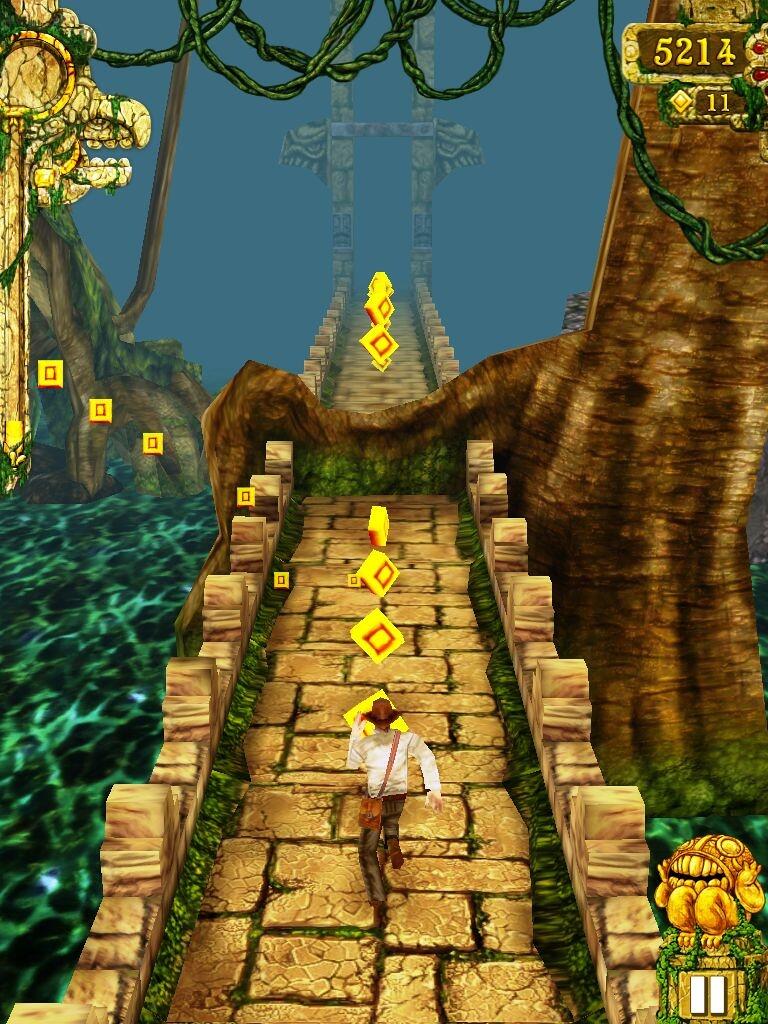
This led me to an article about a university project at the Ludwigsburg University of Education in which students from various teaching disciplines worked with a primary school class at Rosensteinschule. The aim of the project was to transfer well-known video games into the real world and use them in physical education. On various project days, the games Super Mario, Pacman, SuperTuxCart, Angry Birds, Temple Run, Moorhuhn, and Townsmen were brought to life. The selection criteria for the games were their level of popularity, so that already familiar game principles could be built upon, their popularity among schoolchildren and students, as well as their design and educational potential and youth media protection requirements.

The concept was developed as follows: After selecting a suitable game, it was analyzed in terms of its underlying storyline, intention, basic activities, strategy, and communication. The use of media was then designed and planned to determine the extent to which children could be given the opportunity for creative participation and independent activity.

Use of media

To integrate digital games into the lessons, one or more digital devices were used depending on the game, including tablets, projectors, green screens, GoPro, Nintendo Labo, and Makey Makey.

For the Super Mario game, for example, a tablet was used as a panel to play sounds from the game. The children had to perform a specific movement depending on the sound and had to recognize the sounds from the game to do so.

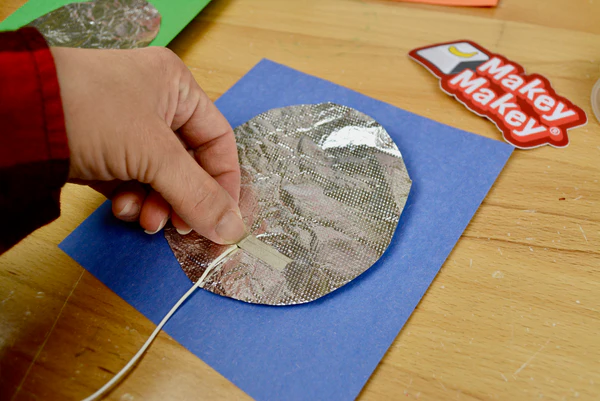
Some games used a buzzer or controller built with Makey Makey. In most cases, the game itself or a live broadcast from the current player’s GoPro was also projected onto the gym wall using a projector.

2) Building a buzzer with Makey Makey

A green screen enabled immersion in the jungle world of the game Temple Run. Each student’s run was recorded and could be watched live by the other students or analyzed afterwards by the student themselves. In this game, there was a scene in which the students had to swing on a trapeze (= vine) through a fire. A still image of this scene was later printed out as a photo so that the students could take it home with them. However, the students observed that the pupils were bothered by the fact that the trapeze was visible in the photo – they had high expectations for a realistic representation of the situation. During the design phase, the students considered this circumstance to be negligible, which shows how different the expectations of pupils and students can be. [2]

3) Jungle world in Temple Run

Advantages of digitally supported physical education

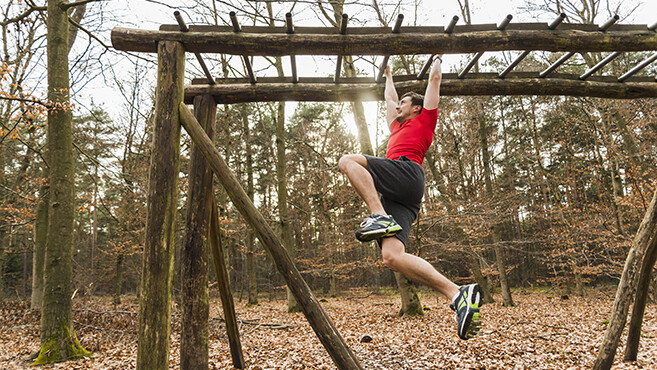
The use of digital games in physical education opens up opportunities for immersion and involvement. They create “access to children’s inner perception (…) through the forms of expression of movement, play, storytelling, and imagination in a kind of symbolic transfer (…) of interpersonal communication” (Marquardt, Anja: Gaming im Sportunterricht, p. 107. Translated to english with DeepL Translator). Students slip into new roles, embody avatars, and identify with their character traits and strengths. This creates a new perspective that goes hand in hand with newly gained self-confidence, a strong urge to move, and new body movements. It can also help students find their identity and promote self-efficacy. For example, students observed that a rather shy student suddenly dared to climb over a high obstacle.

Digital games also make it easier to use neglected or feared sports equipment such as the trapeze or the vaulting horse. Creative reinterpretations of the equipment as a “mountain,” “coin,” or obstacle alienate the equipment and can thus alleviate students’ fears. [2]

4) Student climbing over an obstacle

Conclusion

I found this article particularly helpful as inspiration for the use of media, but I also enjoyed seeing that the concept was well received by the students and was able to break old patterns. I also found the principle of role-playing and the associated benefits very convincing. I wonder why I didn’t come across the article sooner.

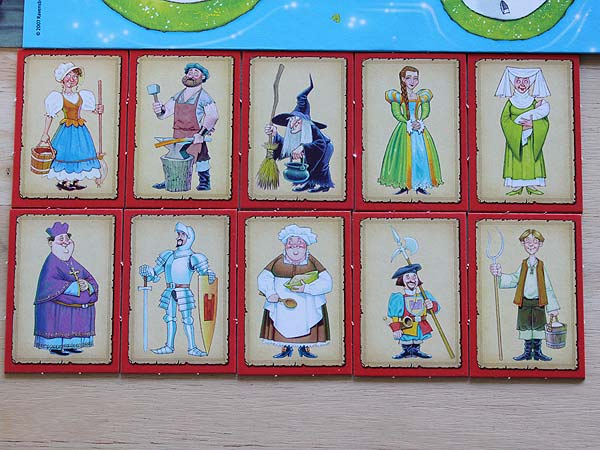
For my own concept, I could well imagine incorporating numerous sports equipment items as artifacts for building the world or the playing field, in addition to digital media, and offering students the opportunity to contribute creatively to the design of the world. Collaboration with other subjects such as art or crafts/creative design would also be conceivable. For example, students could design certain materials they need, such as the thief or food cards in the “Who did it?” game, themselves, thus giving them a more personal connection to the game.

5) Thief cards in “Who did it?” (German: Wer war’s?)

Sources

[1] Phygital Games of the Future: Disciplines. URL: https://gofuture.games/disciplines/, last opened 09.02.2026

[2] Marquardt, Anja (2019): Gaming im Sportunterricht – virtuelle Bewegungsräume schaffen reale Bewegungsanlässe. In: Junge, Thorsten/Niesyto, Horst (Hrsg.): Digitale Medien in der Grundschullehrerbildung. Erfahrungen aus dem Projekt dileg-SL. Schriftenreihe Medienpädagogik interdisziplinär, Band 12. München: Verlag kopaed, S. 103-116.
Found under this URL: https://www.ph-ludwigsburg.de/fileadmin/phlb/hochschule/fakultaet1/erziehungswissenschaft/medienpaedagogik/12-Abgeschlossene_Projekte/dileg_SL/dileg-SL-2019-Marquardt_-_Gaming_im_Sportunterricht.pdf

Images

1) https://gofuture.games/uploads/media/20250305205658010396e8c78a06451049908879175521d/medium.webp

2) https://cdn.shopify.com/s/files/1/0162/8612/files/wireto_foil_600x600.jpg?v=1643832686

3) https://heise.cloudimg.io/v7/_www-heise-de_/download/media/temple-run-93154/temple-run-1_1-1-20.jpg?org_if_sml=1&q=75&width=998

4) https://encrypted-tbn0.gstatic.com/images?q=tbn:ANd9GcSmyKITKwqVT7P4zXrPL–okZ4rOcgfsAQHpA&s

5) https://www.brettspiele-report.de/images/w/wer_wars/wer_wars_beispiel_12.jpg

Forms of interaction

In order to better understand the interactions that take place in the game and in class, I examined interaction on a theoretical level and initially focused my research primarily on social interaction. Apart from the findings summarized below, I also looked at the principle of re-enactment or scenic understanding by Alfred Lorenzer and the associated transference and countertransference. However, due to its lack of relevance to the topic of physical education, I will refrain from elaborating on my findings in this blog article.

Forms of interaction

“Interaction (from Latin inter ‘between’ and actio ‘activity’, ‘action’) refers to the mutual influence of actors or systemsSocial interaction.” (Wikipedia: Interaktion. URL: https://de.wikipedia.org/wiki/Interaktion, last opened 07.02.2026)

Social Interaction

“Social interaction refers to processes of mutual influence, e.g., through communication and social reciprocal exchange relationships between individuals and social groups (social influence), as well as the resulting change in, for example, behaviors and attitudes (attitude change).” (Wikipedia: Interaktion. URL: https://de.wikipedia.org/wiki/Soziale_Interaktion, last opened 07.02.2026)

The term communication is sometimes used as a synonym for social interaction, but communication can also be one-sided, i.e., only from the sender to the receiver, whereas interaction always involves both parties. It therefore involves a response from the receiver to the content sent or parts thereof. Interaction can therefore be described as a symmetrical process and communication as either a symmetrical or asymmetrical process. [1]

Theme-centered interaction according to Ruth Cohn

Thematic-centered interaction (TCI) is a model for working in groups that was developed in the mid-1950s by American psychoanalyst and psychologist Ruth Cohn and therapists Norman Liberman, Yitzchak Zieman, and other representatives of humanistic psychology. Its goal is to promote social learning, personal development, and progress in the subject area [2]. It is used in the fields of education, leadership, social work, counseling, and social engagement. [3]

“TCI was developed against the theoretical backdrop of psychoanalysis, group therapy, and humanistic psychology, and takes into account experiences from Gestalt therapy and group dynamics.” (Wikipedia: Themenzentrierte Interaktion. URL: https://de.wikipedia.org/wiki/Themenzentrierte_Interaktion, last opened 08.02.2026)

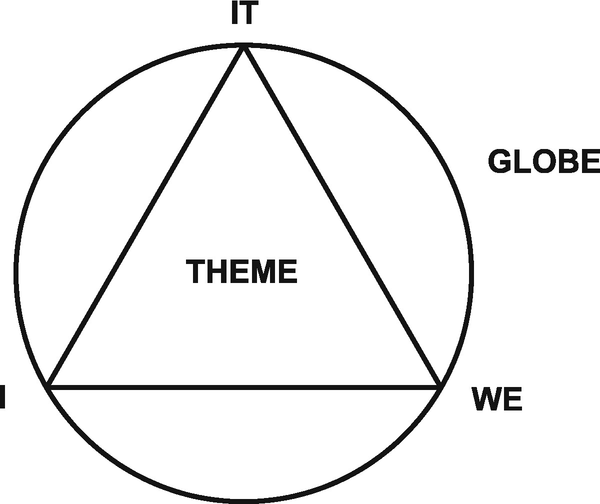
According to theme-centered interaction, there are four factors that influence interaction: the individuals (I), their relationships (we), the shared task (it), and the environment (globe). For successful interaction, it is essential that these factors are in balance. [3]

TCI is also based on a humanistic worldview that can be formulated in three axioms:

“1. Human beings are psycho-biological entities. They are also part of the universe. They are therefore both autonomous and interdependent. The more aware individuals are of their interdependence with everyone and everything, the greater their autonomy.

2. Respect is due to all living things and their becoming (and passing away). Respect for growth requires evaluative decisions. The humane is valuable, the inhuman threatens value.

3. Free decision-making takes place within conditioning internal and external boundaries; expansion of these boundaries is possible.”

(Ruth Cohn Institut: Themenzentrierte Interaktion. Werte und Menschenbild. URL: https://ruth-cohn-institute.org/themenzentrierte-interaktion-tzi/, last opened 08.02.2026)

Another key aspect of theme-centered interaction is that there is a theme that sets the goal for the group and is formulated in such a way that all group members can identify with it. The group leader has a moderating role, but is also a participant, so that cooperation on an equal footing can develop. [3]

The two postulates of TCI:

“1. The chairperson postulate: Lead yourself—become aware of your inner and outer reality, use your senses, make decisions, and take responsibility.

2. The disturbance postulate: Disturbances take precedence – obstacles, concerns, and conflicts require attention and should be taken seriously and dealt with so that the group remains capable of working and learning.”

(Ruth Cohn Institut: Themenzentrierte Interaktion. Postulate. URL: https://ruth-cohn-institute.org/themenzentrierte-interaktion-tzi/, last opened 08.02.2026)

Furthermore, the following rules are formulated in TCI:

1. Represent yourself in your statements; speak using “I” rather than ‘we’ or “one.”
2. When you ask a question, explain why you are asking and what your question means to you. Express yourself and avoid interviewing.
3. Be authentic and selective in your communications!
4. Refrain from interpreting others. Instead, express your personal reactions.
5. Be cautious with generalizations.
6. When you say something about another person, also say what it means to you.
7. Side conversations take precedence. They are disruptive and usually important.
8. Only one person at a time, please!

(Ruth Cohn Institut: Themenzentrierte Interaktion. Hilfsregeln. URL: https://ruth-cohn-institute.org/themenzentrierte-interaktion-tzi/, last opened 08.02.2026)

Interaction and pedagogy

Interaction serves to socialize individuals and plays a major role in psychosocial development. In social situations, skills such as role distance, empathy, tolerance of ambiguity, and identity representation can be acquired. In an educational context, a distinction is made between actions among peers and interaction between children and adults. Adults should create opportunities for children to interact. [1]

Sources

[1] Wikipedia: Interaktion. URL: https://de.wikipedia.org/wiki/Soziale_Interaktion, last opened 07.02.2026

[2] Wikipedia: Themenzentrierte Interaktion. URL: https://de.wikipedia.org/wiki/Themenzentrierte_Interaktion, last opened 08.02.2026

[3] Ruth Cohn Institut: Themenzentrierte Interaktion. URL: https://ruth-cohn-institute.org/themenzentrierte-interaktion-tzi/, last opened 08.02.2026

Image: https://media.springernature.com/lw685/springer-static/image/chp%3A10.1007%2F978-3-030-01048-5_2/MediaObjects/460965_1_En_2_Fig1_HTML.png

Who Was It?

Another popular board game is “Who Was It?”, in which players must search a castle for a magical ring that has been stolen by one of the castle’s inhabitants. Only the magical ring can save the kingdom from the evil wizard, who will reach the castle at 6 p.m. With the help of an interactive treasure chest, which also lets time run down and puts the players under pressure, the animals can be questioned as witnesses. Each animal demands a specific type of food that the players must find in the castle. Once they have found the food, they can give it to the animal, which then provides a clue in return, such as: “The thief is wearing black shoes.” In this way, the castle inhabitants who are not suspects can gradually be eliminated.

The game is made more challenging by a ghost that moves from room to room and chases the players back to the children’s bedroom, where they must start over, as well as by trapdoors, failed magic spells, and a thieving raven that steals food.

If the thief is caught before time runs out, the players can open the thief’s chest and the kingdom is saved.

Why is “Who Was It?” so well suited for physical education classes?

It requires a high level of cooperation and communication: players must coordinate with one another about which animals have already been questioned, in which rooms keys or food are hidden, and who can be ruled out as the thief. In addition, players do not compete against each other but work together toward a common goal: saving the kingdom. The time frame is particularly suitable for PE lessons, as the length of the game can be adjusted individually. The number of castle inhabitants and animals can also be adapted. In the original game, there are three different difficulty levels, which can be selected according to the students’ age and transferred to the real-life version of the game.

How the game could be adapted for physical education:

The animals or rooms of the castle are distributed across different stations in the gym or on the sports field. Simply running back and forth between the stations already gets the students moving. To perform actions such as searching, feeding, or asking, physical exercises must be completed. These could be detected by a Kinect sensor, which would then trigger the corresponding action in the interface. For this, each station would need a sensor and a device that enables interaction and provides audio feedback. At a central station, the food items are stored and the clues about the thief are collected.

Approach 1.1: The Chaos Game

The Chaos Game is popular in youth work in German-speaking countries because it combines elements such as movement, team spirit, and creativity.

How the game works: The players are divided into several groups of 4-5 people. At the beginning of the game, they have the task of making a game piece from at least 3 objects they have found. Once this is on the playing field, they can roll the dice. The numbers 1 to 40 are hidden on small stickers in a predefined area (alternatively, depending on the desired duration of the game, the numbers 1 to 30 or 1 to 50 can also be hidden. The level of difficulty can be influenced by the choice of hiding places). There are 40 squares on the game board. The players have the task of finding the number that is on their current square. Once they have found the number, they must tell the jury where it is hidden. This statement is checked against a list of hiding places. If the statement is correct, the players are given a task that they must complete in order to be allowed to roll the dice again. These tasks are usually creative tasks, such as performing a short play, building a human pyramid, writing a poem on a specific topic, or drawing a portrait of the jury. The tasks could be modified in physical education classes so that they mainly promote physical activity. For example, students could be asked to fetch five orange objects from the other end of the sports field, perform a choreographed dance, or do a handstand. They could also be sent to stations where they have to practice on the high bar or do the long jump, for example.

The group that reaches the goal first wins.

This approach could very easily be implemented in a similar way, but here too the question arises as to how the exercises could be monitored.

https://blogger.googleusercontent.com/img/b/R29vZ2xl/AVvXsEgVw54wZBjF8QQIJGUCe4yW0_0AkXsvDVyFbKmePsfQ_kWOGOXK71oG1WKIPUBzJw-jOWPmkne9oc2j1ByWZ5XdqHiLg7u8zBOfuntkqftp5u9oqfHazV7fJrENsA2vBF1S2nuWBSIZ3a3Y/s1600/chaosspielwebsite.jpg

What alternatives could be offered in physical education classes?

Gamification

Definition:

Gamification is the transfer of game-like elements and processes to non-game contexts with the aim of changing behavior and increasing motivation among users.

https://wirtschaftslexikon.gabler.de/definition/gamification-53874

Classic, highly performance-oriented games in physical education, such as dodgeball or Brennball, could be replaced by decentralized group games. In traditional games of this kind, individual students are often the center of attention for the entire class, which can lead to embarrassment and feelings of shame. Games in which many actions take place simultaneously and attention is distributed among several groups are more suitable. This reduces the focus on the individual and promotes a more relaxed, inclusive playing situation.

Approach 1: A sports game

How can athletic performance be integrated into a game? Can principles from well-known board games be transferred to real life? Which games are particularly suitable for physical education because they promote physical activity?

Settlers of Catan:

About Settlers of Catan:

Settlers of Catan is one of the most popular board games from the 1990s and was developed by the german game designer Klaus Teubner.

“Klaus Teuber (1952–2023) was one of the most successful game designers in the world. His many award-winning games have thrilled millions of people around the globe. His most successful game was first released in 1995: CATAN – The Game, which won the Game of the Year award in the same year. With this game, he shaped the genre of “German board games.” The game has now been translated into over 40 languages and is sold in around 70 countries.”

https://www.catan.de/sites/default/files/2025-03/4002051684655_CAT_NE_Basis34_Manual_DE_web.pdf

Settlers of Catan could be brought to the sports field. The basic principle is that the students are divided into groups and play against each other. The aim of the game is to build a city/settlement. By performing athletic tasks/exercises, the students can acquire raw materials (e.g., high jump to win ore) and exchange them for buildings or infrastructure elements at the building authority. Each building is worth a certain number of victory points, which are added up at the end of the game. There could also be a resource station where quiz questions about sports are asked, which could be used to educate students about exercise and health, for example.

The following questions arise when implementing the game in physical education classes:

What could the stations look like?
There is only one teacher, which means that the stations cannot be supervised in person. How can the stations be implemented digitally so that all important functions are fulfilled?

What tasks do the raw material stations need to fulfill?
Explain the rules and scoring system, act as referee, count points, distribute raw materials.
To do this, the raw material cards must be digitized. Each group must have an “account” where the number of raw materials acquired is stored. This account must be readable at the building authority.

Is there a combat zone?
The raw materials must be transported through a combat zone where students can be attacked by students from opposing teams. A successful attack results in a confrontation. The winner receives/keeps the raw materials.

What equipment will be used? What analog elements might there be?

Is there an overview map that can be shown using a projector?
This would allow each group to position themselves strategically on the playing field at the start. This could be near certain resource stations, for example.

What is the best way to divide the groups? Randomly or according to performance (mixed teams)?

What exercises can be implemented as stations?
The stations should ideally be spread across the sports field. Tasks that can be performed alone are suitable, such as high jump, long jump, long throw, sprinting, somersaults, etc.

How can the performance of the exercises be monitored?

Why is Settlers of Catan suitable for sports education?

Settlers of Catan encourages individual action and interaction among students. They must communicate with each other, reach agreements, and find solutions together, rather than competing solely in direct performance comparisons. This strengthens social skills and reduces social pressure. Many actions take place simultaneously. There is no permanent focus on individual players, as is often the case in classic competitive games. This makes weaker or insecure students feel more confident, which reduces feelings of shame and increases their willingness to participate. Collecting resources, achieving intermediate goals, and visible progress ensure a high level of intrinsic motivation. In physical education, movement tasks can be linked to these game mechanics so that physical activity is experienced not as a performance requirement but as part of a meaningful, playful overall concept.

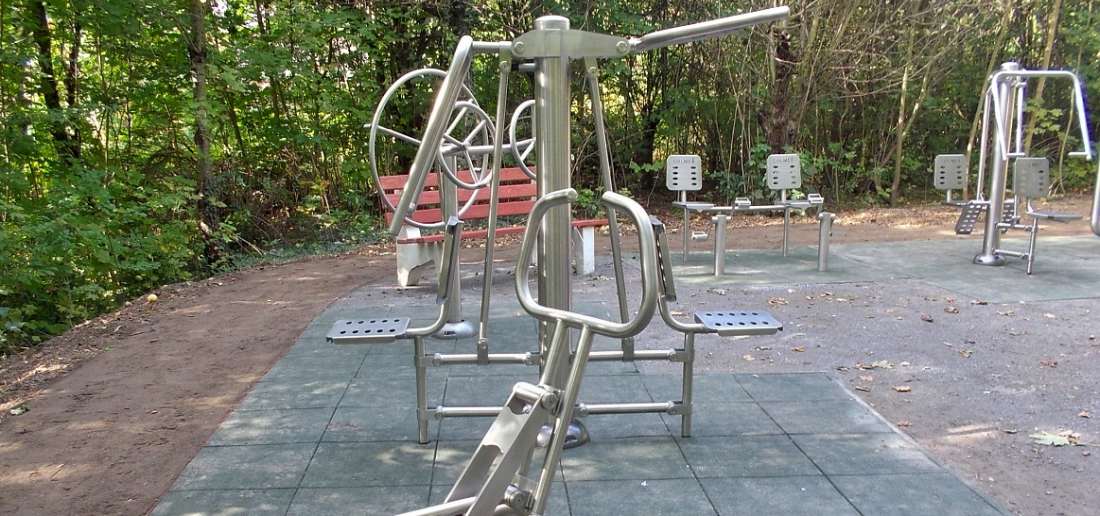
The Trimm-Dich movement as an example for successfull sport campaign

The Trimm-Dich movement was launched on 16 March 1970 as a campaign to encourage the general public to take up more physical activity with the slogan ‘Trimm Dich durch Sport’ (Get fit through sport). Jürgen Palm, long-time managing director of popular sports at the DSB, and sports physician Wildor Hollmann were particularly involved in this initiative. After the economic miracle, a prosperous society had established itself in Germany, in which obesity and cardiovascular diseases were on the rise. The aim was to counteract this situation through sport and exercise. Until then, sport had been strongly performance-oriented and was only practised in the context of competitions. The Trimm-Dich campaign succeeded in establishing popular sport. Older people, overweight people and less able-bodied people were also encouraged to exercise, and sport became a leisure activity for the first time. Within a few years, 9 million citizens of the Federal Republic of Germany were encouraged to take up active sports.

Why it was so successfull

The campaign’s great success can be attributed to the fact that it perfectly captured the spirit of the times. The 1972 Olympic Games in Munich sparked widespread enthusiasm for sport among the general public and contributed to the success of the Trimm-Dich movement. In addition, Germans had more free time available due to the reduction in working hours, which meant that a general change in lifestyle took place. The campaign was known to 94% of the total population and 99% of young people.

In addition to TV commercials, there was also a mascot, ‘Trimmy’, who was shown in various outfits and participating in a wide range of sports. To this day, Trimmy is the mascot of the DOSB, the German Olympic Sports Confederation.

The longterm effects of the campaign

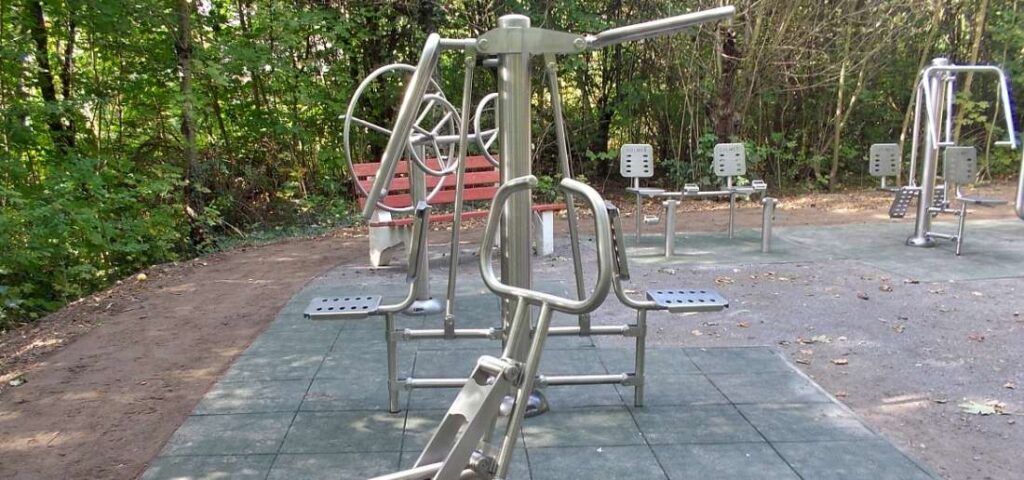
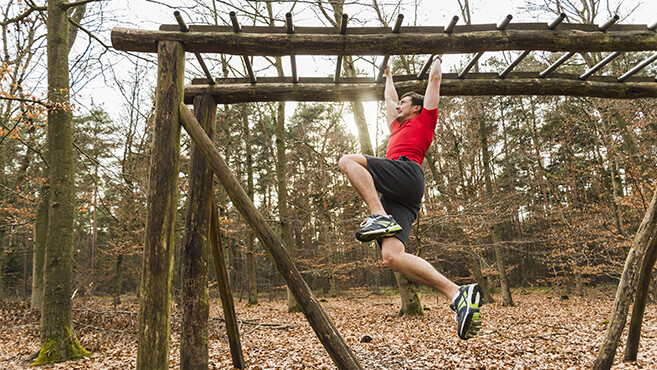
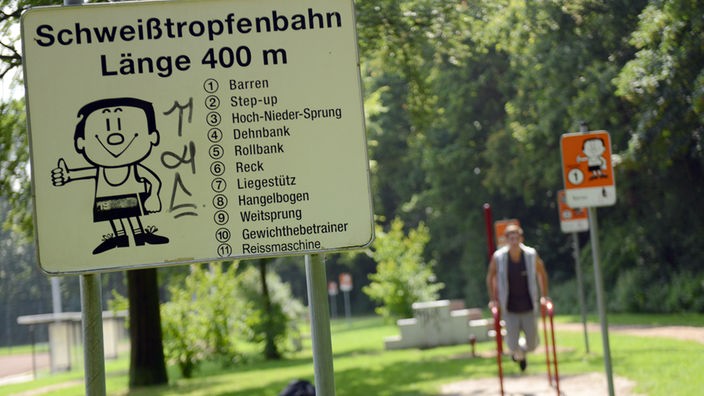
The most visible effects of Trimm-Dich were the numerous fitness trails that were built in many places in the 1970s, modelled on the Swiss Vitaparcours: in Germany, there were around 1,500 Trimm-Dich facilities in the 1980s. At the same time, the first informal running groups were formed, which met outside of sports clubs to go running. The Trimm-Dich campaign initially caused concern among sports clubs, as they feared a decline in membership numbers. In the long term, however, the campaign led to clubs increasingly focusing on popular sports. They changed their programmes and set up non-competitive activities for the general public, families, children and women, which were geared solely towards exercise in leisure time. The Trimm-Dich movement had a significant impact on sports clubs as we know them today and was the catalyst for the fitness wave that continues to this day.

Sources

Image Sources

Analysis and summary of a scientific review on the relation between sports and psychological and social well-being

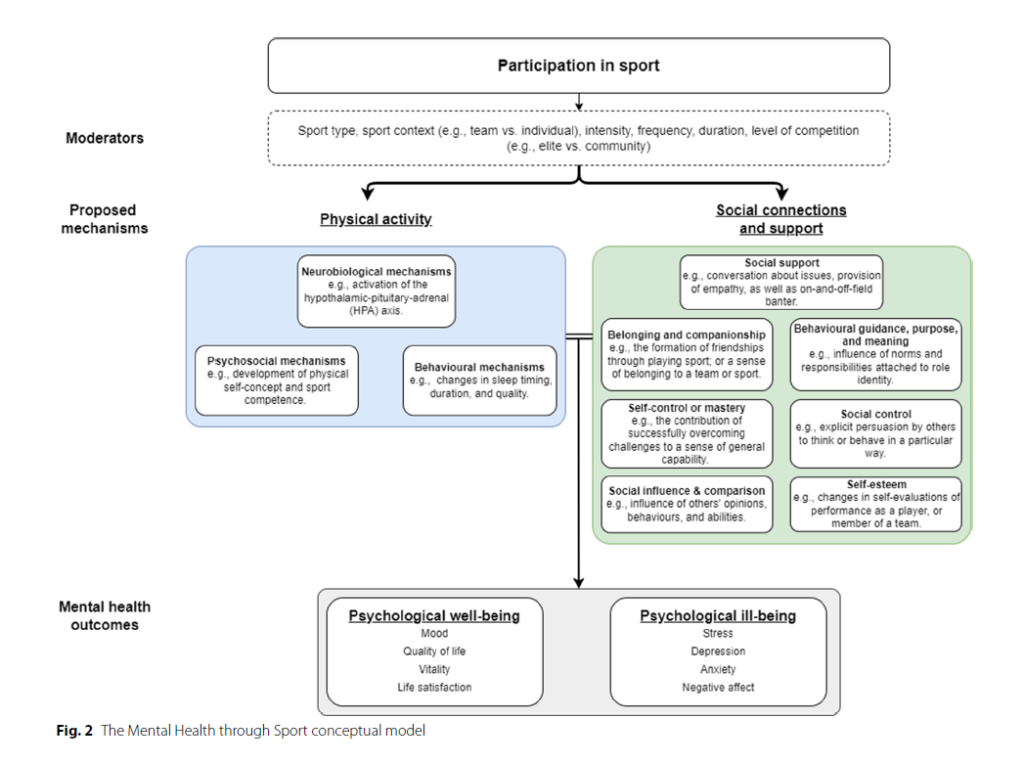
For proving my point of the impact of sports on mental health I read a scientific review called “The impact of sports participation on mental health and social outcomes in adults: a systematic review and the ‘Mental Health through Sport’ conceptual model“ which was conducted by Narelle Eather, Levi Wade, Aurélie Pankowiak and Rochelle Eime in 2023. The review screened studies that were published between 2012 and March 2020 to find out the relation between sport participation and mental health and social outcomes.

This is how the term mental health is defined in the review:

According to the World Health Organization, mental health refers to a state of well-being and effective functioning in which an individual realizes his or her own abilities, is resilient to the stresses of life, and is able to make a positive contribution to his or her community. Mental health covers three main components, including psychological, emotional and social health. Further, psychological health has two distinct indicators, psychological well-being (e.g., selfesteem and quality of life) and psychological ill-being (e.g., pre-clinical psychological states such as psychological difficulties and high levels of stress). Emotional well-being describes how an individual feels about themselves (including life satisfaction, interest in life, loneliness, and happiness); and social well–being includes an individual’s contribution to, and integration in society.

The review showed that adults who participate in sport activities on a regular basis have better mental health conditions: there was shown to be a strong relation to psychological well-being, like e.g. higher self-esteem and life satisfaction, and lower psychological ill-being, like e.g. a lower level of depression, anxiety and stress. Furthermore, sports can have a positive influence on social factors such as improved self-control, pro-social behaviour, interpersonal communication anda sense of belonging. Although this review researched the impact of sports on adults, it can still provide useful insights for the topic of sports education in schools and can be transferred to youths.

Specific outcomes of the review

Another interesting finding is that the positive effects are not as strong when it comes to elite-level sport: in contrary to community sport it can cause higher levels of psychological distress. Research in this field indicates that this fact is related to the high mental and physical demands on pro-athletes. The effects of the pressure to perform prove my point of the negative impact that performance oriented sports education can have on the students mental well-being.

Summary of findings in the review:

  • the positive effects of participating in sports even exceed the effects of other leisure-time activities or recreational activities
  • the effects occur in all different kinds of sports and across different life stages and sub-populations
  • there is a strong tendency for youths to drop out of community sports during adolescence, which leads to many people missing out on the positive effects of sports on mental well- being
  • over the past 25 years there was a consistently high rate of around 10% of adults affected by mental illness
  • especially among young adults there is a high level of loneliness and social isolation
  • improved vitality through sport participation
  • if adults participate in sports they chose themselves and that they enjoy, there is a relation between the intensity of the sports participation and the amount of mental health benefits
  • social factor of sports (social support, peer bonding) as an explanation for the benefits on mental and social health
  • evidence shows that participation in sports in adolescence and young adulthood prevent depression, anxiety and stress longterm
  • aspects that impact the improvement of psychological well-being:
    • psychological mechanisms: development of self-efficacy, opportunity for mastery, changes in self-perceptions, the development of independence, and for interaction with the environment
    • behavioural mechanisms: changes in sleep duration, self-regulation and coping skills
    • social mechanisms: social influence/social comparison; social control; role-based purpose and meaning (mattering); self-esteem; sense of control; belonging and companionship; and perceived support availability
  • improved perception of capability or value (within a team) -> improved self-esteem
  • self-efficacy: learning new skills, overcome challenges, self-control mastery -> confidence in the ability to cope with general life challenges

Deductions based on those findings:

  • It is important that one has the possibility to choose sports that they enjoy
  • Social bonding is an important  factor for unfolding the potential of sports. If social bonding is prevented by performance pressure, unhealthy competition and comparison, the potential of sports can not be reached
  • For students to learn new skills and experience self-efficacy and mastery, sports education needs to be tailored to the student’s individual capabilities and needs

Sources

Eather, Narelle; Wade, Levi; Pankowiak, Aurélie; Eime, Rochelle: The impact of sports participation on mental health and social outcomes in adults: a systematic review and the ‘Mental Health through Sport’ conceptual model. 2023

The lost potential of physical education in schools

The problem with physical education in schools is that it is mainly oriented on performance. There is a strict grading system that is not tailored to the individual capabilities of students. This leads to less sporty students feeling even worse about their bodies and loosing trust in their physical capabilities and developing an aversion against sports and movement in general that is often maintained into adulthood. This  can result in a lack of movement later on in life which has a high impact on one’s physical and mental health and also can possibly cause severe physical health and mental health problems later on. Physical education actually offers great potential that goes beyond the obvious physical benefits: it has been proven that sport promotes neuroplasticity in the brain [1]. Neuroplasticity refers to the development of new synapses or the formation of neurons in the brain [4]. Among other things, sport promotes the release of neuromodulators such as dopamine and serotonin, as well as neurotrophic substances such as BDNF (brain-derived neurotrophic factor). These substances promote growth and accelerate and enhance neuroplasticity [4]. This plays a central role in learning processes, but also in building self-confidence. In addition to boosting pupils’ self-esteem, this could also improve their academic performance, which in turn strengthens their self-esteem.

To reinforce this point, I would like to quote Dr Barbara Prüller-Strasser, a researcher at the Department of Medical Biochemistry at the Biozentrum Innsbruck:

“Movement leads to more neurons participating in a learning situation after a cognitive stimulus. Thus, sport can improve attention and learning ability before mental activities.” [1]

Physical activity is also closely linked to general mental well-being and can prevent mental and neurological disorders [1]. This is why it is important to design physical education in a way that it reaches its full potential and is beneficial for every student.

The main research question is how physical education needs to be changed in order to benefit the mental health of students and to help them build healthy self-esteem. Questions that also need to be considered are what impact movement has on stress reduction, academic success, physical abilities and the body-mind-connection in general.

Personal motivation

During my own school days, I perceived physical education as rather limiting to my personal development. Instead of promoting my individual abilities, failing the strict assessment system and the relentless comparison with my classmates led to a high level of frustration in physical education, which prevented me from pursuing any sporting activities for years. It was only through personal development that I realised the potential of exercise in terms of emotional and physical health. I find it very sad that this potential is not being exploited in school physical education. I would like to see future generations benefit more from physical education and develop a healthy relationship with their bodies and exercise. Especially in a society where working at a screen is widespread, I consider physical activity to be essential. Furthermore, I ask myself how I, as a designer, can contribute to raising awareness of the lost potential of physical education and what contribution I can make to solving the problem from a design perspective.

Possible problem solving approaches

There are different possible approaches on how to solve the problem. One of them could be changing the curriculum of sports education classes to fit the individual student, focussing on their individual progress instead of imposing a strict grading system on them and comparing them to their physically stronger classmates. Theoretical input on the benefits of physical activity should also be included. This could also happen via educating the sports teachers on the body-mind-connection and giving them tips on how to support young people in building self-esteem. Changing the curriculum as a solution is going to be hard to achieve due to bureaucracy. Therefore, it may be more helpful to incorporate special movement-action-days that dedicate one whole day to education about movement, mind and body. This could replace the Federal Youth Games that are very performance oriented.
Another approach could be to educate the students outside of the school context. This could happen on social media or in an app specially designed to guide them to a healthy relationship with their body and also on how to “survive” physical education classes without feeling minor, for example teaching them how to deal with comparing oneself with peers in a healthy way and how to enjoy physical activity as much as possible.

Expected challenges

Challenges of this topic could be finding the right persons for interviews, the almost unchangeable curriculum of schools and the broadness of the topic. Until now it remains unclear to what extent physical education in schools can be impacted and if the problem can be solved from outside of the system. Another challenge, due to the complexity of the topic, is that it might be hard to maintain the focus on the interaction design aspect of the topic, making sure not to drift into other subject areas.

Next steps

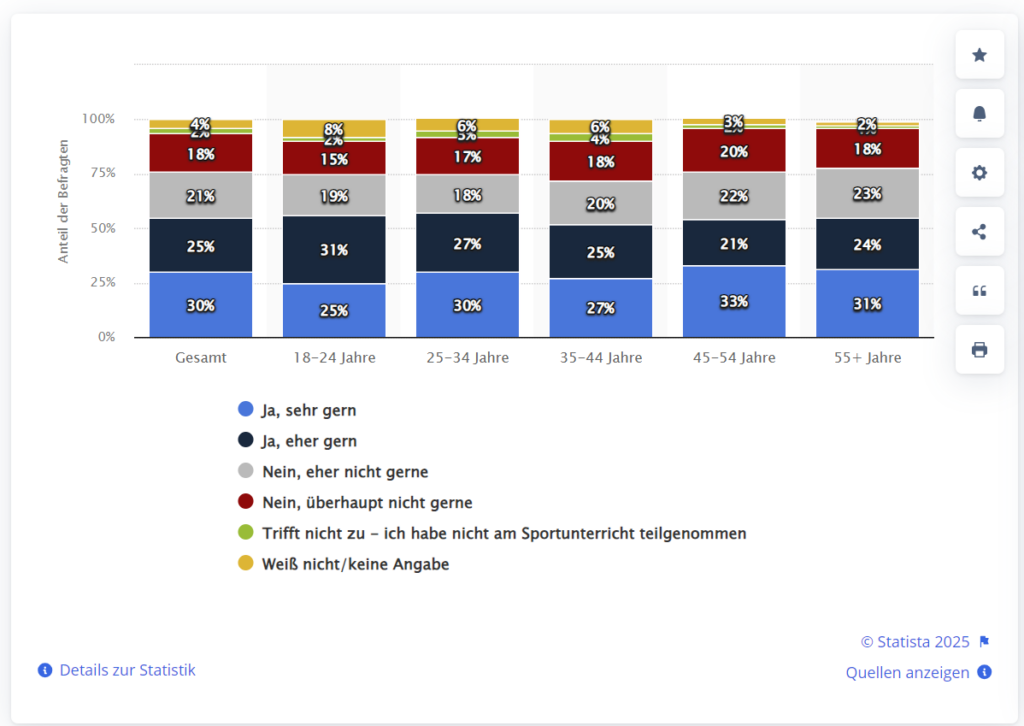
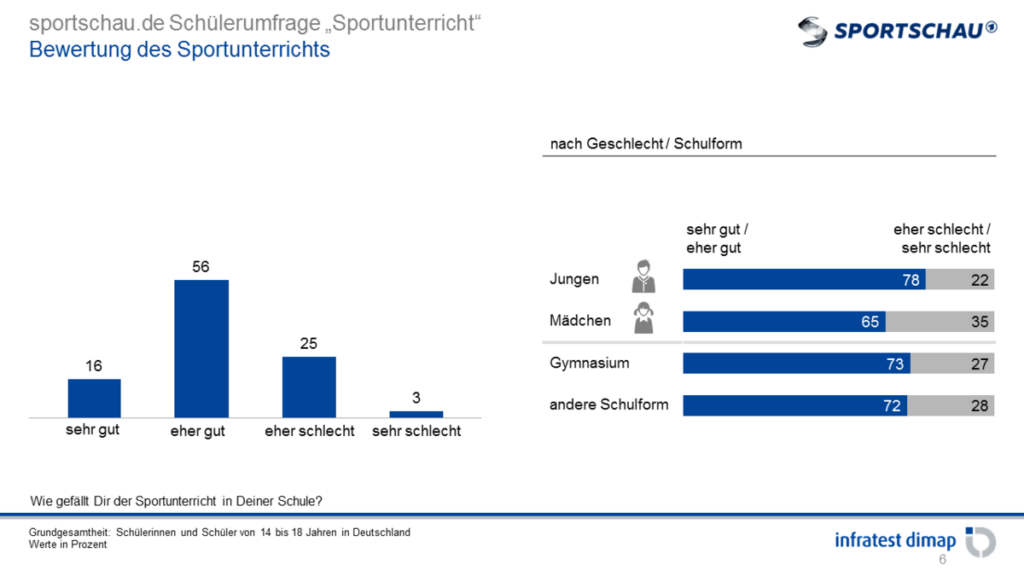
The most important step is to collect relevant literature and other sources to deepen the research and create a profound scientific basis for problem solving attempts. Another sensible step is to conduct surveys to find out how physical education is currently perceived in schools and how it has been perceived by different generations. This will, on the one hand, rule out personal bias and, on the other hand, highlight any generational differences that may exist. In addition, the aim is to find out on what basis the current concept of physical education was developed in order to better understand and evaluate it. One potentially relevant approach is the Trimm-dich movement, which was initiated by the German Sports Federation in the 1970s as a campaign to promote more exercise [3]. More in-depth research on this topic could yield promising approaches to solving the problem. It is necessary to examine the extent to which the ideas behind this movement can be transferred to the present day and to the specific context of physical education. Furthermore, it will certainly be helpful to find people as early as possible with whom subject-specific interviews can be conducted later in the research process, in case the available literature does not provide sufficient insights.

References

  • [1] 2. Fachtagung zu Sport, Ernährung und Psyche. URL: https://www.i-med.ac.at/mypoint/news/694959.html (zuletzt aufgerufen am 15.11.2025)
  • [2] Vanutelli, Maria Elide; Hommel, Bernhard; Cancer, Alice: Moving the mind, thinking the body: new insights on the mind-body connection from the neuroscience of movement, sports, arts, yoga, and meditation. URL: https://pmc.ncbi.nlm.nih.gov/articles/PMC10879547/ (zuletzt aufgerufen am 15.11.2025)
  • [3] Trimm-dich Bewegung. Website des Deutschen Sportbunds. URL: https://www.dosb.de/service/trimmy (zuletzt aufgerufen am 13.11.2025)
  • [4] Hütter, Franz; Lang, Sandra Mareike: Neurodidaktik für Trainer. Trainingsmethoden effektiver gestalten nach den neuesten Erkenntnissen der Gehirnforschung. Bonn: managerSeminare Verlags GmbH, 2017.