The “Harmonix Series” by Wing Hei Cheryl Hui and Patrick Hartono represents a visionary bridge between human-computer interaction and therapeutic art, moving beyond the technical novelty of Digital Musical Instruments to address a profound need for the democratization of creativity. What I find most compelling about this work is its commitment to radical accessibility; by shifting the focus from mastering a complex tool to simply experiencing a soundscape, the authors empower users of all physical and cognitive abilities to become creators. This is further elevated by the intentional integration of mindfulness into the interface design, which transforms the act of music making into a meditative process for emotional regulation rather than just a performance. The synergy between robust technical implementation and a sophisticated aesthetic sensibility is palpable, resulting in an instrument that doesn’t just function, but truly resonates on a human level. Ultimately, this project serves as a vital reminder that the future of music technology should prioritize deep human impact and digital wellbeing, treating the user as a whole person seeking connection and calm.
Author: meric.oeztuerk
How an Immersive (3D) Mixing Bottleneck Inspired Me
After a decade of producing electronic music, I understood that a great mix is about creating a sense of space. When I transitioned into object-based audio (like Dolby Atmos), I encountered a paradox: While I could place a vocal perfectly in 3D space using precise coordinates, the next step getting the reverb right felt like stepping back into the Stone Age.
The Bottleneck of Spatial Incoherence
In spatial mixing, we use digital metadata (x,y,z) to define an object’s location. However, to make that object sound physically plausible far away, close, or high up the Reverb Send Level must be manually adjusted to match that coordinate.
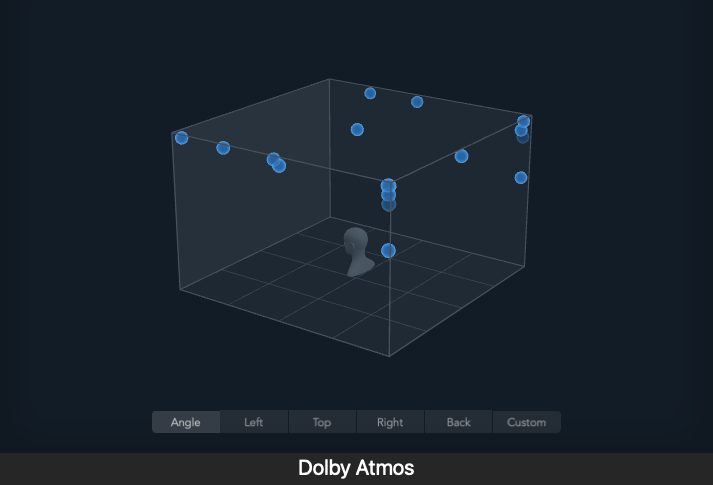
I discovered that this manual adjustment was the core problem:
- Inconsistency: What sounds right in Scene A might be wrong in Scene B. Maintaining spatial realism across a two hour film or album tracklist became a massive, repetitive task.
- Subjectivity: The decision relied entirely on my ears, not physics. This meant spending creative hours tweaking parameters that should be calculated, not guessed.
The Revelation: If the “correct” reverb level is a function of the sound’s position and the room’s acoustics, it is an objective, solvable problem.
The Solution Concept: We could use AI (Deep Learning) to perform this complex, repetitive DRR calculation instantly. My thesis idea was born: Train an AI to map a vocal’s characteristics and its 3D position directly to the DRR-derived Reverb Send Level.
This project is the culmination of my journey turning creative frustration into a rigorous technical solution that aims to inject speed, consistency, and scientific backing into the art of spatial vocal mixing.
Crossing the Bridges
“Crossing the bridges” can refer to a specific film, a musical album, a metaphor for spiritual or professional journeys, or a proverb about not worrying about future problems. The meaning depends entirely on the context, such as a 1992 drama film, a 2013 film about returning to a village, a 2005 documentary about Istanbul, a musical album, or the idiom “don’t cross that bridge until you come to it”
My name is Meriç, and I’m a sound designer, music producer, and electronic dance music performer known as numeric.
I started making electronic music about eight-ten years ago, and over time it turned into something much deeper a lifelong search for sound, emotion, and space.
Music and sound have always been central to my life. This passion led me to explore questions like how to create sound and arrange electronic music compositions. This curiosity drove me to research more, investigate deeply, and develop a passion for music and sound. I started my journey as a DJ in 2014, performing at various venues. Through this experience, I realized the need to create compositions that could convey my stories through sound. Over the years, I have immersed myself in music composition and production, constantly striving to enhance my sound and musical quality. I have learned sound design, production, effect techniques, mixing techniques, arranging, and experimented with various hardware/software synths.
My passion for music, especially electronic music composition, led me to pursue a Master’s degree in Music at Istanbul Technical University . During my studies, I honed my skills in sound design, mixing, and mastering techniques, solidifying my desire to build a career in the sound design area. My time at ITU provided a rich exploration of the audio realm. I deepened my understanding of musical structure and harmony through music theory courses and explored sound manipulation through audio programming . I gained insights into contemporary music trends and techniques through my coursework. I also had to meet with great professors, artists and well minded fellow students.And I think most important I discovered how interesting and at the same time beautiful to research what you are passionate about .
Sound design, for me, is both a craft and an inquiry. I spend countless hours refining my techniques, creating unique pieces and constructing custom systems for performance and media art. This personal research runs parallel to my artistic output, which lies at the intersection of electronic music, experimental audio, and immersive experience.I’m fascinated by how sound behaves in space, how it moves around the listener, and how technology can make those experiences more alive.Studying sound design gives me the tools to connect artistic ideas with technical reality.It helps me understand how sound works, but also how to use it to create emotion, meaning, and atmosphere.In my creative work, sound design is not separate from music Its the biggest part of the music.It’s the texture, the emotion, a tool which shapes a raw material.I see it as a way to build worlds, whether in a live performance, movie, theatre installation, or interactive setting or advertisement. In the future, I want to continue my journey in sound design on both an academic and an artistic level, developing my practice professionally through research, creative projects, and collaborations.In the next two semesters, I would like to focus on the intersection of creative sound design, spatial audio, and intelligent systems .During my previous master’s studies, I worked on projects related to immersive and 3D sound, and that’s where my real passion for this field began to grow.
That experience deeply shaped my artistic direction and was one of the main reasons I decided to join the Sound Design program at IEM, a place that, in my opinion, holds a tremendous position in the field of immersive sound.
Now, I want to take this interest to a much higher level, both creatively and conceptually.
In the coming semesters, I plan to explore how immersive sound can be used to create emotionally powerful and spatially engaging experiences, bridging artistic expression and technological research.