Second round of interviews

4: 60 year old man  

Works from home, loves new technology, a lot of daily screen time. 

Have you heard the term “doomscrolling” before? 
Yes, I’ve come across it online. 

What does it mean to you? 
A side effect of modern information overload. 

How often do you find yourself doomscrolling? 
Occasionally, especially during news-heavy periods. 

What kinds of content do you tend to doomscroll? 
Mainly technology, global politics, and economic trends I would say. 

What usually triggers you? 
Curiosity and wanting to stay updated. 

Are there certain situations or moods? 
During work breaks or late evenings at home. 

How do you feel while doomscrolling? 
Mentally stimulated but also tense. 

How do you feel when you stop? 
Often aware that instead of spending my break scrolling on my phone, i should have given my brain a proper break. 

Do you feel it serves a purpose? 
Yes, staying informed feels important to me. 

Have you tried to reduce it? 
I’ve tried replacing it with podcasts or long-form articles, but I did still spend a lot of time scrolling. 

What pulls you out of it? 
Meetings, work tasks, or eye strain. 

Looking back, how does it affect your life? 
I think it contributes to mental fatigue more than I’d like to admit. 

5: 61 year old woman

Partially on sick leave, works part-time from home. 

Have you heard the term “doomscrolling” before? 
Yes, and I immediately recognized myself in it. 

What does it mean to you? 
Scrolling even when you know you should stop. 

How often do you doomscroll? 
Almost every day. 

What kinds of content do you tend to doomscroll? 
News, health-related topics, social media posts. 

What usually triggers you? 
Fatigue and lack of energy to do anything else. 

Are there certain situations or moods? 
When I’m too tired to rest properly but too restless to stop. 

How do you feel while doomscrolling? 
Sort of numb at first, then guilty. 

How do you feel when you stop? 
Tired, guilty and sort of useless.  

Do you feel it serves a purpose? 
It fills time when I dont have anything to do, but it also steals my time when I actually have something I should be doing.  

Have you tried to stop or reduce it? 
Yes, but when I’m exhausted, scrolling feels like the easiest option. 

What pulls you out of it? 
Physical discomfort or realizing how much time has passed. 

Looking back, how does it affect your mental health? 
I think it increases my tiredness and makes it harder to recover. 

6: 70 year old man 

Retired, lot of free time. Mainly uses Facebook to stay in touch with old friends.

Have you heard the term “doomscrolling” before? 
No, not really. But i can imagine what it is about.  

What does it mean to you? 
Would assume scrolling through negative news and discussions online, awaiting an inevitable doom.  

How often do you find yourself scrolling through negative or distressing content? 
A few times a week. It’s not constant, but I often spend more time than I intend to. 

What kinds of content do you tend to doomscroll? 
Mostly news articles shared on Facebook, political posts, and comment sections. I rarely watch videos as I’m not interested in humorous or entertaining content. 

What usually triggers you to start doomscrolling? 
Usually I just log on to check notifications from updates from friends, and then something catches my attention. 

Are there certain situations or moods that make you doomscroll more or less? 
I do it more when I’m alone and don’t have much planned. When I’m busy or social, I dont check social media. 

How do you usually feel while you’re doomscrolling? 
At first I feel interested and engaged, but over time I become bored of it and somewhat discouraged. 

How do you feel when you stop? 
Often more heavy-hearted than before I started. 

Do you feel like doomscrolling serves a purpose for you in the moment? 
Yes, it gives me a sense of staying informed and helps pass the time. 

Have you ever tried to stop or reduce your doomscrolling? 
I’ve tried to be more mindful of how long I spend on Facebook, but it’s not easy to stick to it. 

What usually pulls you out of a doomscrolling session? 
Realizing that I have spent a lot of time on it, or simply feeling tired of reading negative content. 

Looking back, how do you think doomscrolling affects your mental health, mood, or daily life overall? 
I don’t think it affects me as much as it might do younger people. For me Facebook is important for maintaining social connections, so I don’t want to give it up completely. 
First interviews

1: 10 year old girl 

Lives in Geneva, Switzerland. Uses a tablet freely and spends a lot of time on it. 

Have you heard the term “doomscrolling” before? 
No, not before you explained. 

What does it mean to you? 
I think it means when you keep scrolling and scrolling and don’t stop. 

How often do you find yourself scrolling through negative or distressing content? 
I think almost every day, because sometimes videos just come up even if I don’t search for them. 

What kinds of content do you tend to doomscroll? 
Short videos on YouTube Shorts, my mom won’t let me have Tiktok. Sometimes it’s videos about war or animals getting hurt. And people being mean in comments. 

What do yu think usually makes you doomscroll? 
When I’m bored. Like when my alone and my friends are busy. 

Are there certain situations or moods that make you doomscroll more or less? 
At night before bed I do it more because i dont want to sleep. Also when I feel lonely or when I’m not allowed to go outside. 

How do you usually feel while you’re doomscrolling? 
Kind of “icky”, curious but also scared. Sometimes my stomach feels weird, but I still  keep watching. 

How do you feel when you stop? 
A little sad. Sometimes I think about it when I try to sleep. 

Do you feel like doomscrolling serves a purpose for you in the moment? 
Maybe, i dont really know. 

Have you ever tried to stop doomscrolling? 
Not really. Sometimes my parents take the tablet away because i spend too much time on it. 

What usually pulls you out of a doomscrolling session? 
When my parents tell me to stop, when the battery dies, or when I get really tired and fall asleep. 

Looking back, how do you think doomscrolling affects your mental health or daily life? 
I think it makes me more scared about the world. Sometimes I worry about things that probably won’t happen to me 

2: 25 year old woman  

Management student from Trondheim Norway that enjoys spending time outdoors. Has a very old phone that barely works. 

Have you heard the term “doomscrolling” before? 
Yes, I’ve heard it, mostly from friends or social media discussions. 

What does it mean to you? 
Endlessly scrolling through negative news even though it makes you feel worse. 

How often do you find yourself doomscrolling? 
Rarely. Maybe twise a week. 

What kinds of content do you tend to doomscroll? 
Mostly big news events like climate change, wars, or political issues. 

What usually triggers you to start doomscrolling? 
Major events. If something big happens, I might check updates repeatedly. 

Are there certain situations or moods that make you doomscroll more or less? 
When I’m stressed or stuck indoors for a long time, I’m more likely to do it. 

How do you usually feel while you’re doomscrolling? 
Overwhelmed and frustrated. 

How do you feel when you stop? 
Relieved. I usually feel better once I put the phone away and go do something else. 

Do you feel like doomscrolling serves a purpose for you? 
Only in the sense that I want to stay informed. 

Have you ever tried to stop or reduce your doomscrolling? 
Yes. I consciously limit news and social media intake and rely more on summaries. 

What usually pulls you out of a doomscrolling session? 
My phone freezing, going for a walk, or realizing that i have spent way to much time on it. 

Looking back, how do you think doomscrolling affects your life? 
I think it affects me less than others because i do it so little, but when it happens, it definitely increases stress and frustration. 

3: 22 year old man  

From Trondheim Norway, currently unemployed, enjoys reading and watching gaming streams on YouTube. 

Have you heard the term “doomscrolling” before? 
Yes, I know the term pretty well. 

What does it mean to you? 
Getting stuck consuming negative content, even when it ruins your mood. 

How often do you find yourself doomscrolling? 
Probably every day or a few times a week at least. 

What kinds of content do you tend to doomscroll? 
Comment sections, gaming drama, news about the economy, politics, and sometimes world news. 

What usually triggers you to start doomscrolling? 
Im unemployed at the moment so having too much free time and feeling unmotivated. 

Are there certain situations or moods that make you doomscroll more? 
When I feel stuck or anxious about the future. 

How do you usually feel while doomscrolling? 
Detached at first, then slowly more pessimistic i guess. 

How do you feel when you stop? 
Drained and guilty. Like I wasted time. 

Do you feel like doomscrolling serves a purpose? 
In the moment it distracts me from stress, even though it replaces it with a different kind. 

Have you ever tried to stop or reduce it? 
I’ve tried setting time limits, but I only ignore them. 

What usually pulls you out of a doomscrolling session? 
A lot of the time hunger, fatigue, or sometimes i manage ro switch to a game or book. 

Looking back, how does doomscrolling affect your life? 
It makes me feel more stuck and less motivated to change my situation. 

Interview preperation

When i go home for christmas i plan to hold interviews about peoples doomscrolling habits and thougts with my friends and family members. I have a big family that includes people of all different ages, genders and lifestyles, so it is a good group to interview to gain a wider understanding of peoples relationship to doomscrolling.

How to approach an interview 

When holding an interview, I think it is important to think of it as a qualitative conversation rather than a strict questioning session. My goal is to understand people’s experiences, perspectives, and meanings in their own words. According to Kvale and Brinkmann (2015), qualitative interviews should balance structure and openness, allowing the interviewer to guide the conversation while remaining flexible and responsive to the person you are interviewing, something I agree with and will try to follow.  

I will be using a semi-structured interview approach that provides a framework of themes and questions while still leaving room for follow-up questions and unexpected insights. 

Different approaches for different age groups 

I will be interviewing people of different ages and will have to adapt to the age and life situation of the participants. Younger participants often respond better to concrete examples and simple language, while adults and older participants may need more time to reflect and may appreciate being given space to elaborate on their answers. Adapting the interview style to different age groups helps ensure that their responses are authentic and that the participants understand the questions. 

Wording questions 

The wording of the different interview questions plays a central role in the outcome of the data collected. Open ended questions that begin with howwhat, or can you describe encourage participants to reflect and provide more detailed answers. Leading questions or questions that suggest a “correct” answer should be avoided, as they can influence responses and push people to provide the expected answer instead of their own thoughts (Kvale & Brinkmann, 2015). 

Interview template  

As mentioned, for my interviews I will use a semi-structured interview guide. This approach ensures consistency across interviews while still allowing flexibility to explore individual experiences in depth. 

The interview template includes: 

  1. Introduction:  
  • Brief explanation of the purpose of the interview and content.  
  1. Opening questions:  
  • These questions are meant to ease the participant into the topic and check their knowledge with the term. 
  • Have you heard the term “doomscrolling” before? 
  • If yes: What does it mean to you? 
  1. Main questions:  
  • How often do you find yourself scrolling through negative or distressing news or content? 
    (For example: daily, weekly, occasionally, or rarely.) 
  • What kinds of content do you tend to doomscroll? 
    (News, social media posts, videos, comment sections, specific topics, etc.) 
  • What usually triggers you to start doomscrolling? 
    (Boredom, stress, habits, current events, notifications, or something else?) 
  • Are there certain situations or moods that make you doomscroll more or less? 
    (For example: late at night, during stressful periods, when you’re alone, or when you’re busy.) 
  • How do you usually feel while you’re doomscrolling? 
  • How do you feel when you stop? 
  • Do you feel like doomscrolling serves a purpose for you in the moment? 
  • If yes: What do you think you’re getting out of it? 
  • Have you ever tried to stop or reduce your doomscrolling? 
  • If yes: What strategies did you try, and did any of them work? 
  • What usually pulls you out of a doomscrolling session? 
    (Time limits, emotions, interruptions, physical needs, other people, etc.) 
  • Looking back, how do you think doomscrolling affects your mental health, mood, or daily life overall? 
  1. Follow-up questions: Further questions based on the participant’s responses. 
  1. Closing: Giving participants the opportunity to add anything they feel is important.  

This structure is widely used in qualitative research because it combines reliability with flexibility and allows for rich, nuanced data collection (Kvale & Brinkmann, 2015). 

Reference 

  • Kvale, S., & Brinkmann, S. (2015). InterViews: Learning the Craft of Qualitative Research Interviewing (3rd ed.). Sage Publications. 
  • ChatGPT was used to help with grammar and spelling.

Update: Why My Doomscrolling Experiments “Haven’t Worked” (Yet) 

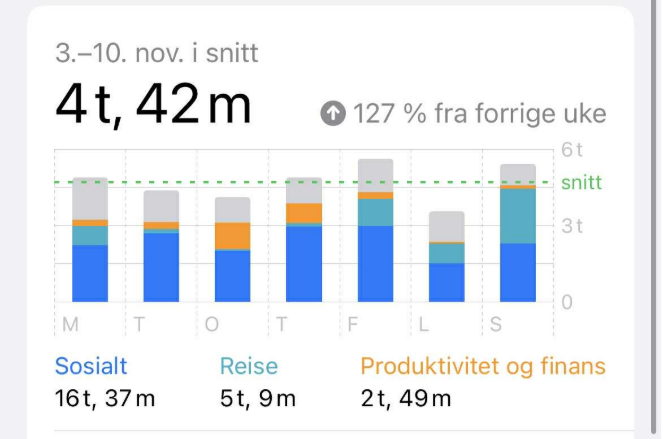
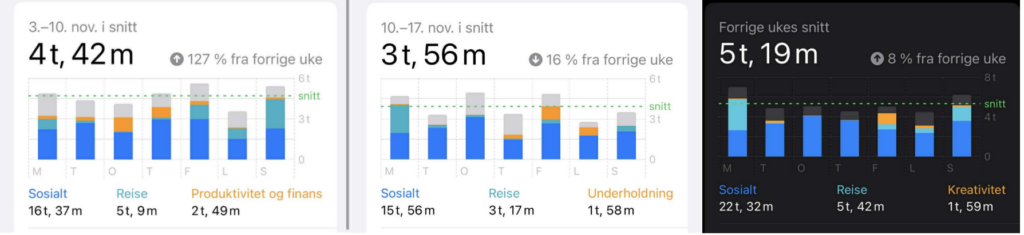
Since my last update, I’ve noticed that my screen time has actually increased during December, even though I’ve still been implementing, staying off my phone in the morning, 30-min dedicated scroll time, and time limits on certain social media apps. At first, this felt frustrating, but looking closer, the increase makes sense when I consider what the past few weeks have looked like. (The picture shows my screentime from the week before i started the experiment, the first week of experiments, and last week)

December has been dominated by exam stress, deadlines, and a heavy workload. Instead of using my phone less, I’ve often been using it more, particularly when I’m supposed to be working. Doomscrolling has become closely tied to procrastination. When schoolwork feels overwhelming, scrolling offers a quick way to avoid the discomfort of starting or continuing a task. The more pressure I feel, the easier it is to reach for my phone. 

Time limit: 

One week after setting time limits on my most-used social media apps, my average screen time initially went down by about 54 minutes. However, that change didn’t last. As stress increased, so did my tendency to ignore the limits. I would hit “ignore,” and keep scrolling, or switch to another entertainment app once I reached my limit. This was also reflected in my screen time categories, where “entertainment” replaced “productivity and finance” in the top three. Instead of reducing screen use, I was simply redirecting it. 

30 min dedicated scroll time:  

The 30-minute scroll time experiment has been especially difficult to follow during this period. When I’m calm and focused, setting boundaries feels manageable. But when I’m stressed or exhausted, doomscrolling shifts from being a habit to being a coping mechanism. In those moments, the goal isn’t entertainment or information, it’s distraction. That’s why the limits feel easy to ignore, the short-term relief of scrolling feels more important than long-term intentions. 

Learnings: 

This has made me realize that doomscrolling gets worse under pressure. Exam stress lowers my ability to regulate my behavior, and procrastination feeds into scrolling, which then increases stress even further. It becomes a cycle: stress leads to doomscrolling, doomscrolling leads to guilt and lost time, and that lost time creates even more stress. 

Although my screen time going up feels like a setback, it has actually helped me understand my behavior and doomscrolling more clearly. These experiments haven’t failed, they’ve shown me that technical solutions like app limits aren’t enough on their own in all cases. To truly reduce doomscrolling, I also need to address the stress and avoidance that push me toward it in the first place. 

I’m still not where I want to be with my screen time, but I’ll continue experimenting and reflecting on what works, especially once the exam period is over and my stress levels are lower. I’ll update again as I keep testing these tools and learning more about doomscrolling habits. 

How design promotes doomscrolling

This week i conducted secondary research on specific ways design can promote doomscrolling. The key words i used to find research were:  

  • Manipulation 
  • Ethical design  
  • Design thchniques  
  • Balance  
  • Addictive design 

Doomscrolling is a central topic in discussions surrounding digital well-being. While personal tendencies and social factors play a role, some research suggests that doomscrolling is not merely a product of user psychology but is significantly shaped by deliberate platform design choices. Researchers within human-computer interaction, media studies, and digital ethics argue that certain interface features, algorithmic systems, and persuasive design strategies encourage extended engagement, reduce self-regulation, and foster behaviors similar to addiction.  

This secondary research synthesizes findings from four key studies: Design Frictions on Social Media, Do Persuasive Designs Make Smartphones More Addictive?, Algorithmic Addiction by Design, and Dark Patterns and Addictive Designs (Weizenbaum Institute Journal).  

Can design promote doomscrolling?

Collectively, the refered studies argue strongly that, yes, digital design can and does greatly promote doomscrolling.  

The Weizenbaum Institute article Dark Patterns and Addictive Designs argues that many modern platforms intentionally employ manipulative design features that push users towards compulsive, prolonged usage. These “addictive designs”, which the author classifies as a subset of dark patterns operate by exploiting cognitive vulnerabilities and behavioural biases.  

Similarly, Algorithmic Addiction by Design argues that doomscrolling is not an accidental side effect of the digital ecosystem, but rather a predictable outcome of systems that are engineered to maximize attention and maintain corporate market dominance. This paper highlights how algorithmic feeds that prioritize emotionally charged and negative content increase the likelihood of users continuing to scroll, reinforcing doomscrolling loops.  

In short, across the academic literature, there i strong agreement that doomscrolling is largely design driven, not user driven. Interface choices and algorithms create conditions where users remain trapped in cycles of passive, prolonged, and often harmful content consumption. 

How design promotes doomscrolling

The mechanisms design promotes doomscrolling through can be divided into three overlapping categories: interface features, algorithmic systems, and persuasive feedback loops. 

  1. Interface Features that Reduce Friction

Classic doomscrolling enabling design patterns include infinite scroll, autoplay, and constant content availability. Dark Patterns and Addictive Designs emphasize that these features undermine user autonomy by removing natural stopping cues. When platforms eliminate the user’s friction, they eliminate opportunities for users to reflect or disengage. 

Research in Design Frictions on Social Media underlines this by adding small “micro-boundaries,” such as requiring a reaction before moving to the next post, reduces mindless scrolling and increases user awareness. This study provides evidence that frictionless interfaces directly encourage dissociation and passive content intake, core components of doomscrolling. 

2. Algorithmic Personalization and Content Curation 

Algorithmic Addiction by Design gives a detailed analysis of how AI-driven recommending systems promotes doomscrolling. Algorithms prioritize content that maximizes engagement, often selecting emotionally intense, sensational, or negative material, which research shows people are more likely to keep scrolling through. The resulting feedback loop increases exposure to negative content, prolonging the users doomscrolling. 

This aligns with arguments in Do Persuasive Designs Make Smartphones More Addictive?, where interviews reported that recommendation engines and personalized feeds were among the most powerful triggers for compulsive use, especially on apps like short-video platforms and social networks. 

3. Persuasive Design and Reward Mechanisms 

The smartphone addiction study describes persuasive design as including notifications, social feedback, rewards, and habit-forming triggers. Users reported that these features extended their screen time, reinforced checking their phone, and made it difficult to stop consuming content, even when they recognized the negative effects. 

When combined with negative or emotional content feeds, these mechanisms contribute directly to doomscrolling by keeping users in heightened emotional cognitive states while removing opportunities for easy disengagement. 

Posible solutions

The literature gives several solutions to dealing with doomscrollin, like design level interventions, regulatory frameworks, and alternative platform architectures. 

1. Introducing Design Frictions 

Design Frictions on Social Media shows that adding small interruptions like requiring user input before loading new content significantly improves content recall and disrupts the mindless browsing. Though users may find such frictions frustrating, they are effective at reducing dissociative states and at breaking doomscrolling loops. 

Possible friction-based solutions: 

  • Natural stopping points instead of infinite scroll 
  • “Are you still scrolling?” checkpoints 
  • Manual content loading 
  • Time-based reminders or breaks 

2. Regulating Addictive and Manipulative Design 

Both Algorithmic Addiction by Design and the Weizenbaum Institute article argue that systemic solutions are necessary as doomscrolling is structurally motivated by engagement-driven business models.  

Solutions: 

  • Banning or limiting dark patterns associated with compulsive use 
  • Transparency requirements for recommender systems 
  • Restrictions on exploitative design for minors 
  • Integrating well-being standards into digital services regulation 

These approaches shift responsibility away from individuals and onto the designers, platforms and governments. 

3. Alternative Algorithmic and Platform Designs 

Solutions discussed across the literature include: 

  • Chronological feeds instead of algorithmic feeds 
  • User-controlled recommendation systems 
  • “Well-being optimized” recommender algorithms 

These alternatives aim to realign platform incentives with user autonomy and mental health. 

Conclusion

Across all four articles, there is strong evidence that design not only promotes doomscrolling but is one of its primary causes. Interface patterns, algorithmic content curation, and persuasive design mechanisms all work together to keep users emotionally activated, cognitively overloaded, and scrolling for longer than they intend. Doomscrolling is therefore best understood as a structural design outcome, not merely a personal failing. 

At the same time, research also shows that design can be part of the solution. Introducing friction, regulating dark patterns, and creating alternative architectures that emphasize user well-being can meaningfully reduce doomscrolling’s impact. Together, these studies highlight both the challenges and opportunities for building healthier digital environments. 

Research update + Doomscrolling and anxiety

Personal experiments:

Screentime before:  

What I spend most of my time on is the category “social”. The second one is “travel” which is just when I have gps on my phone while driving to and from my hiking trips. The third category is “productivity and finance”.  

Screentime after setting a time limit on most used social media apps:  

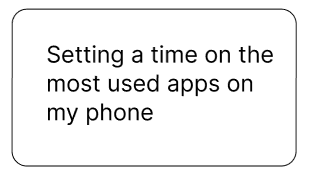
One week into setting a timelimit on my most used social media apps, my screentime went down by 54 minutes on average. The third of the top three categories changed from “Productivity and finance” to “entertainment”.   

As i mentioned in a previous blog post, I didn’t feel like setting the time limit was working due to it being too easy to ignore. The screentime dropping slightly could be an indicator that even though I ignored the limit, maybe it was a little nudge to a little more conscious use of social media platforms and made me limit my use somewhat.  

The third category being changed to “entertainment” shows that when i met my limit for the social media apps, sometimes i just exited that app and opened up another application used for entertainment.  

I’m still not where I want to be with my screentime and will continue to implement my tools for reducing it and cupdate later on how also following the 30 min scroll time project affects me.

Secondary research

This week I also conducted more secondary research about the reasons why humans tend to doomscroll and some of the side affects it leads to.

Why do we doomscroll?

Why we doomscroll can be explained by how our brains are wired for threat and novelty. As Harvard Health Publishing explains, the brain’s fight-or-flight response pushes us to scan for danger when we perceive uncertainty or risk, and doomscrolling feeds directly into that impulse. Meanwhile, Newsweek notes that, especially for younger people, social media serves like a “digital pacifier”, a convenient distraction from stress, loneliness and boredom. Which makes doomscrolling feel like a quick way to cope even when nothing has really changed. In these situations it works as a quick fix and not as a long term solution. Because news feeds and apps constantly deliver new content at irregular intervals, each swipe can feel like a small “reward”, encouraging us to keep scrolling in search of the next one.  

How can doomscrolling trigger anxiety?

Constant exposure to negative or alarming content through doomscrolling can have serious repercussions for our mental and physical health. According to Harvard experts, doomscrolling overloads our stress response: extended exposure to distressing news can lead to symptoms like trouble speeling, muscle tension, headaches, irritability, or even elevated blood pressure. A 2023-2024 review even links excessive doomscrolling to decrease overall well-being and increases existential anxiety, a sense of dread of panic about life and the future. Moreover, as Newsweek points out, what feels like staying informed or reducing uncertainty often does the opposite, delivering “fleeting relief” but ultimately reinforces worries because each new negative headline renews anxiety instead of easing it.  

Why doomscrolling is most common with younger people

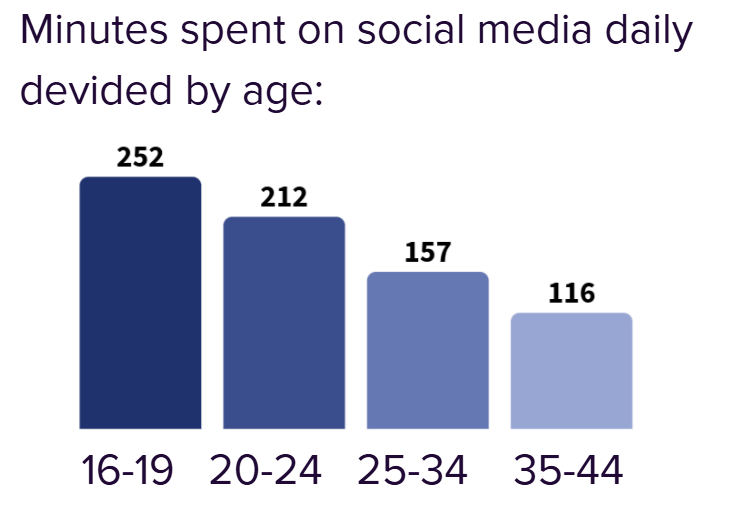
Doomscrolling appears to be especially widespread among younger age groups. In a 2024 survey cited by Newsweek, around 53% of gen Z respondents identified themselves as regular doomscrollers, a far higher rate than the general adult population. The article explains this by noting how deeply intertwined social media is with younger people’s daily lives: manually use their phone for hours, and social platforms often act as distraction from stress, isolation, or uncertainty. Because younger people are more frequently online and more exposed to algorithm driven content cycles, their risk of falling into habitual doomscrolling (and the mental health consequences that come with it) becomes much greater than for older generations.  

“Anxiety among young adults almost tripled between 2019 and 2023 in the U.S. according to Department of Health and Human Services data cited by the report. ”

Sources:

https://www.newsweek.com/gen-z-doomscrolling-problem-2065999

https://www.health.harvard.edu/mind-and-mood/doomscrolling-dangers

https://www.ipsos.com/en/axa-mind-health-report-mental-health-continues-deteriorate-around-world

https://www.ssb.no/kultur-og-fritid/tids-og-mediebruk/statistikk/norsk-mediebarometer/artikler/dette-er-de-mest-populaere-sosiale-mediene?utm_source=chatgpt.com

https://www.southerncross.co.nz/society/info-hub/members-hub/your-toolbox/wellbeing/thinking-well/the-dangers-of-doomscrolling?utm_source=chatgpt.com

https://www.theguardian.com/society/2022/sep/06/doomscrolling-linked-to-poor-physical-and-mental-health-study-finds

How do we stop doomscrolling?

19.11.2025, Second research blog

Update on current research:  

Findings: I did not manage to stick to it at all. When you are in the app and you have reached your daily limit a widget pops up saying that you have reached the limit you have set. Then you have two options: “OK” that takes you out of the app, and “ignore” where you can choose how long you wish to ignore it for. For me I found it way too easy to just ignore the limit. Especially when I was in the middle of a video or of reading something, and I did not really feel any consequences of ignoring it in the moment. The time limit did not help me reduce my screen time at all.  

Moving forwards: I will keep the time limit on my phone, but I will extend it to 45 minutes and see if that makes it more manageable to uphold.

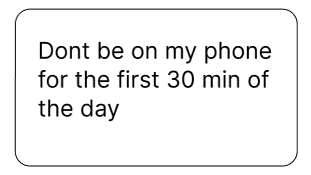
Findings: I myself subconsciously reaching for my phone a lot, but in contrast to setting the time limit I moves my phone out of my immediate reach which made it much more effective. I did manage to stick to staying off social media for the first part of my day, and defaulting to reaching for my phone reduced after a while. I found having a phone free morning very nice and freeing, and I started the day feeling lighter. After I while I would have to start using my phone for checking things like emails and messages and stuff, and I would go back to my normal use pretty quickly so it did not really reduced my scrolling through the rest of my day, but for my morning while getting ready and having breakfast it definitely worked.  

Moving forwards: I will continue with this experiment and see if It can affect my daily use over time, and if I can become more aware of my using patterns.  

Upcomming research

This week I will start trying to dedicate 30 min of screen time every evening to see if having a preset time for scrolling makes it easier to stick to only using social media within that frame.

I will also conduct more secondary research about the affects of doomscrolling. I will also research other people who have conducted similar experiments to mine and compare their findings to mine. 

Research blog 5.11.2025

Can design help prevent doomscrolling?

With social media platforms like Instagram and Tiktok it’s easy to get trapped in a cycle of never-ending scrolling. These platforms are designed to keep our attention for as long as possible, making it hard for the user to put the phone down and move on. They are tempting the user with a never ending supply chain of content with an algorithm perfectly fitted to the individual user. I myself, and many other people in my life have experienced this fist hand. You scroll on social media constantly having new content pop up and all of a sudden, an hour or two has passed by. It is called doom scrolling when this chain of content has a negative affect on the user, leaving them with feelings like sadness, anxiety or stress. This does not only affect people’s mental health but can also shape how people perceive the world and interact with technology. The algorithm is often so good that people still continue to scroll endlessly even though the content the consume is mainly negative, because it shows the type of content they find interesting, not recognising that overconsumption of these topics can be bad for their mental health. 

Research questions

  •  How can interaction design be used to reduce or prevent doomscrolling 
  • Can designers prevent the negative side affects of social media usage while still keeping the good parts?   
  • What role does interface design play in helping users manage their screentime? 

Potential challenges

  • Will external nudging be enough or is personal motivation needed  
  • Design is part of the problem and hopefully also the solution 
  • Getting designers to take ethical responsibility and puting it over their/ the companies buisnes goals.  

Possible approaches

The project could explore different ways of limiting peoples screentime or the content they consume by for example nudging the user to take breaks or swich focus, or simplifying the design of this kind platform to strictly necessary features. 

Personal motivation

This topic is very relevant for todays time, espessially with younger generations that are growing up with the access of smartphones and tablets, being so used to having access to constant entertainment. Personally, this topic also raises the question of ethical design. Is it ethical of an app designer to design a platform so well formed that the user get trapped? The designer is doing its job very well, and is probably getting paid what they deserve, but is it right when the use can lead to healt issues? One can argue that the platforms also inflict a lot of joy when used corectly. Is there a way to use design to keep the joy and decrease the negative side affects? I want to find out.  As an interaction designer, I want to find out how we can design digital environments that promote healthy use of social platforms rather than feeding this addiction. 
 

Relevance to design

The issue of doomscrolling is highly relevant to the design field, as designers shape the interfaces, flows, and feedback systems that can either encourage or help prevent compulsive use. Domscrolling highlights how design directly influence user behavior, attention, and wellbeing 
For interaction designers, the topic questions current engagement-driven patterns such as infinite scrolls and autoplay, and prompting exploration of more mindful, reflective, and balanced alternatives. From a product and service design perspective, it highlights the need to prioritize digital wellbeing. 
On an ethical level, designers should consider their responsibility within the users mental wellbeing, within both mental heath and peoples attention span and consider moving from maximizing engagement toward supporting healthy digital habits. 

Upcoming research

Personal experiments

I will try to find affective ways of reducing screen time by testing 3 different recomended methods on myself the following weeks.

After the experiments i will answer some questions like: Did i manage to decrease my screentime? Did aything happen to my consentration? Did my mood encrease or decrease? Did I miss using my phone? What did I do instead of scrolling? Did I feel like I missed out on anything by not being online as much?

I will also gather information online via articles, videos, podcasts and such. In addition i plan on holding interviews with social media users among my peers to gather a wider understanding of the issue
 

References