Analysis of migraine tracking Apps Pt.2 – Migraine Buddy

This week’s blog post topic will be another migraine App called Migraine Buddy. It is one of the first results in the App Store of this category and rated with 4.8 Stars from 5.

I chose this app since I had never used it before and due to my curiosity because of the high rating.

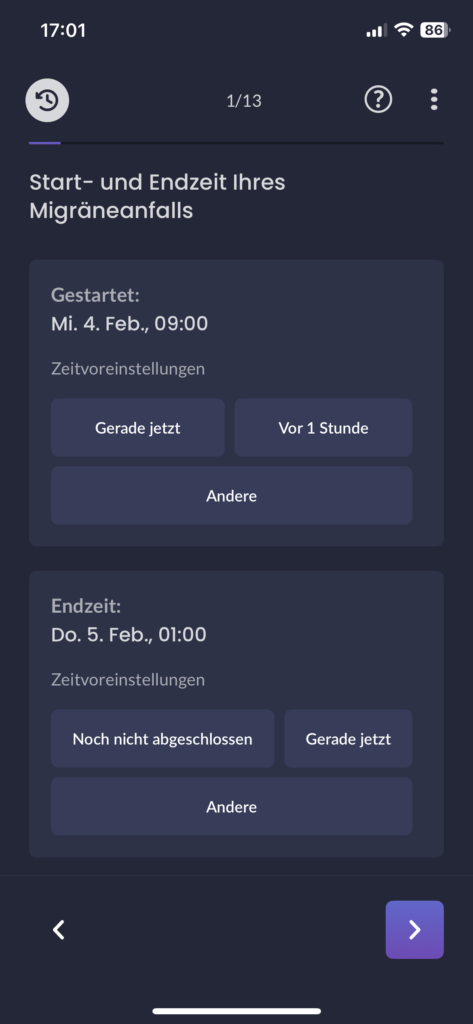
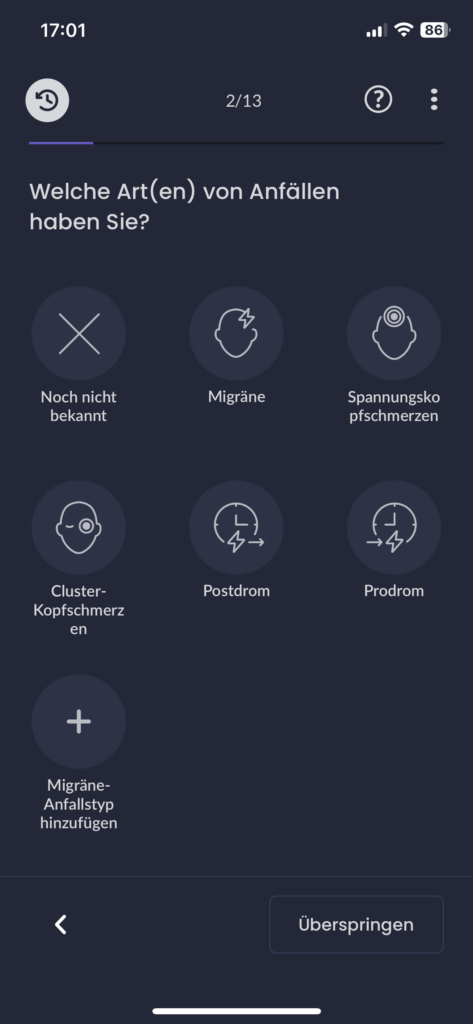
The first entry screen asks the user to add an entry for their last migraine attack.
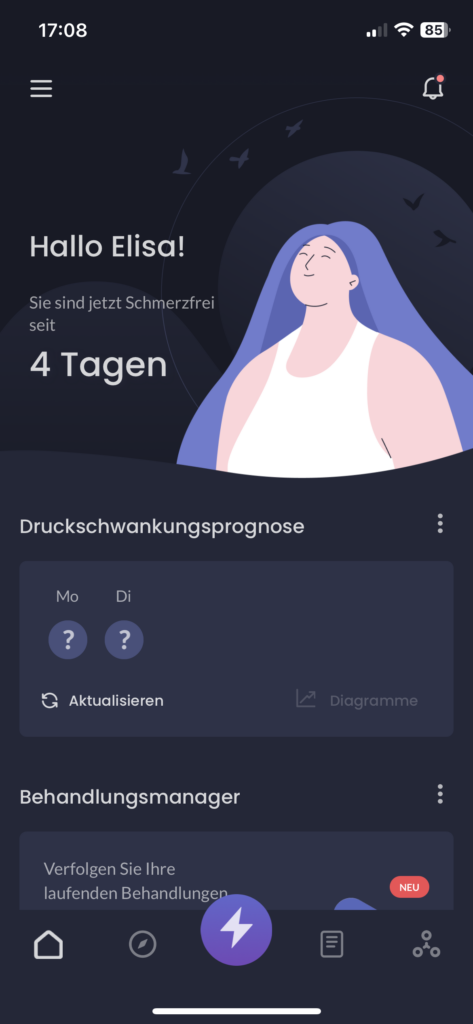
Home screen

dashboard focuses on the positive painfree days but I fear it could be hard to read for migraineurs with a high frequency rate to see a number that is just very small and therefore not positive for them.

Benefits

This app offers a great variety of features:

One feature that I noticed was the adaptility for indivual preferences due to the “adapt homescreen button”. This button ensures that users can adapt the screen to their liking and show the information that is useful to them.

Home screen

I believe that from a user experience point of view this is a great feature to help migraineurs decide what aspect they want to focus on since the app provides a lot of information which could be overwhelming or uninteresting for some users.

Migraine also offers a sleep track feature which caught my attention as well. Since a good sleep quality is an important part of migraine prevention it seems plausible as why users could also track their sleep with the app. They need to give the app access to their notifications and gps.

Sleep screen

The options screen below shows more helpful features

  • export feature of data
  • questionnaires to receive more tips
  • a personal migraine impact Report
  • survey about migraine treatment to participate voluntarily
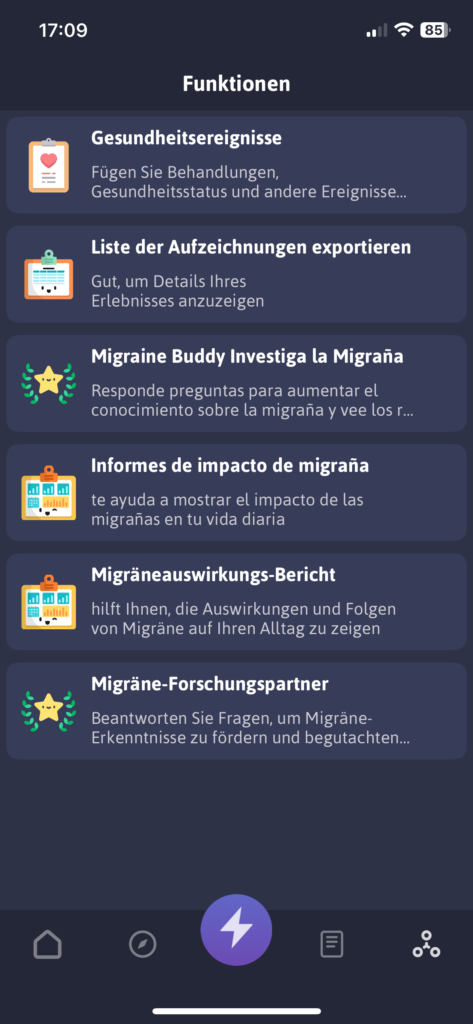
Options screen

I noticed an error since the migraine impact error is displayed twice (one in spanish since it was my system’s default language before and one in german). This seems to be a bug that needs to be fixed.

Besides, users can also add more data concerning their health such as menstruation, other diseases and treatments, etc.

Health screen

As I have mentioned before in previous blog posts, migraine is considered a complex neurological disorder that is difficult to generalize since every experience is different for each migraineur. Therefore adding more entry options in an organized way can be helpful to get a better understanding of one’s disease.

Cons

One feature I came across made me question if it is suitable for migraineurs. It is the report feature which is meant to give users helpful insights into their attacks, support and medication (see image below)
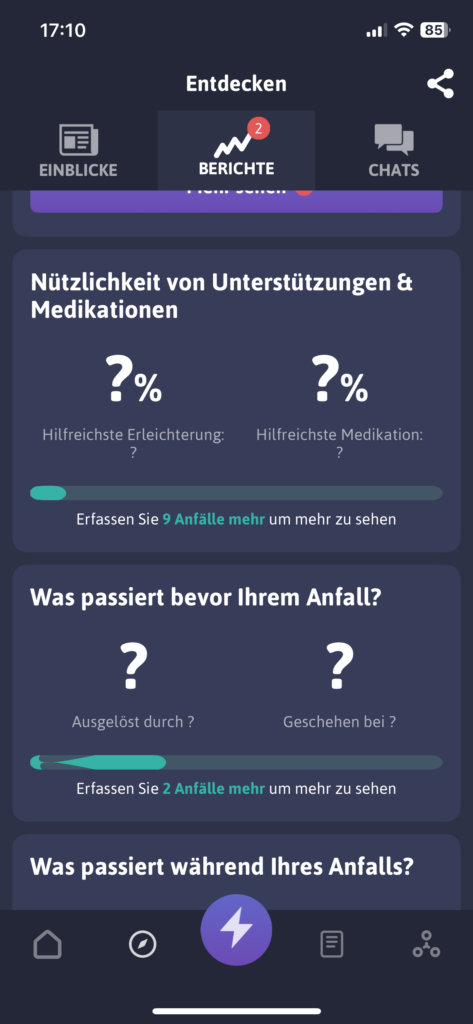
Report screen

But the insights are not visible yet and it says “track 9 more attacks to see more”. My immediate impression was negative and that the wording seems insensitive to the target group’s suffering. Migraineurs that suffer from migraine attacks once or twice a month (aka episodic migraine) would have to wait several months to receive helpful information and I can only imagine how frustrating that must feel. Personally, if i would have to wait 9 months to track 9 migraine attacks to finally receive more information I wouldn’t use this app anymore. If you downloaded an app to track your migraine you are probably doing it to proactively get help or find solutions for your chronic neurological disorder.

Therefore, an option where users could still receive general information and education about lifestyle or sleep changes could be an idea to avoid the negative thought of “I have to suffer first to unlock more insights”. The information provided then could change once the user has tracked their triggers and attacks consistently and adapt to the individual person.

Conclusion

All in all, migraine buddy also offers entry options for migraine attacks and calendar overview and export option for appointments with neurologists like the Migräne App by the pain clinic Kiel from the previous blog post.

However, migraine buddy offers a more appealing design and visuals. The dark mode design probably was selected to consider light sensibility of the users and therefore more suitable.

It offers a great variety of interesting features but I see a lack of communciation of one important aspect of tracking. The consequence of tracking everything and using an app to enter data consistently about every single detail of your day could be negative for users. What are the downsides of tracking everything? Could it have a negative impact on the mental health of migraineurs to focus so much on stress and lifestyle management?

Personally, I have made the experience of trying to optimize my lifestyle by analyzing everything using an app and focusing on

  • exercise – but not too much as it could cause an attack due to exhaustion. But also not too less since exercise is reported to help to reduce the frequency of attacks
  • weather – seeing weather changes in an app that you know are likely to cause an attack can cause internal stress days before the day even starts
  • sleep – you are supposed to sleep well and consistently but also not too much as some people experience migraine when they relax as well
  • diet – don’t skip meals, eat regularily but what if you travel and you didn’t get to prepare a meal beforehand? Yes, even then you stress about it

These are just examples of my thoughts were taken over by overanalyzing thoughts due to apps I used. Since I suffer from episodic migraine I can tell you how awful it feels to live a “perfect” routine but still get a heavy attack at the end of the day. I ended up asking myself “what have I done wrong? Is it my fault?”. The answer is no. The cause for migraine lies in the genetics of a person and their brain and since there still is no cure migraineurs can only aim to live a balanced live to reduce attacks but getting rid of the attacks is not possible yet.

Need for scientific proof as a next step

Although I would interview more migraineurs about their opinions to prove if they have had a similar experience I still believe that an important information should be given to users during the use of the app. The app is meant to help identify patterns but it should be done carerfully with reminders of taking care of their mental health regurarily or seek professional help from a therapist if needed.
Not just rainbows and pretty patterns

This week I dived into research about the neurological disorder to gain a better understanding of it.

Challenges

When researching about a health-related topic, I’ve faced some obstacles while trying to do a superficial research. While writing my Bachelor thesis I learned the importance of understanding that I as a Designer won’t be able to understand every information I come across since most sources are of the medical and therefore full of latin and scientific terms that are hard to understand. But the lesson I learned is to never forget the reason of why I am reading those scientific papers in the first place. The goal isn’t to understand every single detail but to gather a basic understanding of the topic. This base will then enable me to proceed with more knowledge about it and continue with the Design work. As I started reading papers about migraine I kept reminding myself to remember this lesson in order to prevent myself from feeling too lost in detailed sections. Trying to be selective with my sources is also helpful since I am the person choosing them and deciding which sources or sections are diving too deep into neuroscience.

With this in mind I started asking myself which questions could be relevant for a superficial investigation and collected following results:

Terminology

The word migraine comes from the Greek word hemikrania which means half of a skull. This term was then translated to French: migraine. The reason is that the pain affects one side of the head. [1]

The phases of a migraine attack

A migraine attack is usually characterized by four different phases: [2],[3]

  1. Prodome: occurs hours or days (as early as 3 days) before the headache phase, including symptoms such as appetite changes, thirst, yawning, etc.
  2. Aura: appears immediately before the headache (usually flickering lights, blurred vision,…)
  3. Headache: pain phase (usually pulsating)
  4. Postdrome: after an attack characterized by non-headache symptoms such as cognitive deficits, fatigue, and others

What surprised me most is that the first phase already begins before the one-sided headache pain even starts. The symtoms that are described such as yawyning, appetite changes or thirst also don’t indicate clearly that a migraine attack is about to start. If a person that is menstruating would analyze their symtoms it wouldn’t be easy to identify whether it is due to a migraine or their menstruation. Even mood changes are reported as a symtom which would also cause the same problem.

Migraine can be classified into two categories: Migraine with aura and Migraine without aura.

Visual aura: occurs in approximately 15–33% of patients affected by migraine attacks. I would like to elaborate more on this topic as it is one important aspect of this complex neurological disorder.

Sensory aura: Perceived as pins-and-needles tingling or numbness starting in the lips/tongue, face, or hand, spreading slowly to the arm or body. Positive sensations dominate, feeling like a wave of prickling.

Speech/language aura: Difficulty finding words, slurring or fluent but nonsensical speech, often unilateral and concurrent with other auras

How does visual aura look like?

The experience of visual aura differs. Some people perceive:

  • Zig-zag patterns
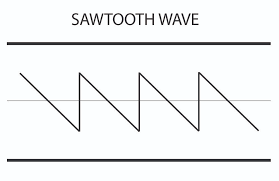
  • Sawtooth patterns (see picture below)
  • Geometric shapes
  • Stars
  • Scintillating scotoma (shimmering blind spot that expands)

Image 1: Sawtooth wave form

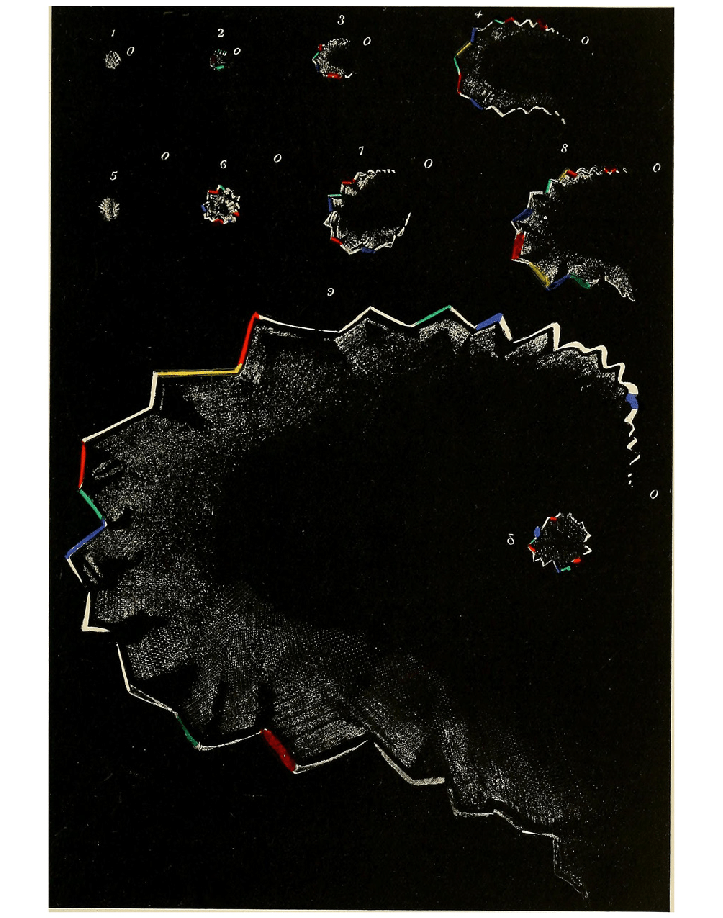
Some migraineurs experience blind spots or temporary vision loss. (e.g. when I thought I was going blind during sports class). It often begins in the center or periphery of vision and spreads graduall, resembling a so-called “fortification spectrum” or wavy lines.

Example of a migraine aura: This picture illustrates the typical gradual expansion of a migraine aura along with the characteristic fortification spectrum.

The visualizing of aura

When I tried to look for images that depict a migraine’s aura I was a bit underwhelmed. Most of the edited images or drawings create a rather aesthetic looking effect.

The warm colors of this image combined with the pastel and colorful lines create a happy and warm mood. For me as someone who experiences visual aura regularly this image is rather irritating and I wouldn’t associate it with migraine.

This image does illustrate a blind spot that is blocking the viewer’s sight but the colorful elements next to it again are more similar to a beautiful rainbow than an overwhelming sight loss.

It was a challenge to find a realistic depiction that didn’t leave me with a weird feeling while looking at it. A negative consequence could be that viewers might come to the conclusion that visual aura looks harmless and is actually aesthetic.

After reading more neuroscientific research articles I started searching with scientific keywords such as “fortification spectrum” and then found images that resembled my visual aura more.

Conclusion

When sharing experiences about migraine attacks I often struggle with explaining the visual part of it and how deeply it actually it hurts to see those flashing lights. Since you are the only person it is visible for it is hard to describe, especially since it is related to so much discomfort and pain. Now that I learned that migraineurs report different visual aura I feel intrigued to look more into this topic. It could be interesting to ask people that have perceived visual aura to describe it and have a look at aura simulations. As I am personally affected I could even try to visualize my aura myself and aim for a more realistic draft without embellishing it.

References

  • Rose FC. The history of migraine from Mesopotamian to Medieval times. Cephalalgia. 1995 Oct;15 Suppl 15:1-3.
  • Vollesen AL, Benemei S, Cortese F, et al. Migraine and cluster headache – the common link. J Headache Pain 2018; 19: 89.
  • Stankewitz A, Aderjan D, Eippert F, et al. Trigeminal nociceptive transmission in migraineurs predicts migraine attacks. J Neurosci 2011; 31: 1937–1943.
  • Dongen, Robin & Haan, Joost. (2019). Symptoms related to the visual system in migraine. F1000Research. 8. 1219. 10.12688/f1000research.18768.1.

Images

Person holding their head in pain showing and covering their face in them.

In(visible) disease – migraine: raising awareness and designing solutions for migraine patients

Is this what going blind feels like?

During physical education class in fifth grade I thought I was going blind. From one second to the next, I couldn’t see my friend’s face anymore. I could still hear her talking but some weird lights started appearing in front of my eyes which followed my gaze everywhere I looked and were blocking my sight. They made me feel nauseous and I started panicking. “I can’t see you anymore.” was all I was able to say in that moment. My friend first was confused, then scared and everyone started panicking. I had to sit down and drink water but while everyone was asking me questions I couldn’t answer I realized that even closing my eyes made me feel sick and disoriented. I lost my ability to speak, even think in that moment and could barely express what I was physically and emotionally going through. My mother had to pick me up from school and I spent the rest of that day in pain lying in bed after the “scary lights” and a tremendous head pain had kicked in. Every stimuli even a weak source of light or any kind of noise felt like it directly hurt my brain. I had never felt this senstive and concious of my surroundings. I could only lay in my dark room, cry, vomit and wait for the torture to stop. My mom wasn’t suprised to hear what had happened to me at all but obviously seemed very concerned. This was the day I first heard about migraine. What I had just experienced was called a migraine attack and I am not the first person in my family to suffer from it. My mother, my father and grandmother were affected by them as well – and mine had started at ten years old. And this wouldn’t be the last one to appear out of nowhere.

This was a rather personal story to dive into this topic but as every person describes their suffering from this disease in a different way, I thought it could give an insight into what it feels like to experience a migraine attack (at least how I do).

What is migraine and how many people are affected?

According to the Medical Univertsity of Vienna (2024) one million people in Austria suffer from migraine. It is a primary headache disorder which lasts about 4 to 72 hours. What I experienced with the strange flashing lights is a typical symptom of a certain type of migraine known as “migraine with aura”. Aura referring to the visual elements such as flashes of light, blind spots, zigzag patterns, blurred vision, or seeing spots and wavy lines. In my case I would describe them as blind spots that block your sight and increase so much that you can’t see what is in front of you anymore. The intense sensitivity to light and noises is called photo- and phonofobia. The fact that I couldn’t speak and struggled to find words is also a side-effect of experiencing aura. It can lead to the person loosing their speech and just mumbling or struggling to form a whole sentence. After reading more about this disease I learned that most of my symtoms and the different phases of my attack were already known in science and a pretty typical case.

Lack of awareness and medical treatment

Although lots of people suffer from migraine with or without aura, the neurological disease still remains a topic the majority of society doesn’t know or talk about enough. The lack of awareness and no access to proper treatment is what can lead to frustration and even anxiety or depression. In a world where this disease is treated as a simple headache (don’t get me wrong, I don’t mean that a headache can’t be painful) we need to stop avoiding talking about certain diseases only because it makes us feel unconformtable start being curious instead.

Unfortunately, many patients suffering from headache disorders never receive an appropriate diagnosis and don’t have access to treatment or medications. Receiving an appointment with a neurologist is almost hopeless nowadays.

The cause of migraine attacks is still unkown but is usually treated with specific medication but also by following a healthy diet and regular exercise schedule, staying hydrated and using a migraine headache calender to identify possible triggers.

Relevance for design

But in what way does migraine relate to design? Well, currently there are several migraine tracking-apps in the Google Play Store and Apple Store. Most of these apps are free and their goal is to track details about migraine attacks e.g. the intensity of the migraine so that the user can identify their individual triggers and patterns such as weather changes, sleep problems, caffeine and alcohol intake, etc. Users are supposed to track their daily habits to receive an overview of the disorder’s frequency and eventually improve their understanding of the disease.

Personal motivation

As my neurologist has recommended to keep track of my migraine attacks and recommended an app from the pain clinic in Kiel to use it as a “headache diary” I have made experience with different applications over the years. In the following posts I would like to dive into those experiences and analayze them. From a design point of view but also from the perspective of the targeted user group there are several aspects I perceived that should be improved and tested! I believe that combining both of these perspectives and talking to experts (neurologists, psychologists and patients) could be helpful to create a meaningful solution that is tailored to the user’s needs.

My approach

  1. Initial resarch to gain an essential understanding of the disease and it’s characteristics
    • What is the status quo in science? (cause, treatment,…)
  2. Identify problems considering all pain points e.g. medical treatment and health system
  3. Analyze migraine apps for a state of the art research
  4. Ideate possible solution to found problems
  5. Online survey

References

  • Medical University of Vienna. (2024, May 7). One million people in Austria affected by migraine.
    https://www.meduniwien.ac.at/web/en/ueber-uns/news/2024/news-im-mai-2024/one-million-
    people-in-austria-affected-by-migraine/
  • World Health Organization. (2024, March 5). Migraine and other headache disorders. Retrieved October 19, 2025, from https://www.who.int/news-room/fact-sheets/detail/headache-disorders