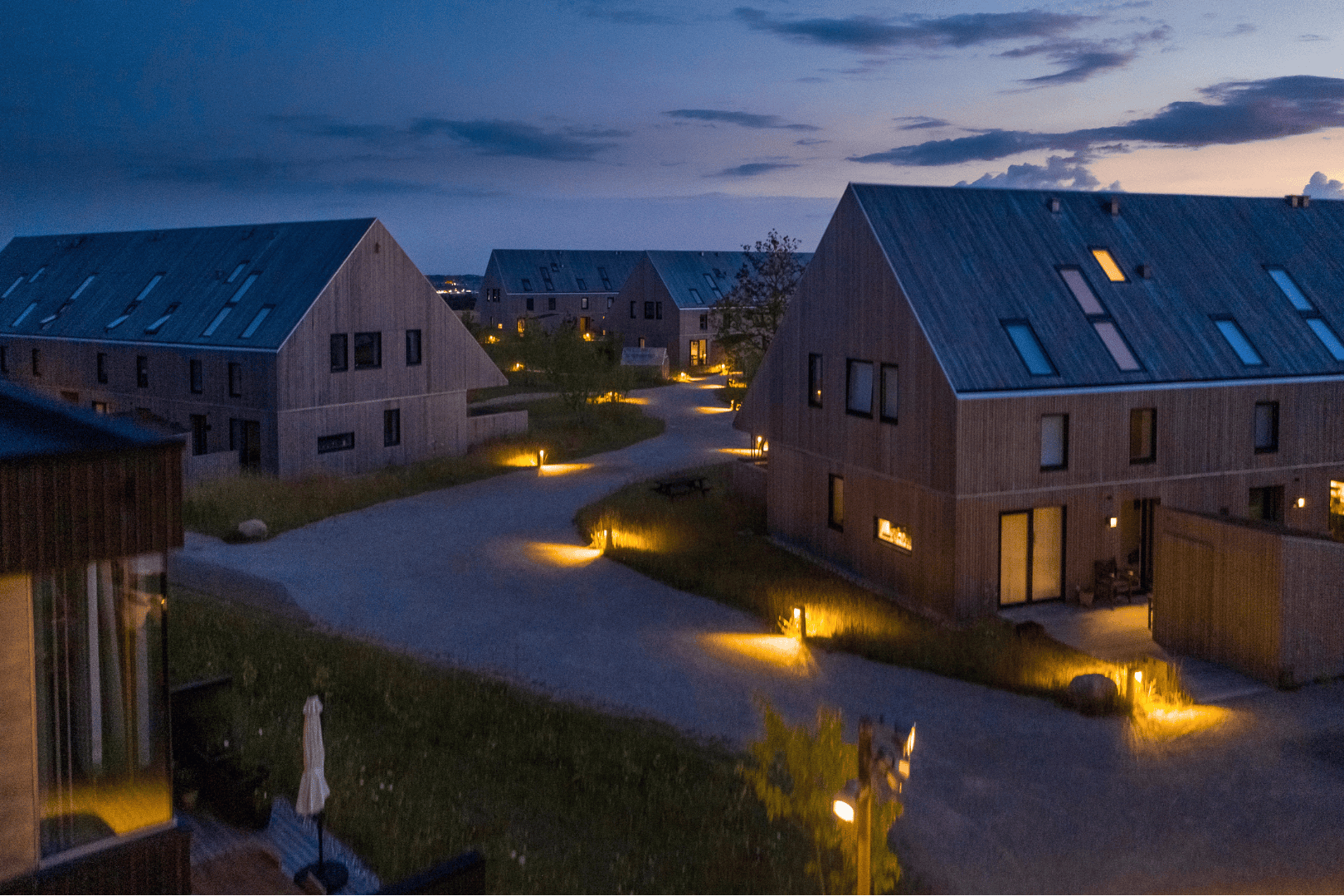
DarkSky International has published guidelines for environmentally friendly fixtures. They were developed by lighting engineers and designers to reduce glare and light trespass, while mantaining maximal functionality and safety. If a fixture respects these Five Principles of Responsible Outdoor Lighting, it earns the DarkSky Approved seal.
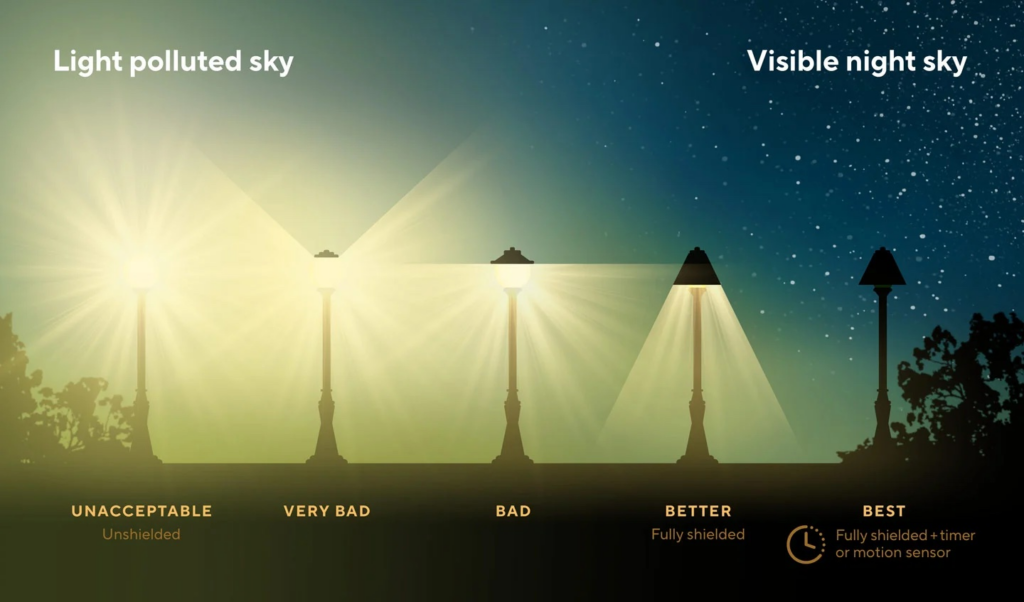
- Useful — fixtures should only be installed where they are needed;
- Targeted — the light beam should point downward and be appropriately shielded to avoid spills;
- Low level — the brightness should be as low as possible and reflection from bright surfaces should be taken into account;
- Controlled — timers, motion detectors and dimmers should be used, so that the light only stays switched on when it is needed, dimmed when possible, and turned off when not needed;
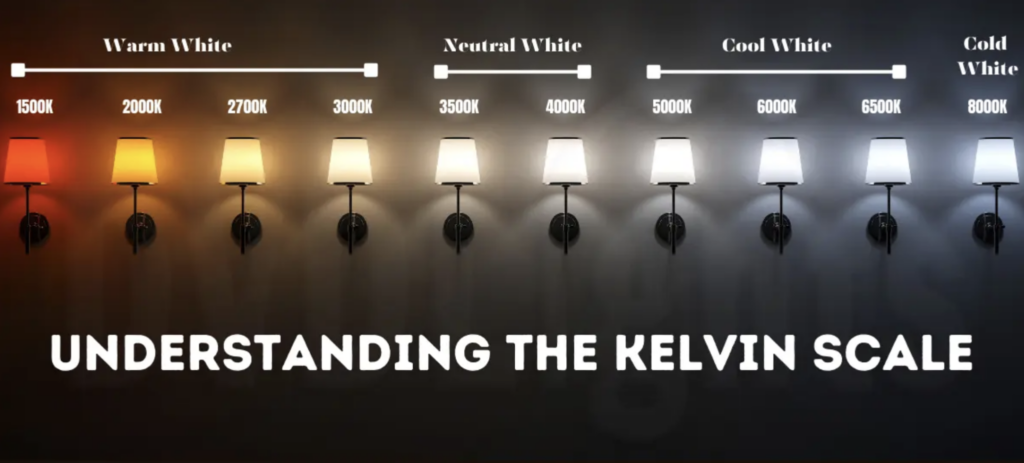
- Warm-colored — shorter wavelength (blue-violet) light should be limited, as it scatters much more intensely in the atmosphere than longer wavelength lights (red/yellow) and causes visual discomfort.
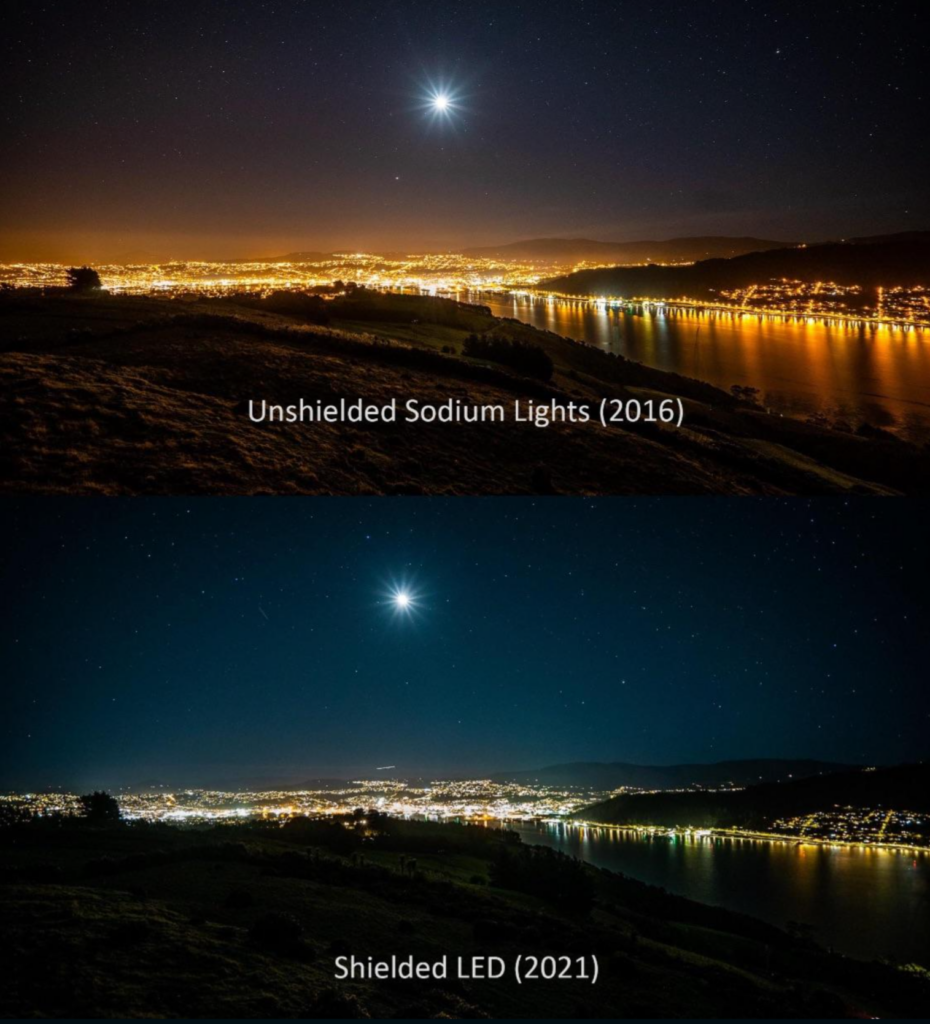
Apta Lighting Design Studio recommends a color temperature below 3000 K. They also state that LEDs and Compact Fluorescent Lights (CFLs) are better alternatives to conventional incandescent bulbs, thanks to their low luminance that does not compromise visibility. These bulbs also consume less energy.
There are four categories of luminaires, depending on location and purpose:
- Residential Luminaires, for homes
- Commercial Luminaires, for business properties and public buildings (schools, hotels, and government buildings)
- Pedestrian Comfort Luminaires, which create a more comfortable experience for pedestrians
- Sea Turtle Sensitive Luminaires, which do not disrupt the natural navigation system of turtles
As Sea Turtle Conservancy explains, sea turtles are disturbed by artificial light because babies are driven towards the brightest light source after hatching. The brightest horizon used to be the one on the side of the ocean as opposed to the dark sand dunes, but due to artificial lighting they are mislead.

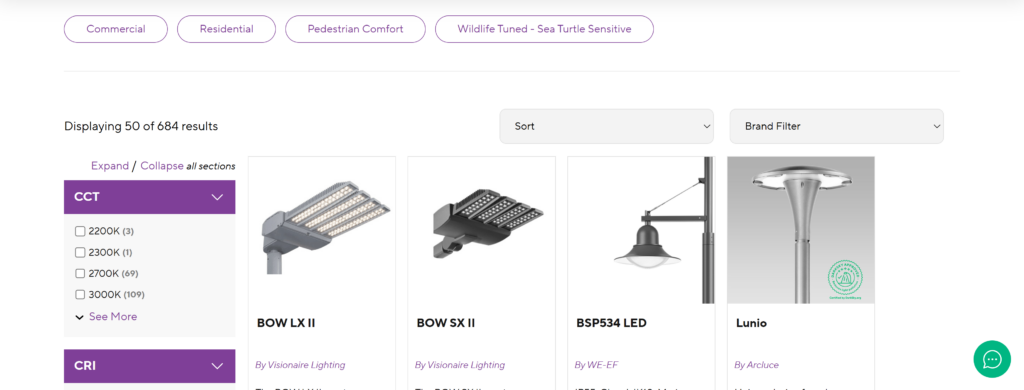
Producers can apply to receive the DarkSky approval by filling out a form on their website. The list of approved fixtures can be found on their website, with the option to filter them based on usage, technical properties and brands.