Last week I asked myself “How can interaction design combat light pollution?”. This week I researched one way to raise awareness for the cause, which is citizen science. It involves regular people, who can submit measurements of the night sky brightness. This way, they support scientific projects in an interactive and educational way. I found out that there are several campaigns that deal with this theme, but the majority of people are not aware of them and I wonder why.
To get to the root of the problem, I selected the Globe at Night project and tested its discoverability and usability. According to its website, Globe at Night is the most successful light pollution awareness campaign to date, thanks to over 200,000 measurements from people in 180 countries over the last 14 years.
The research method I used was usability testing. I started out by defining two tasks I would present to each participant:
- You want to report data about light pollution in the sky. Find a service on the Internet (app or website) that allows you to send data to scientists.
- Report the condition of the sky right now to the Globe at Night project.
I tried to include people of different ages, nationalities and levels of digital competency. Ideally, everyone who has a smartphone or a pc and access to the Internet is part of my target group, but I chose to narrow it down to people interested in science or nature lovers. I was able to find 5 people, who performed the tests on pc and on smartphone.
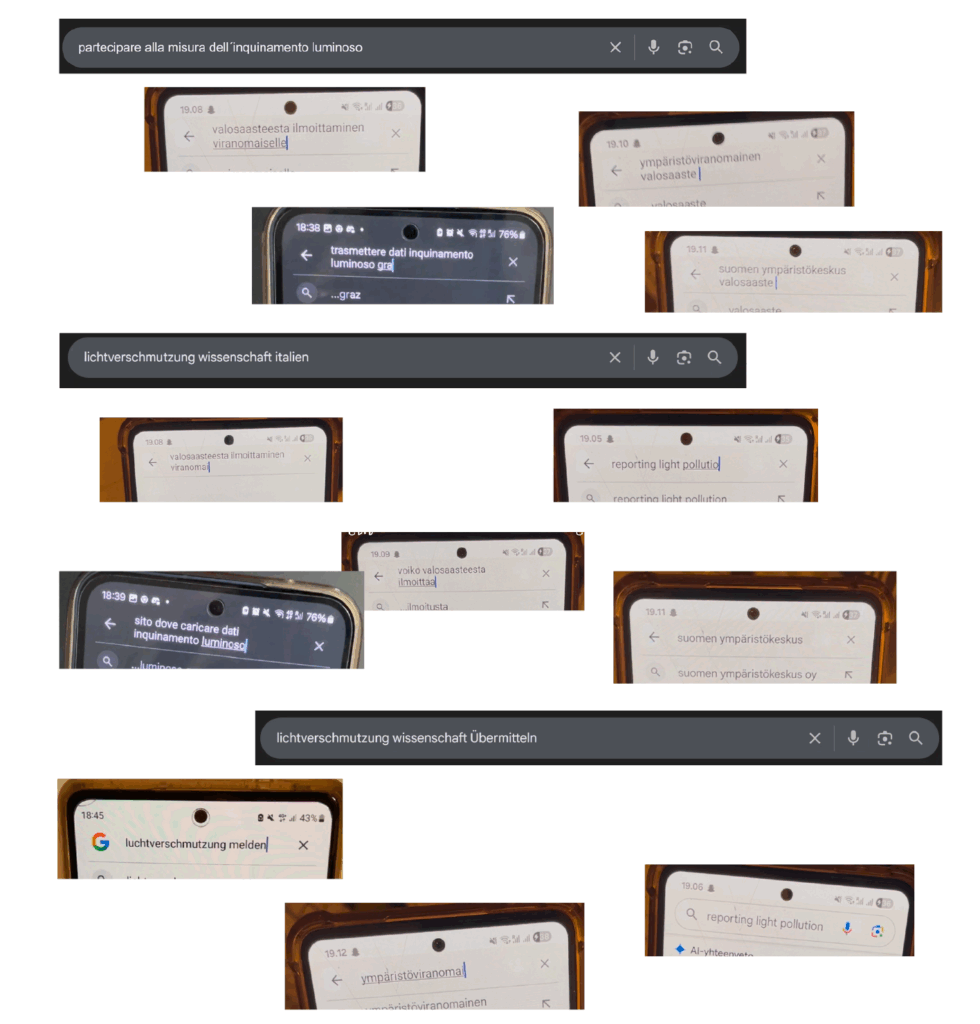
It is not easy to find a service that allows you to report data about light pollution to scientists. People tend to search in their own language for a service in their city and country. Many websites were found but no one was convinced of their result. The Globe at Night project claims to be the biggest of its kind, but it remains hidden by the search engine, even when searching for keywords like “report light pollution”. I think that this problem could be solved by improving the Search engine optimisation and taking into account the internationality of searches.
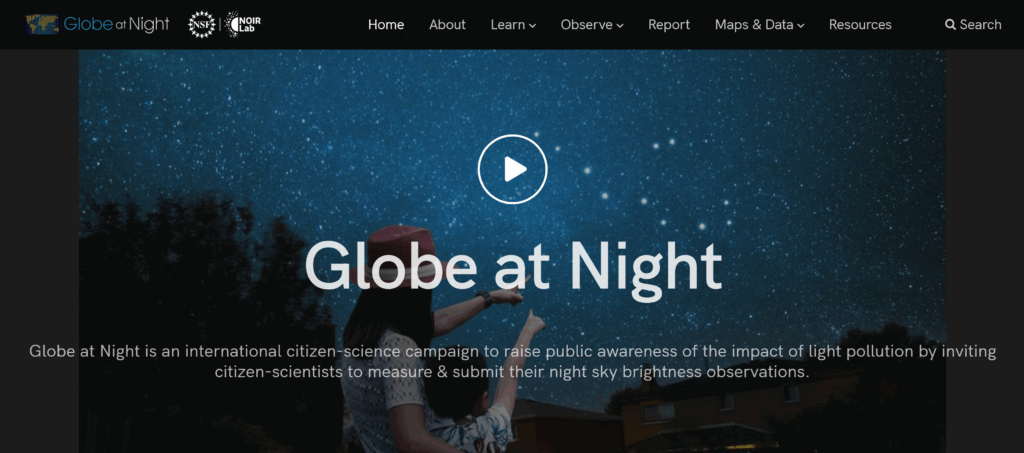
With respect to the Globe at Night website, I detected various technical issues. While the report form exists in many different languages, the homepage is only in English, making it difficult to find how to report data for non speakers, especially those belonging to older generations.
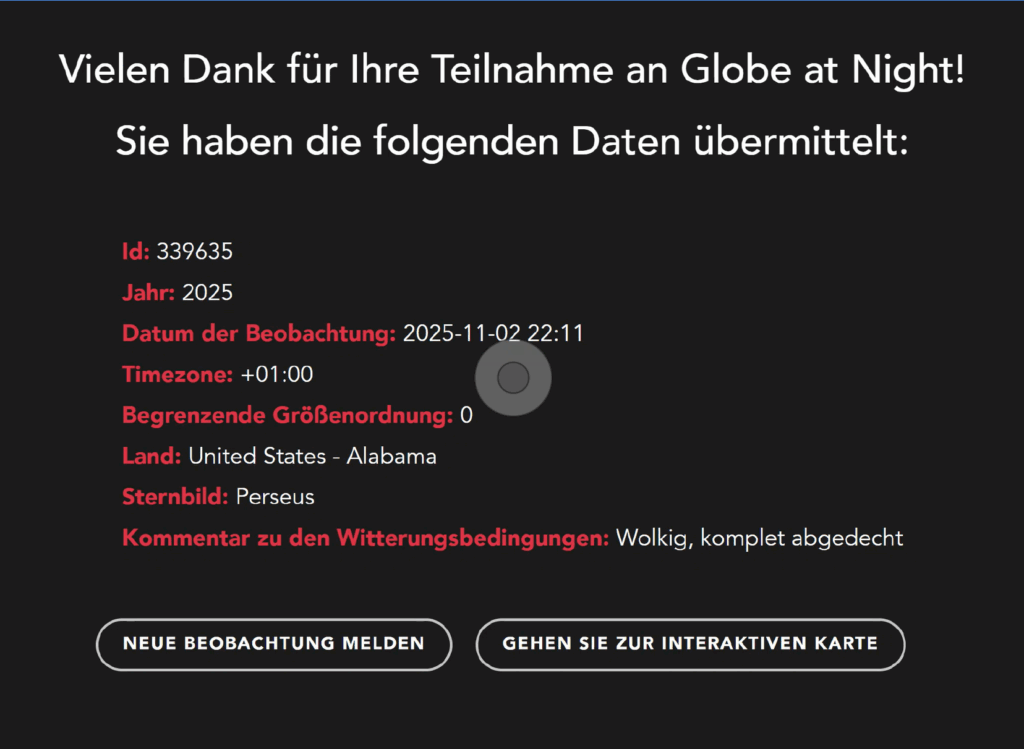
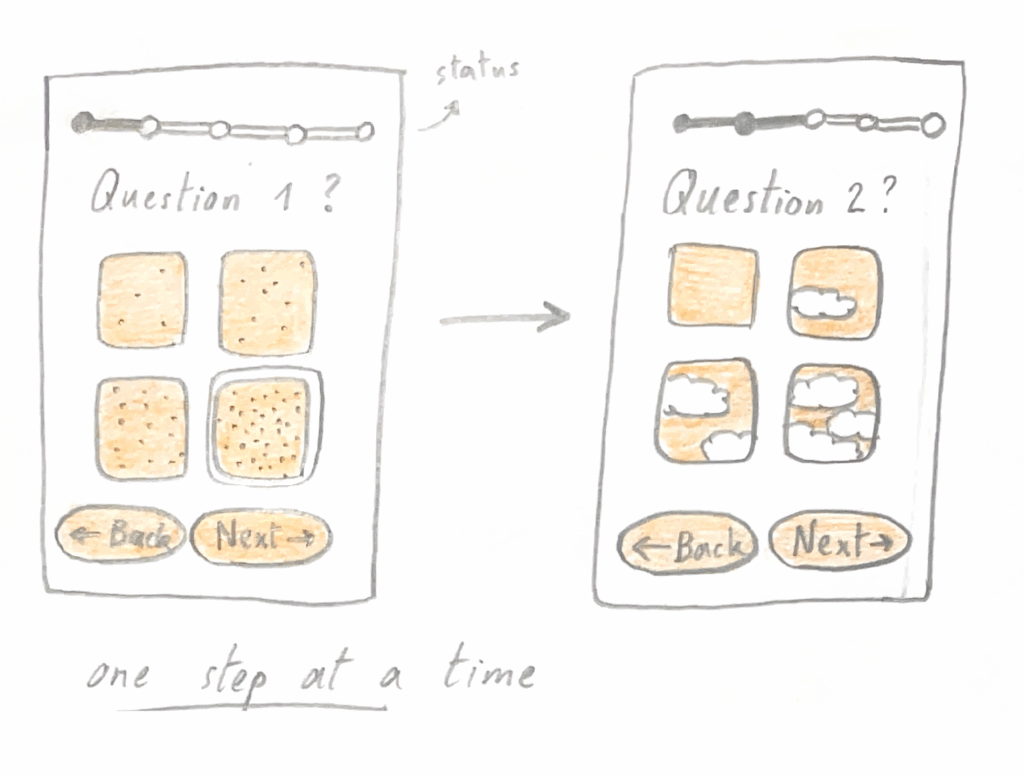
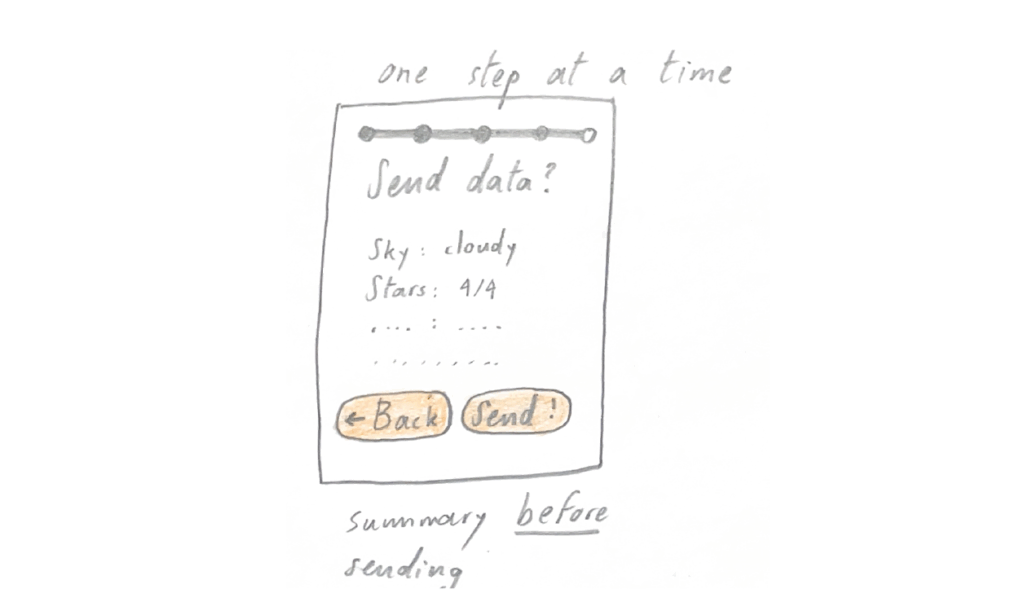
On the desktop version, due to the disposition of the steps in space, some are overseen, while on mobile it was easier to follow them all. Some participants noticed that they forgot to fill out some areas after submitting the results. I believe that the process could be improved by separating the steps or showing them one under the other while scrolling down. A recap should be visible before submitting data, not after.
An aspect that created many issues was the location. Since all of the participants allowed location sharing, they expected the data to be correct, which was not the case.
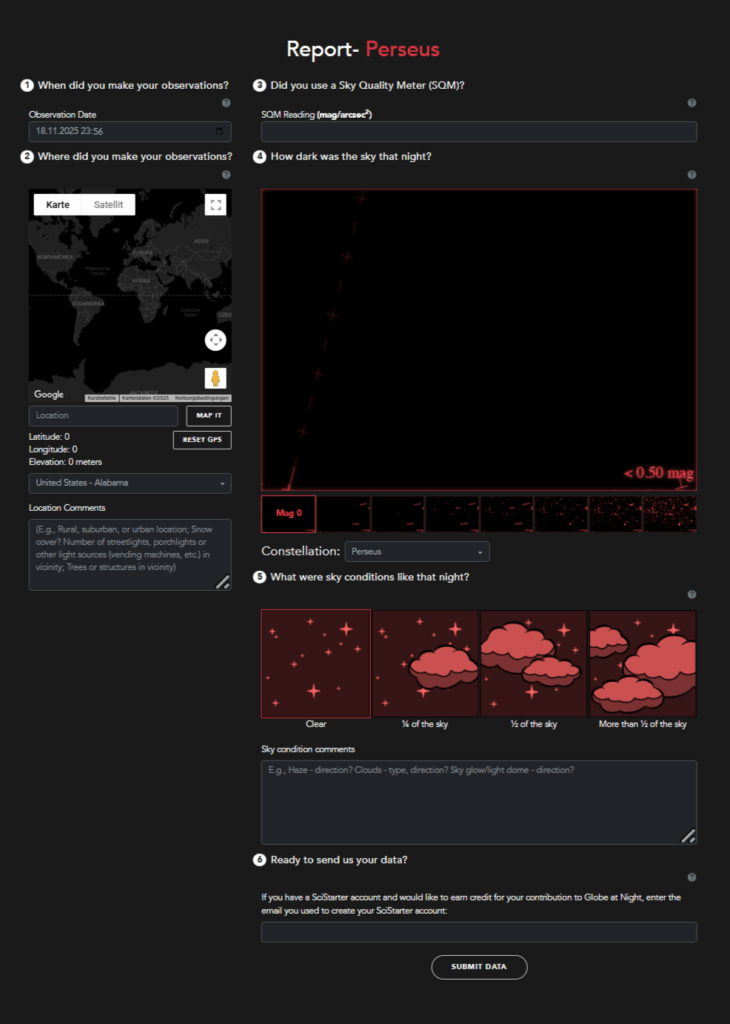
Finally, some participants felt overwhelmed when confronted with specific questions. One was whether they used a Sky Quality Meter to measure the brightness of the sky and the other concerned what constellation they were looking at. The project claims to be “citizen science” but these questions are not accessible to people lacking astronomical knowledge. I reckon they should be omitted, explained better or only shown after the user has demonstrated to posess the required knowledge in a previous answer.
There is a chance Globe at Night has never performed usability tests on their website, and this project could help them improve their service. I might consider contacting them, while I research other ways interaction design can help fight light pollution.