#slowness #slowliving #slowinteraction #digitalcalm #calmtechnology
Modern interfaces seem fast not only because they are optimized, but also because they were designed that way from the outset — visually, cognitively, and, most importantly, emotionally.
“Did you ever notice that some apps seemed faster even though your internet connection remains the same?” — Ayman Abdallah, 2025 [1]
The author explains that the perception of speed depends not only on metrics but also on design decisions such as smooth animations, instant feedback, and placeholders during loading—all of which create that “feeling of speed” regardless of the actual loading time.
Today, fast interfaces have long become the norm. In this article, I want to examine and discuss the key patterns of “fast UX” that define our digital experience.
1️⃣ Instant Feedback — instant reaction as an illusion of control
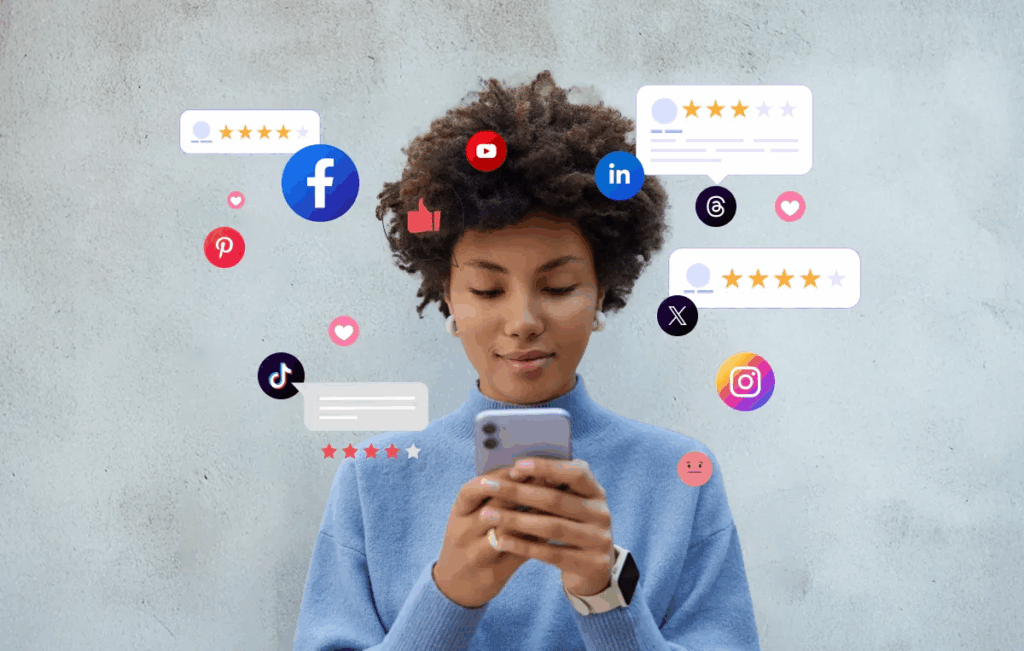
Instant Feedback is a so-called seamless reaction: you like something, and the heart immediately turns red; you swipe right, and the screen changes instantly without any smooth animation. This pattern reinforces the feeling that the app is always “ready” and sometimes even faster than you are.
Examples:
⭐Instagram: likes, saves, animations — instant, even if the request has not yet reached the server. “Visual simulation of action.”
⭐TikTok: swipe to the next video with zero delay, even if the video is loading in the background.
⭐YouTube Shorts: reactions and swipes are also instantaneous. The feeling of an endless stream.
❔ How does this speed things up? Instant Feedback suppresses the moment of pause, thought, and reflection. Even the slightest delay could allow you to realize what is happening.
2️⃣ Endless scroll — no beginning and no end

One of the most fashionable inventions of digital content consumption culture.
Examples:
⭐TikTok: swipe to the next video with zero delay — even if it is loading in the background. The platform has also recently introduced the ability to automatically scroll through the feed.
«Are we truly ready for it to be the white noise in the background of our daily lives?» — Jordan Hart [2]
This is a great example of how one seemingly insignificant feature can fundamentally change the core concept of the TikTok platform.
“Autoscroll makes TikTok — an app that people use to dissociate, and which already has to remind its users to take a break because they’ve been scrolling for hours — into an even more passive experience. And I’d argue you get the most out of TikTok when you engage with it, going down that rabbit hole on a new topic that caught your interest or reading the back-and-forth in the comments section about a hot-button issue.” [3]
Endless scroll provides an infinite amount of content without a stop signal, without a bottom line, and even without a pause. The only pause is when you go to the comments and try to socialize a little. This is a difficult task with an unknown outcome, which, from a psychological point of view, forces the user to continue in an attempt to find the end, which does not exist.
⭐We are also all familiar with Instagram Reels, Threads, Pinterest, and X feeds.
“As a result, the feed is a ubiquitous interface — an infinite stream of content, a list that goes on forever.” — Alexis Lloyd [4]
3️⃣ Notification Loops — as a trigger for acceleration
Notifications are a kind of rhythm in which we live. They form an accelerated cycle of checking:
Notification —> Waiting —> Reaction —> Click —> Attention
Examples:
⭐Instagram: notifications that “someone has started a live stream,” “you’ve been tagged,” “new post”
⭐Facebook: notifications for every random action
⭐TikTok: push notifications about “trending videos you might like”
⭐Snapchat: the same streaks
❔ Why does this speed things up? Notifications create a certain time frame that dictates when we need to act, without giving us a chance to think. We don’t choose the moment — it chooses for us.
4️⃣ Micro-Acceleration Patterns

Modern applications use micro-movements that create the illusion of speed, even if the actual work of the system takes longer. This is one of the key mechanisms of “fast UX.”
Examples:
⭐LinkedIn, Airbnb, Uber, Notion: use of Skeleton Leaders — so-called low-fidelity gray blocks that mimic the structure of future content. This way, the brain is already loaded and sees movement, it seems that everything is about to happen, but the loading is still in progress. This keeps the user engaged.
⭐Spotify, Google, Gmail: use the technique of movement towards the result. Interfaces use animation before the data is ready. Animation of the transition to the player, a pop-up map, opening a letter.
⭐Instagram, YouTube, Duolingo: auto-advance behavior. Content plays and switches automatically — without the user’s decision. The video switches to the next one based on a recommendation, the same endless feed, or a transition to the next task without indicating it.
🔚 Conclusion
Finally, I would like to mention that all these patterns are effective, but not from the point of view of human experience.
For humans, this creates:
📌a feeling of rush;
📌an inability to stop;
📌short, superficial attention;
📌an accumulation of cognitive noise;
📌digital fatigue;
📌destroy the sense of time by accelerating the internal rhythm.
Fast UX is more than just speed.
It is the aesthetics of acceleration built into every movement: swipe, like, notification, update.
These patterns shape the pace of our lives.
I can also recommend a relevant video on this topic by a blogger who highlights the problems of digital noise and, based on her own experience, talks about how to clear it up and turn it to your advantage:
“Our brain processes approximately 10 billion bits per second through our senses—sight, hearing, and touch. At the same time, our prefrontal cortex, which is our attention, can only process 10 bits per second of what it allows into our consciousness.
This ratio is not really new. Even in the days of the telegraph, people complained of being overwhelmed. I love reading historical commentary on new technologies because what we now consider unique to our time has actually been described in the same words by people in the past.” [5]
Sources 🛈
[1] Ayman Abdallah. Why some apps feel faster than others. Medium, 2025. Available at: https://medium.com/@aymanabdallah/why-some-apps-feel-faster-than-others-926a30839fab
[2],[3] Jordan Hart. TikTok’s new auto-scroll feature sparks debate. Business Insider, 2024. Available at:
https://www.businessinsider.com/tiktok-autoscroll-feature-comments-section-2024-1
[4] Alexis Lloyd. Future #62: Invention & Reinvention. Ethical Futures Lab / Medium, 2023. Available at:
https://medium.com/ethical-futures-lab/future-62-invention-reinvention-4c657950f89d
[5] Anastacia Kay. Как выйти из цифрового тумана (How to Get Out of Digital Fog). YouTube, 2024. Available at:
https://www.youtube.com/watch?v=t_vi1-y-bbQ
