From “Mental Construction” to Digital Consumption: How the ‘Live View’ screen killed our ability to see.
Design & Research | Master Thesis Log 04
“A photograph is not created in the camera. It is created in the mind.”
This concept, famously articulated by Stephen Shore [1], is known as Mental Construction. Shore argues that the physical act of pressing the shutter is just the final step of a long psychological process. The photographer looks at the chaos of the world, organizes it mentally into a frame, and then uses the machine to capture that thought.
But today, this order of operations has been reversed.
The “Live View” Lobotomy
In my research into camera interfaces, I have identified a critical shift in how we interact with the image: the shift from the Viewfinder to the Screen.
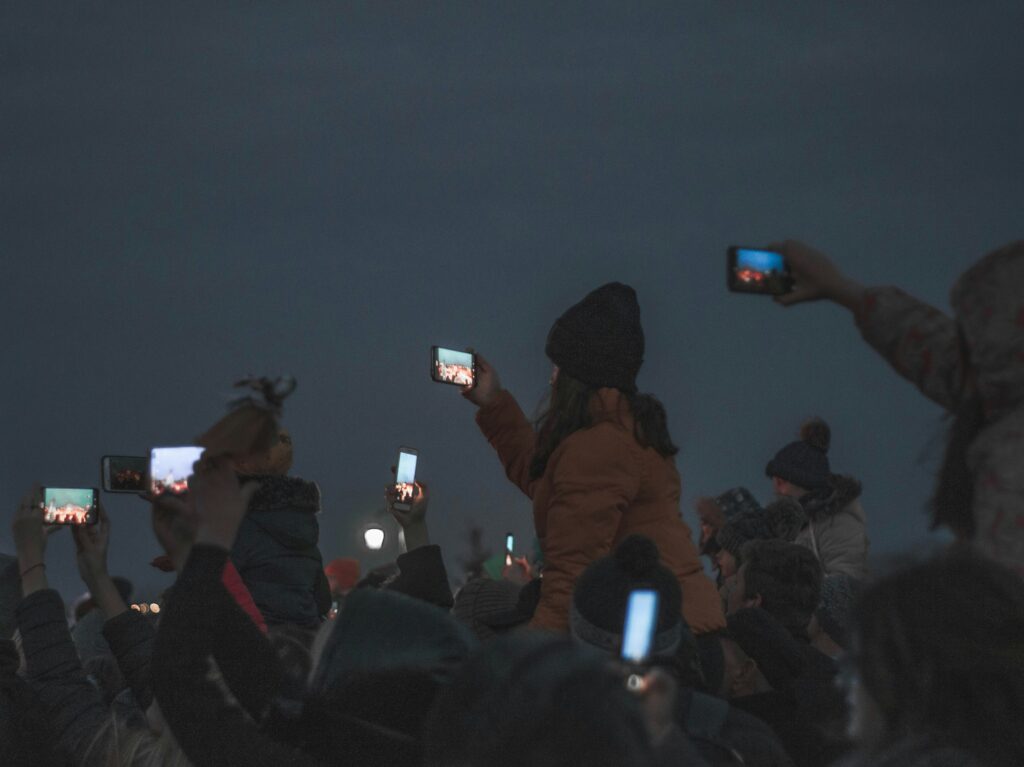
The Viewfinder (Traditional): When you look through an optical viewfinder, you are looking at reality. The camera is just a window. You have to imagine (Pre-visualize) how the film will interpret that reality. You are active.
The Screen (Modern): When you look at a smartphone screen, you are looking at a processed simulation. The HDR is already applied. The colors are already boosted. You don’t need to imagine the photo because the computer has already finished it for you.
This interface design encourages Post-rationalization instead of Pre-visualization. We shoot first, and ask questions later. We treat the world as raw data to be harvested, rather than a subject to be understood.
The Death of the “Latent Image”

Ansel Adams wrote extensively about “visualization”—the ability to see the final print in your mind’s eye before the exposure is made [2].
Digital interfaces have killed this skill. Because the feedback loop is instant (0.01 seconds), there is no gap for the imagination to live in. In film photography, there was a “Latent Image”—the invisible period between shooting and developing. That invisibility forced the photographer to trust their vision.
By removing the latency, we removed the anxiety. But we also removed the intent. If I can take 1,000 photos in a minute and delete 999, I stop caring about the 1.
Implications for Interaction Design
This leads to a radical question for my thesis: Can we design for blindness?
If the screen is the problem, maybe the solution is to take it away. I am beginning to conceptualize an interface that re-introduces “digital latency.”
Imagine a camera app that doesn’t show you the photo immediately. Imagine a tool that forces you to define your parameters (Mood: Melancholy? Lighting: High Contrast?) before it opens the shutter.
By delaying the gratification, we might restore the “Mental Construction.” We might force the user to become an architect of the image again, rather than just a consumer of it.
Next Steps: Defining Authenticity
If we strip away the instant gratification and the AI perfection, what is left? Next week, I will finally tackle the definition of “Authenticity.” I will look at the debate between “Optical Truth” (what the lens sees) vs. “Emotional Truth” (what the human feels), and how we can code that difference into a system.
References (IEEE)
[1] S. Shore, The Nature of Photographs. Phaidon Press, 2007.
[2] A. Adams, The Camera. Little, Brown and Company, 1980.
AI Declaration: This blog post was drafted with the assistance of an LLM to explore the psychological concepts of ‘Mental Construction.’ The connection to Interface Design and the ‘Latent Image’ theory are my own research.
