Documentaries, especially ones about history, use often a combination of scenes with actors and actresses, interviews with experts and animation. The further back in time the historical topic of the documentary plays, the less actual footage of the time period will exist. For example, when portraying the life of dinosaurs or showing a depiction of the big bang there is no way around some form of animation. 3D animation of dinosaurs is necessary to portray a realistic interpretation of scientist findings about their life. These animations are expansive and time consuming which is why the same scenes may be played multiple times. As soon as the historical period includes humans scenes with actors or actresses are used more often. Animation becomes less important, however, it is still used.
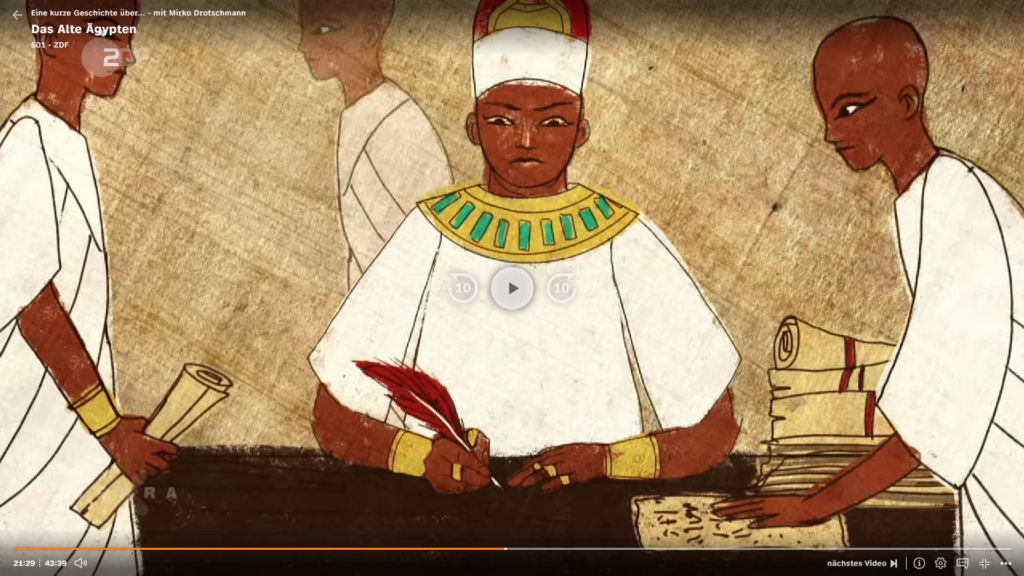
As an example in an TerraX episode called “Eine kurze Geschichte über … – mit Mirko Drotschmann – Das Alte Ägypten” produced by ZDF all three styles are combined. There is a section with actors and actresses, one with the reporter and experts as well as short animated sequences. The animated sequences are kept close to the style of the drawings of ancient Egypt if not used directly as reference. The animation is kept simple and does not have complicated movements or effects. It is in 2D and only a few elements are moved. The most important factor is the information they convey to the viewer in combination with the narration. In one scene some legends as well as gods are described with their powers shown. In this simple animation style this can be shown instead of simply told. While the usage of actors and actresses would be possible, using VFX or SFX would be more expansive and time consuming. Meanwhile getting the information from an interview section would be less impactful.
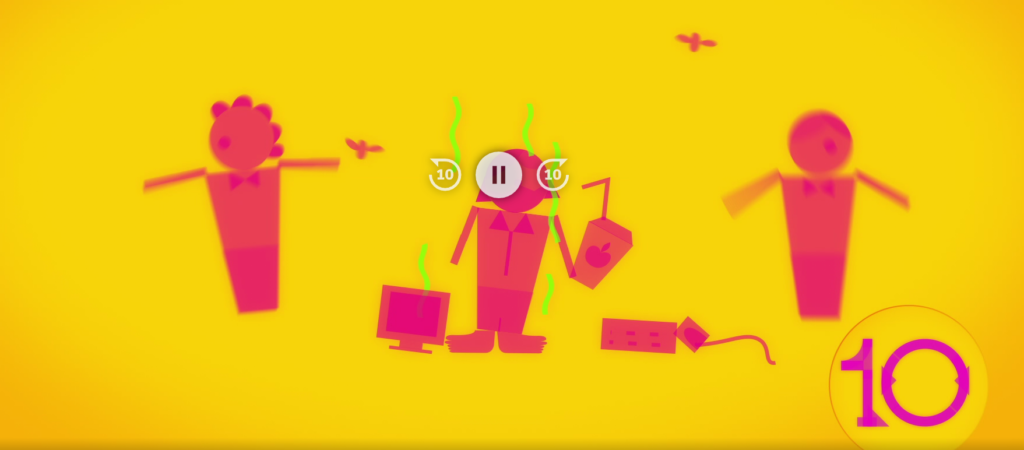
In another ZDF production “Die glorreichen 10“ 10 historical facts are put together in a top 10 video. They use footage from other ZDF productions in combination with their own animation. In this case characters of this animation consist of base shapes like circles and rectangles, resembling pictograms. With simple movements a humorous fact is being told to the viewer. The art style enhances comedy with help of exaggeration and fun sound effects. With these sections and the humorous approach to the story telling overall it catches a different target group, while still telling historical facts.
“Die Sendung mit der Maus“ is a TV show for children. They always have some sort of documentary included in the program between different animations. If it is a longer section about the production of for example ski, the documentary is interrupted by a short animation of their mascot the orange mouse. The mouse will often interact with something similar to the subject, for example skiing in a little skit. The theme therefore is not fully dropped, yet there is a pause from the fact and explanation.
Overall animation can enhance a documentary with a visual and tonal change. Dry facts can be broken down into digestible animated portions.
https://www.zdf.de/play/dokus/die-glorreichen-10-260/die-glorreichsten-gruender-der-geschichte-100
