Introduction
We have become an indoor generation.
We spend most of our lives inside buildings, on public transportation, and in enclosed spaces. Home, school, office, gym, and shops: we rarely spend time outdoors, even though we often think otherwise.
Recent studies show that people believe they spend about 60–70% of their time indoors, but the reality is very different: on average, we spend up to 90% of our day indoors. This change has occurred in a very short time compared to the history of human evolution, which has seen us live outdoors for hundreds of thousands of years, following the natural cycles of light and dark.
This distance from nature affects the body, the mind, and the way we relate to the environment. In this context, caring for plants becomes a simple yet meaningful gesture, especially for certain generations more sensitive to these issues.
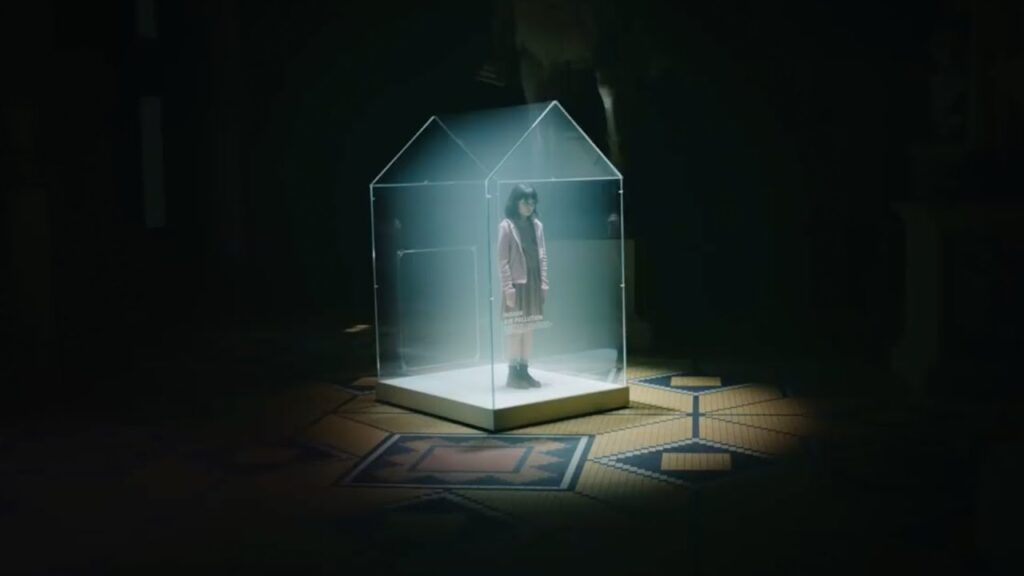
Image 1 . Screenshot from “VELUX『the Indoor Generation』” video
The Physical and Mental Effects of an Indoor Lifestyle
Living primarily indoors has concrete consequences. Indoor air is often more polluted than outdoor air, even in cities. Building materials, furniture, cleaning products, and simple daily activities like cooking or breathing increase levels of CO₂ and harmful substances.
The lack of natural light also has a significant impact. Our bodies use daylight to regulate our sleep-wake cycles. Spending little time outdoors can cause sleep problems, fatigue, difficulty concentrating, and mood swings. In many cases, it also contributes to stress, anxiety, and seasonal depression.
Despite this, we’re often unaware of how little contact we have with nature. This creates a gap between perception and reality that makes it difficult to change habits.
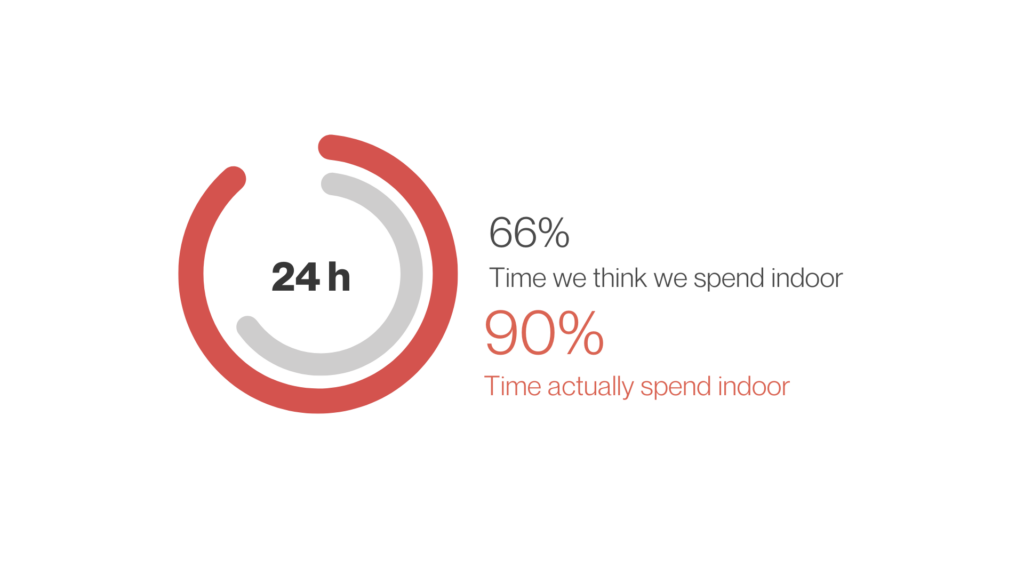
Image 2. Graph showing average time spent indoors over 24 hours – from Bauenmitholz
Why Millennials and Gen Z Are More Drawn to Plant Care
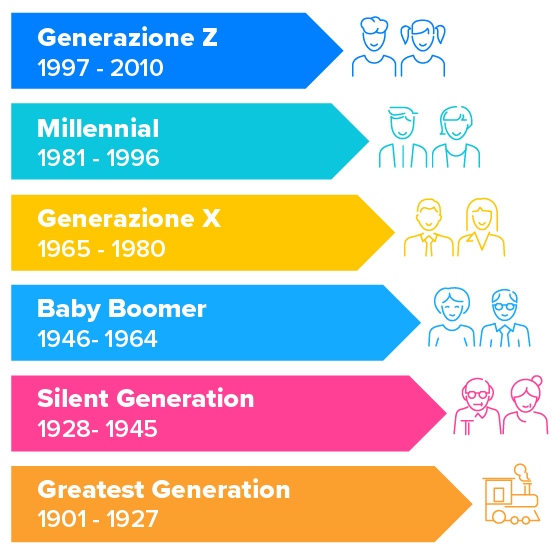
Image 3. Graph with the different generations divided by age group- from Fineco Bank
Research shows that millennials and Gen Z are currently the generations most involved in caring for indoor plants. This doesn’t mean they have more plants than other generations, but they purchase and care for them more frequently and with greater attention. There are several reasons:
- They more often live in apartments without gardens
- They have a strong connection to mental well-being
- They are more sensitive to environmental issues
- They use plants as a form of self-care
For many young adults, caring for a plant isn’t just a hobby, but a way to slow down, take responsibility, and reconnect with something alive. It’s no coincidence that a large percentage of millennials say that plants make them happier and more optimistic about the future.
Indoor Plants as a Response to Disconnection from Nature
Indoor plants can mitigate some typical problems of indoor living:
- They improve the perception of air quality
- They introduce natural variations into the space
- They make the passage of time visible
- They promote routine and attention
Even when the biological impact is limited, the psychological effect is strong. A plant changes, grows, and reacts. It’s the opposite of a screen that’s always the same.
This opens up an interesting space for interaction design.
Nature-Based Interaction Design: From Screens to Living Interfaces
We are the indoor generation, but that doesn’t mean we have to give up contact with nature. Younger generations, accustomed to complex digital interfaces, seem to increasingly appreciate simple, natural interactions. Plants offer just that: interaction based on observation, time, and slow feedback.
For interaction design, this means rethinking the role of interfaces:
- fewer screens
- more living objects
- more relationships, less control
Nature-based user interfaces can help rebuild a connection with the environment, especially for those who mostly live indoors.
A young woman cultivating her plants – Image by senivpetro on Freepik
References
[1] Plant Plan, “Unpacking the studies of Prof. Dr. Tove Fjeld,” Plant Plan Blog. [Online]. Available: https://www.plantplan.co.uk/blog/unpacking-the-studies-of-prof-dr-tove-fjeld. [Accessed: Jan. 2026].
[2] A. Author et al., “Article title,” International Journal of Environmental Research and Public Health, vol. 19, no. 12, Art. no. 7454, 2022. [Online]. Available: https://www.mdpi.com/1660-4601/19/12/7454
[3] University of Technology Sydney, “Indoor plants,” UTS, Sydney, Australia, 2014. [Online]. Available: https://www.uts.edu.au/globalassets/sites/default/files/indoor_plant_brochure_2014.pdf
[4] N. Blatchford, “The houseplant industry is thriving thanks to millennials and their plant babies,” National Post, 2019. [Online]. Available: https://nationalpost.com/news/canada/the-houseplant-industry-is-thriving-thanks-to-millennials-and-their-plant-babies
[5] P. Ahmmadi, M. Rahimian, and R. G. Movahed, “Theory of planned behavior to predict consumer behavior in using products irrigated with purified wastewater in Iran,” Journal of Cleaner Production, vol. 296, 2021, Art. no. 126359, doi: 10.1016/j.jclepro.2021.126359.
[6] P. T. Thuy, N. T. Hue, and L. Q. Dat, “Households’ willingness-to-pay for mangrove environmental services: Evidence from Phu Long, Northeast Vietnam,” Trees, Forests and People, vol. 15, Art. no. 100474, 2024, doi: 10.1016/j.tfp.2023.100474.
[7] C. J. Armitage and M. Conner, “Efficacy of the theory of planned behaviour: A meta-analytic review,” British Journal of Social Psychology, vol. 49, no. 3, pp. 471–499, 2010.
[8] X. Liu, H. Lindhjem, K. Grimsrud, E. Leknes, and E. Tvinnereim, “Is there a generational shift in preferences for forest carbon sequestration versus preservation of agricultural landscapes?” Climatic Change, vol. 176, no. 9, 2023, doi: 10.1007/s10584-023-03588-z.
[9] B. Satinover, J. Nichols, and J. W. Holt, “A comparison of sustainability attitudes and intentions across generations and gender: A perspective from U.S. consumers,” Cuadernos de Gestión, vol. 23, no. 1, pp. 51–62, 2023, doi: 10.5295/cdg.211647bs.
[10] X. Li, J. Dai, X. Zhu, J. Li, J. He, Y. Huang, X. Liu, and Q. Shen, “Mechanism of attitude, subjective norms, and perceived behavioral control influence the green development behavior of construction enterprises,” Humanities and Social Sciences Communications, vol. 10, no. 1, p. 266, 2023.
[11] W. J. Fisk, “Health and productivity gains from better indoor environments and their relationship with building energy efficiency,” Annual Review of Energy and the Environment, vol. 25, pp. 537–566, 2000. [Online]. Available: https://www.annualreviews.org/doi/pdf/10.1146/annurev.energy.25.1.537
[12] CasaPortale, “Indoor generation,” 2018. [Online]. Available: https://www.casaportale.com/public/uploads/Indoor%20generation.pdf
