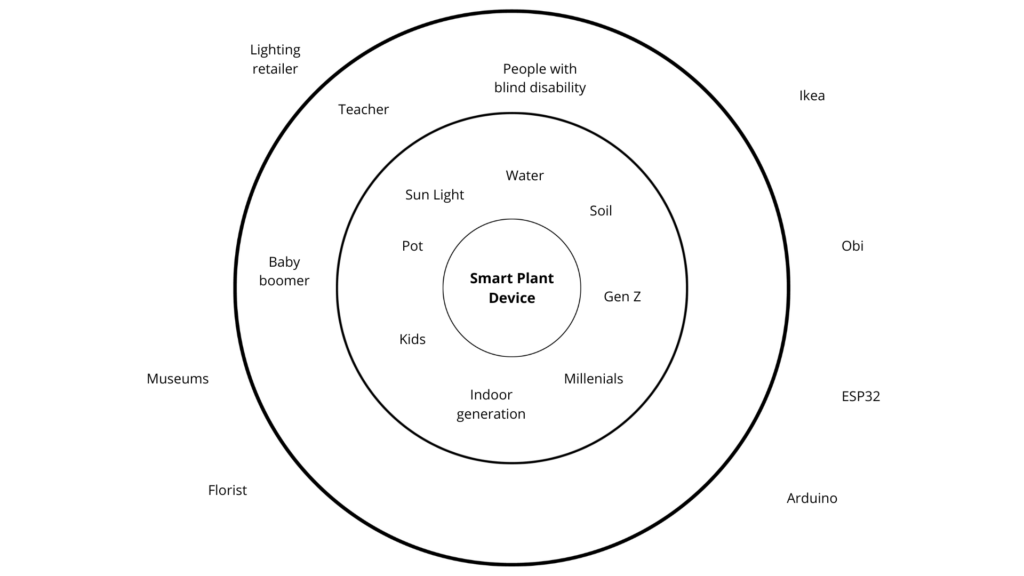
The system map places the product at the center, but expands the perspective to a wider ecosystem. Instead of defining it as a single object, such as a lantern, the project considers a broader category: a smart plant care device. This allows more flexibility in form and use.
Around the product, the first layer includes direct users and elements directly involved in plant care. These are not only people, but also natural agents such as sunlight, soil, and water, which all influence how plants grow. Human users include generations such as Gen Z, millennials, kids, and the “indoor generation,” meaning people who spend most of their time inside and may have less direct contact with nature.
The second layer includes indirect users. These are people who may not use the device directly but are still connected to it. For example, teachers could use it in educational contexts, especially with children. Kids can interact with the device in a playful and learning-oriented way. People with visual impairments are also considered, since the use of sound can support accessibility. Baby boomers, such as parents, might not be the main users but could be interested in the product through their children.
The outer layer includes providers and institutions. These can be stores like IKEA or OBI, which are related to home products, or suppliers of electronic components such as Arduino and ESP32. Florists are also relevant, as well as museums, if the product is used in installations or educational workshops. Shops that sell lighting products are important too, since the device can function both as a practical tool and as a decorative object.
