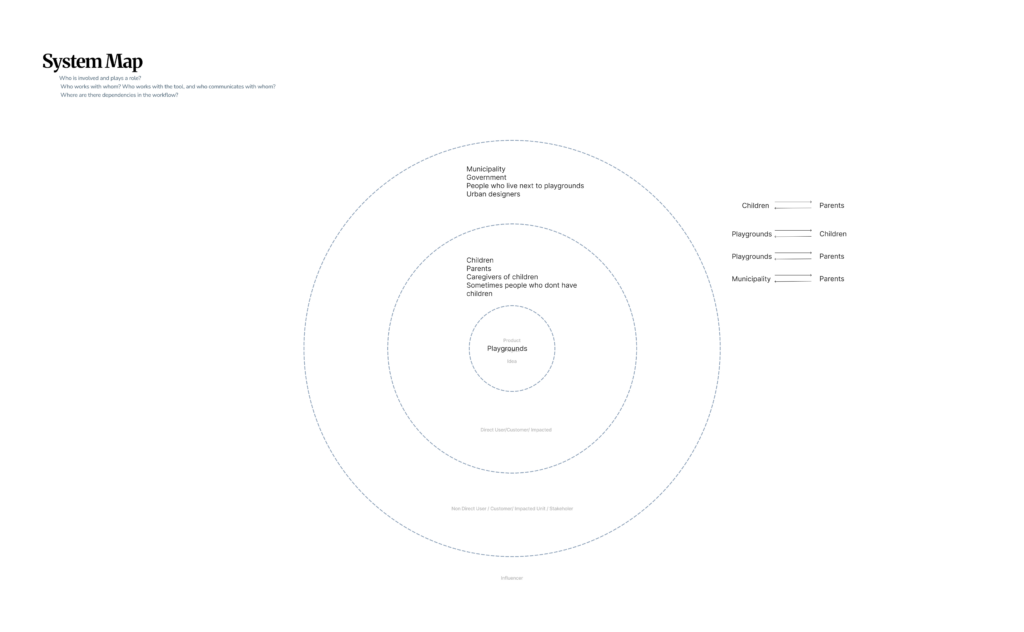
At the center of the system are playgrounds. Surrounding them are primary users such as children, parents, and caregivers, who actively engage with these spaces. Beyond this immediate layer, broader stakeholders like municipalities, urban designers, and local communities influence how playgrounds are designed, built, and maintained.
The map also highlights key relationships, such as the connection between children and parents, and the role of municipalities in shaping decisions that affect both groups. These interactions reveal that playgrounds are not isolated spaces but part of a larger social and institutional system.
Playgrounds is not only about physical structures, but about navigating a network of stakeholders, needs, and influences. This perspective reinforces the importance of including children’s voices within a complex design ecosystem.
