Last time we discussed what structure an ecosystem on Europa could have, today it’s time to explore it. I’ve grouped the animals into their place in the food chain. This way I can build it up gradually, thinking about the way animals would need to evolve to be able to consume their prey or flee from becoming prey themselves.
I put my focus on arthropods, molluscs, cnidaria, annelids and cephalopods – no bony fish, as they seem to be far and in-between and soft tissue animals or those with a shell or exoskeleton dominate around the hydrothermal vents.
I also structured my ecosystem along the aquatic food web. Here, the base is made up of producers, in this case these would be the chemosynthetic bacteria. These are eaten by the primary consumers, who are eaten by the secondary consumers, who are eaten by the tertiary consumers or final consumers. finally, everything that’s left over is broken down by the decomposers.
Producers
Chemoplankton form the basis for life down around the hydrothermal vents of Europa. Through the biological conversion of the minerals and chemicals contained in the vents they produce energy and synthesize organic matter.

Primary Consumers
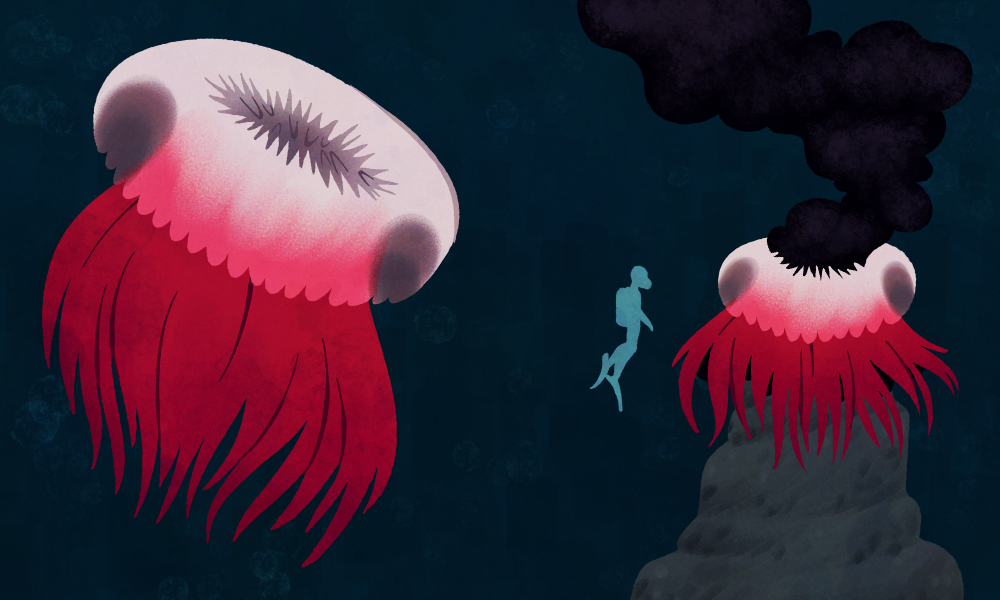
Floaters make up the subphylum of Vitrummarinum a group of animals comparable to jellyfish on Earth. They can be found in the waters right above the vents, drifting in and out of the plumes of smoke being expelled. They possess almost no sensory organs, neither do they have a brain – only a rudimentary sensory system that allows them to detect light, temperature and vibrations in the water. The opening in the centre of their body is filled with soft bristled that they use for filter feeding, which is usually done by “sitting” atop active vents.
Two species of them dominate in the oceans of Europa:
Red Cloaks (Anulusnatans palliumrubrum), which stand out with their diameter of around two meters. They have developed a sort of funnel made from tissue, allowing them to feed from the large vents in volcanically active areas.
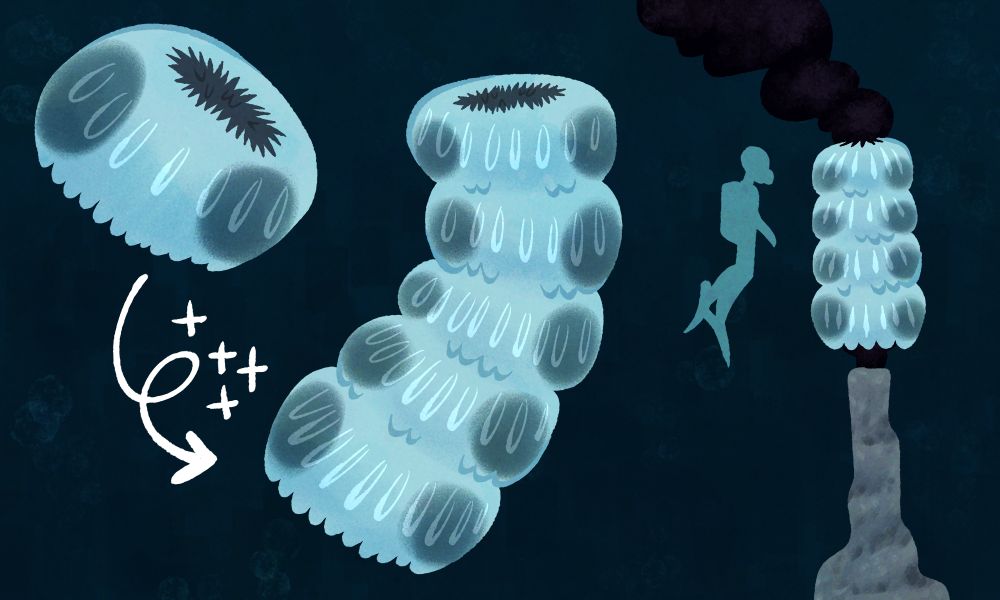
Glass Towers (Anulusnatans turrisvitrea) live in shallower oceans and grow only to a diameter of around 40cm. While they lack the funnel structure of their deep-sea cousins, they found a different way to maximize food intake: they “fuse” together with other members of their species, building large, tower-like structures that allow them to feed thoroughly and deter predators due to their unwieldy size.
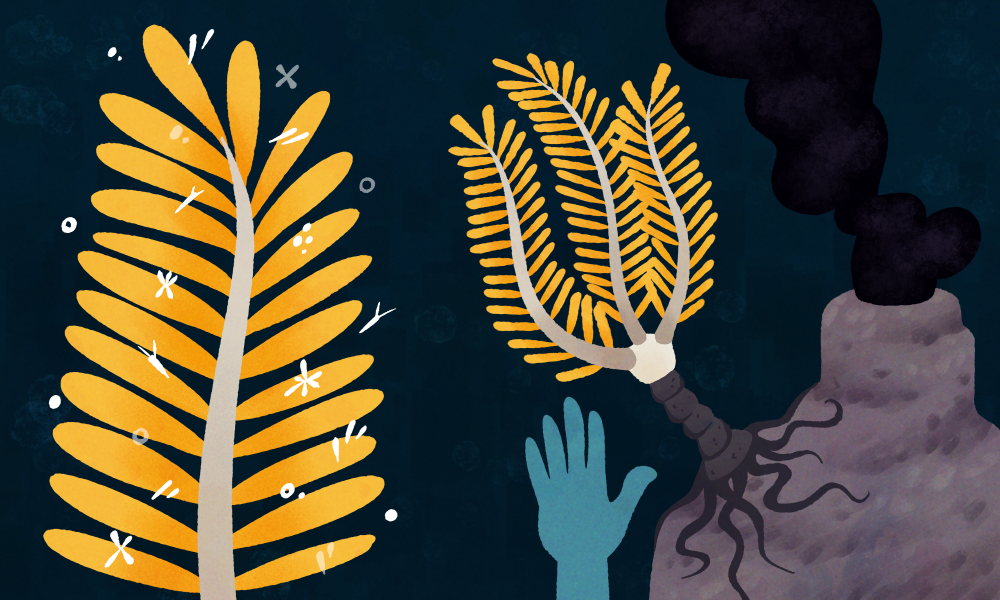
Although Antennae Trees may look like plants, they actually are part of the phylum Caulispennatus. They settle around the vents in both shallow and deep waters, where they dig into cracks and openings in the rock and remain sedentary. Antennae Trees are passive suspension feeders, using their feathered arms to filter Chemoplankton out of the water. Their stems are platted, likely an adaption to process their mineral-heavy diet and protect themselves from predators. They are able to swim by swinging their bodies back and forth, allowing them to move to different feeding grounds and evade predators.
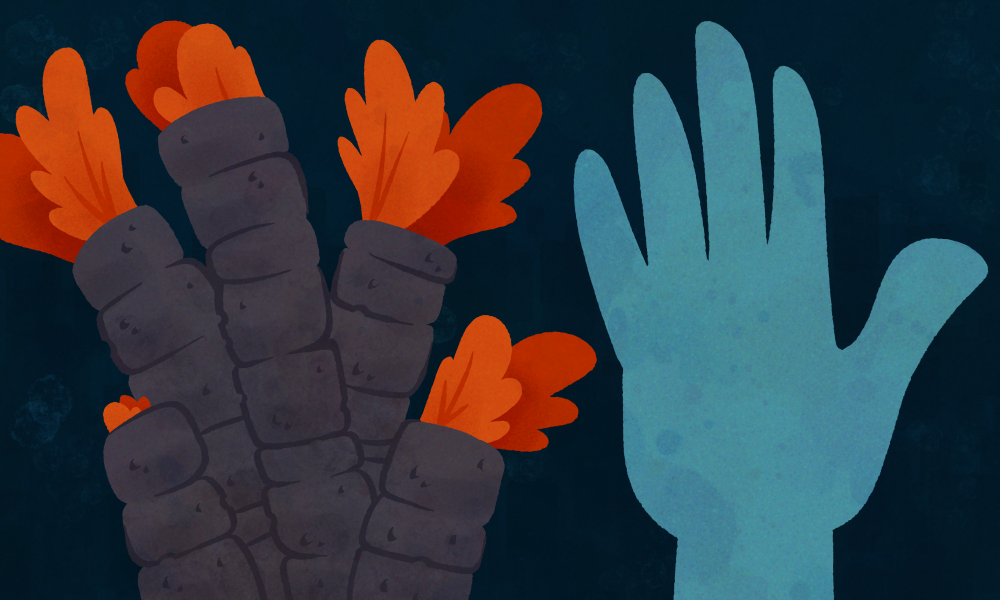
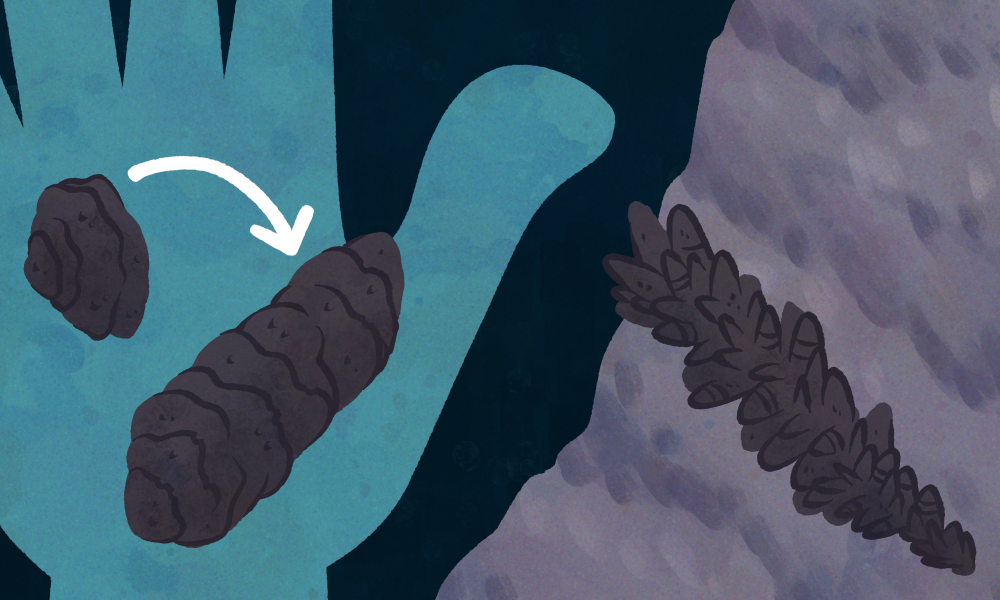
Pipe Worms are part of the same phylum as Antennae Trees, though they separated from their common ancestor around 400 million years ago. Their colonies can be found mostly around the equator, where the tides are strongest and thus the ocean the warmest. They expand often hundreds of square meters across the ocean floor. Their black pipe-like shells are composed from iron sulphides, that are excreted as they filter the black vent smoke for Chemoplankton. These shells protect them from a wide range of predators, allowing them to hide away whenever they sense unusual vibrations in the water.
Iron Beaks belong to the Laminaferrea phylum, a group of mollusc-like animals. Their name is due to the long, beak shape they grow into; young Iron Beaks are visually comparable to oysters but overtime they rather grow in length than overall size. This allows them to safely filter food from inside they rocky crevices they reside in. They commonly live in the shallow zone, though there are species that adapted to life all the way down in the abyss. They are composed of two hinged halves protecting their soft inner body. The black colour of their shell is due to the iron sulphides in their diet.
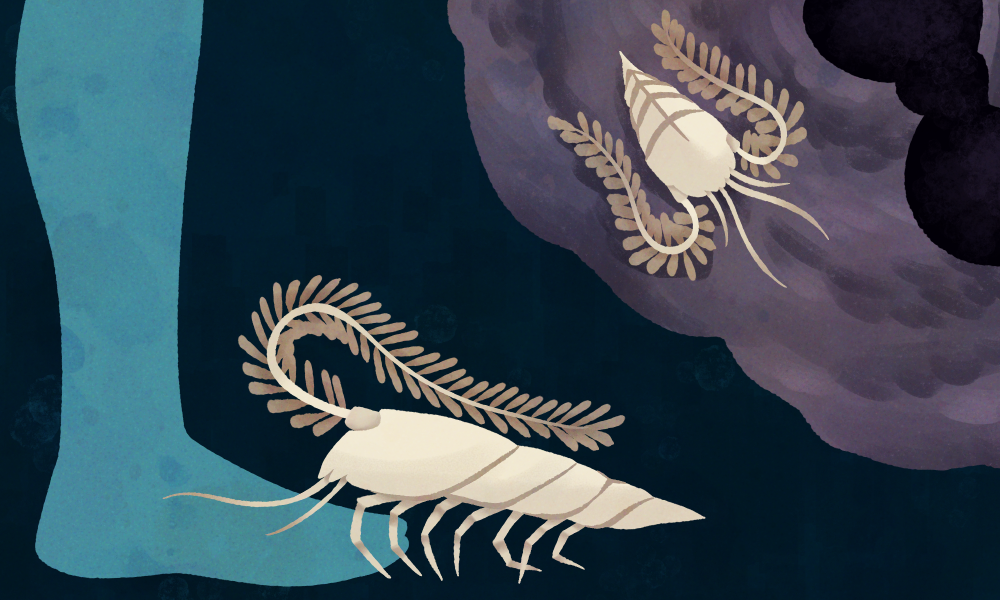
The White Bristle Crab lies in the Armaturatus phylum, which is a group of animals defined through the segmented shell protecting their bodies, similar to a knight’s armor. The White Bristle Crab is one of the most common representatives of the Reptator order, who are exclusively ground-dwelling. They live directly on the vents, roving around in large groups. Their long-bristled antennae are home to bacteria, which go through a process called chemosynthesis that detoxifies the poisonous minerals from the water and turn them into organic matter (–> see Chemoplankton). By “cleaning” their antennae the White Bristle Crabs are able to harvest this organic matter. They lack any kind of image-forming organ, though they are extremely sensitive to vibration.
Sources:
- O.V. (31.3.2026): Aquatic food webs. In: National Oceanic and Atmospheric Administration, https://www.noaa.gov/education/resource-collections/marine-life/aquatic-food-webs (zuletzt aufgerufen am 02.04.2025)
