Prototype Setup
After the last iteration phase, the idea and plan for an experience prototype were developed in order to test the concept of a light-guiding system that could be implemented at German train stations through overhead projection. The prototype, together with the findings from the testing, was documented, analysed, and evaluated to draw conclusions for the next stages of the project.
The environment in which the prototype was tested was an academic setting during a class focused on prototype testing. In preparation for the testing, the physical setup first had to be constructed within the space. For this purpose, a free area of the room was selected where the prototype could be outlined on the floor using prepared tape. Beforehand, a sketch of the site had been created, which could now be translated into the real environment. Using tape, two large rectangles were constructed to represent the train platform and the train tracks. Next, the exits were marked using smaller rectangles together with signs identifying them as exits. These elements reflected the basic structure commonly found on train platforms in Germany.
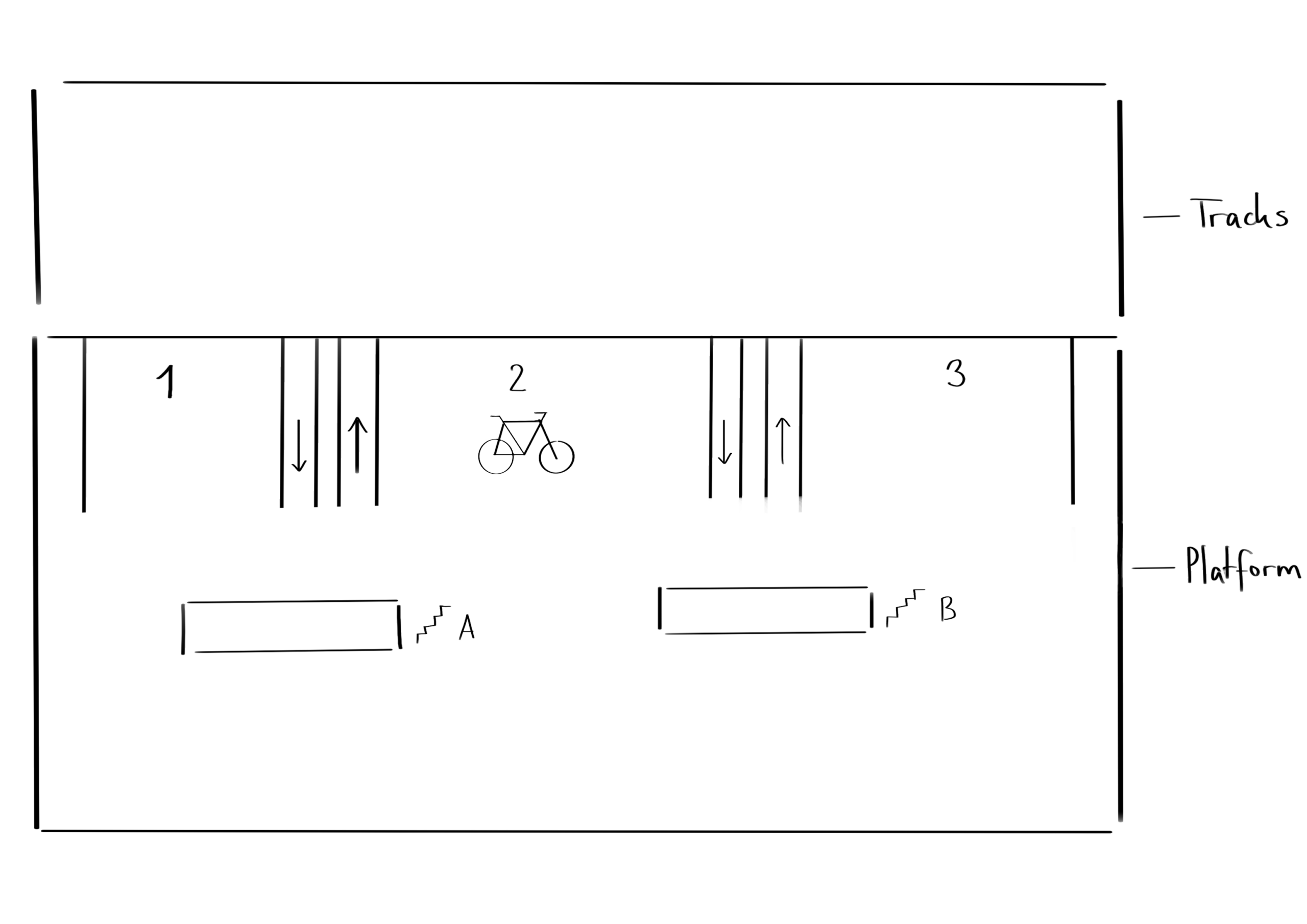
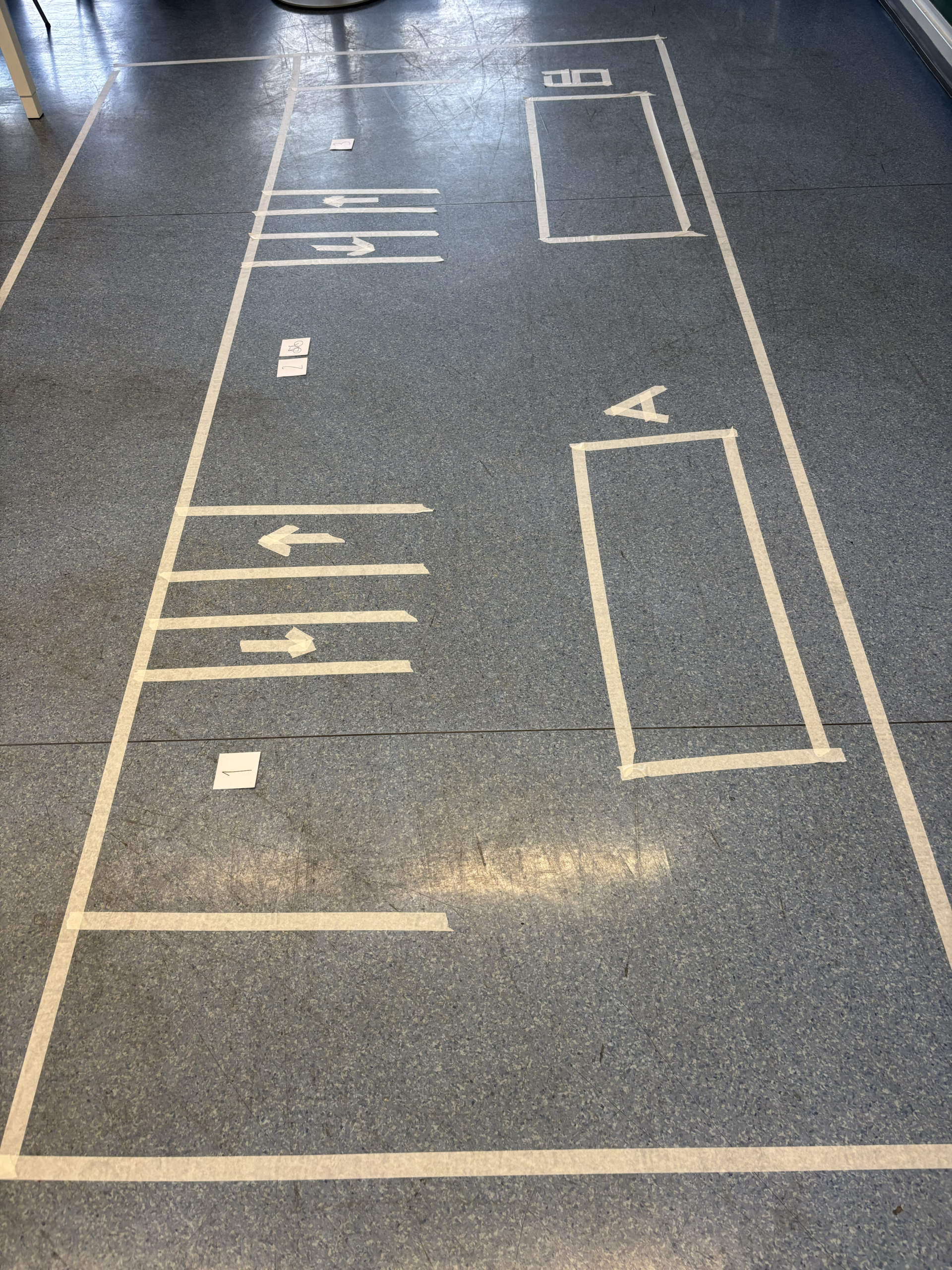
In addition to these existing platform elements, new components were introduced to represent the proposed intervention and demonstrate how the final product could improve the user experience. The first additions were two lines indicating the beginning and end of the arriving train. After this, the entrances were marked with four additional lines that created two corridors equipped with arrows to indicate the direction in which passengers should enter and exit the train. Another important part of the setup was the indication of carriage numbers through numerical markers, as well as the addition of a bicycle icon to represent the bike carriage. Finally, letters were added to the exits in order to distinguish different exit points leading towards different directions and destinations. With these elements in place, the setup of the physical prototype was completed.
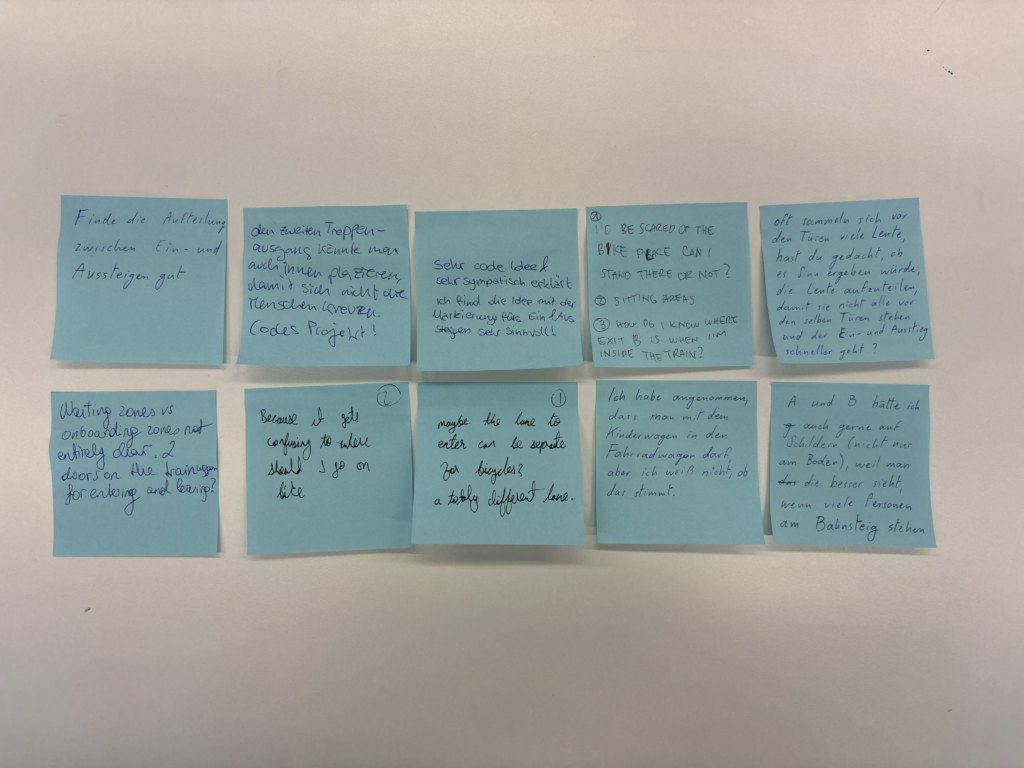
To document the testing sessions, a tripod and a smartphone were used to record videos of the interactions. Additional photographs were taken for further documentation purposes. To collect feedback after the testing, a station with sticky notes and pens was prepared where participants were invited to leave open feedback regarding their experience, including what they liked, what they found confusing, and what they believed could improve the prototype. The feedback was intentionally kept open-ended because the primary aim of the testing was to observe participants’ behaviour within the environment. The written feedback mainly served as an opportunity to gather additional ideas, comments, and perspectives. Since the product is still in the conceptual phase, changes and redirections are still possible, making further suggestions particularly valuable. With this setup completed, the first round of testing could be conducted.
Testing
For the testing sessions, different participants were recruited, most of whom were students from a variety of academic subjects. The testing was conducted in four rounds with varying group sizes. This variation proved useful because it reflected different situations that can occur on real train platforms, where there are sometimes fewer and sometimes significantly more passengers present.
At the beginning of each session, the project and prototype were briefly introduced and the aim of the testing was explained. Afterwards, participants were divided into two groups: one group representing passengers on the platform and another group representing passengers inside the train. In cases where the participant groups were smaller, all participants took part in both scenarios one after another. Once divided, the platform group received three tasks that they were asked to complete freely within the marked platform area. Participants could position themselves and move throughout the prototype space according to the given tasks. After the first group completed their exercises, the second group was asked to position themselves within the area representing the train tracks and imagine that they were passengers inside a train arriving at the station. They were then given two tasks to complete within the prototype environment.
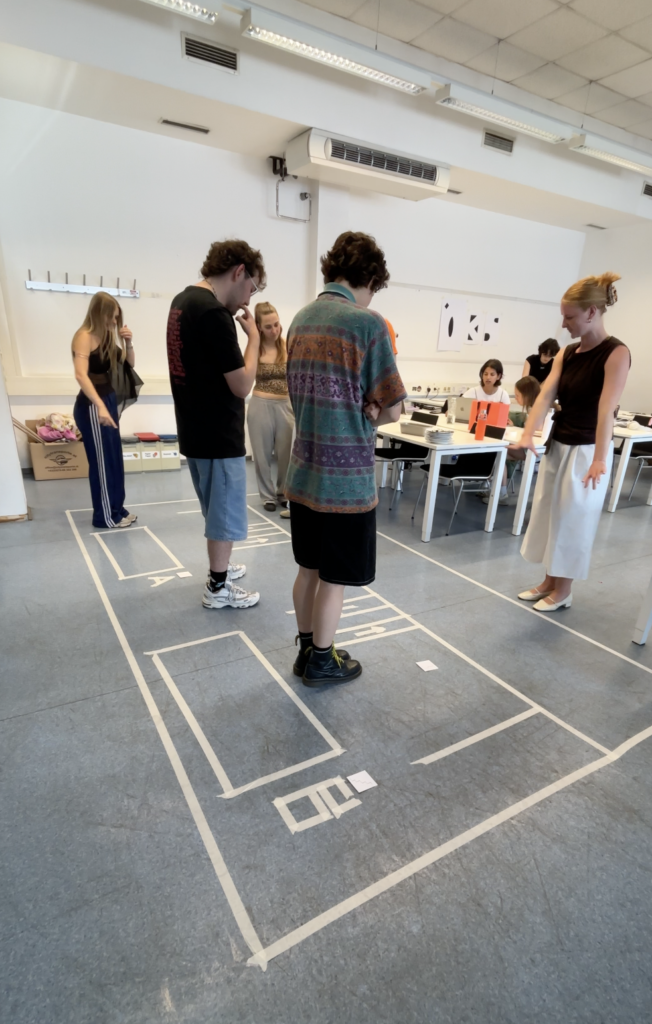
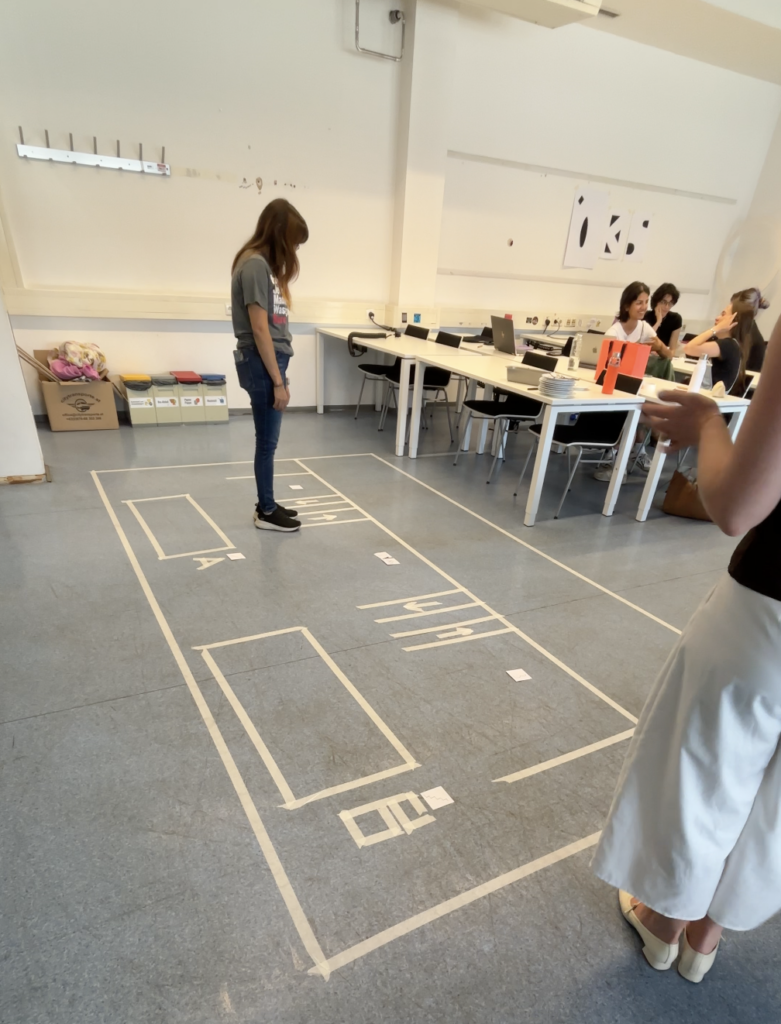
The instructions given to participants were intentionally kept relatively limited in order to allow users to interpret the situations independently and draw their own conclusions based on the information available within the setup. After the testing sessions, participants were invited to leave written feedback on sticky notes if they had further comments, questions, or suggestions. These feedback notes were later collected for analysis.
Result Analysis
The results of the testing, including the recorded videos, observational notes, and written feedback from participants, were reviewed and analysed in order to gain insights into user behaviour and experiences within the prototype environment.
One observation that stood out during the analysis was the influence of participant numbers on behaviour. Smaller groups were generally able to complete the tasks with fewer problems and less confusion. In contrast, the larger groups experienced greater difficulty following instructions and navigating through the tasks efficiently. This observation reflects real-life conditions, as train stations become increasingly complex and challenging when larger numbers of people occupy the same space at once. The conclusion here is, that the indications at the platform need to be clear enough so that all users can understand and interact with them, no matter how high the occupancy rate of the station is. Another important observation was that the directional lines indicating entrance and exit routes were too small in the prototype setup for many participants to actively follow during the exercises. However, the concept itself was generally understood and positively mentioned in the feedback. The carriage numbers also caused some confusion among participants, as some users were unsure whether the numbers referred to train classes or carriage numbers. This suggests that an alternative form of communication or visual representation may be necessary. A similar issue emerged with the bicycle icon intended to indicate the carriage for passengers travelling with bicycles or larger objects. Although participants understood the symbol itself, they were uncertain whether the carriage was exclusively intended for bicycles or if it could also accommodate strollers and similar items. The additional information provided at the exits was generally well understood. However, observations showed that clearer pathways towards the exits would be beneficial. It also became apparent that further consideration is needed regarding how boarding passengers and exiting passengers can move without obstructing one another.
Another piece of feedback that stood out was the suggestion to introduce designated waiting and boarding zones on the platform. Participants felt that this could reduce confusion and improve the organisation of the available space. This idea will therefore be considered further and may become an additional feature within the proposed guidance system. Overall, the testing results were highly valuable and insightful, providing many opportunities for further research, refinement, and development within the project.
Information Gathered
This testing process represented a completely new experience for me, as I had never previously worked with an experience prototype and therefore did not know what to expect from either the process or the results. However, the testing exceeded my expectations and provided a large number of insights that would not have been possible to gain from a purely digital prototype. Observing participants directly within the physical environment made the experience feel significantly closer to reality and helped reveal both possibilities and challenges that the final product could face within an actual train station setting. The testing therefore played an important role in improving my understanding of how users interact with the concept and how the idea could continue to develop in the future.
Next Steps
This testing phase marked the final step within this chapter of research and completed the first attempt at creating a functional and testable prototype for the intended project. The information gathered throughout this stage of the research process can now be carried forward into the next phase of development. The upcoming work will focus on exploring the technical feasibility in greater depth, making the final product concept more tangible and realistic, and continuing to test and refine future ideas and iterations of the project.
