10. Neuro-Inklusive Unternehmenskultur: Bitte mehr als nur bunte Sitzsäcke

Um mal weg von der digitalen Welt zu kommen und in ein anderes Medium, denn Design geht weit über Interfaces hinaus. Wenn Unternehmen über Inklusion sprechen, landen sie oft schnell bei der Inneneinrichtung. Da stehen dann ergonomische Stühle, bunte Sitzsäcke in der „Chill Area“ und vielleicht gibt es einen Obstkorb. Versteh mich nicht falsch: Ein schönes Büro ist toll und ergonimische Stühle helfen sicher auch bei Rückenproblemen. Aber für einen Menschen mit ADHS, Autismus oder Legasthenie löst ein Sitzsack wenige Probleme, wenn die eigentliche Arbeitsstruktur, die „mentale Architektur“ des Unternehmens, exklusiv auf neurotypische Standardgehirne ausgelegt ist.

Echte neuro-inklusive Unternehmenskultur bedeutet, den Workflow als Service zu begreifen. Es geht darum, Barrieren abzubauen, die oft so tief im System verankert sind, dass wir sie gar nicht mehr als solche wahrnehmen. Wir müssen weg vom Anpassungszwang des Einzelnen hin zu einer Infrastruktur, die vielfältig ist.

Der Albtraum des „Standard-Büros“

Der klassische 9-to-5-Tag im Großraumbüro ist für viele neurodivergente Menschen eine massive Belastungsprobe. Warum? Weil er zwei Dinge gleichzeitig verlangt: maximale soziale Performance und maximale kognitive Konzentration unter vielen sensorischen Bedingungen.

Stell dir vor, du versuchst eine komplexe Code-Zeile zu schreiben oder einen Text zu entwerfen, während neben dir drei Leute über das Wochenende reden, das Telefon klingelt und die Neonröhren über dir in einer Frequenz flackern, die du zwar nicht bewusst siehst, die dein Gehirn aber permanent unter Stress setzt. Für ein neurotypisches Gehirn ist das „Hintergrundrauschen“. Für ein Gehirn mit sensorischen Verarbeitungsbesonderheiten ist das quasi Schwierigkeitslevel 1000 und geht dazu noch auf die Exekutivfunktionen. Jede Ablenkung kostet nicht nur fünf Minuten, sondern oft den gesamten „Flow“, den wir mühsam aufgebaut haben. Es ist viel anstrengeder sich zu konzentrieren, es kostet viel mehr Energie und einmal aus dem “Flow” draußen, fällt es schwer wieder reinzukommen.

Was brauch man für einen neuro-inklusiven Workflow?

Um das zu ändern, müssen wir nicht das gesamte Büro umbauen, sondern die Art, wie wir zusammenarbeiten.

1. Asynchronität Kommunikation

Der größte Feind des ADHS-Hyperfokus ist der Satz: „Hast du mal kurz eine Minute?“ In vielen Firmen gilt es als höflich, sofort zu antworten. Für neurodivergente Menschen ist das ein Produktivitätskiller. Ein inklusiver Workflow setzt auf asynchrone Kommunikation. Das bedeutet: Slack oder Teams funktionieren viel besser, denn Informationen werden so aufbereitet, dass man sie konsumieren kann, wenn das Gehirn gerade im Aufnahmemodus ist. Es gibt keine Erwartung einer sofortigen Antwort, außer bei echten Notfällen. Das gibt Menschen mit ADHS die Freiheit, in ihre tiefen Fokusphasen abzutauchen, ohne Angst zu haben, sozial als „unkooperativ“ zu gelten.

2. Body Doubling als Team-Feature

In meinem Post über ADHS habe ich das Prinzip des Body Doubling erwähnt, also die bloße Anwesenheit einer anderen Person, die uns hilft, bei der Sache zu bleiben. Warum nutzen wir das nicht aktiv im Arbeitsalltag? Unternehmen können „Focus-Rooms“ (virtuell oder physisch) anbieten. Das sind Sessions, in denen sich Leute treffen, kurz ihr Ziel für die nächste Stunde ansagen und dann einfach schweigend parallel arbeiten. Es gibt keinen sozialen Druck zur Interaktion, nur die gemeinsame Energie des Tuns. Das ist Service Design für die Exekutivfunktion.

3. Low-Stim-Zonen

Wenn wir über physische Räume reden, dann gerne auch strategisch, denn eine Idee für inklusive Büros sind klare Zonen. Eine „Low-Stim-Zone“ ist dabei kein Pausenraum, sondern ein Arbeitsraum, in dem absolute Stille herrscht, das Licht gedimmt ist und visuelle Reize minimiert sind. Gleichzeitig brauchen wir Regeln für die Erreichbarkeit. Dieses Mindset ständig erreichbar sein zu müssen, während seiner Arbetiszeit kann auch Druck ausüben. Ein „Do-not-disturb“-Status im Kalender sollte in der Unternehmenskultur so respektiert werden wie eine verschlossene Tür beim Vorstand. Inklusion bedeutet hier, das Bedürfnis nach Ruhe nicht als „Sonderwunsch“ abzutun, sondern zu akzeptieren.

Der „Curb-Cut-Effekt“: Warum alle profitieren

In der Stadtplanung gibt es das Konzept der Bordsteinabsenkungen (Curb Cuts). Sie wurden für Rollstuhlfahrer:innen gebaut. Aber wer nutzt sie heute? Menschen mit Kinderwagen, Reisende mit Koffern, Radfahrer:innen. Genau das passiert bei neuro-inklusivem Design am Arbeitsplatz. Wenn wir Meetings strukturierter gestalten, Informationen asynchron teilen und klare Fokuszeiten einführen, hilft das nicht nur den Neurodivergenten. Es hilft dem Elternteil, das nachts besser arbeiten kann. Es hilft der introvertierten Führungskraft, es hilft letztlich jedem, der in unserer überreizten Welt nach Konzentration sucht.

Fazit: Inklusion ist ein Wettbewerbsvorteil

Neurodivergente Menschen bringen oft außergewöhnliche Fähigkeiten in den Bereichen Mustererkennung, Kreativität und Problemlösung mit. Aber sie werden diese Fähigkeiten nur dort einsetzen, wo sie nicht die Hälfte ihrer Energie darauf verschwenden müssen, so zu tun, als hätten sie ein neurotypisches Gehirn. Auch in der Arbeitswelt kann viel neu designt werden, weg vom Standardmaß, hin zu einer Umgebung, die Flexibilität als Stärke begreift. Denn am Ende des Tages ist ein inklusives Unternehmen nicht nur „netter“, sondern schlichtweg innovativer und leistungsfähiger.

Quellen & Referenzen

  • The Brain Charity (2024): Neurodivergent-friendly design transforms modern workplaces.
  • CIPD (2024): Neurodiversity at work guide.
  • Doyle, N. (2020): Neurodiversity at work: a biopsychosocial model and the impact on working lives. British Medical Bulletin.
  • Austin, R. D., & Pisano, G. P. (2017): Neurodiversity as a Competitive Advantage.

Note: This text was developed with the assistance of artificial intelligence for research purposes and to refine the linguistic clarity and flow of the final draft.
9. Dark Patterns: Wenn Design zur Dopamin-Falle wird

Aber unter was leiden Menschen mit ADHS überhaupt und was hat das mit Design zu tun? In meinem zweiten Blogpost habe ich beschrieben, wie das ADHS-Gehirn nach Dopamin sucht und oft erst unter extremem Druck handlungsfähig wird. Dieses Wissen über neurologische Prozesse ist mächtig und wie jede Form von Macht kann sie missbraucht werden. In der Tech-Industrie gibt es dafür einen Begriff: Dark Patterns. Das sind Design-Strukturen, die darauf ausgelegt sind, Nutzer zu Handlungen zu verleiten, die sie eigentlich nicht wollen. .

Für Neurodivergente Menschen sind diese Muster sehr ärgerlich. Sie sind eine Form der digitalen Barrierefreiheit im Rückwärtsgang, sie nutzen nämlich die neurologische Veranlagung aus, aber ins negative.

Die Slot-Machine im Handy

Warum ist es so schwer, TikTok pder Instagram nach fünf Minuten wieder zu schließen? Der Grund liegt in einem psychologischen Mechanismus namens Variable Reward Schedule Das Gehirn schüttet am meisten Dopamin aus, wenn eine Belohnung unvorhersehbar ist. Jedes Mal, wenn wir den Feed nach unten ziehen („Pull-to-Refresh“), ist das wie der Hebel an einem Spielautomaten. Kommt jetzt ein lustiges Video? Eine spannende Nachricht? Oder nur Werbung?

Dieses Prinzip trifft neurodivergente Menschen besonders hart. Da das interne Belohnungssystem ohnehin dysreguliert ist, reagieren wir viel stärker auf diese kleinen, schnellen Dopamin-Kicks. Wir geraten in einen „Zustand des Suchens“, aus dem die Exekutivfunktion uns nicht mehr so leicht rausholen kann. Wir wollen aufhören, aber der präfrontale Kortex, unsere interne Bremse ist gegen das hormonelle Feuerwerk, was diese ständigen Dopmaninkicks auslöst, des Belohnungszentrum quasi machtlos.

Dazu habe ich mir mal die Dark Patterns im Detail angeschaut.

1. Der Infinite Scroll

Ursprünglich als Komfort-Feature gedacht, ist der endlose Feed heute eines der effektivsten Werkzeuge zur Aufmerksamkeits-Extraktion. Er eliminiert den sogenannten „Stop-Signal“-Effekt. In der analogen Welt signalisiert uns das Ende einer Zeitungsseite oder das Kapitelende eines Buches: „Hier kannst du eine Pause machen.“ Im digitalen Design wird dieser Moment künstlich entfernt. Für Menschen mit ADHS, die ohnehin Schwierigkeiten mit der Zeitwahrnehmung (Time Blindness) haben, verschwinden so viel zu schnell zu viel Zeit darin.

2. Künstliche Verknappung und die FOMO-Falle

„Nur noch 2 Stunden verfügbar!“, „3 andere Personen schauen sich diesen Artikel gerade an.“ Diese Einblendungen erzeugen künstlichen Stress. Stress führt zur Ausschüttung von Cortisol und Adrenalin, was wiederum, wie wir auch schon beim Deadline Dopamin gelernt haben, das Gehirn in einen Tunnelblick-Modus versetzt. Neurodivergente Menschen, die oft mit Impulskontrolle kämpfen, treffen unter diesem künstlichen Druck Kaufentscheidungen, die sie später bereuen.

3. Der „Daily Streak“

Apps wie Duolingo oder Snapchat nutzen Streaks, um Nutzer:innen zur täglichen Rückkehr zu zwingen. Was wie Gamification aussieht, ist oft psychologischer Druck. Für jemanden mit exekutiver Dysfunktion kann das Versäumen eines Tages zu Schuldgefühlen oder Scham führen, was dazu führt, dass die App entweder zwanghaft genutzt oder aus Frust über das Scheitern komplett gelöscht oder einfach nicht mehr benutzt wird. Es gibt keinen Raum für einen schlechten Tag oder einen Pause Tag. Manchmal ist es sogar so weit, dass Apps dich dazu bringen 3 “viruelle Münzen” zu kaufen, ein paar Münze bekommt man natürlich kostenlos und wenn man keine mehr hat ploppt sofort ein angebot auf mit “Jetzt 10 Münzen kaufen dann kannst du dein Streak einfrieren und eine Münze kostet dann aber echte 2€, was natürlich auch wieder manipuliert. An dieser Stelle lösche ich die Apps meistens komplett, dann wird wohl keine neue Sprache über Duolingo gelernt, weil mich die ständigen Erinnerungen und aufploppen und sonstiges einfach viel zu sehr nervt.

Der Gegenentwurf: Neuro-Ethisches Design

Als Designer tragen wir auch stückweit die Verantwortung für die mentale Gesundheit unserer User. In Los Angeles beginnt jetzt einer von einigen anstehenden Prozessen gegen Social-Media-Konzerne. Es geht um deren Mitverantwortung für psychische Probleme von jugendlichen Nutzern.

Inklusion bedeutet hier, das Gehirn nicht zu manipulieren, sondern es zu unterstützen. Was wäre das Gegenteil von Dark Patterns?

  • Eingebaute Haltepunkte: Statt Infinite Scroll könnten wir „Load More“-Buttons nutzen oder nach einer gewissen Zeit eine sanfte Erinnerung einbauen: „Du bist seit 20 Minuten hier. Möchtest du eine Pause machen?“
  • Transparente Benachrichtigungen: Statt eines vagen roten Punktes sollte eine App genau sagen, was passiert ist. „Anna hat dein Foto kommentiert“ erlaubt es mir, die Relevanz einzuschätzen, bevor ich die App öffne.
  • Vergebendes Design: Inklusive Gamification würde „Pause-Tage“ erlauben oder Streaks nicht sofort auf Null setzen, wenn das Leben (oder die Exekutivfunktion) dazwischenkommt.

Fazit: Ethik ist kein Feature, sondern das Fundament

Wir müssen aufhören, Engagement-Metriken (wie Verweildauer oder Klickraten) als den alleinigen Erfolg eines Designs zu sehen. Wenn ein Design nur deshalb „erfolgreich“ ist, weil es die neurologischen Schwächen einer Person ausnutzt, dann ist es ethisch gescheitert.

Echtes neuro-inklusives Design bedeutet, die Autonomie der Nutzer:innen zu respektieren. Wir sollten Werkzeuge bauen, die Menschen helfen, ihre Ziele zu erreichen und nicht Produkte, die Menschen dazu benutzen, die Ziele von Werbealgorithmen zu erfüllen. Es ist Zeit für eine digitale Welt, in der wir uns nicht ständig gegen unser eigenes Gehirn wehren müssen.

Quellen & Referenzen

Note: This text was developed with the assistance of artificial intelligence for research purposes and to refine the linguistic clarity and flow of the final draft.
8. Das „Double Empathy Problem“ Warum Kommunikation keine Einbahnstraße ist

In diesem Post bin ich nochmal Werg von meiner Idee von einem MR Awareness Tool und habe mir nochmal mehr generell zu Neurodivergenz, Design und Hürden angeschaut.

Hast du schon mal versucht, ein Android-Ladegerät in ein iPhone zu stecken? Es passt einfach nicht. Nicht, weil das Kabel kaputt ist oder das Handy einen Defekt hat, sie nutzen einfach unterschiedliche Protokolle. Genau so fühlt sich Kommunikation oft an, wenn neurotypische und neurodivergente Welten aufeinandertreffen. Lange Zeit galt in der Psychologie das Narrativ, dass neurodivergente Menschen (besonders Autist:innen) ein „Defizit“ in der sozialen Interaktion hätten. Man ging davon aus, dass sie soziale Signale einfach nicht „richtig“ lesen können. Aber was, wenn das nur die halbe Wahrheit ist?

Der Soziologe Damian Milton stellte 2012 eine revolutionäre Theorie auf: das Double Empathy Problem. Er argumentiert, dass soziale Schwierigkeiten nicht einseitig bei der neurodivergenten Person liegen, sondern im Zwischenraum entstehen. Wenn zwei Menschen mit völlig unterschiedlichen neurologischen „Betriebssystemen“ kommunizieren, entstehen Missverständnisse auf beiden Seiten.

Die Illusion der „richtigen“ Intuition

In der Design-Welt ist es immer super wichtig, dass alles intuitiv ist. Wir wollen Interfaces bauen, die man „einfach so“ versteht. Doch hier liegt die Falle: Intuition ist kein biologisches Gesetz. Sie ist das Ergebnis von kulturellen Erfahrungen und von der Art, wie unser Gehirn Reize filtert.

Für ein neurotypisches Gehirn ist es oft „intuitiv“, zwischen den Zeilen zu lesen, Ironie an der Tonlage zu erkennen oder vage Anweisungen durch den Kontext zu ergänzen. Für ein neurodivergentes Gehirn, das Informationen oft bottom-up (also detailfokussiert statt kontextfokussiert) verarbeitet, ist diese Art der Kommunikation nicht intuitiv, sondern ein Ratespiel. Das Double Empathy Problem zeigt uns also Neurotypische Menschen sind oft genauso schlecht darin, die direkten, detailreichen und logikfokussierten Kommunikationsmuster von Neurodivergenten Menschen zu verstehen. Die Empathielosigkeit ist also beidseitig, nur dass die neurotypische Seite ihren Stil als „Standard“ definieren darf. Und alles andere kann dann als “Problem” dargestellt werden.

Design als Dolmetscher: Brücken statt Barrieren

Wenn wir als Designer:innen verstehen, dass Kommunikation keine Einbahnstraße ist, verändert das unsere Arbeit grundlegend. Wir hören auf, User „erziehen“ zu wollen, und fangen an, Brücken zu bauen. Hier sind drei Ansätze, wie wir das Double Empathy Problem im Design lösen können:

1. Explizitheit schlägt implizite Erwartungen

Vermeidung von „Mystery Meat Navigation“: also Icons oder Buttons, deren Funktion man erst durch Raten oder Drüberfahren mit der Maus versteht. Ein inklusives Interface sagt genau, was es tut.

  • Beispiel: Statt eines vagen „Absenden“-Buttons, der je nach Kontext etwas anderes tut, nutzen wir „Anfrage jetzt zahlungspflichtig abschicken“.
  • Warum? Es reduziert die kognitive Last der Interpretation. Wenn das System klar und direkt kommuniziert, muss das Gehirn keine Energie für das „Deuten“ von Absichten verschwenden.

2. Multimodalität: Die Freiheit der Wahl

Manche Menschen brauchen das geschriebene Wort, um Informationen in ihrem eigenen Tempo zu verarbeiten. Andere brauchen visuelle Roadmaps, um den Prozess zu verstehen. Ein Interface, das nur auf einen Kanal setzt, schließt automatisch Menschen aus. Inklusion im Webdesign bietet deshalb oft „Easy-Read“ Versionen oder klare visuelle Marker parallel zu Texten an. Das Ziel ist es, dem User die Wahl zu lassen, wie er die Information empfangen möchte.

3. Vorhersehbarkeit

Ein großer Stressfaktor in der Kommunikation ist das Unvorhersehbare. Was meint sie damit? Warum kommt keine Antwort? Im Interface-Design können wir diesen Stress durch Feedback-Loops abfangen. Jede Aktion braucht eine sofortige, eindeutige Reaktion des Systems. Wenn ein Prozess länger dauert, brauchen wir keine vage Ladeanimation, sondern eine klare Fortschrittsanzeige: „Schritt 2 von 4: Wir prüfen deine Daten.“

Warum uns das alle besser macht

Das Spannende ist: Wenn wir für das Double Empathy Problem designen, profitieren alle. Wer mag schon unklare Anweisungen oder versteckte Menüs? Inklusion bedeutet hier, dass es mehr als nur einen „richtigen“ Weg gibt, Informationen zu verarbeiten.

Design sollte nicht der Filter sein, der bestimmt, wer „reinpasst“, sondern das Werkzeug, das Vielfalt ermöglicht. Wenn wir Interfaces bauen, die explizit, multimodal und vorhersehbar sind, senken wir die Barrieren für alle, egal, welches Betriebssystem im Kopf gerade läuft.

Quellen & Referenzen

  • Milton, D. E. (2012): On the ontological status of autism: the ‘double empathy’ problem. In: Disability & Society, 27(6).
  • Crompton, C. J., et al. (2020): Autistic peer-to-peer information transfer is highly effective.
  • Reframing Autism (2023): Double Empathy Problem Explained. Eine großartige Ressource für die praktische Anwendung des Konzepts.
  • Gernsbacher, M. A., & Yergeau, M. (2019): Empirical Failures of the Claim That Autistic People Lack a Theory of Mind.

Note: This text was developed with the assistance of artificial intelligence for research purposes and to refine the linguistic clarity and flow of the final draft.

7. Social Media and Neurodivergence

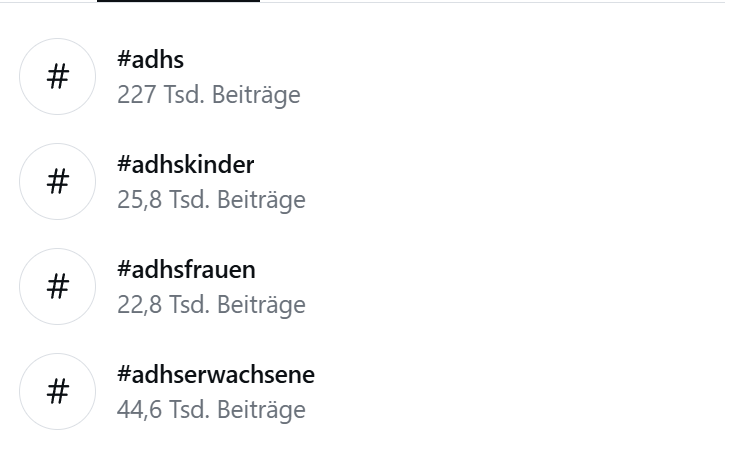
The hashtag #ADHD now has over 227,000 posts on Instagram alone. About two years ago, ADHD suddenly blew up online it was everywhere. Videos titled “If you do these five things, you might have ADHD” went viral. People shared stories about late diagnoses, sudden realizations, and a new understanding of their daily struggles.

At first glance, this looks like progress: more visibility, more awareness, and more people recognizing long-overlooked symptoms. And indeed, research shows that women and adults have historically been underdiagnosed, partly because ADHD has often been associated with the stereotypical “hyperactive boy” image. But the viral attention also has a dark side. The more popular the topic becomes, the blurrier the line between self-awareness and self-diagnosis gets.

When Short Videos Oversimplify Complexity

The problem isn’t that social media creators mean harm, most want to inform and destigmatize. But platform logic rewards simplicity. Ninety seconds just isn’t enough to explain the complexity of a neurodevelopmental condition. As a result, catchy “five signs” videos dominate our feeds.

That leads to a paradox: more reach doesn’t mean more understanding.
Short clips make information accessible, but they also spread misconceptions. Everyone can relate to being forgetful or disorganized sometimes yet ADHD goes much deeper. It affects attention, impulse control, emotion regulation, motivation, and even time perception, often to a degree that causes real disruption in everyday life.

For many diagnosed adults, the real relief comes from finally understanding how these symptoms interconnect, beyond what an algorithm can compress into a viral soundbite.

Between Self-Diagnosis and Real Support

Another big development is the rise of self-diagnosis culture online. Influencers share their personal experiences, helping others feel seen and less ashamed. In some cases, that sparks genuine reflection and motivates people to seek professional help.

However, a clinical ADHD diagnosis is a multi-step process involving medical, psychological, and behavioral evaluations. Specialists consider case histories, developmental backgrounds, and standardized assessments. In other words: a viral video can’t replace a conversation with a trained professional.

Yet, this digital movement still has a positive side, it signals growing awareness of neurodiversity and a more open public dialogue about it.

Awareness Without Clickbait

Fortunately, there are credible voices online too. Experts such as psychologist Dr. Alina Maerker (host of Psychologie to go!) and neurodivergent educators provide accessible, evidence-based insights to counter misinformation. Still, the algorithm favors emotional, simplified content over detailed explanations.

Psychologically, that makes sense: our brains crave quick rewards and certainty, while accurate education takes time and nuance. The challenge is finding ways to make accuracy engaging.

The Next Step: Experiencing ADHD

Videos inform, but they rarely create deep empathy. What’s missing are interactive tools that help non-ADHD individuals understand what living with this condition feels like.

Recent research is starting to explore this idea. Virtual reality (VR) simulations and learning apps are being tested to recreate experiences such as overstimulation, distractibility, or distorted time perception.

These technologies could redefine how we teach about ADHD, moving from observation to immersion. Understanding wouldn’t just mean knowing the facts; it would mean feeling what daily life might be like for someone with ADHD.

Conclusion

The social media hype around ADHD shows how deeply digital culture shapes our perception of mental health. Awareness is important, but education needs depth. Between trending and therapeutic, there’s a space where real understanding can grow.

Perhaps it’s time to nurture that space, with accurate information, genuine empathy, and new ways to not just talk about ADHD, but to understand it.

References

  • American Psychiatric Association (2022). Diagnostic and Statistical Manual of Mental Disorders (5th ed., Text Revision). APA Publishing.
  • Kooij, J. J. S. et al. (2019). European consensus statement on diagnosis and treatment of adult ADHD. European Psychiatry, 56: 14–34.
  • Messinger, M. A., et al. (2023). Immersive simulations as tools for empathy and education in neurodiverse conditions. Frontiers in Psychology, 14: 1205158.
  • Maerker, A. (2022). Psychologie to go! Podcast. Spotify.

Note: This text was developed with the assistance of artificial intelligence for research purposes and to refine the linguistic clarity and flow of the final draft.

6. Making ADHD Tangible: Why We Need More Than Just Information

After diving into several high-profile autism awareness projects recently, I began a targeted search for similar resources dedicated to ADHD. My goal was simple: find a tool that doesn’t just explain ADHD, but allows the user to experience it. However, I’ve found that there isn’t much out there yet—or at least, very little that bridges the gap between clinical explanation and lived reality.

The Current Landscape: Between Expert Talks and Stereotypes

If you search for ADHD content today, you’ll find a wealth of information, but most of it sits at two extremes. On one side, we have “Expert Talks”, clinical, detached, and educational. On the other, we have “Stereotypes”, media that often reinforces the outdated image of ADHD as “The Fidgety Young Boy.”

A prominent example is the video about Max (A Day with Max and Lisa). While it is a decent educational starting point, it remains a passive experience. Max describes his internal world, but the audience remains a distant observer. Furthermore, it leans into that classic trope of the hyperactive child, often overlooking the internal restlessness, executive dysfunction, and emotional dysregulation that characterize ADHD in adults and girls.

Another frequently cited resource is the YouTube video Falling Letters. To its credit, it portrays the struggle with reading and focus quite well. However, the video is now nearly a decade old. As a standard 2D video format, it only captures a tiny, flat snippet of a multi-dimensional reality. It’s like trying to understand the ocean by looking at a photo of a wave; you see it, but you don’t feel the weight of the water.

The Immersion Gap: Why Video is No Longer Enough

The core problem with current ADHD awareness tools is the “Empathy Gap.” In design, we know that data rarely changes behavior; experience does. The 3D and 360-degree experiences produced by The Guardian regarding autism (which I discussed in my previous post) set a high bar. They move the user from “watching a story” to “being in the story.”

This level of immersion is exactly what is missing for ADHD. During my research, I discovered Impulse: Playing with Reality, a VR game that uses a mix of gameplay and documentary storytelling to explore the “inner world” of those with ADHD. It is an incredibly exciting project because it treats the neurological condition as a dynamic landscape to be navigated, not just a list of symptoms.

The downside? Accessibility. Currently, many of these high-fidelity experiences are location-based or tied to specific festivals. For a designer, this reveals a massive “State of the Art” gap: we have the technology to simulate these experiences, but we haven’t yet democratized them into tools that a teacher, employer, or family member can easily access to foster true understanding.

My Vision: Bridging Worlds with Mixed Reality (MR)

This brings me to my current concept: A Mixed RealityExperience. Why MR instead of pure VR? Because ADHD doesn’t happen in a vacuum; it happens in the “real” world. In a VR headset, you are in a different world. In Mixed Reality, you are in your world, your desk, your living room, but that world is filtered through a neurodivergent lens.

Imagine a game where a user is tasked with a simple chore, like sorting mail or preparing a coffee. As they move through their actual room, MR allows us to strategically manipulate their environment:

  • Visual Distractions: Virtual “pop-ups” or shifting colors on real-world objects could simulate the difficulty of filtering out irrelevant stimuli.
  • The Internal Voice: Using spatial audio, we can simulate the “internal monologue” or the “mental noise” that many with ADHD experience—a constant stream of thoughts that can be distracting, self-critical, or overwhelming.
  • Time Distortion: We could incorporate “Time Blindness” by having a clock on the wall that appears to speed up or slow down, making the user lose track of the time they’ve spent on a task.

By overlaying these digital stressors onto the user’s physical reality, the frustration becomes personal. It is no longer “Max is struggling”; it is “I am struggling.”

Next Steps:

While MR is a one direction, I am also considering other formats to see what works best. My upcoming steps include:

Targeted Research: Conducting surveys and interviews with those affected. I want to find out both: how they actually feel in specific situations and what they want or need from an awareness tool to feel truly understood.

Deep Analysis: A more in-depth look at existing projects to identify what is still missing in the current state of the art.

Sources & Links:

Note: This text was developed with the assistance of artificial intelligence for research purposes and to refine the linguistic clarity and flow of the final draft.

5. The Invisible Bias

Away from the “fidgety boy”: Why our view of neurodiversity is often blind to gender and culture

When we talk about neurodiversity, many people still have a very specific image in their minds: the young student who disrupts class or the brilliant but socially awkward IT expert. These clichés are not only outdated, they are dangerous. They shape how we build simulations, how we design software, and who ultimately gets the support they need and who doesn’t.

In my research, I noticed that most tools that depict “sensory overload” focus on the visible, almost “loud” symptoms. We see someone covering their ears or closing their eyes. But what about those we don’t see?

A key reason for gender bias in diagnosis and design is what is known as masking (or camouflaging). FLINTA individuals in particular often learn at an early age to suppress their neurodivergent traits in order to meet social expectations.

Masking is not simply “pretending.” It is a highly complex, unconscious, and extremely exhausting process. You are constantly scanning your surroundings: Am I laughing at the right moment? Am I staring at the person I’m talking to for too long? Do I seem too absent-minded right now? While you appear completely calm and “functional” on the outside, your brain is racing at 200% in the background.

In terms of design, this means that if we only optimize for visible symptoms, we exclude the entire group of people who mask their symptoms perfectly. A study clearly shows that this camouflaging correlates directly with a higher rate of depression and burnout. So if an interface wants to be “barrier-free,” it can’t wait for a user to “look overwhelmed.” It must assume that stress often occurs internally.

Neurodiversity does not exist in a vacuum. It is inextricably linked to gender, but also to cultural and ethnic origin. Researchers often refer to this as the intersectional gap.

For example, a white child with ADHD symptoms is often seen as “in need of treatment” or “gifted but restless.” Statistically, the same symptoms are far more likely to be misinterpreted as “indiscipline” or “aggression” in Black children or children from marginalized communities. As a result, neurodivergent people from these groups are often diagnosed very late or not at all.

For us designers, this means that when we create personas or look for test groups for our products, we must not only represent “standard neurodivergence.” We have to ask ourselves: How does a person with ADHD use my app who also struggles with racist stereotypes in everyday life and therefore has an even greater need for security and predictability?

And in order to improve it, we first need to understand it better.

Conclusion: Inclusion requires diversity in the database

Accessibility is not an “add-on” that you slap onto a finished product. It is an attitude. Ultimately, greater inclusion helps everyone.

Neurodiversity does not exist in a vacuum. A woman with ADHD experiences barriers differently than a man, as racialized and gendered stereotypes complicate diagnosis and acceptance.

Sources & Links:

  • Hull et al. (2017/2020): Sex/Gender Differences in Camouflaging in Autism. Link to Study (PMC)
  • Hull‑Artikel (Journal)
    Hull, L., Lai, M.-C., Baron-Cohen, S., Allison, C., Smith, P., Petrides, K. V., & Mandy, W. (2020). Gender differences in self-reported camouflaging in autistic and non-autistic adults. Autism, 24(8), 1–13.
  • John Innes Centre Blog (Webseite/Blog)
    John Innes Centre. (2025, 5. August). Exploring neurodiversity through an intersectional lens. Abgerufen von https://www.jic.ac.uk/blog/exploring-neurodiversity-through-an-intersectional-lens/
  • Tiimo App Blog (Webseite/Blog)
    Tiimo. (2024, 12. Dezember). Masking in autistic women and girls: What it is and why it matters. Abgerufen von https://www.tiimoapp.com/de/resource-hub/masking-autistic-women-girls
  • Crenshaw‑Aufsatz (Original 1989)
    Crenshaw, K. (1989). Demarginalizing the intersection of race and sex: A Black feminist critique of antidiscrimination doctrine, feminist theory and antiracist politics.

Note: This text was developed with the assistance of artificial intelligence for research purposes and to refine the linguistic clarity and flow of the final draft.

4. Experiencing the World Differently: Experiential Design as an Empathy Bridge

Another area I want to explore is awareness of neurodiversity. What is it actually like to have a brain that functions differently? To answer this, static descriptions often fall short. This is where interactive simulations, such as VR or AR applications, come into play. There are already impressive tools helping neurotypical people understand sensory processing in autism and ADHD.

In the world of design, we often repeat the mantra: “You are not your user.” But how do you design for someone whose neurological sensory processing is calibrated fundamentally differently? This is where Experiential Design becomes essential. Instead of just reading facts about neurodivergence, simulations allow us to physically bridge the “empathy gap” and experience the Double Empathy Problem (the mutual struggle for understanding between neurodivergent and neurotypical individuals) firsthand.

Simulations: Feeling the Sensory Overload

A “sensory overload” is not just mere discomfort; it is a neurological flood. Interactive systems use visual and auditory distortions to make this state tangible:

  • The Party (The Guardian VR): This VR experience places users in the shoes of an autistic teenager at a birthday party. You experience how harmless sounds—laughter, the clinking of ice cubes—gain the same priority in the brain as the main conversation, eventually leading to a “meltdown.”
  • Too Much Information (National Autistic Society): A simulation of a supermarket visit. It uses extreme contrasts, flickering lights, and amplified audio frequencies to represent the failure of “sensory gating”—the neural filter that normally sifts through stimuli.

The Next Level: Simulating Cognitive Barriers

While sensory input is often the focus, other aspects of neurodiversity remain largely invisible in the design process. It would be fascinating to incorporate concepts like Time Blindness or Object Permanence into these interactive experiences:

  • Time Blindness: A simulation could manipulate the perception of time—perhaps by having a UI clock run irregularly or by delivering notifications in a way that dissolves the sense of “soon” versus “now.” For designers, this highlights the need for clear progress bars and visual timers rather than vague temporal cues.
  • Object Permanence: In the world of ADHD, the phrase “out of sight, out of mind” is often a literal cognitive hurdle. A simulation could demonstrate how quickly vital tasks or tools “cease to exist” once they vanish from the immediate field of vision. This would underscore the importance of persistent navigation and visual anchors.

Why This Matters for Designers

These tools are not built for “spectacle” but for awareness. When we, as designers, experience how paralyzing a flashing banner or a loud autoplay video can be during sensory overload, it permanently shifts our priorities in the UI/UX process.

It’s no longer just about aesthetics or conversion rates; it’s about cognitive accessibility. We learn that accessibility isn’t a “plug-in” or a secondary feature, it is the foundation of an inclusive digital space. It is time we stop designing for a “standard user” who doesn’t actually exist in reality.

This is a really good example of sensory overload. It would be interesting to incorporate other issues, such as time blindness or object permanence, into the experience. It’s something to consider further.

Sources & Links:

  • The Guardian VR (2017): The Party: A virtual experience of autism. Link to Project
  • National Autistic Society (2016): Too Much Information (TMI) Campaign. Link to Campaign
  • Damian Milton (2012): On the ontological status of autism: the ‘double empathy’ problem. In: Disability & Society. Link

Note: This text was developed with the assistance of artificial intelligence for research purposes and to refine the linguistic clarity and flow of the final draft.

3. Designing for ADHD vs. Designing for Awareness

Okay, I’m wondering where I want to go with my research. Do I want to do something for neurodivergent people, or do I want to raise awareness among neurotypical people about what it’s like to be neurodivergent?

I have ideas and approaches for both directions, which I would like to discuss here one by one in the hope of being able to make a decision afterwards.

Direction 1: Tools for people with ADHD

The aim here is to make everyday life easier. As I mentioned in my last blog post, executive dysfunction is a big issue. Tasks can feel very daunting for people with ADHD, so it can help to break large tasks down into smaller subtasks.

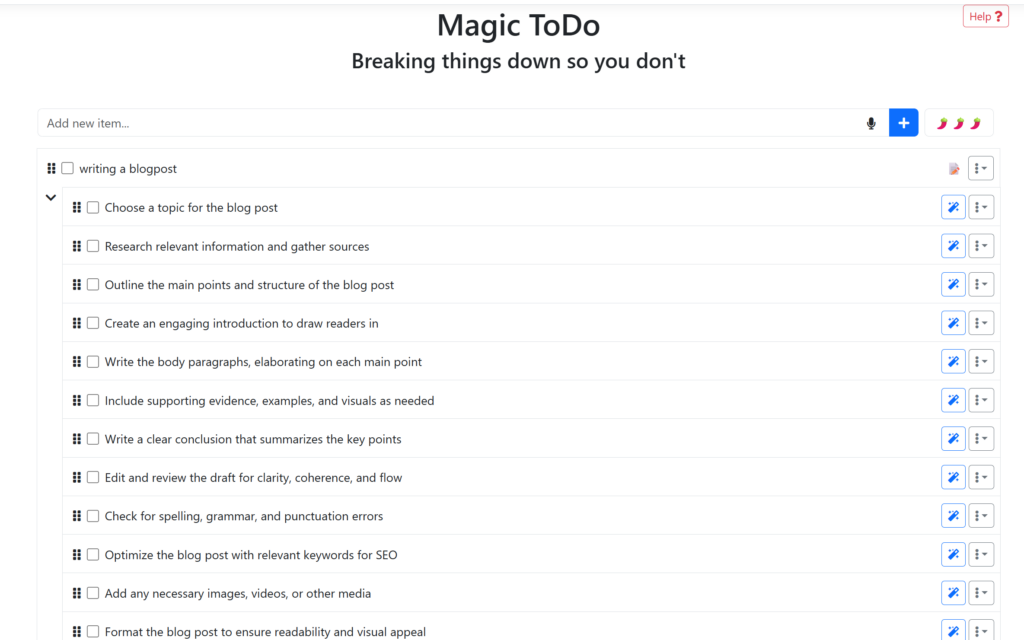
There is already a tool called gooblin.tools that breaks a large to-do list down into many small subtasks.

But here’s where it gets tricky: if I break a task down into twenty small steps, I suddenly have twenty tasks instead of one. For an ADHD brain, this can be just as paralyzing. You get lost in the details, the list seems endless, and your focus wanes. Real interaction design for neurodiversity must therefore go beyond simply “breaking things down.”

Where my research comes in: Three ways beyond the list

I ask myself: How can interfaces help us without overwhelming us with new information? In the specialist literature, there are strategies that I want to examine as design principles:

1. Adaptive scaffolding Instead of immediately showing the user all 20 subtasks, a system should only highlight the zone of next development. This means that I only ever see the next step. The interface keeps the rest of the list “invisible” in the background so as not to overload the working memory. Only when step A has been completed does step B appear.

2. Externalization & visual anchors Executive dysfunction often means that you cannot keep track of the time and sequence of tasks in your head. Design can act as an “external cognitive support” here.

• Instead of text: visual roadmaps or timers that show where I am in the process.

• Instead of lists: interactive boards that make priorities tangible through color or size.

3. Digital body doubling: An exciting approach from practice is “body doubling”. The mere presence of another person helps you stay in the flow. How can interaction design simulate this feeling?

•    Through focus spaces where you can see that others are also working.

•    Through interfaces that create a kind of “gentle presence” or social commitment without building up pressure.

It requires a balance that still allows for autonomy and does not come across as patronizing. A tool like this would have to function as a “breathing scaffold”: providing structure when task paralysis kicks in, but discreetly retreating as soon as you are hyperfocused,

It’s not about taking the user by the hand like a child, but rather making the interface flexible enough to adapt to the current cognitive load.

References & Further Reading

  • Vygotsky, L. S. (1978): Mind in Society. The foundational work on the “Zone of Proximal Development” (ZPD). It explains why effective support (Scaffolding) must be placed just beyond a person’s current independent ability to help them reach the next level of action.
  • Schmidt-Pott, H. (2024): Executive Dysfunction & The Action-Gap. A deep dive into why neurodivergent individuals often struggle to translate complex internal plans into physical steps. It highlights the specific need for tools that bridge this “initiation gap.” (Link)
  • Bien-être Autiste (2023): Understanding Task Paralysis. This research discusses how “Choice Overload” and unorganized information lead to mental freezing. It advocates for reducing visible options to prevent the brain from becoming overwhelmed by its own to-do lists. (Link)
  • Maier, G. (2024): Externalization and Body Doubling Strategies. An exploration of how external cues (visual timers, roadmaps) and the presence of others (Body Doubling) can bypass executive blocks and create a sustainable flow state. (Link)

Note: This text was developed with the assistance of artificial intelligence for research purposes and to refine the linguistic clarity and flow of the final draft.

2. ADHD – More than just a lack of concentration

The Paradox of Procrastination

A lot of people think ADHD is just the little boy that can’t sit still in the classroom and can’t focus on the lecture. But in reality there is so much more than that.

I have ADHD myself, which is probably also why I find the topic so fascinating. I speak from experience here – the best example is the publication date of this blog post (Number 2), which was long overdue.

Why didn’t I do it? I definitely didn’t forget. On the contrary: I thought about it constantly. The knowledge that I hadn’t written the post yet stressed me out. I worried much more than if I had just done it. But I just couldn’t start.

It’s often difficult to explain this state whether to myself or to others. I rationally know that a task needs to be done, but I’m simply unable to begin. The good news: There is a scientific explanation. The problem is not laziness or lack of motivation, but rather procrastination and Executive Dysfunction.

The brain of people with ADHD simply works differently. Three main factors from neurobiology and cognitive functions are responsible:

1. The Dysregulated Dopamine System: The Kick Is Missing

Dopamine is an important neurotransmitter responsible for motivation, reward, and drive. In ADHD, this system is dysregulated. This means the kick is missing: tasks that are perceived as too boring, too complex, or associated with a distant reward lead to insufficient dopamine release to provide the initial impulse to start

2.Executive Dysfunction: The Freeze Mode

The Executive Functions in our brain are essentially the control centre, responsible for planning, organizing, and initiating action. When the ADHD brain faces a huge project, it shuts down. This leads to a mental block and absolute overwhelm. It feels “frozen”, also known as ADHD Paralysis. You want to, you must, but you are emotionally and cognitively paralyzed. The fear of making mistakes or not completing the task perfectly can intensify this paralysis.

3. Time Blindness

The difficulty in perceiving and estimating time realistically is very challenging for the ADHD brain. Dr. Russell Barkley, a leading ADHD expert, popularized the concept Time Blindness. It’s is a neurological impairment in time perception. As a result, individuals with ADHD feel stuck in the “Now,” which leads to unpunctuality, avoidance behavior, and an underestimation of task duration.

The Consequences

This might be annoying when writing a blog post, but this behaviour can also have serious consequences, such as:

  • Health Neglect: Failing to follow medication schedules or postponing doctor’s appointments, which can worsen conditions.
  • Financial Problems: Like failing to file tax returns, not paying bills, or resulting job losses and dropping out of studies.

But why does it eventually work after all?

Because of the Deadline Dopamin Turbo.

The stress generated by extreme time pressure just before the deadline massively releases adrenaline and cortisol (stress hormones). These stress levels then generate a Dopamine Kick. This sudden, powerful, emotional kick is often the only way the dysregulated dopamine system enters the working mode. The body unconsciously seeks this strong stimulation to become capable of action at all.

The Cost: Chronic Stress

Sure, the turbo works, but at what price? The constantly high stress level is harmful. The following problems can occur:

  • Brainfog, because high cortisol levels can damage the memory center, the hippocampus, which for example, explains the memory problems.
  • Psychological Consequences, this is also an emotional burden due to constant stress, guilt, and anxiety, which can lead to depressive moods and anxiety disorders.
  • Physical Consequences, it can also lead to physical consequences such as sleep disorders, headaches, and circulatory problems.

The whole thing is a vicious cycle, as avoidance leads to more stress, which in turn reinforces procrastination.

Strategies

ADHD procrastination is not a character flaw but a neurological symptom. The Deadline Turbo is a short-term survival strategy, but not a solution.

What helps? There are various strategies that can assist:

  • Body Doubling, that means working alongside someone else.
  • The use of gamification.
  • Breaking down tasks into small steps.
  • Routines, exercise, and mindfulness.
  • External aids: Like timers, to-do lists, and visual planning.

However, there is one big catch: Although we know the strategies, the application often fails due to ADHD itself. Why? Because the Executive Dysfunction that stops us from working also blocks the ability to even begin with the strategies. You essentially have to motivate yourself to be motivated. A frustrating vicious circle.

These were just a few examples of the challenges people with ADHD can face. There are other symptoms such as internal restlessness, lack of focus, distractibility, forgetfulness, disorganization, impulsivity, or emotional dysregulation.

And ADHD is just one type of Neurodivergence.

References

  • Barkley, R. A. (2015). Attention-Deficit Hyperactivity Disorder: A Handbook for Diagnosis and Treatment.
  • McEwen, B. S. (2017). Physiology and neurobiology of stress and adaptation: central role of the brain.
  • Volkow, N. D., et al. (2009). Dopamine in ADHD: The Role of Dopamine Transporter and Receptor Availability.
  • Rozanski, A., et al. (1999). The epidemiology, pathophysiology, and management of psychosocial risk factors in cardiac practice: the emerging field of behavioral cardiology.
  • Dhabhar, F. S. (2014). Effects of stress on immune function: the good, the bad, and the beautiful.

Note: This text was developed with the assistance of artificial intelligence for research purposes and to refine the linguistic clarity and flow of the final draft.

1. Design for Neurodiverent Users

https://upload.wikimedia.org/wikipedia/commons/9/91/Neurodiversity_Symbol.svg

Design shapes the way we move, think, work, and connect with our environment and other people. It influences how we navigate often without us even noticing. Yet many design decisions whether in digital products, physical objects or architecture still assume a neurotypical user as the default.

With an estimated 15 to 20 percent of the global population being neurodivergent, this means a significant part of our society is still overlooked. Neuro-inclusive design is not a niche or an add-on. It is a core part of creating accessible, meaningful, and human-centered experiences.

This blog post explores what neurodivergence is, why it matters for design, and how we can start building environments that truly support different ways of thinking, sensing, and being.

Neurodivergence describes people whose brains process information, stimuli, or social cues differently from what is typically expected. It includes ADHD, autism, dyslexia, dyspraxia, Tourette’s, and many other variations. The word itself is not a medical term. It simply acknowledges that not all brains work the same way, and that these differences are valid.

Being neurodivergent is not an illness. It means experiencing the world through a different lens. Along with challenges, many neurodivergent people have exceptional strengths such as creativity, pattern recognition, intense focus, innovative thinking, or strong problem-solving abilities.

But because most environments are designed with neurotypical needs in mind, friction appears where it does not have to.

Noise sensitivity
Busy open offices or loud spaces can feel overwhelming. Many people depend on noise-cancelling headphones to stay focused or simply to get through the day.

Sensory differences
Some individuals are easily overstimulated by bright lights, strong smells, or chaotic visuals. Others seek more input and need tactile or movement-based stimulation to feel regulated.

Attention and focus differences
ADHD can make task switching, organizing, or following long instructions difficult, while at the same time enabling periods of deep hyperfocus.

Social communication differences
Unspoken rules, social cues, or group interactions can be hard to navigate, especially in environments that rely on intuition and context.

Learning differences
Reading, writing, or doing math can be challenging even when intelligence is average or above average.

No neurodivergent person experiences these things in the same way. Neurodiversity is extremely individual. The real problem is not the person, but that many systems and spaces expect only one type of brain.

When design defaults to the “typical,” it unintentionally excludes a large part of the population.

Designing with neurodivergent needs in mind improves:

• comfort
• accessibility
• autonomy
• ease of use
• emotional well-being

And importantly, inclusive design shouldn’t create separate solutions. It focuses on flexibility, options, and environments that adapt to different needs. When we design with neurodivergent users in mind, experiences become better for everyone.

1. Adaptive furnishing in physical spaces
Furniture and spatial layout directly influence sensory comfort and attention. Offering a mix of soft seating, modular furniture, beanbags, standing options, or quiet corners makes a space more welcoming for different nervous systems. These choices allow people to self-regulate, whether they need calm, movement, or a different type of sensory input.

2. Reducing cognitive load in digital design
Digital interfaces can either support or overwhelm. For people with ADHD for example, keeping track of passwords or understanding unclear error messages can be exhausting.
Design can help by offering:
• clear, friendly error messages
• the option to save passwords
• login links via email
Small adjustments like these reduce cognitive load and frustration, improving usability for all users.

3. Reducing working memory load
Designs that minimize what people need to remember make experiences more inclusive.
Checklists, reminders, autofill, tagging systems or saved preferences help users stay organized without relying solely on memory.

4. Multiple ways to absorb or provide information
Neurodivergent people process information differently. Giving users options improves accessibility for everyone.
Examples include text combined with icons use an easy readable font, captions on videos, simple infographics, or voice input for people who struggle with typing.

5. Clear visual structure and predictable layouts
Many neurodivergent users rely on consistent, easy-to-scan interfaces. Predictable layouts reduce cognitive load and help people stay oriented.
Useful design choices include clear headings, simple navigation that stays in the same place, generous whitespace and labels that say exactly what they mean.

6. Sensory-friendly lighting in physical spaces
Lighting can make or break someone’s ability to focus. Adjustable warm lighting, flicker-free LEDs or access to natural light help reduce sensory overwhelm. Offering dimmer switches or “low-stim” areas gives people control over their environment.

The most important principle of neuro-inclusive design is to Design with neurodivergent people, not just for them. This means involving them during the design process and not just in the end. Their lived experience is essential. Their insights reveal real barriers, real needs, and real opportunities for better design.

„Neurodivergence: what it is, symptoms and treatment“. Zugegriffen: 16. November 2025. [Online]. Verfügbar unter: https://www.topdoctors.co.uk/medical-dictionary/neurodivergence/

„Neurodivergent: What It Is, Symptoms & Types“, Cleveland Clinic. Zugegriffen: 16. November 2025. [Online]. Verfügbar unter: https://my.clevelandclinic.org/health/symptoms/23154-neurodivergent

„Inclusive Design for Neurodiversity: Creating Harmonious Spaces for a Diverse Future“, modulyss. Zugegriffen: 16. November 2025. [Online]. Verfügbar unter: https://modulyss.com/en-INT/inclusive-design-for-neurodiversity-creating-harmonious-spaces-for-a-diverse-future

R. East, „How to Design for Neurodiversity“, Showcase PSR. Zugegriffen: 16. November 2025. [Online]. Verfügbar unter: https://showcase-psr.co.uk/how-to-design-for-neurodiversity/

Ryan.Taylor, „How neurodivergent-friendly design transforms modern workplaces“, Support for neurological conditions | The Brain Charity. Zugegriffen: 16. November 2025. [Online]. Verfügbar unter: https://www.thebraincharity.org.uk/neurodivergent-friendly-design/

Australian Psychological Society, Designing Neurodiverse inclusive events: Creating accessible experiences for all. 2024.

Note: This text was developed with the assistance of artificial intelligence for research purposes and to refine the linguistic clarity and flow of the final draft.