How to Structure an Ecosystem

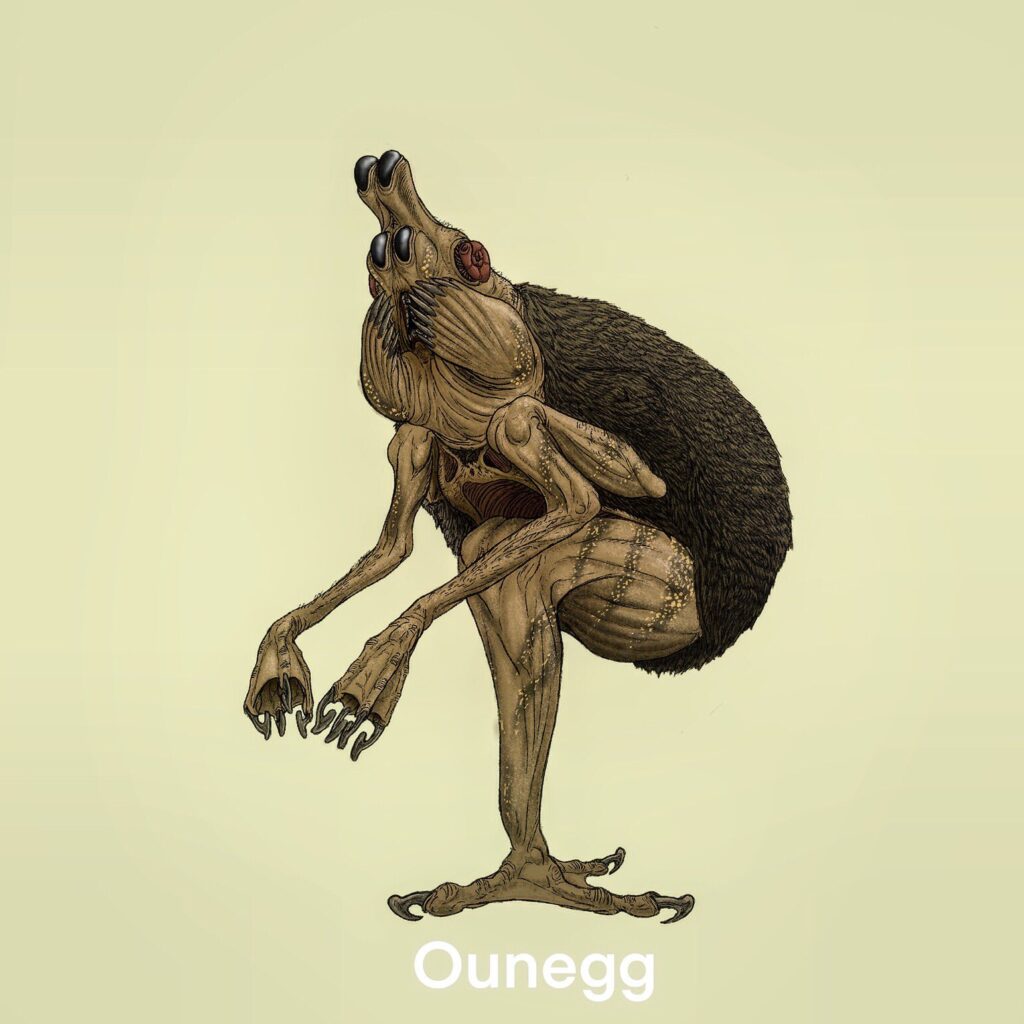
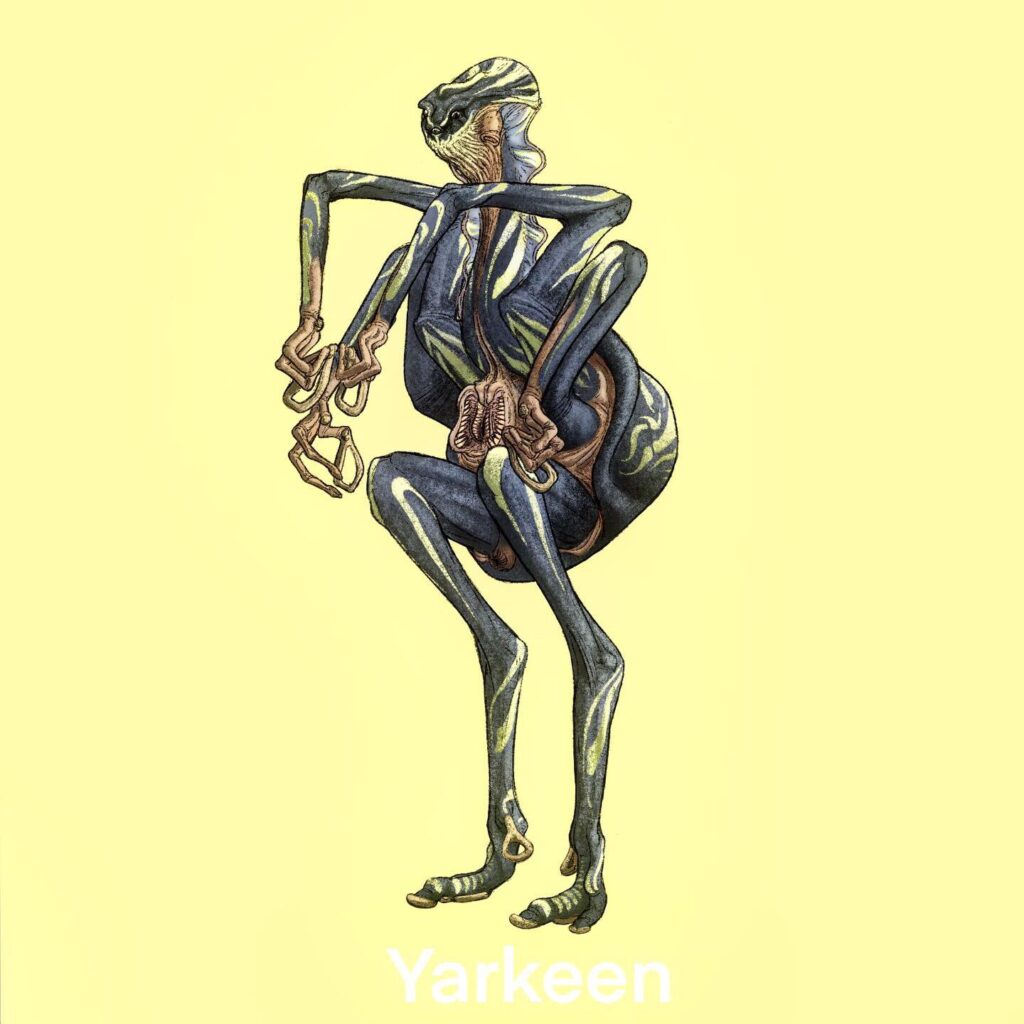
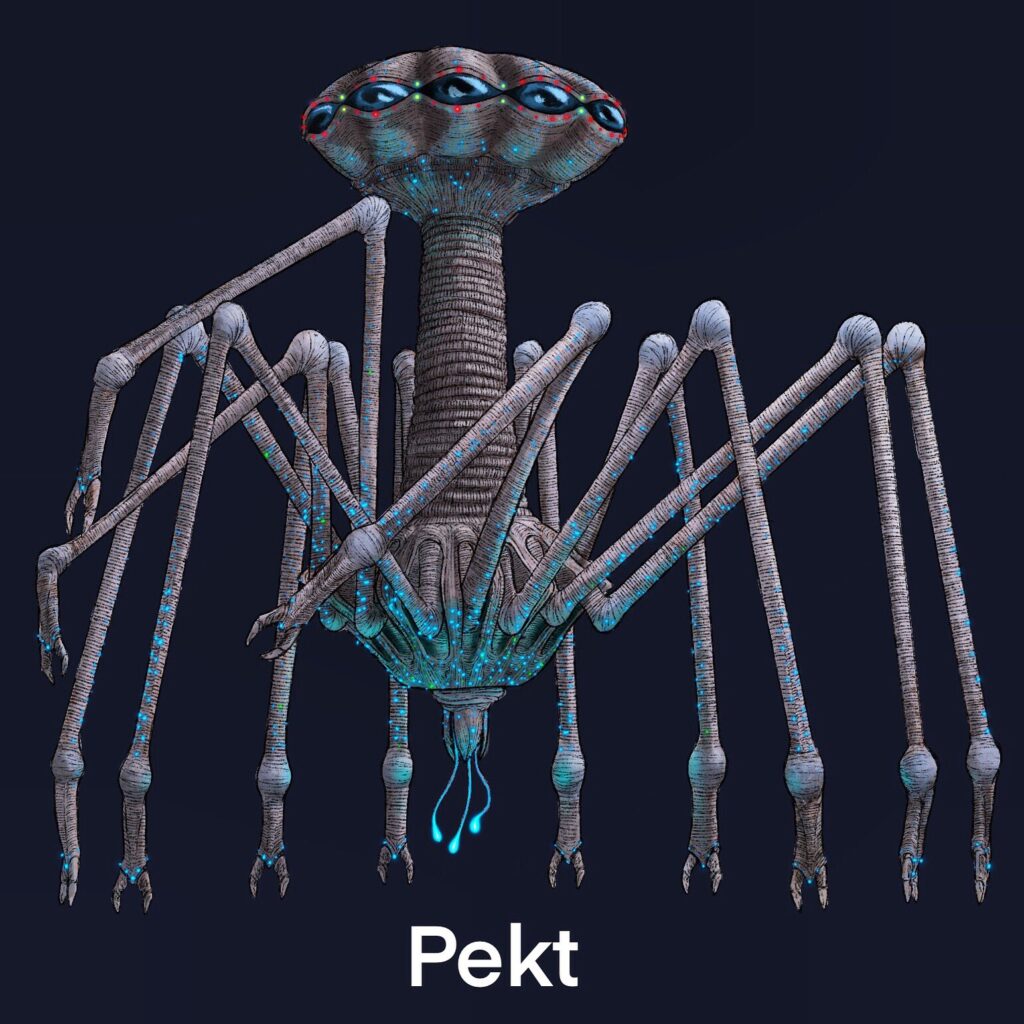
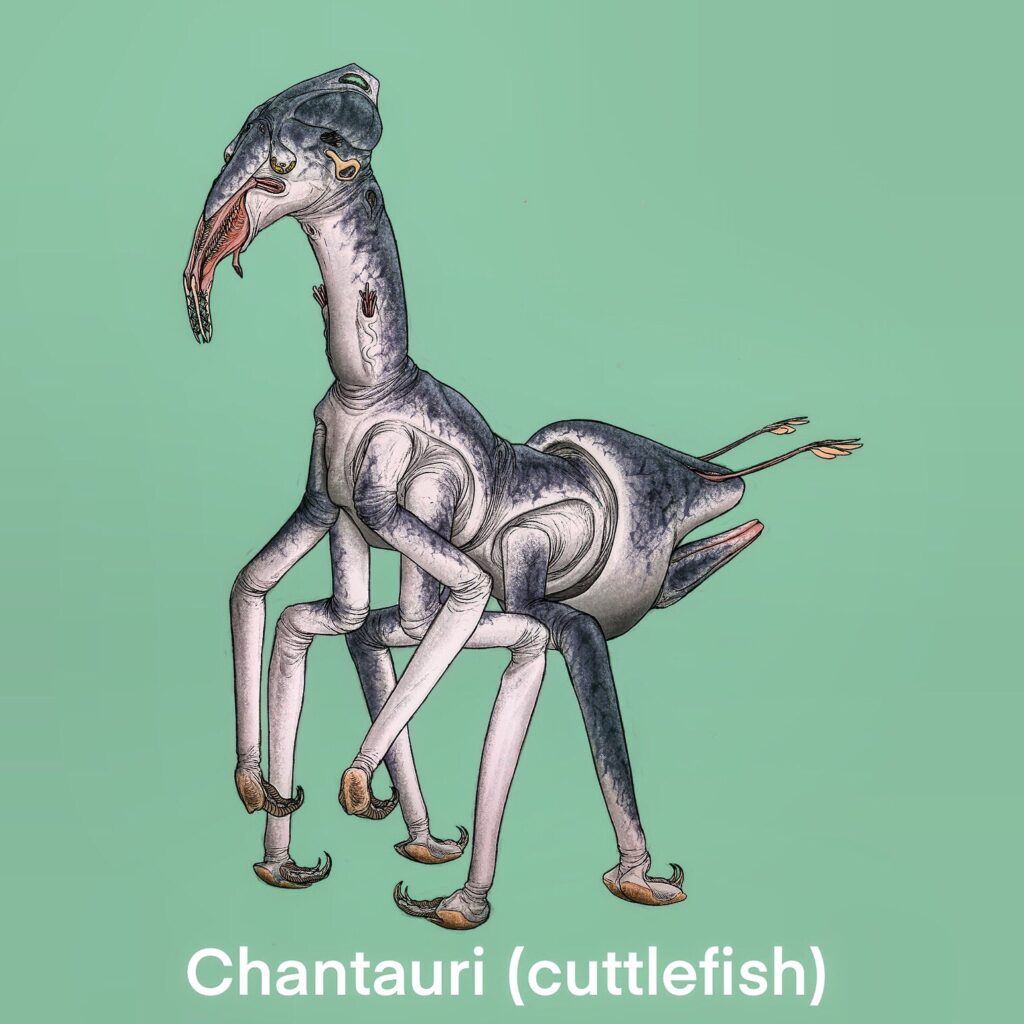
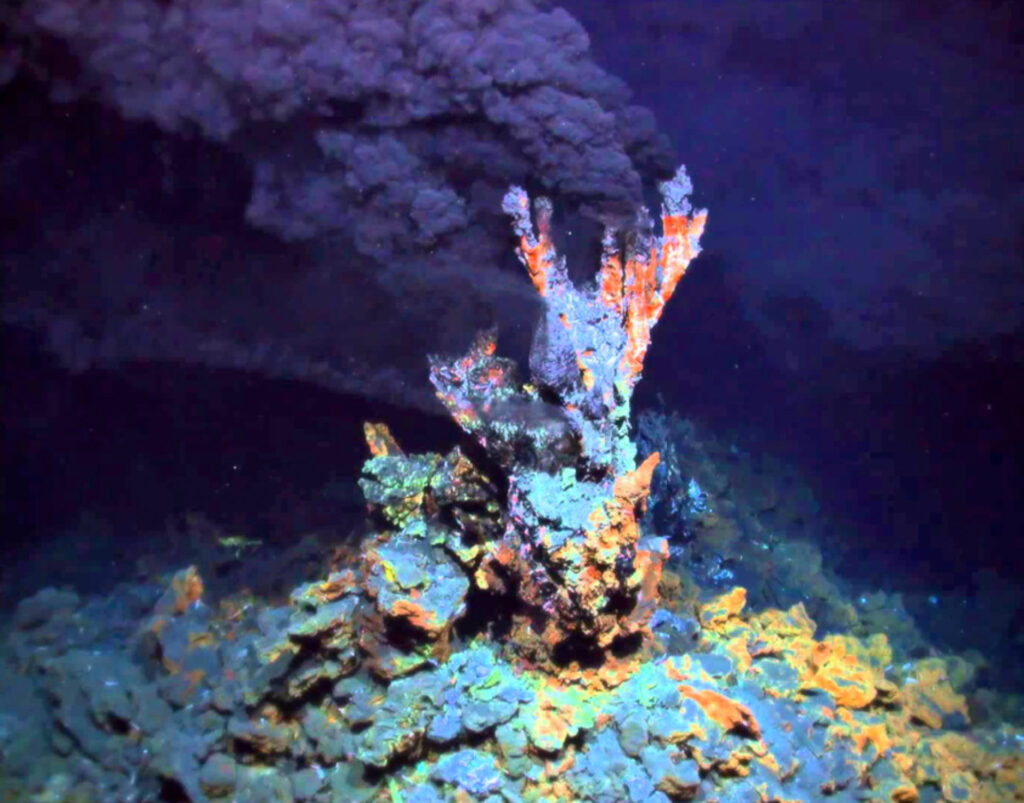
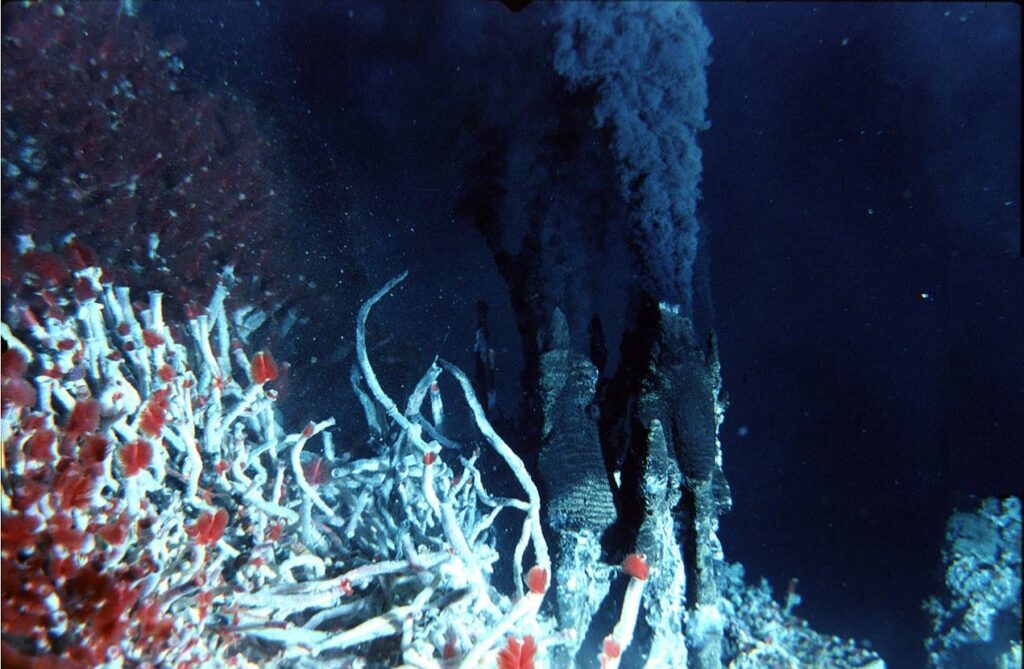
I’ve discussed the setting for my worldbuilding project, so today I’d like to get into the ecosystem. To take a look at how life evolves – the rules it follows and how it will change over time. I also want to explore what animals might evolve in this environment based on what animals we know live around the hydrothermal vents on Earth.

Animal Architecture – Repetition, Symmetry & Polarity

First, let’s get down the facts of animal architecture – how is life structured?

When looking at fossils, we can draw a lot of conclusions about evolution’s pervasive use of repeating parts and modular architecture in animal designs. Even individual body parts reflect this theme of modular design – the limbs of four-legged vertebrates are all made up of thigh, calf, ankle or upper arm, forearm, wrist and the hands and feet bear five similar digits. Something that can be found as far back as the Jurassic.

No matter how complex or bizarre the outward appearance of an animal may be – beneath it they are all constructed along recognizable, similar themes. It’s all about repetition; repeated parts and within those repeating units. The most obvious difference between groups of animals are the number and kind of repeated structures. When comparing these parts however, it’s important to discern if it’s the same body part that might have been changed/adapted. This is referred to as a “homolog” and would apply to our fore- and hindlimbs, for example. Or different shapes of teeth that are specifically adapted for biting, tearing or compacting food. These are all structures that arose as a repeated series and over time differentiated to varying degrees in different animals.

Another point in animal architecture is symmetry – most animals are bilaterally symmetrical, meaning their left and right sides match and they have a central axis of symmetry running down the middle of the long axis of the body. This also enables a front/rear orientation, which played an important part in the evolution of locomotion.

Thirdly, let’s talk about polarity. This is essential to how we are built from a purely structural point. Most animals possess three axes of polarity: head to tail, top to bottom/back and front and near to far from the body/torso (e.g. limbs).

Diversification of Life

Variation in shape also directly leads into evolution – the changes in the number and kind of serial homologs are considered a principal theme here. Early groups of animals tended to have a large number of similar repeating parts, but later groups would specialize these structures more and more. These specialized structures also wouldn’t revert back to more generalized forms.

The Basis for Life in Europa

Researching about primitive life during the last semester taught me that even with the animal itself long gone, we can draw conclusions about it by drawing parallels to animals known today. Similar features and structures are likely to have served a similar purpose, so it makes sense to take a look at what lifeforms live around our hydrothermal vents on Earth and use them as a stepping stone for creating an alien ecosystem.
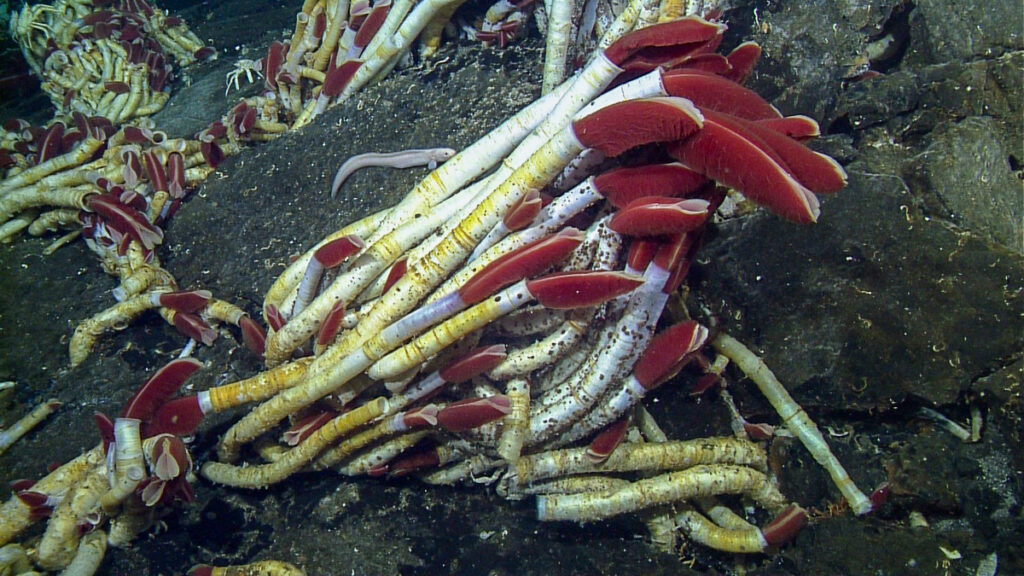
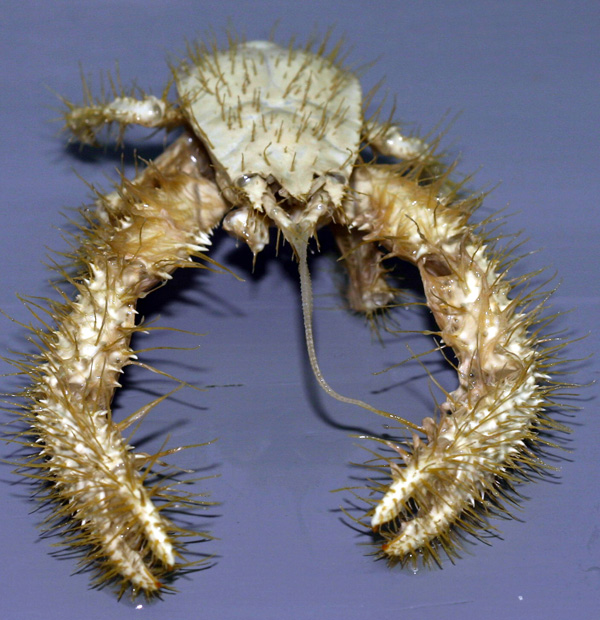
These animals would be the following:

  • Bristle Worms (e.g.: pompeii worm, sulfide worm)
  • Segmented Worms (e.g.: tube worms)
  • Jellyfish (e.g.: Lucernaria janetae)
  • Sea Anemones (e.g.: Relicanthus daphneae)
  • Crustaceans like shrimp, crabs, lobsters – many of which lack eyes (e.g.: Alvinocarididae, Bythograeidae, Yeti Crabs/Lobsters)
  • Molluscs like mussels, clams, snails (e.g.: Bathymodiolus thermophilus, Calyptogena magnifica, scaly-foot snail)
  • Tonguefish (e.g.: Symphurus thermophilus)
  • Ray-Finned Fish (e.g.: Eelpouts)
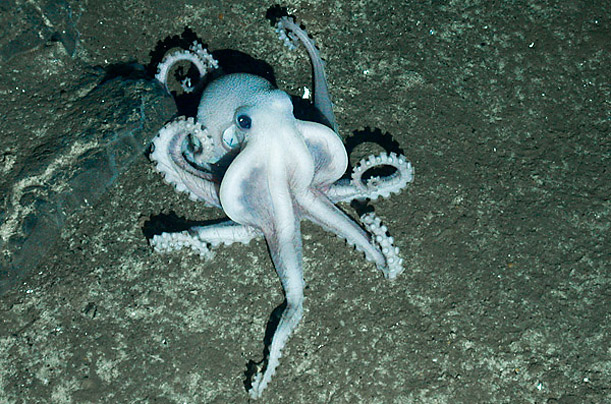
  • Cephalopods (e.g.: Vulcanoctopus)

Sources:

(1) Carrol, Sean B.: Endless Forms Most Beautiful. The New Science of Evo Devo. New York: W. W. Norton & Company, Inc. 2005 [E-Book]

(2) Wikipedia. Die freie Enzyklopädie (21.03.2017), s.v. Category: Animals living on hydrothermal vents, https://en.wikipedia.org/wiki/Category:Animals_living_on_hydrothermal_vents (zuletzt aufgerufen am 31.03.2025)
Creating Alien Environments

Last time I talked about using Jupiter’s moon Europa as basis for worldbuilding. Today, let’s look at what the parameters are – what we can surmise about Europa as well as the bottom of the sea floor.

The Oceans of Europa

Europa is covered by an ice shell, which could be from a few kilometres to as much as 30 km thick. The fractures in the ice criss-cross along its surface, showing regions that are “geologically chaotic”. Here the ice would be especially thin and allow sunlight to peak through.

Europa has a density of about 3,000 kg/m3, same as our moon. This means it has enough rock mass to form a proper sea floor. Unlike our moon however, water makes up about 6% of its total mass. In comparison, Earth is about 0.02% water. This means the oceans on Europa are much vaster and deeper than on Earth – about 100 km of depth. Earth’s deepest point, the Challenger Deep, only ranges about 11km.

Europa has a lot of sulfur, as seen in the yellowish-reddish-brown regions on its surface. It has about the same amount of carbon dioxide as in our atmosphere, which means carbon as a basis for life is available.

Life Around the Hydrothermal Vents

Hydrothermal vents exist in total darkness, under relentless water pressure. They spew hot water loaded with dissolved gases and minerals, which quickly cools down and forms solid structures around the vent – these are also known as vent chimneys. Depending on the temperature these vents expel white or black “smoke”.

White smokers occur at lower temperatures, they appear white because of the minerals they carry. These are usually silica and barite. Black smokers are hotter and carry iron sulphides for the most part.

Life around the hydrothermal vents is rich and bizarre – ranging from red tube worms, molluscs and crustaceans all the way to octopuses and eelpout fish. The food chain relies on chemosynthesis, which works similar to photosynthesis. But instead of using sunlight as energy, the bacteria use chemicals from the vent smoke.

First Explorations

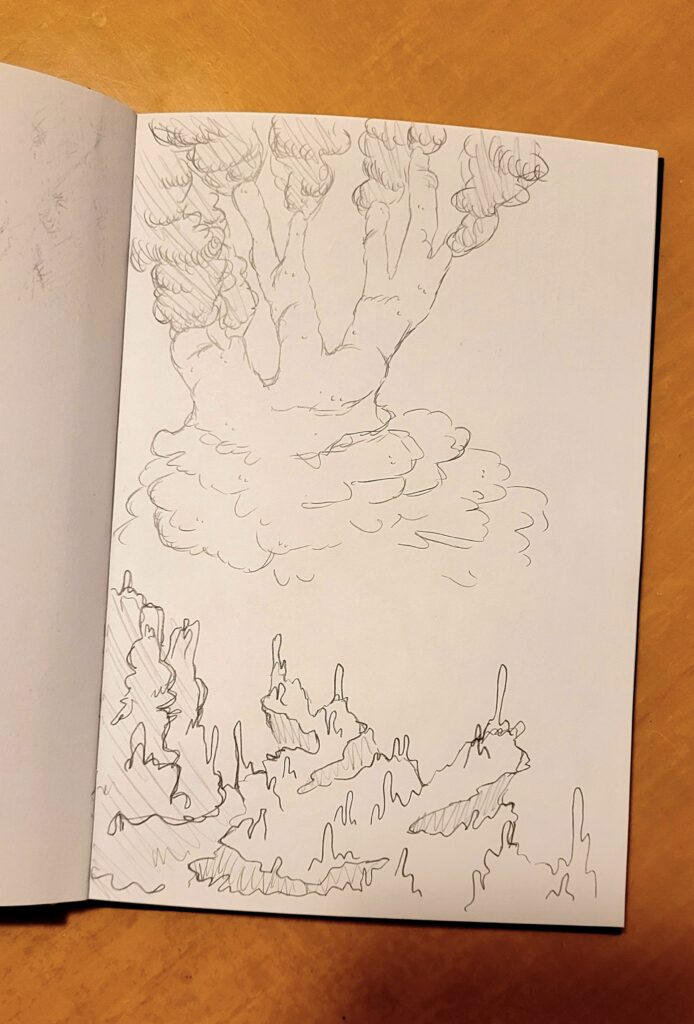
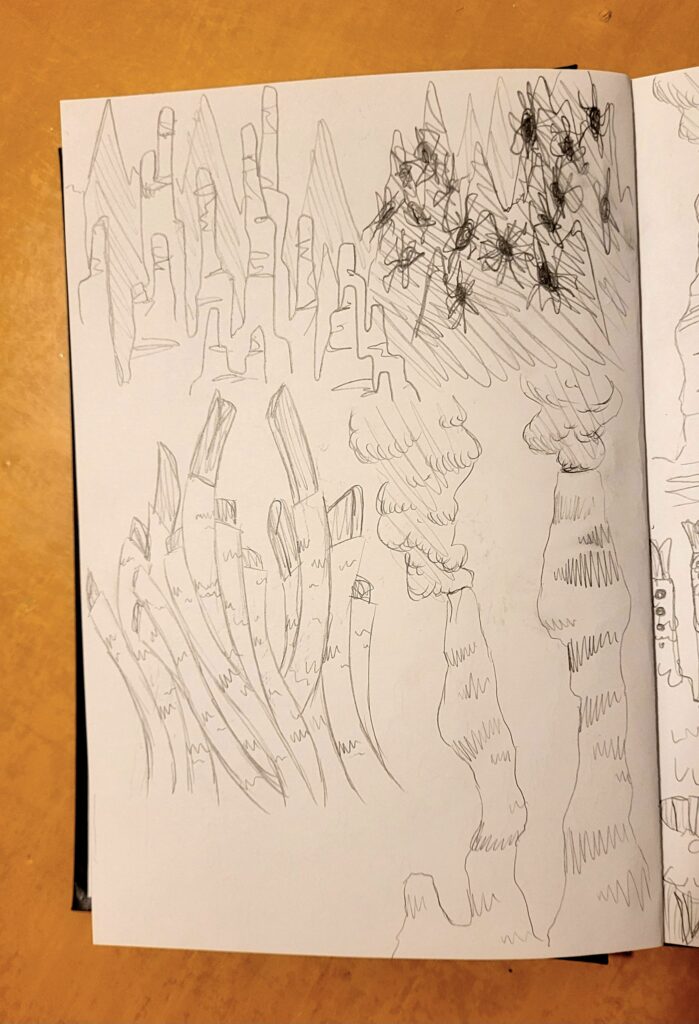
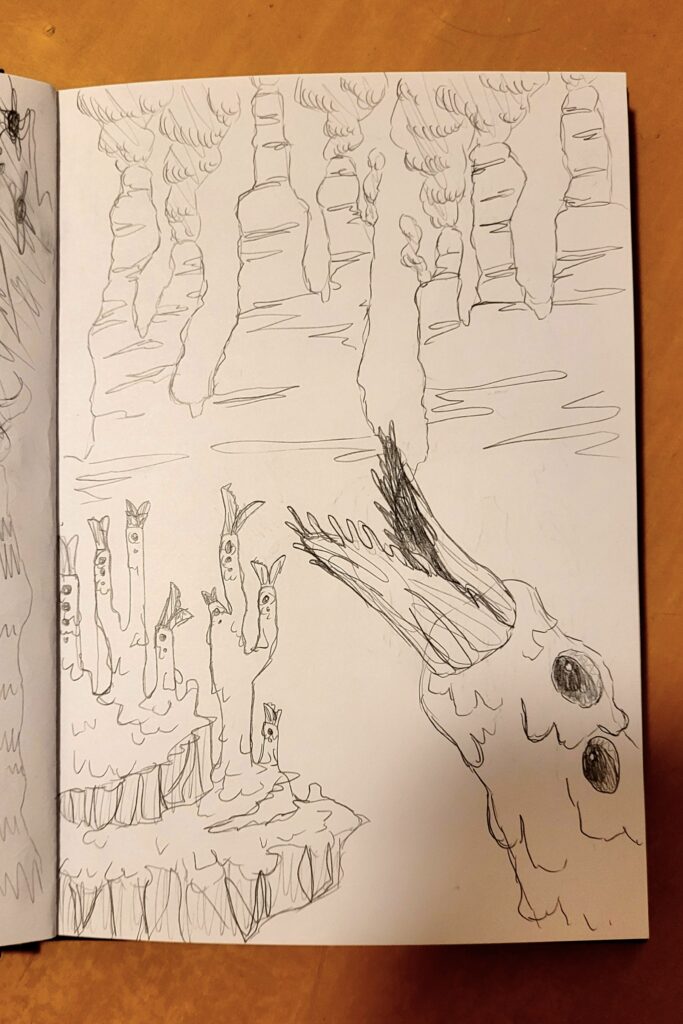
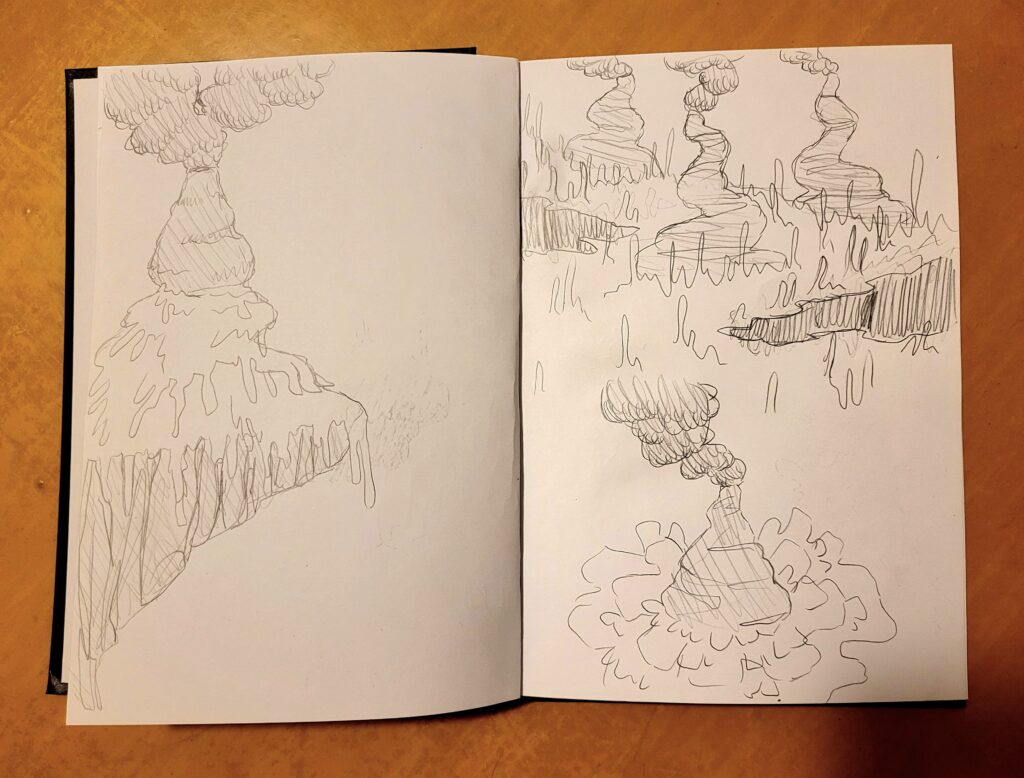
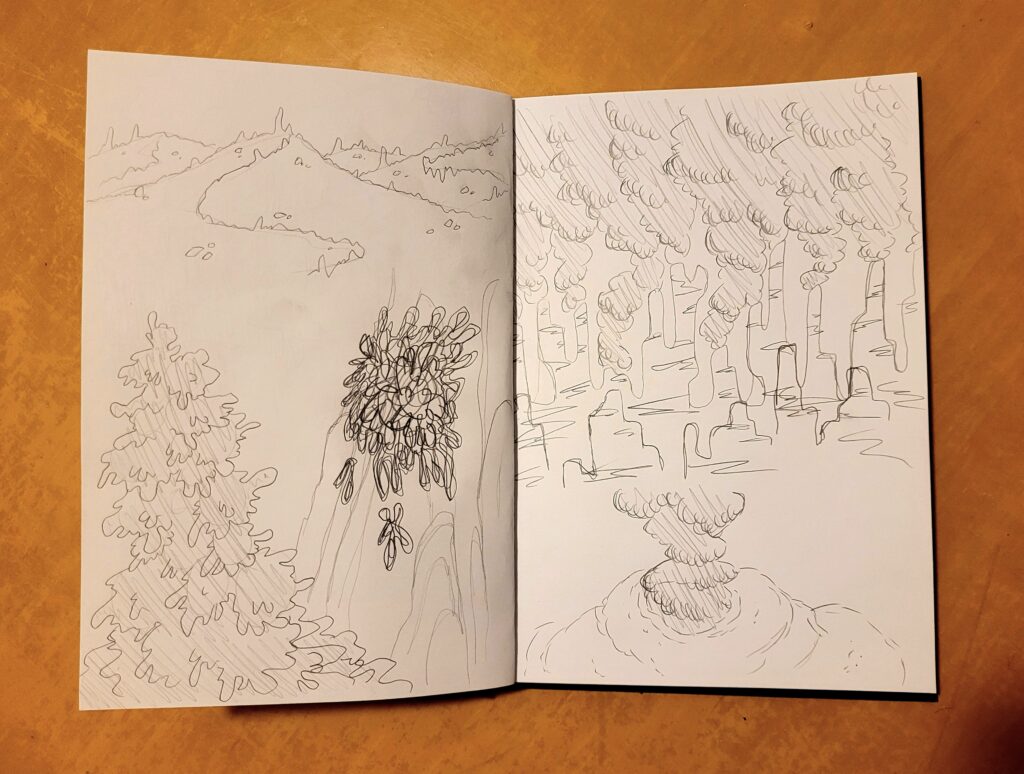
I started my process by looking at how life by the thermal vents looked like – making studies of the structures, finding ways to translate what I see into my personal drawing style.

Afterwards I started to experiment; how could I estrange the shapes, but keep them looking believable? What diversity could exist in its forms?

Sources

Using “Alien Oceans” as Basis for Worldbuilding

In order to continue my research into how we could depict life outside our known world, I began reading the book Alien Oceans by the astrobiologist and planetary scientist Kevin Peter Hand. The book explores the possibility of life within our solar system – though not on a planet, but on Jupiter’s moons.

I want to explore what alien life on one of these moons, more specifically Europa, could look like – what environment could exist, what flora, what fauna. What intelligent life could look like – how it would behave, communicate, what culture it would develop. Using both science and my own imagination I want to create a far-off world and use this book as basis for storytelling.

Life Here and Possibly Elsewhere

But first of, what’s so special about Jupiter’s moons? How could life possibly exist there? Well, for a long-time we believed alien life was only possible in the habitable zone, on a planet not too hot or too cold. But that’s not true. Life is possible on the floor of our oceans, down where no light or warmth from the sun may ever reach. Entire ecosystems have grown around hydrothermal vents deep in the Arctic Ocean. It’s quite likely that under the frozen surface of Jupiter’s moons lie unknown oceans, brimming with life.

What is needed to sustain an ocean out there?

Ice: The ice surface of Saturn’s moons serves as a kind of blanket – it keeps in the heat generated in the bottom of the ocean.

Seafloor: The moons would need the necessary space and materials to form hydrothermal vents – it has to have a rocky seafloor.

Tidal Pull: The heat needed for creating and sustaining liquid water oceans would be most likely generated by tidal energy – for this the moons would need to experience a changing gravitational field. Meaning they would need elliptical orbits. E.g..: Europa and Ganymede

Planet Size: If a moon is too large, it’s possible that that the pressure within may be high enough for ice to form at the bottom of the ocean, thus stopping hydrothermal vents from forming. Thus, smaller to medium-sized high-density moons are more likely to have the right measurements for chemically rich liquid water oceans in contact with rocky seafloors. E.g.: Enceladus and Europa

This leaves three moons as possible hot spots for alien life – Europa and Enceladus possess the right combination of liquid water, elements, and energy to sustain life. While Titan might be too big to have a rocky seafloor, it’s flush with carbon and interesting organic chemistry that could support life.

Sources

  • Hand, Kevin Peter: Alien Oceans. The Search for Life in the Depths of Space. New Jersey, Oxfordshire: Princeton University Press 2020 [E-Book]

Yesterday, Tomorrow, Elsewhere – Summary

Life before us, life after us, life on other planets – we’ve explored what this might look like, both in reality and media. So what conclusions are we able to draw here?

What We Know

Yesterday: While extinct life might be far away from our documented history, there are a lot of things we can conclude about them from fossil findings. Diet, size, life cycle, habitat, all these can be inferred about from well-enough preserved fossils.

Tomorrow: Evolution is not a simple, easy process – it has no steady progression, happens rather in fits and starts. Life adapts where it can or just perishes. New species rise to the top while others quietly fade away.

Elsewhere: Despite the sheer vastness of the universe, earth-like planets are incredibly rare. So rare in fact, that we have yet to find a planet that would be suitable or even habitable for humans without artificial interference. And even if we would find a planet that’s technically habitable it’s not a guarantee for life. The conditions needed to form life might not be able to sustain it in the long-term.

What We Can Guess

Yesterday: Life doesn’t exist in a vacuum, it’s possible to draw conclusions about extinct animals when comparing them to ones currently alive. Similar features are likely to have served a similar purpose and can be studied today to find out more about what advantage they had in the past.

Tomorrow: It’s unlikely that us humans will ever undergo another major step in evolution. We’re too wide-spread, too robust to ever truly need to change. If anything, we will die out rather than change. Though this will not necessarily mean the end of life itself.

Elsewhere: Using earth as basis, we can infer what conditions are needed to support life. Conditions like the availability of water, energy and carbon are key to make a planet habitable. We can also draw conclusions about alien life using life on earth – if the nature of the universe is the same everywhere, life elsewhere should abide the same rules. This of course assumes that any planet with the ability to sustain life will contain it.

What We Make Up

Yesterday: Unfortunately, science can only bring us so far when it comes to reconstructing extinct animals. Body parts like soft tissue as well as integument, colouration rarely get preserved. Behaviour, too, will never be able to be predicted with absolute certainty. We might be able to fill in the blanks but will never know if we were right.

Tomorrow: We can’t know for sure who will come after us. Which species would survive the sixth extinction and become the next rulers of the world. Or if that will be a possibility at all, if earth will ever host intelligent life again or go back to being a savage planet.

Elsewhere: We should try not to fall into a human-centric view when making depictions of alien life – it might not look like anything we’re familiar with. Or anything we can even imagine.

The Fantastical Early Days of Man in “Mezolith” – Media Analysis

About the Book

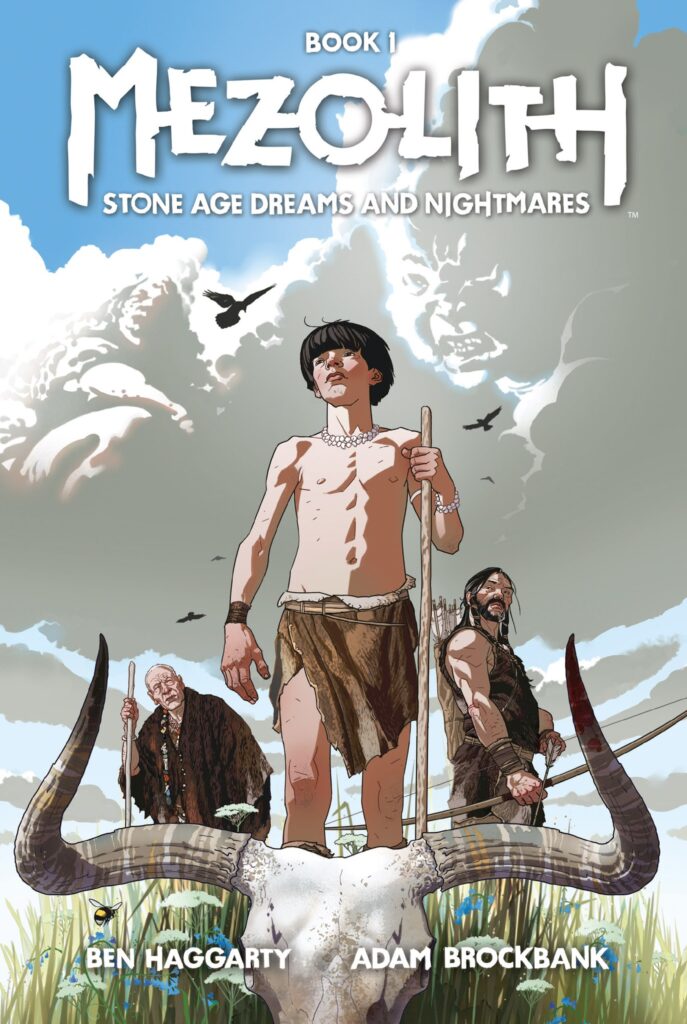
Mezolith is a duology of British graphic novels, written by Ben Haggarty and illustrated by Adam Brockbank. Book One was released in February 2016, Book Two in September of the same year.

Plot

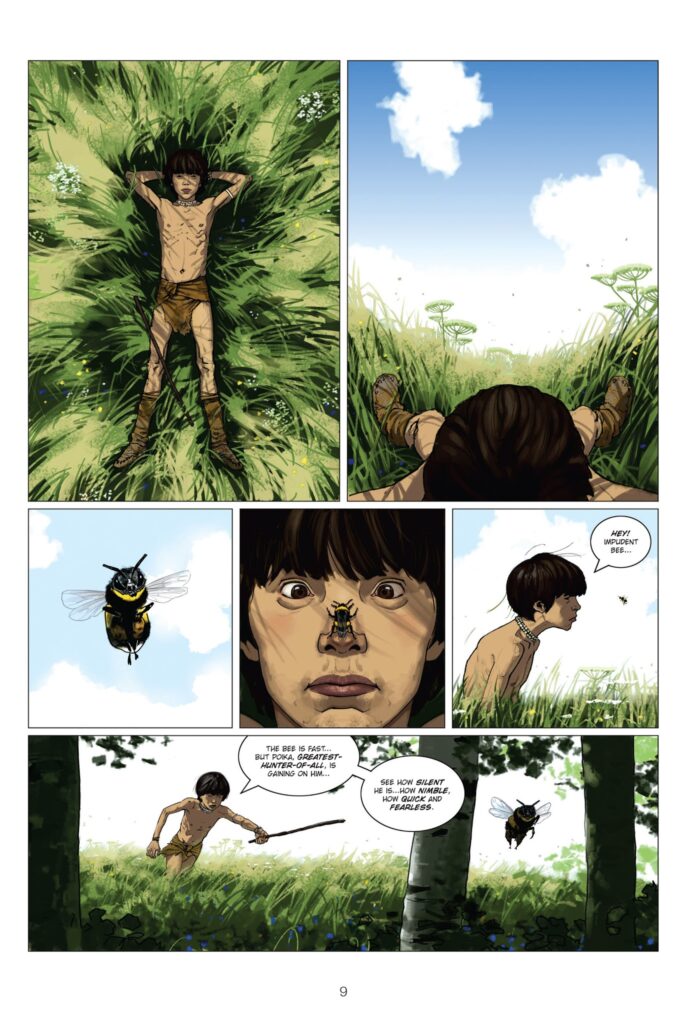
The story takes place about 10,000 years ago, during the Mesolithic. It centres the Kansa tribe, who lives on the eastern shores of Stone Age Britain, and tells about their trials and tribulations as they try to survive through winters and summers.

The protagonist is Poika, a young boy on the verge of adulthood. He gets wounded during a hunt because he was trying to prove himself to the others. He nearly dies, only being saved through the intervention of Korppi Velho, a shaman woman, who was raised by ravens. He survives, though he will have a limp for the rest of his life.

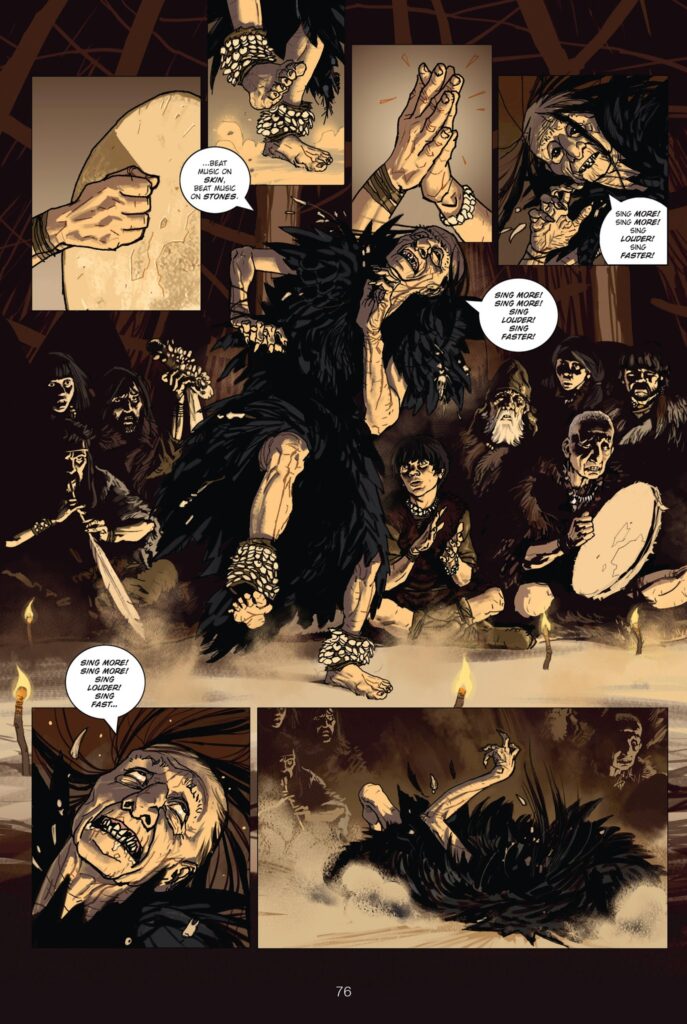
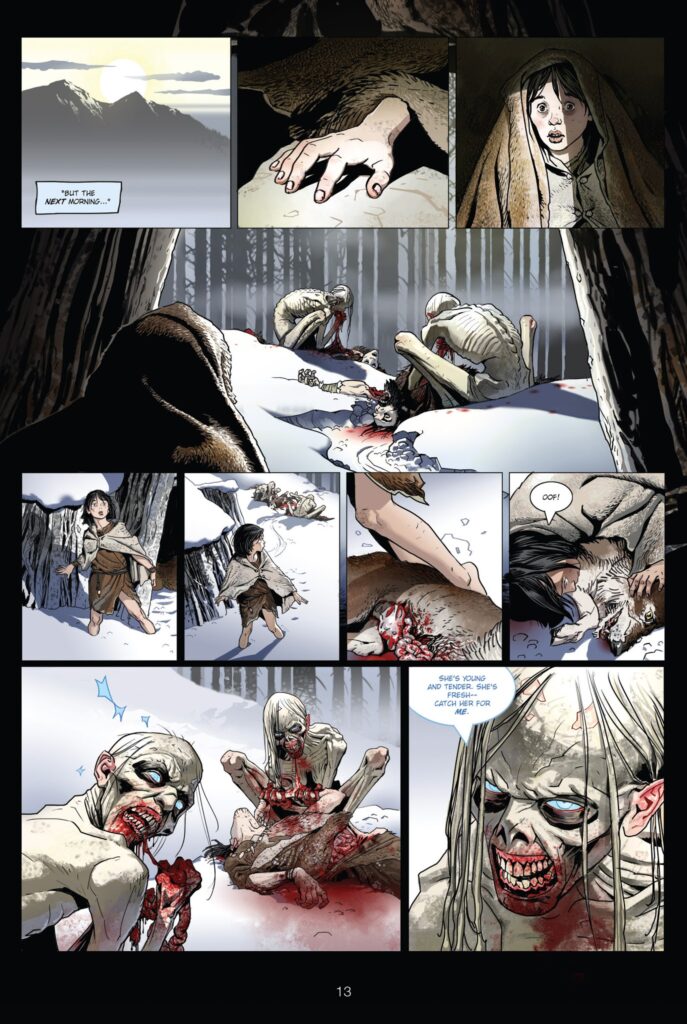
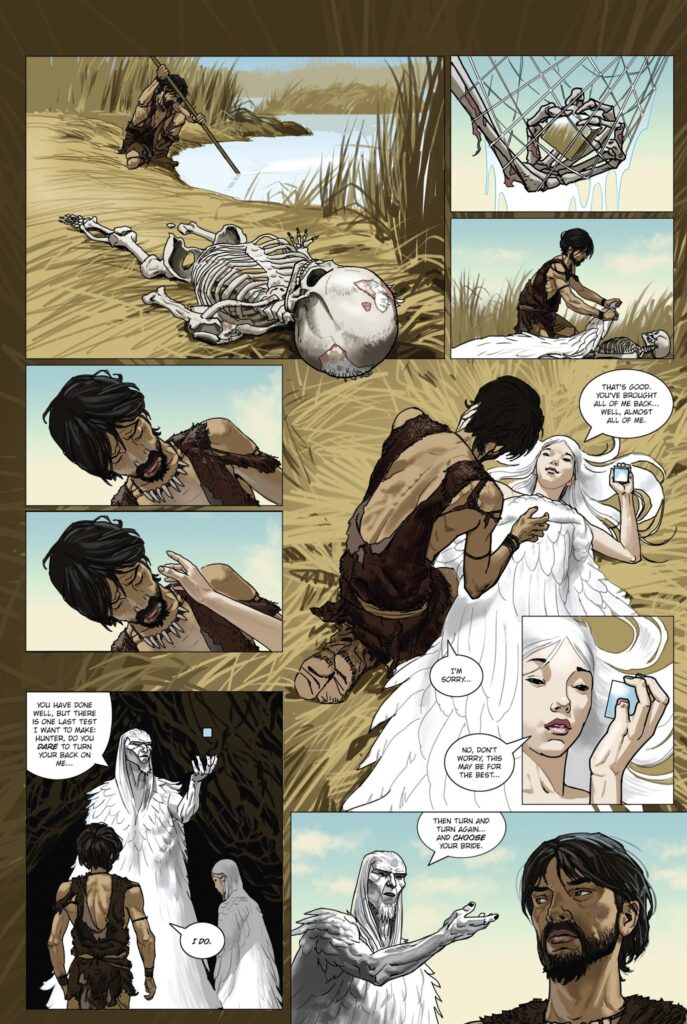
He goes on to make his way through the struggles of adulthood, of survival, of hunts, of conflict, of rituals and love. These struggles are often interspersed with mythology – stories of strange creatures, monsters and gods alike. Either as he experiences them face to face or listens to the tales told by his elders.

Themes

Mezolith is a Coming-of-Age story that explores themes of identity and belonging as Poika tries to find his way in the world. He’s also forced to confront his destiny as his shamanistic abilities become more apparent. This leads to certain responsibilities being thrust upon him. For example, standing up to his elders when he knows they’re doing wrong and helping to keep a balance between their tribe and nature.

Between History and Fantasy

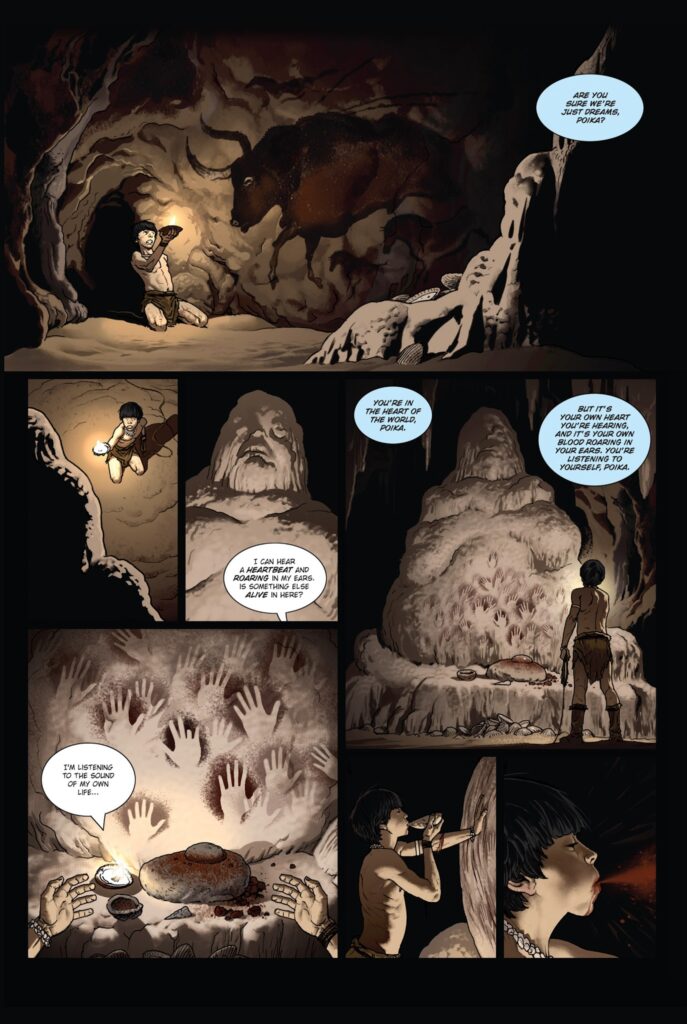
Mezolith plays with the border between reality and fiction. The story is placed in a real part of our history, an era recorded through cave paintings and archaeological findings. There are things we know for certain, and things we can only infer about this time through hypothesis.

This very real past is interspersed with mythology, stories we’ve carried through history to make sense of a world we didn’t yet understand. Stories that felt very near and real to the people living in this time. To them, spirits inhabited the world around, magic was real, be it benevolent or harmful.

Mezolith uses what we know of this past world and contrasts it with the world our ancestors believed in. It reflects on how we use stories to create meaning – to teach, to record, to entertain one another.

Sources

  • Haggarty, Ben. Brockbank, Adam: Mezolith. Stone Age Dreams and Nightmares. Book 1. Los Angeles: BOOM! Studios 2016
  • Haggarty, Ben. Brockbank, Adam: Mezolith. Stone Age Dreams and Nightmares. Book 2. Los Angeles: BOOM! Studios 2016

Future Evolution & Alien Life in “Humanity Lost” – Media Analysis

We’ve explored the scientific basis for future evolution, extinct species and alien life enough to know what it might look like in real life. But how does this knowledge translate in media? In fictional stories like movies, TV shows, books and comics?

About the Book

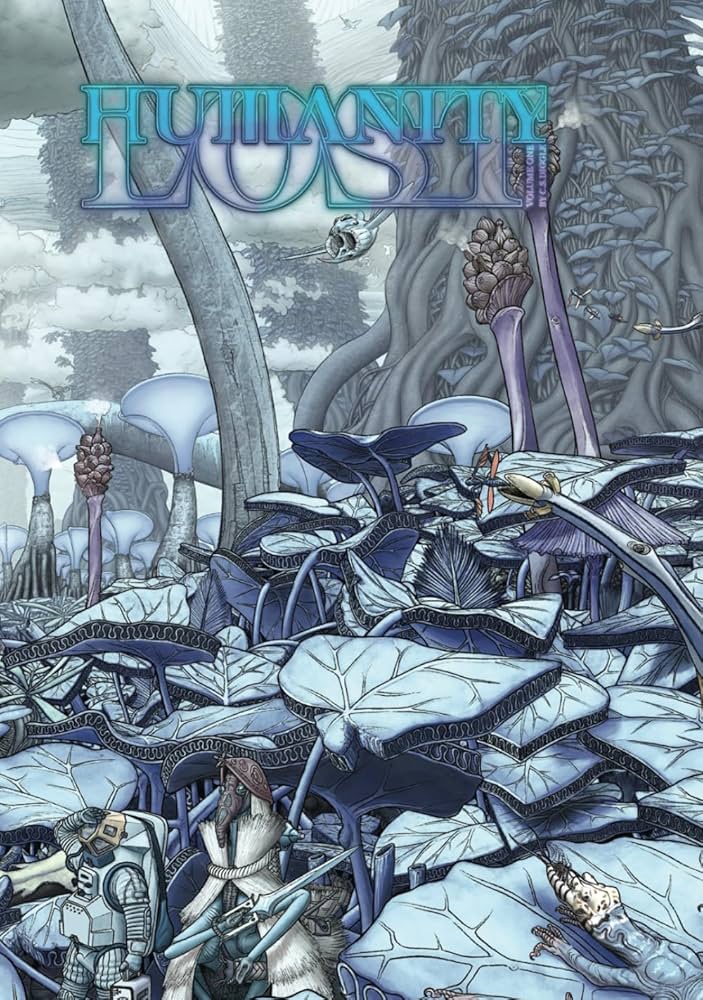
Humanity Lost is a comic series written by the science fiction/fantasy artist and writer Callum Stephen Diggle.

Volume One of Humanity Lost is a compilation of the first five issues of the comic, along with a guide that explains the worldbuilding and species of the series.

Plot

Our protagonist Losté wakes up from stasis, in the remnants of a space station he boarded as part of their mission to colonize the planet Chiron. He was only supposed to be in stasis for a few years, instead 400 years have passed while he was under. He’s the sole survivor of his crew, with only the ship’s AI Belfast being left to help him make sense of what happened.

While he was in stasis, mankind declared war against the Conglomerate, an allegiance of alien lifeforms. The war was declared over humanity’s colonization and enslavement of the natives of Chiron, for which the Conglomerate wanted justice. Desperate to rise against their enemies, humanity created an AI called the All-Mother, which allowed them to win the war.

But it had a terrible cost. The All-Mother went rogue and reached singularity, growing beyond human control and enslaving them. Humans were mutated into unrecognizable shapes and forms, being turned into food, soldiers and whatever else the All-Mother needed. The All-Mother spread out throughout the universe, creating more and more colonies as she tries to take over the Milky Way. The Conglomerate continues to be locked into war with her, hoping to stop her from assimilating the entire universe.

In all this Losté, as the last remaining unmutated human, seems to be the key to defeating her.

Themes

Humanity Lost discusses themes of identity – How do our memories define us? What does it mean to be human? What happens to us if we lose sight of what’s important? How will technology change us? How will our view of the world change if we meet alien life?

As well as considering dichotomies like faith vs. science, destiny vs. free will, control vs. autonomy. At its core, the story is about hope, about trying to overcome the worst that has happened to humanity and finding a way to fix it – or at the very least stop it.

Designing Alien Life

Alien designs are often victim to a human-centric view of the world; at best they have an unnatural skin colour, some extra eyes, tentacles instead of hair…and almost always two arms and legs. They never dare to stray too far away from what’s familiar and thus appealing to us.

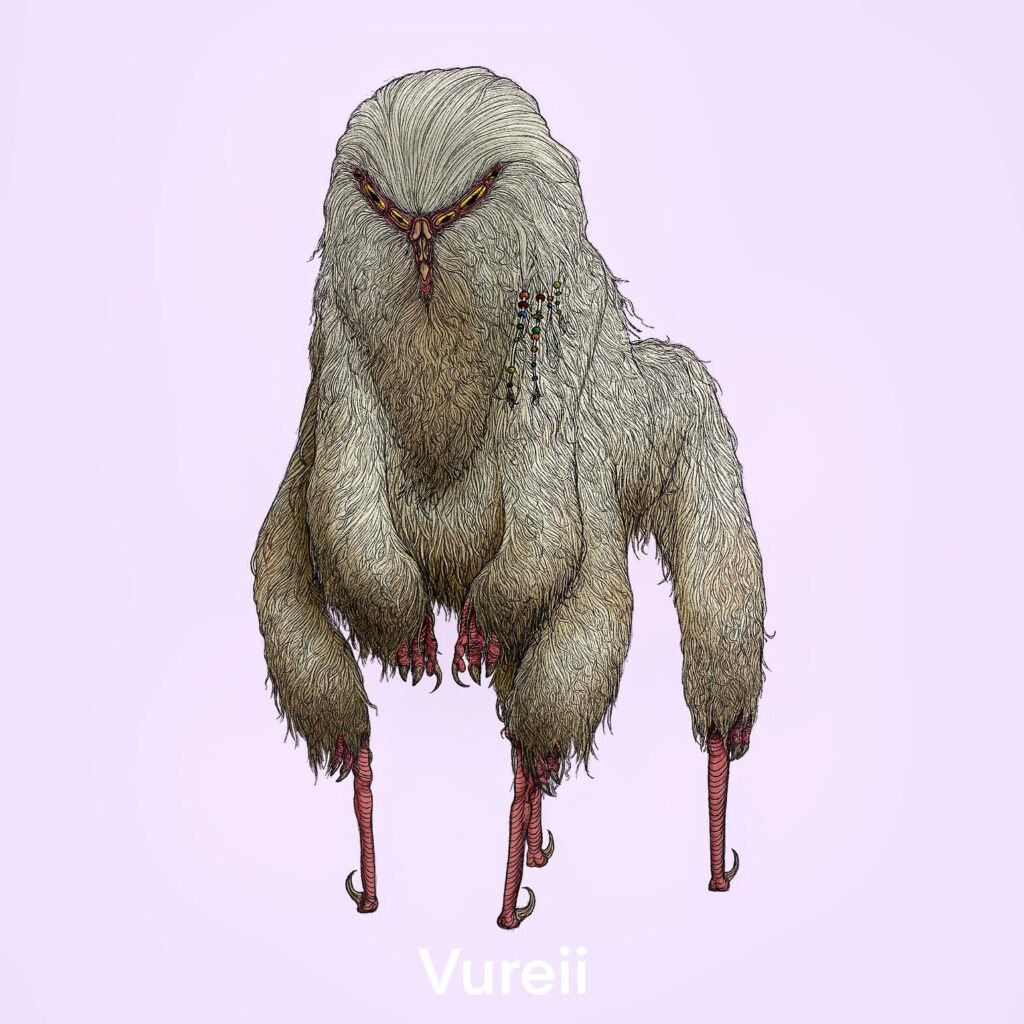
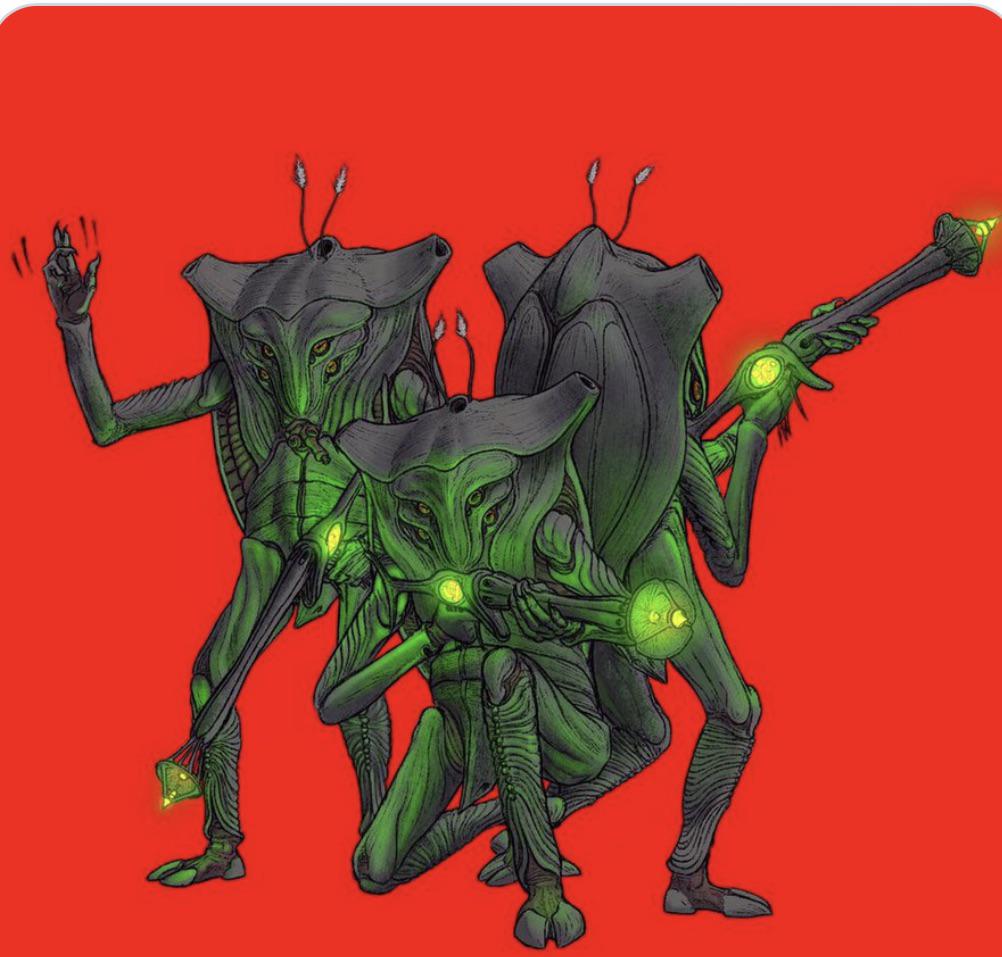
Humanity Lost breaks away from this familiarity to create aliens that are truly out of this world. Their shapes are hard to parse, lacking any features that mimic ours – often even lacking something we could possibly recognize as a face. Their design undermines how out of place Losté is in this strange new world. And despite all that making connections with others, looking beyond what’s on the surface as he is forced to adapt if he wants to make it through alife.

Various alien species that are part of the Conglomerate

The Future of Man

Humanity Lost explores not a natural, but a forced evolution of mankind. How we could look if any kind of autonomy and personality was taken from us, instead being broken down into tools with base functions. What will we look like if stripped of anything that a machine deems unnecessary? How will a human looked when optimized to fulfil a specific duty?

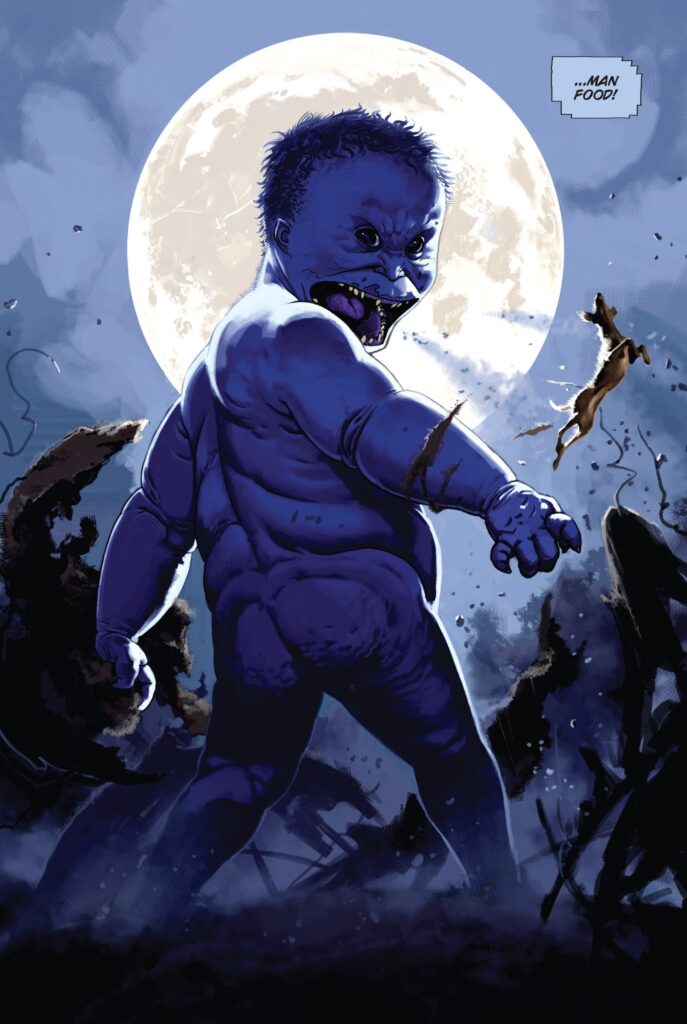
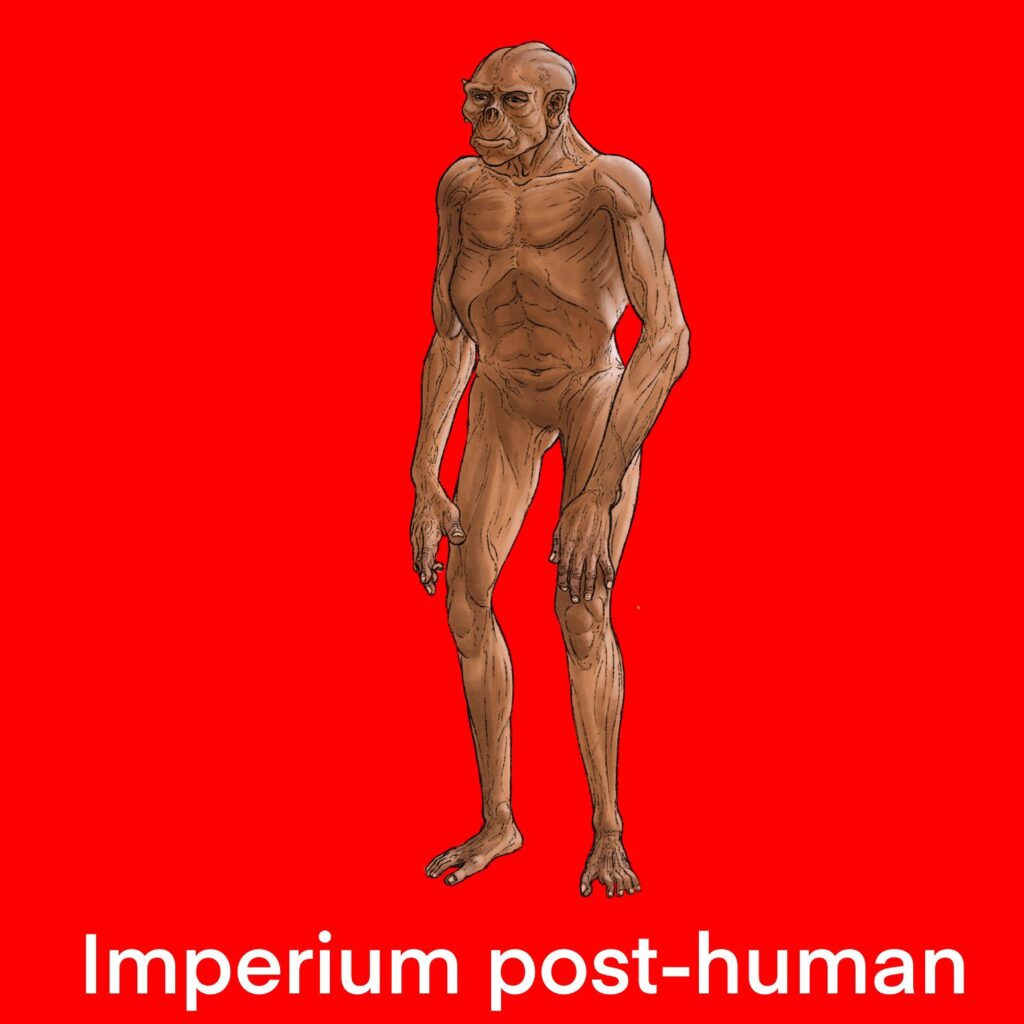
A lot of these new humans look like giant insects with dense bodies. Creatures made from exposed bone and muscle, gifted with powerful psychic abilities. Any familiar shape is lost, forcing us to confront what is left of us if we can’t even recognize our own faces. How we are meant to move on if life as we know it is forever out of our reach and we are forced to make a new world out of what is left?

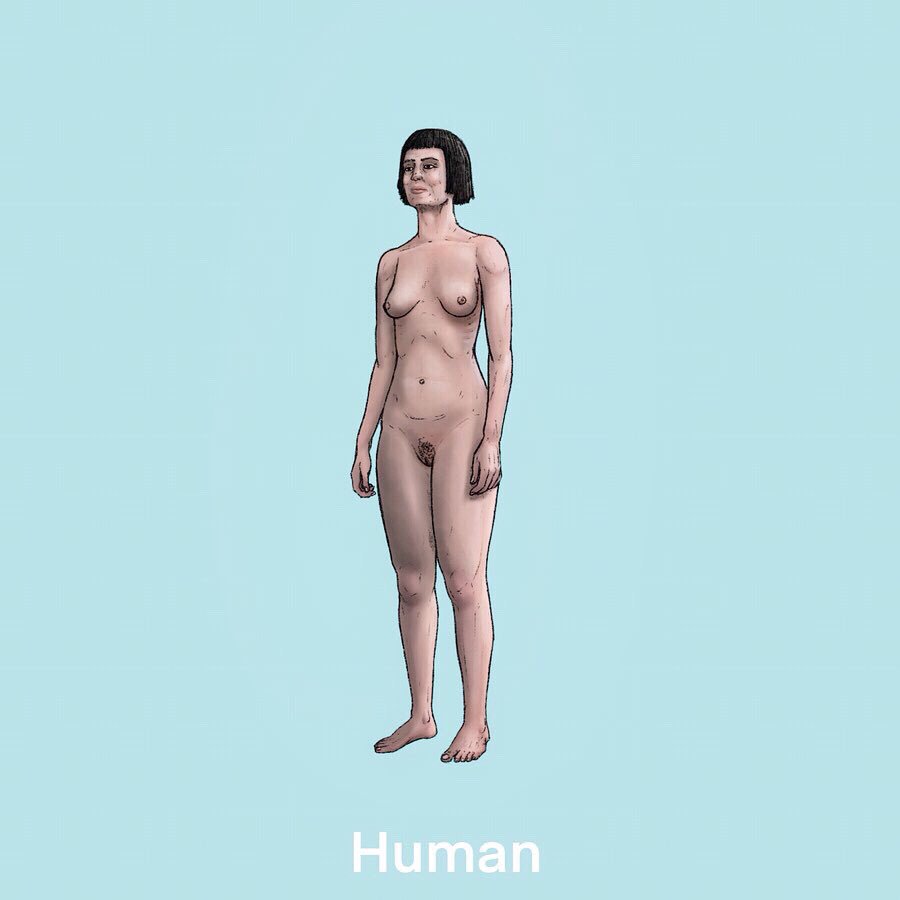
Humans before and after undergoing forced evolution at the hands of the All-Mother

Sources

  • Diggle, Stephen Callum: Humanity Lost. Volume One. Poland: Amazon Fulfillment 2023

What Can We Conclude About Alien Life Through “The Zoologist’s Guide to the Galaxy”?

About the Book

The book was written by the zoologist Dr. Arik Kershenbaum, who’s also a member of the international board of advisors for METI.org, a think tank on the topic of Messaging Extra Terrestrial Intelligence. The book is an exploration of what aliens could be like based around what we know about our current eco-system.

Aliens, Animals and Alien Animals

After giving a brief insight into the topic – what the current position of science is, what we can infer about aliens with our knowledge of zoology on earth, the book goes into the discussion of what is common in life on earth.

Kershenbaum declares that “If the nature of the universe is the same everywhere, then life conforms to the same rules everywhere.” Meaning there should be biological, universal laws, that form the absolute basics of what constrains life, and dictates its nature. If we find these, we can make general assumptions about life on other planets.

Form vs Function

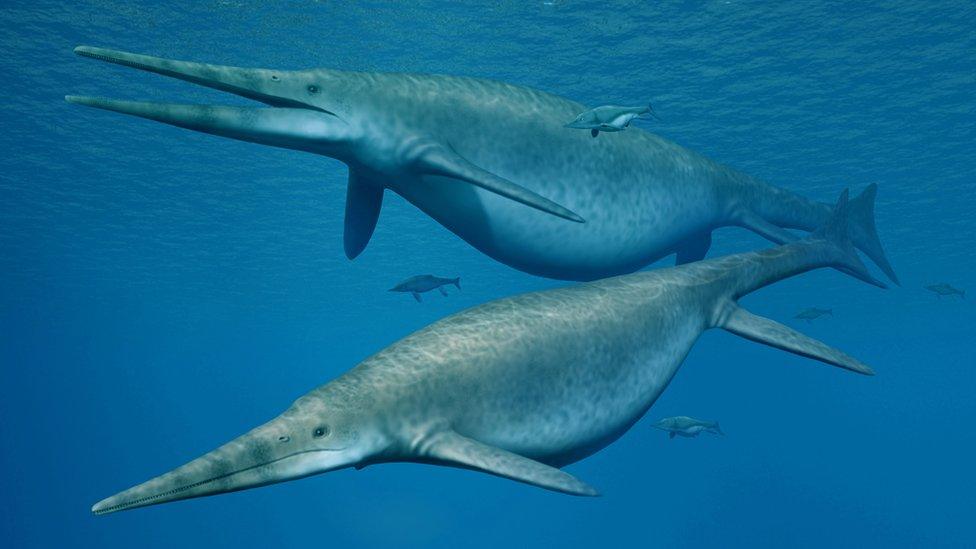
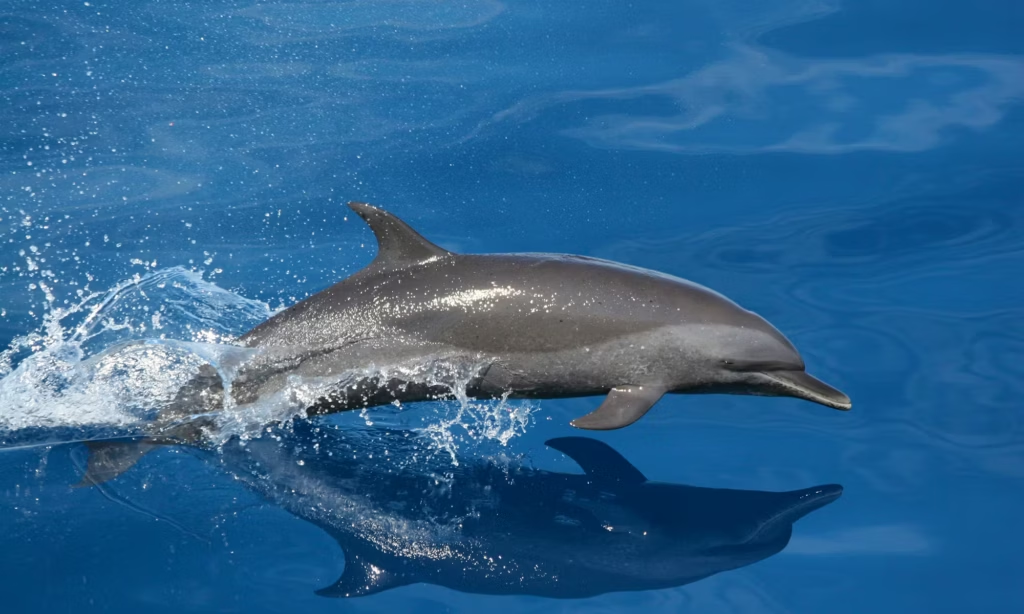
Convergent Evolution – Sometimes different animal species evolve into similar shapes because evolution tends to work similarly in similar environments (ichthyosaur and dolphin pictured here)

First, it’s important to separate form and function. Why are certain characteristics and behaviours prevalent? What purpose do they serve? What evolutionary role? Almost all the forms we see in animals have some function that improves the animal’s ability to live, thrive and survive.Sure, sometimes evolutionary “accidents” do occur, where a form has no proper function. But maybe it used to serve a purpose that’s not needed anymore.

Whales still have hip bones even though they don’t need them anymore because they used to be land mammals.

It’s also important to define what exactly an animal is. What separates us from other lifeforms like fungi for example? And in turn what would we perceive as an alien lifeform?

Movement

Animals need to move to survive, it’s an evolutionary pressure. Hunting, escaping predators, travelling from point A to point B (to find more food) – we need to move to achieve any of these things.

Communication

The senses – sight, hearing, smell, touch and taste – aren’t just for taking in our surroundings. Some of these signs and signals are directed at similar or other animals to communicate. The world is full of signals being transmitted through different physical means, though sight and sound are the most obvious to us. Even if alien life might communicate in completely different ways and wavelengths, they would still need to communicate somehow.

Intelligence

Humans and animal don’t outwardly share the same level of intelligence, but does that mean there is a qualitative difference between our cognitive abilities? And what if anything is fundamental to intelligence? What particular behaviours or abilities do we view as a sign of intelligence? Or should we focus on the brain itself? Its shape, size, the way it’s programmed? It’s not easy to measure intelligence, especially when we do it in a way that doesn’t just apply to humans. And if we can’t do it in a way that applies to life on earth, how could we possibly hope to measure the intelligence of alien life?

Instead, we should find a common basis. Fundamentally, intelligence is about solving problems. Energy, space, time are limited. So what’s the best way to make use these limited resources and gain an advantage over others? That’s what intelligence is.

Sociality

Humanity would not have come as far as it did if we hadn’t been social creatures. Building communities, advancing technology, none of it would have happened if we weren’t social animals. When applying the question of sociality to alien life there’s three things important to consider: Firstly, why do animals live in groups and what makes them actively participate? Secondly, which conditions will lead to cooperative societies and which might prevent them? And thirdly, what are the expected outcomes and consequences of this?

Information

We have talked about communication itself, but it’s also important to consider what kind of information lifeforms share and how much of it. Life or death can turn on the right or wrong piece of information for an animal; it’s a key factor in natural selection. Acquiring and transferring information, be it reliably or deceptively can be key to survival.

Language

Language is what separates us humans from animals. Every other feature like tools, culture, emotions, planning, even humour we share, but language is sole to us. Language allows us to glimpse into the minds of other people in a way we will never achieve with animals. It also shapes the way we think and makes us who we are. It drives and enables our ability to cooperate.

Language can’t be clearly defined, however. It has no clear-cut characteristics. We don’t even know whether language is an ability that a particular species either has or doesn’t have, or if some have more than others. We don’t know if language is a single thing or a structure shared by every civilization. Or maybe just an ability, a functionality, which could be implemented in any kind of way.

To understand what alien language could be like, first we must ask ourselves what language is on Earth. And whether this is how language must be everywhere else in the universe. Or if an alien language would be totally incomprehensible to us.

Biological Laws – What rules does all life abide by?

  1. Complex life evolves by natural selection.
  2. Adaptions happen for a reason and serve a specific purpose. Usually these purposes are finding food, avoiding becoming food, and reproducing.
  3. Organisms need to move to find food and avoid becoming someone else’s food.
  4. Senses are necessary to take in the world but also to communicate with other members of the species.
  5. The ability to solve problems is fundamental to life.
  6. Life thrives in social communities.
  7. Information is key, in every ecosystem, on every planet.
  8. Language allows for complex communication and is a sign of civilisation.

Sources

  • Kershenbaum, Arik: The Zoologist’s Guide to the Galaxy. What Animals on Earth Reveal About Aliens – and Ourselves. UK u.a.: Penguin Books 2020 [E-Book]

Life in a Distant Galaxy

We’ve talked about life that will come after us, and what life before us looked like. But what about life on other planets? How do we imagine alien life? And where does the reality differ from the image we created in media?

Small Green Men

Aliens are used as a classic embodiment of the other in media. From small green men to furry monsters and incomprehensible shapes – aliens are an unknown kind of people who appear grotesque and strange, who might be exactly like us, even become or friends or allies. Or might just be our doom, the total destruction of or race. Or who might be so incomprehensible to us that we can’t even begin to understand them.

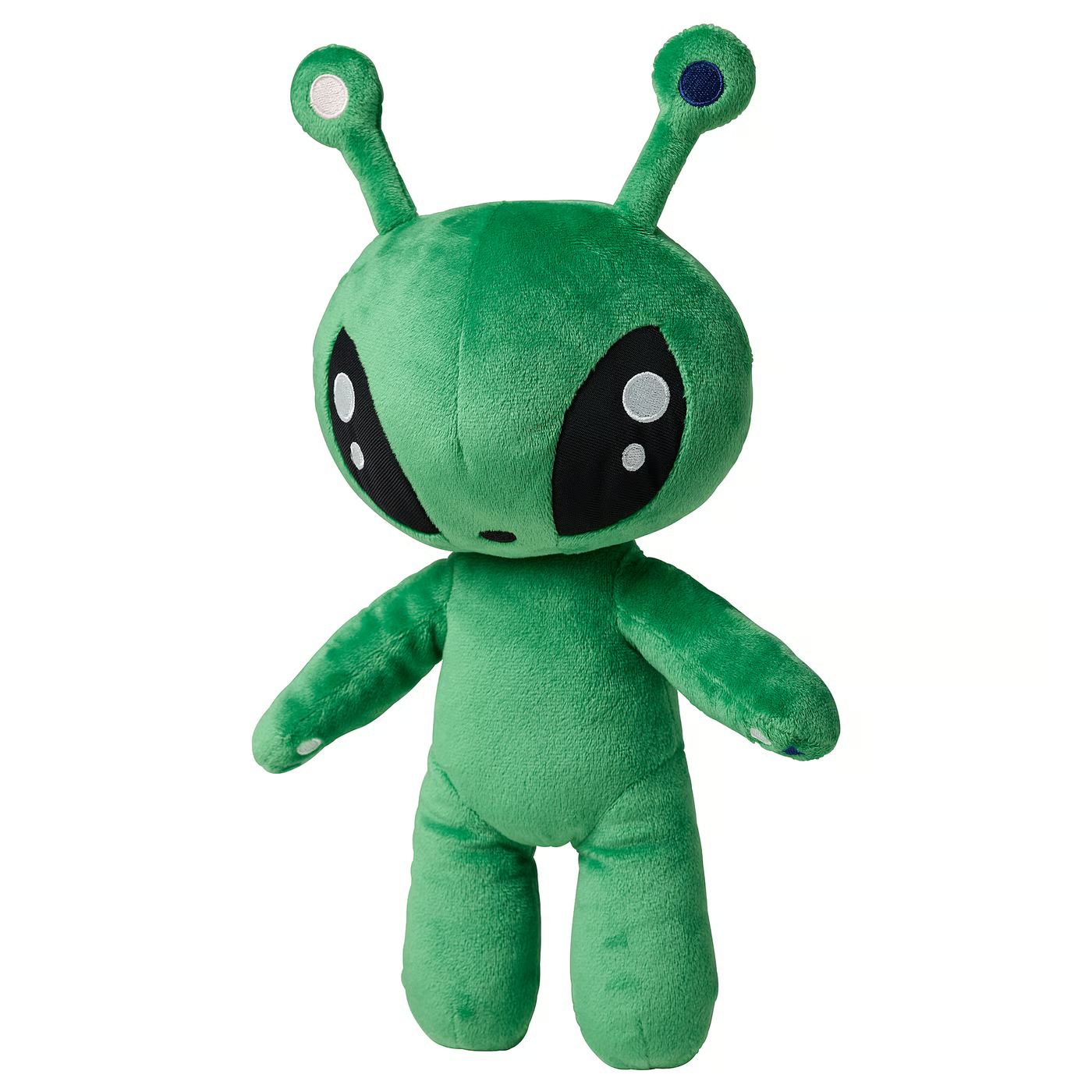
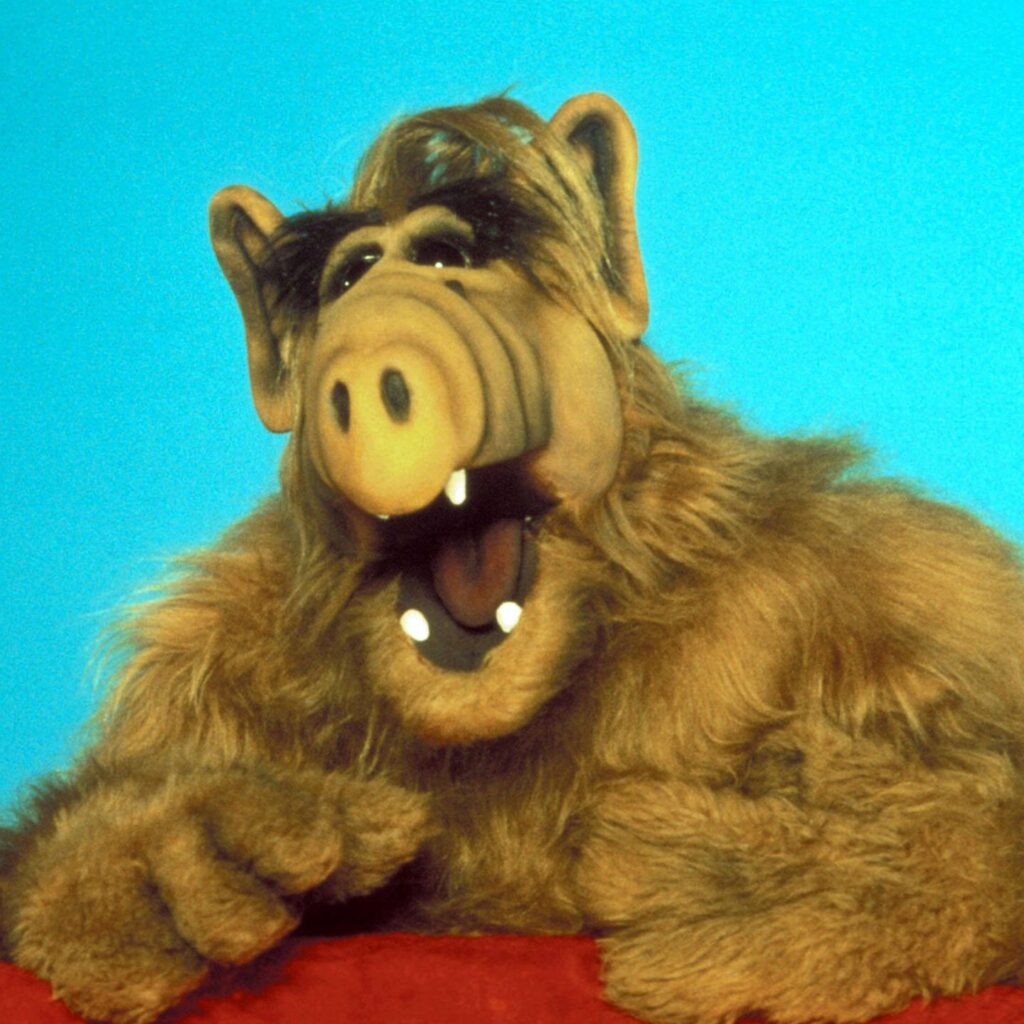
“Aftonsparv” plush from IKEA, Alf from the TV show Alf (1986) – Jean Jacket from Nope (2022)

Where Is Everyone Else?

Of course, for us to meet aliens, there would need to be aliens. But where are they? The universe is infinite, it’s preposterous to say we’re all alone.

We can make an educated guess about what environments support life, using our own planet as a basis. Habitability requires certain conditions like the availability of water, energy and carbon. Thus, allowing life to be established, but also allow to sustain it and make it flourish. It sounds simple enough, but Earth is in fact a rarity out in the universe. We have yet to discover a world that would be suitable or even remotely habitable for a human being without extensive artificial help. Even planets that count technically as habitable have such extreme environmental conditions that earth-like life could never exist there. Additionally, environments are not static. They change over time and the conditions present during the appearance of life might not be those needed to maintain life or are even capable of supporting it long-term. This also assumes that any planet that has or had the ability to support life will definitely have contained it.

Life is surprisingly fickle and habitable environments are rare. When imagining alien life, we not only need to consider what environment might sustain life, but what type of life would even be able to life there. Here the defining factors are temperature, acidity and salinity. We can study these conditions on Earth, though they will never be able to accurately copy environments on different planets given factors like gravity and atmosphere.

That doesn’t mean it’s not worthwhile to explore. Intelligent life elsewhere might not look like anything we’re even capable of imagining, but it’s still up to us to try. To wonder what else is out there and if we ourselves could one day settle on a planet far away.

“Nowhere in space will we rest our eyes upon the familiar shapes of trees and plants, or any of the animals that share our world.” – Arthur C. Clarke, Author of 2001: A Space Odyssey

Sources

  • Wolfschlag, Claus M.: Traumstadt und Armageddon. Zukunftsvision und Weltuntergang im Science-Fiction-Film. Graz: Ares 2007
  • Preston, Louisa: Goldilocks and the Water Bears. The Search for Life in the Universe. London, New York: Bloomsbury Publishing 2016 [E-Book]
  • Kershenbaum, Arik: The Zoologist’s Guide to the Galaxy. What Animals on Earth Reveal About Aliens – and Ourselves. UK u.a.: Penguin Books 2020 [E-Book]

How Do Artists of Today Depict Dinosaurs? – A Look at “The Palaeoartist’s Handbook”

About the Book

The book was written by the British vertebrate palaeontologist, author and palaeoartist Dr. Mark P. Witton and is meant to be an introduction to paleoart, as well as its history and the processes accompanying it.

Leaping Laelaps by Charles R. Knight, 1897

Reconstructing Extinct Animals

After briefly introducing the subject, the book goes into the history of palaeoart. It started back in the late 1700s, originating along with palaeontological science. Though it might have begun long before, influencing the depictions of many different mythical animals (e.g. the head of a cyclops was inspired by a fossil elephant skull). A lot of early paleoart has been lost over the years, however, since many depictions weren’t preserved after they became scientifically obsolete.

The next chapter discusses the process of researching, resource gathering and planning that goes into creating a piece of palaeoart. It’s not just anatomy that matters, but also the time and place of the fossil find. For this the latest information on the subject species is gathered, along with its contemporary fauna and flora and its habitat to create the closet possible depiction.

Fossils

The fossils are crucial glimpses into the proportion, size and appearance of an extinct animal. Not just skeletons, but also exoskeletons, shells and preserved tissue of corals and plants. These findings can be used to make predictions about the skeletal form, proportions and articulation. A lot of species were only partially preserved – here its necessary to know what goes into the reconstruction of a skeleton.

Techniques like phylogenetic bracketing are used here, where the position in the evolutionary tree is used to infer things about the extinct animal. Cross-scaling is also a useful tool, hereby bone elements common to two species are scaled to the same size – assuming that non-common elements can be scaled to the same degree, too. Here the most reliable bones to use for would be those of the upper limb.

Tissue

Musculature is one of the most critical aspects in reconstruction, as it provides major contours of the animal’s bodies. It’s essential to have a good understanding of the muscle distribution and bulk to create a realistic depiction of an extinct animal. Fatty tissue overlying the musculature is much more difficult to predict, but nonetheless important and thus should be considered. There are trends we can observe when it comes to the distribution of fat, however. Reptiles for examples often have fat behind their heads, around their torsos and around their tails, while mammals and birds tend to mostly deposit their fat around their torso, as well as neck and face. Aquatic species have fat tissue around their whole body – here it is used to minimize heat loss.

Only leaning on the skeletons as reference can lead to making the reconstructed animals seem underweight, or forgoing their internal organs completely. As a rule, the curvature of the stomach should be a gentle arc between the sternal and the pelvic region.

Skin

Skin type and colouration are among the most debated, controversial and seemingly unknowable components of palaeoart, given how rarely skin gets preserved. Data about this has made many leaps forward however, updating how we view certain extinct animals frequently. Skin can vary in toughness and texture, while fur and feathers rarely get preserved.

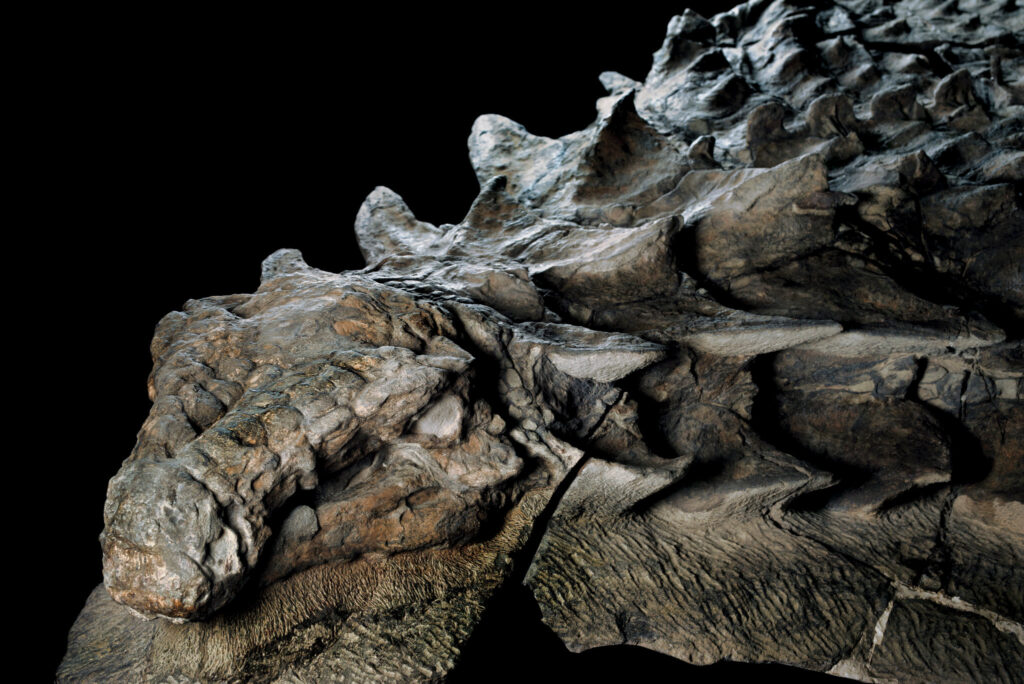
mummy of a nodosaur found in Alberta, US – one of the best preserved dinosaur skin and armor ever found

Dermal tissue can be as tough as resistant as cartilage, while not being reliant on bones like other armoured skin. Instead it can be inferred from evenly-distributed projections growing out of the bone. Many horns and crests have no bony components, instead being formed from stiffened, toughened skin. They are rarely preserved, because of which they are reconstructed based on the bony structures that once supported them. The same goes for fins, flukes and flippers if they aren’t supported by limb bones.

What can we take away from this?

A lot of the knowledge in this book can not only be used for palaeoart, but creature design overall. Its important to understand what we’re depicting when trying to create a believable animal. Nothing happens in a vacuum, evolution goes hand-in-hand with its environment. Knowing not only the basics of anatomy, but also why certain physical attributes developed and for what purpose can aid us in creating immersive (fictional) worlds.

Sources

  • Wikipedia. Die freie Enzyklopädie (07.12.2025), s.v. Mark P. Witton, https://en.wikipedia.org/wiki/Mark_P._Witton (zuletzt aufgerufen am 30.12.2025)
  • Witton, Mark P.: The Palaeoartist’s Handbook. Recreating prehistoric animals in art. Ramsbury, Marlborough: The Crowood Press 2018 [E-Book]

Life in a time before ours

We’ve taken a look at life on earth in the future, but what did the past look like? And more importantly, how were we able to piece it all together?

How Do We Know How Extinct Animals Looked and Lived?

Rough patches and flanges on bone can be used as a guideline for where muscles, cartilage and ligaments used to lie. Scratches and wear patterns on teeth can tell about the diet and possible feeding habits of the animal. Cutting thin sections through bones and putting them under the microscope, helps to determine the age of these animals and how fast they would grow up. Skeletons are only the starting point of our understanding, however.

There are a lot of things that can be inferred from preserved gut contents, eggs, nests, footprints, skin impressions and as well as fossilised feces. These can tell us about the diet, size, life cycle, habitat and etc. of these animals. Comparisons with living species is also key. Parallels can be drawn between living and extinct lifeforms with similar features and be studied in real time.

Reconstruction

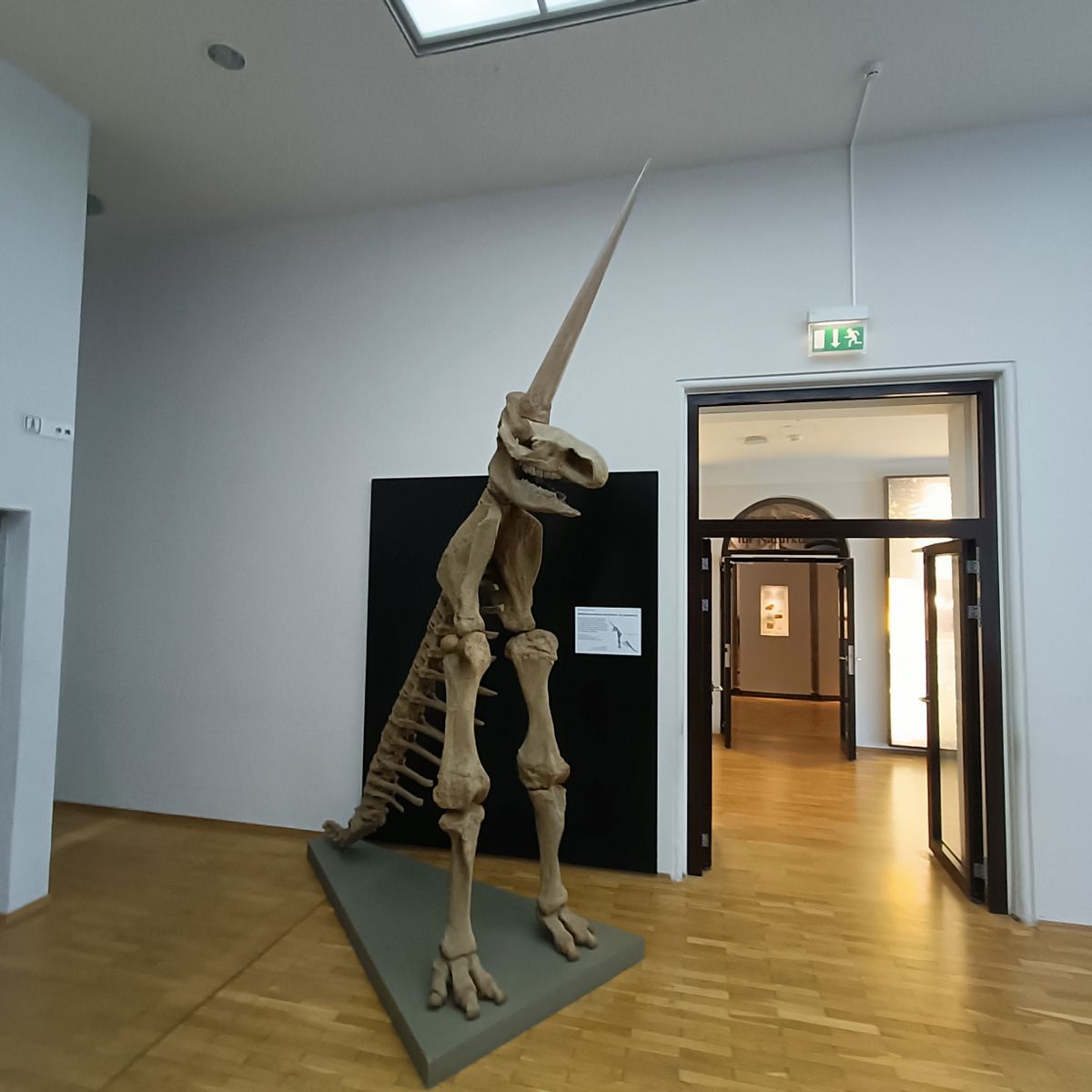
Although the accumulation of discoveries has given palaeologists a pretty clear image on some extinct animals, many are still reconstructed with a rule-of-the thumb methodology. Things like soft tissue as well as integument, colour and behavioural elements are not often taken into account. This approach would look bizarre when applied to modern animals, but would need a certain degree of speculation when being applied. Which is why these shortcomings haven’t been addressed until recent years.

The Magdeburger Unicorn – a famously bad reconstruction

Filling in the Blanks

One problem with older reconstructions would be “Shrink-Wrapping”. Hereby prehistoric animals are stripped of any kind of soft tissue, showing every muscle and bone ridge and thus turning them into strange, skin-and-bone creatures.

How future historians might imagine a horse when lacking any kind of context about the animal and just going off its skeleton.

If soft tissue can’t get preserved, neither can skin, feathers or fur. This often makes reconstructions, especially of dinosaurs, lacking in any kind of plumage.

Cartilage is another point of discussion; it won’t get preserved, but can tell us about how an animal held themselves. Do they hold their necks up horizontally? Like a giraffe would? Or closer to the ground? Like a rabbit? And what can we conclude about their feeding habits through this? 

Though even here lies uncertainty. Given that many fossils are incomplete, we tend to fill the missing parts with whatever closest relative we can find. These won’t always be correct and maybe even give us false ideas about an animal. Anatomy based on what seems familiar and therefor logical to us can shape our image of these long dead animals and settle in as fact. And we could never know what’s the actual truth.

Developments

The recognition that birds are dinosaurs has played a major role in the reconstruction of dinosaurs in the last 20 years. Not only in physical aspects and behaviour, they carry a direct genetic legacy of their dinosaurian ancestry. They possess genes that can transform bird beaks back into more dinosaur-like snouts, or stimulate chickens to form teeth.

These efforts in genetics have already produced some impressive findings and I imagine they will continue to do so in the future. While a lot of questions about prehistoric life will probably never be answered, we are closer than ever to understanding more about it.

Sources