#3 Testing and Research

Background

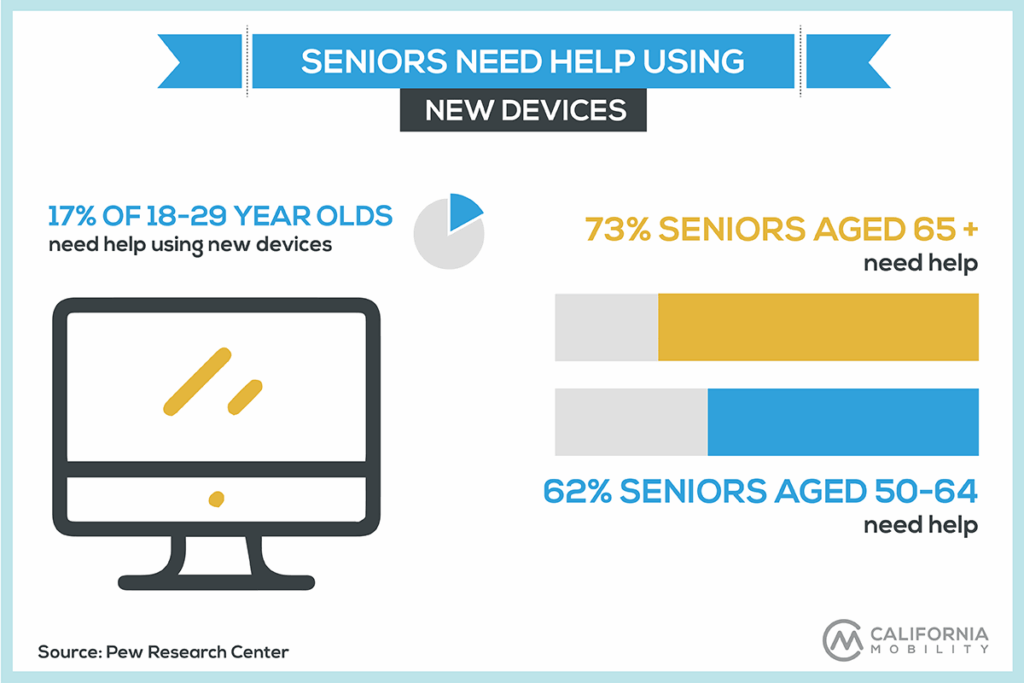
This week I had a situation that perfectly illustrated why I chose this topic. I was explaining some functionalities of a new app to my grandfather. He has always been very tech-savvy, he still works on his own website but even he struggles with certain concepts from time to time. He often tells me that everything takes him much longer than it used to and even when I show him a quicker or easier way to do something, he still sticks to the method he already knows. I believe this is partly a matter of habit and partly a reluctance to change something that “still works.”

What surprised me most was watching him interact with the app after my explanation. I assumed that once I had shown him how the app worked, it would be straightforward. But when he tried it on his own, he had to stop and ask for help at many points. It made me realize how much prior knowledge and digital literacy designers unconsciously expect from users, even when the interface seems simple to us.

This small moment showed exactly why designing for older adults matters: even motivated users with experience and interest in technology can struggle when interactions are not intuitive, forgiving or aligned with their mental models.

But here comes the real question: Is the problem rooted in the design of digital products or in the mental models that older adults bring with them? In other words, should we focus on improving the interfaces or on helping older people build the conceptual frameworks they need to understand how technology works in the first place?

Research

Problems older adults face with technology usually come from two sides: the design of the technology and the way older people understand and process information. When these two sides don’t match, it leads to confusion and mistakes. [1][3]

Many digital products simply aren’t designed with older adults in mind. This creates barriers that make technology hard to use.

  • Interfaces that feel cluttered or complicated: When apps have too many features or unclear layouts, older adults struggle to find what they need.[3]
  • Physical design that clashes with age-related changes: Small buttons, close-together touch targets or gestures like pinching and swiping can be difficult due to reduced vision, motor skills or dexterity.[3]
  • Unclear icons: Small, abstract or unfamiliar icons can be hard to recognize. Older adults often expect bigger, more descriptive labels instead of symbolic icons. [3]
  • Inconsistent design: If the interface doesn’t behave in predictable ways, it breaks the user’s expectations. This lowers trust and makes people feel unsure about what will happen next. [5]

(Planned) Sources

[1] D. Orzeszek et al., ‘Beyond Participatory Design: Towards a Model for Teaching Seniors Application Design’, arXiv [cs.CY]. 2017.

[2] L. Kane, “Usability for Seniors: Challenges and Changes,” Nielsen Norman Group, Sep. 08, 2019. https://www.nngroup.com/articles/usability-for-senior-citizens/

[3] G. A. Wildenbos, L. Peute, and M. Jaspers, ‘Aging barriers influencing mobile health usability for older adults: A literature based framework (MOLD-US)’, International Journal of Medical Informatics, vol. 114, pp. 66–75, 2018.

[4] J. Nielsen, “Usability for Senior Citizens: Improved, But Still Lacking,” Nielsen Norman Group, May 28, 2013. https://www.nngroup.com/articles/usability-seniors-improvements/

[5] Thefinchdesignagency, “Building User Trust in UX Design: Proven Strategies for Better Engagement,” Medium, Feb. 05, 2025. https://medium.com/@thefinchdesignagency/building-user-trust-in-ux-design-proven-strategies-for-better-engagement-c975aa381516

User Interfaces in Video Games

User Interfaces in Video GamesThe quest for genre-appropriate and usable game UI

This thesis would explore the relationship between video games, user interfaces and users, in the context of genres and usability. It would place a focus on the history, genres and UI elements and their functions in games, as well as examine accessibility options and overall usability. Some games have interfaces with very small text, which is a result of no standardised guidelines. Some games also have user interfaces that are completely divorced from the style of the game, making them look jarring and potentially taking away from the overall user experience.

At the beginning, UI wasn’t an established field in the game development industry, but has since evolved to slowly include not only UI but also UX [1]. I want to explore how UX/UI manifests itself in this medium while taking a look at the industry, past and present.

  • How can user interfaces in video games harmonise with the aesthetics of the game and to provide a seamless experience? How do they become one with the game?
  • How do genre conventions influence user interface design choices in video games?
  • Should games sacrifice functionality for style and vice versa? Do accessibility options affect the art being made?
Figure 1: MGS1 Screenshot
Source: [2]
Figure 2: Persona 3 Portable Screenshot
Source: [3]

The relevance of this topic comes down to the different ways UX/UI principles can be reinforced within games, a huge medium that often gets ignored in academic contexts for being too playful.

Human-centered design bases itself on, among other things, existing patterns . These patterns can be hard to grasp in more complex interfaces such as games, where standardisation isn’t reinforced, or expected, in the same way it is with websites. Regulations don’t exist for games like they do for websites, because websites are an essential part of everyday life, but games aren’t. I still think that they are an important everyday medium that should be accessible to anyone and not shut anyone out.

It’s also relevant to examine the aesthetics, personality and style of these interfaces which is the more graphical angle to approaching game user interfaces. Knowing how to ride the line can be difficult. So, should games sacrifice functionality for style and vice versa?

Interaction design could help to deal with these issues by using existing knowledge, guidelines and research about usable interfaces and cross examining them with game interfaces. User experience design would help with making sure the interfaces are usable and clear, while user interface (and general graphic design) would help with making them aesthetic and cohesive.

The biggest challenge I have right now is to narrow down the scope of the project and see a clear path. Theres many things I want to touch upon, and I’m not sure yet how they will come together. Initially, I wanted to also examine the “responsive” angle of video game user interfaces, by exploring desktop, mobile and console games. While I’m still interested in this and the differences in developing interfaces for such varying screen and control schemes, I’m not sure where the focus would lie in the end.

Another challenge would be how to produce qualitative and quantitative data from my analysis efforts, and if I will actually find discrepancies and scientific value. The biggest challenge I will have in the future is deciding on an outcome/workpiece, as I’m not sure how to target this overall research into a design outcome.

In my next steps I would like to:

  • start actual research and try to build my literature collection on the topic
  • gain proper knowledge on the history of games, UI elements and their functions as well as accessibility issues
  • familiarise myself with the current state and find best practice examples
  • maybe even play games and note down experiences

My personal motivation lies in my immense enjoyment of games in the past year. They have improved my quality of life ten-fold, became a part of my routine and, for that reason, I would love to make games a good experience for everyone. I’ve been noticing that games have accessibility options such as subtitles available but then the subtitles are incredibly hard to read due to their size, font choices or contrast. This always bothered me and eventually I started thinking about how most people even play games when the interfaces don’t help but rather distract. I would love to combine my passion for usable user interfaces with games, which are full of interface elements.

Game UI Database – initially, building a database was also part of my probable outcome, but since I have come across this giant database of screenshots of various menus and game states for thousands of games

Bridging the Gap 

Image by congerdesign from Pixabay

#digital-literacy #trust #interactiondesign #inclusive-design #older-adults #usability #accessibility 

With the current development of technology, our world is becoming more digital every day. As a result, digital literacy, the ability to use, understand and critically engage with digital technologies, is becoming essential for full participation in society. 

However, a significant portion of older adults rarely or never use digital technology in their everyday lives. This is not simply a matter of disinterest, but often the result of exclusion: many digital products are not designed to meet their needs. Age-related changes such as declining vision, hearing, motor skills and cognitive flexibility make it more difficult to learn and adapt to new systems. When technology assumes prior experience or fast learning, it unintentionally leaves many older users behind. 

Yet, digital literacy offers clear benefits for older adults. It can strengthen social connections by allowing them to stay in touch with family and friends, thereby supporting mental well-being. Beyond that, digital engagement can foster independence, stimulate cognitive activity, help overcome physical barriers and even support a sense of identity and belonging in an increasingly digital world. 

Still, psychological barriers remain. Many older adults believe they are “too old” to learn new technologies or lack confidence in their ability to do so.  

Interestingly, digital exclusion is not only an issue of age. Anyone, regardless of generation, can experience it if they lack access, confidence, or understanding of digital systems. The topic, therefore, is not about age alone but about how design can make technology inclusive, trustworthy and empowering for all users. 

Research Focus

Main Questions

How can interaction design support older adults in learning digital skills and becoming more digitally literate?

How can design make digital systems understandable, transparent and trustworthy for older users?

SubQuestions

  • How do older adults approach learning?
  • How do older adults approach learning new digital technologies?
  • What barriers (cognitive, emotional, or physical) affect their ability to learn digital skills?
  • What teaching or onboarding methods are effective for older adults?
  • What competencies are essential for older adults to be digitally literate?
  • How does digital literacy affect older adults’ independence, social participation and well-being?

Relevance for Design Fields

In many wealthy countries, people aged 65 and older are the fastest-growing demographic. With increasing life expectancy, older adults are living longer, staying active and continuing to pursue personal interests well into late life. They want to manage their finances, shop online, research topics and stay in touch with friends and family. However, age brings physical and cognitive changes. Hearing, vision and dexterity often decline, making interaction with technology more challenging. Most websites and apps are designed by and for younger users, which can make them inaccessible for older adults.

Digital literacy is a fundamental factor when designing interfaces for products and services. The level of digital competence within a user base guides decisions about interface complexity, navigation and functionality. For users with limited digital literacy such as older adults, interfaces need to be clear, predictable and forgiving, providing guidance and feedback that supports learning.

Possible Solutions

  • Integrating older people in the design process from the beginning.
  • Combining digital interactions with real life interactions.
  • Teaching basic digital literacy.

Challenges

Recruiting participants for my research may be challenging, especially ensuring a great range of experience levels. Motivating older adults to engage in learning and actively work on improving their digital literacy can also be difficult. Additionally, designing interfaces and interactions that effectively accommodate users with different levels of digital literacy is complicated.

Preview

In my next step I would like to already integrate some interviews with people. I want to grasp what the problem for them really is. I also plan to go deeper into the research of digital literacy for older people, read up on education and learning for the aging population.

Personal Motivation

As I was working on the topic of accessibility for my bachelor’s thesis, I became especially interested in how digital products can be made more inclusive. This is also when I found out that older adults often struggle to understand the functionality of websites, apps or other digital tools. I like to think that, one day, everyone has equal access to digital products, regardless of age or ability. I chose this topic because I believe good design should leave no one behind. Older adults should be able to use digital products independently, without relying on others and feel empowered while doing so. Being able to navigate technology confidently helps them participate more fully in social life, explore new interests and stay connected with friends and family. This is not just about convenience, it’s also about mental well-being, as social inclusion plays a key role in maintaining cognitive and emotional health. I’m also curious about how older adults’ social networks (family and friends) can play a role in spreading digital literacy. If friends, family, or community members can support each other, it could create a positive effect, helping even more people gain the skills and confidence to engage with technology. Ultimately, my focus is on designing solutions that empower, include and connect older adults in the digital world.

Another thing that really opened my eyes came from a talk at the WUC. I learned that many older adults would be happy to use technology if someone simply showed them how (guidance through interaction design). Surveys presented at the talk highlighted that 20% of older adults would use digital products more often if they were easier to use and 19% would engage more if they could see a clear benefit. These findings made me realize that, for many older users, the barrier is not disinterest, it’s accessibility, guidance and perceived value.

Index

Grabowski, S. (2024, October 2). A guide to interface design for older adults. Adchitects. https://adchitects.co/blog/guide-to-interface-design-for-older-adults

Kane, L. (2019, September 8). Usability for older adults: Challenges and changes. Nielsen Norman Group. https://www.nngroup.com/articles/usability-for-senior-citizens/

Landra, A. (2021). Impact of digital literacy on mobile user interfaces: A process for outlining UI design guidelines for people with low digital literacy (Master’s thesis, Politecnico di Milano, Scuola del Design). Politecnico di Milano.

Vercruyssen, A., Schirmer, W., Geerts, N., & Mortelmans, D. (2023). How “basic” is basic digital literacy for older adults? Insights from digital skills instructors. Frontiers in Education8–2023. doi:10.3389/feduc.2023.1231701

Weck, M., & Afanassieva, M. (2020). AGEING PEOPLE’S TRUST IN DIGITAL ASSISTIVE TECHNOLOGY: INITIAL TRUST FORMATION.