The Change and Impact map I developed is structured around two key perspectives: “Before” and “After.” These two sides represent the situation prior to and following the introduction of the proposed product. This comparative approach is intended not only to highlight the potential improvements the design aims to achieve, but also to critically reflect on any negative consequences or challenges that may arise as a result of its implementation. By placing both aspects side by side, the map encourages a balanced and realistic evaluation of the design intervention.
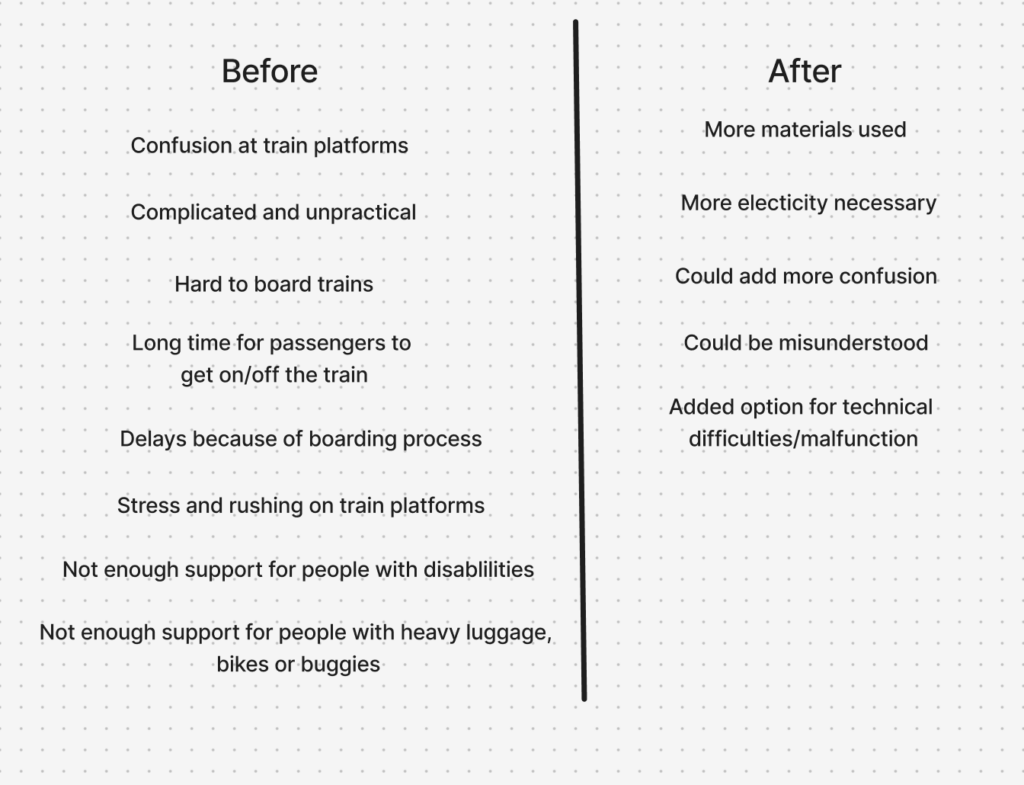
In my project, the “Before” section focuses on the current issues experienced at German train platforms. These include challenges faced by passengers, such as confusion, lack of orientation, or limited accessibility, as well as difficulties encountered by train conductors and Deutsche Bahn (DB), including time inefficiencies and operational constraints. This side of the map serves as a diagnostic tool, clearly outlining the pain points within the existing system and establishing a foundation for targeted improvements.
The “After” section, in contrast, explores the potential outcomes following the introduction of a physical UX solution at train platforms. It considers possible side effects, including shifts in user behavior, increased reliance on technological systems, additional resource requirements, or the emergence of technical issues. This ensures that the proposal is not viewed in an overly idealistic way, but rather as part of a complex system with both benefits and trade-offs.
When analyzing the map, it becomes evident that the “Before” side contains more negative aspects than the “After” side. This imbalance can be interpreted as a positive indicator, suggesting that the proposed solution has strong potential to improve the current situation.
Overall, the Change and Impact map provides a valuable framework for assessing both the opportunities and limitations of the design, supporting more thoughtful and responsible decision-making.
