This post considers the grid not only as a mathematical structure but also as a cultural choice. The way a design tradition uses grids can reveal something about how that culture understands rules, order, and individual expression.
Switzerland remains the most useful starting point, since modern grid theory originated there. After the First World War, it’s neutrality made it a meeting point for various European artistic movements. From this convergence emerged the Swiss International Style, a movement built almost entirely around the grid. Designers such as Josef Müller-Brockmann regarded a strict, clear grid as more than a practical tool; it represented something closer to a moral position. A clear grid implied honesty, suggesting that the designer was not attempting to manipulate the viewer through unnecessary decoration.
“The use of the grid as an ordering system is the expression of a certain mental attitude inasmuch as it shows that the designer conceives his work in terms that are constructive and oriented to the future.”
Josef Müller-Brockmann, Grid Systems in Graphic Design, 1981
This is consistent with broader aspects of Swiss culture, which is often associated with neutrality, precision, and confidence in systems, evident in punctual trains and precise watchmaking. The strict grid fits naturally within this cultural identity. Order, in this context, is not perceived as restrictive, but as respectful and fair toward the viewer.
Japanese editorial design offers a useful contrast. Japanese magazines and posters often combine text and images in ways that appear more layered and flexible than the Swiss approach. Vertical and horizontal text frequently appear together on the same page, and images may overlap text in deliberately playful ways. This is not because Japanese designers lack an understanding of grid systems; many demonstrate considerable expertise in this area. Rather, the cultural emphasis on harmony differs from the Swiss preference for highly visible order. Japanese design tends to permit greater visual complexity, provided the overall composition still achieves balance.
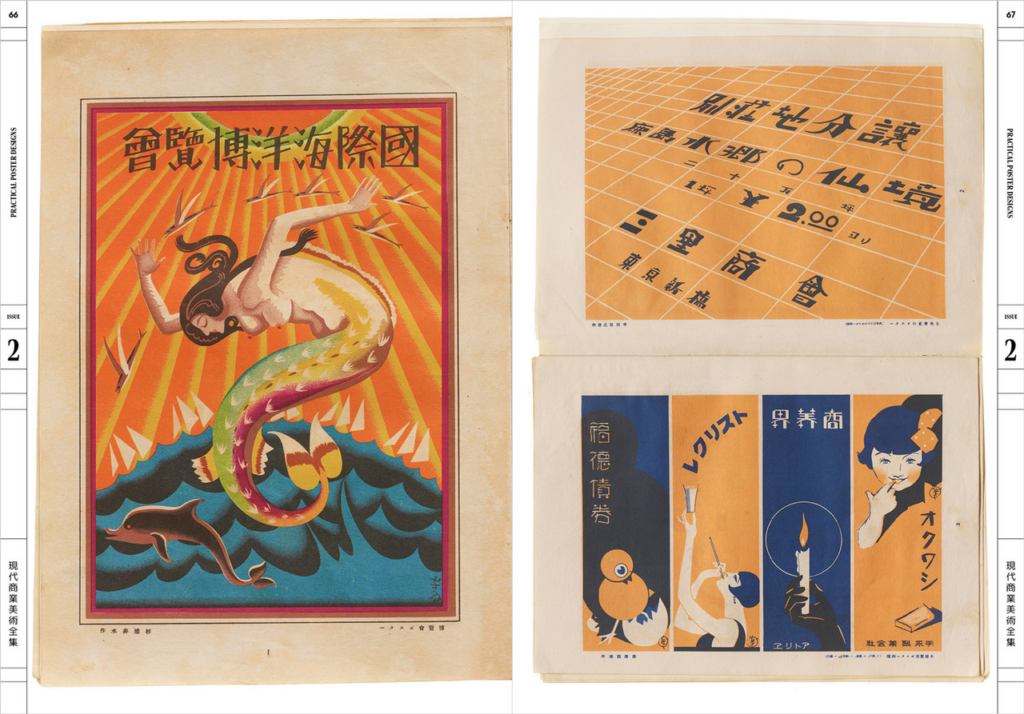
American design culture provides a third example. From the 1980s onward, particularly through schools such as Cranbrook Academy of Art, some American designers deliberately broke grids, as discussed in an earlier post. This did not represent a rejection of structure altogether, but rather treated the grid as something to actively resist. This reflects a broader cultural value placed on individuality and rebellion, evident even in something as specific as magazine layout.

Taken together, these examples suggest a discernible pattern. A culture that values consistency and shared systems, such as Switzerland, tends to produce strict, largely invisible grids. A culture that values harmony and layered meaning, as seen in much of Japanese design, tends to produce more flexible, almost poetic grid structures. A culture that values individual expression and resistance to convention, as in parts of American design history, sometimes treats the grid as something worth deliberately disrupting.
None of these approaches should be considered inherently superior. They represent different responses to the same underlying question: how much order a society wishes to feel, and how much freedom it is willing to allow within that structure.
This distinction is not simply of historical interest; it is also relevant to designers working across global markets. A grid system that feels trustworthy in Switzerland may appear cold or overly rigid elsewhere. A flexible, layered layout that feels balanced in Japan may seem disorganized to someone trained exclusively in Swiss-style principles. Designers working internationally should recognize that a grid is never entirely neutral; it carries cultural meaning, even when this is not explicitly discussed.
In conclusion, every grid reflects, to some extent, the values of the culture that produced it. Strict lines can signal trust and fairness. Flexible layouts can signal harmony and depth. Broken grids can signal freedom and resistance. The structure of a page, in this sense, is never purely formal; it is a quiet expression of how a culture conceives of order itself.
