Introduction
When we talk about biophilia, we refer to the definition proposed by the Biophilic Society:
“Biophilia refers to the innate human affinity for the natural world – a love of life. It emphasizes the importance of integrating natural elements and patterns into our built environment to enhance physical, emotional, and psychological well-being.” [1]
However, recent technological advances, such as virtual and augmented reality, can offer benefits that are similar to those gained from direct contact with nature. The technologies that mediate, simulate, or enhance our experience of nature are commonly called technological nature. Virtual reality, for example, can help people experience nature when access to real natural environments is limited. Recent studies show that older adults who used VR nature experiences felt less socially isolated, had a better mood, and reported improved overall well-being.
Pros and Cons of Technological Nature
This raises an important question:
To what extent can technological nature truly satisfy our need for nature?
Important insights into both the strengths and limits of technological nature come from research by Peter Kahn and his colleagues. In one study, large plasma screens showing real-time natural scenes were placed in windowless university offices. Over 16 weeks, participants reported better psychological well-being, improved cognitive performance, and a stronger sense of connection to nature. This suggests that a digital view of nature can be better than having no nature at all.
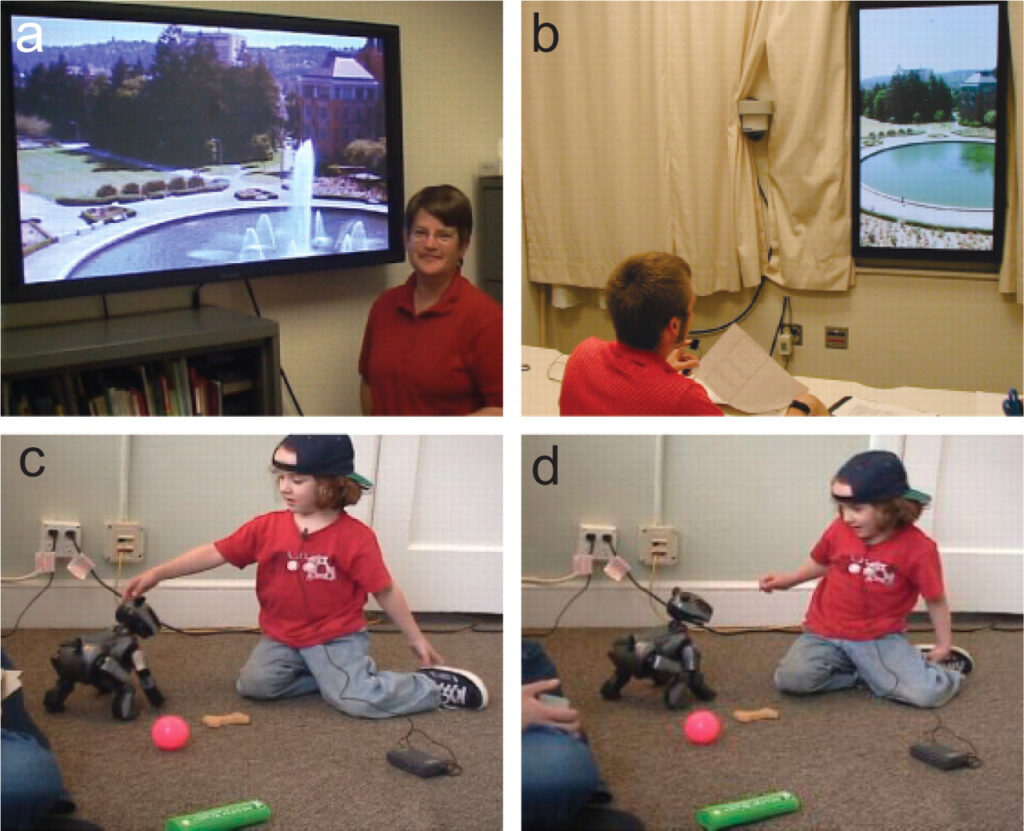
However, a second study revealed clear limitations. When researchers compared a real window with a nature view, a digital window showing the same scene, and a blank wall, only the real window helped people recover from stress more quickly. The digital window did not perform better than the blank wall. Overall, these results show that technological nature can be helpful when nature is absent, but it is not as restorative as real nature [5].
Fig. 1 The image illustrates examples of technological nature, where digital or artificial systems simulate natural experiences. It includes plasma screens used as “virtual windows” displaying real-time outdoor nature scenes in both office and laboratory settings, as well as a robot dog (AIBO) designed to evoke responses similar to interactions with a real animal. From: The Human Relation With Nature and Technological Nature [3]
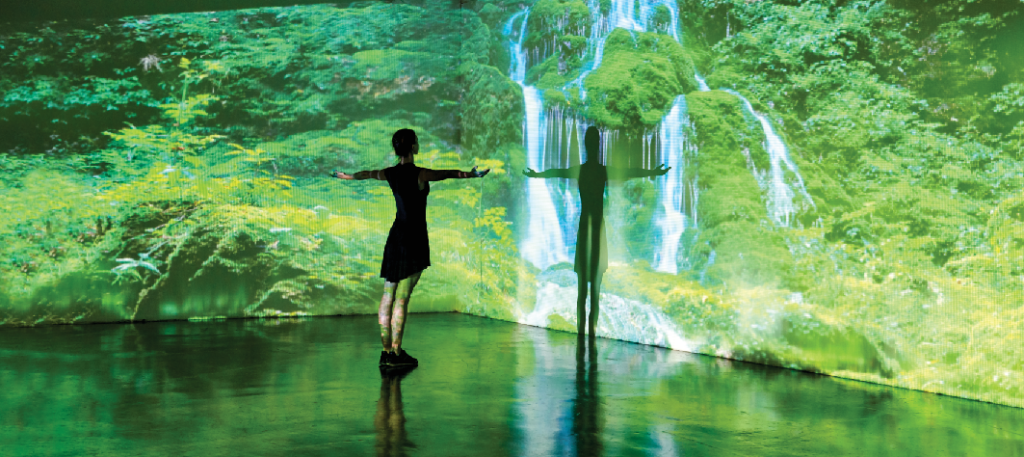
Fig. 2 Visual representation of VR experience simulating a natural environments. from: nature human behaviour
Further research confirms that technological nature cannot fully replace direct contact with the natural world. Without physical and multisensory experiences—such as wind, temperature, and natural smells—these digital experiences can become repetitive over time. Easy access to technological nature may also reduce people’s attention to real nature and lead to a simplified idea of what “nature” is [3].
This is important because current VR nature experiences cannot provide all the benefits of real nature. Some of these benefits depend on natural biochemical processes that technology cannot recreate. Relying too much on technological nature may also reduce spontaneous social interactions in natural spaces, which are important for well-being and social connection.
Conclusion
Technological nature is a useful resource in a world where access to real nature is often limited or uneven. However, research shows that it cannot replace real, living nature. Instead of asking whether technological nature can take the place of real nature, we should focus on how it can work together with it and support it.
Reference
[1] “Technological Nature,” UW HINTS Lab, https://sites.uw.edu/hints/research/technological-nature/ (accessed Dec. 9, 2025).
[2] “The Biophilic Society is born,” Living Future Europe, https://living-future.eu/the-biophilic-society-is-born/ (accessed Dec. 9, 2025).
[3]. Kellert, S. R. in Children and Nature: Psychological, Sociocultural, and Evolutionary Investigations (eds Kahn, P. H. & Kellert, S. R.) 117–151 (MIT Press, 2002)
[4] Lin, X. C., Lee, C., Lally, D. & Coughlin, J. F. in Human Aspects of IT for the Aged Population (Applications in Health, Assistance, and Entertainment, 10927) (eds. Zhou, J. & Salvendy, G.) 89–100 (Springer, 2018).
[5]P. H. Kahn Jr., R. L. Severson, and J. H. Ruckert, “The Human Relation With Nature and Technological Nature,” Current Directions in Psychological Science, vol. 18, no. 1, pp. 37–42, 2009
