I started with the value proposition canvas for the main user group (the students). Most of it was easy to fill out because I had already done research on it previously. I identified teachers a secondary user group. While filling it out, I noticed that some of the aspects, especially the jobs to be done, were very closely related.
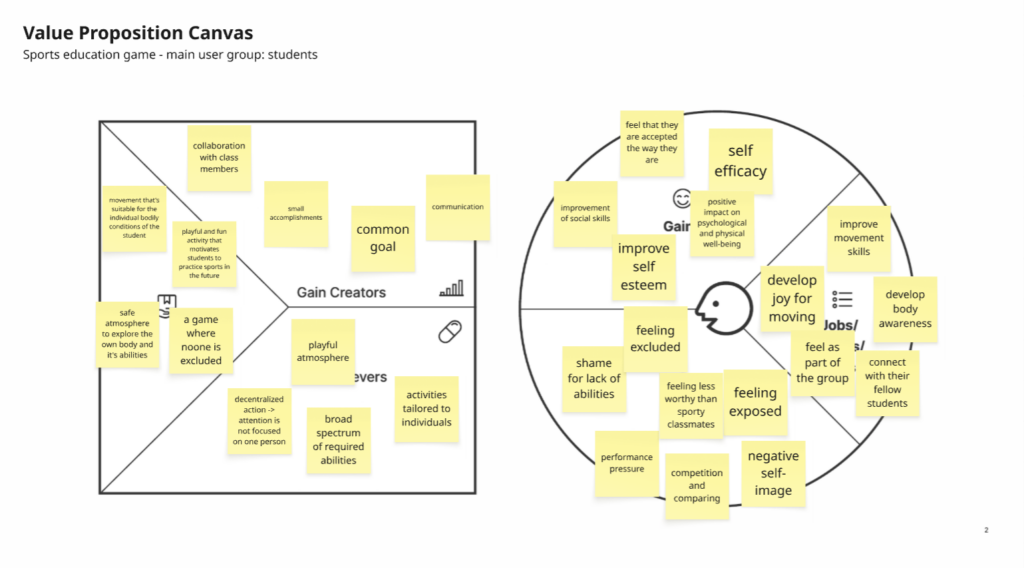
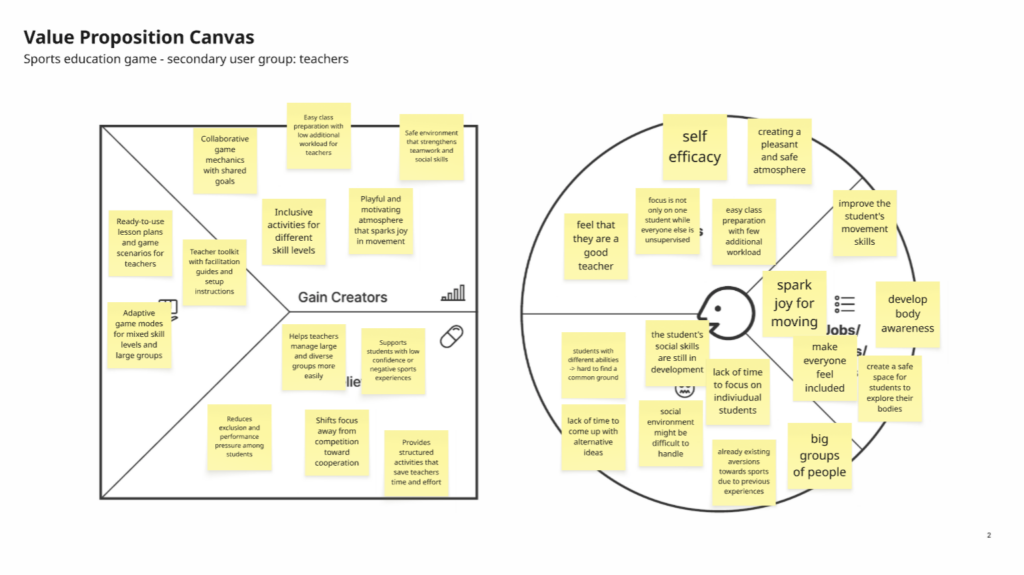
Based on those canvases I formulated the following business idea:
Physical education classes are meant to encourage movement, teamwork, and confidence, yet for many students they are associated with pressure, exclusion, and comparison. A German study from 2022 found that 39% of students do not enjoy PE classes, which can contribute to a long-term aversion toward sports and physical activity. This is especially concerning because sports and movement are closely linked to psychological well-being, self-esteem, and social development.
The idea behind this project is to rethink how movement is experienced in schools by creating a collaborative game concept specifically designed for PE classes. Instead of focusing on competition and individual athletic performance, the game encourages students to work together toward a shared goal. The activities rely on decentralized action and a broad range of abilities, meaning that participation does not depend only on traditional sports skills such as throwing, catching, or speed.
The concept is designed for school environments with diverse groups of students and aims to create situations in which everyone can contribute in different ways. By shifting the focus from performance to collaboration, the game can help reduce feelings of exclusion while making movement more enjoyable and accessible. Teachers also benefit from a structure that is easy to prepare, adaptable to large groups, and flexible enough for different ages and ability levels.
The long-term goal is to create more positive experiences with movement during school years and help students build confidence, social skills, and a healthier relationship with sports. Beyond the classroom, the project could contribute to a more inclusive understanding of physical education where participation and teamwork become more important than competition alone.
As a product, the concept could be offered to schools and educational institutions through physical or digital game kits, ready-to-use lesson plans, and a platform with adaptable activities for PE teachers. Additional revenue streams could include teacher workshops, subscriptions for new game content, or partnerships with schools and educational organizations.
