5 rules for friendly luminaires

a street with shielded luminaires
Credit: Lampas / Photo by Torben Eskerod, from DarkSky

DarkSky International has published guidelines for environmentally friendly fixtures. They were developed by lighting engineers and designers to reduce glare and light trespass, while mantaining maximal functionality and safety. If a fixture respects these Five Principles of Responsible Outdoor Lighting, it earns the DarkSky Approved seal.

different examples from unshielded to shielded luminaires
Shielding can make a big difference in avoiding light spills, Utah State University
  1. Useful — fixtures should only be installed where they are needed;
  2. Targeted — the light beam should point downward and be appropriately shielded to avoid spills;
  3. Low level — the brightness should be as low as possible and reflection from bright surfaces should be taken into account;
  4. Controlled — timers, motion detectors and dimmers should be used, so that the light only stays switched on when it is needed, dimmed when possible, and turned off when not needed;
  5. Warm-colored — shorter wavelength (blue-violet) light should be limited, as it scatters much more intensely in the atmosphere than longer wavelength lights (red/yellow) and causes visual discomfort.
comparison between unshielded sodium lights (2016) and shielded LED (2021) in Dunedin, New Zealand
The effect of shielded vs. unshielded street lights on light pollution in Dunedin, New Zealand, Reddit

Apta Lighting Design Studio recommends a color temperature below 3000 K. They also state that LEDs and Compact Fluorescent Lights (CFLs) are better alternatives to conventional incandescent bulbs, thanks to their low luminance that does not compromise visibility. These bulbs also consume less energy.

Understanding the Kelvin scale, different colours and temperatures
A colour temperature below 3000 K is recommended, My Planet Led

There are four categories of luminaires, depending on location and purpose:

  • Residential Luminaires, for homes
  • Commercial Luminaires, for business properties and public buildings (schools, hotels, and government buildings)
  • Pedestrian Comfort Luminaires, which create a more comfortable experience for pedestrians
  • Sea Turtle Sensitive Luminaires, which do not disrupt the natural navigation system of turtles

As Sea Turtle Conservancy explains, sea turtles are disturbed by artificial light because babies are driven towards the brightest light source after hatching. The brightest horizon used to be the one on the side of the ocean as opposed to the dark sand dunes, but due to artificial lighting they are mislead.

a baby turtle crawling toward artificial light
Hatchlings crawl toward light sources; if these are artificial, they get disoriented, Sea Turtle Conservancy

Producers can apply to receive the DarkSky approval by filling out a form on their website. The list of approved fixtures can be found on their website, with the option to filter them based on usage, technical properties and brands.

screenshot of the DarkSky approved luminaires page
DarkSky approved luminaires

First interviews

1: 10 year old girl 

Lives in Geneva, Switzerland. Uses a tablet freely and spends a lot of time on it. 

Have you heard the term “doomscrolling” before? 
No, not before you explained. 

What does it mean to you? 
I think it means when you keep scrolling and scrolling and don’t stop. 

How often do you find yourself scrolling through negative or distressing content? 
I think almost every day, because sometimes videos just come up even if I don’t search for them. 

What kinds of content do you tend to doomscroll? 
Short videos on YouTube Shorts, my mom won’t let me have Tiktok. Sometimes it’s videos about war or animals getting hurt. And people being mean in comments. 

What do yu think usually makes you doomscroll? 
When I’m bored. Like when my alone and my friends are busy. 

Are there certain situations or moods that make you doomscroll more or less? 
At night before bed I do it more because i dont want to sleep. Also when I feel lonely or when I’m not allowed to go outside. 

How do you usually feel while you’re doomscrolling? 
Kind of “icky”, curious but also scared. Sometimes my stomach feels weird, but I still  keep watching. 

How do you feel when you stop? 
A little sad. Sometimes I think about it when I try to sleep. 

Do you feel like doomscrolling serves a purpose for you in the moment? 
Maybe, i dont really know. 

Have you ever tried to stop doomscrolling? 
Not really. Sometimes my parents take the tablet away because i spend too much time on it. 

What usually pulls you out of a doomscrolling session? 
When my parents tell me to stop, when the battery dies, or when I get really tired and fall asleep. 

Looking back, how do you think doomscrolling affects your mental health or daily life? 
I think it makes me more scared about the world. Sometimes I worry about things that probably won’t happen to me 

2: 25 year old woman  

Management student from Trondheim Norway that enjoys spending time outdoors. Has a very old phone that barely works. 

Have you heard the term “doomscrolling” before? 
Yes, I’ve heard it, mostly from friends or social media discussions. 

What does it mean to you? 
Endlessly scrolling through negative news even though it makes you feel worse. 

How often do you find yourself doomscrolling? 
Rarely. Maybe twise a week. 

What kinds of content do you tend to doomscroll? 
Mostly big news events like climate change, wars, or political issues. 

What usually triggers you to start doomscrolling? 
Major events. If something big happens, I might check updates repeatedly. 

Are there certain situations or moods that make you doomscroll more or less? 
When I’m stressed or stuck indoors for a long time, I’m more likely to do it. 

How do you usually feel while you’re doomscrolling? 
Overwhelmed and frustrated. 

How do you feel when you stop? 
Relieved. I usually feel better once I put the phone away and go do something else. 

Do you feel like doomscrolling serves a purpose for you? 
Only in the sense that I want to stay informed. 

Have you ever tried to stop or reduce your doomscrolling? 
Yes. I consciously limit news and social media intake and rely more on summaries. 

What usually pulls you out of a doomscrolling session? 
My phone freezing, going for a walk, or realizing that i have spent way to much time on it. 

Looking back, how do you think doomscrolling affects your life? 
I think it affects me less than others because i do it so little, but when it happens, it definitely increases stress and frustration. 

3: 22 year old man  

From Trondheim Norway, currently unemployed, enjoys reading and watching gaming streams on YouTube. 

Have you heard the term “doomscrolling” before? 
Yes, I know the term pretty well. 

What does it mean to you? 
Getting stuck consuming negative content, even when it ruins your mood. 

How often do you find yourself doomscrolling? 
Probably every day or a few times a week at least. 

What kinds of content do you tend to doomscroll? 
Comment sections, gaming drama, news about the economy, politics, and sometimes world news. 

What usually triggers you to start doomscrolling? 
Im unemployed at the moment so having too much free time and feeling unmotivated. 

Are there certain situations or moods that make you doomscroll more? 
When I feel stuck or anxious about the future. 

How do you usually feel while doomscrolling? 
Detached at first, then slowly more pessimistic i guess. 

How do you feel when you stop? 
Drained and guilty. Like I wasted time. 

Do you feel like doomscrolling serves a purpose? 
In the moment it distracts me from stress, even though it replaces it with a different kind. 

Have you ever tried to stop or reduce it? 
I’ve tried setting time limits, but I only ignore them. 

What usually pulls you out of a doomscrolling session? 
A lot of the time hunger, fatigue, or sometimes i manage ro switch to a game or book. 

Looking back, how does doomscrolling affect your life? 
It makes me feel more stuck and less motivated to change my situation. 

Can smart design limit the glare of billboards?

a bright billboard on a street at night
Billboards cannot be shielded, as opposed to other fixtures, DarkSky

Electronic billboards, also called electronic message centers (EMC) can be up to ten times brighter than traditionally lit billboards, therefore harming the nighttime environment. Unlike light fixtures, they cannot be shielded and due to the horizontal disposition of LEDs, light is also emitted laterally and upward, into the sky. Light from EMCs can cause glare (a visual condition where intense light reduces vision and causes discomfort) and be a dangerous distraction to drivers. Other than that, it can affect breeding, foraging, and orientation in wildlife.

Due to the impossibility to shield EMCs, design can only slightly mitigate their glare. What is most important is careful operation, programming, and location of this technology.

The DarkSky Technical Committee developed EMC guidelines to provide planners, lighting designers, architects, biologists, government officials, and the general public with solutions for EMC related harm. The guidelines were published in January 2019 and include:

  1. Best practices for the amount of light emitted for urban, suburban, and rural areas
  2. A Curfew when EMCs should be switched off completely, from 11:00 p.m. or 30 minutes after the close of business (for on-premises signs) until one hour before sunrise 
  3. Best management practices to decrease or eliminate negative impacts on the environment and improve safety for drivers and pedestrians

The best management practices consist in 6 points:

  1. Monitoring — The EMC should continuously be monitored by its owner 
  2. Sensitive area setback — EMCs should not be placed within or close to natural areas, beaches, wetlands, state and national parks, wildlife refuges and residential areas
  3. Distraction limitation — Messages should minimise distraction to drivers and pedestrians by setting a minimum message duration, a maximum transition time between messages, and maintaining adequate spacing between EMCs
  4. Gradual brightness reduction — EMC luminance levels should gradually dim between daytime and nighttime modes 
  5. Size limits — Larger EMCs should be avoided
  6. Density limits — The number or combined size of signs permitted for a given road or area could be limited

Unlike other types of lighting, which are quantified by their illuminance (how much light falls upon a surface), EMCs are quantified by thor luminance (the luminous intensity leaving the sign). For this reason, a standard luminance meter should measure the white screen at the moment of installation.

This being said, design also plays a role in light pollution. Sustainability directory states that bright, saturated colours and high contrast also increase light pollution. To protect the night sky designers should opt for darker backgrounds and minimise the overall illuminated area.

The world of billboards

During my previous research, I stumbled across Ankünder, the company that manages outdoor advertising in Graz. Allegedly this company is switching off their illuminated billboards at night, and I searched their website for further information relevant to interaction design and light pollution.

an Ankünder billboard in Graz
Billboard on Hauptplatz in Graz, Ankünder

I found information about their rolling advertising media “Poster Lights” and its advantages. It consists of backlit rolling (switching) posters. According to Ankünder, this method is effective due to its high visibility on the road. In addition, the rolling movement draws even more attention than the traditional billboard. They are intended to be used in combination with classic posters and are supposed to transmit high impact, recall and recognition values to the viewer.

“Poster Lights” rolling advertising media in action near Augarten in Graz

I then decided to find out more about the different types of billboards and how they are related to interaction design and light pollution.

According to the billboard service Blindspot, there are different types of billboards:

  • Static billboards, which are usually located on the side of highways and can be illuminated by another light source at night;
  • Digital billboards, which use LED or LCD screens to rotate multiple ads or display animated graphics;
  • Mobile billboards, placed on vehicles, which have the ability to reach strategic locations.
picture of static billboard
Static billboard, Pinpoint Media
picture of digital billboard
Digital billboards, Play Signage
picture of a mobile billboard
Mobile billboard on a truck, Lime Media

What changes between a digital and a static billboard is budget and flexibility. While LED or LCD billboards are more expensive, they allow content scheduling and catch more attention due to motion and bright colours. On the other hand, static billboards have higher installation costs, but they always occupy the same position, building brand familiarity. One example is the iconic Schweppes neon sign in Madrid’s Gran Vía, which is officially protected as a Monument of Cultural Interest.

picture of Schweppes billboard in Madrid
The huge Schweppes Billboard in Madrid is a mixture between static and digital, La Sexta

What caught my attention were interactive billboards. These use technology or analogue methods to create engagement with the viewer. Some methods are touchscreens, motion sensors, QR codes, and VR (in combination with one’s phone), but on another service called Media Venue I also read about scented billboards, a billboard that is a rock-climbing wall, or a company that gave its public the chance to vote on social media for the billboard to be displayed.

interactive billboard that can be climbed by Ikea Clermont-Ferrand
Billboard that can be climbed by Ikea Clermont-Ferrand, Archilovers

#6 Technology Acceptance Across Ageing Societies

Central and Northern Europe: Austria, Finland and the Netherlands

In many European nations, the digital gap is defined by a sharp decline in internet use as individuals enter their late 70s and 80s.

  • Austria: A significant gap persists between younger and older cohorts. While 95% of Austrians aged 16 to 74 used the internet in 2023, only 53.8% of those aged 75 to 84 were online. Within this older group, the gap widens further: 64% of 75- to 79-year-olds are online, compared to just 43% of those aged 80 to 84. [3]
  • Finland: Research highlights that the gap is not just age-dependent but linked to frailty. While 80% of non-frail Finnish individuals have internet access, this drops to 46% among those considered frail, indicating that health status is a primary driver of the digital divide in this region. [4]
  • The Netherlands: Studies here show that technology use is negatively associated with lower social status and physical functioning, though gender differences in ICT use were not significantly observed in Dutch samples. [4]

Japan: Leading with Followers

Japan is a unique case due to its position as a world leader in demographic ageing, which has turned the country into a global laboratory for technology adoption.

  • Necessity as a Driver: Unlike other nations where technology may be viewed as a luxury, Japan’s acute labour shortages in agriculture and caregiving have forced a higher acceptance of automation. For example, the average age of a Japanese farmer is 68.4 years, leading to the widespread deployment of ICT-enabled heavy machinery to augment the skills of an ageing workforce. [1]
  • Psychological Drivers: A comparative study between Japan and the UK regarding online public services found that self-efficacy and ageing satisfaction were more prominent determinants of technology readiness and usage in the Japanese elderly population. [1]

What is ICT-enabled heavy machinery?

At its core, heavy tech machinery refers to large, powerful equipment integrated with modern technologies like GPS, telematics, IoT (Internet of Things) sensors and advanced software. Unlike their purely mechanical predecessors, these machines can communicate, self-diagnose and perform tasks with a high level of accuracy. [2]

The United States: Sociodemographic and Racial Patterns

In the United States, the digital age gap is heavily influenced by a combination of sociodemographic factors and physical health.

  • Patterns of Use: US data indicates that technology use among older adults is strongly correlated with younger age, male gender, white race, higher education and being married. [4]
  • Health as a Barrier: Also physical fitness is a major hurdle; more than 75% of the American population aged 65+ reports difficulties in physical functioning, which correlates with decreased technology use. Furthermore, approximately 21% of US seniors have visual impairments that complicate digital screen interaction. [4]

Developing Countries: China and Bangladesh

In developing regions, the gap is often influenced by cultural norms and the speed of infrastructure development.

  • China: This region has seen a surge in research, particularly regarding smartphone acceptance. However, findings suggest that Chinese seniors under 65 are more likely to adopt these technologies, while older cohorts remain more resistant. [5]
  • Bangladesh: A distinct cultural gap exists here; older adults traditionally use mobile phones only for typical voice calls. The concept of receiving health care advice via a phone is a relatively new and daunting concept, leading to higher levels of technology anxiety compared to developed nations. [5]

Sources

[1] K. Kushida, “Japan’s Aging Society as a Technological Opportunity,” 2024. Accessed: Dec. 23, 2025. [Online]. Available: https://carnegie-production-assets.s3.amazonaws.com/static/files/ Kushida_Demographics%20and%20Tech%20Trajectories_final.pdf#page=23.21

[2] “What Exactly is Heavy Tech Machinery?,” Heavytechservices.ca, 2025. https://www.heavytechservices.ca/what-exactly-is-heavy-tech-machinery (accessed Jan. 05, 2026).

[3] N. Djahangiri, V. Kropfreiter, and J. Peterbauer, Internetnutzung von älteren Menschen in Österreich: Ergebnisse der Erhebung zum Einsatz von Informations- und Kommunikationstechnologien in Haushalten 2023. Wien, Austria: Statistik Austria, 2023.

[4] N. Halmdienst, M. Radhuber, and R. Winter-Ebmer, “Attitudes of elderly Austrians towards new technologies: communication and entertainment versus health and support use,” European Journal of Ageing, vol. 16, no. 4, pp. 513–523, Apr. 2019, doi: https://doi.org/10.1007/s10433-019-00508-y.

[5] Y.-Y. Yap, S.-H. Tan, and S.-W. Choon, “Elderly’s intention to use technologies: A systematic literature review,” Heliyon, vol. 8, no. 1, p. e08765, Jan. 2022, doi: https://doi.org/10.1016/j.heliyon.2022.e08765.

Embodied Interaction: How the Body Influences Our Perception of Slowness 7/10

Some focus and writing tools deliberately avoid real-time notifications or visual noise, allowing users to remain physically settled for longer periods.

Good example is iA Writer, which minimizes interface elements to reduce physical and cognitive agitation.

Identitfiying the problem

The last weeks I was facing some struggles which is why this post was on-hold for a while. I felt a bit stuck and the reason is the size of this topic’s scope. While being unsure about the direction my research would take, I continued investigating about the neurological disorder and gathered more information. Although it made me feel like I could understand it better I felt a bit overwhelmed by the broadness of this topic and the lack of a cleary defined problem for my research.

Luckily I was able to organize a zoom meeting with a journalist that is diagnosed with migraine as well and dedicates their time to raise awareness about this disease. This conversation helped to identify core topics and possible themes i could look into.

These were some of the key takeaways from our meeting:

  • when talking to them and hearing about their own individual experience with migraine I realized how many aspects I could relate to but there were still several differences in how migraine affects us e.g.
    • the frequency of attacks (chronic migraine or episodical migraine)
    • intensity of an attack
    • aura
  • they mentioned the importance of talking to other migraineurs to feel more seen and understood
  • we have both used migraine apps to track our triggers and pain days
  • we agreed that awareness of this disease has increased over the last 20 years, but in our experience, it remains stigmatised and often misunderstood
  • they have created a very interesting sound installation to let people have an experience with an overwhelming migraine attack

This interview was essential to realize that my research and reflections outside of the investigation had already progressed so much and taken one direction without me noticing. The reason being that I didn’t take enough notes and that most of my thoughts weren’t written down to organize them which led to me feeling overwhelmed. I felt like I was already several steps ahead but this research diary was still on page 3. Another reason may be that since I am affected by this disorder I feel like already have a strong foundation of this topic and personal experiences with digital tools like Apps but at the same time I am trying to look into this topic from a scientifical and design perspective. Combining those perspectives turned out to be harder than I imagined, however I still belive that it could be significant for this research. As I have to find a way to incorporate both takes to have a meaningful result.

What does this topic have to do with design?

You may wonder about the relation of migraine with design as I haven’t really elaborated my intention. Design helps to create solutions whenever there are problems and a Designer decides to dedicate their time to ideate a creative solution to minimize the problem. But where does the problem lie in this case?

First of all one essential problem is the fact that there is no awareness about this complex disorder. I have mentioned this in previous blog posts but I realized it’s connection to the other problems. As this disease is not talked about enough it remains a stigmatized topic in our society with no space to talk about pain and sufferment caused by it. This could be a reason for migraineurs not being able to recognize their condition in the first place. With poor awareness and knowledge about this neurological disorder how should you even understand what is happening to you? Another problem is the difficulty of being diagnosed correctly and receive care by a healthcare professional and the time to get attended at a neurological appointment to be examined. I was about 19 years old when I learned that I had migraine with aura during my first appointment at a neurological institution I had been waiting for a year. The WHO (2025) states that the main clinical barrier lies in the lack of knowledge among health care providers.

The lack of effective communication between healthcare providers and their patients as a reason for unawareness of ways to reduce migraine attacks by lifestyle changes and stress management. Since almost everything is considered a trigger and the list of triggers is long and confusing and varies in most migraineurs. Why an attack is triggered at a certain point or what triggers it are questions that still need further investigation according to the Medical University Vienna (2016). But the patient education is a significant part of improving their condition (WHO,2025).

One approach to reduce the frequency of migraine attacks is to use so called pain calendars. There are physical paper templates (see image below) to write down the times you experienced a migraine and some of its characteristics e.g.

  • pain severity
  • symptoms
  • duration of pain
  • triggers (sleep quality, stress, menstruation, weather, etc.)

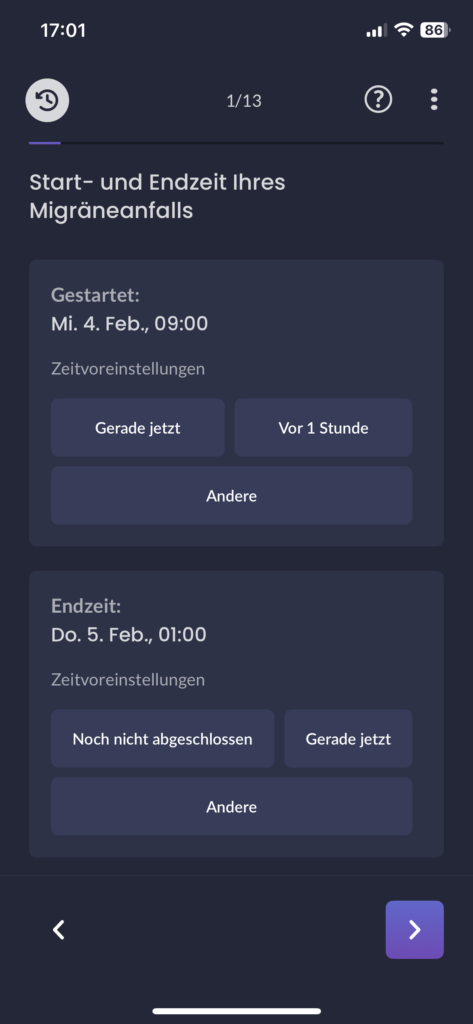
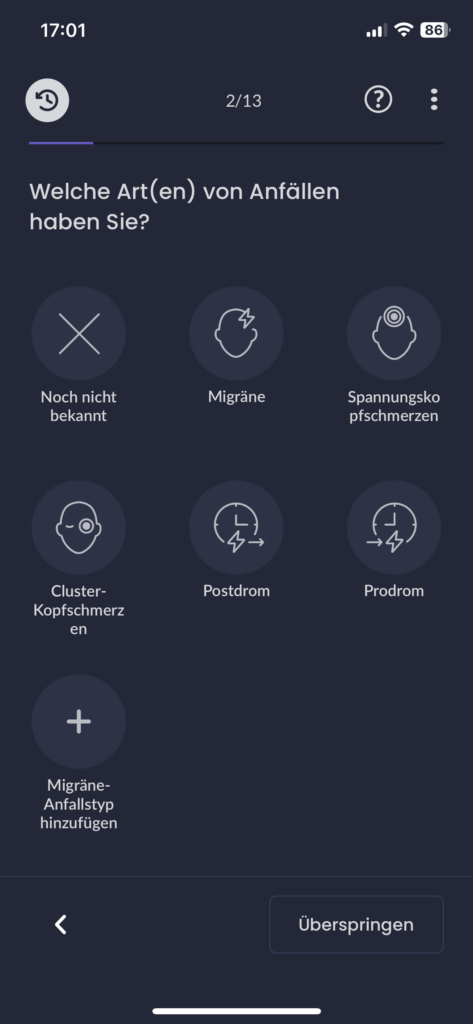
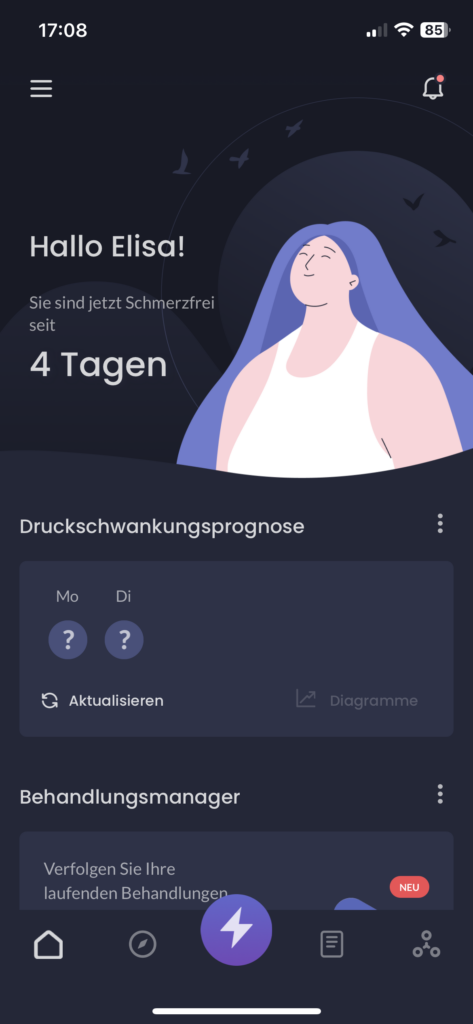
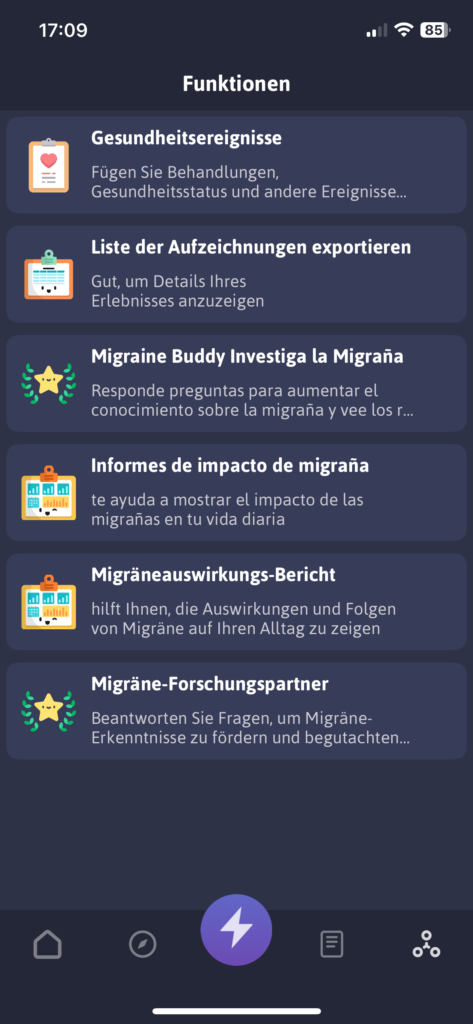
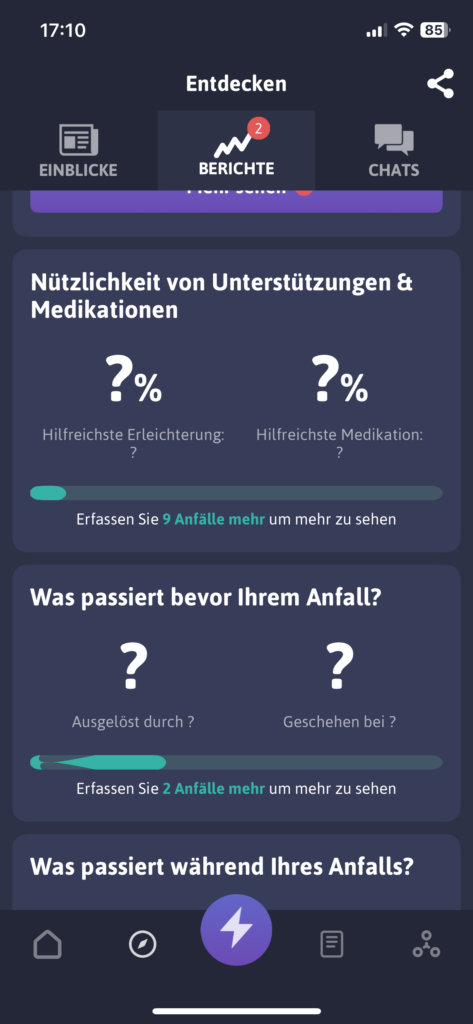
Personally I got tired of printing these templates my neurologist gave me and looked into digital solutions. Mobile apps have been developed for migraineurs to offer a fast and portable overview recognise triggers and warning signs and in the best case identify patterns (see image below). Currently, there are several apps that are either free or chargeable. My goal is to conduct a short evaluation of selected apps to analyze their design and effectiveness from a UX Design perspective. My hypothesis is that most of these apps are designed to track everything without even mentioning the risks on mental health and blame and controling self-management behaviour. From personal experience a few years ago when I used apps to track pain triggers I noticed a correlation in myself to developing a pesimistic and fearful mindset of sufferment. Therefore I am going to look into this issue and whether other patients also experience overanlalyzing and blaming oneself when an attack occurs although they made “healthy” choices.

My following approach

To distance myself a bit more from my own experiences and take the role of a User Researcher, i plan to create an online survey about migraine with and without aura. The goal will be to ask participants for the individual experience of aura and gather more insight into what migraineur’s struggles are. Besides, I would like to find out if they use any tools to track their pain days and if yes, which ones. Lastly, it could be interesting to ask them about a way to simulate an attack to raise awareness about migraine and if they can imagine it to be implemented in VR or with an App or an art installation?

Sources

Who is in Control? The Battle for Agency

Design & Research | Master Thesis Log 06

For the last few weeks, I have analyzed photography through the lens of philosophy. But as an Interaction Designer, I need to understand the user.

This week, I interviewed two distinct photographers. My goal was to investigate a core design problem: When the machine (AI) takes control of the image, do we lose the art?

The data I collected was surprising. One photographer sees a new evolution of tools, while the other sees a moral battle for truth.

The first subject is a working digital photographer who uses modern tools. In our discussion, we talked about features like Generative Expand—where AI creates the background for you.

For him, this isn’t about “faking” reality; it’s about utility. He explained that sometimes you don’t have the budget for a studio or the right location, so the AI helps you “fix” the background. He is willing to give up control of those pixels to solve a problem.

I pushed him on the question of Agency: If the camera is digital, is the computer doing the work?

He clarified a crucial distinction across several of his answers. For him, the human is absolutely still in control, provided one condition is met: Manual Settings.

He emphasized that as long as the photographer is manually managing the technical variables—White Balance, Shutter Speed, Aperture, ISO—the human is the “Pilot.” Even if the image is digital, the decisions are human.

This is a vital finding for my thesis. It suggests that for digital natives, “Agency” is located in the Settings Menu, not the film roll.

However, he admitted that as AI improves, this balance might shift. He expressed a real uncertainty about where the line will be drawn in the future:

“I don’t think it will ever die honestly it’s a form of art that’s been around forever I think it may change in ways I hope it doesn’t get so reliant on AI but who truly knows.”

Then, he offered a profound prediction. He believes that the definition of “Authenticity” is about to shift. Just as Film became the “vintage” alternative to Digital, he believes standard Digital cameras will become the “Authentic” alternative to AI:

I think you will always have it around even if one day ai takes over you will have those who will still shoot film and those who will use digital as the new form of film vs AI which scary to think about but true

This suggests that “Agency” is relative. In 2030, holding a digital camera and manually setting the White Balance might be seen as the ultimate act of human control, because it proves a human was there.

On the other side, I interviewed a legend in the New York film photography scene. He is known for capturing the “Madness” of NYC—raw, unedited, and chaotic.

I asked him if the perfection of AI images offends him. His answer ignored the utility argument entirely. He focused strictly on Value.

“I ignore it. Work done by a human will always be worth more”

He believes that the “Apparatus” (the machine) cannot create value. Only human labor creates value. When I asked if the public will eventually be fooled by the shiny look of AI, he gave a final verdict:

“The truth always prevails”

For the Purist, “Control” is binary. You either have it, or you don’t. He refuses to let the AI fix his backgrounds or clean up his noise, because those imperfections are where the “Truth” lives.

This field research has clarified the conflict I am studying. We have two user groups with opposing definitions of “Control”:

  • Group A (Evolution): Believes in Selective Control. As long as they control the technical settings (Manual Mode), they feel like the artist—even if AI helps generate the background.
  • Group B (Resistance):  Believes in Total Control. They reject machine intervention entirely because they believe value comes from physical truth and human labor.

Refining the Question:
If we allow AI to take over parts of the process (as Group A accepts), do we eventually destroy the “Value” that Group B cherishes? Or is controlling the “Settings” enough to keep the human soul alive?

Next Steps

To answer this, I need to find the middle ground. Next week, I am interviewing “Hybrid” creators—people who use both manual film cameras AND high-tech Cameras. To see how they navigate the balance between Control and Automation.

Turning the table: Socialised event app

After the first four previous blog posts I reached a point where I was unsure of how to move forward. Personally I found it difficult to see where I could contribute through interaction design – although there are plenty of possibilities. I struggled mostly with finding a direction that I felt comfortable with and doable for me to go through with for my thesis, given my current motivation, knowledge and interest. Therefore I have decided to go back to scratch. 

Through a conversation with a professor from my home university, NTNU, I aired the idea of an application and/or website that would gather events into one platform, making the search for the weekend plans a bit easier. She further added the thought of looking at it from a student perspective, for example also as an erasmus student. This reminded me of the talk about a “loneliness” epidemic, and the hostel app where you can join activities of other solo travellers. 

There are many questions that could be asked around this “topic” or idea. How big is the need for a system that gathers events and happenings into one app, from the users perspective? As all kinds of events would be available for all kinds of people, how would the event hosts feel about this in regards to the target group they are trying to reach? And for the environment they are trying to create? Would it work well practically? How could one ensure safety for the users wanting to join an event with strangers?

In a publication by the Joint Research Center it was written that loneliness was more common among students compared to working people (Berlingieri, Colagrossi & Mauri, 2023). A survey done on students in the US in spring in 2025 by NCHA found that 46.7% scored positive on the UCLA loneliness scale (American College Health Association, 2025). A press release from the UK government stated that almost all participating students had felt lonely at least once during their academic year. 52% of the participants also said loneliness was one of their concerns at university, 48% were concerned with “fitting in” (UK Department for Culture, Media and Sport, 2023). In a study done at the Carinthia University of Applied Sciences (CUAS) in Austria 31.7% reported moderate loneliness, while 4.8% were severely lonely. Where most felt socially lonely (29.4%) (Limarutti, Maier & Mir, 2023). 

These statistics show that loneliness is a concern and problem amongst students, and specifically socially. When starting university, especially when moving cities it can be difficult to integrate and find people who share your interests. Currently there exists apps like Bumble BFF and Hostelworld’s features for meeting people while travelling, whether or not these can help battle the feeling of loneliness would be something to further look into. 

A problem with such “meeting” apps is related to privacy and safety. Dating apps are a similar way to meet people, however people are concerned whether or not this is a safe way to meet. Pew Research center found that 46% of US adults saw dating apps as “not too safe or not at all safe way to meet people” (Anderson, Vogels & Turner, 2020). Some “meeting” apps have implemented ways of making users feel more secure in meeting through their apps by adding ID verification. Although it can create a sense of safety for others, many seem to be skeptical about giving these app companies their personal information through ID verification (Hendrickson, 2025). There are various other features these apps offer to prevent unsafe situations. The dating app Hinge offers users a way to report users if they experience discomfort or find a fake profile. Finding a balance between safety and privacy is an important goal. 

Of course there exists ticketing apps that offer tickets to events of all kinds in one, such as Ticketmaster and Eventim. But how well these work and if there is a need for an improvement of these can be looked further into. Although they have no particular target group in itself other than a high focus on concert goers. If there is a need for these features to merge and to target students, could be questioned and researched further through the use of surveys.

Refrences

Cognitive Load and Interruption in Interaction Design

Digital interruptions are often discussed as a problem of timing or frequency, but research on cognitive load suggests that the deeper issue lies in how much mental capacity is already in use when an interruption occurs. From an interaction design perspective, interruptions are not neutral events: they directly compete with limited cognitive resources and shape whether users can maintain focus, recover (or resumption) or disengage entirely.

Cognitive Load Theory provides a useful foundation for understanding this problem. Originally developed in educational psychology, the theory distinguishes between intrinsic load (the complexity of the task itself), extraneous load (unnecessary demands imposed by the system) and germane load (effort that supports learning or task completion).1 While this framework is not specific to interaction design, it becomes highly relevant when applied to digital systems that constantly introduce new stimuli.

Interruptions almost always add extraneous load. Notifications, alerts, pop-ups, and task switches force users to allocate attention away from their primary task, even if the interruption is brief. Importantly, this cost is not limited to the moment of interruption. Research on fragmented work shows that once attention is broken, users often struggle to fully return to the original task, resulting in longer completion times and reduced efficiency.3

This effect becomes clearer when cognitive load is examined alongside attention control. Lavie’s load theory of attention shows that distraction behaves differently depending on what type of load is dominant.2 When perceptual load is high, irrelevant stimuli are more easily filtered out. However, when cognitive control or working memory load is high, people become more vulnerable to distraction. In other words, users performing cognitively demanding tasks are precisely the ones least able to handle interruptions.

For interaction design, this creates a structural problem. Many digital systems interrupt users during moments of high cognitive demand; writing, problem-solving, decision-making, when working memory is already saturated. Under these conditions, even small interruptions can produce disproportionate disruption, increasing error rates, stress and resumption time. The interruption itself may appear minor, but its cognitive cost is not.

Recent reviews further reinforce this point. Koundal et al. (2024) synthesize evidence, showing that interruptions significantly increase mental workload, particularly in complex or time sensitive tasks. Their review highlights that performance degradation is not simply a result of distraction, but of accumulated cognitive demand that exceeds users’ capacity to recover smoothly.4

From a design perspective, I think this shifts the problem away from whether interruptions are useful and toward when and under what cognitive conditions they happen. An interruption that might be manageable during low-demand activity can become harmful during high-load tasks. This suggests that static notification rules or generic “best practices” are insufficient. Without accounting for cognitive load, even well-intentioned designs risk undermining user performance.

Rather than treating interruptions as isolated UI elements, I think they should be understood as events that interact with users’s cognitive state. Designing for interrupted experiences therefore requires attention to task complexity, working memory demands, and recovery support, not just visual hierarchy or timing thresholds.

In this sense, cognitive load is not a background theory but a central constraint. Any system that interrupts users without considering their mental workload is effectively designing against sustained attention. For interaction design, acknowledging this constraint is a necessary step toward more humane, resilient and interruption-aware systems.

  References (APA 7)

  1. Sweller, J., & Chandler, P. (1991). Evidence for cognitive load theory. Cognition and Instruction, 8(4), 351–362. https://doi.org/10.1207/s1532690xci0804_5
  2. Lavie, N. (2010). Attention, distraction, and cognitive control under load. Current Directions in Psychological Science, 19(3), 143–148. https://doi.org/10.1177/0963721410370295
  3. Mark, G., Gonzalez, V. M., & Harris, J. (2005). No task left behind? Examining the nature of fragmented work. Proceedings of the SIGCHI Conference on Human Factors in Computing Systems, 321–330. https://doi.org/10.1145/1054972.1055017
  4. Koundal, D., Sharma, A., & Kumar, S. (2024). Effect of interruptions and cognitive demand on mental workload: A critical review. Applied Ergonomics, 114, 104158. https://doi.org/10.1016/j.apergo.2023.104158

AI Assistance Disclaimer:
AI tools were used at certain stages of the research process, primarily for source exploration, grammar refinement and structural editing. All conceptual development, analysis and final writing were made by the author.