Category: Sound Design
Physical Sound Layering Blog 3
Can Kuytak/ Blog 3
Intention
The main goal of this project is to bring the layering techniques used in DAWs into a physical room setting. By placing sine tones and low-frequency textures in different corners, the installation lets listeners move around, changing the sounds they hear and how they engage with them. The room itself becomes an active part of the composition through natural acoustic effects like interference, standing waves, and phase interactions. This creates an immersive sound environment where each listener encounters a distinct mix of overlapping sonic layers.
Tasks Fulfilled by the Project
- Spatial Sonic Exploration: Demonstrates how sound interacts with architecture, creating zones of reinforcement, cancellation, and perceptually new tones.
- Dynamic Interaction Through Movement: Enables the audience to experience continuously changing sound based on their position.
- Minimal Material, Complex Perception: Shows how simple sine waves layered spatially produce rich acoustic textures without digital processing.
Main Goals
- Design a sonic environment where sine tones interact naturally through room placement.
- Reveal acoustic phenomena such as interference patterns, beating frequencies, and standing waves.
- Create a movement-sensitive installation where perception changes with listener position.
- Illustrate mechanical (acoustic) layering, demonstrating how physical space generates multi-layered sonic experiences.
Subtasks
- Frequency and Tone Design: Select sine frequencies and low-frequency textures; test small frequency differences to produce interference and beating.
- Speaker Placement and Room Mapping: Determine positions in corners, analyze reflections, and identify zones of natural acoustic layering.
- Acoustic Testing and Iteration: Measure how tones interact at different positions; refine frequencies, amplitudes, and placements.
- Environmental Refinement: Adjust speaker angles, levels, and minor modulations to optimize layering and spatial phenomena.
Sequence
Frequency selection
Speaker setup
Walk-through testing
Refinement
Final installation.
Methods and Framework Conditions
- Information Needed: Basics of room acoustics, standing waves, interference, phase behavior, and frequency propagation.
- Methods: Testing with sine waves, observing position-dependent changes, iterative refinement.
- Existing Knowledge: Basic knowledge of sonic environment and sound design tools
- Resources: Speakers, audio interface, tone generator software (DAW, Max/MSP, Pure Data), optional SPL meter.
Mechanical Layering Concept
By placing sine tones in different corners and allowing low-frequency textures near sources, the installation naturally produces physical layering:
- Standing Waves: Certain frequencies amplify or cancel in specific zones.
- Interference Patterns: Overlapping sine tones create perceptual beats and shifting sonic surfaces.
- Spatial Filtering: Listener movement changes the balance between frequencies, producing dynamic layering.
- Emergent Phenomena: New perceptual tones arise through acoustic interaction.
Unlike digital layering in a DAW, this mechanical layering is generated by the room itself, making each listener’s experience unique and the space an active compositional element.
Timeline Overview
- Current Semester – Explore: Research acoustic phenomena, test sine tones.
- Second Semester – Experiment: Build prototype, experiment with frequencies and speaker layout.
- Third Semester – Product: Final installation, documentation of installation, prepare presentation.
Questions for Exploration
- Which sine-tone interactions (beating, interference, modulation) create the strongest spatial presence?
- How can modulation be used without losing the tone’s fundamental purity?
- Which listener paths produce the most distinct dynamic layering experiences?
- Which frequency combinations create the clearest spatial effects?
How an Immersive (3D) Mixing Bottleneck Inspired Me
After a decade of producing electronic music, I understood that a great mix is about creating a sense of space. When I transitioned into object-based audio (like Dolby Atmos), I encountered a paradox: While I could place a vocal perfectly in 3D space using precise coordinates, the next step getting the reverb right felt like stepping back into the Stone Age.
The Bottleneck of Spatial Incoherence
In spatial mixing, we use digital metadata (x,y,z) to define an object’s location. However, to make that object sound physically plausible far away, close, or high up the Reverb Send Level must be manually adjusted to match that coordinate.
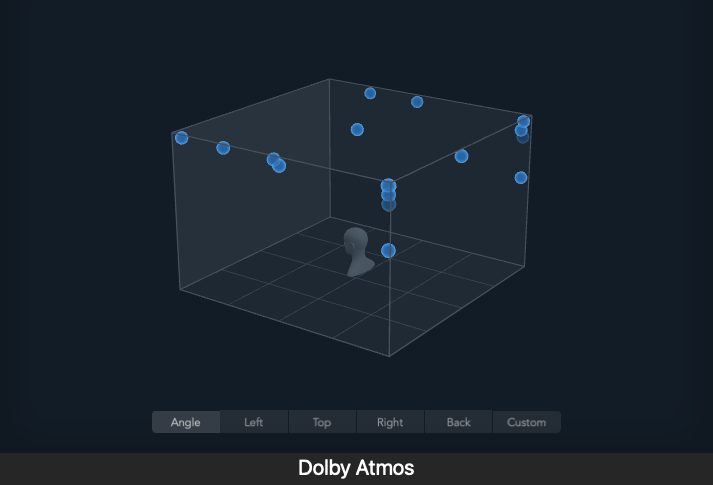
I discovered that this manual adjustment was the core problem:
- Inconsistency: What sounds right in Scene A might be wrong in Scene B. Maintaining spatial realism across a two hour film or album tracklist became a massive, repetitive task.
- Subjectivity: The decision relied entirely on my ears, not physics. This meant spending creative hours tweaking parameters that should be calculated, not guessed.
The Revelation: If the “correct” reverb level is a function of the sound’s position and the room’s acoustics, it is an objective, solvable problem.
The Solution Concept: We could use AI (Deep Learning) to perform this complex, repetitive DRR calculation instantly. My thesis idea was born: Train an AI to map a vocal’s characteristics and its 3D position directly to the DRR-derived Reverb Send Level.
This project is the culmination of my journey turning creative frustration into a rigorous technical solution that aims to inject speed, consistency, and scientific backing into the art of spatial vocal mixing.
Crossing the Bridges
“Crossing the bridges” can refer to a specific film, a musical album, a metaphor for spiritual or professional journeys, or a proverb about not worrying about future problems. The meaning depends entirely on the context, such as a 1992 drama film, a 2013 film about returning to a village, a 2005 documentary about Istanbul, a musical album, or the idiom “don’t cross that bridge until you come to it”
My name is Meriç, and I’m a sound designer, music producer, and electronic dance music performer known as numeric.
I started making electronic music about eight-ten years ago, and over time it turned into something much deeper a lifelong search for sound, emotion, and space.
Music and sound have always been central to my life. This passion led me to explore questions like how to create sound and arrange electronic music compositions. This curiosity drove me to research more, investigate deeply, and develop a passion for music and sound. I started my journey as a DJ in 2014, performing at various venues. Through this experience, I realized the need to create compositions that could convey my stories through sound. Over the years, I have immersed myself in music composition and production, constantly striving to enhance my sound and musical quality. I have learned sound design, production, effect techniques, mixing techniques, arranging, and experimented with various hardware/software synths.
My passion for music, especially electronic music composition, led me to pursue a Master’s degree in Music at Istanbul Technical University . During my studies, I honed my skills in sound design, mixing, and mastering techniques, solidifying my desire to build a career in the sound design area. My time at ITU provided a rich exploration of the audio realm. I deepened my understanding of musical structure and harmony through music theory courses and explored sound manipulation through audio programming . I gained insights into contemporary music trends and techniques through my coursework. I also had to meet with great professors, artists and well minded fellow students.And I think most important I discovered how interesting and at the same time beautiful to research what you are passionate about .
Sound design, for me, is both a craft and an inquiry. I spend countless hours refining my techniques, creating unique pieces and constructing custom systems for performance and media art. This personal research runs parallel to my artistic output, which lies at the intersection of electronic music, experimental audio, and immersive experience.I’m fascinated by how sound behaves in space, how it moves around the listener, and how technology can make those experiences more alive.Studying sound design gives me the tools to connect artistic ideas with technical reality.It helps me understand how sound works, but also how to use it to create emotion, meaning, and atmosphere.In my creative work, sound design is not separate from music Its the biggest part of the music.It’s the texture, the emotion, a tool which shapes a raw material.I see it as a way to build worlds, whether in a live performance, movie, theatre installation, or interactive setting or advertisement. In the future, I want to continue my journey in sound design on both an academic and an artistic level, developing my practice professionally through research, creative projects, and collaborations.In the next two semesters, I would like to focus on the intersection of creative sound design, spatial audio, and intelligent systems .During my previous master’s studies, I worked on projects related to immersive and 3D sound, and that’s where my real passion for this field began to grow.
That experience deeply shaped my artistic direction and was one of the main reasons I decided to join the Sound Design program at IEM, a place that, in my opinion, holds a tremendous position in the field of immersive sound.
Now, I want to take this interest to a much higher level, both creatively and conceptually.
In the coming semesters, I plan to explore how immersive sound can be used to create emotionally powerful and spatially engaging experiences, bridging artistic expression and technological research.
Motion/Gesture tool for virtual foley and sound design
– First ideas and concepts
The research of project ideas for my personal project took a little longer than expected. For this project I was planning to learn new skills, as well as create something valuable to present and use for my career aspirations after the masters course. As one of my main interests lies within sound design and foley for linear and interactive media, the project should be within that area.
When thinking about foley work, it seems to me that the actual foley recordings have not really changed a lot since its invention in the 1920s. Of course equipment and technology shaped its development, but in essence the performance and recording of probs is still the same. This sparked an idea of bringing the foley performance into the digital realm, while still keeping the haptic feeling and body performance in the real world.
I came across an interesting project, an application to trigger sounds with a leap motion controller, which seems to have died off at some point and is not supported anymore. I was not really aware of the concept of leap motion to trigger sounds, but I already stumbled upon some gesture control via gloves controllers. A well known example would be the MiMU Gloves demonstrated by Imogen Heap in her NPR Music Tiny Desk Concert from 2019. In that performance she controls parameters of a sampler and multi effect application with hand gestures live while singing on top of it. The main function of the gloves in this performance is to create sound scapes, pads and rhythm. It seems to be used more like a backing instrument in combination with the artist’s voice.
As there are already applications to control foley and sound effects playback via audio input, for example human voice, I had an idea to use some kind of sensors to trigger and control foley sounds via motions and gestures. This could happen through some kind of gloves or motion capture via a camera, but is not only bound to that. Bringing this idea into my project, there could be an option to control the amplitude, pitch and playback speed of multiple samples simultaneously, as well as seamlessly blend between them. That would be one way to get different textures from multiple recordings and create something new out of it. As an option there could also be a granular synthesis option to get different sounds, depending on the situation and sonic vision. With the motion and gesture control this seems like an interesting and interactive way to play a sampler like a physical instrument.
For my project, the main goal would be to develop a software which could take gesture or motion control inputs and control certain playback parameters and effects to have a virtual foley stage controlled via physical movement. For the controller input I will research available controllers at FH Joanneum or IEM, as developing and building such a unit would go beyond the scope of this project. I still need to figure out many key factors involved in this project, but this seems like the direction I want to head towards.
The next steps would involve research on the development platform to allow this as well as how to incorporate the data output of the motion tool to realise the controls in the application. It would be also necessary to determine the scope of the application and what the prototype should be able to perform. As foley and sound effects cover a broad sonic landscape, concentrating on one specific type would make the definition of goals more approachable and lead to a quicker implementation of specific targets.
Sound is both my language and tool
– A sound design journey
My musical education started with my drum practice lessons when I was eight years old. Prior to that I had a little obsession with the handheld tape recorder, where I remember running through the house and recording everything I came across. At some point during my teens I swapped out my drumsticks with two record players and I started to mix vinyl records. This newfound artform of combining and merging tracks together to create a sonic experience and adventure has completely taken over most of my attention for years to come. During that time I also had my first ventures into producing music digitally via Ableton Live. This experience was at some point a little dampened by my then lack of technical abilities and expertise in the mixing and mastering field. This led to a newborn curiosity in the more technical areas of music production, especially in the art of disc mastering and lacquer cutting. It all started with the question ‘Why does this record sound so different compared to xyz’. To deepen my knowledge and expertise I invested in a desktop cutting lathe system for one-off and small run vinyl record production. This was followed by years of learning all the ins and outs of this cutting system, groove geometry and disc mastering in general. And finally ended up taking over the cutting room in a vinyl record pressing plant just outside of London, UK for the last 3 years.
Music and sound, to me, induces the strongest feelings and excitement out of any sensoric system in the body. There is nothing as beautiful as the sensation that can be experienced in music and sound from my perspective. As a drummer from heart, rhythm and groove is something that needs to be felt and experienced, rather than explained and understood. Nothing can connect and unite people across the planet and various backgrounds like music does. It is such a vital tool to society and has fuelled various movements and revolutions alike. The inspiration one can get through music is to me personally unique compared to other art forms. I also appreciate the story aspect behind a full album much more than just listening to single tracks and songs. The same is going for DJ sets and the intentional compilation of songs to create experiences, which was the reason I was so captivated when starting out playing vinyl records.
My prior interest in sound design has always been more from a sole music perspective. It was only about a couple years ago when I discovered some field recordings and the artist speaking about their craft. The way this topic was presented was so captivating, I immediately knew that I wanted to get involved as well. Since then I have experimented with different types of field recorders and microphones, from shotgun, ultrasonics and contact microphones. The idea of capturing natural sounds and mangling them to create fascinating soundscapes was always appealing to me. I always experimented with sounds and sketched ideas, more than actually arranging these into more finalized works. Therefore I am really interested in collaborating with people from different disciplines and creating interesting projects throughout my studies. When making the decision to further deepen my knowledge in the sound design field, but moreover get a better understanding of all the opportunities and challenges, it was soon clear to me that the course at FH & KUG would be a great fit.
For my creative work I would envision sound design to be the main anchor, as a supporting creative outlet for multi disciplinary media or in a standalone position. The main role should always be to contribute to a joint, well balanced experience. Without sound design I feel things lack emotion and a certain connection to the media. This is why it should always encourage a bigger goal and support the cause. Sound design should therefore be a well planned and calculated stage at the project, with input and feedback from most stakeholders. It will probably not be the easiest task to convince people about the importance of a well structured approach, but in my work and work environment I want to enforce this as best as possible.
Within the next two years I want to try out everything I can and see what kind of area is the most interesting to specialize and focus on in my future. I am very open to dive into the fields of interactive and linear media, but also have a hunger to learn more about the actual sound design process of a physical product and some material science behind it. In the craft itself I am trying to learn and soak up all the skills that would need to be necessary to achieve my goals. I am looking forward to learning more about storytelling and dramaturgy in general, which will strengthen my understanding of the topic, as well as the ability to work alongside a team and the internal communication that comes with that. My mission is to fully commit to every project with my passion for sound design by creating meaningful experiences. I want to find my niche, where I can then develop my personal style and skills to be sought after.
Specifically interesting would be to work in audio post production for a short movie or animation film. I want to learn the basics of mixing sound for media in dolby atmos or other surround formats. Within these projects I also want to focus on my foley skills and work. This would be both a creative and technical thrilling experience. Besides that I am also looking forward to designing audio assets for interactive media, like a video game. I do like the approach and process to this, especially with all the variations one might do on similar sounds. Another fascinating skill to learn would be the implementation of these sounds to create a realistic sonic environment in an animated world. The last major topic I want to engage in would be product sound design. I am inspired by how one can shape materials and form an audibly pleasing experience that creates a stronger emotional connection to an object.
Ultimately I am super excited to have taken this path and direction, within a field where my creative needs and my technical interests are both met complementary. I cannot wait to create holistic and immersive experiences to enrich and inspire people around the world. Sound is both my language and tool.
