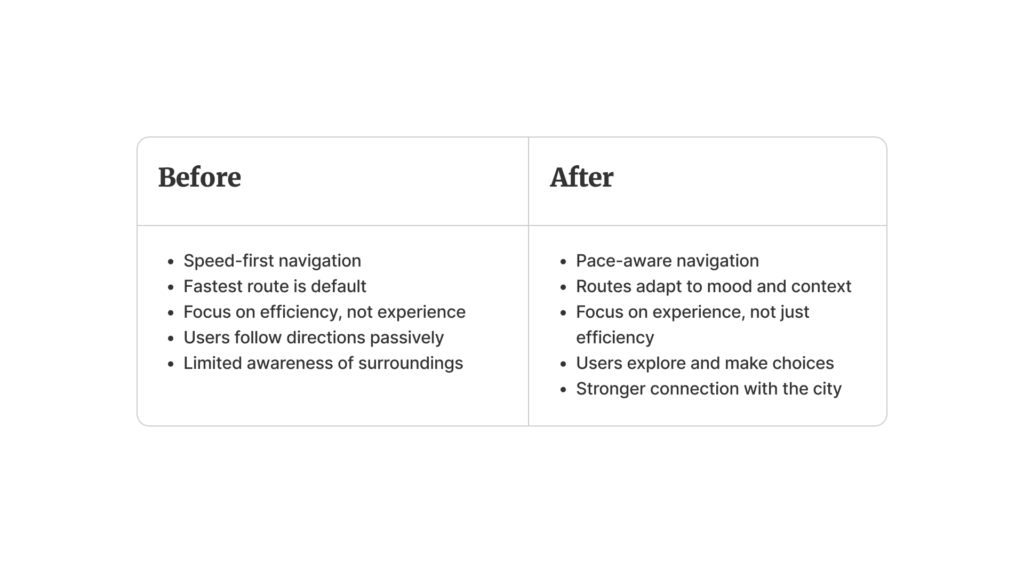
This comparison highlights the shift from efficiency-oriented navigation to experience-oriented movement. Most existing navigation systems prioritize speed, offering the fastest route by default and guiding users through the city with minimal user involvement.
As a result, users typically follow directions passively, often losing their sense of the surrounding environment and missing opportunities to interact with it. Travel becomes functional rather than experience-driven.
In contrast, this project explores navigation as something more adaptive and human-centered—where routes respond to mood and context, encourage exploration, and foster a more meaningful relationship with the city.
