Designers are empathetic visionaries seeking to find the right answer to their user’s desires. Besides breaking down Desirability designers are also responsible for building bridges towards Viability and Feasibility. In business context designers are therefore forced to view challenges holistically within the larger business scale. In order to succeed they need to adapt to business language. By integrating their human-first approach new opportunities and possibilities open up. Their scope of work increases: driving processes and communication, breaking down silos and avoiding risks are suddenly part of their daily work.
The major goal of this project is to identify and collect methods that could be used by designers to build trust with allies in the company.
Value of Human Centred Design
The number of companies understanding the value of human centred design is constantly increasing.
AirBnB: back in 2008 when the booking platform was first introduced, the visionaries of AirBnB were exposed to different challenges, such as the one to offer trust for guests towards their hosts. A major design enabled this by emphasising on more transparency. This was done by adding verified profiles and allowing feedback of other guests to be displayed. (Vishal Peshne, “UX Case Study: The Success of Airbnb’s User-Centered Approach,” Medium, Jan. 26, 2025. https://medium.com/@vishal.peshne/ux-case-study-the-success-of-airbnbs-user-centered-approach-7557f3d769b9)
Juicero: this example of an American start-up perfectly describes, why a good solution is worth nothing without the right problem statement, and it’s influence on financial aspects. Juicero allows its customers to buy an electrical juice-squeezer that operates by simply putting a pre-made bag of juice in the machine. However, quickly users figured out, that in order to open the said bag, they don’t need the machine at all. You can simply do so with your bear hands. (“TOOLS FOR TOMORROW,” Tools for Tomorrow, 2024. https://www.tomorrow.tools/ (accessed Nov. 10, 2025).
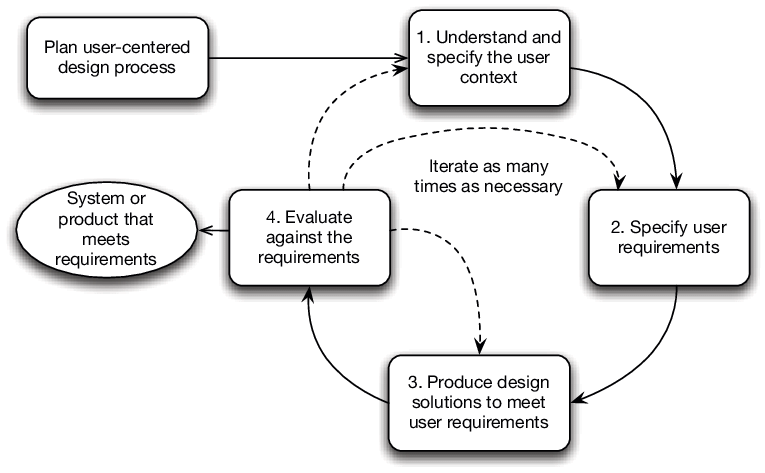
Image by Trenton Schulz
My Motivation
During my bachelor’s I was working as a UI & UX at a local start up. I was enthusiastic and motivated to start. As the first ever UX designer at the company I was quickly challenged with a number of obstacles:
Explaining what UX is about
We need to put emphasise on iteration and process driven outcomes. Stakeholders often seek deliverables. It can be difficult to define a specific deliverable, as artifacts such as Prototypes might suffer from a lack of granularity.
User Centred Mindset
UX-Professionals must always push their agenda to sensitize why it’s important to develop a product according to user needs. Ideas for products must constantly be challenged, whether they will deliver actual value for users and/or customers. This is also why problem statements should be focused on precisely before jumping to conclusions too quickly.
Integrating UX in an agile Environment
The company already had existing processes, most of them closely related to agile ways of working. UX and agile do go hand in hand. However, I once attended a talk, where the speaker mentioned, in her early years of agile training, there was no word of UX yet to be heard. Therefore, it can be challenging to spread awareness on the topic.
Relevance for Designers
As product designer in order to cooperate with our stakeholders and team members we must adapt to their language. In terms of human centred design, it is no good to distance yourself as a designer from other disciplines (e.g. Engineering, Business, Dev-Teams and most of all users).
We must be willing to collaborate, especially with our close colleagues from Product Management. This may include gaining trust with the Product Owner one has to report to.
Recherche Weg
In order to get a grasp of this complex topic I would like to perform two expert interviews with UX professionals with a lot of experience. I could imagine this becoming a bit difficult, as they won’t most likely be able to disclose any confidential information within their companies.
Furthermore, I am planning on attending a few talks from UX professionals (e.g. UX Graz, or some online alternatives for networking) to get an understanding of UX designer’s agenda in companies of all kinds. As of right now, I can imagine focusing on larger corporations and enterprises.
Possibility to Collaborate with a Business
At the WUC 2025 I had the opportunity to connect with Ines Lindner, a UX-Strategist at REWE International. Her responsibility is to tangle the challenge of merging enterprise architecture with human-centred values. In her talk she dives through the different processes that were enabled by Ines and her colleagues to ensure a smooth collaboration between the different parties from Design, Business and IT. One approach introduced by the speaker are so called “fusion teams”. These are teams, consisting out of employees from these mentioned parties. It allows them more freedom in collaboration and especially communication between departments. This is an essential step for breaking down silos, for which Ines has come up with a unique metaphor. Instead of bluntly referring to the different departments as “silos”, as it’s often done in business context, she uses the terms “city” and “houses”. If I’m lucky I have a chance for collaborating with REWE for my thesis topic. In this case however, the whole topic would be connected to the use case of cash registers in the stores such as BILLA, BIPA, Penny etc.
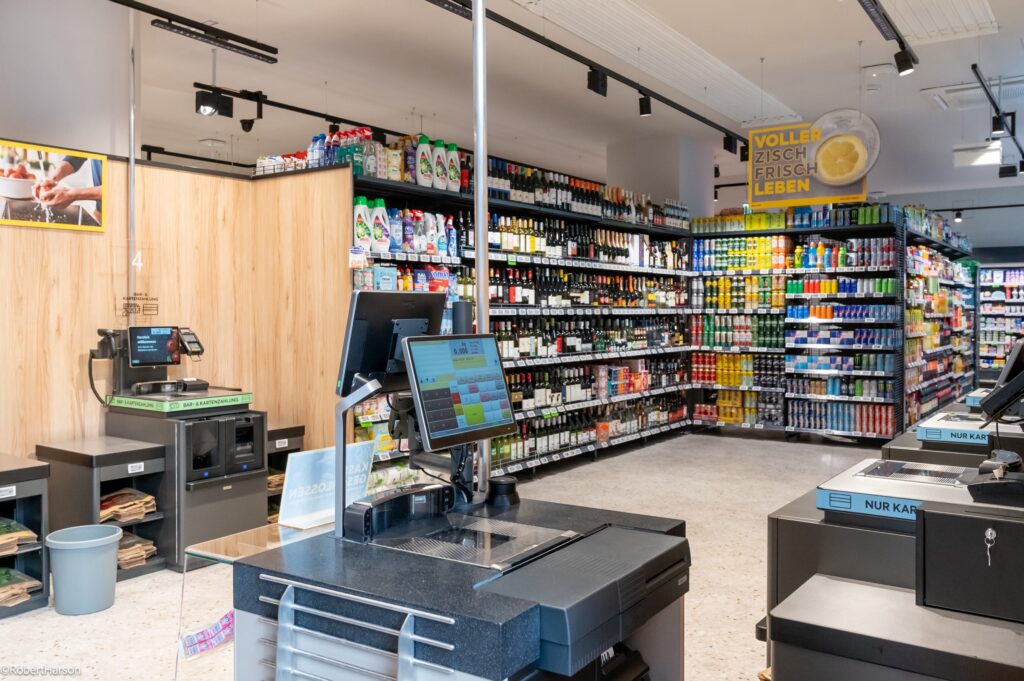
Image by REWE Group
If the possibility of connecting with REWE doesn’t work out, I might reach out to BOSCH Sicherheitssysteme, where I did my internship.
References
Jurgen Appelo, Management 3.0. Pearson Education, 2010.
A. Cooper, R. Reimann, and d D. Cronin, About face 3 : the essentials of interaction design. Indianapolis, Ind.: Wiley, 2007.
S. Flores and N. Yu, “Placing Desirability at the Center of Innovation,” BCG Global, Jan. 16, 2024. https://www.bcg.com/x/the-multiplier/placing-desirability-at-center-of-innovation
B. Flyvbjerg and D. Gardner, How Big Things Get Done. Currency, 2023.
F. Laloux, Reinventing organizations: A guide to creating organizations inspired by the next stage of human consciousness. Nelson Parker, 2014.
