How environmentally friendly is street lighting in Graz?

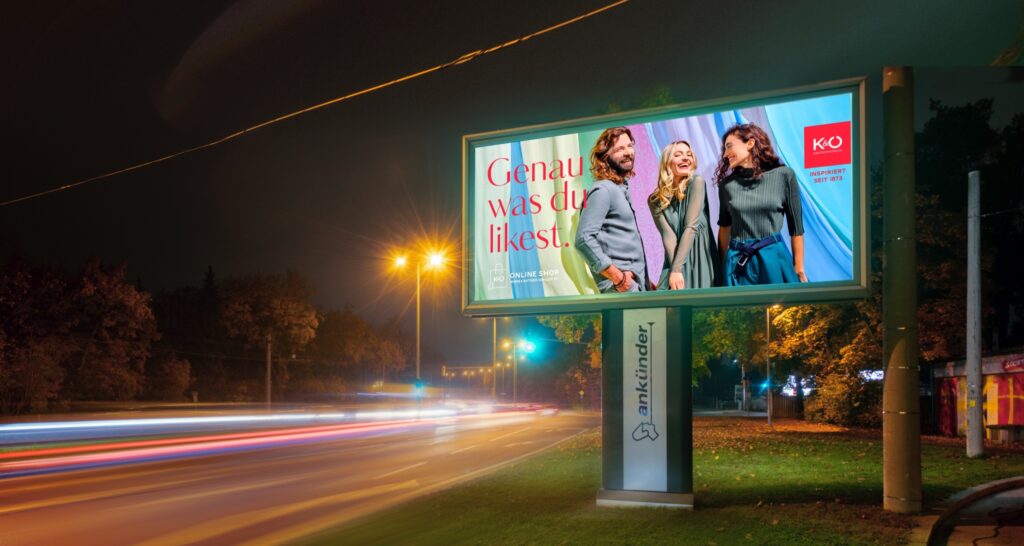
illuminated billboard with a clothing shop ad at night in Graz
An illuminated billboard, Ankünder

Last week I researched dark sky places, this week I have taken a look at how light pollution is tackled in urban areas, specifically in Graz.

First of all, I researched national laws. The Tyrol Competence Center on Light Pollution and Dark Skies lists Austrian regulations on light pollution. As opposed to other EU countries, Austria has no explicit legal requirement to operate street lighting, but these can be derived from various standards and legal norms, such as:

  • ÖNORM EN 13201, Part 2-5 Road Lighting (2004), which lists standards used for planning public lighting systems in all EU countries;
  • ÖNORM O 1055 Road lighting – Selection of lighting classes – Rules for the implementation of CEN/TR 13201-1 (2017), which includes provisions for dimming during off-peak periods;
  • ÖNORM O 1051 Road lighting – Lighting of Conflict Areas (2007), which contains recommendations for lighs illuminating zebra crossings, roundabouts, car parks, etc.;
  • RVS (Guidelines and Regulations for Highways) 05.06.11 and 05.06.12, which includes limit values and criteria to avoid undesired effects of artificial lighting on drivers.

According to Energie Graz, which operates the public lighting system of the city, a total of 28,802 lights illuminated the city as of 2021. Due to the population increase and in order to improve the feeling of safety, in previous years the light system has been expanded by 21%, which corresponds to 98 lights per 1,000 inhabitants. One might think that this would have led to an increase in energy consumption, but actually it fell by over 11% between 2004 and 2021, thanks to the conversion to modern LED street lighting. This has been the case of around 31% or almost 9,000 light points on streets, squares, parks, footpaths and cycle paths of Graz. Apart from having a significantly lower energy consumption, modern LED lights have lower maintenance costs, a long service life, reduced CO₂ emissions, and less light spill, contributing to less light pollution. 

LED street lighting also adapts to the needs of citizens in a smart way. For example, when footpaths and cycle paths are not used at night, the lights are dimmed to 10% of their usual brightness.

During the public meeting of the municipal council on 15 February 2024, it was mentioned that Ankünder GmbH, the leading provider of outdoor advertising media in Styria, had been switching off all illuminated advertising signs from midnight to 5 a.m., except at bus stops for a year.

During the course of the meeting, KPÖ municipal councillor Max Zirngast asked the city to collaborate with the Chamber of Commerce (WKO) to develop a concept to limit light pollution. It motivates Graz-based companies to minimise their light emissions from illuminated advertising and illuminated displays. Most parties voted in favour, but I have not been able to find follow-up information about the proposal’s realisation.

Energie Graz, being responsible for the public lighting in Graz, can be contacted to report faults and problems with street lights. This can be done via e-mail, call or by downloading the “Schau auf Graz” app.

In the next article, I would like to research more about this app and other ways to raise your voice about light pollution in Graz.
International Dark Sky Places

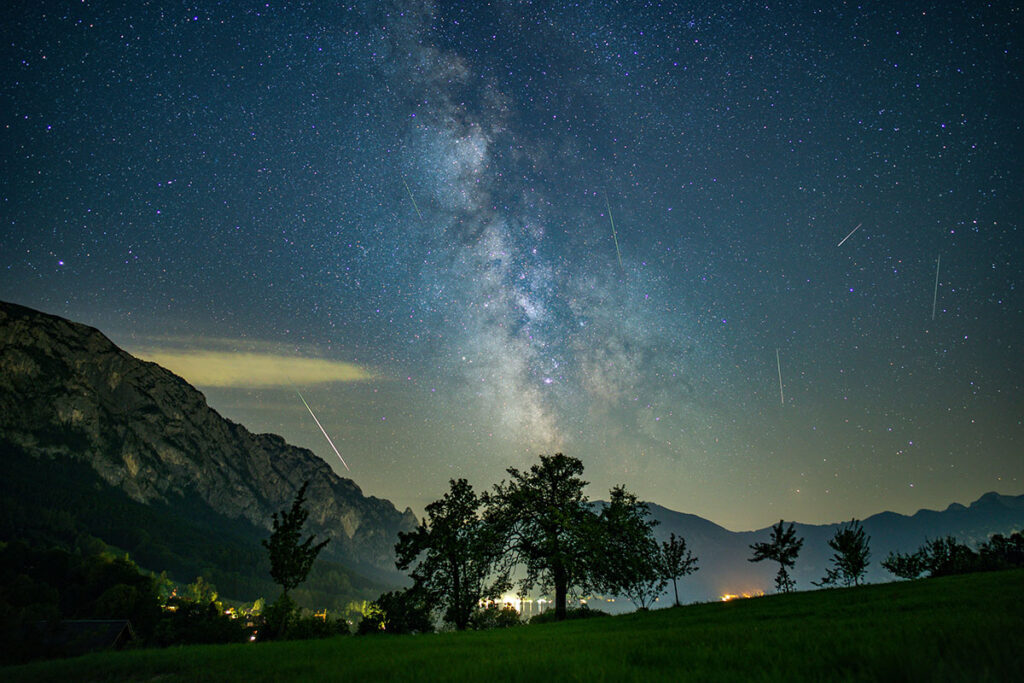
picture of the night sky with Milky Way and mountain landscape
The Attersee-Traunsee Nature Park in Upper Austria, photo from their website

DarkSky is a worldwide organisation combating light pollution. It offers certifications for protected areas and facilities that preserve dark skies through responsible lighting policies and public education. The existence of dark areas allows us to stay connected with nature and protect ecologically sensitive zones.

It all started when Flagstaff, Arizona, was named the first International Dark Sky City in 2001. Now there are over 200 places in 22 countries of the world and a total of 160,000 square kilometers of protected land certified by the International Dark Sky Places (IDSP) program.

The certifications DarkSky confers are six: International Dark Sky Parks, International Dark Sky Sanctuaries, International Dark Sky Reserves, Urban Night Sky Places, International Dark Sky Communities and DarkSky Approved Lodging. Additionally, they also have a list of approved luminaires and retailers, together with outdoor sports lighting guidelines.

To request a certification, there is an application process consisting in an initial inquiry, a formal application finally a certification if all criteria are met.

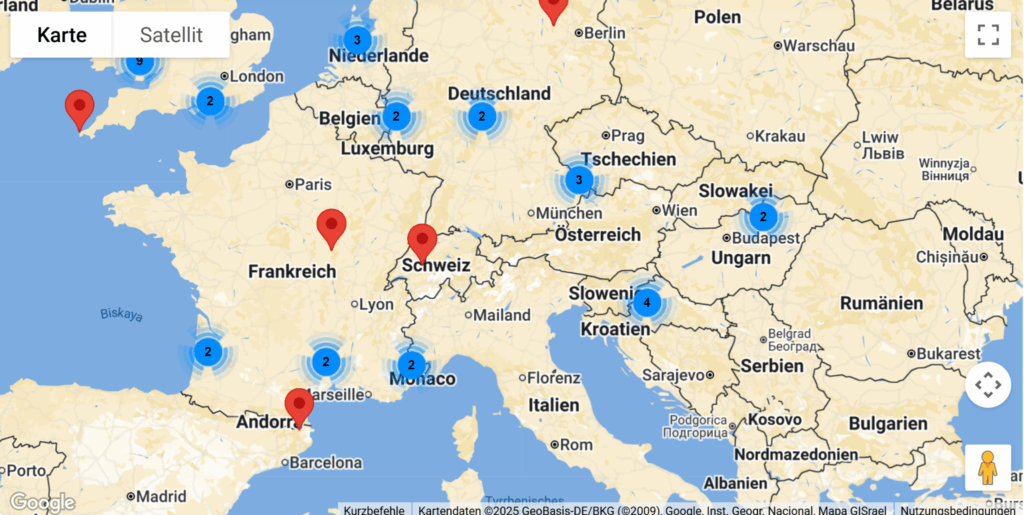
I used DarkSky’s map to find International Dark Sky Places in my countries, Austria and Italy. I found Naturpark Attersee-Traunsee in Upper Austria, but was surprised to find out that there are none in Italy

An overview of International Dark Sky Places in Europe, from DarkSky

In fact, according to an article published in the magazine Science Advances in 2016, Italy and South Korea are some of the countries of G20 with the brightest night skies, with the Pianura Padana being the most polluted Italian area. Efforts have been made to certify dark areas such as South Tyrol, Maremma (Tuscany), and the Saint-Barthélemy valley (Aosta Valley), but without any results.

The Attersee-Traunsee Nature Park is the largest natural park in Upper Austria with some of the darkest night skies remaining in central Europe. With the size of 77 square kilometers, it lies between the lakes Attersee and Traunsee and spans across the eponymous Traun and Atterseer Flysch Mountains. It was certified as International Dark Sky Park in 2021. On its website the certification is not mentioned, but there is a separate one dedicated to the “star park“.

Globe at Night project — Testing discoverability and usability

Last week I asked myself “How can interaction design combat light pollution?”. This week I researched one way to raise awareness for the cause, which is citizen science. It involves regular people, who can submit measurements of the night sky brightness. This way, they support scientific projects in an interactive and educational way. I found out that there are several campaigns that deal with this theme, but the majority of people are not aware of them and I wonder why.

To get to the root of the problem, I selected the Globe at Night project and tested its discoverability and usability. According to its website, Globe at Night is the most successful light pollution awareness campaign to date, thanks to over 200,000 measurements from people in 180 countries over the last 14 years.

The research method I used was usability testing. I started out by defining two tasks I would present to each participant:

  1. You want to report data about light pollution in the sky. Find a service on the Internet (app or website) that allows you to send data to scientists.
  2. Report the condition of the sky right now to the Globe at Night project.

I tried to include people of different ages, nationalities and levels of digital competency. Ideally, everyone who has a smartphone or a pc and access to the Internet is part of my target group, but I chose to narrow it down to people interested in science or nature lovers. I was able to find 5 people, who performed the tests on pc and on smartphone.

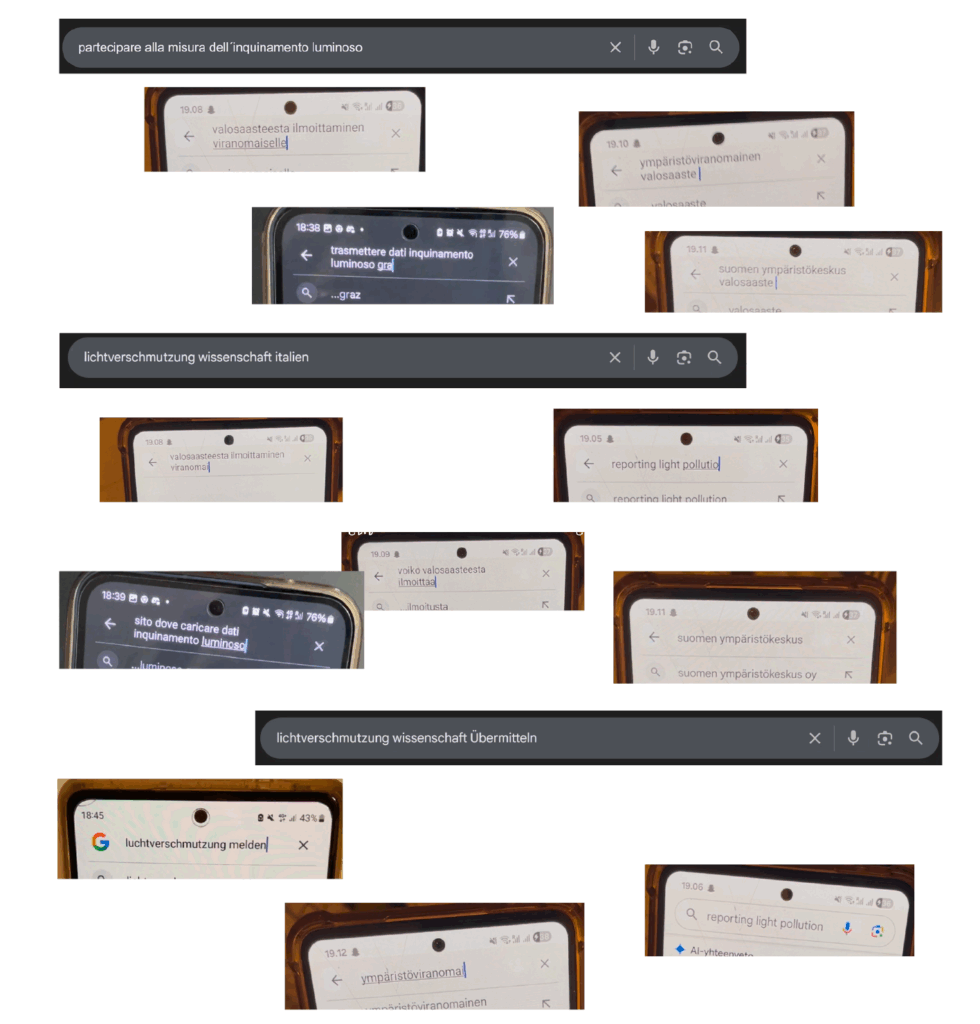
It is not easy to find a service that allows you to report data about light pollution to scientists. People tend to search in their own language for a service in their city and country. Many websites were found but no one was convinced of their result. The Globe at Night project claims to be the biggest of its kind, but it remains hidden by the search engine, even when searching for keywords like “report light pollution”. I think that this problem could be solved by improving the Search engine optimisation and taking into account the internationality of searches.

screenshots of different Google searches
Some Google searches of the participants. Only one found the Globe at Night website.

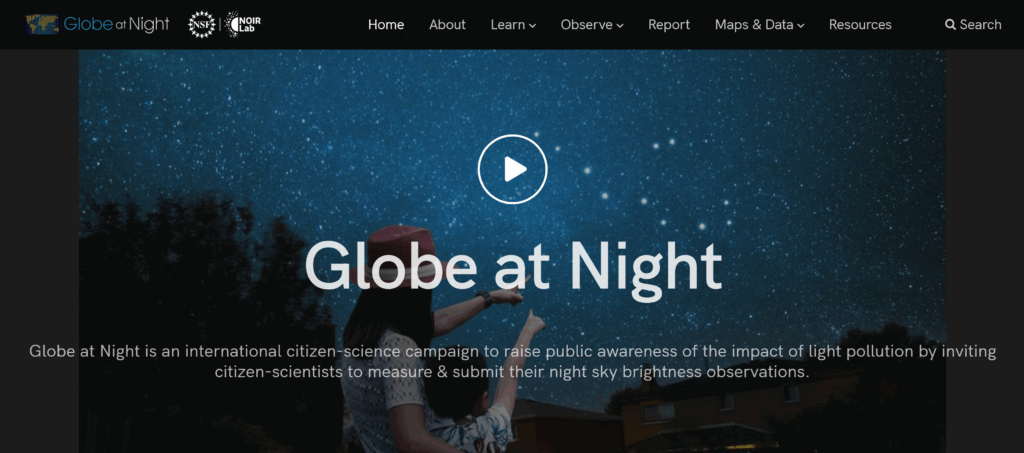
With respect to the Globe at Night website, I detected various technical issues. While the report form exists in many different languages, the homepage is only in English, making it difficult to find how to report data for non speakers, especially those belonging to older generations.

Globe at Night homepage
The homepage is only available in English.

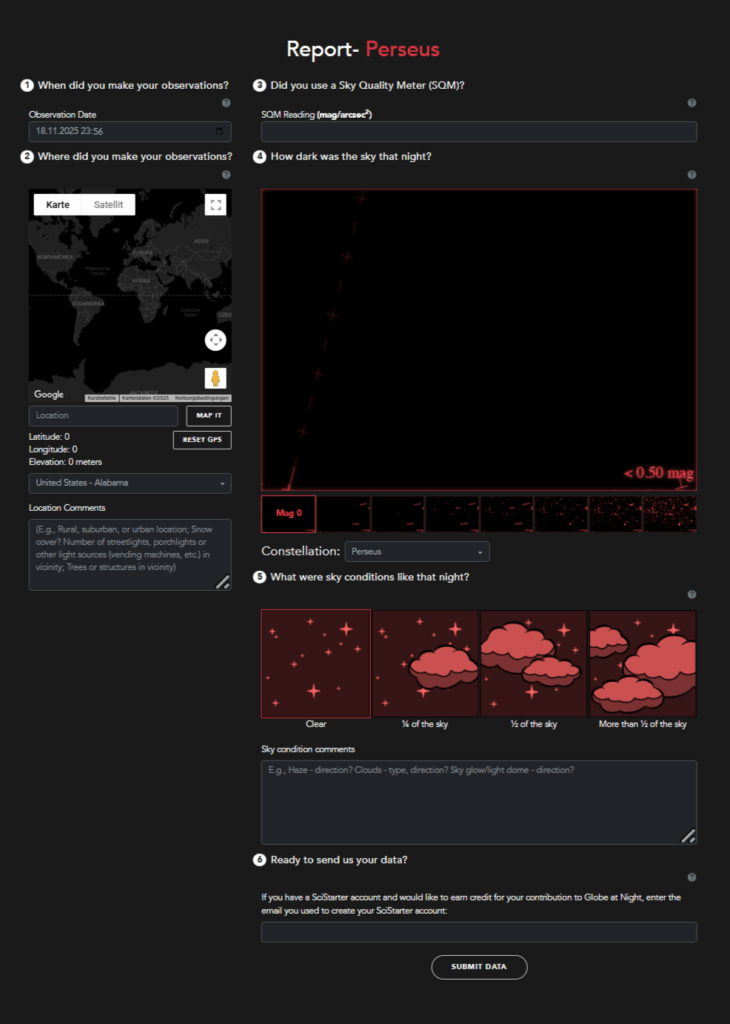
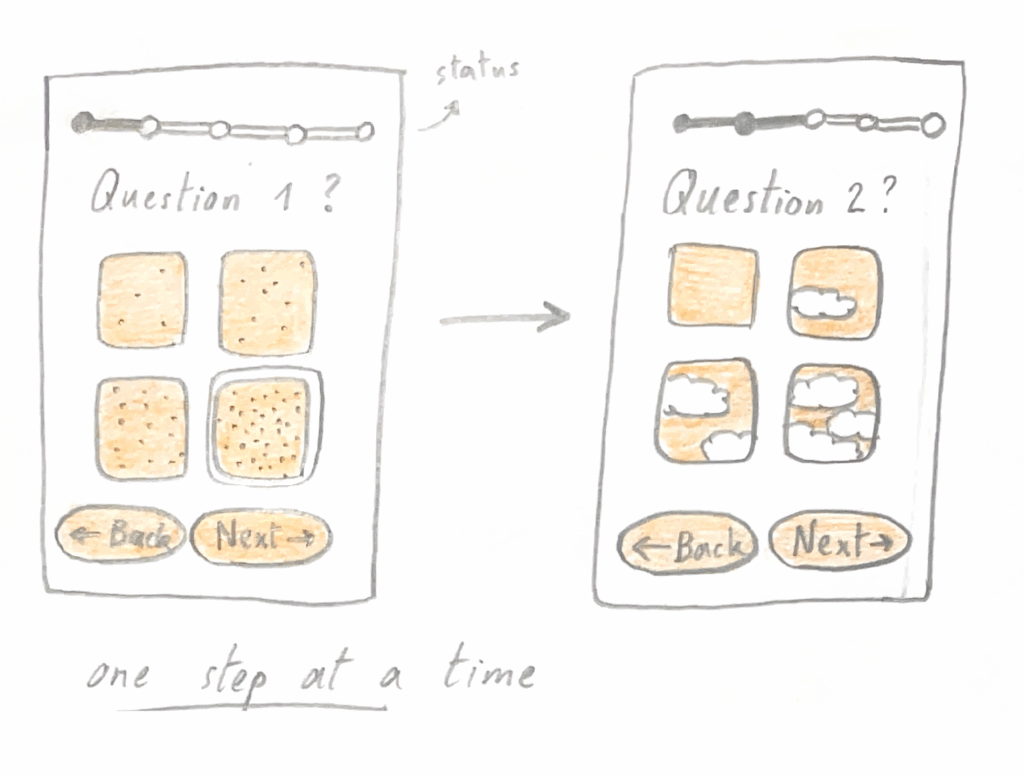
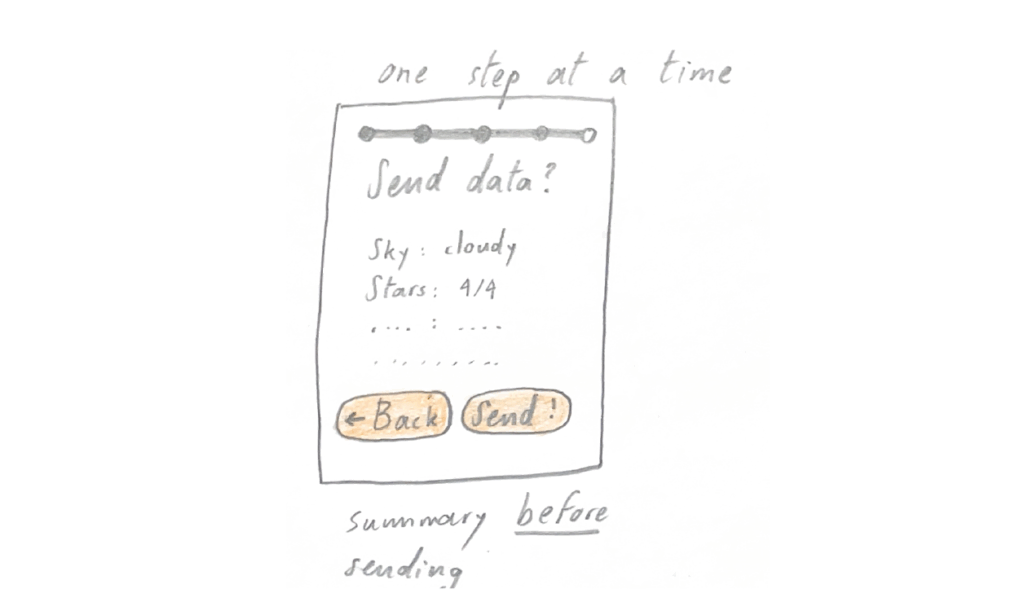
On the desktop version, due to the disposition of the steps in space, some are overseen, while on mobile it was easier to follow them all. Some participants noticed that they forgot to fill out some areas after submitting the results. I believe that the process could be improved by separating the steps or showing them one under the other while scrolling down. A recap should be visible before submitting data, not after.

An aspect that created many issues was the location. Since all of the participants allowed location sharing, they expected the data to be correct, which was not the case.

report form with many questions on two columns
The report form
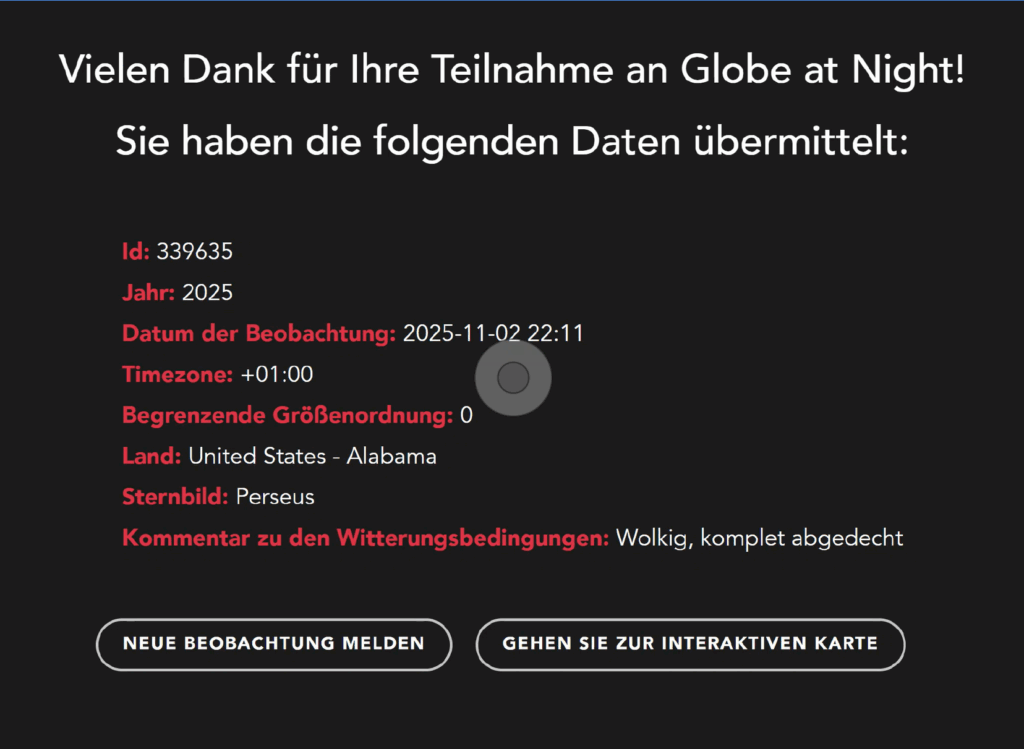
recap after submitting data
A recap is shown after submitting data. At this point it was too late to change the country.
sketch where the questions are separated and not all on the same screen
A suggestion to separate the questions, which could help the users to focus on every step.
sketch where a recap is shown before submitting, as a final step
A recap before submitting data could help prevent mistakes.

Finally, some participants felt overwhelmed when confronted with specific questions. One was whether they used a Sky Quality Meter to measure the brightness of the sky and the other concerned what constellation they were looking at. The project claims to be “citizen science” but these questions are not accessible to people lacking astronomical knowledge. I reckon they should be omitted, explained better or only shown after the user has demonstrated to posess the required knowledge in a previous answer.

There is a chance Globe at Night has never performed usability tests on their website, and this project could help them improve their service. I might consider contacting them, while I research other ways interaction design can help fight light pollution.

The future is too bright

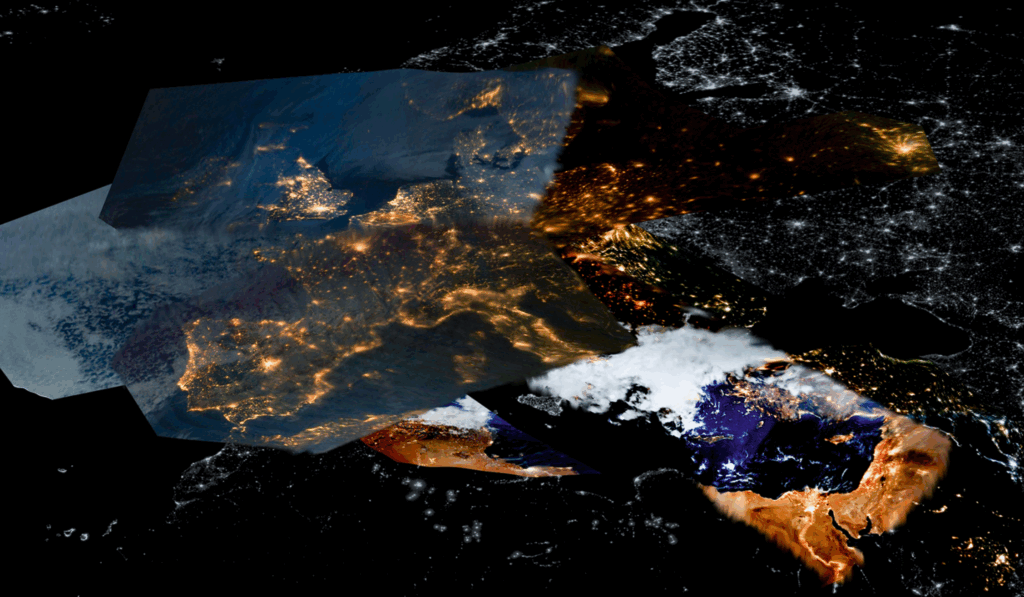
satellite photo of Europe where light pollution can be seen
Artificial light as seen from satellites. Protege Noctem, Mattia Balsamini

83% of the world’s population has never seen the Milky Way, living disconnected from our cosmos. This is due to light pollution, which is the excessive or inappropriate use of artificial outdoor light. Apart from distancing us from nature, it impacts human health and wildlife behaviour.

The invention of light completely changed our society: thanks to artificial illumination, after sunset we can do almost everything we would do during daytime. This revolution has lengthened the workday, allowing economic growth.

But like all great inventions, it comes with a downside. Due to poor design, light reflects in directions other than the intended one: streetlamps, cars, windows, factories and billboards significantly brighten the night sky, especially over urban areas. 

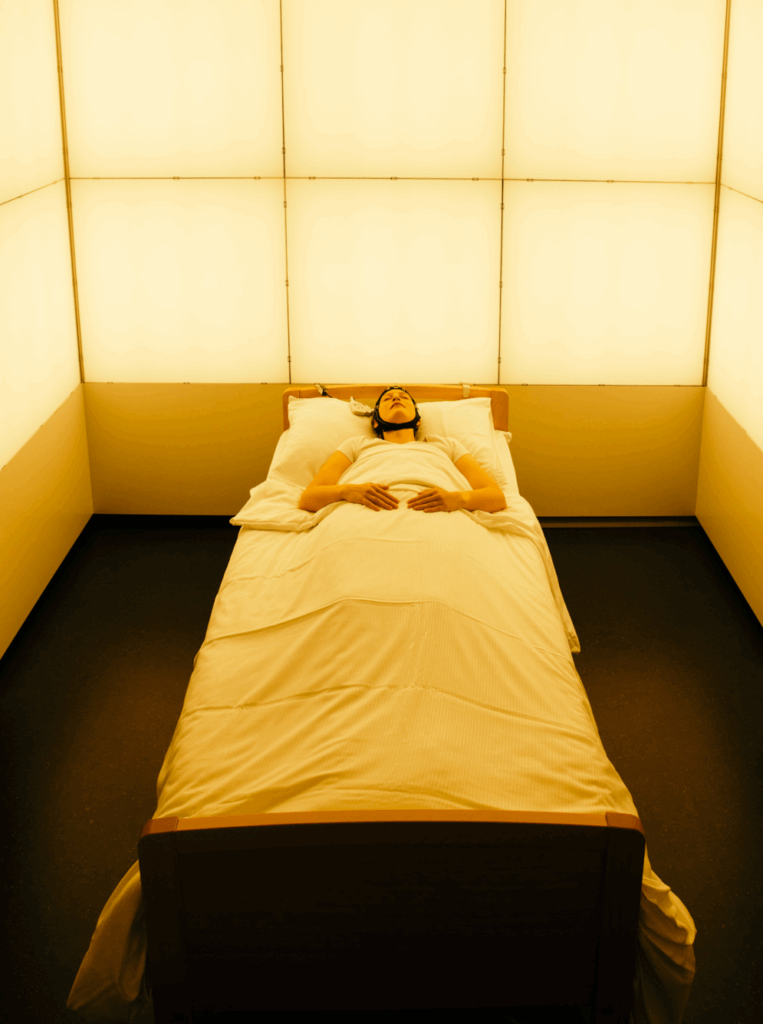
For what concerns health, artificial light confuses the production of melatonin, therefore damaging the human circadian cycle. This results in sleep deprivation, stress, anxiety and according to recent studies it is even linked to cancer.

a person lying on a bed with a measuring device attached to their head
Studies show how exposure to artificial light is linked to several health issues. Protege Noctem, Mattia Balsamini

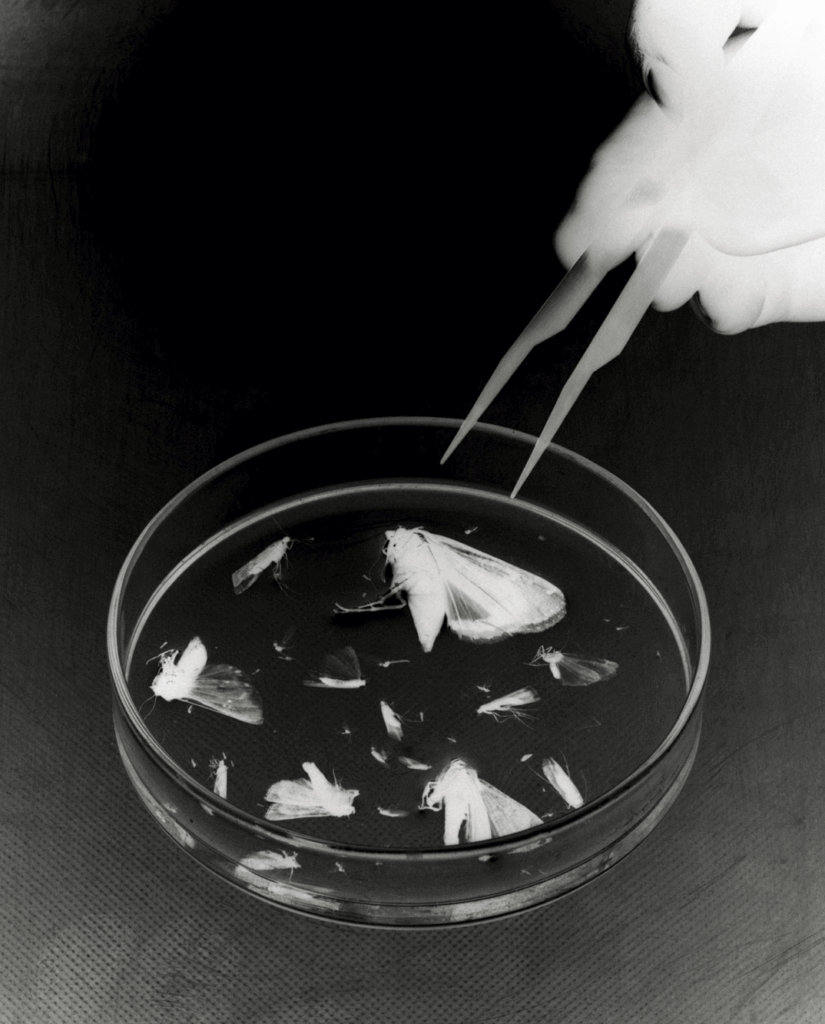
Wildlife is also deeply affected: migration patterns are damaged, wake-sleep habits changed, nocturnal insects are disoriented, plant leaves no longer sense the start of winter. Often the consequence of these anomalies is death.

dead moths
Artificial light causes the death of many small insects. Protege Noctem, Mattia Balsamini

I became passionate about this cause after visiting the photography exhibition Protege Noctem by photographer Mattia Balsamini. In his project, he documents the disappearance of the night and its creatures. Thinking about what humans are doing to nature is frustrating and I often feel powerless about it. I decided to try to contribute by asking myself: “How can interaction design combat light pollution?”. 

I think there are three directions that can be taken: raising awareness, designing eco-friendly products and supporting ways to take action. My aim for the next few weeks is to explore each of these aspects, starting from what already exists in the design field, moving onto what can be implemented and finally figuring out what is missing.

We can raise awareness on the disappearing stars, the health risks of light pollution and its impact on wildlife. In addition, we can draw attention to the importance of preserving darkness. There are several organizations working to reduce light pollution and create dark sky reserves. One of these is the DarkSky International, which fights for dark sky reserves.

Where light is necessary, we can limit it. This is where light design kicks in. Many examples come to my mind: the design of light itself, in private and public settings, its intensity, temperature, duration, disposition, reflection, orientation and its sensors. On the other hand, we can also explore shadows and how to create them: curtains, blinds and shields for instance. Another direction could be exploring light alternatives: is it possible to fulfill certain needs with the help of other means, such as sound, touch or motion? 

different lamp designs from a light pollution perspective
Street light design. © Valeria Montjoy (ArchDaily)

Finally, design can support various ways to take action. These are advocating for changes in schools, workplaces and communities, spreading the word or citizen science. The latter involves regular citizens, who submit measurements of the night sky brightness and support scientific projects, such as the Globe at Night Project.

Light pollution is a broad topic and I am excited to investigate its relation to interaction design. Nevertheless, I fear that any solution I might come up with may be difficult to apply to daily life. I therefore aim to focus on realistic ideas that can actually make a difference during my research.


Sources

Balsamini, M. (2023, December 18). Protege noctem. Mattia Balsamini. https://mattiabalsamini.com/project/protege-noctem/

Light pollution. (n.d.). https://education.nationalgeographic.org/resource/light-pollution/

MapMaker: Light pollution. (n.d.). https://education.nationalgeographic.org/resource/mapmaker-light-pollution/

Gaston, K. J., Davies, T. W., Bennie, J., & Hopkins, J. (2012). REVIEW: Reducing the ecological consequences of night‐time light pollution: options and developments. Journal of Applied Ecology, 49(6), 1256–1266. https://doi.org/10.1111/j.1365-2664.2012.02212.x

Light pollution – artificial sky brightness – science on a sphere. (2016, August 4). Science on a Sphere. https://sos.noaa.gov/catalog/datasets/light-pollution-artificial-sky-brightness/