Last week I researched dark sky places, this week I have taken a look at how light pollution is tackled in urban areas, specifically in Graz.
First of all, I researched national laws. The Tyrol Competence Center on Light Pollution and Dark Skies lists Austrian regulations on light pollution. As opposed to other EU countries, Austria has no explicit legal requirement to operate street lighting, but these can be derived from various standards and legal norms, such as:
- ÖNORM EN 13201, Part 2-5 Road Lighting (2004), which lists standards used for planning public lighting systems in all EU countries;
- ÖNORM O 1055 Road lighting – Selection of lighting classes – Rules for the implementation of CEN/TR 13201-1 (2017), which includes provisions for dimming during off-peak periods;
- ÖNORM O 1051 Road lighting – Lighting of Conflict Areas (2007), which contains recommendations for lighs illuminating zebra crossings, roundabouts, car parks, etc.;
- RVS (Guidelines and Regulations for Highways) 05.06.11 and 05.06.12, which includes limit values and criteria to avoid undesired effects of artificial lighting on drivers.
According to Energie Graz, which operates the public lighting system of the city, a total of 28,802 lights illuminated the city as of 2021. Due to the population increase and in order to improve the feeling of safety, in previous years the light system has been expanded by 21%, which corresponds to 98 lights per 1,000 inhabitants. One might think that this would have led to an increase in energy consumption, but actually it fell by over 11% between 2004 and 2021, thanks to the conversion to modern LED street lighting. This has been the case of around 31% or almost 9,000 light points on streets, squares, parks, footpaths and cycle paths of Graz. Apart from having a significantly lower energy consumption, modern LED lights have lower maintenance costs, a long service life, reduced CO₂ emissions, and less light spill, contributing to less light pollution.
LED street lighting also adapts to the needs of citizens in a smart way. For example, when footpaths and cycle paths are not used at night, the lights are dimmed to 10% of their usual brightness.
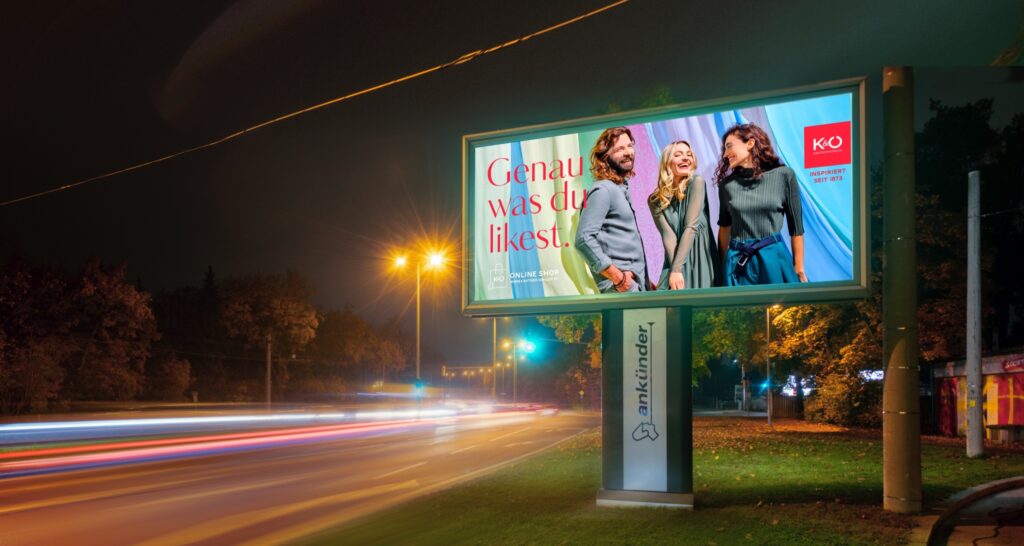
During the public meeting of the municipal council on 15 February 2024, it was mentioned that Ankünder GmbH, the leading provider of outdoor advertising media in Styria, had been switching off all illuminated advertising signs from midnight to 5 a.m., except at bus stops for a year.
During the course of the meeting, KPÖ municipal councillor Max Zirngast asked the city to collaborate with the Chamber of Commerce (WKO) to develop a concept to limit light pollution. It motivates Graz-based companies to minimise their light emissions from illuminated advertising and illuminated displays. Most parties voted in favour, but I have not been able to find follow-up information about the proposal’s realisation.
Energie Graz, being responsible for the public lighting in Graz, can be contacted to report faults and problems with street lights. This can be done via e-mail, call or by downloading the “Schau auf Graz” app.
In the next article, I would like to research more about this app and other ways to raise your voice about light pollution in Graz.
