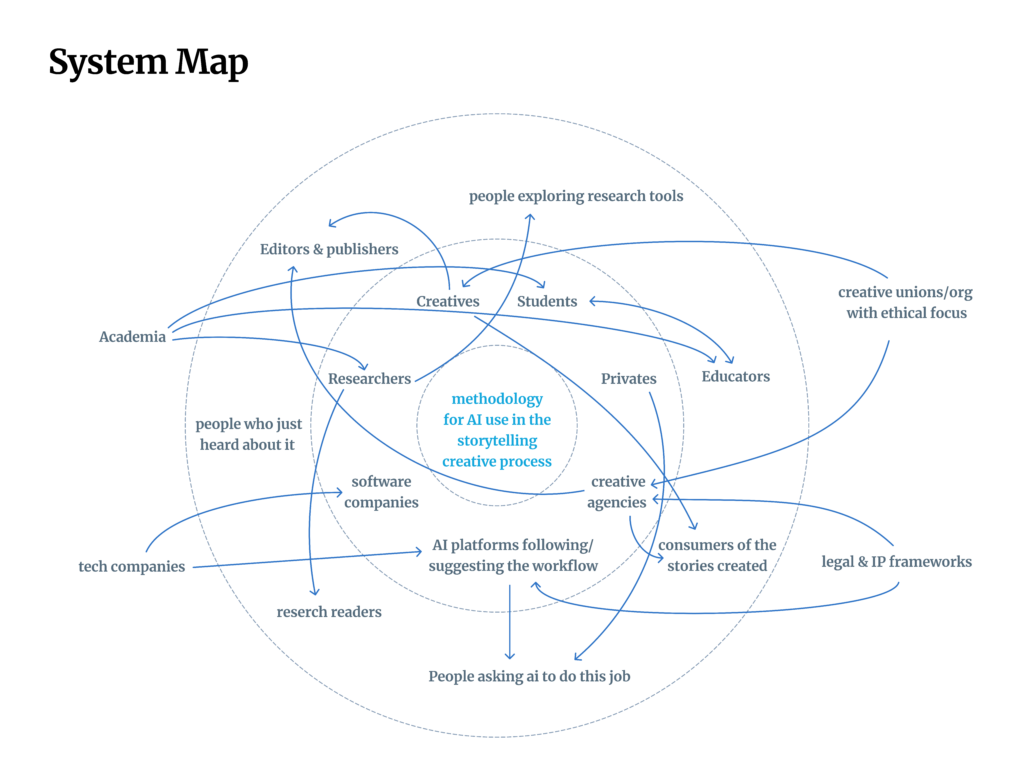
After starting with a giant question mark about the role played by AI nowadays in the field of data visualization, I decided to start with a literature review to narrow down and frame better on which topic/s to focus. So I have decided to investigate better how LLMs and generative models intervene in data driven storytelling (meant as turning data into easy-to-read and easy-to-understand stories that help turning insights into action).
A systematic review regarding telling stories with data deeply guided my curiosity and focus on the topic of human intentionality. In addition, many papers were also questioning the modern role of the author in the creative process. I want to understand better where the author exactly stands today and how empathy and human intention, that are not entirely replicable by machines, fit in a world dominated by algorithmic storytelling. Therefore, I am exploring the co construction of meaning to observe how humans and algorithms might merge to build these new narratives.
As my literature review expanded, several critical points have emerged. I’d like to explore how algorithm suggestions might perpetuate a structural bias compared to a possible unintentionally “human manipulation”. It is also crucial to question whether relying on automated micro narratives is always the right choice when considering a diverse user base. To conclude (as if this was not already enough qeustions) I plan to explore the sociological aspect of the epistemic control, understanding to whom may it belong.
But for now, let’s keep the focus on just the creative process adopted to create a narrative starting from data and see how the data community behave when involving AI!