Introduction
From physiology to psychology, research points to a clear truth: contact with nature restores us in ways no technology can. A recent article in Frontiers in Public Health by a team of researchers, including Stefan Zerbe, Hannah-Lea Schmid, Claudia Hornberg, Julius Freymüller, and Timothy Mc Call highlights the importance of better understanding how nature, with its elements, qualities, and processes, affects human health and well-being. [3]
The outcomes of the research are clear: different dimensions and scales of nature have distinct impacts on human health and well-being.
Saying “nature is good for us” is far too generic. We need to ask ourselves: which nature, at what scale, in what form?
Mapping the Three Scales of Nature
The notion of “scale” here does not refer to the physical size of a space, but to the ecological level at which we observe nature.
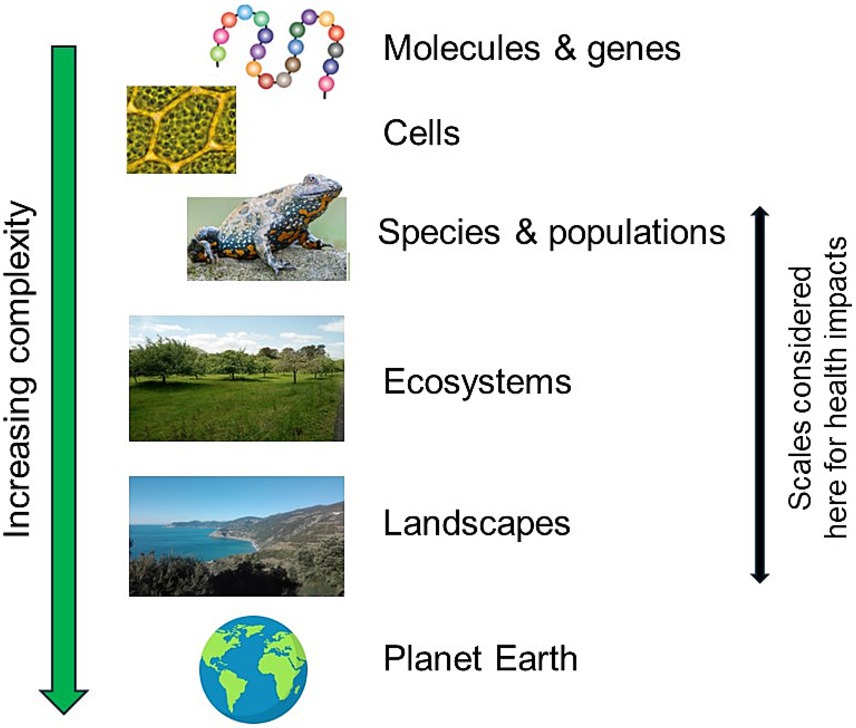
Fig. 1: Hierarchical organization of biological structures. from:Frontires In public Healt
In the study mentioned above, a multidisciplinary team of scholars analyzed primary research, examining key theories, concepts, and nature-based therapeutic approaches. Through iterative discussion, they identified and mapped three distinct scales of nature—species, ecosystems, and landscapes—showing how each of these levels affects human health and offering an overview of the concepts and therapies associated with them.
The results of this research are reported in the table below.
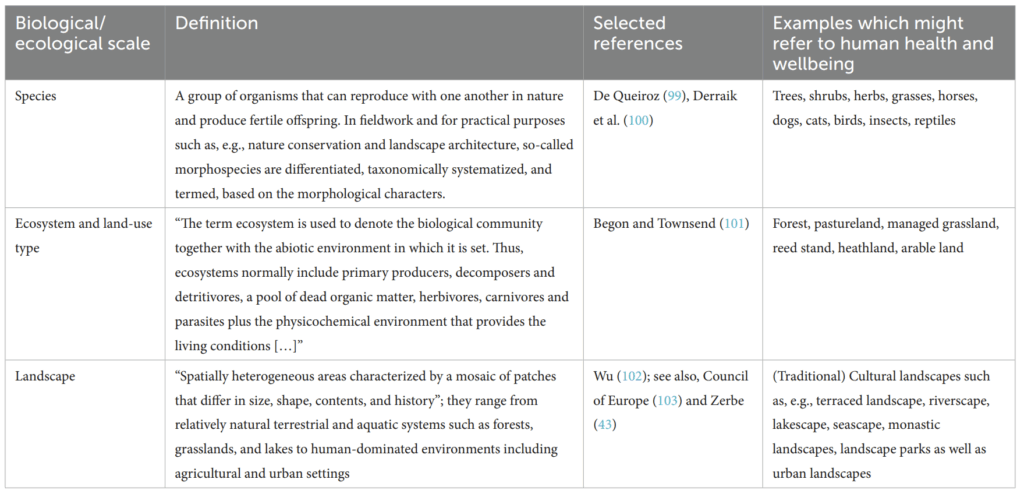
Table 1 . Definition of the biological and ecological scales regarding species, ecosystems, and landscapes with selected key references. – From Zerbe et al., Frontiers in Public Health (2025).
Ecological scales provide a useful way to describe nature in health research, because they help us understand how different levels of natural complexity may influence human well-being in different ways. The authors demonstrate that certain concepts and therapeutic interventions directly correspond to these scales. For example:
- At the species/individual scale we find interventions such as Animal-Assisted Therapy.
- At the ecosystem/land-use scale, we encounter Forest Therapy, Green Care, and garden-based therapeutic approaches.
- At the landscape level, broader conceptual frameworks emerge, including Therapeutic Landscapes, which consider the symbolic, cultural, and spatial dimensions of place.
Biophilia: The Most Comprehensive Framework
In the end, nature does not affect us in the same way: its forms, its levels of complexity, and our own individual dispositions shape how we experience it. This variability supports what Zerbe’s team highlights: there is no single, universally beneficial “nature,” but rather a variety of scales and forms.
Biophilia—our evolutionary tendency to benefit from the living world—provides the broadest framework for understanding why some natural experiences restore us deeply while others do so much less.
References
[1] Nejade RM, Grace D, Bowman LR. What is the impact of nature on human health? A scoping review of the literature. J Glob Health. (2022) 12:04099. doi: 10.7189/jogh.12.04099, PMID:
[Google Scholar]
[2] Aerts R, Honnay O, Van Nieuwenhuyse A. Biodiversity and human health: mechanisms and evidence of the positive health effects of diversity in nature and green spaces. Br Med Bull. (2018) 127:5–22. doi: 10.1093/bmb/ldy021, PMID: [Google Scholar]
[3] Zerbe S, Schmid H-L, Hornberg C, Freymüller J and Mc Call T (2025) Nature’s impact on human health and wellbeing: the scale matters, Front. Public Health 13:1563340, doi: 10.3389/fpubh.2025.1563340
.