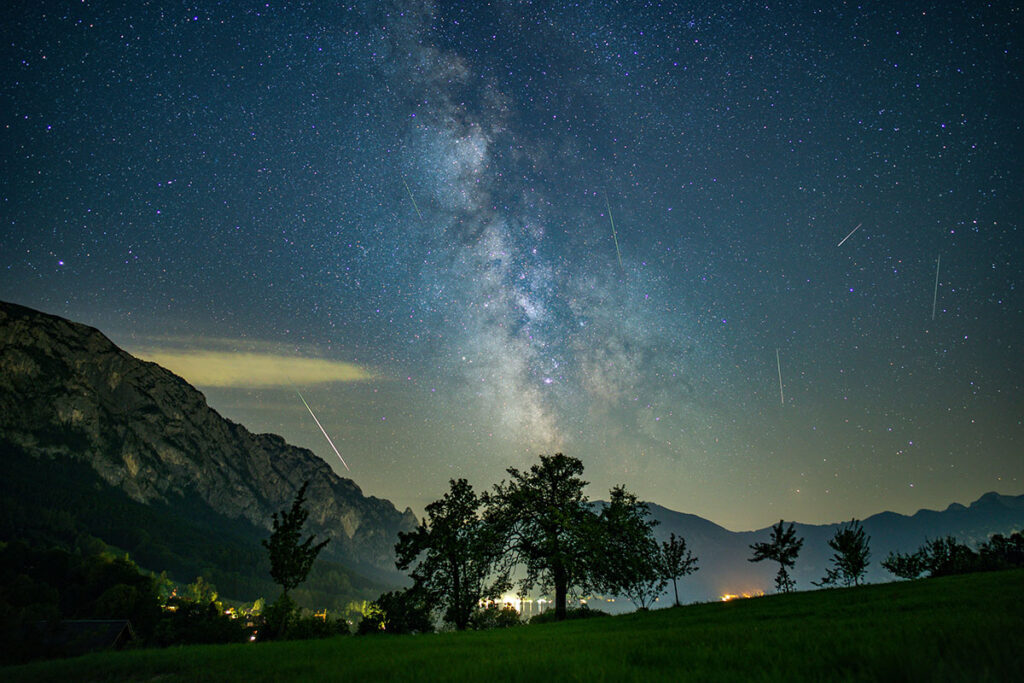
The second step to visualise who is involved in my project was to create various “before” and “after” scenarios, which I summarise below.
Before
Scientists wonder about light pollution in a certain area
Sleep experts wonder if there is a correlation between some sleep patterns and the light pollution of a certain area
The government or the European Union do not direct their funds towards this problem due to lack of awareness
Citizens feel helpless in front of environmental issues
After
Nature lovers submit data about the night sky during their outdoor adventures
Thanks to data collected by the Globe at Night Project, universities can research correlation between some sleep patterns and the light pollution of a certain area
Thanks to collected data and awareness, young people concerned about the environment raise their voice and draw the institutions’ attention
Thanks to a easy reporting feature, citizens can help scientists with small actions
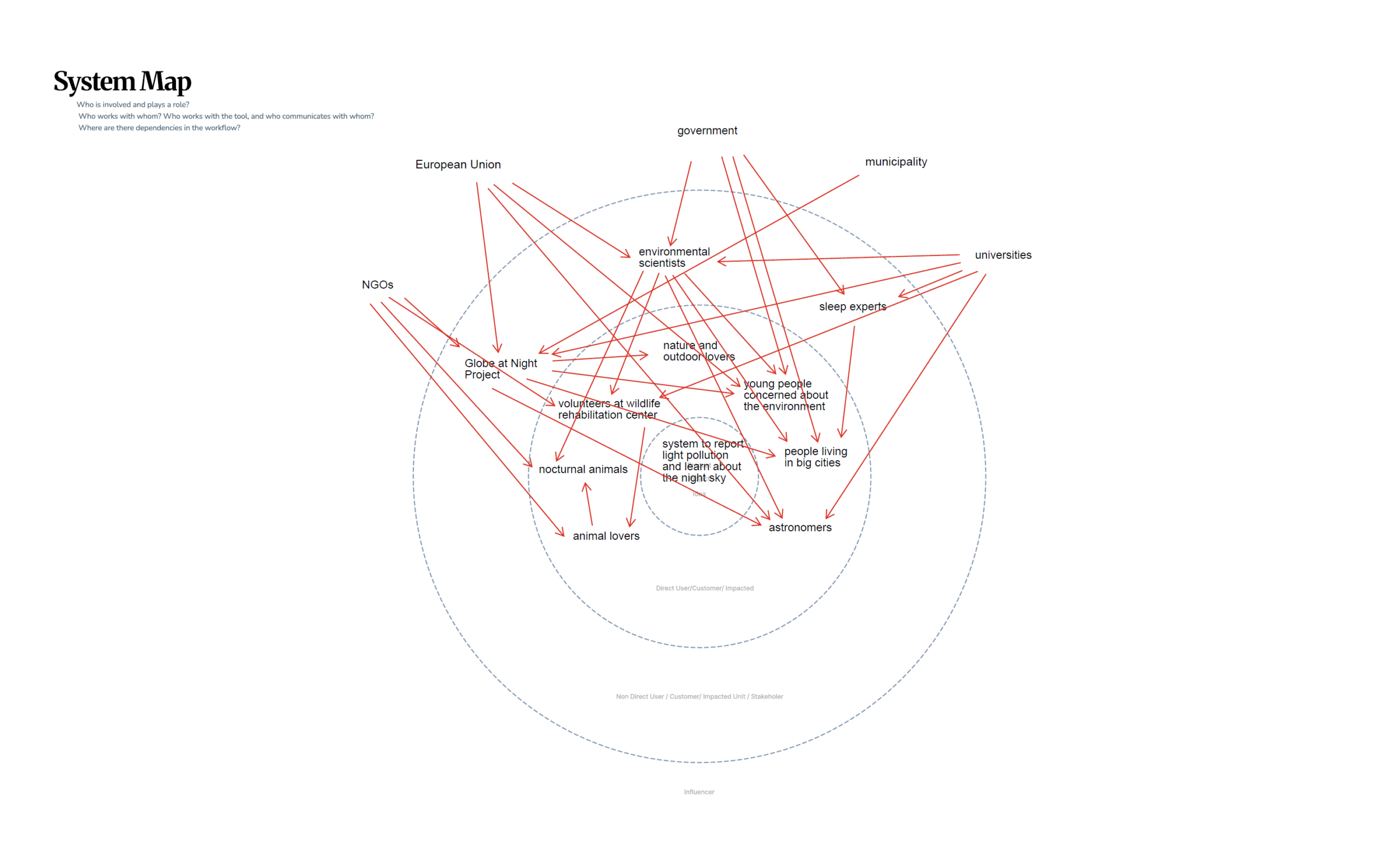
For my idea of a system to report light pollution and learn about the night sky I created a system map. It is used to visalise direct users, indirect users and influencers of the project. After filling out the map, I drew connections between the people and institutions involved.
Let’s take a look at how to raise awareness on light pollution through gamification.
The installation of new lighting by the DARKER SKY Project, photo: Burmann/NPorts
Nienke Aal, wildlife management student at Van Hall Larenstein University of Applied Sciences did an internship at the DARKER SKY Project. It is an Interreg North Sea project, funded by the European Regional Development Fund, which aims at reducing light pollution and increasing biodiversity and ecological connectivity. In her report about the experience, Nienke describes the creative and collaborative approach of the project. In fact, it involved designers, ecologists, and storytellers, who all contributed to create a nature-friendly night.
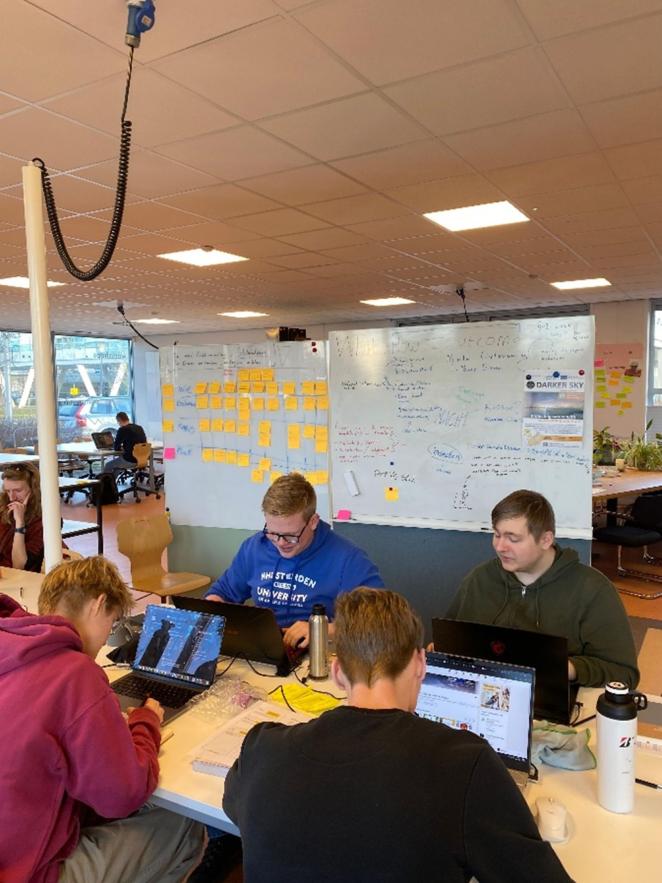
Students of the minor Design for Complex Problems from NHL Stenden, the Netherlands developed interactive sessions with stakeholders to inform and encourage reflection and behavioural change. They showed them different pictures of artificial lighting and asked them to rate them as either “good” or “bad”. They approached the activity with an open mind and showed that listening is equally important as designing.
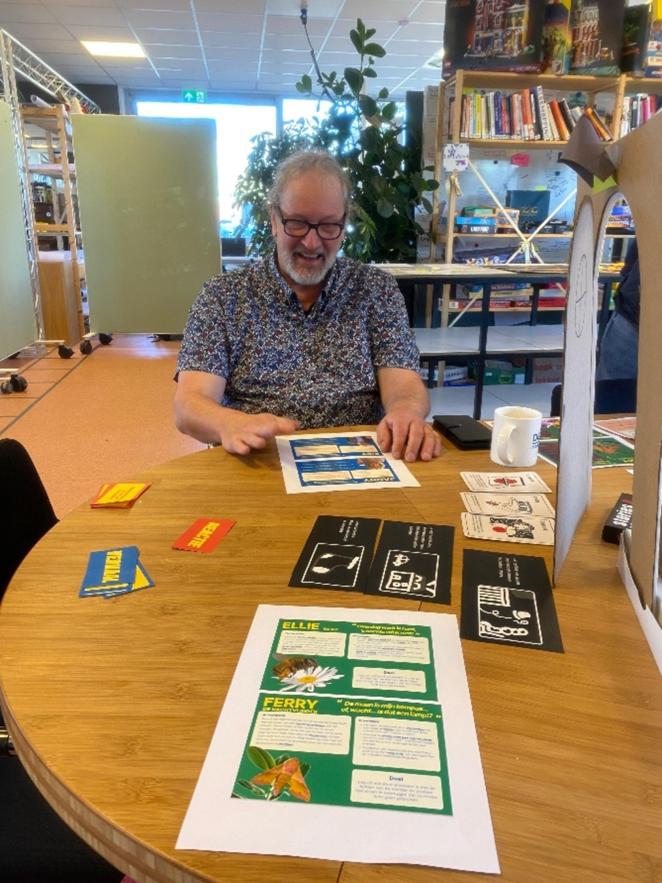
Students from the course Communication and Multimedia Design (CMD) also from NHL Stenden created a board game and an animation to raise awareness about light pollution. The game took players through four different habitats, each with a different light. Light was the villain in the game, causing difficulties to players and ultimately leading them to lose. The animation on the other hand showed the effects of light pollution on animals, but translated to humans. With light, the character felt more and more exhausted. At the end, the curtains close and the relief can be felt with the help of music. After watching the animation, five out of nine people who had not worried about light pollution before admitted that they felt concerned about the future of biodiversity.
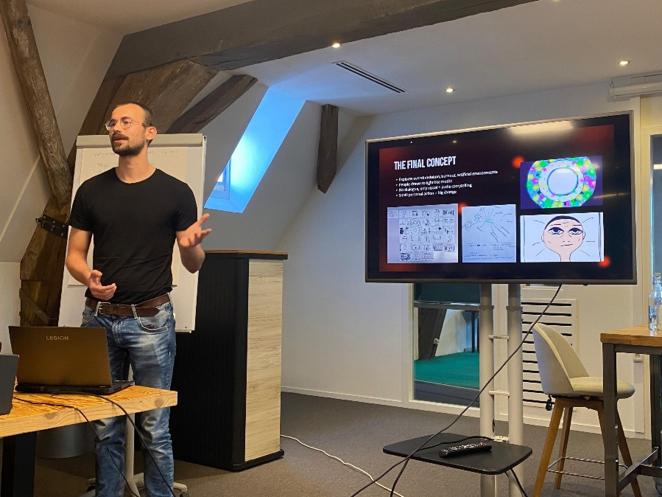
These photos were all taken by Nienke Aal for DARKER SKY. Unfortunately I could not find any close-up pictures. Nevertheless, reading about them was inspiring and made me realise that design, interdisciplinarity and non-formal education can really tackle complex issues.
Another example of interaction design for awareness I found is the videogame Lux, developed at the University of Quebec at Chicoutimi in Canada. It is designed to promote better lighting practices among the population and show the impact light pollution has on animals. Although games about light pollution are not very common, they are usually educative and serious, while this one wants to give a playful twist to the issue.
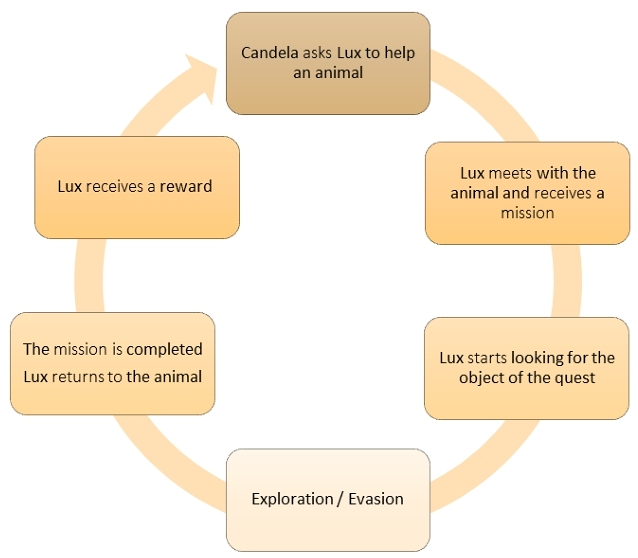
The story is set in a North American city plagued by light pollution. In the game, the player is Lux, a cat that has the mission to save small animals incapacitated by the dazzle. Lux performs different tasks, including replacing blue light bulbs with warmer ones and correcting their orientation. A drone, which represents the enemy, emits a light that disorients the protagonist.
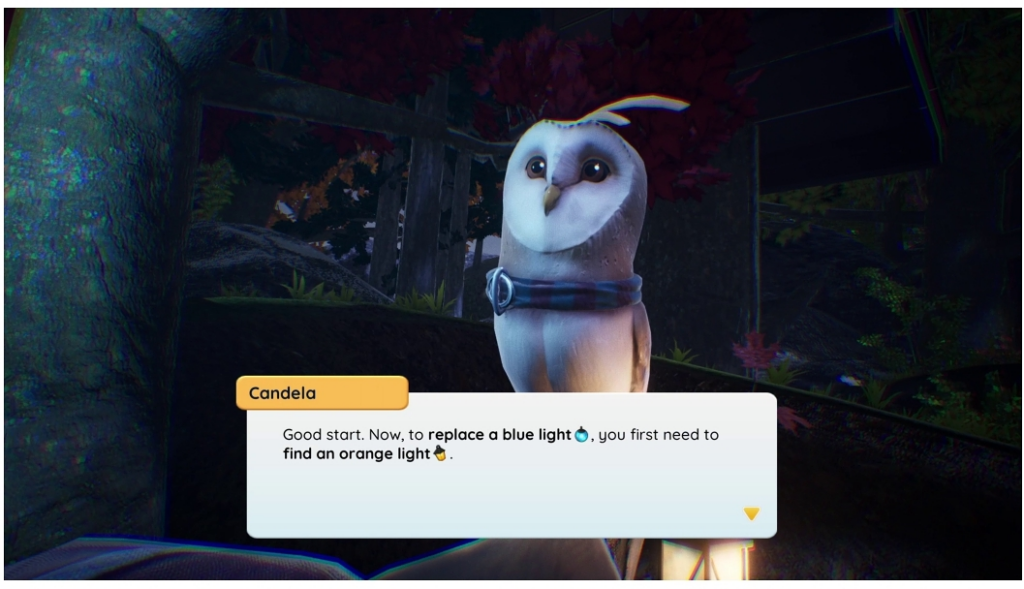
The description gives us detailed information about the UI, the design method used and character design. The UI introduces icons and bold words in the text bubbles to help the player skim through the speech bubbles. The Lux game was developed using a user-centered design approach and the Agile method, where playtesting had an essential part.
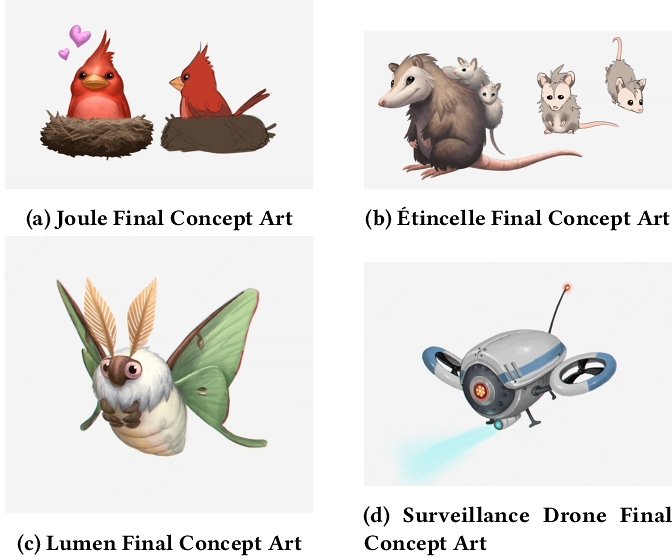
All animals are native to the northern American environment and are named after light or energy references, such as Candela, Joule, Étincelle and Lumen.
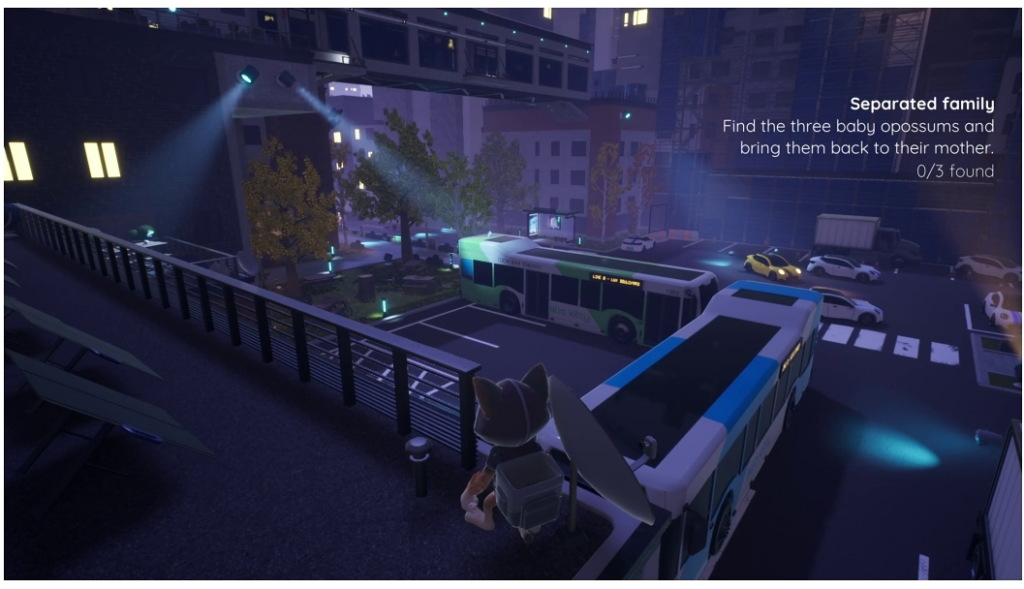
Candela, the barn owl, gives instructions to the player. The UI introduces icons and bold words in the text bubbles to help fast reading and improve accessibility, LuxSome of the characters with light and energy inspired names, LuxIn level 2 the player has to locate and bring back three opossum babies, after their mother almost gets hit by a truck with blinding headlights and loses them, Lux
Lux wants to play with contrast: light seems necessary for humans, but it can be harmful for animals. Through this game, players can easily learn good practices that are friendly to fauna and can recognise problematic lighting in their environment.
I really recommend you to read the whole game description, I think it is a masterpiece because every detail is carefully selected, plus the characters are adorable.
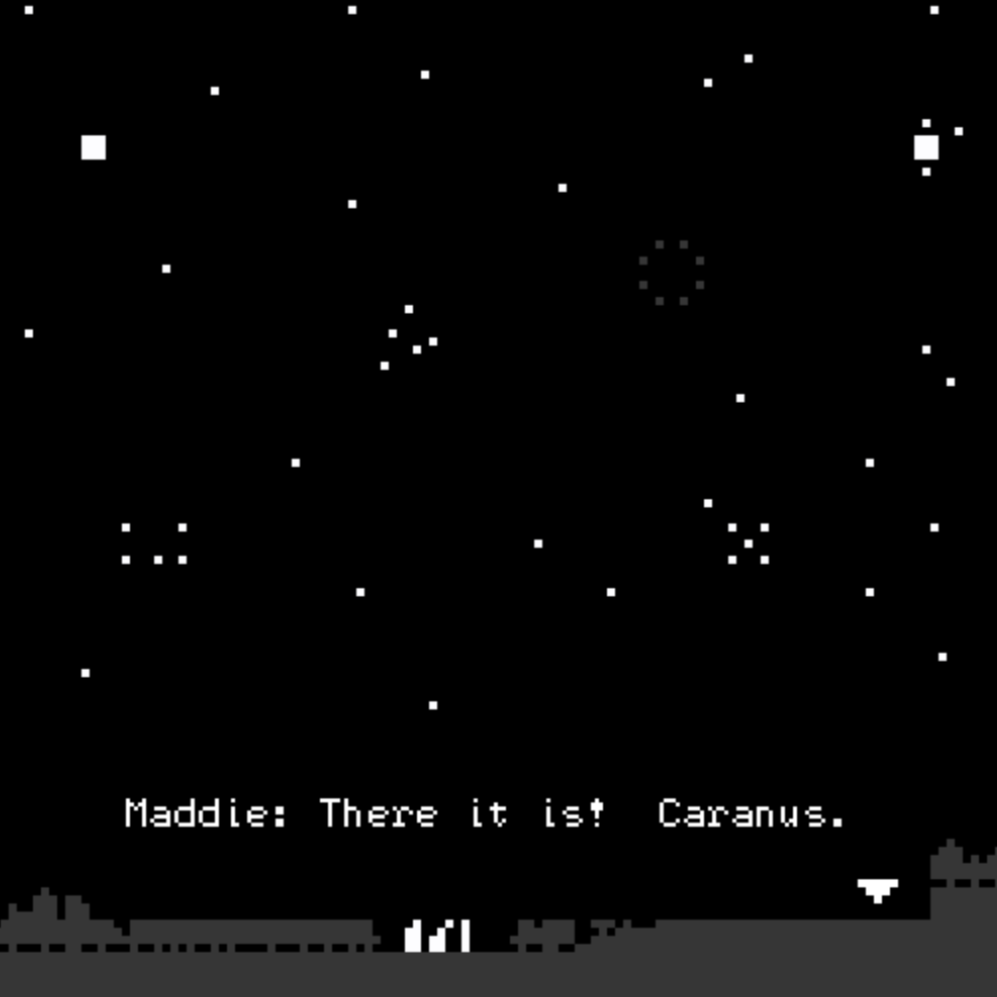
I also found a short game that depicts a quiet moment, Growing Light by Space Owl. In it, some campers observe the stars at night. The player can use arrow keys or the touch screen to search the night sky with the telescope and follow the campers’ conversation. The author’s motivation behind this minigame is showing that we are missing out on a chunk of the human experience if we’re deprived of our view of the night sky. It is very short and simple: as a player, you only move the telescope and make the characters speak. Still, the simplicity of the plot, the minimal interaction and the dark colours were able to transmit me serenity.
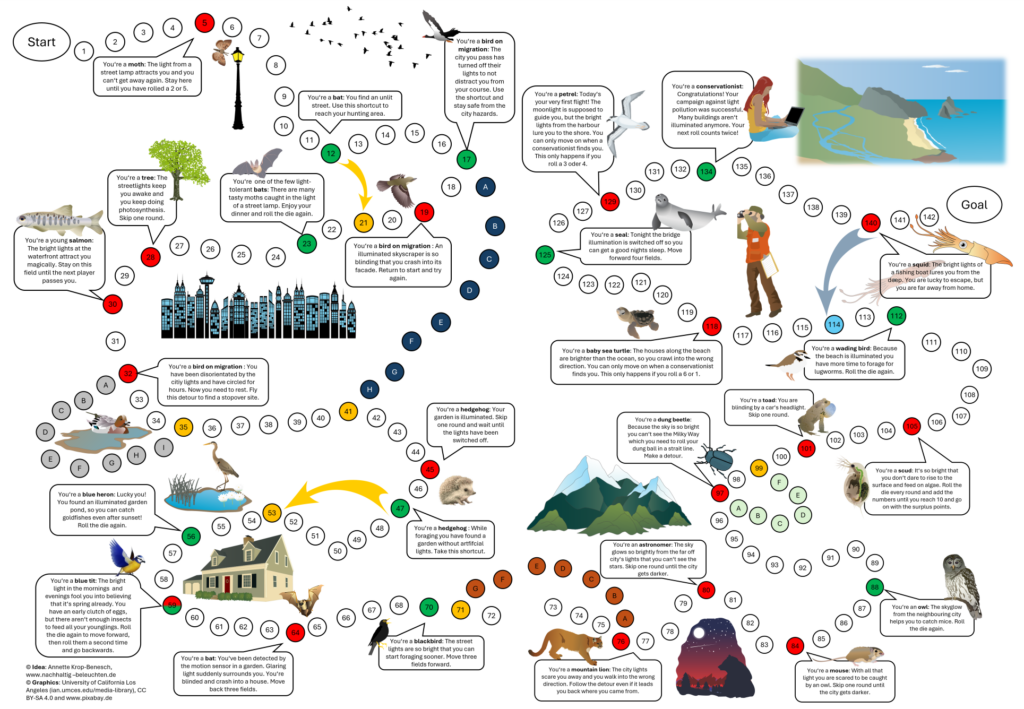
I am ending this article about gamification with an analogue example called Journey through a Bright Night. It is a board game developed by a mother and her two children, who wanted to educate their classmates about light pollution. It is an open source game that can be downloaded, printed on a sheet of paper and played with just a dice and playing pieces. While moving forward on the path, players face the same challenges that animals of different species encounter due to light pollution. The game’s format already exists, but it is educational thanks to detailed explanations.
Researching games about light pollution has been fascinating. I discovered a whole genre that I did not know existed. Unfortunately they are not very popular because environmental causes rarely are a reason for profit and this one is still a niche. I hope some day light pollution will get as much attention as plastic in the oceans, fast fashion, greenhouse emissions and deforestation, and maybe design can help make that happen.
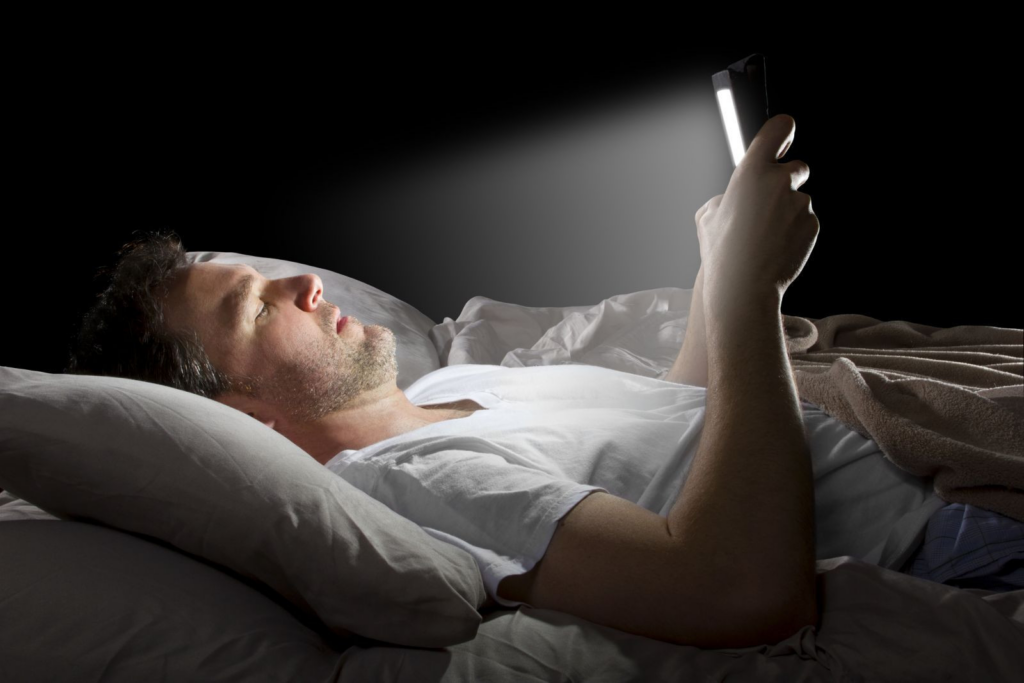
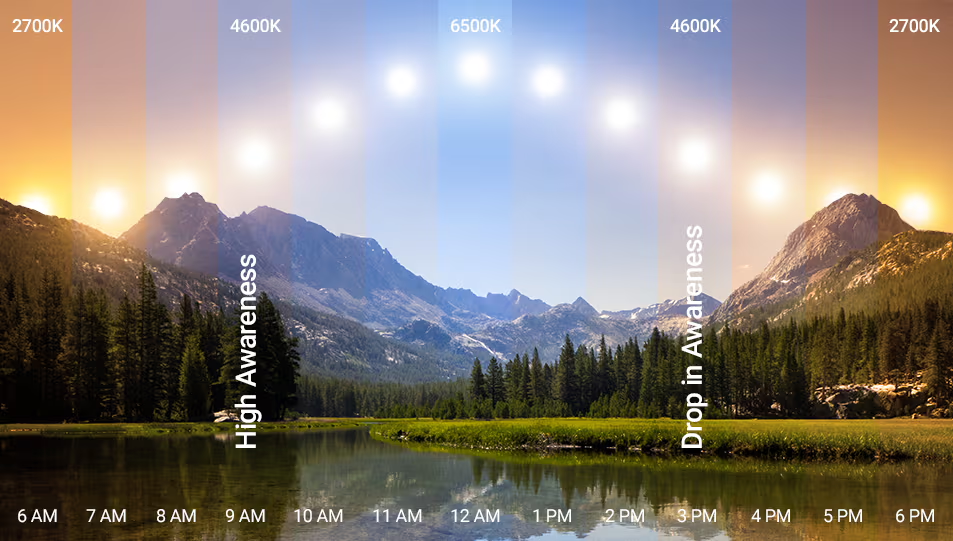
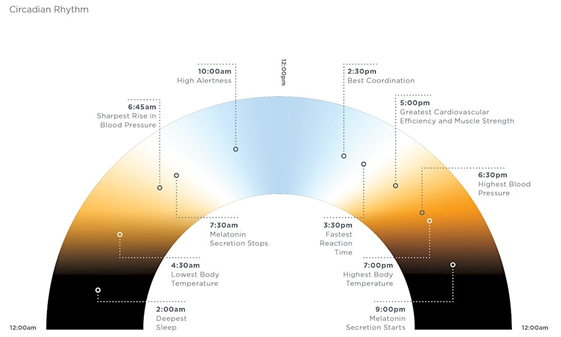
Artificial light, especially from lightbulbs and smartphones, disrupts our sleep cycle and suppresses the production of melatonin. The aspects that disturb us are primarily brightness, temperature and prolonged use during evening hours. This happens because the sun naturally emits intense blue light during peak hours and as smart devices mimic these conditions, our mood is boosted and our body becomes alert.
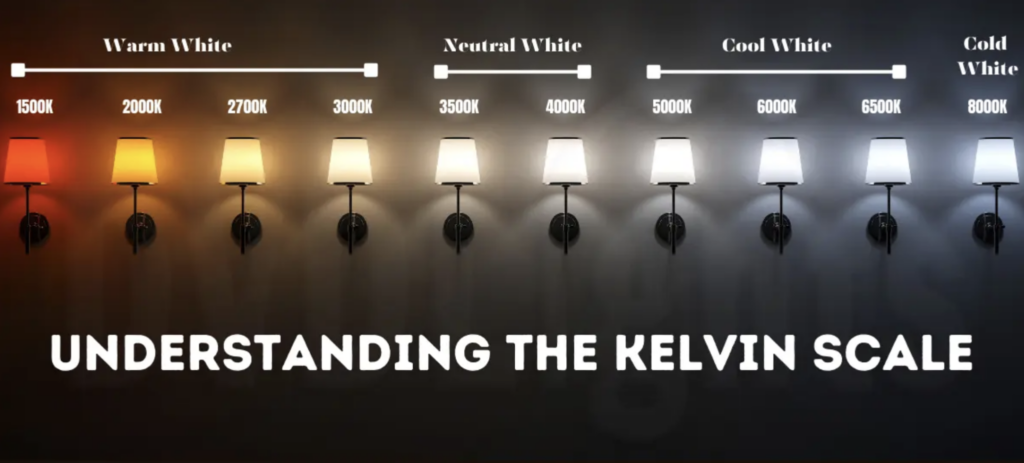
Different light temperatures and their effect on humans, FlexfireThe cricadian rhytm, Lighting Research Center, Mariana Figueiro, Kassandra Gonzales, and David Pedler. Designing with Circadian Stimulus, October 2016
Calm tells us that a common best-practice for better sleep quality is avoiding screens 1–2 hours before bed, but if this is not possible, there are other solutions:
Using dark mode, to shift screen colors to warmer tones (yellow/orange)
Using blue-blocking glasses, to filter out blue lights
Lowering brightness
Choosing calm, low-stimulation content
Exposing yourself to lots of bright light during the day, which improves mood and ability to sleep (Harvard Health Publishing)
Using dim, indirect lighting in your room, so your eyes are not adjusting between two extremes.
Creating rituals to wind down, like sipping tea, stretching gently, dimming lights or playing ambient sounds or calming music
The less your nervous system has to process, the easier it is to relax. Therefore, when using your phone in the evening, you should:
Avoid fast-cut editing, suspenseful storylines, or emotionally charged posts that can keep your brain alert long after putting down the phone
Avoid answering e-mails, playing games or watching engaging shows
Consume slower, more predictable content, like a familiar show or nature documentaries
Avoid social media or curate your feed towards slower content
Use apps that guide meditation, breathing, or visualization
Listen to white noise, gentle music, or ASMR, with the “Do Not Disturb” mode on and the phone slightly out of reach
If you doom scroll, set a timer, a sleep reminder or keep the phone away from you when you are ready to sleep
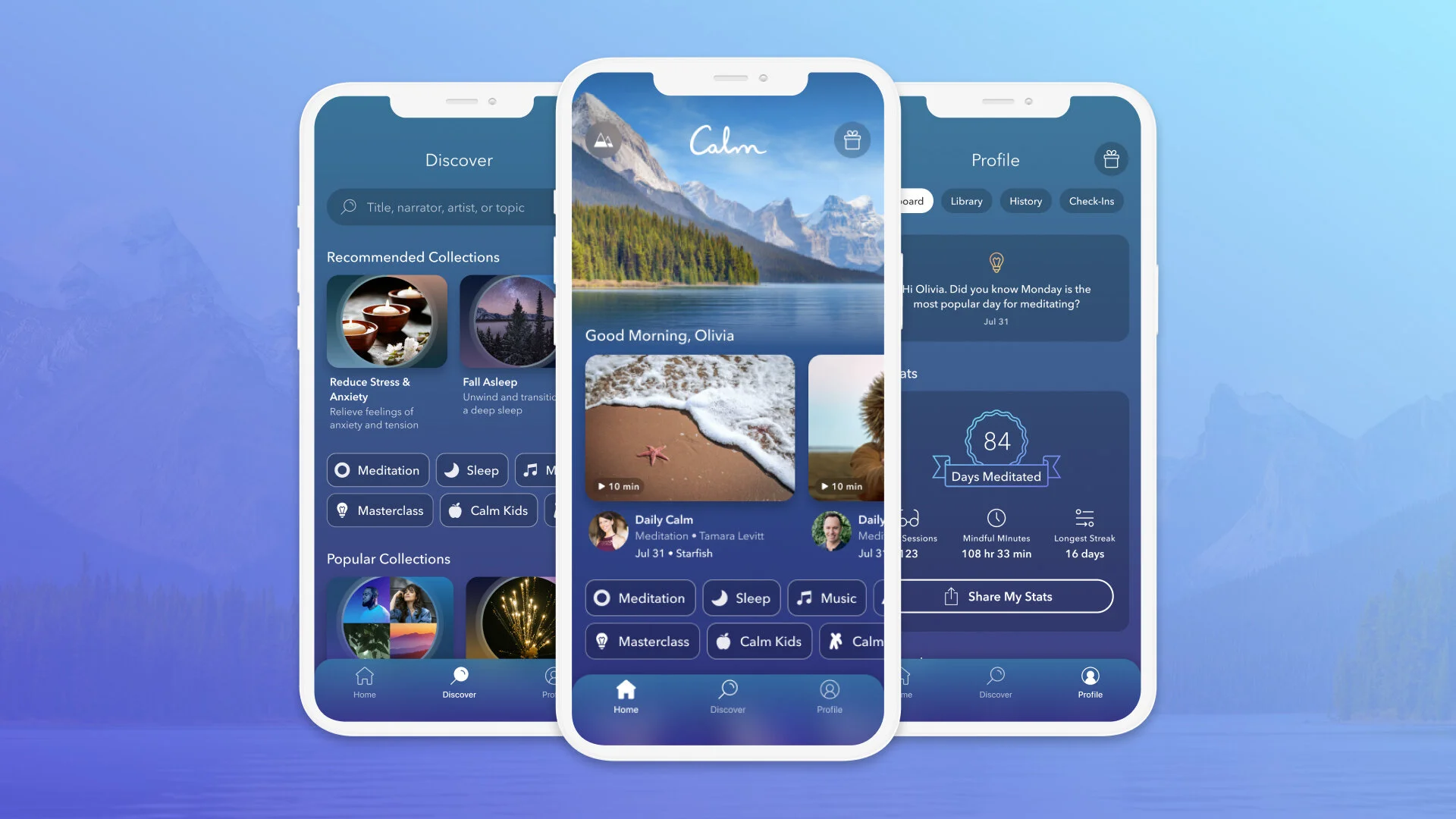
Calm is an app with bedtime stories, guided meditations, relaxing music, soundscapes and the function to track your sleep.
Calm’s library of meditations, Sleep Stories, music, and more, Calm
According to Calm, different light colours can affect the sleep cycle differently:
Blue light helps you stay focused but wakes you up in the evening
White light supports alert and clarity
Yellow and amber light mimics sunset colours and relax the body, telling it to wind down
Red light is the least likely to interfere with sleep thanks to its long wavelengths
Red light tells us that the day is ending and has a relaxing effect on us
A polysomnographic (PSG) and electroencephalographic (EEG) study published in Sleep MedicineVolume 14, Supplement 1 showed that sleeping with a bedside light on not only causes change in sleep quality , but also has a persistent effect on brain oscillations.
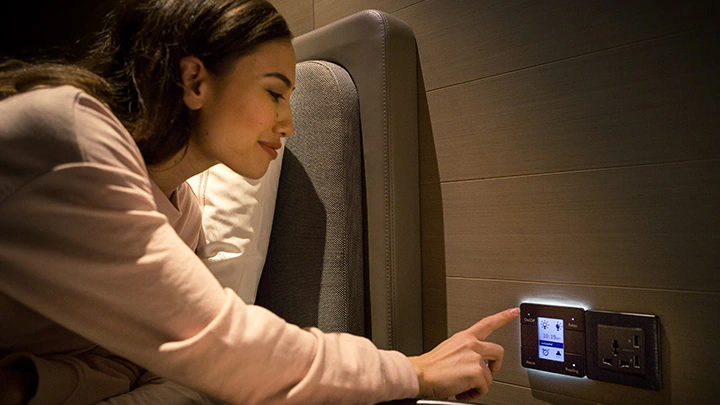
Many companies, such as Ge Lighting are designing Circadian Lighting products. According to their website, Circadian Lighting is a concept that can help support the internal biological clock and sleep. With light the human cycle can be synchronised with the natural cycle of the world. Circadian Lighting does not only improve health, but also reduces fatigue and improves productivity, concentration, cognitive health and physical and emotional wellness.
Circadian Lighting considers color temperature, time, duration, and angle of light. The methods used are intensity tuning, colour tuning and Correlated color temperature (CCT). Intensity tuning is a controlled dimming system that sets the light’s intensity to match the brightness of the sun. Colour tuning and correlated colour temperature match the light’s temperature to match the colour of the sun. Values range between 1000K and 10000K. The lower, the warmer and the higher, the cooler.
Circadian Light system that allows personalisation on a small interface on the side of the bed, Interact Lighting
Below you can find some Circadian Lights. These products are connected to the Internet and allow a schedule and settings personalisation through an app or other interface.
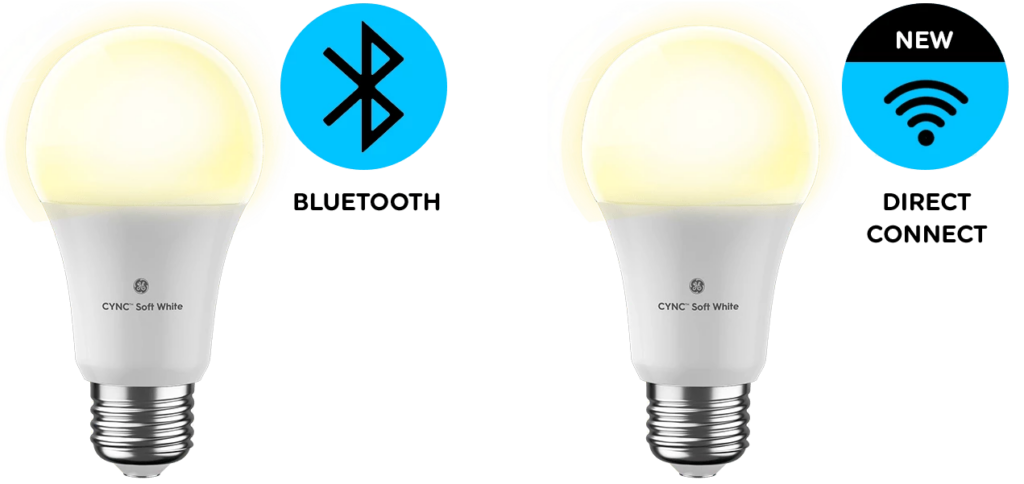
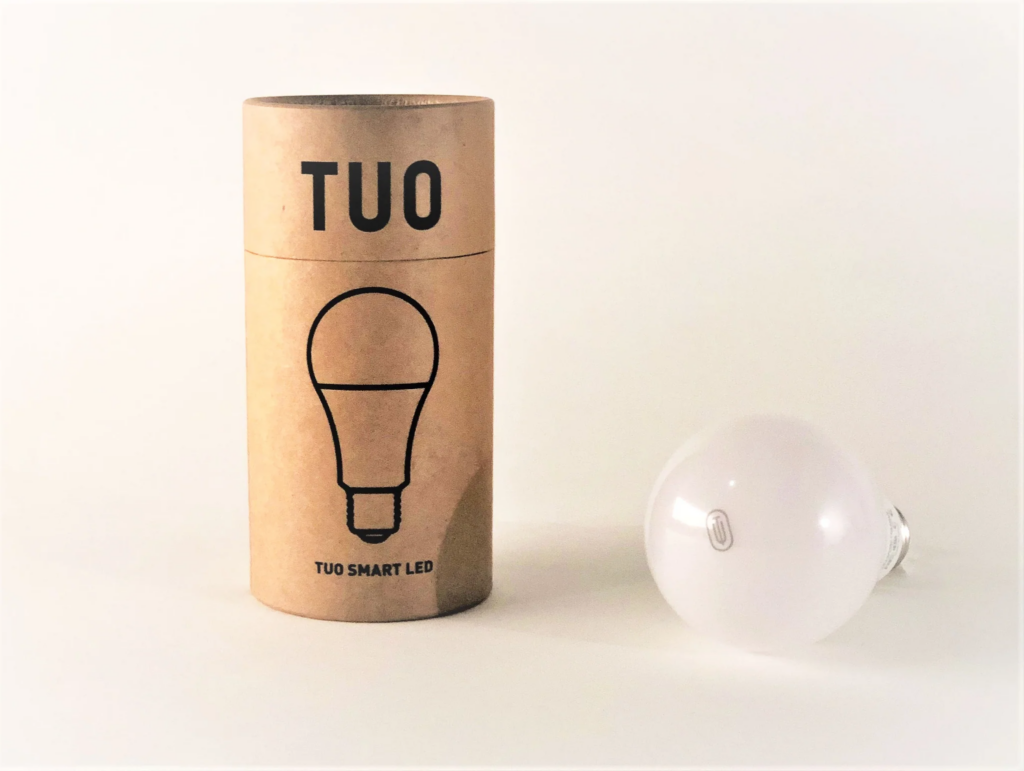
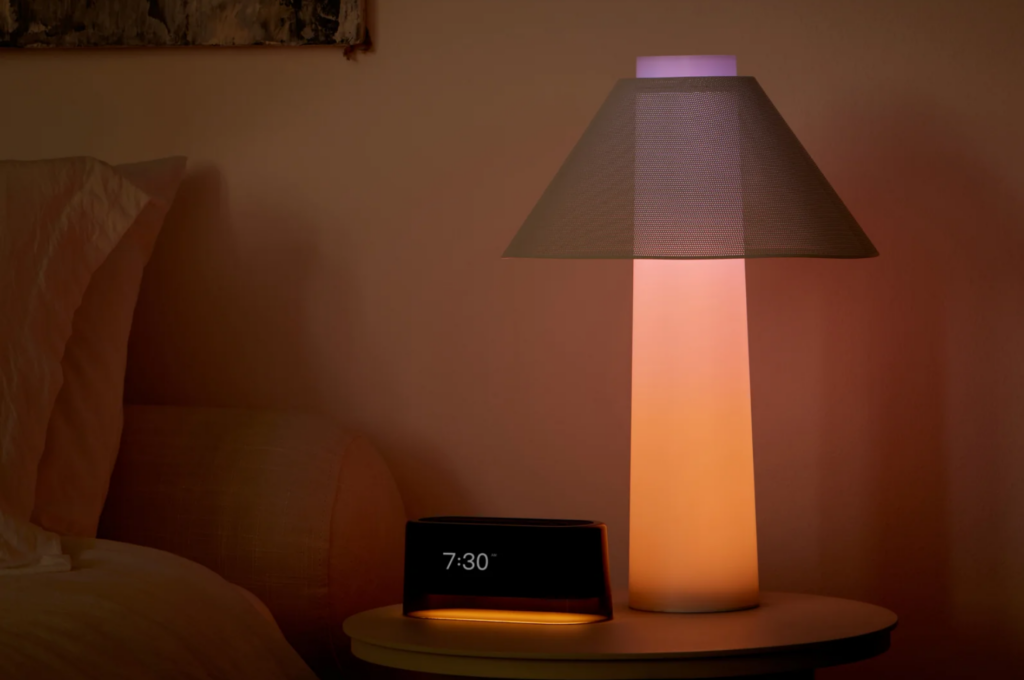
CYNC Soft White LED Light Bulbs allow you to set schedules, control away from home, control with your voice, save preferences and dim/brighten lights. You can connect them to your smartphone via Bluetooth or Wi-Fi and they work with Alexa and Hey Google. In addition, you can use the Cync App to create custom scenes, set schedules, and control multiple bulbs at once, even remotely.TUO Circadian Smart Bulb allows customized schedules with fade to wake you up in the most natural way. It works with the TUO Life App, compatible with iOS and Android. It features three modes: wake, active and calm.The Loftie Lamp features sunrise wake ups, bedsignal bedtime reminders, sunset dimming, custom colours and gradients, night light mode, reading light mode and adjustable brightness. It can be connected to the Internet, pairs with the Loftie Clock (Optional) and can be controlled with the Loftie App. Functionality is combined with a modern design and intuitive physical buttons.
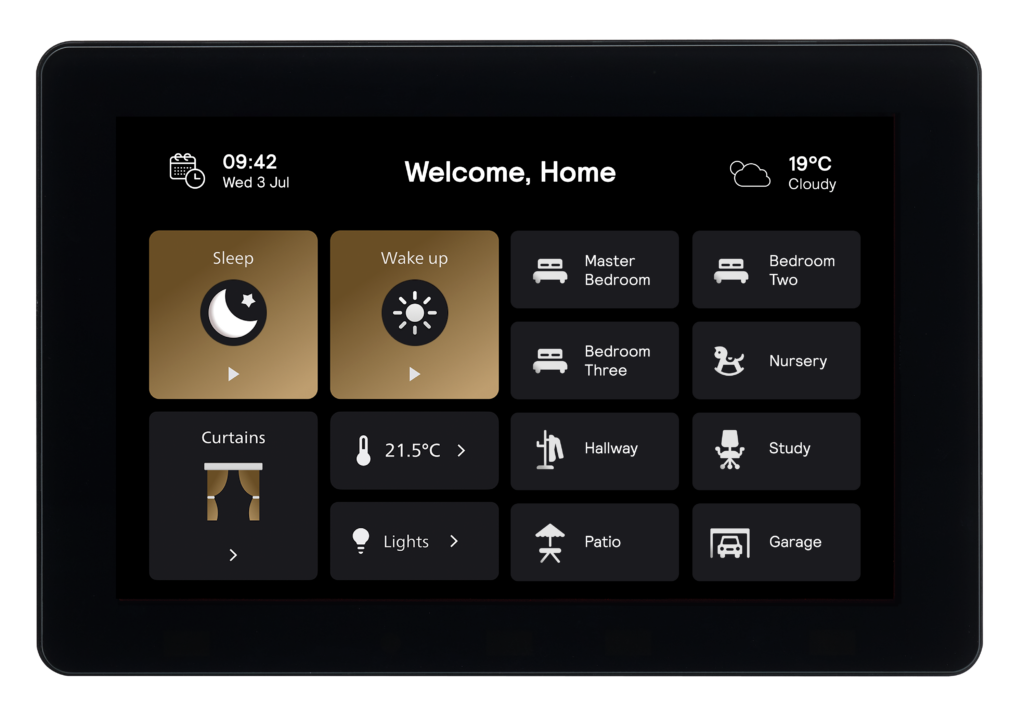
Philips has developed a lighting management platform called Dynalyte. It allows users to create different lighting scenes to suit a variety of tasks and occasions, schedule scenes according to sunrise and sunset, seasonal changes and and public holidays and also the function to group luminaires. To manage their space, users can choose between browser-based software and mobile apps. The system includes user profiles and access control.
The interface is customisable in terms of language and iconography and allows easy scene selection, Dynalite
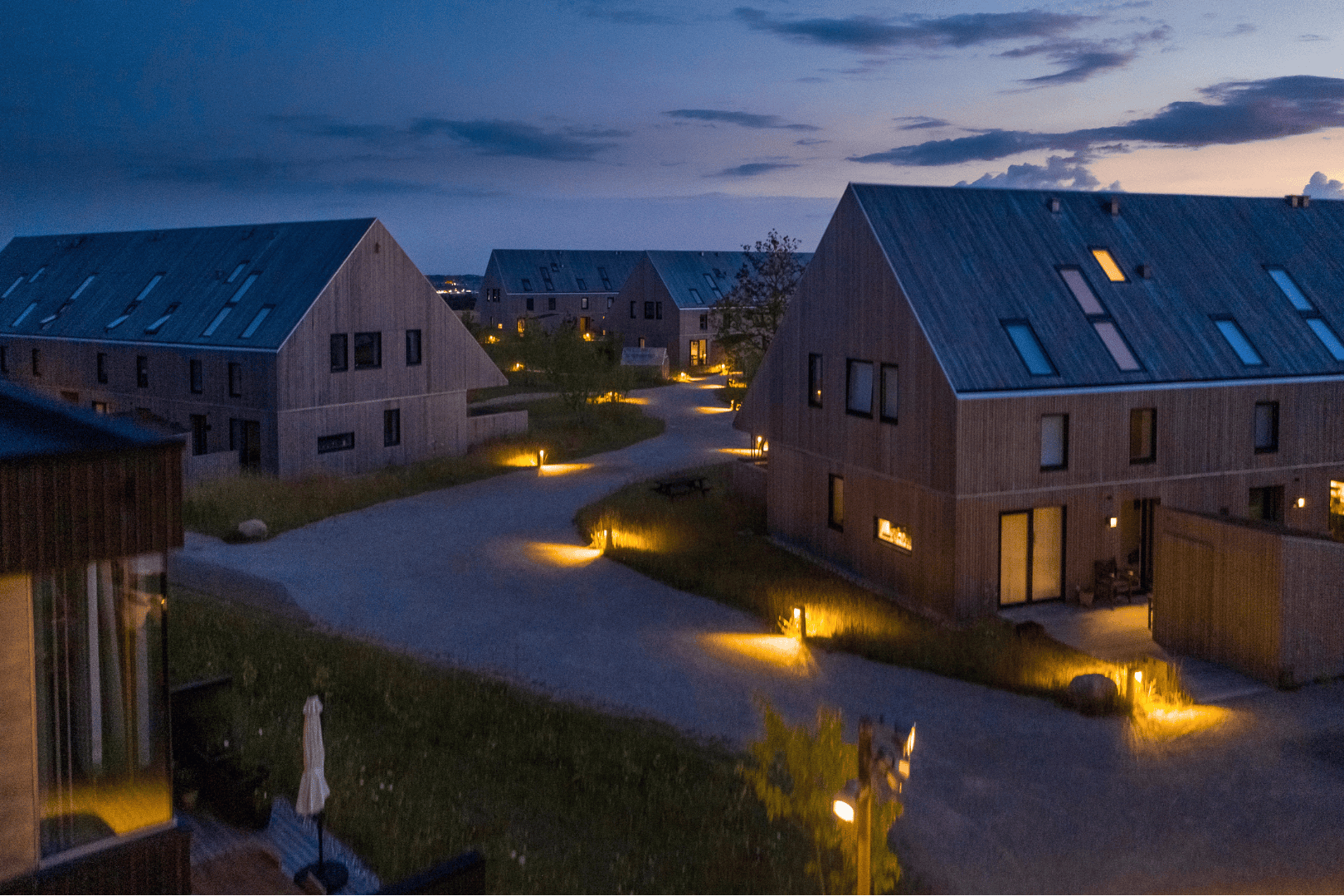
Credit: Lampas / Photo by Torben Eskerod, from DarkSky
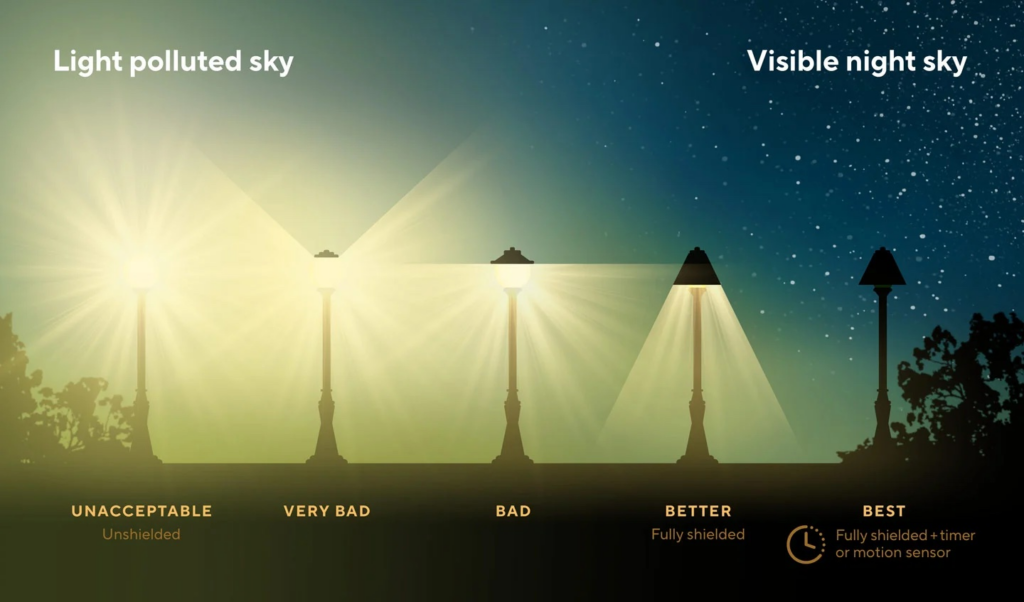
DarkSky International has published guidelines for environmentally friendly fixtures. They were developed by lighting engineers and designers to reduce glare and light trespass, while mantaining maximal functionality and safety. If a fixture respects these Five Principles of Responsible Outdoor Lighting, it earns the DarkSky Approved seal.
Useful — fixtures should only be installed where they are needed;
Targeted — the light beam should point downward and be appropriately shielded to avoid spills;
Low level — the brightness should be as low as possible and reflection from bright surfaces should be taken into account;
Controlled — timers, motion detectors and dimmers should be used, so that the light only stays switched on when it is needed, dimmed when possible, and turned off when not needed;
Warm-colored — shorter wavelength (blue-violet) light should be limited, as it scatters much more intensely in the atmosphere than longer wavelength lights (red/yellow) and causes visual discomfort.
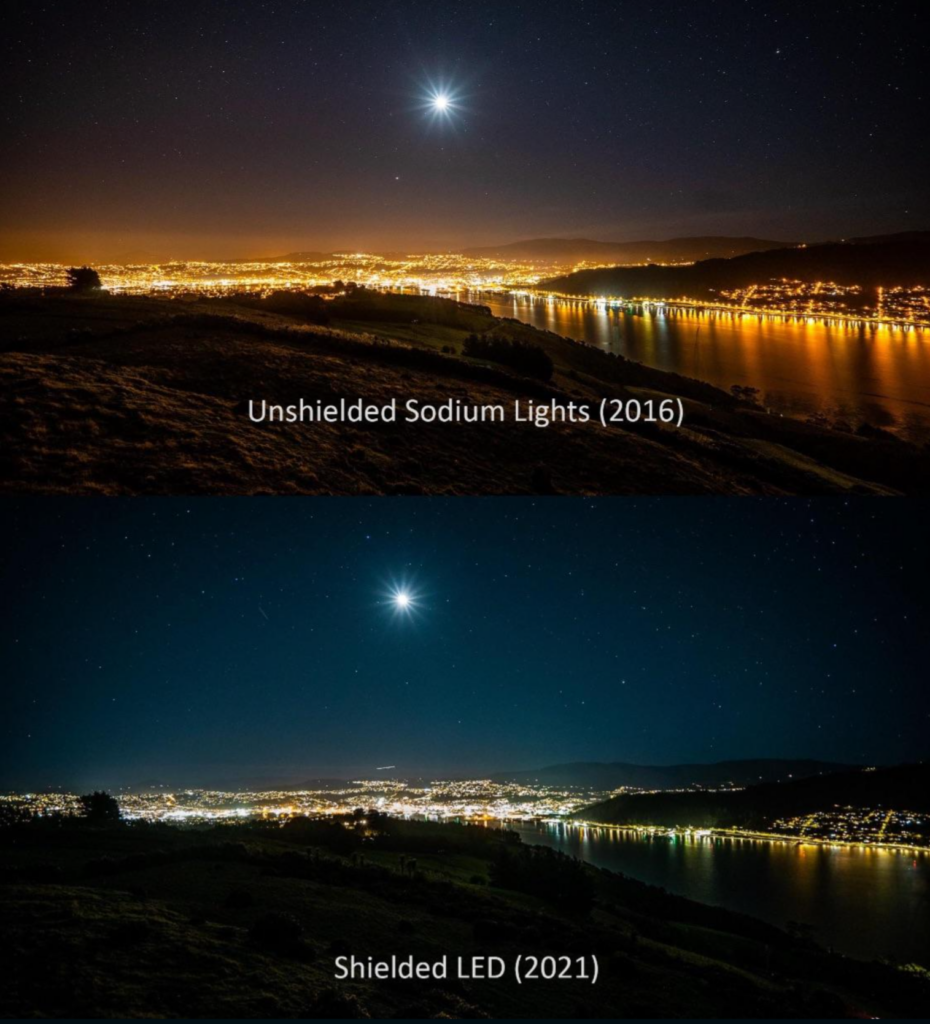
The effect of shielded vs. unshielded street lights on light pollution in Dunedin, New Zealand, Reddit
Apta Lighting Design Studio recommends a color temperature below 3000 K. They also state that LEDs and Compact Fluorescent Lights (CFLs) are better alternatives to conventional incandescent bulbs, thanks to their low luminance that does not compromise visibility. These bulbs also consume less energy.
A colour temperature below 3000 K is recommended, My Planet Led
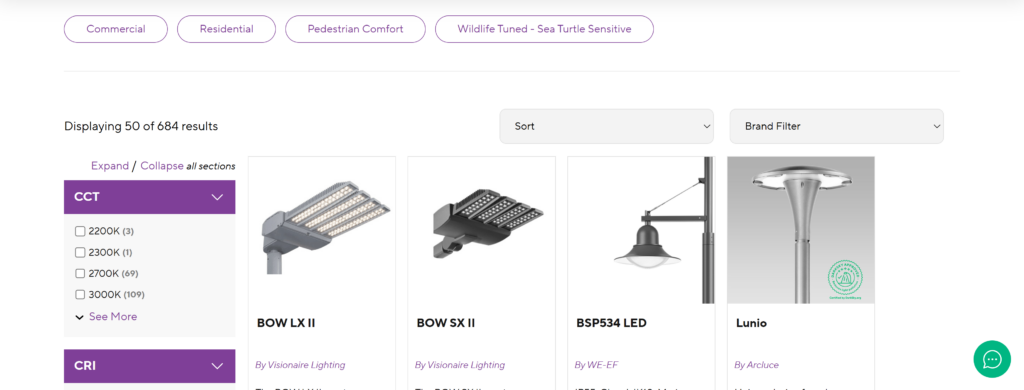
There are four categories of luminaires, depending on location and purpose:
Residential Luminaires, for homes
Commercial Luminaires, for business properties and public buildings (schools, hotels, and government buildings)
Pedestrian Comfort Luminaires, which create a more comfortable experience for pedestrians
Sea Turtle Sensitive Luminaires, which do not disrupt the natural navigation system of turtles
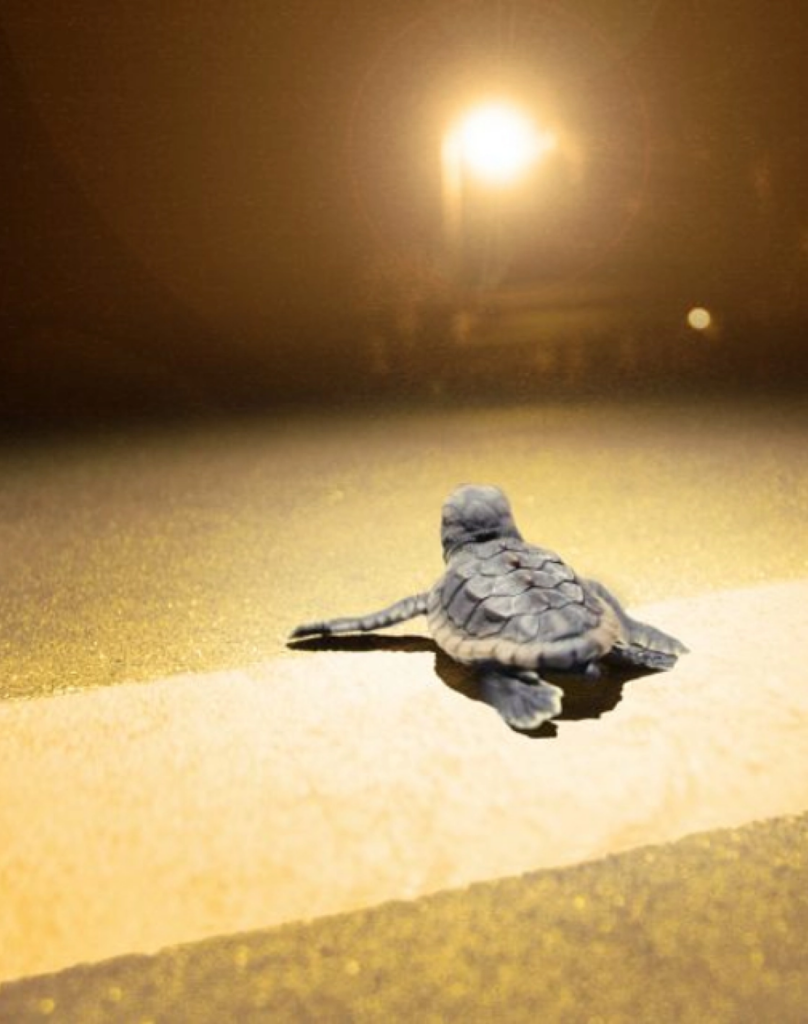
As Sea Turtle Conservancy explains, sea turtles are disturbed by artificial light because babies are driven towards the brightest light source after hatching. The brightest horizon used to be the one on the side of the ocean as opposed to the dark sand dunes, but due to artificial lighting they are mislead.
Hatchlings crawl toward light sources; if these are artificial, they get disoriented, Sea Turtle Conservancy
Producers can apply to receive the DarkSky approval by filling out a form on their website. The list of approved fixtures can be found on their website, with the option to filter them based on usage, technical properties and brands.
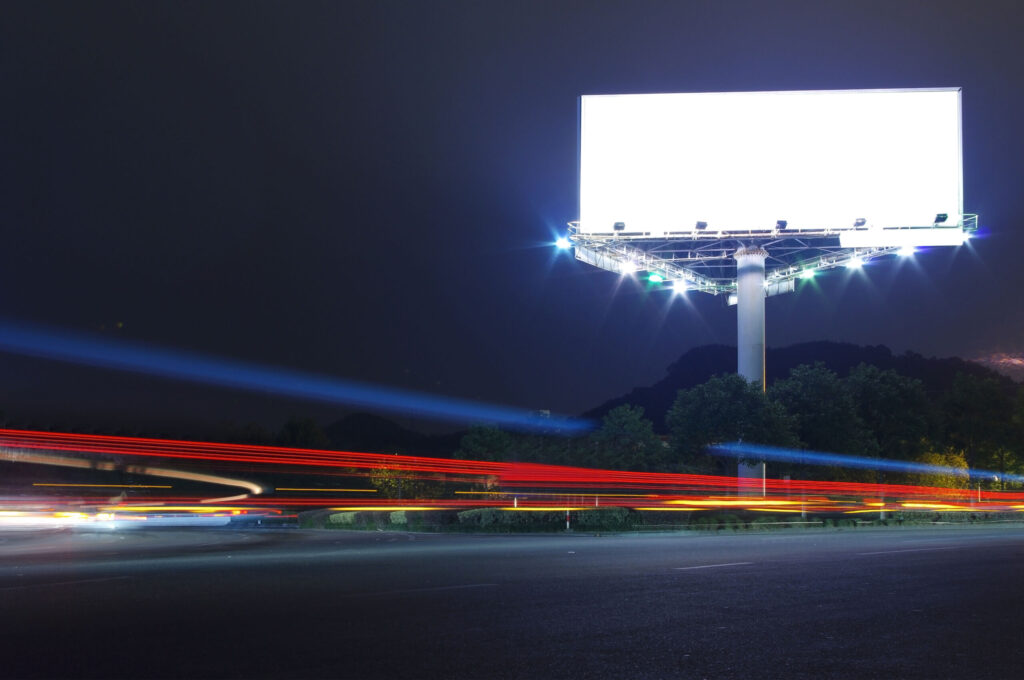
Billboards cannot be shielded, as opposed to other fixtures, DarkSky
Electronic billboards, also called electronic message centers (EMC) can be up to ten times brighter than traditionally lit billboards, therefore harming the nighttime environment. Unlike light fixtures, they cannot be shielded and due to the horizontal disposition of LEDs, light is also emitted laterally and upward, into the sky. Light from EMCs can cause glare (a visual condition where intense light reduces vision and causes discomfort) and be a dangerous distraction to drivers. Other than that, it can affect breeding, foraging, and orientation in wildlife.
Due to the impossibility to shield EMCs, design can only slightly mitigate their glare. What is most important is careful operation, programming, and location of this technology.
The DarkSky Technical Committee developed EMC guidelines to provide planners, lighting designers, architects, biologists, government officials, and the general public with solutions for EMC related harm. The guidelines were published in January 2019 and include:
Best practices for the amount of light emitted for urban, suburban, and rural areas
A Curfew when EMCs should be switched off completely, from 11:00 p.m. or 30 minutes after the close of business (for on-premises signs) until one hour before sunrise
Best management practices to decrease or eliminate negative impacts on the environment and improve safety for drivers and pedestrians
The best management practices consist in 6 points:
Monitoring — The EMC should continuously be monitored by its owner
Sensitive area setback — EMCs should not be placed within or close to natural areas, beaches, wetlands, state and national parks, wildlife refuges and residential areas
Distraction limitation — Messages should minimise distraction to drivers and pedestrians by setting a minimum message duration, a maximum transition time between messages, and maintaining adequate spacing between EMCs
Gradual brightness reduction — EMC luminance levels should gradually dim between daytime and nighttime modes
Size limits — Larger EMCs should be avoided
Density limits — The number or combined size of signs permitted for a given road or area could be limited
Unlike other types of lighting, which are quantified by their illuminance (how much light falls upon a surface), EMCs are quantified by thor luminance (the luminous intensity leaving the sign). For this reason, a standard luminance meter should measure the white screen at the moment of installation.
This being said, design also plays a role in light pollution. Sustainability directory states that bright, saturated colours and high contrast also increase light pollution. To protect the night sky designers should opt for darker backgrounds and minimise the overall illuminated area.
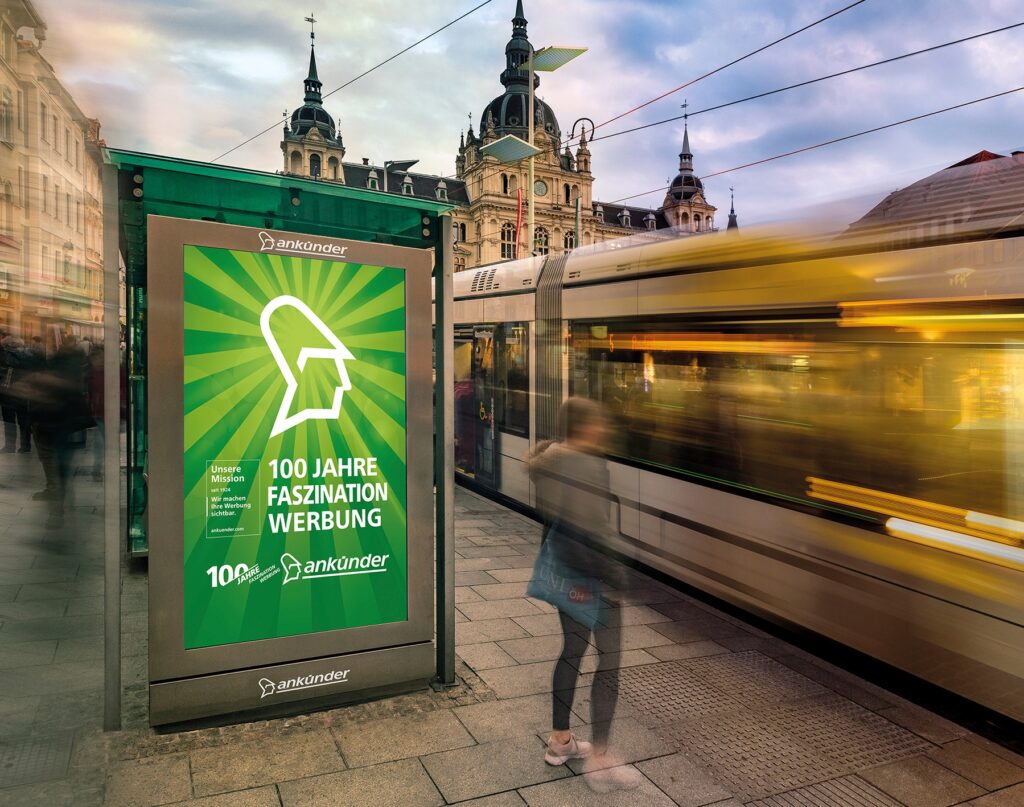
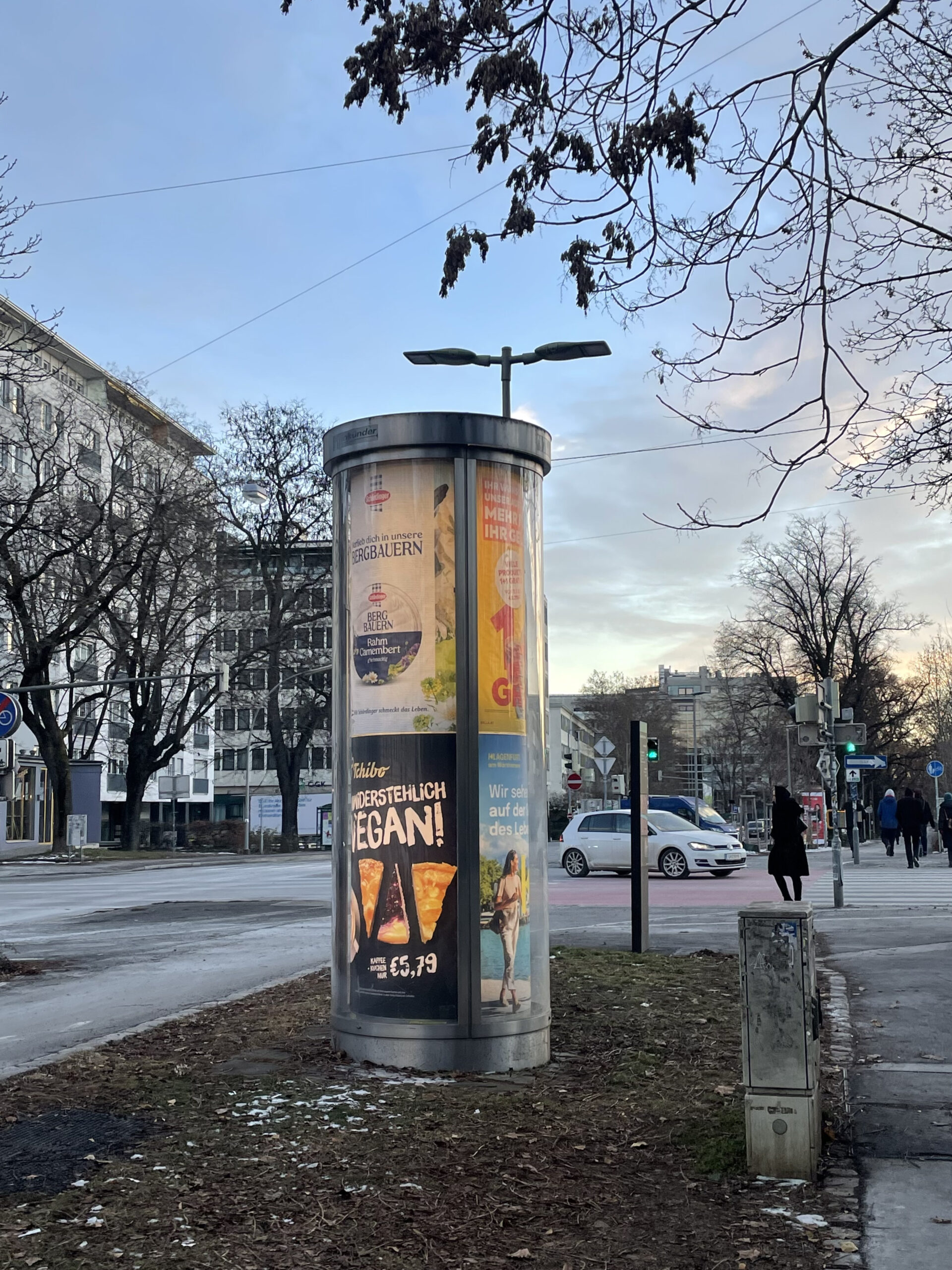
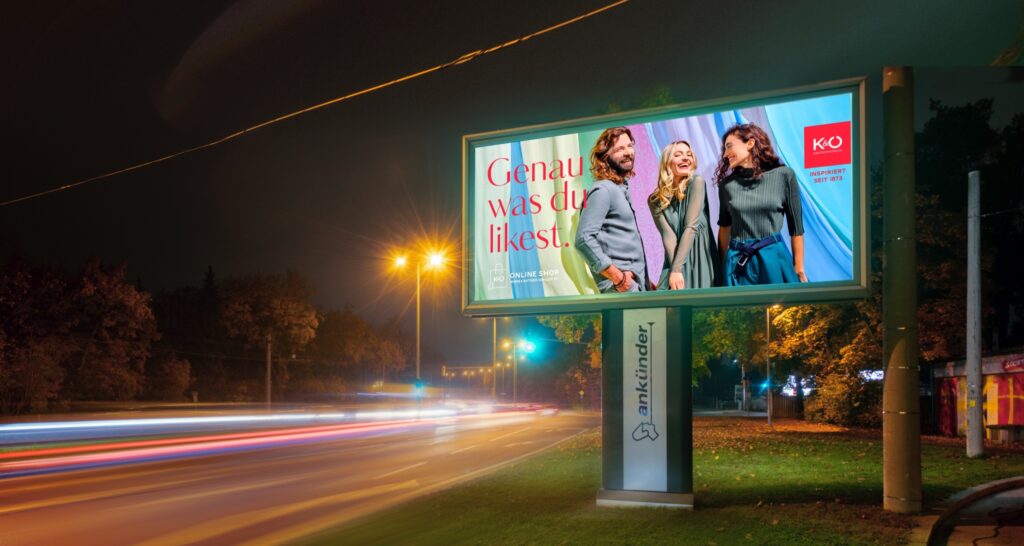
During my previous research, I stumbled across Ankünder, the company that manages outdoor advertising in Graz. Allegedly this company is switching off their illuminated billboards at night, and I searched their website for further information relevant to interaction design and light pollution.
I found information about their rolling advertising media“Poster Lights” and its advantages. It consists of backlit rolling (switching) posters. According to Ankünder, this method is effective due to its high visibility on the road. In addition, the rolling movement draws even more attention than the traditional billboard. They are intended to be used in combination with classic posters and are supposed to transmit high impact, recall and recognition values to the viewer.
“Poster Lights” rolling advertising media in action near Augarten in Graz
I then decided to find out more about the different types of billboards and how they are related to interaction design and light pollution.
According to the billboard service Blindspot, there are different types of billboards:
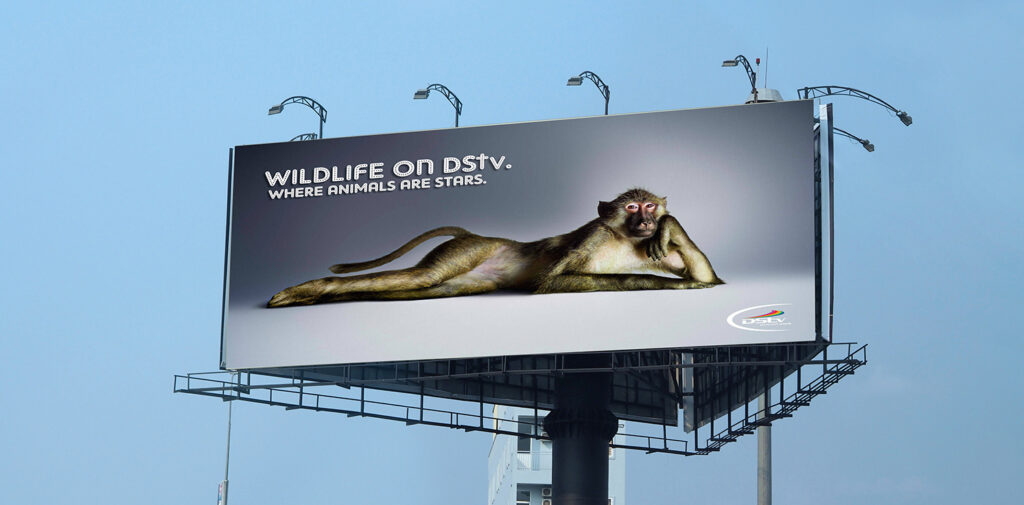
Static billboards, which are usually located on the side of highways and can be illuminated by another light source at night;
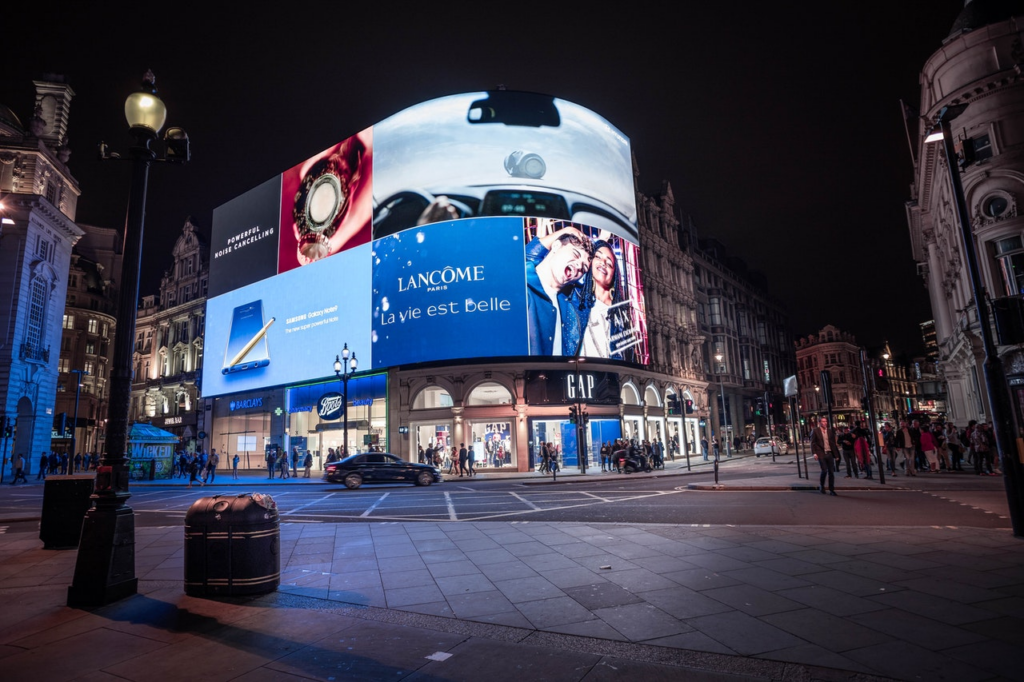
Digital billboards, which use LED or LCD screens to rotate multiple ads or display animated graphics;
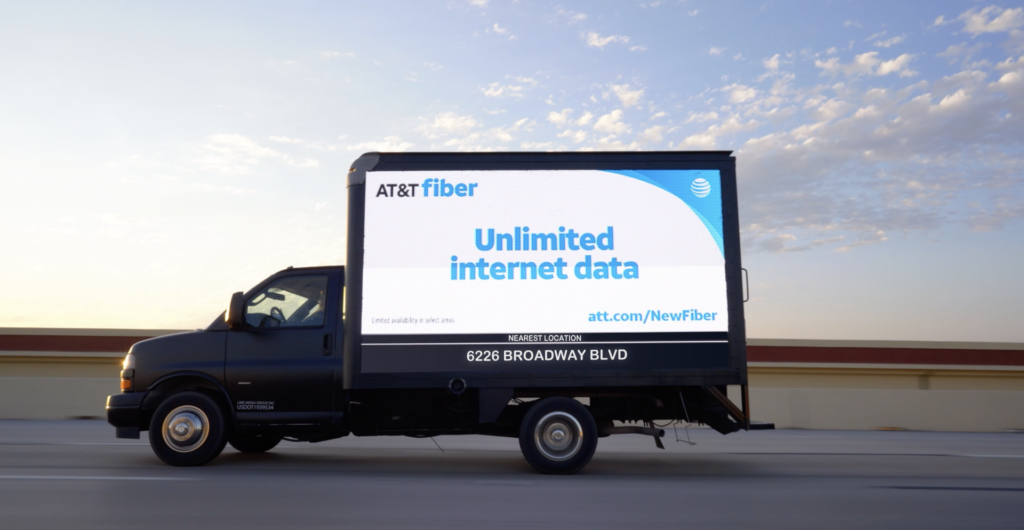
Mobile billboards, placed on vehicles, which have the ability to reach strategic locations.
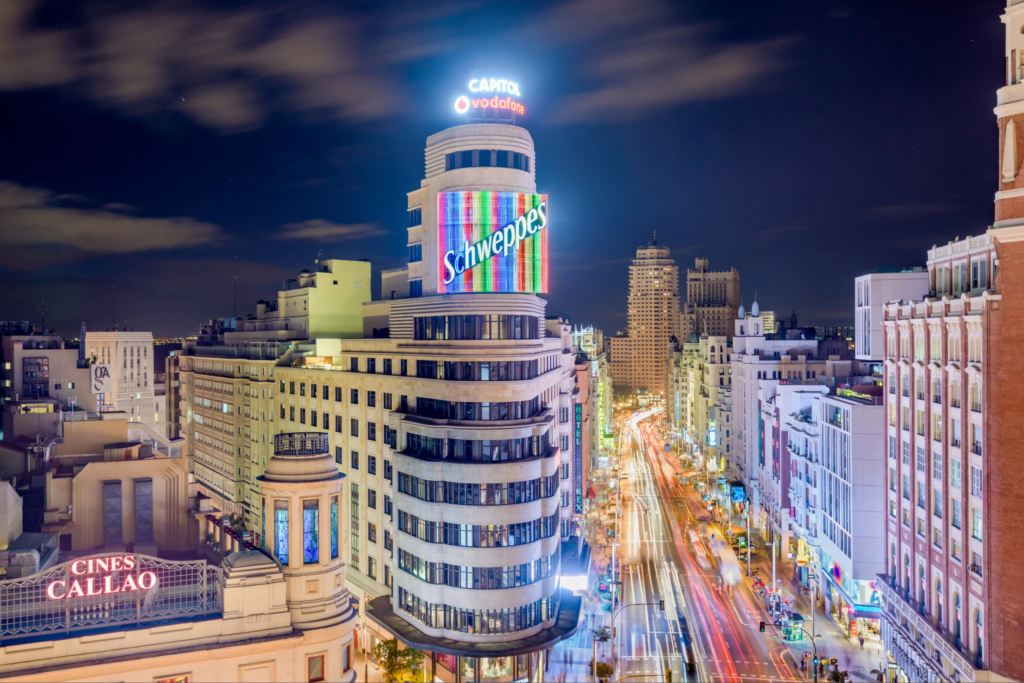
What changes between a digital and a static billboard is budget and flexibility. While LED or LCD billboards are more expensive, they allow content scheduling and catch more attention due to motion and bright colours. On the other hand, static billboards have higher installation costs, but they always occupy the same position, building brand familiarity. One example is the iconic Schweppes neon sign in Madrid’s Gran Vía, which is officially protected as a Monument of Cultural Interest.
The huge Schweppes Billboard in Madrid is a mixture between static and digital, La Sexta
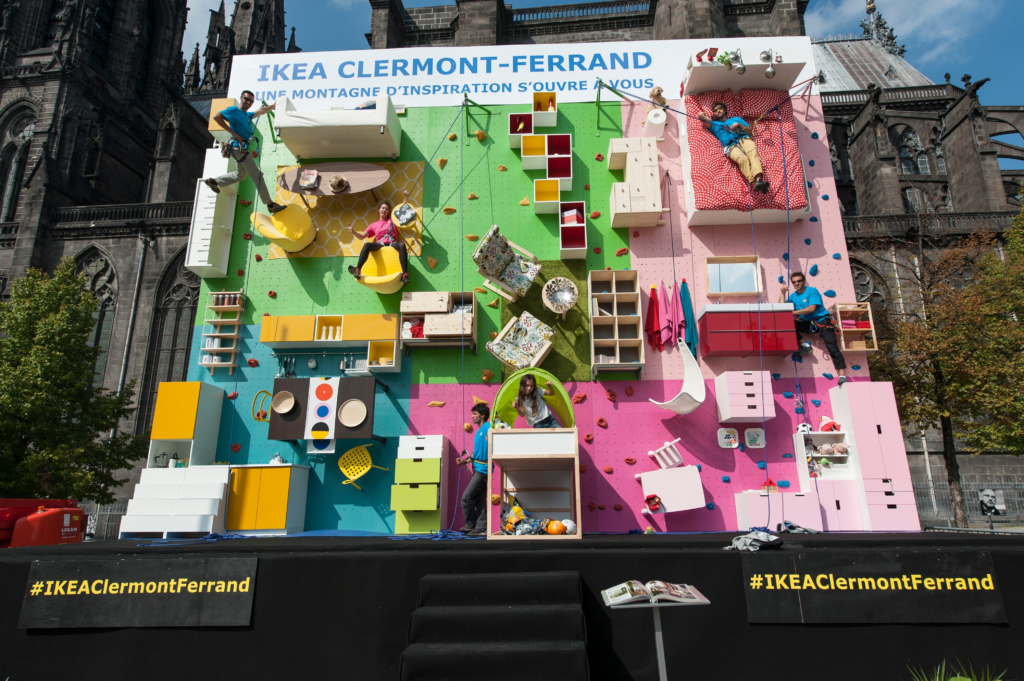
What caught my attention were interactive billboards. These use technology or analogue methods to create engagement with the viewer. Some methods are touchscreens, motion sensors, QR codes, and VR (in combination with one’s phone), but on another service called Media Venue I also read about scented billboards, a billboard that is a rock-climbing wall, or a company that gave its public the chance to vote on social media for the billboard to be displayed.
Billboard that can be climbed by Ikea Clermont-Ferrand, Archilovers
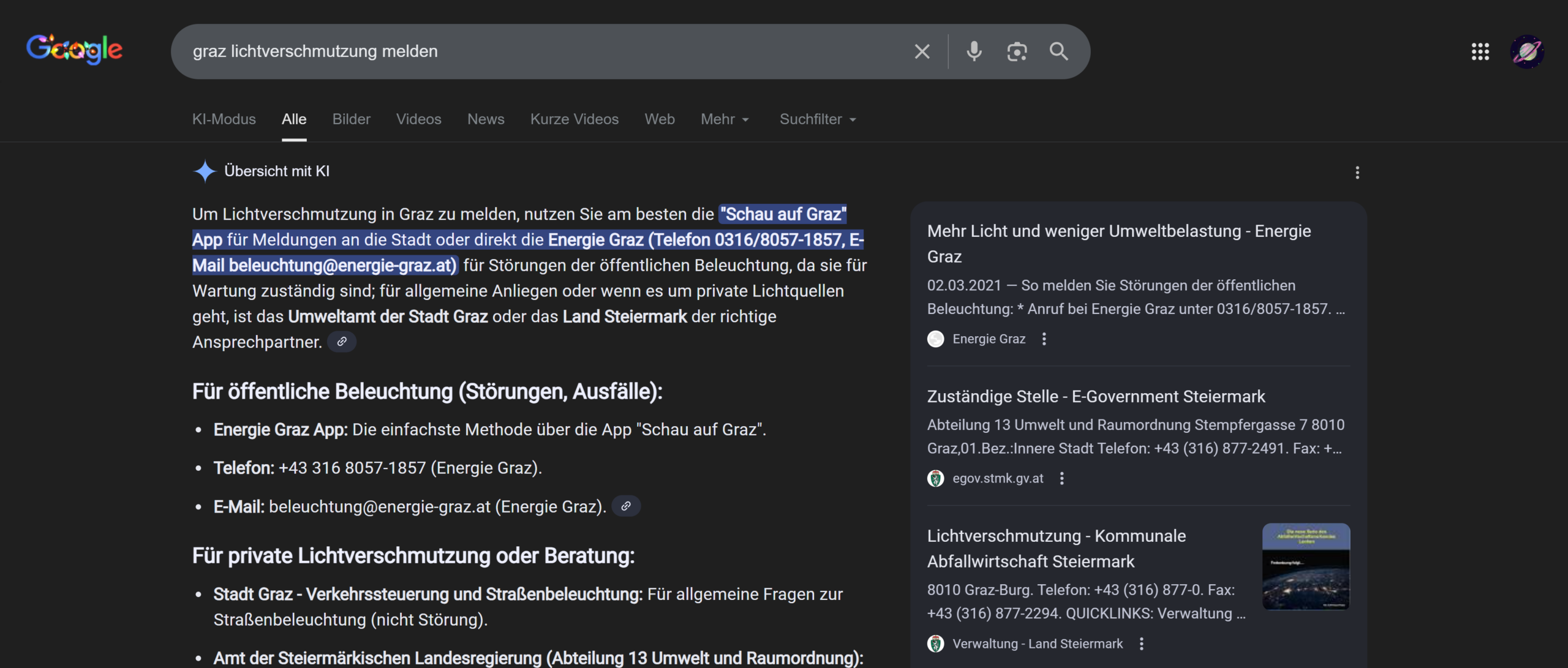
This week I researched ways to report faults in public lighting in Graz. First I used Google’s AI overview and then checked the information on various websites. The AI overview already gives a complete answer to the question: you can either contact Energie Graz, which manages the public lights in the city, or use the app Schau auf Graz (“look after Graz”).
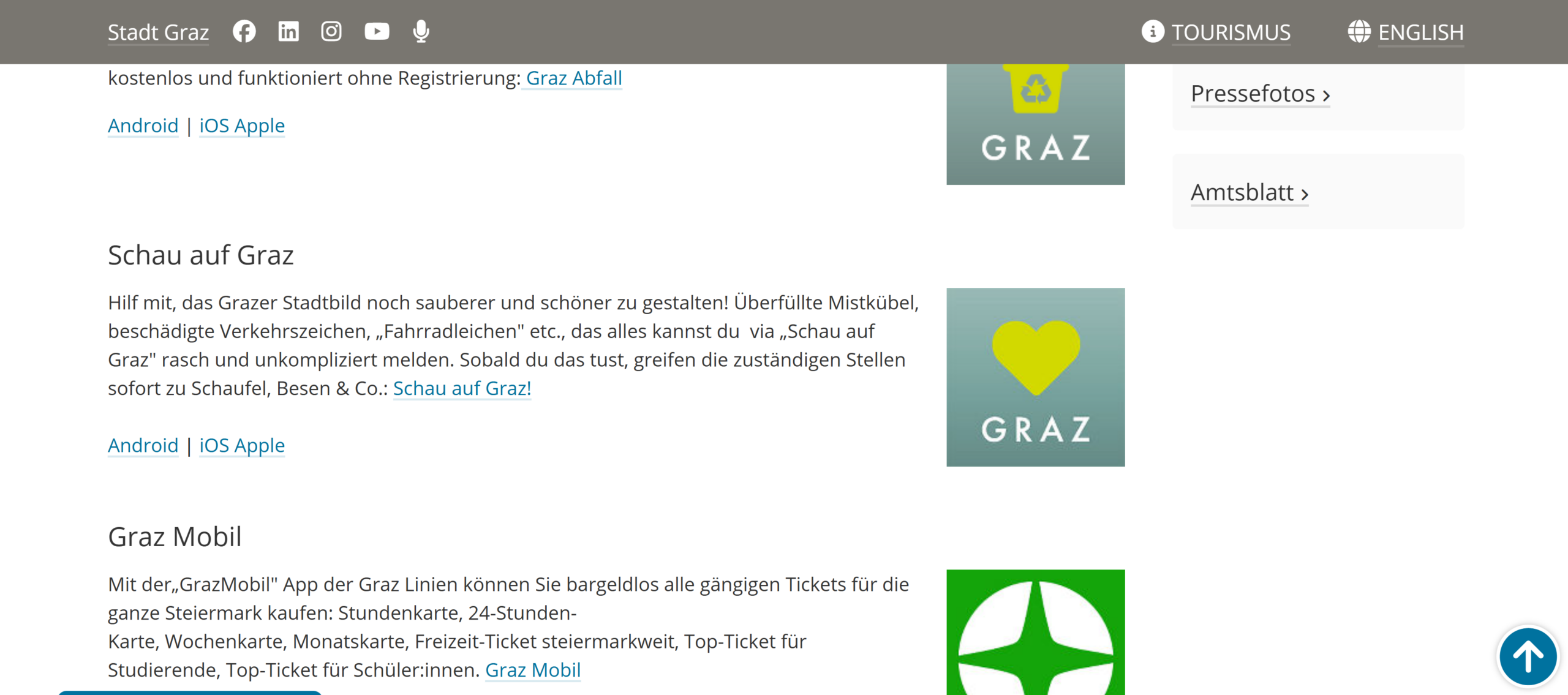
Schau auf Graz is an Internet service that allows citizens to report problems and suggest improvements about public property, and there is also a section about lighting.
have been living in Graz for almost 3 months, but I had never heard of it and I wanted to know if I am the only one. I asked my colleagues from the Communication, Media, Sound and Interaction Design course how familiar they were with it. Out of the almost 30 people who answered, only 4 people from Graz/Styria knew it, the rest had never heard of it, including 2 people from Graz and surroundings. None of the people who are new in Graz knew the app. I reckon that it is a great way to improve public areas and think that it is a pity that it is not very common. I have never seen an ad about it, but I found it quite well hidden on the Stadt Graz website, under “apps of the city of Graz”.
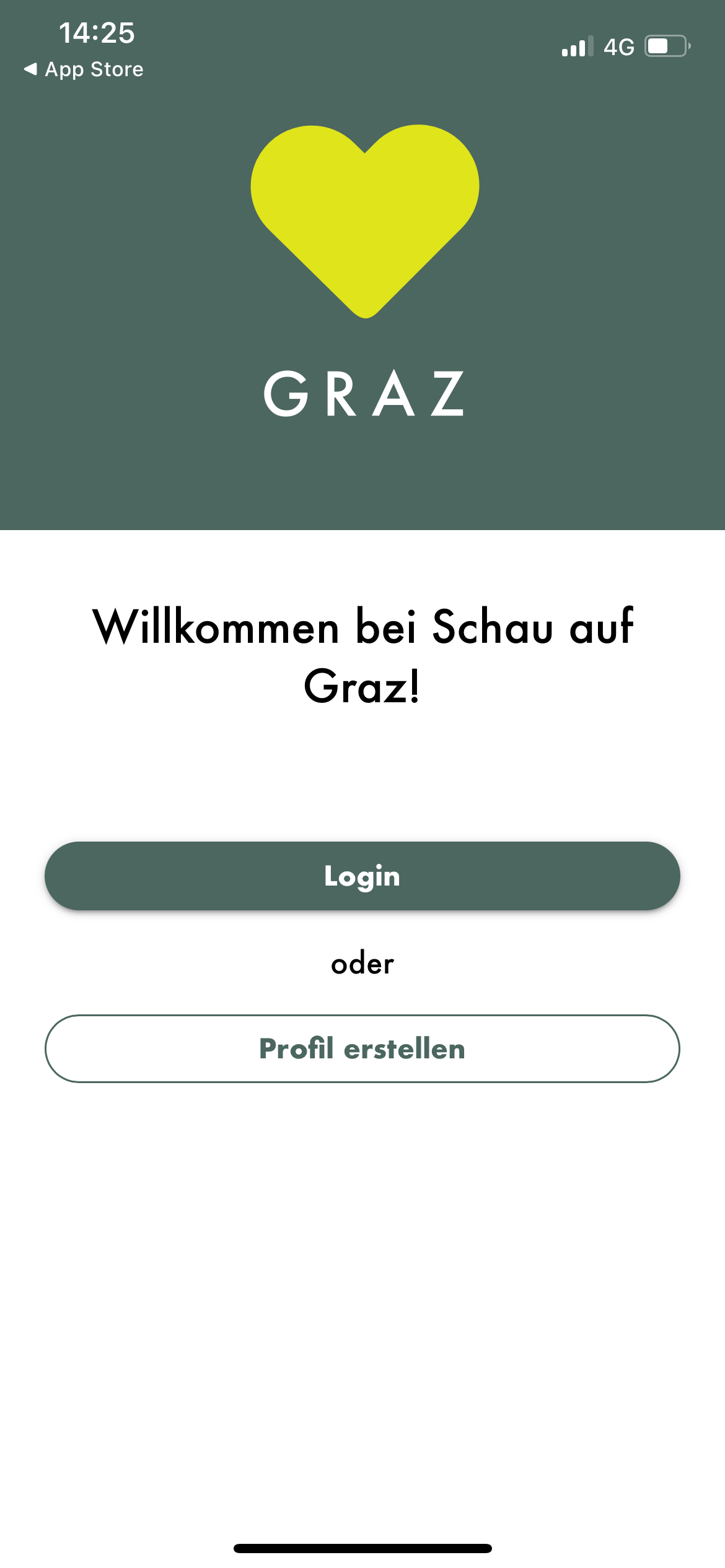
I downloaded the app to see how it works and pretended I wanted to report a defect light in public space. I found the service to be quite easy to use and efficient, but some improvements could be introduced.
First of all, it is not easily accessible for foreigners living in Graz, because it is only available in German.
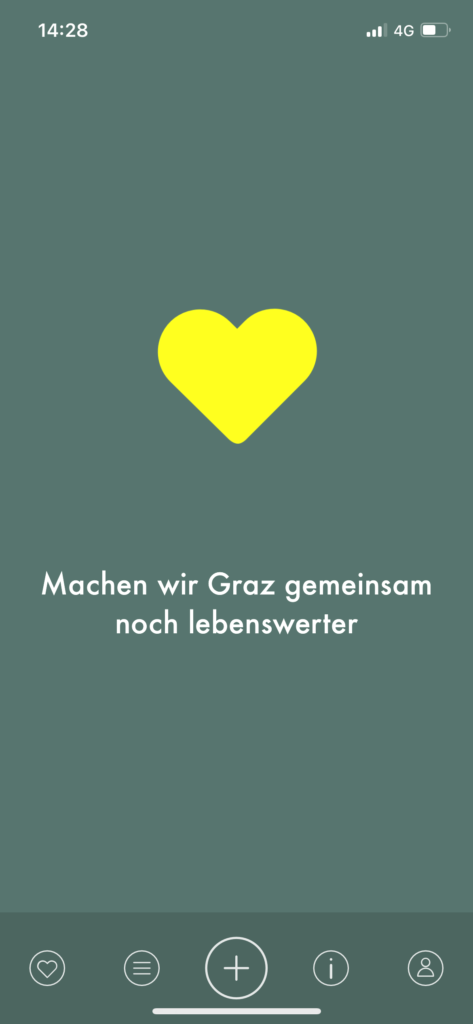
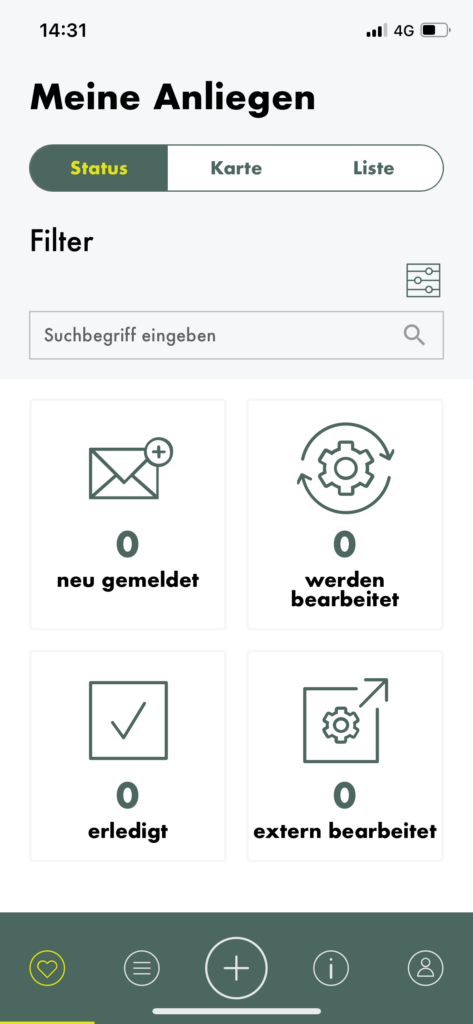
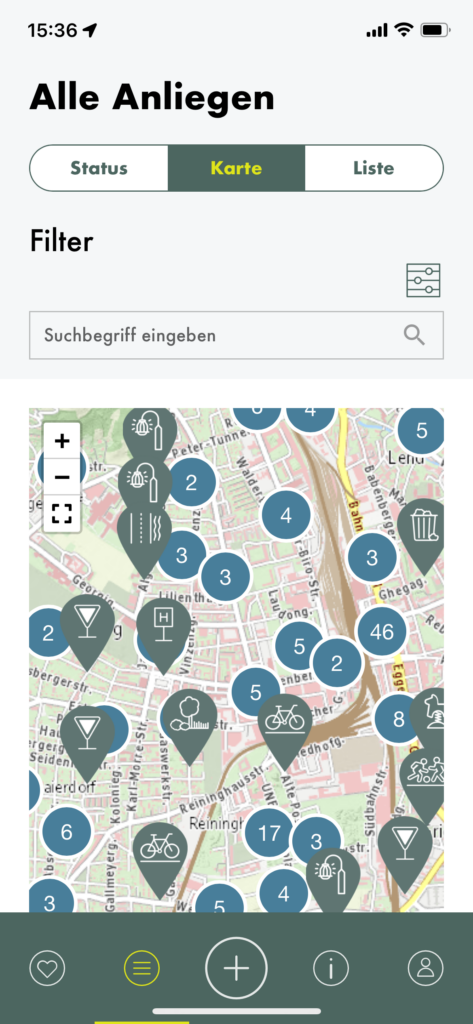
The navigation bar at the bottom creates 5 different sections, from left to right: my concerns, all concerns, new concern (the biggest and most important button), information and profile.
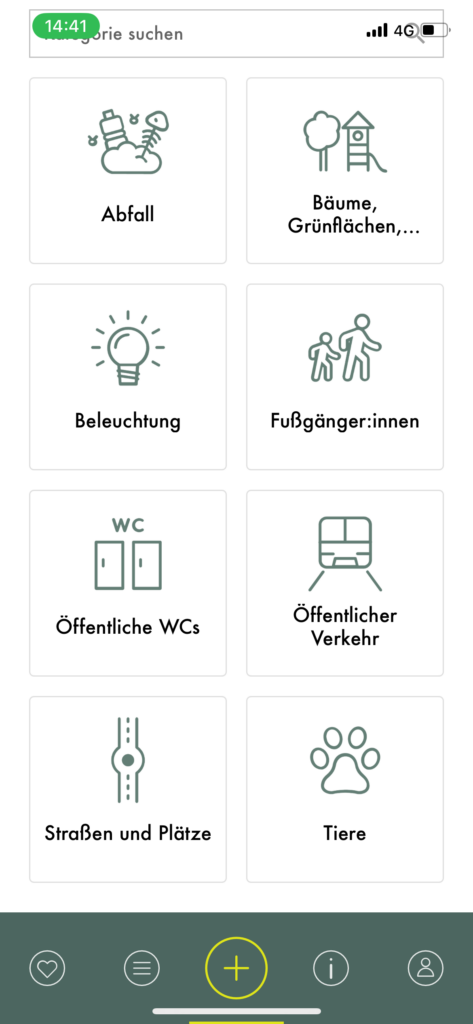
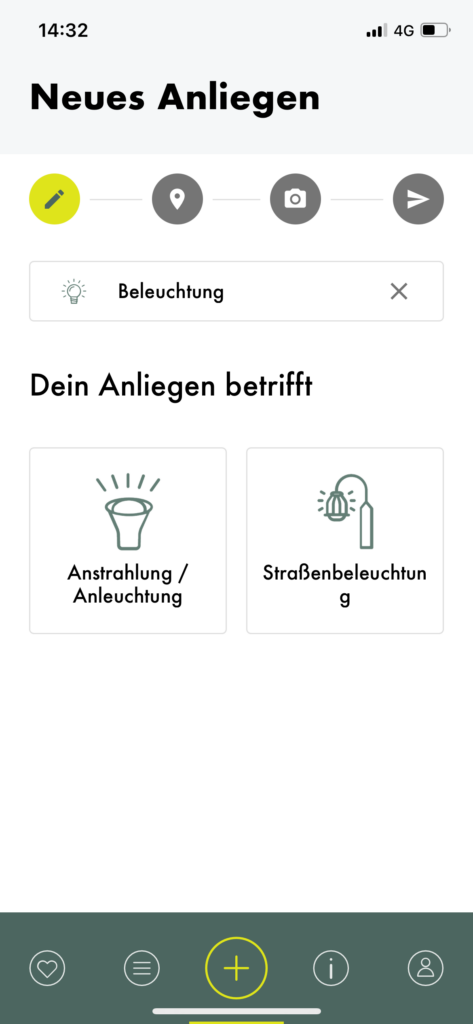
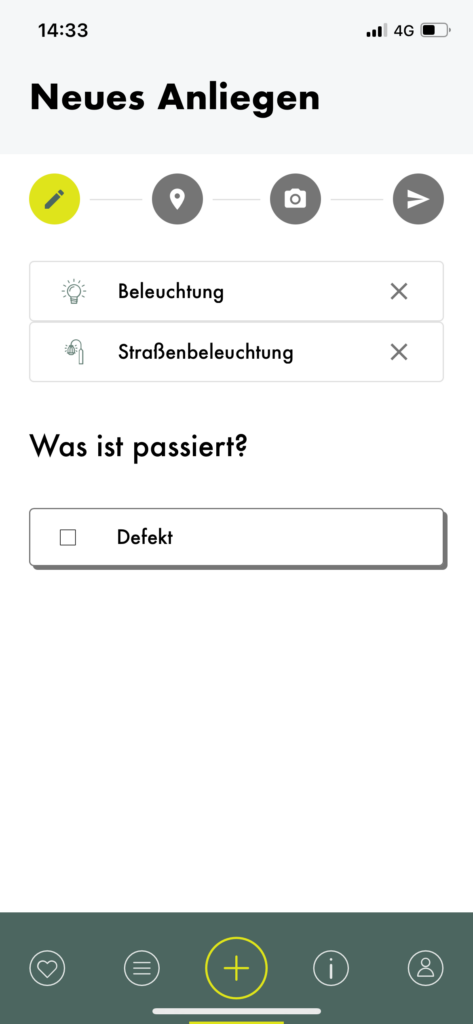
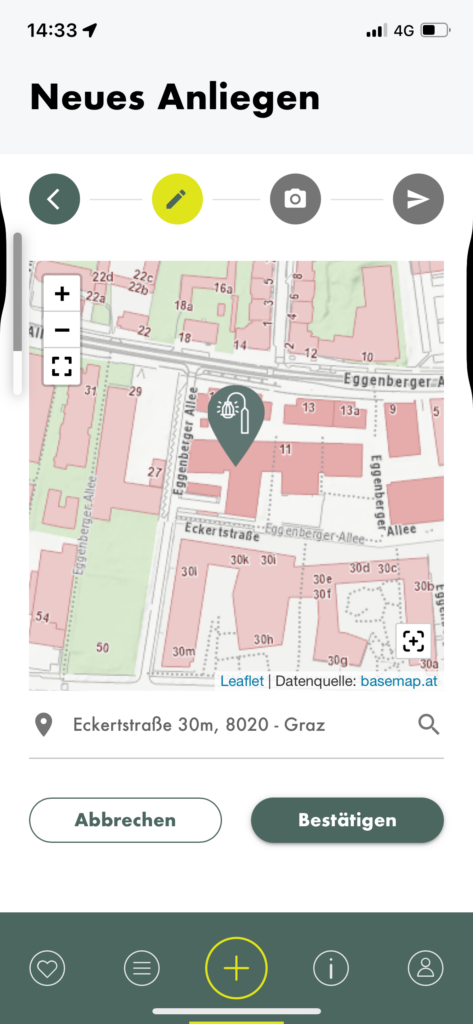
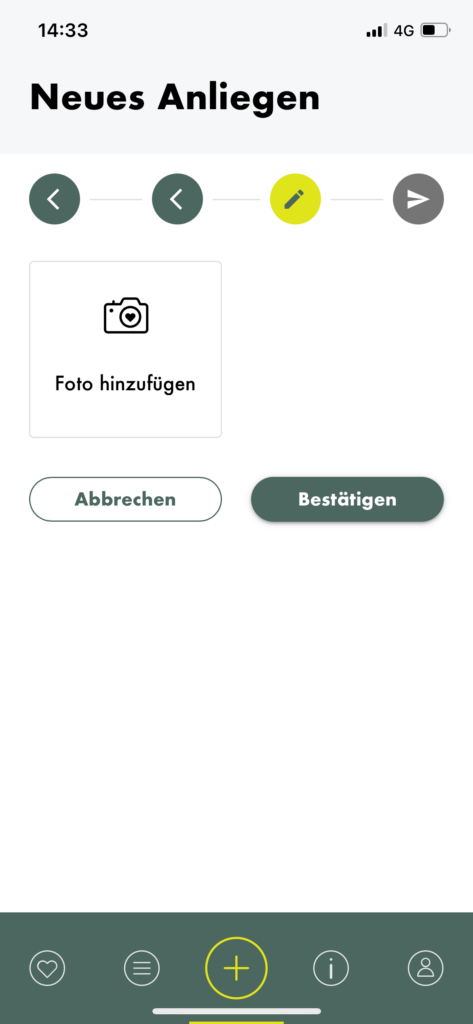
When creating a new concern, you can choose from various categories, one of which is “Beleuchtung” (lighting). I tapped on it and was then asked to choose what kind of lighting I wanted to report. I was confused about the difference between the two options, but a quick google search and a closer look at the icons made me realise that the option on the left regards lights that illuminate façades and the other one concerns lampposts, which illuminate the streets. After selecting one, I was asked to choose what I wanted to report, and “fault” was the only option to choose from. A status bar and some sort of breadcrumbs menu allows you to track the progress and go back if needed. The second step is choosing the location of the fault, then you are asked to submit a picture. After that the report is ready to be sent.
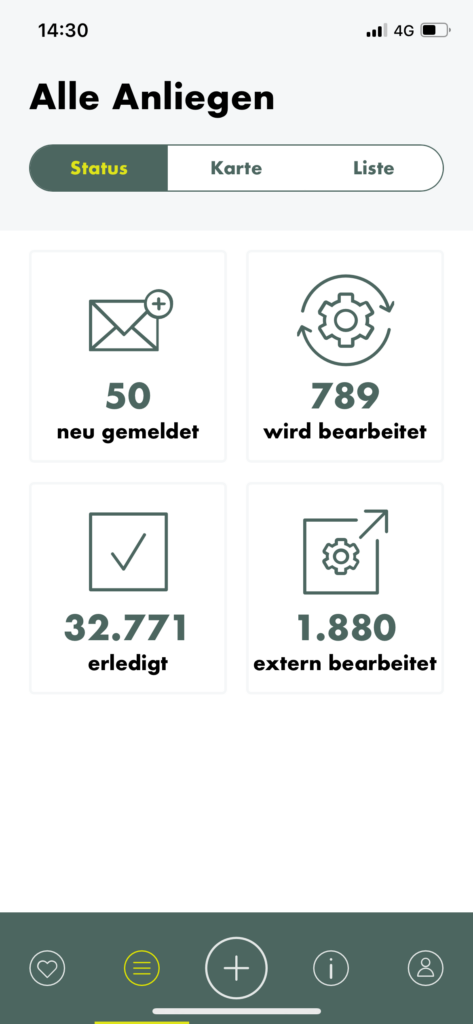
You can then check the progress of your query on the “my concerns” page. I also took a look at other queries and found it convenient that you can choose if you want to see their status, their position on the map or a list.
Last week I researched dark sky places, this week I have taken a look at how light pollution is tackled in urban areas, specifically in Graz.
First of all, I researched national laws. The Tyrol Competence Center on Light Pollution and Dark Skies lists Austrian regulations on light pollution. As opposed to other EU countries, Austria has no explicit legal requirement to operate street lighting, but these can be derived from various standards and legal norms, such as:
ÖNORM EN 13201, Part 2-5 Road Lighting (2004), which lists standards used for planning public lighting systems in all EU countries;
ÖNORM O 1055 Road lighting – Selection of lighting classes – Rules for the implementation of CEN/TR 13201-1 (2017), which includes provisions for dimming during off-peak periods;
ÖNORM O 1051 Road lighting – Lighting of Conflict Areas (2007), which contains recommendations for lighs illuminating zebra crossings, roundabouts, car parks, etc.;
RVS (Guidelines and Regulations for Highways) 05.06.11 and 05.06.12, which includes limit values and criteria to avoid undesired effects of artificial lighting on drivers.
According to Energie Graz, which operates the public lighting system of the city, a total of 28,802 lights illuminated the city as of 2021. Due to the population increase and in order to improve the feeling of safety, in previous years the light system has been expanded by 21%, which corresponds to 98 lights per 1,000 inhabitants. One might think that this would have led to an increase in energy consumption, but actually it fell by over 11% between 2004 and 2021, thanks to the conversion to modern LED street lighting. This has been the case of around 31% or almost 9,000 light points on streets, squares, parks, footpaths and cycle paths of Graz. Apart from having a significantly lower energy consumption, modern LED lights have lower maintenance costs, a long service life, reduced CO₂ emissions, and less light spill, contributing to less light pollution.
LED street lighting also adapts to the needs of citizens in a smart way. For example, when footpaths and cycle paths are not used at night, the lights are dimmed to 10% of their usual brightness.
During the course of the meeting, KPÖ municipal councillor Max Zirngast asked the city to collaborate with the Chamber of Commerce (WKO) to develop a concept to limit light pollution. It motivates Graz-based companies to minimise their light emissions from illuminated advertising and illuminated displays. Most parties voted in favour, but I have not been able to find follow-up information about the proposal’s realisation.
Energie Graz, being responsible for the public lighting in Graz, can be contacted to report faults and problems with street lights. This can be done via e-mail, call or by downloading the “Schau auf Graz” app.
In the next article, I would like to research more about this app and other ways to raise your voice about light pollution in Graz.
The Attersee-Traunsee Nature Park in Upper Austria, photo from their website
DarkSky is a worldwide organisation combating light pollution. It offers certifications for protected areas and facilities that preserve dark skies through responsible lighting policies and public education. The existence of dark areas allows us to stay connected with nature and protect ecologically sensitive zones.
It all started when Flagstaff, Arizona, was named the first International Dark Sky City in 2001. Now there are over 200 places in 22 countries of the world and a total of 160,000 square kilometers of protected land certified by the International Dark Sky Places (IDSP) program.
The certifications DarkSky confers are six: International Dark Sky Parks, International Dark Sky Sanctuaries, International Dark Sky Reserves, Urban Night Sky Places, International Dark Sky Communities and DarkSky Approved Lodging. Additionally, they also have a list of approved luminaires and retailers, together with outdoor sports lighting guidelines.
To request a certification, there is an application process consisting in an initial inquiry, a formal application finally a certification if all criteria are met.
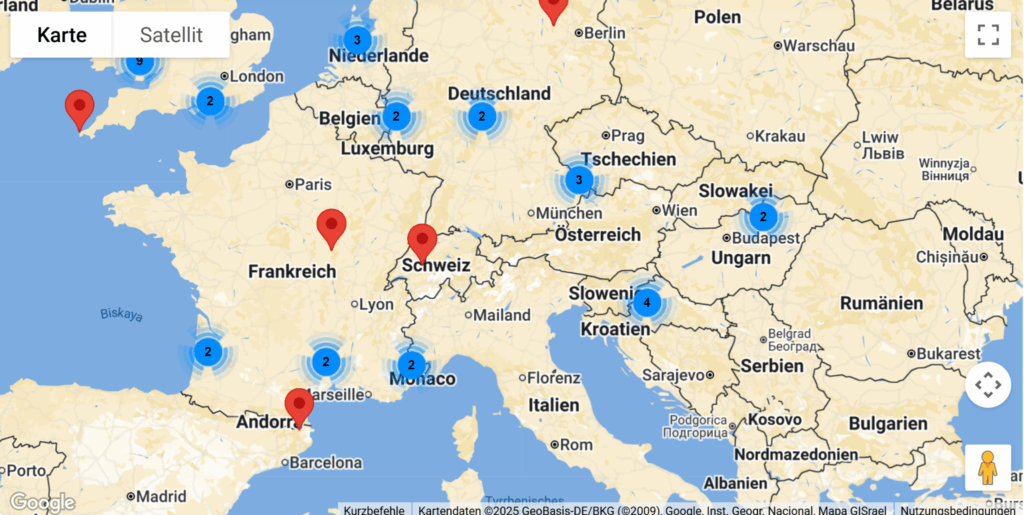
I used DarkSky’s map to find International Dark Sky Places in my countries, Austria and Italy. I found Naturpark Attersee-Traunsee in Upper Austria, but was surprised to find out that there are none in Italy.
An overview of International Dark Sky Places in Europe, from DarkSky
In fact, according to an article published in the magazine Science Advances in 2016, Italy and South Korea are some of the countries of G20 with the brightest night skies, with the Pianura Padana being the most polluted Italian area. Efforts have been made to certify dark areas such as South Tyrol, Maremma (Tuscany), and the Saint-Barthélemy valley (Aosta Valley), but without any results.
The Attersee-Traunsee Nature Park is the largest natural park in Upper Austria with some of the darkest night skies remaining in central Europe. With the size of 77 square kilometers, it lies between the lakes Attersee and Traunsee and spans across the eponymous Traun and Atterseer Flysch Mountains. It was certified as International Dark Sky Park in 2021. On its website the certification is not mentioned, but there is a separate one dedicated to the “star park“.