Output Analysis and Reflection

This last post is dedicated to reflect on this semester’s project – and give some insight into what became of it!

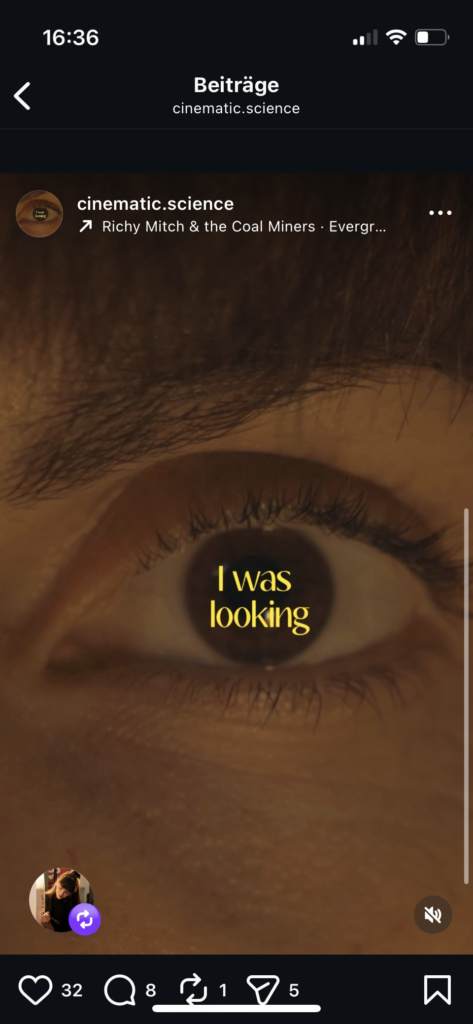
Now, since I produced a reel-type short video on the topic of map projections and Greenland as my creative part of this semester’s task, I also wanted to publish this video to gather some insight into if this is something a public audience would find interesting. 

For that purpose, I developed a little design framework for myself and transformed two of my existing social media accounts on YouTube and Instagram accordingly.

Because my focus in creating this content was to make interesting, appealing visuals paired with science-related information, I ultimately decided on renaming my accounts to „cinematic.science“. 

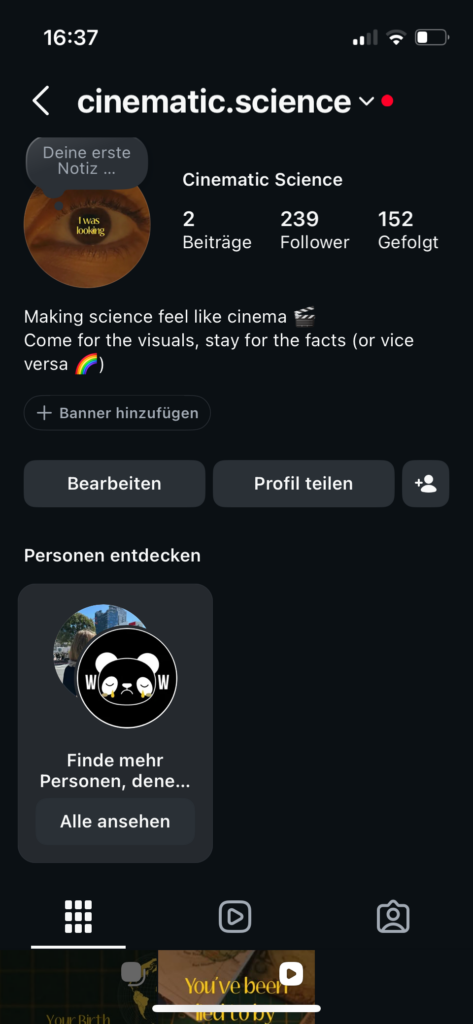
I changed the bio and profile pictures before finally posting the reel to both platforms. In order to better understand the performance of each, I should mention that the Instagram account had around 226 followers and I had previously used it for sharing my artworks, however, it hadn’t been in use for multiple years. I figured it would be a good opportunity to use this account as it already had an existing audience and hoped that they would accept the change in direction.

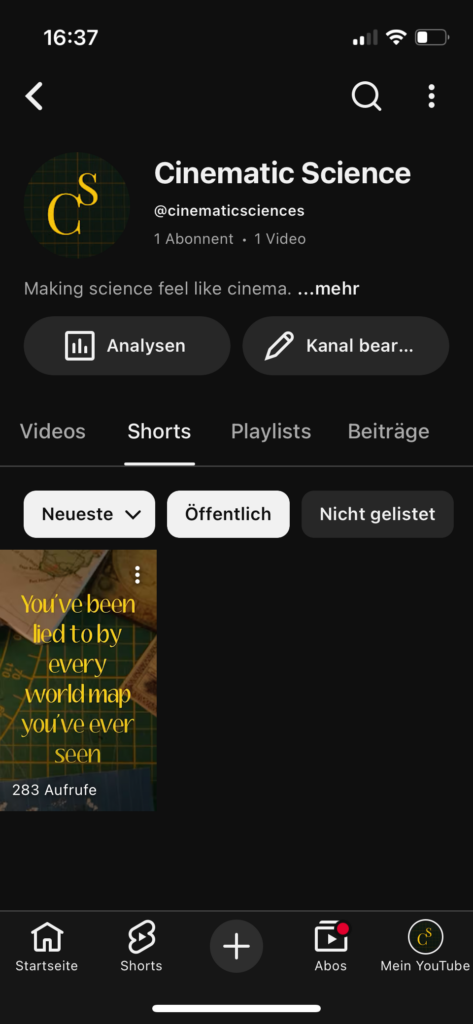
The YouTube Account, while also being existent, is one that I had not used previously and sat at 0 followers and 0 videos, so I knew that I would start from scratch there. 

Before posting, I did do some research on what social network algorithms like in terms of posting times, captions and hashtags – however, I am not entirely sure that my implementation of these suggestions helped with the performance of the content. Still, I tried to incorporate supposed effective posting times and caption suggestions (shorter, key-word focused) into my publishing process and ended up posting the first video in the beginning of July.

Overall, the results after publishing the video on both accounts varied, however that was to be expected due to the difference in followers.

I would say that the „success“ was mediocre, the YouTube video garnered 283 views as of today, 1 follower and 2 likes. 

The Instagram reel performance was a little better, with gathering 950 views, 32 likes, 4 comments and 17 new followers (opposed to 3 lost followers), which is considerably better but I would also attribute this to the fact that I shared the video on my personal account that has a lot more followers and probably had the effect that people that know me personally interacted with it. 

I think it leaves room for improvement, but I also believe that building a community based on publishing content of this sort takes time, as there needs to be a baseline trust and reliability in the authenticity of the shared information, so I will definitely try to continue to publish content and see where that journey takes me.

I actually did publish another post, this time it was less informative and more trend-based but tailored to my topics, as I did a „your birth-month – your xy“ post based on map projections. This was a carousel (multi-slide) static posting on Instagram only, which did not receive as many interaction and was also seen by less people(575), accumulating a total of 12 likes and no comments, suggesting that this might be too niche or not appealing enough to my audience. I suppose that further testing will reveal which formats prove to be effective. 

The posts and profiles were set up can be found here:

https://www.instagram.com/cinematic.science

https://www.youtube.com/@cinematicsciences

Overall, my conclusion is that getting into this entire research – recording – editing – publishing process is A LOT. There is much more to consider than „just“ filming a video, playing around with edits and putting it out there. I suppose that I underestimated the amount of resources it would take to some extent because the researching and breaking it down into digestible pieces part takes some effort, since I also only wanted to publish something I knew was well researched and reliable. Still, I had a lot of fun diving into all of these little topics and testing out what I could achieve with my setup and my ideas, and it definitely motivated me to keep going and do more even though the results purely based on social media metrics aren’t yet overwhelmingly positive. I did receive some personal feedback from friends and colleagues that was very positive, so I plan on continuing on my way, gather more experience and collect further feedback that can continuously be integrated into new content.
Dissemination practices

As teased in one of my previous blog posts, I wanted to give more detailed insights into dissemination practices. I do believe that this will help me understand the scientists side of things more, as I was previously more focused on developing content for the general public. And while that goal remains the same, I believe that it is crucial to understand how scientists try to communicate their topics and to find a way that bridges the gap between the scientific and non-scientific community.

A 2020 article by Tony Ross-Hellauer et. al. published ten simple rules for innovative dissemination of research, which will now briefly be explained. These ten recommendations were compiled via multidimensional research activities and have the goal to provide primarily researchers with an entry point to more innovative dissemination practices, allowing them to choose methods and tools according to their audience, requirements and skills. 

Rule 1: Get the basics right

In order to be able to communicate effectively, it is necessary to have clarity in some aspects: one needs to define objectives, define the potential target group(s), messages and methods of engagement and communication. Also, a dissemination plan should be created to strategically outline the project goals.

With defining objectives, the authors essentially mean the purpose and goal of the dissemination – what is a researchers motivation, what should be achieved with it? This step is essential for planning further activities.

This step goes hand in hand with defining the target audience and who to reach with ones research – having clarity in who the stakeholders are will also determine what they need in order to receive the information. The same goes for developing the key messages, as these need to be planned accordingly in order to be communicated to a specific group.

Rule 2: Keep the right profile

The authors suggest establishing a unique identity, both online and offline, for a research project or individual researchers – be it through the usage of websites, personal social media accounts, academic social networks or other, as this will help in increasing visibility. Creating a brand and having a visual identity not only can have an impact in the public’s perception and accumulating esteem within the scientific community.

Rule 3: Encourage participation

Inviting research audiences to engage and collaborate in order to create a collaborative, collective endeavor is suggested. Participatory approaches can be anything from games through including the public in the research process.

Also, frequent and early dissemination, i.e. by updating followers on social media, publishing progress blogs or tell the public about early findings can in turn mean early feedback. So, to sum up, including not only researchers but also citizens and other audiences outside of the academic circle can increase a project’s societal impact.

Rule 4: Open science for impact

Open science is definitely as knowledge that is share and developed via collaborative networks in a transparent and accessible way and is rooted in the principles of transparency and equitable participation. Practices include, for example, open access to publications, open source software, open research data, citizen science, or open educational sources.  Open Access publications can have a larger impact as they are widely available and can be reused and explored further. Therefore, dissemination can be considered a core element of the open science approach.

Rule 5: Remix traditional outputs

Research articles or books can be consider traditional research outputs. The authors suggest that innovative dissemination practices should complement these traditional tools in order to boost impact. Publishing press releases, blog posts or nonspecialist summaries alongside the traditional outlets can be a great way of reaching more people with one’s research and which also might get picked up by media outlets who are often interested in science-related stories. 

Rule 6: Go live

There are multiple ways of translating dissemination into in-person activities outside of specialized conferences. Science slams, TED talks science shops or science festivals offer different ways of interacting with various audiences. Reaching out to key stakeholders is also encouraged, as policy-makers or thought leaders have the power of making change happen and personal conversation might be a powerful tool to support collected evidence on a topic. 

Rule 7: Think visual

Currently, dissemination is still largely done via writing or spoken word. Including visual elements can be a strong tool in helping the audience understand and interpret research. The most logical approach is, of course data visualization, a practice that has been used for a long time. However, the means of visualizing data have changed throughout time and offer some new possibilities such as smart graphs and infographics. Science comics, video abstractor even artistic interpretations are ways of depicting science in a way that might just be memorable – and therefore stronger in impact.

Rule 8: Respect diversity

Diversity within the academic discourse has always included discussions about cultural backgrounds, gender, ethnicities, ideologies, digital literacy and economic diversity. It is important to not only raise awareness about diversity issues but to also grant higher visibility to underrepresented minorities in research. And in terms of communication, there should always be the consideration of how to appropriately and respectfully reach the right audience – because research should be reaching everyone that it might affect. Helpful tools to achieve this is defining a code of conduct or contributing guidelines. 

Rule 9: Find the right tools

Contrary to traditional dissemination methods, innovative dissemination often requires a different skillset and other resources. A Hub created by OpenUP offers a catalogue of innovative dissemination services researchers can use and list resources that range from data visualization, outreach and publishing to event organization, archives, and crowdsourcing opportunities. 

There are other initiatives like this in order to support researchers in their dissemination and widen public scientific engagement.

Rule 10: Evaluate, evaluate, evaluate.

Dissemination activities should constantly be monitored and evaluated in regards to their effectiveness and impact. Analyzing why or why not certain tactics do or do not work is crucial in order to identify effective practices and allow researchers to be strategic in using them. 

Evaluation should be based on a combination of qualitative and quantitative indicators and could include interviews, questionnaires, or observations for measuring impact.

All these dissemination guidelines made me realize that I, myself, might need to re-evaluate my research approach. I need to decide where I want to put my focus in my further research – to support the scientists in their science communication skills and develop formats that might be applicable for them or to independently find ways of communicating science to the non-scientific community outside of dissemination goals.

This blogpost is majorly based on this PLOS article: 

Ross-Hellauer, Tony, Jonathan P. Tennant, Viltė Banelytė, Edit Gorogh, Daniela Luzi, Peter Kraker, Lucio Pisacane, Roberta Ruggieri, Electra Sifacaki, and Michela Vignoli. “Ten Simple Rules for Innovative Dissemination of Research.” PLOS Computational Biology 16, no. 4 (2020): e1007704. https://doi.org/10.1371/journal.pcbi.1007704.

Science Communication and Dissemination

While I am busy with creating further visual content that is related to science and have been starting to put out some of my creations, I still wanted to continue my research about the world of science communication. From an exercise in the design and research class, I came up with a number of relevant key words for my research which I wanted to explore further. And one term in particular has crossed my path in both the research process and in “real life”, which is why I would like to dedicate this blogpost to the topic of dissemination. In the world of science, dissemination is a term that one will frequently come across – and one that I would define as closely related to the field of science communication.

Dissemination in the context of science essentially means transferring knowledge to a targeted audience because that audience will either use it, be impacted by it or influence the use of the evidence. In short: dissemination is all about getting information to the right people so that they can make use of that knowledge. To name one example – knowledge that concerns health care could be communicated to policy makers, patients or healthcare practitioners. It is a core component in translating knowledge strategically in order to adopt and implement new practices.

There are various frameworks and translation models that include elements of dissemination, however, dissemination is often regarded as a single step at some point towards the end of a research project rather than spanning over its entire running time which in turn contributes to a translational gap between what is evidence is being generated and what actually impacts policies and practices. This furthermore has also the potential to represent poor return on investment to research funders.

Dissemination is a complex topic that demands strategic use and while many models exist, researchers struggle to select the fitting resources for their dissemination strategy and lack guidance in terms of which activities to implement at the subsequent steps of the dissemination process. 

So, to sum up: while there are strategies and models, implementing them effectively poses a big challenge, which is why it would be important to develop a framework that is accessible and clear to everyone. 

While my previous posts and my general approach was more on the non-scientific community as a target group for my topic and also the little projects I have been working on, it was quite interesting to see that proper science communication is a struggle that is not only related to (public) education but maybe even more relevant for the scientific community,  incredibly important in order to translate scientific findings for decision makers or audiences that concretely benefit from certain knowledge. 

While communication to the public and offering ways of easily accessible information that are intended to raise the overall knowledge within the population is a large part of what caught my interest in the matter and is also something I want to pursue further, the importance of that other side of science communication was not as evident to me before.

Therefore, I think it could be interesting to also follow the topic from this other side. To look at the ways  scientists currently frame and communicate their work to respective target groups and then find the issues and new (design supported) approaches to make for better knowledge transfer.

The way of communication research has been changing, especially due to digital possibilities.

And while traditional formats such as scholarly journals and books can be found online, their functions and formats have remained similar throughout that time of change. 

Therefore, online media such as blogs and social media platforms offer new possibilities for scientists to use. Blogs and wikis have risen to popularity with something called „open notebook science“, professional academic networks like ResearchGate or Academia.edu have millions of users, and for interaction with the wider public, online formats such as TED talks that are being streamed via YouTube have become very popular. 

Digital technologies allow scientists to not only communicate with their primary dissemination targets (such as other scholars, policy makers or similar) but to actively involve people that otherwise would not have had access to this information.

The potential of adopting new methods is promising, as new cross-disciplinary collaborations could emerge which in turn could support publications, funding and new research opportunities.

Overall, there has been a noticeable push towards making science and research known to the greater public since the 1980s and the inclusion of non-scientific audiences which in turn has caused new forms of dissemination to emerge. Examples for this would be sciences shows or magazines and in more recent years, new event types such as science slams or open lab days. New participatory spaces such as science cafés or hackerspaces emerged which influence both research production and dissemination  processes, and powerful trends that strive for the globalization of research, responsible research, and inclusion of previously excluded audiences are reshaping the scope and purposes of dissemination. 

The issue here is, that while these new emerging approaches are viewed as fundamental constituents of open science, researchers tend to still focus on traditional outputs such as journal articles, speaking at conferences or publishing books. 

Innovative dissemination would, in turn, mean dissemination that exceeds traditional academic publishing and meeting practices and aims to spread the research findings to a more widespread audience.

I feel like this is the part I would like to find out more about in the future because that is also where the power of (media) design can play a vital role. 

For the next blogpost, I plan on diving a little bit deeper into (innovative) dissemination practices in order to find out more about the possibilities and challenges in that regard.

Sources used in this blogpost:

First part: Scott, Sion, Bethany Atkins, Thomas D’Costa, Claire Rendle, Katherine Murphy, David Taylor, Caroline Smith, Ian Kellar, Andrew Briggs, Alys Griffiths, Rebekah Hornak, Anne Spinewine, Wade Thompson, Ross Tsuyuki, and Debi Bhattacharya. “Development of the Guide to Disseminating Research (GuiDiR): A Consolidated Framework.” Research in Social and Administrative Pharmacy 20, no. 11 (2024): 1047–57. https://doi.org/10.1016/j.sapharm.2024.07.007.

Second part: Ross-Hellauer, Tony, Jonathan P. Tennant, Viltė Banelytė, Edit Gorogh, Daniela Luzi, Peter Kraker, Lucio Pisacane, Roberta Ruggieri, Electra Sifacaki, and Michela Vignoli. “Ten Simple Rules for Innovative Dissemination of Research.” PLOS Computational Biology 16, no. 4 (2020): e1007704. https://doi.org/10.1371/journal.pcbi.1007704.

The journey to a result

Okay, so this was the moment I wanted to share the video I edited for my little design and research project with you – a short reel where I try to communicate a somewhat scientific topic / share some facts – in the case of this video, it’s about the topic of map projections and why Greenland looks so big on maps while it is actually way smaller.

And then, this happened:

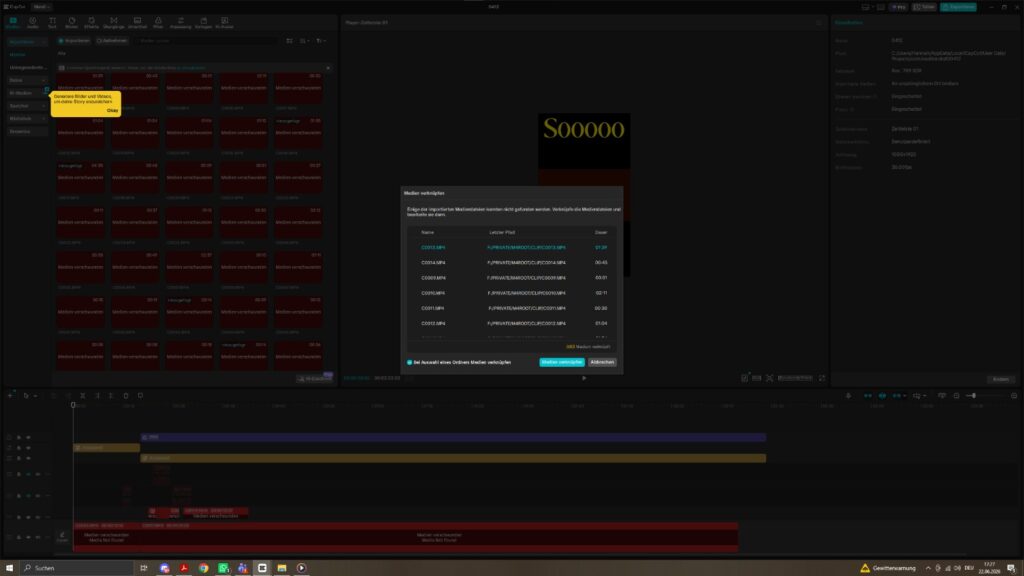
A big learning from that, I guess, is: ALWAYS SAVE YOUR DATA WITH AN EXTRA BACKUP. Or you might experience the same feeling of dread I had as you check every single one of your SD cards, desperately hoping that one of them might still hold your files, the hope dwindling with every empty folder you encounter. 

However, I had at least one thing – since I exported a work in progress file, I had some footage left to work with.

Ultimately, I ended up editing the preview and managed to create this video piece:

In the upcoming blogpost I will talk about learnings in the editing process and possible improvements for further content creation. Also, I still want to record a voice over because feedback suggested that it would be helpful / possibly improve the quality of the watching experience because following the content might be easier.

Visual Hooks

As I was researching and looking for video edit ideas, I stumbled upon a big topic that is especially relevant for social media content: (visual) hooks. Hooks, in general, are a way of capturing an audiences attention at the very beginning of a piece of content.

Especially on social media and in the world of short form video content, it is vital to get people’s attention within an incredibly short amount of time, as content needs to stand out in order for people to stick with it and finish watching. 

Usually, a hook happens within the first five seconds of a video or can be found in the first line of text in the caption or posting. Its purpose is to interrupt – for example – mindless scrolling and create enough curiosity for a viewer to consume the entire piece of content.  On social media platforms it is crucial to keep people interested in one’s content as the algorithms reward longer playback times or replays with an increased distribution rate which in turn increased viewership numbers and public attention.

Various types of hooks can be used to garner attention, such as making a surprising statement, asking compelling questions or promising valuable information. Visual hooks (= something you show) can. be especially effective because our brains process images around 60.000 times faster than text. 

The psychology behind hooks 

Certain psychological triggers naturally cause human responses. One of the most important drivers here is curiosity and what happens within the human brain when what is called a curiosity gap occurs.  It is an incredibly powerful tool when it comes to capturing peoples attention. Raising a question people want to know the answer to will keep viewers watching because the brain essentially registers incomplete information as a problem that needs to be solved. Sparking curiosity basically hijacks a person’s neural pathway because once a question has been asked, a sense of tension arises through with the brain’s desire of wanting closure. 

Emotional Connection Factors

Emotions are human behavioral drivers – so hooks that manage to evoke emotions such as surprise, joy, the aforementioned curiosity or even fear are especially effective. Connecting with the audience emotionally can have a special appeal and compel the audience into watching or interacting with content. 

The following paragraphs will look at some visual hooks and explain how they work.

Curiosity Gap or Open Loop Technique

As mentioned before, sparking curiosity is a very effective way of generating attention. When teased with potentially valuable information or asked a question one wants to know the answer to, the curiosity gap is in full effect.

A simple example would be something like:

“I discovered a weird productivity hack that tripled my output. You won’t believe what it involves…” 

Or

“Most people use their phone charger wrong. Here’s why.” 

Both these hooks cause an instinctive reaction from the viewer, who now is faced with  unresolved questions: are they using their chargers wrong? What hack could there be that makes you so successful?

The „Wait for it“- Visual Hook

Visuals are extremely powerful and can serve as hooks by themselves. When a video is started with a dramatic or unusual visual instance, it suggests that something greater is about to happen which in turn, again, keeps the audience watching.

Examples for that would be a visual that suggests a massive object that is about to be dropped or something complex being activated – or even someone preparing for an extreme challenge. This works because humans respond intensely to visual tension and if something appears to be in progress or incomplete, we wait to see the outcome. 

Bold Claims

A strong or controversial claim can be another effective strategy because they challenge assumptions. They signal to the viewer that they might learn something that could question or even change their existing views and that the content could cause their perspective to shift. 

An example for this would be “This is the biggest mistake new creators make.” 

Such as with curiosity, bold claims cause tension because a viewer – whether or not they agree with the statement – will stick around to either see if the argument that is being posed holds up or be validated in their views.

Story hooks

As humans, we are naturally made for stories. Therefore, when a piece of content introduces narrative tension, viewers instinctively will want to know how it unfolds.

Narrative structures create emotional responses or relatable scenarios, which is why this approach is so effective.

An example would be: 

“I almost quit my job last year. Then something unexpected happened..“


Stories evoke empathy and curiosity at the same time. People want to follow through with a narrative once it has started, which is why story-based hooks are particularly useful for content or creators that want to build a strong personal connection with their audience.

Rapid-fire value hook

Leading with valuable insights or sharing a quick list right away can be an effective hook as well because it promises the audience immediate payoff without having to wait for slowly teased information. 

This style works due to it signaling efficiency and valuing the audience’s time in terms of not making them wait long for promised information.

Examples for this kind of hooks:

„Three things every new filmmaker should know“

or

“Five apps that will make your life easier.”

Bandwagon Effect

Humans are naturally social beings, which is also why we tend to follow trends. When delivering statements that suggest many people are doing a certain thing, this can make for an effective hook. Showcasing popularity or social proof have the potential of making viewers think that they should do something because everyone else is doing it. 

For example: “Join 10000+ savvy marketers who’ve boosted their ROI with this one simple trick!” 

There are numerous types of hooks that have the potential of catching viewer’s attention and especially in the fast-paced environment of social media, I feel like it is almost impossible to not be aware of these strategies if one tries to build up a platform and wants their content to be seen. 

In further video projects, I would like to try out some of these techniques just to see for myself what works and what gets people engaged in science-related content. 

Sources used in this blog entry: 

https://playplay.com/blog/video-hooks

https://psycnet.apa.org/fulltext/2026-89350-001.html

https://www.researchgate.net/publication/237086938_Visual_Images_as_Hooks_for_Problem-Based_Learning

https://www.researchgate.net/publication/327111538_Set_Your_Hook_A_collaborative_video_hook_approach_to_advancing_scientific_engagement

https://research.universityofgalway.ie/ws/portalfiles/portal/25982663/An_Observational_Narrative_of_Student_Reaction_to_Video_Hooks_Final_Draft_pre_Publication.pdf

https://esajournals.onlinelibrary.wiley.com/doi/10.1002/ecs2.3786

https://thebettercontentclub.com/the-science-of-hooks-creating-content-that-stops-the-scroll