Design & Research 2 | For: Katerina Sedlackova
Following my prototypes, I am now looking at how my project fits into the bigger world. I have broken this down into three parts: the system, the change it creates, and who can actually use it.
1/3: System Map
This diagram illustrates the broader ecosystem surrounding my camera-AI guidance system. I have mapped it from the core outwards to show how the project connects to the world.
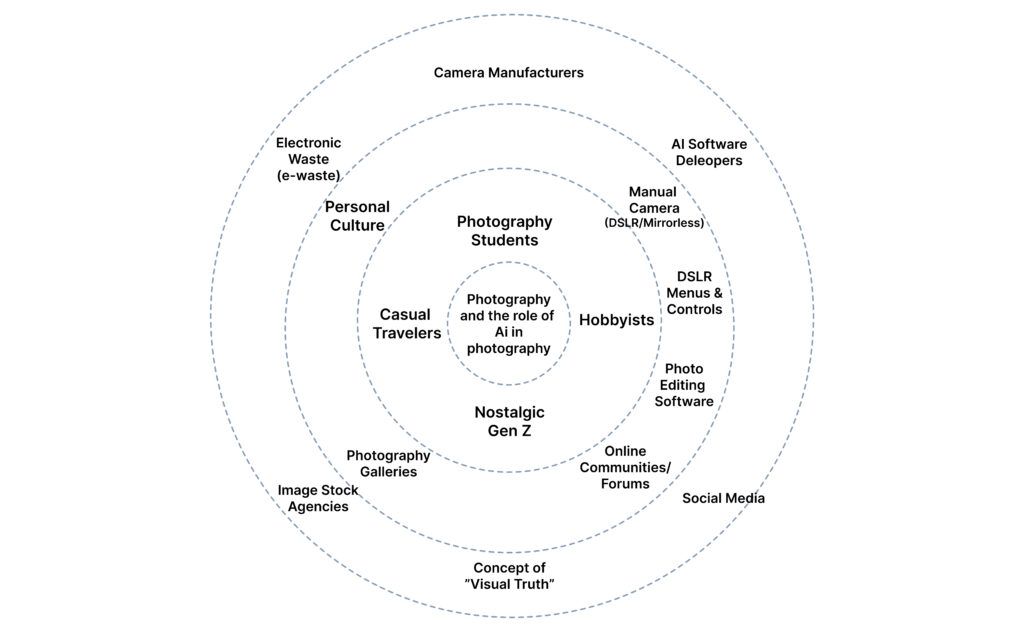
The Core: The interaction between the Photographer and the Manual Camera.
Direct User Context: Students, hobbyists, and “Nostalgic Gen Z” looking for a creative rhythm.
External Ecology: The heavy hitters—Nikon/Sony (Hardware), Adobe/Midjourney (AI), and Instagram (Social). I also included E-waste, as the sustainability of our gear is part of the system.
2/3: Change and Impact (Before vs. After)
This comparison highlights the shift from automation-first snapping to learning-aware photography.
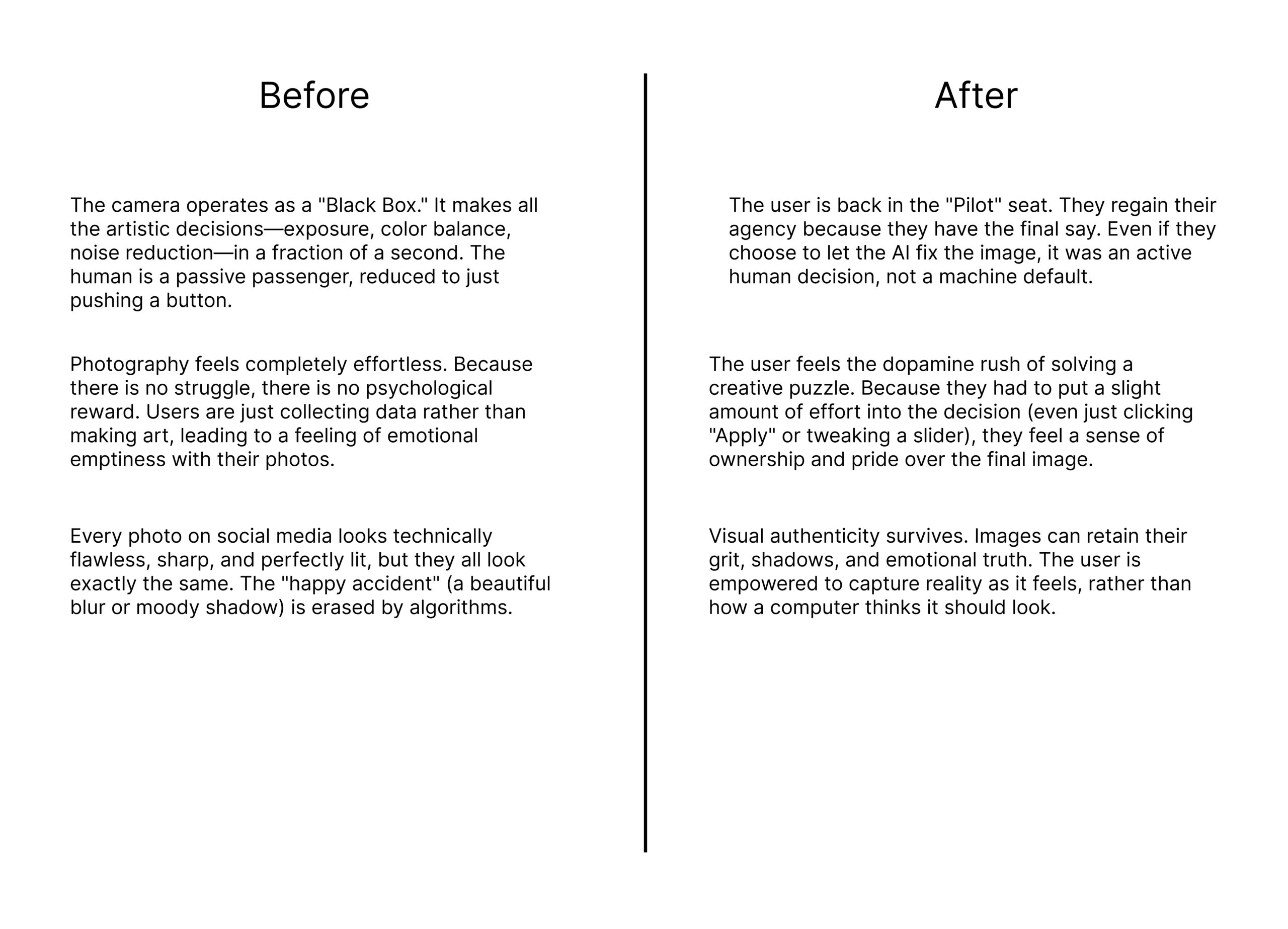
The Goal: The goal is to move the user from being a passive passenger of an automated process to an active “Pilot” who understands their tools.
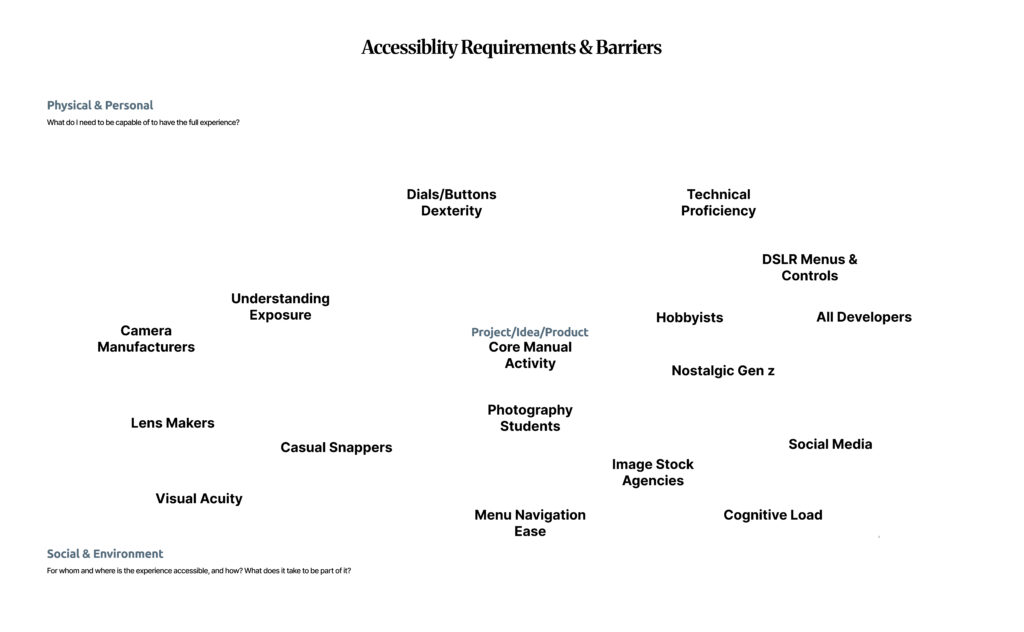
3/3: Inclusion and Accessibility
Accessibility in photography is not just about “talent”; it is a systemic issue. Using the floating barrier map, I identified the physical and cognitive hurdles that stop people from mastering manual photography.