One of the most effective tools for visualizing different ways the future can unfold is the Futures Cone, also known as the 3P Model. It was developed by Anthony Dunne and Fiona Raby (2013), building on earlier work by Stuart Candy (2009) and introduced within the Design Interactions program at the Royal College of Art in London.
The model is structured as a series of cones that branch out from a shared starting point, the present, each representing a different category of future. The probable refers to what is most likely to happen, and it is the space where most designers typically operate. The plausible moves beyond simple prediction, exploring scenarios that are believable, even if not certain, an approach often used by companies preparing for unexpected developments. Then there is the possible, which includes everything that may seem unattainable today due to technological, cultural, or social limits, but could become achievable in the future, as suggested by Michio Kaku in Physics of the Impossible (2008).
Alongside these, we can also consider the preferable future, located at the intersection between the probable and the plausible. While it inevitably reflects subjective values, it also aligns with broader societal and market needs.
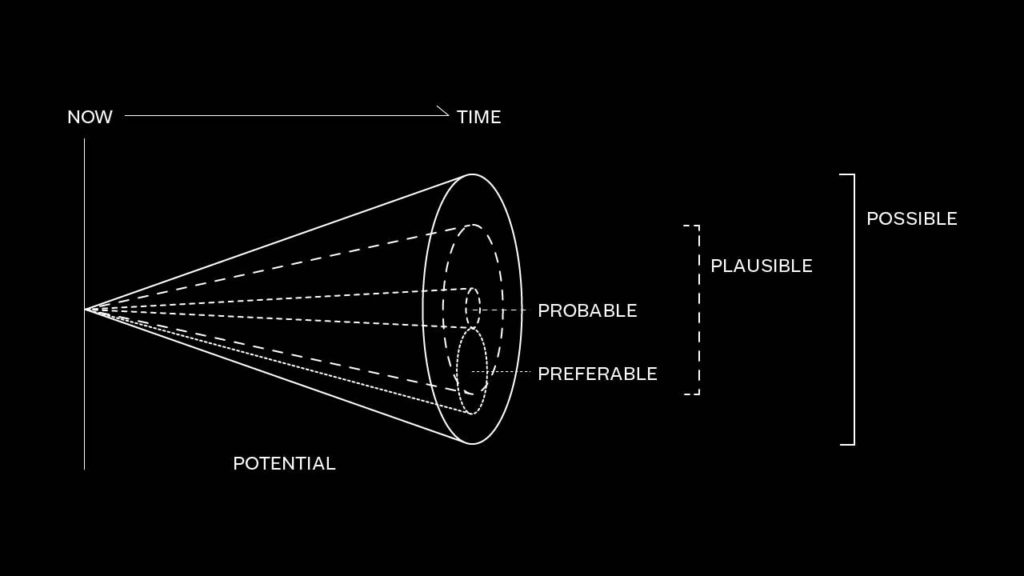
For this reason, it becomes a key area for Speculative Design, which aims to guide change by proposing alternative, inclusive, and sustainable scenarios.
To better understand how these scenarios are actually constructed, it is useful to look more closely at what is known as Scenario Building, or Scenario Planning.
Scenario Planning originated in the pioneering work of Pierre Wack, a French strategist at Royal Dutch Shell, one of the world’s leading oil companies. His task was to monitor global events that might influence oil prices. Until the Second World War, prices had remained relatively stable and affordable, but from the 1970s onward the situation began to shift dramatically: U.S. oil reserves were declining, global demand was rising, and exporting countries, particularly Arab nations, were gaining increasing negotiating power. This combination of factors posed a serious risk to the company’s economic stability.
In response, Wack and his team developed a new planning approach that moved beyond linear forecasting. Rather than searching for a single “correct” prediction, they constructed multiple possible scenarios, each based on different political, economic and social variables. Two main scenarios stood out: a more optimistic one, in which oil prices would remain low and stable, and a more challenging but realistic one, which anticipated a sharp increase in costs.
The effectiveness of this approach became clear during the 1973–1974 oil crisis. Shell was the only major company that found itself prepared, as its leadership had already adjusted their strategies according to the most plausible scenario identified by Wack. This foresight allowed the company to navigate the crisis from a position of strength, further consolidating its role in the global market.
Building on this legacy, Peter Schwartz, who later succeeded Wack at Shell, defines a scenario in his book The Art of the Long View (1991) as «a tool for ordering one’s perceptions about alternative future environments in which one’s decisions might play out». He goes on to explain that «Scenario Planning is about making choices today with an understanding of how they might turn out». In this sense, Scenario Planning is fundamentally about making informed decisions in the present, with an awareness of their potential future consequences.
Within this framework, the role of the designer becomes central. It is no longer just about introducing new products to the market, but about contributing to the creation of more just and sustainable futures. Design can therefore take two different directions: a traditional approach, focused on problem solving, responding to concrete needs through efficiency, aesthetics, and ergonomics and a more critical and speculative one, focused on problem finding, which brings questions to the surface and opens up space for reflection on ethical, environmental and social issues.
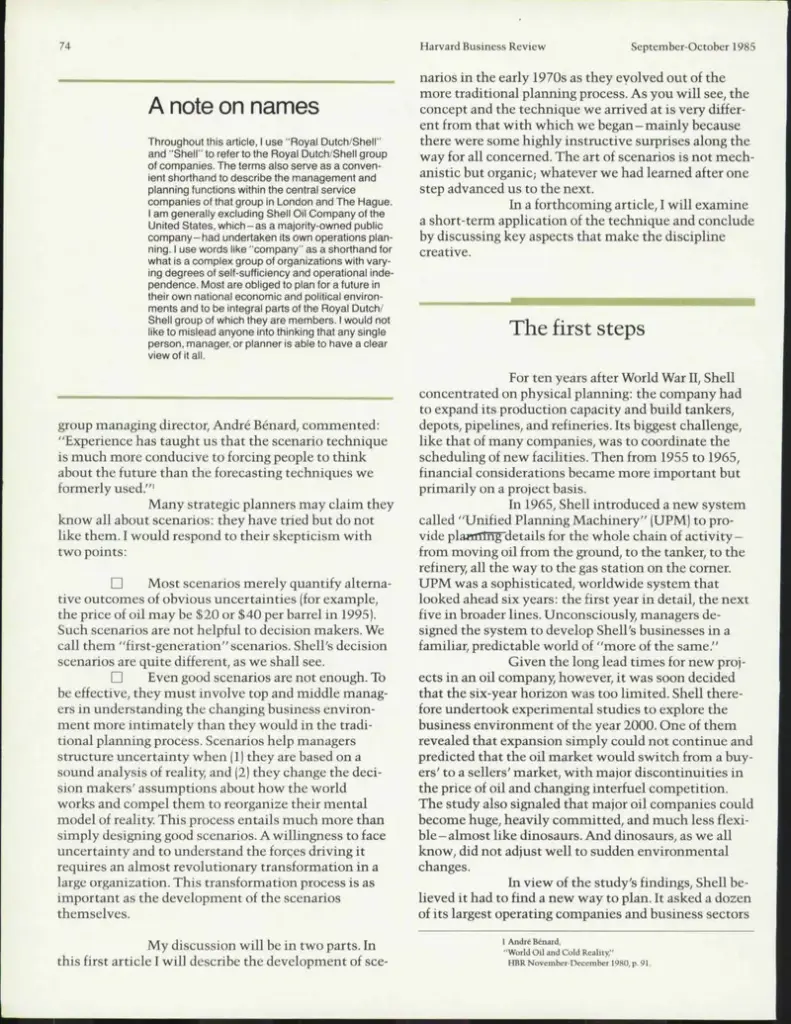
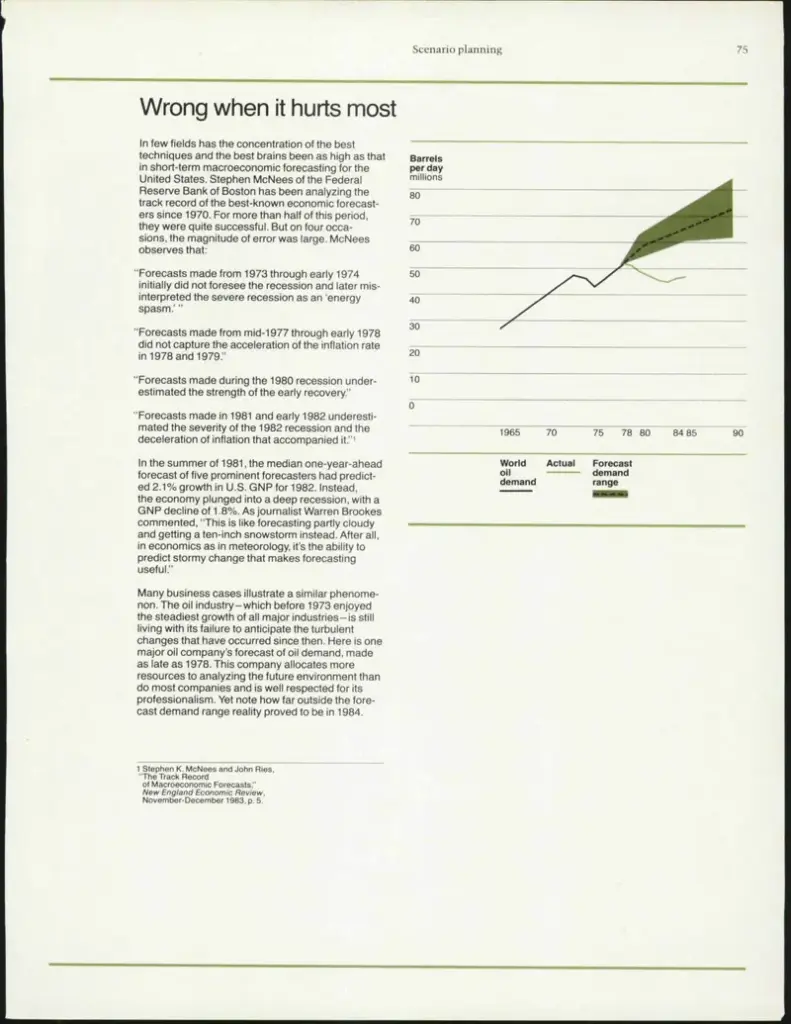
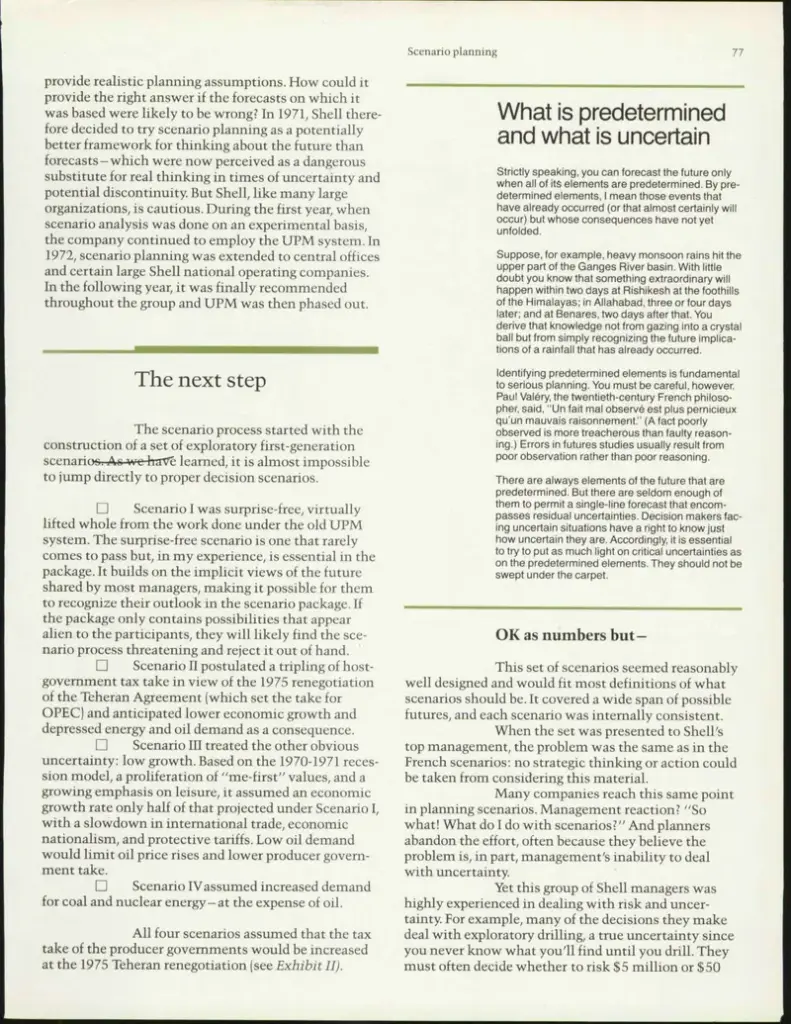
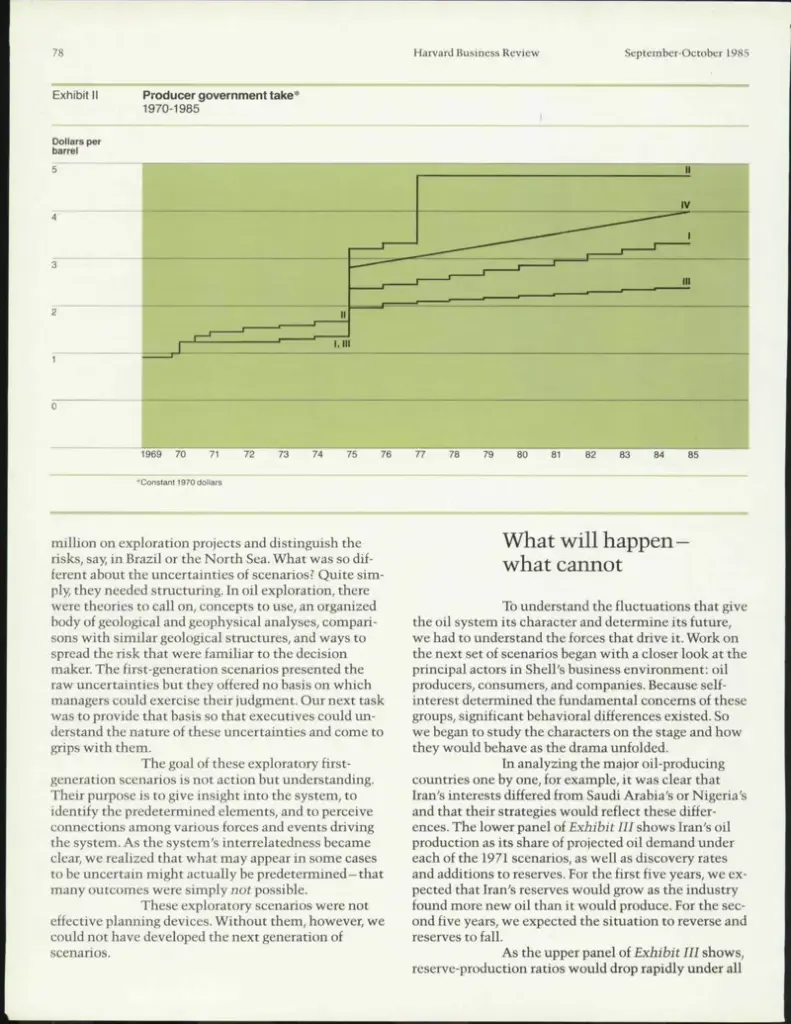
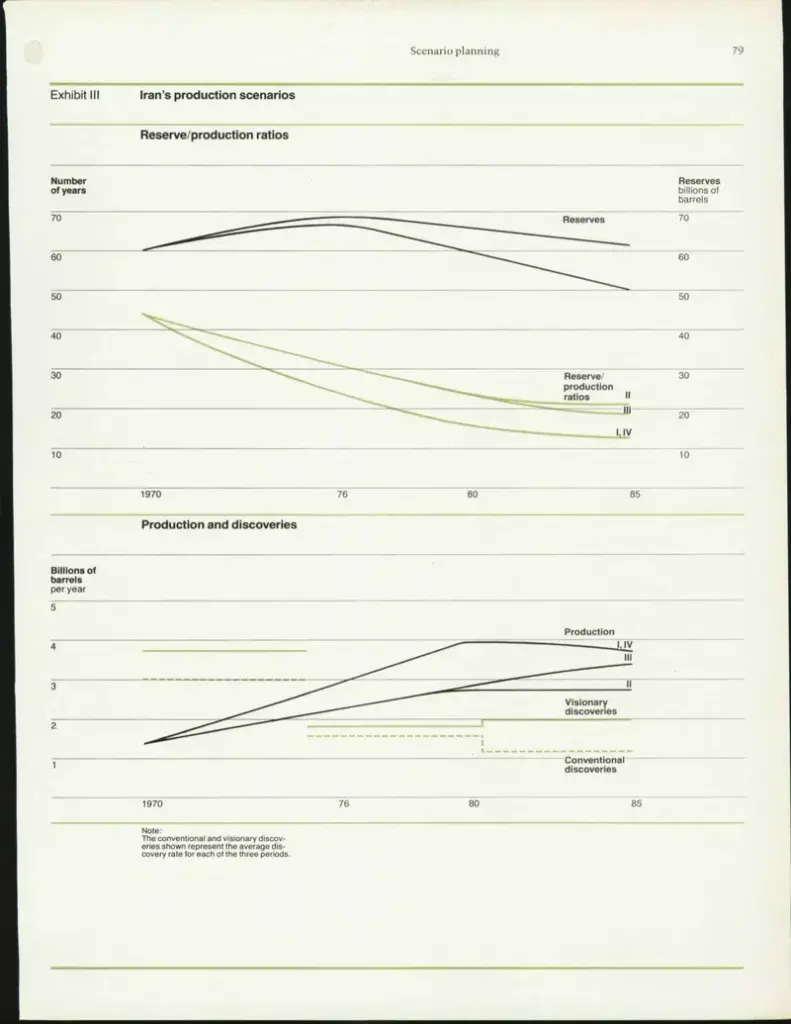
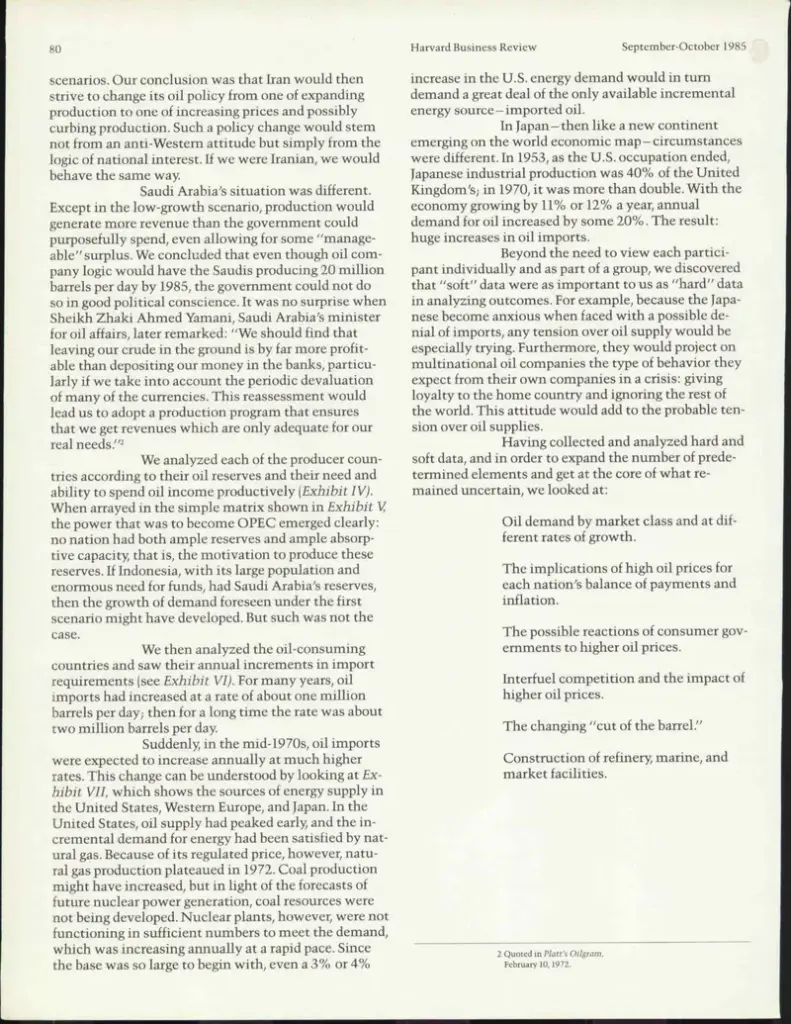
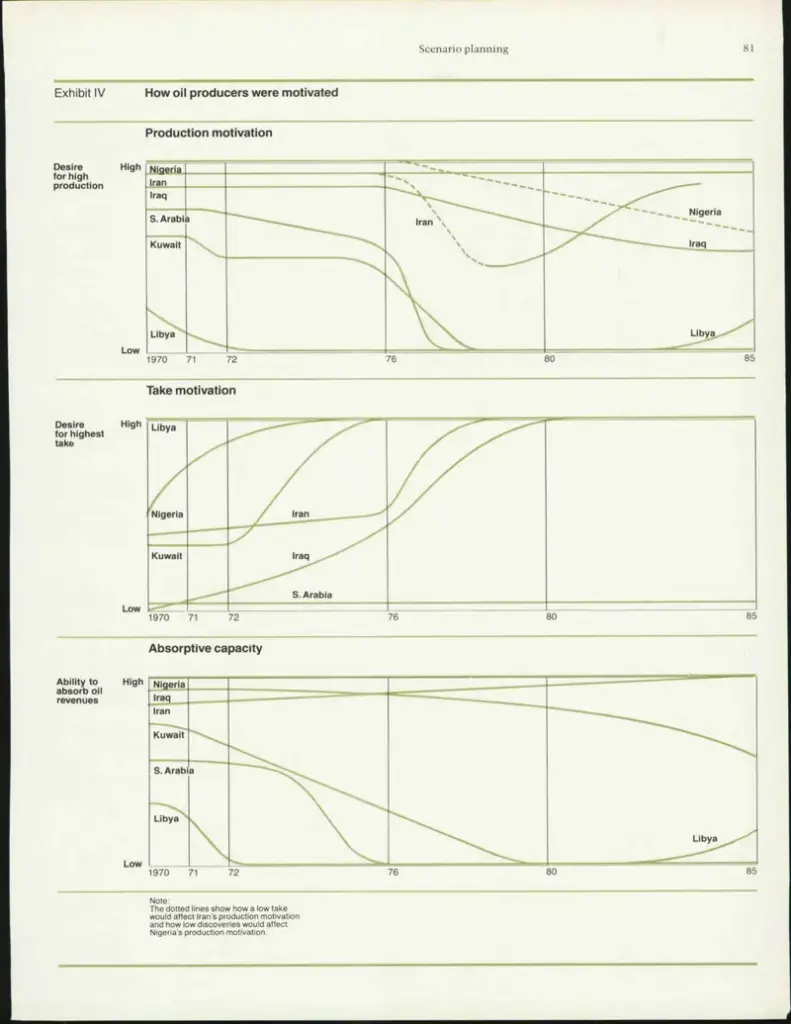
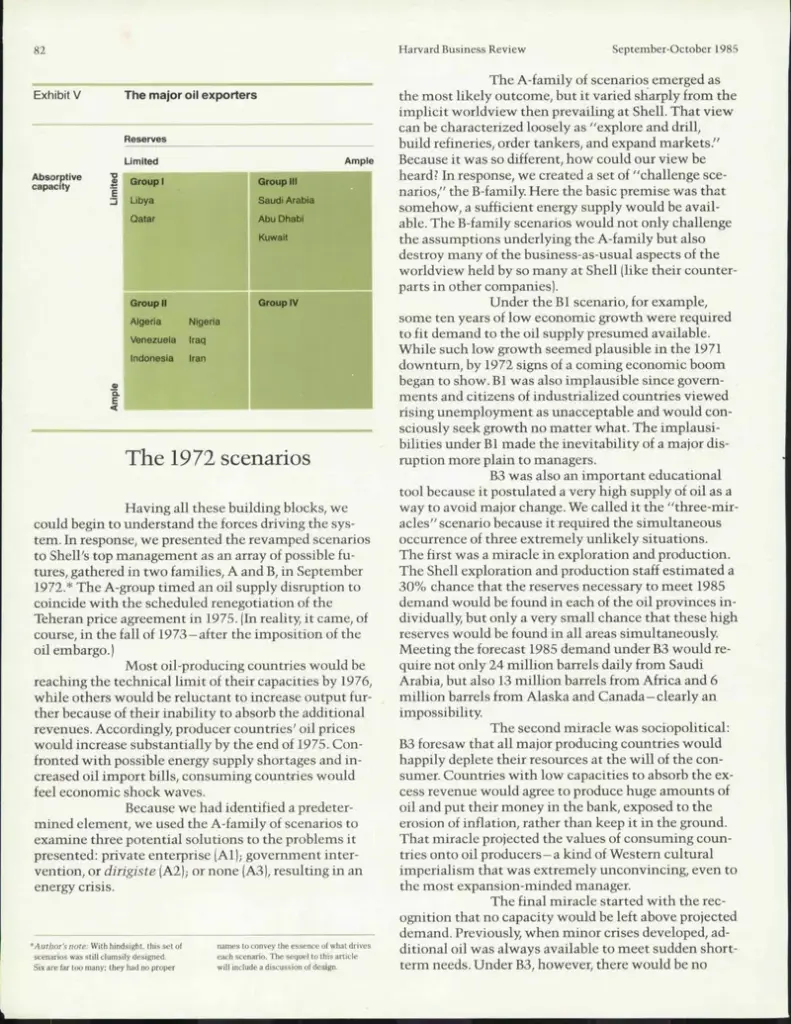
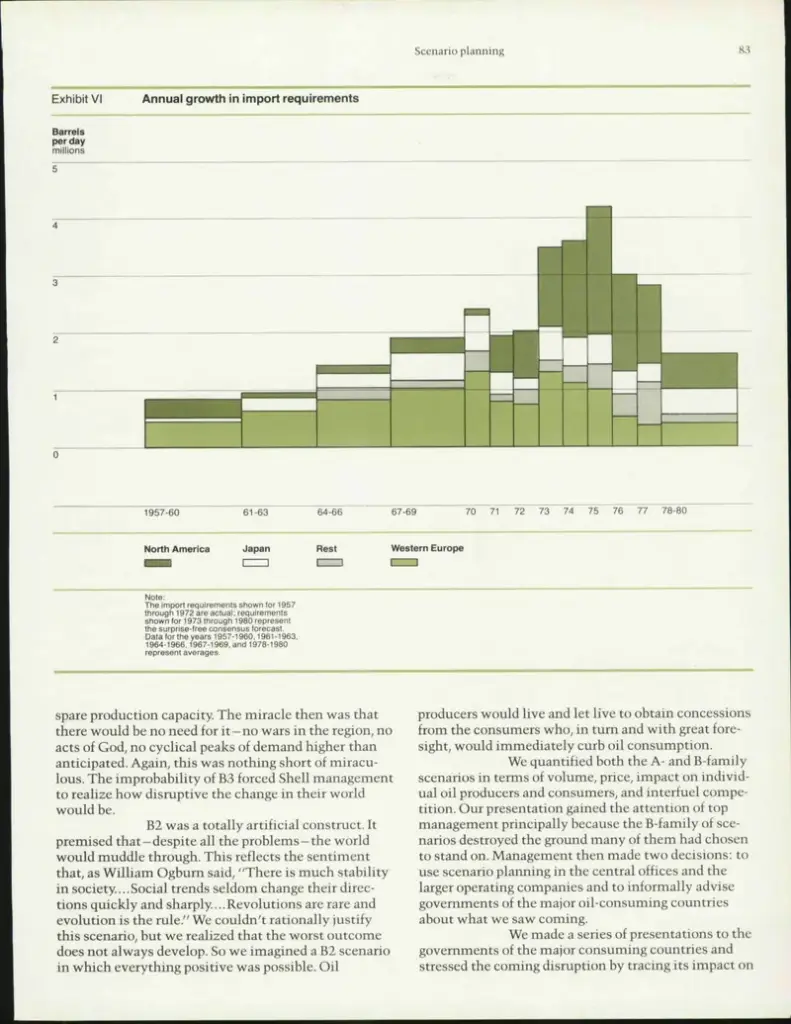
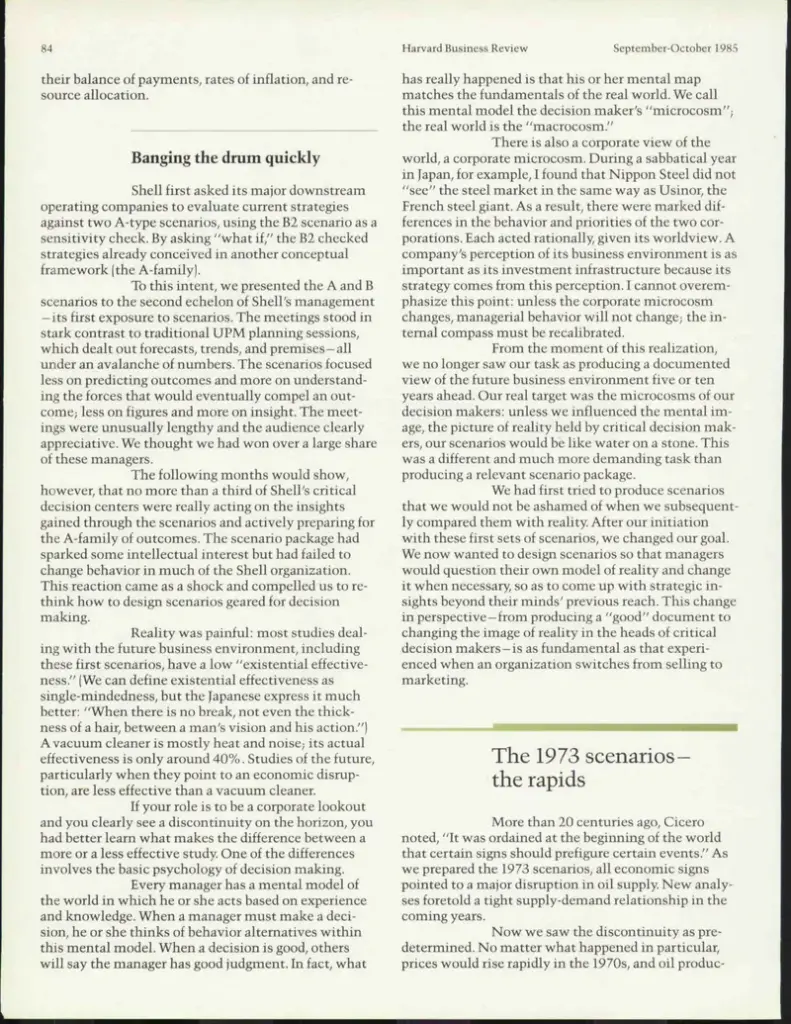
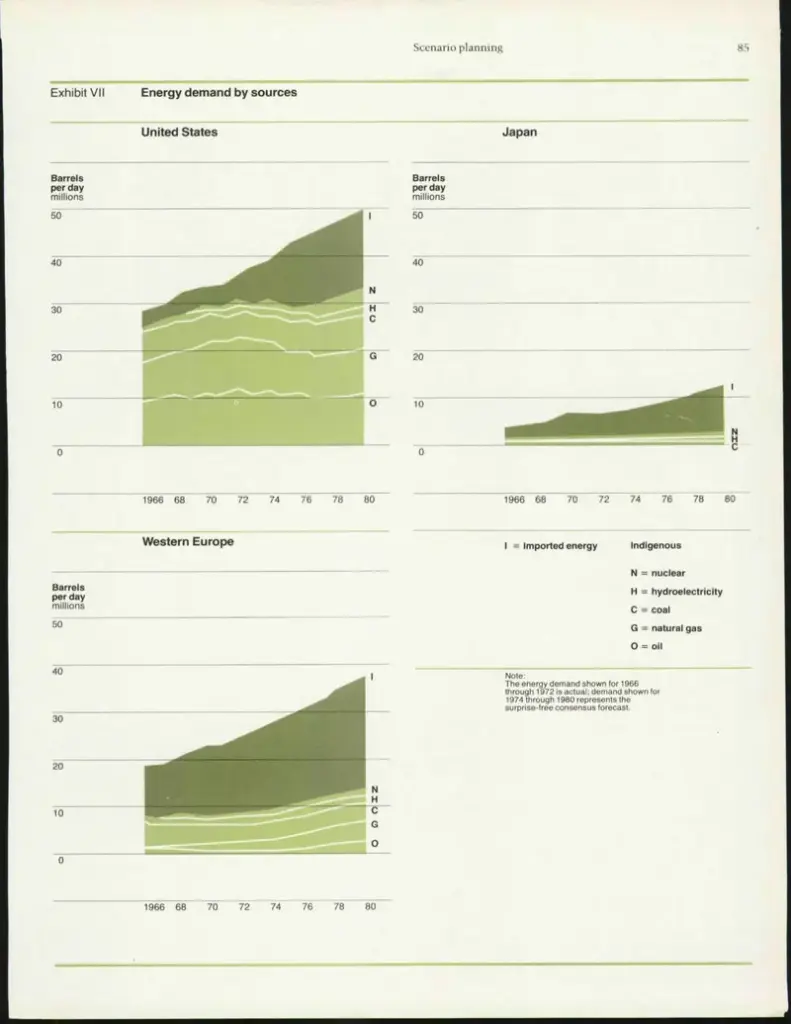
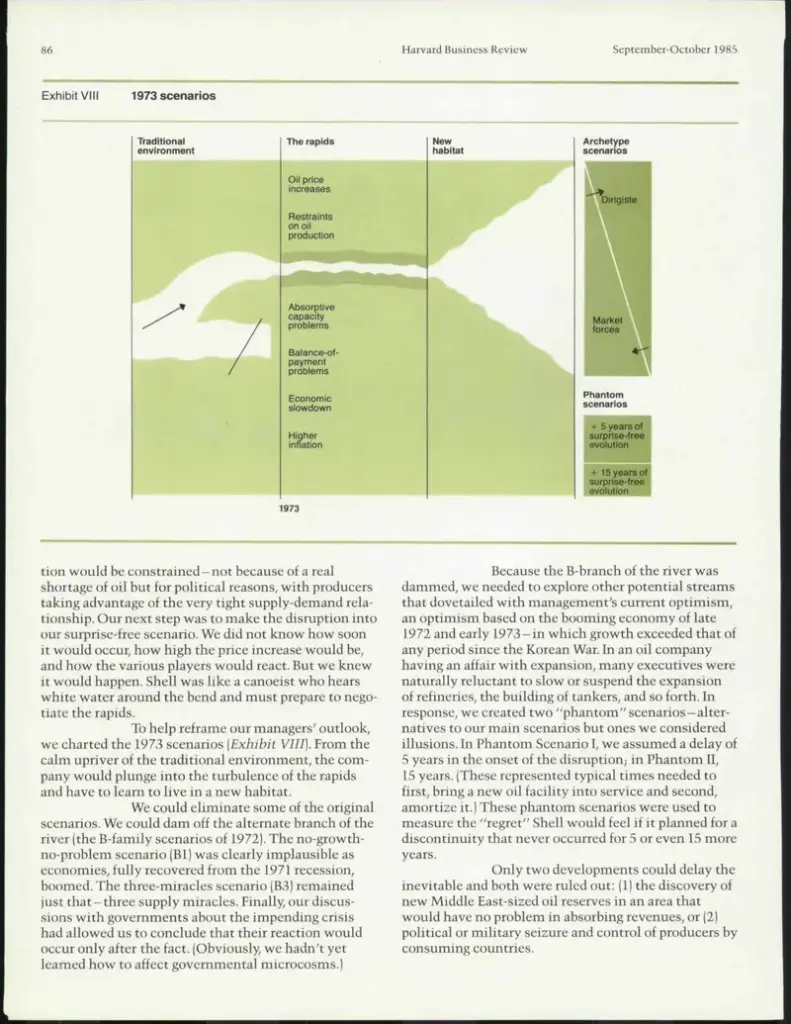
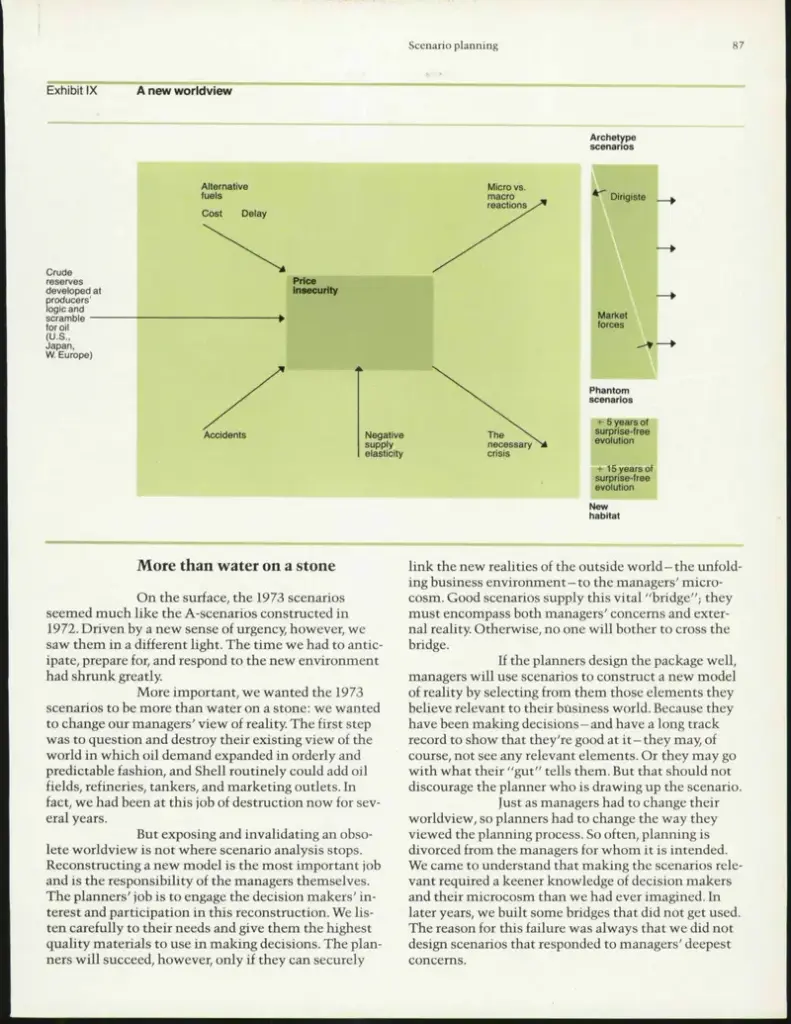
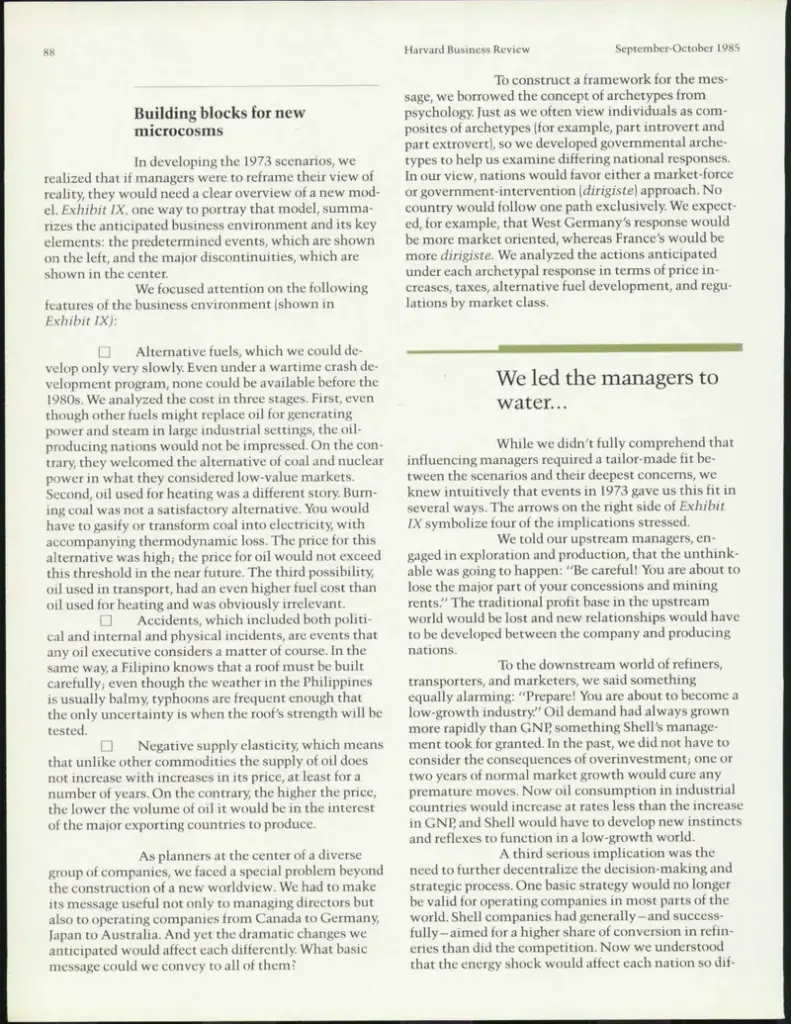
Figure 2. Early Royal Dutch Shell scenario planning reports.
