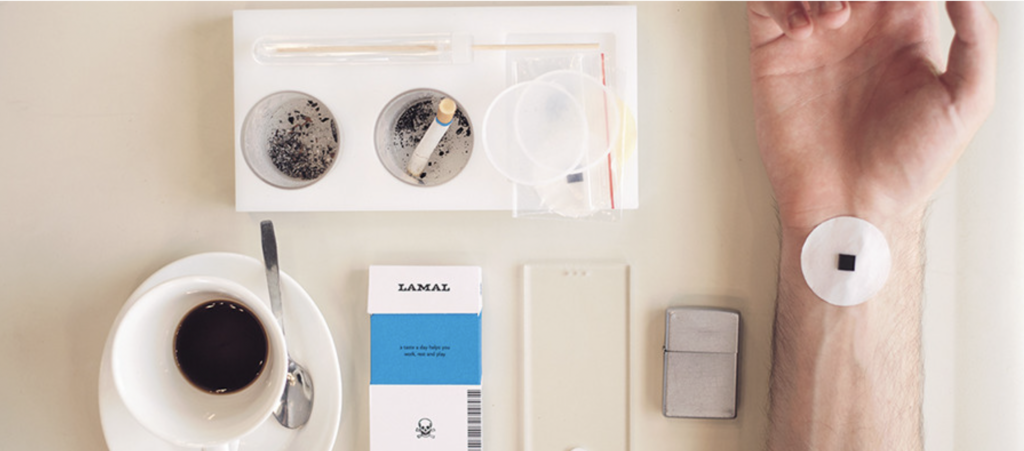
Among the projects discussed so far, Quick Fix and Hyper-Reality are probably the ones that stayed with me the most. They are very different projects, but both deal with aspects of contemporary life that have become increasingly difficult to separate from the digital systems surrounding us.
Online visibility, social validation, algorithms, information overload, digital interfaces, and the growing overlap between physical and virtual experiences are no longer future scenarios. They are already part of how many people experience the world. At the same time, these systems are so embedded in everyday life that many of their effects become difficult to notice. What I find particularly interesting is that both projects make these dynamics visible in different ways. Rather than focusing on distant futures, they take conditions that already exist and push them just far enough to make them impossible to ignore. In doing so, they show how speculative design can be used not only to imagine what might happen next, but also to question realities that are already taking shape around us.
For this reason, the relationship between people and digital environments feels like a particularly interesting area to explore further. Many of the themes that emerged throughout this research seem to converge here, from online identities and social media to information, perception, and the ways reality is increasingly experienced through digital platforms.
One of the most effective moves in Speculative Design is to take something familiar and push it beyond its usual limits. A habit, a social behaviour, a cultural value, something so ordinary that it barely attracts attention, is amplified until it becomes impossible to ignore. This is the logic behind what is often called cognitive estrangement: making the familiar seem strange enough that we can see it differently. Like hyperbole in rhetoric, exaggeration reveals contradictions, tensions, and assumptions that everyday familiarity tends to conceal.
Rather than inventing entirely disconnected futures, speculative projects usually start with something already present in the world. A technology, a social trend, a way of thinking, a system of values. The future that emerges is often less an invention than an extension. Existing tendencies are followed a little further, sometimes to the point of absurdity, sometimes to the point of discomfort. What appears unrealistic at first often feels unsettling for the opposite reason: it remains recognisable. The scenario may be exaggerated, but the logic behind it is already here. By creating a small distance from reality, speculative projects allow us to notice things that have become too familiar to attract our attention. This is what gives exaggeration its critical potential. Instead of describing the world as it is, it pushes certain aspects of it just far enough that they become visible again. Things that normally seem neutral or inevitable suddenly appear questionable. The familiar becomes strange, and once it becomes strange, it can be examined. In this way, speculative scenarios often function as a form of social commentary. They are not concerned with prediction so much as revelation. Their purpose is not to tell us what the future will be, but to expose the implications hidden within the present.
Eutropia and Quick Fix both work in this way. Conceived by Ivica Mitrović and Oleg Šuran, Eutropia imagines a Mediterranean city-state that has achieved prosperity, security, and social wellbeing through the complete monetisation of personal data. Privacy has disappeared. Surveillance is no longer controversial because it is understood as a reasonable exchange for comfort, efficiency, and stability. The collection of personal information is woven into every aspect of daily life and accepted as part of the social contract. The project takes the logic of today’s data economy and simply follows it to its conclusion. That is precisely why the scenario feels plausible. It is not difficult to imagine its world because parts of it already feel familiar. Quick Fix focuses on a different aspect of contemporary culture. Through an installation designed to resemble a vending machine, users can instantly purchase followers, likes, and online popularity. Social recognition becomes something that can be acquired as easily as a drink or a snack. The gesture is deliberately excessive, yet the logic behind it is immediately recognisable. The project takes a dynamic already present within social media platforms and turns it into a literal transaction. What is normally hidden behind algorithms, metrics, and platform design is brought to the surface and made visible. The result is both humorous and uncomfortable. We recognise the exaggeration, but we also recognise ourselves within it.
Neither project is really about the future. Both use fictional scenarios to talk about the present. Their worlds may be exaggerated, but they remain firmly connected to realities that already exist. Like a distorted mirror, they reflect contemporary society back to us in a form that makes certain details impossible to ignore. What emerges is often not something unfamiliar, but something we have stopped noticing.
In this sense, exaggeration becomes far more than a stylistic device. It becomes a way of thinking. By pushing existing tendencies beyond the limits of comfort, Speculative Design creates the conditions for a different kind of awareness. The audience is not asked to believe that these futures will happen. Instead, they are invited to consider why the scenarios feel plausible in the first place. The critical value of the project lies precisely in that moment of recognition, when an imagined future reveals something that has been present all along.
Believing in a well-constructed fiction, even if only for a moment, can change the way we see reality. But that shift becomes truly significant only when the fiction is shared, when it is embraced by many rather than experienced by just one person.
One of the greatest obstacles to genuinely new ways of thinking today is the widespread assumption that everything worth knowing has already been discovered, and that what is real, possible, or true has already been established. In this context, imagination can start to feel unnecessary, even naïve. Society often presents itself as the only version of itself that could exist. Yet much of what we consider true is not purely objective. It emerges from shared narratives, from stories that people collectively accept and pass on. These narratives shape the way we understand the world and provide the common ground on which societies are built. As Dunne and Raby point out, even our idea of reality can be challenged when we encounter a different way of seeing. Alternative narratives expand the boundaries of what feels possible, reminding us that there is never only one way to live, organize society, or interpret the world. This is the idea behind what they call micro-utopias: small imagined worlds that exist outside dominant narratives and suggest alternative ways of thinking and living. As they write, «They inspire us to ask why the real is “real” and the unrealistic is not — who decides? Is it market forces, an evil genius, chance, technology or secret elites? These projects celebrate people’s capacity to create their own imagination» (Dunne & Raby, 2013). The value of these speculative worlds does not lie in whether they can actually be realized, but in their ability to make us question assumptions that usually go unnoticed.
For a story to have this kind of impact, however, it cannot remain private. It has to circulate. It needs to be shared, repeated, and adopted by others. Stories become powerful not simply because they are original or compelling, but because they enter the collective imagination. Once enough people believe in them, they stop functioning as fiction and begin to shape reality itself. They become habits, convictions, social norms, institutions, and myths. Yuval Noah Harari develops this idea extensively in Sapiens: A Brief History of Humankind. According to Harari, what distinguishes humans from other species is not physical strength or individual intelligence, but our ability to create and maintain collective fictions. Human societies are built not only on tangible objects and material resources, but also on shared abstractions such as money, nations, religions, corporations, and human rights. None of these things exist in a physical sense, yet their effects are undeniably real because large groups of people collectively agree that they matter. These shared beliefs shape how we behave, the decisions we make, and the ways we organize our societies. Recognizing this changes how we think about reality itself. Reality is often not simply something that exists independently of us; it is also something that people continuously construct and sustain through shared belief. Once we understand this, it becomes easier to imagine that things could be otherwise.
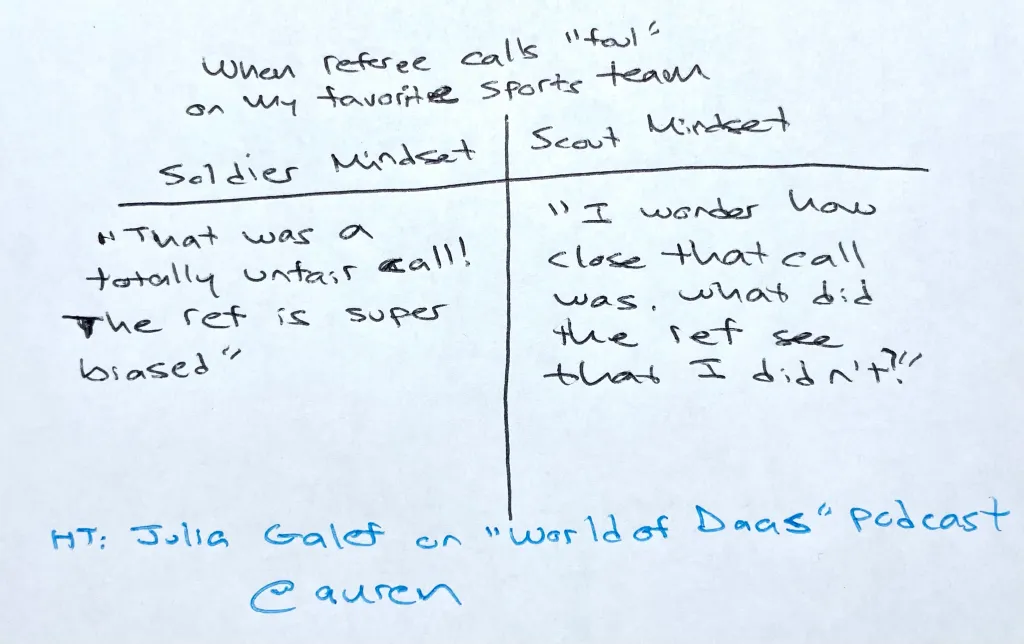
A similar point appears in Julia Galef’s The Scout Mindset, although she approaches it from the perspective of individual belief. Galef argues that our opinions are not always guided by a genuine search for truth. More often, they are influenced by what makes us feel safe, comfortable, or secure. When we want something to be true, we tend to ask ourselves, “Can I believe this?”, looking for reasons to accept it. When we do not want it to be true, we ask, “Do I really have to believe this?”, searching instead for reasons to reject it. She describes this tendency as motivated reasoning: the habit of interpreting information in ways that support our existing preferences and assumptions. To explain this process, Galef introduces two contrasting mindsets. The soldier mindset treats beliefs as territory that must be defended. Information that challenges those beliefs is seen as a threat. The scout mindset, by contrast, is driven by curiosity. Rather than defending a position at all costs, it seeks to understand reality as accurately as possible, even when doing so requires changing one’s mind. We move between these two attitudes constantly, but it is the scout mindset that allows us to remain genuinely open to unfamiliar ideas and alternative possibilities. In many ways, this is also the mindset encouraged by Speculative Design. Its purpose is not to predict the future, but to create enough distance from the present that we can begin questioning assumptions we normally take for granted. Galef also argues that beliefs become particularly difficult to challenge when they are closely tied to our sense of identity. This is why she suggests that we should “hold our identities lightly”. The phrase sounds simple, but its implications are profound. Being able to change our minds without feeling that we are losing ourselves is essential if we want to engage seriously with new perspectives. Speculative Design relies on this openness. It asks us not to decide whether a scenario will happen, but to consider what that scenario reveals about the present and about the beliefs we rarely stop to examine.
Figure 9. Comparison between the Soldier and Scout Mindsets, according to Auren Hoffman.
What does it really mean to believe in something? It is not simply a matter of accepting facts. Belief is also tied to stories, emotions, habits, and cultural values. Our understanding of reality emerges from all of these elements working together. This is why narrative is so powerful: it does not merely describe the world, it actively participates in shaping it. The stories that circulate through politics, media, religion, science, and design influence what we consider normal, desirable, or possible. In Speculative Design, these stories take the form of objects, scenarios, and visual languages that appear to come from the future while speaking directly to the present. Like myths, they do not simply describe the world as it is; they suggest what it might become. Understood in this way, design is about more than function or aesthetics. It becomes a way of proposing alternatives, a tool for making different realities imaginable and, for a moment, allowing them to feel real.
The term Design Fiction was first introduced by Bruce Sterling in Shaping Things (2005) to describe a practice that occupies a space between design and science fiction. While science fiction is often driven by narrative and imagination, Design Fiction remains more directly connected to design practice and to the possibility that what is imagined might one day become real. It is less concerned with predicting the future than with creating believable scenarios through which future possibilities can be explored. Today, Design Fiction is generally understood as a convergence of scientific inquiry, storytelling, and design. Like Speculative Design, it relies on speculation as a way of thinking about alternative futures, but it places particular emphasis on plausibility. The challenge is not simply to imagine a different world, but to make that world feel convincing enough to be taken seriously. This is why so much attention is given to diegetic prototypes: objects, products, and technologies that do not exist, yet appear within a narrative as though they already belong to it. They are far more than props or visual details. By giving material form to an imagined future, they help transform abstract speculation into something tangible and relatable.
This marks one of the key differences between Design Fiction and Speculative Design. Speculative Design often begins with an object, using it as a catalyst for questions, discussions, and critical reflection. Design Fiction, on the other hand, tends to begin with a story. The narrative establishes the world, and the objects are designed to support it, enrich it, and make it believable. Storytelling therefore becomes the primary vehicle through which ideas are explored and futures are experienced. Audiovisual media such as film, animation, sound, and digital environments are frequently used to deepen immersion, allowing audiences to engage with fictional worlds not as distant possibilities but as lived experiences. As Julian Bleecker writes, «Design objects are totems through which a larger story can be told, imagined or expressed. They are like artefacts from elsewhere, telling stories of other worlds» (Bleecker, 2009).
From this perspective, Design Fiction occupies a territory somewhere between empirical science and science fiction. Science defines what is possible through evidence, observation, and established principles. Design Fiction deliberately steps beyond those boundaries, creating space for possibilities that may appear unlikely, unattainable, or even impossible. Its value lies not in proving that a future will happen, but in exploring what that future might reveal about the present. Although Design Fiction has not yet achieved formal recognition as an independent discipline, it has become an increasingly important tool for designers, researchers, and futurists. As Gabriele Ferri argues, it enables the exploration of (im)possible scenarios capable of offering «a provocative contrast with our current society». Yet imagining alternative worlds is only part of the challenge. Making those worlds believable requires careful construction. As Jerry Jenkins observes, fictional worlds need their own rules, environments, populations, and cultures. These elements must be developed with enough coherence to allow audiences to engage with them without constantly questioning their logic. What often makes a speculative world compelling is not its distance from reality, but the balance it establishes between familiarity and novelty. We recognize something of our own world within it, while simultaneously encountering something unexpected.
James Auger explores this issue in greater depth in Beyond Speculative Design: Past – Present – Future (2021), where he identifies several strategies for making speculative narratives more engaging and credible. The Ecological Approachplaces unfamiliar or speculative technologies within ordinary contexts, allowing the strange to coexist with the familiar. The Uncanny operates through emotional resonance, drawing on themes such as death, loneliness, desire, and pain to create a sense of unease that lingers beyond the experience itself. Familiarities work by embedding everyday details into fictional worlds, reducing the distance between the audience and the scenario being presented. Finally, Alternative Presents shift attention away from distant futures by imagining parallel realities that branch from actual historical events. Rather than asking what the future might become, they ask how the present might look if history had unfolded differently.
What Auger’s framework makes clear is that credibility in speculative narratives rarely depends on technical sophistication alone. More often, it emerges from emotional and experiential proximity. The closer a fictional world feels to things we already know, recognise, or experience, the easier it becomes to step inside it and temporarily accept its logic. This principle sits at the heart of fictional design. The goal is not simply to invent objects or technologies, but to create worlds that audiences can inhabit, even if only briefly. The artefacts themselves do not necessarily need to function; they need to feel coherent within the reality they belong to. Fictional design does not simply describe a future. It stages it, materialises it, and allows people to experience it.
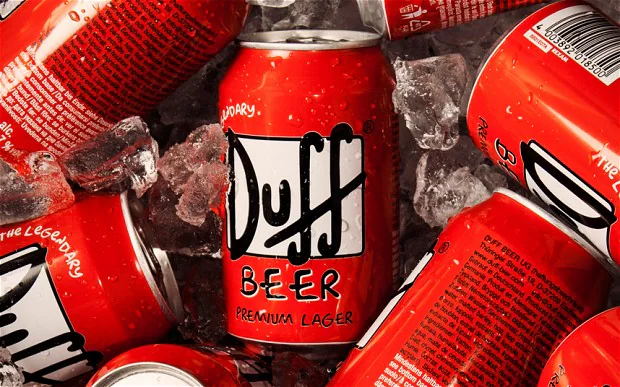
Fictional brands provide a particularly revealing example of this process. Some products that began as inventions within fictional worlds have eventually crossed into reality. Duff Beer, originally created for The Simpsons, was later produced and sold. Nuka-Cola, from the Fallout series, has appeared in limited-edition releases aimed at fans. Even Brawndo, the fictional energy drink from Idiocracy, was eventually transformed into a real product. These cases demonstrate how a well-constructed narrative can generate tangible outcomes, creating emotional connections that persist long after the fiction itself has ended.
Figure 8. Duff Beer on sale in a store.
For this reason, the distinction between Speculative Design and Design Fiction is often less rigid than it first appears. In Speculative Design, an artefact may become the starting point from which a narrative emerges; in Design Fiction, a narrative may provide the framework from which objects are developed (Neeley, 2024). In practice, however, these processes frequently overlap. Objects inspire stories, stories shape objects, and both contribute to the construction of alternative worlds. The boundary between the two remains deliberately porous, and it is precisely within this overlap that some of the most interesting possibilities for design begin to emerge.
After exploring how Speculative Design uses imagination and alternative futures to encourage critical reflection, an important question remains: what allows people to enter these imagined worlds and take them seriously, even if only for a moment?
The answer can be found in what Samuel Taylor Coleridge called the suspension of disbelief, a concept he introduced in 1817:
«If I could transfer from my own mind a human interest and a semblance of truth sufficient to procure for these shadows of imagination that willing suspension of disbelief for the moment, which constitutes poetic faith…»
— S.T. Coleridge, Biographia Literaria, 1817
What Coleridge was describing is the silent agreement that exists between a storyteller and an audience. We know that the events being presented are fictional, yet we choose to engage with them as if they could be true. It is not a matter of being deceived, but of willingly setting aside disbelief in order to experience a story on its own terms. Without this process, narrative itself would struggle to function. This idea is closely related to what literary theorists describe as the narrative pact, the implicit contract established between author and reader whenever a story begins. As Umberto Eco suggests: «In narrative we recognise the capacity to understand, interpret, and represent, giving the form of reality to worlds that are true or born of fantasy». The reader accepts the rules of the fictional world, while the author commits to making that world coherent and believable.
Speculative Design relies on a similar mechanism. Designers do not ask people to believe that an imagined future is real. Instead, they invite them to temporarily accept the internal logic of a proposed scenario and explore its implications. The challenge is not to convince the audience that the fiction is true, but to make it plausible enough that they are willing to engage with it. Only by stepping inside the scenario can they begin to reflect on the questions it raises.
This same dynamic lies at the core of Speculative Fiction, a broad category that includes narratives built around elements that do not exist in our world or do not follow its physical laws. Magic, time travel, parallel societies, and alternative histories all depend on the audience’s willingness to accept an unrealistic premise in order to explore ideas that reality alone cannot provide. The moment we accept those premises, curiosity and wonder begin to emerge, often accompanied by a deeper reflection on the world we inhabit. Speculative Fiction encompasses a wide range of genres, including fantasy, science fiction, dystopian fiction, alternate history, fables, and retrofuturism. Despite their differences, they all operate in a similar way: they construct alternative worlds governed by their own internal logic. As long as that logic remains coherent, audiences are generally willing to follow it. Contemporary design has drawn extensively from these narrative traditions, giving rise to two closely related practices: Speculative Design and Design Fiction.
As defined by Dunne and Raby, Speculative Design is a critical practice that uses alternative scenarios to provoke questions rather than solve problems. The objects it produces are not primarily intended to be used; they are intended to stimulate thought. Rather than offering solutions, they create situations that encourage discussion, challenge assumptions, and open up new ways of imagining the future.
Storytelling plays a central role in Speculative Design. Through fiction, designers create imagined worlds that invite people to look at reality from a different perspective. But why is storytelling so effective at questioning the present? And what makes fictional worlds capable of making us reconsider things that normally seem obvious or unquestionable?
One reason is that stories allow us to imagine possibilities beyond our immediate reality. They help us generate mental images, explore alternative scenarios, and set the imagination in motion (Penati, 2013, p. 22). In this way, storytelling becomes a bridge between what exists and what could exist, giving access to what Penati calls «the plurality of possible worlds». As he writes: «In narrative we recognise the capacity to understand, interpret, and represent, giving the form of reality to worlds that are true or born of fantasy». What makes these worlds particularly engaging is that they rarely feel completely detached from everyday life. When confronted with a future scenario, we instinctively start asking practical questions. How would we live in that world? How would we work, eat, communicate, or move through our daily routines? Even the most radical futures become believable when they are connected to familiar human experiences. It is this combination of distance and familiarity that allows speculative narratives to resonate so strongly.
By building a narrative, designers do more than communicate an idea. They invite people to enter a scenario and experience it from within. The audience is not simply observing; it actively participates by interpreting the story and imagining its consequences. This temporary shift in perspective creates room for reflection and makes it easier to question assumptions that usually go unnoticed. As Dolezel (1998) observes: «Our actual world is surrounded by an infinity of other possible worlds. One only needs to move slightly away from reality to enter the spectrum of possibility and alternative».
Narrative is therefore not just a way of communicating ideas; it is also a way of thinking through them. Jonathan Gottschall describes human beings as homo fictus, creatures who constantly create, consume, and live through stories. Narratives are not merely entertainment. They are one of the main tools we use to understand ourselves and the world around us. This idea is echoed by the psychologist and novelist Keith Oatley, who compares stories to flight simulators for social life. Just as pilots can train for difficult situations without facing real danger, stories allow us to explore emotional, moral, and social challenges without experiencing their real-world consequences. They provide a safe space in which we can test reactions, consider alternatives, and imagine outcomes.
Speculative Design intentionally draws on this capacity. Its goal is not simply to illustrate a concept, but to create an experience that generates both emotional and intellectual engagement. As game designer James Wallis points out, human beings do not just enjoy stories; they are driven to create them. Narrative taps into something deeply rooted in the way we think and make sense of the world. As Jonathan Gottschall argues, every compelling story revolves around conflict: a tension, an obstacle, or a disruption that needs to be confronted. In Speculative Design, that conflict often emerges from the gap between what we know and what we are shown. The resulting sense of disorientation encourages reflection and opens the door to critical thinking. As the British playwright William Maugham once observed, fiction works like bitter medicine coated in sugar: the message is absorbed almost without notice because it arrives through an engaging story. This is what gives narrative its particular power within Speculative Design. Rather than simply explaining an idea, it stays with us, leaving an impression that explanation alone rarely achieves.
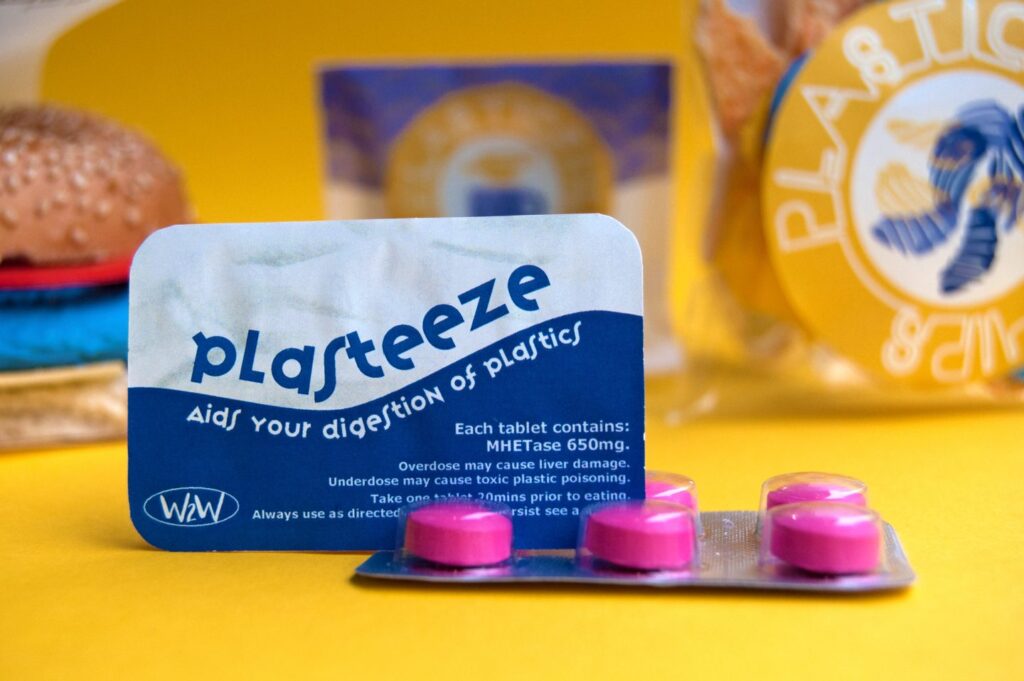
One project that clearly shows how design can engage with social issues is Plasticful Foods, developed by an interdisciplinary team from the University of Amsterdam and the Amsterdam University of Applied Sciences. Rather than simply informing people about plastic pollution, the project tries to unsettle them, disrupting familiar assumptions about waste and consumption just enough to trigger a shift in perspective. It does this by blending real data on plastic pollution with humor and marketing strategies borrowed from commercial advertising. The result is a near-future scenario in which plastic has become so widespread that it ends up in our daily diet. From this premise comes the deliberately provocative idea of Plasticful Foods: a line of “food products” made with recycled plastic, supposedly made digestible through a fictional enzyme called Plasteeze, styled like a dietary supplement.
The logic behind it is intentionally extreme: if microplastic consumption keeps increasing and waste management doesn’t improve, we might eventually have to adapt, not by reducing plastic, but by learning to digest it. It’s a disturbing thought, but that’s exactly the point. It pushes us to ask a simple question: Is this really the future we want? In this sense, the project moves beyond provocation and becomes a tool for critical reflection, asking us to confront the consequences of what we’re doing, or not doing, today.
Figure 4. Plasticful Foods, 2020
Moving away from sustainability but staying within the same speculative framework, technological development offers another rich area for exploration. As digital technologies become more pervasive, they are reshaping not only how we interact with the world, but how we perceive reality itself.
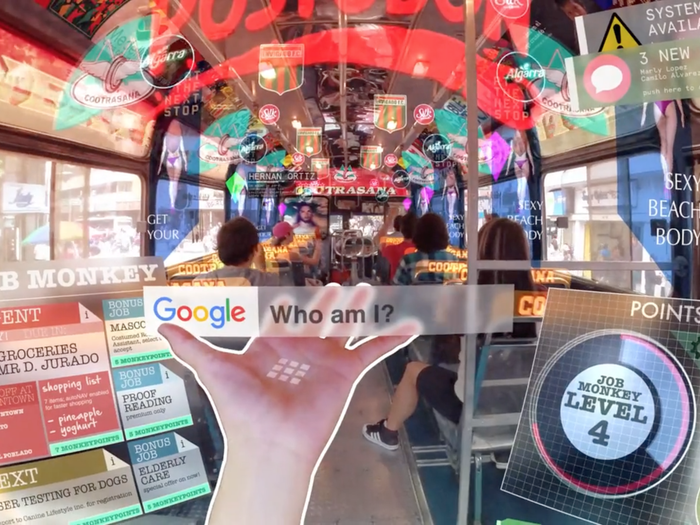
This is where Hyper-Reality comes in, a short conceptual film by Keiichi Matsuda that explores a future in which the boundary between physical and digital has completely collapsed. In this hyper-mediated everyday life, augmented reality, wearable devices, and constant streams of information create an environment saturated with digital stimuli. The result is both fascinating and overwhelming: a world full of possibilities, but also one where perception becomes fragmented and distorted. Matsuda doesn’t offer answers, he opens up a space for reflection, asking us to consider where this trajectory might lead and what it could mean for our sense of identity, control, and freedom.
Figure 5. Hyper Reality, 2024
A similar approach can be found in the work of Anthony Dunne and Fiona Raby, who often construct alternative worlds to explore the social, political, and technological implications of the future.
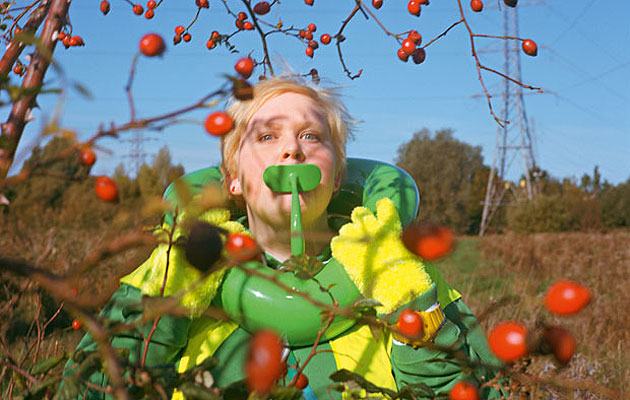
In Foragers, they imagine a scenario shaped by extreme overpopulation and food scarcity. If traditional food systems can no longer sustain the global population, what alternatives might emerge? Their answer takes the form of a speculative community equipped with wearable devices and biotechnological enhancements, capable of extracting and metabolizing nutrients directly from the environment. While the concept is visually striking, its real strength lies in the questions it raises, about adaptation, inequality, and the extent to which we might be willing to alter the human body in response to global crises.
Figure 6. Foragers, 2009
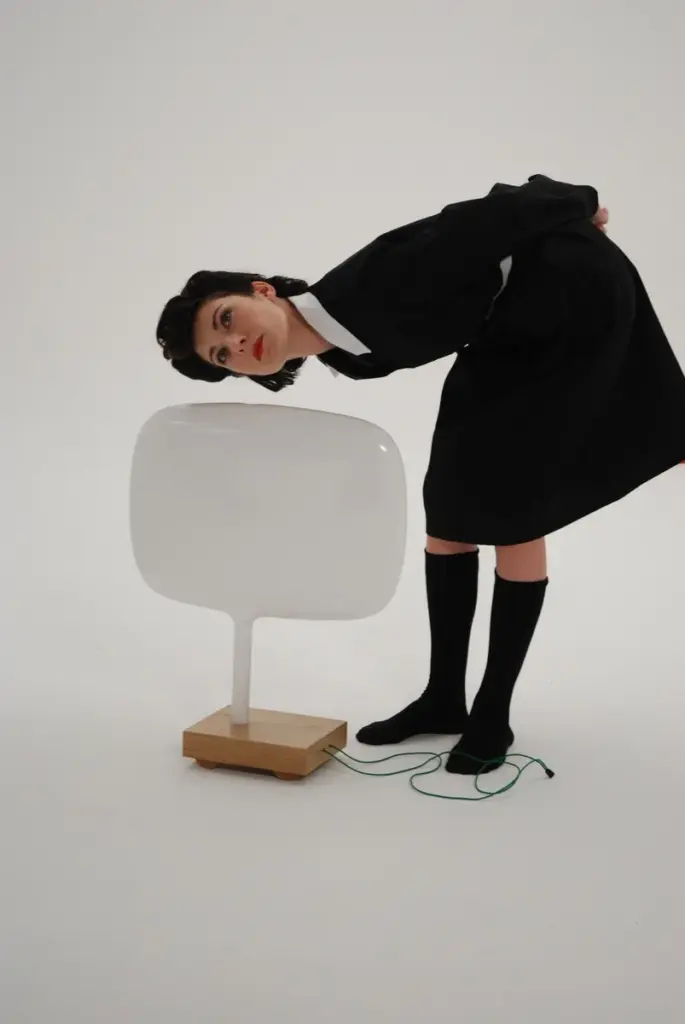
In Needy Robot, Dunne and Raby shift the focus to our relationship with technology, asking what might happen if machines began to exhibit emotions and desires of their own. The robots in the project display subtle but unsettling behaviors: one holds eye contact for too long, another appears anxious when someone gets too close. These small details make the interaction feel strangely human, and slightly uncomfortable. The project doesn’t try to predict the future, but to probe it, inviting us to consider what coexistence with increasingly “human-like” technologies might actually feel like and what kind of relationships we might end up forming.
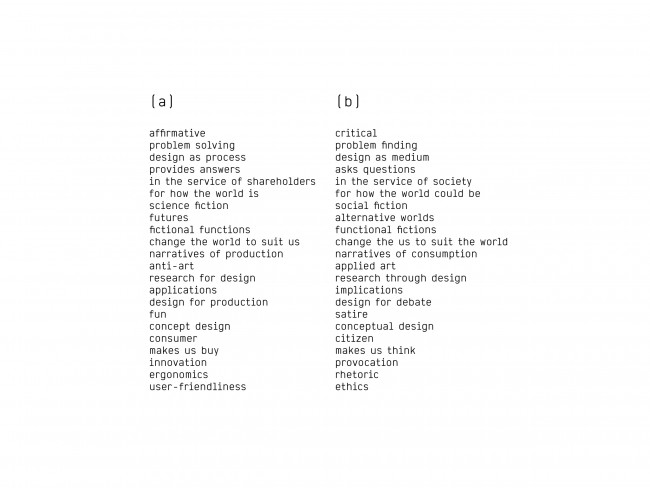
Through prototypes, narratives and fictional artefacts, Speculative Design does not set out to provide answers; instead, it encourages collective reflection. In Speculative Everything (2013), Anthony Dunne and Fiona Raby outline what can be understood as a manifesto for this approach, framing it through a direct comparison between two ways of thinking about design.
They present this comparison as a set of paired concepts: on one side, those associated with traditional design (A), and on the other, those that define Speculative Design (B). The aim is not to replace one with the other, but to open up an alternative perspective, a parallel lens through which to reflect on design and better grasp its critical potential.
Expanding on this framework, Leon Karlsen Johannessen from the Norwegian University of Science and Technology revisits the so-called “A/B Manifesto” in The Young Designer’s Guide to Speculative and Critical Design (2017). He suggests that the two sets of concepts should not be read as strict opposites, but as complementary viewpoints. Rather than excluding each other, they operate in tension: each element in “column A” is mirrored by one in “column B”, creating a contrast that helps clarify what Speculative Design is, and, just as importantly, what it is not.
In a context marked by profound instability and continuous change, the future takes shape as a fundamental tool for expanding the horizon of design. Not as something to be predicted, but as a reflective dimension that stimulates the imagination, opening the way to the construction of possible scenarios and to the definition of visions capable of guiding action in the present. According to the writer H. P. Lovecraft, the unknown generates fear in human beings, an emotion that has played a crucial evolutionary role in survival, protecting us from potential dangers. However, the unknown does not represent only a threat, but also a generative resource: it is from what we do not know that new narratives, visions, and civilizations emerge. As the anthropologist David Graeber states, it is precisely imagination that distinguishes humans from other animals: «…it differentiates humans from animals, a bee from an architect». Even the simple question “What if?” becomes fundamental in shifting design toward the realm of hypothesis and the exploration of what could happen (Anthony Dunne & Fiona Raby, 2013). The future, therefore, is not a fixed or abstract entity, but a complex human process that emerges from the interaction of multiple presents and generates just as many possibilities.
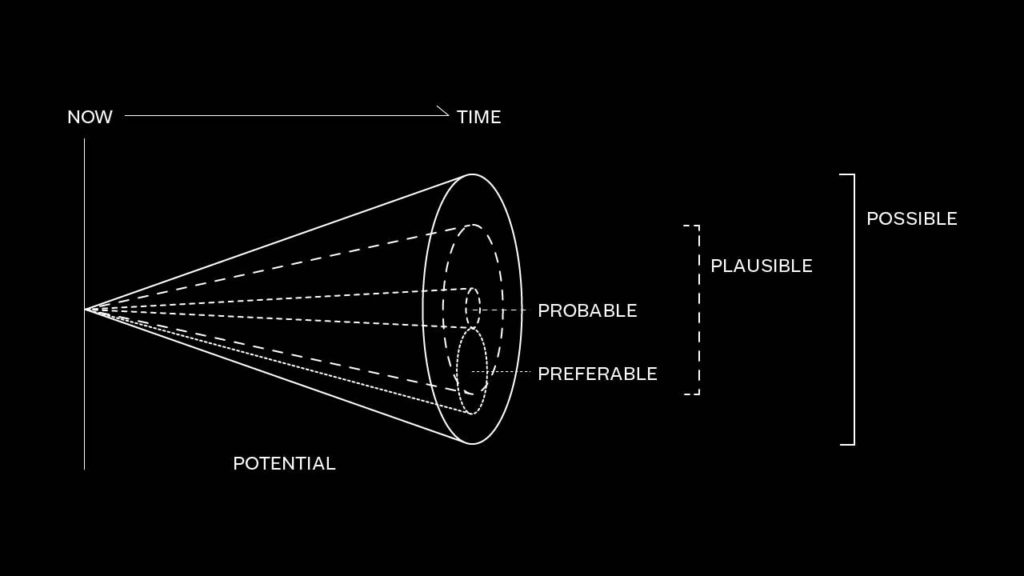
One of the most effective tools for visualizing different ways the future can unfold is the Futures Cone, also known as the 3P Model. It was developed by Anthony Dunne and Fiona Raby (2013), building on earlier work by Stuart Candy (2009) and introduced within the Design Interactions program at the Royal College of Art in London. The model is structured as a series of cones that branch out from a shared starting point, the present, each representing a different category of future. The probable refers to what is most likely to happen, and it is the space where most designers typically operate. The plausible moves beyond simple prediction, exploring scenarios that are believable, even if not certain, an approach often used by companies preparing for unexpected developments. Then there is the possible, which includes everything that may seem unattainable today due to technological, cultural, or social limits, but could become achievable in the future, as suggested by Michio Kaku in Physics of the Impossible (2008). Alongside these, we can also consider the preferable future, located at the intersection between the probable and the plausible. While it inevitably reflects subjective values, it also aligns with broader societal and market needs.
Figure 1. The Futures Cone (Candy, 2009).
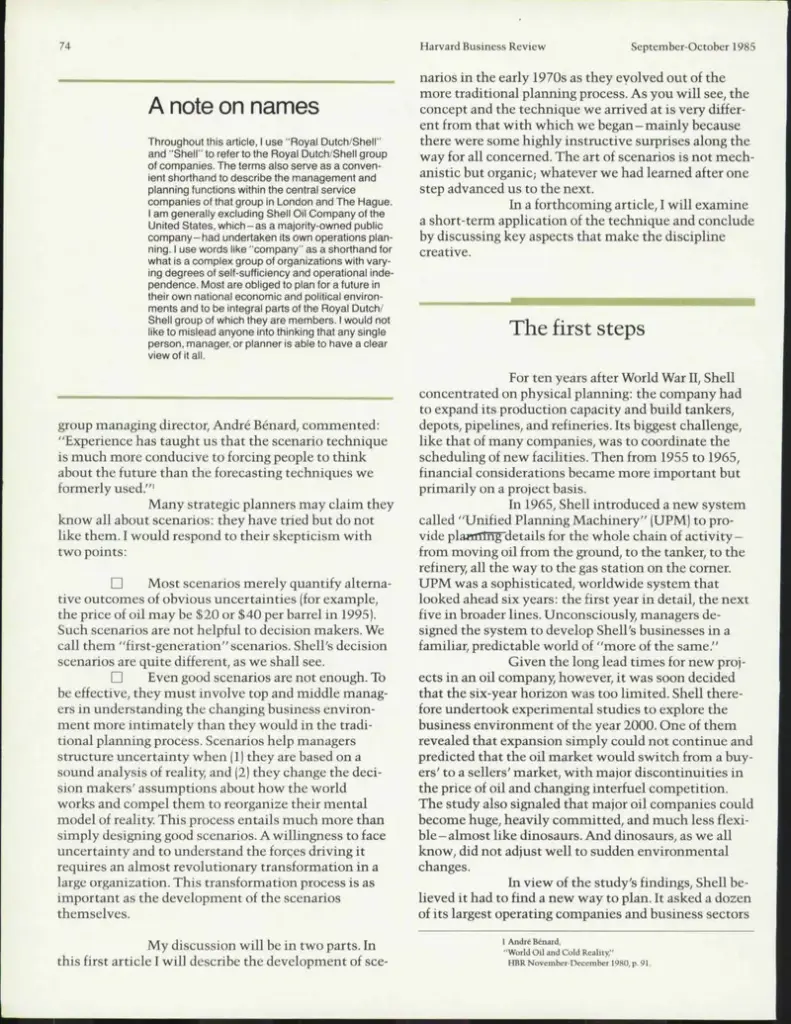
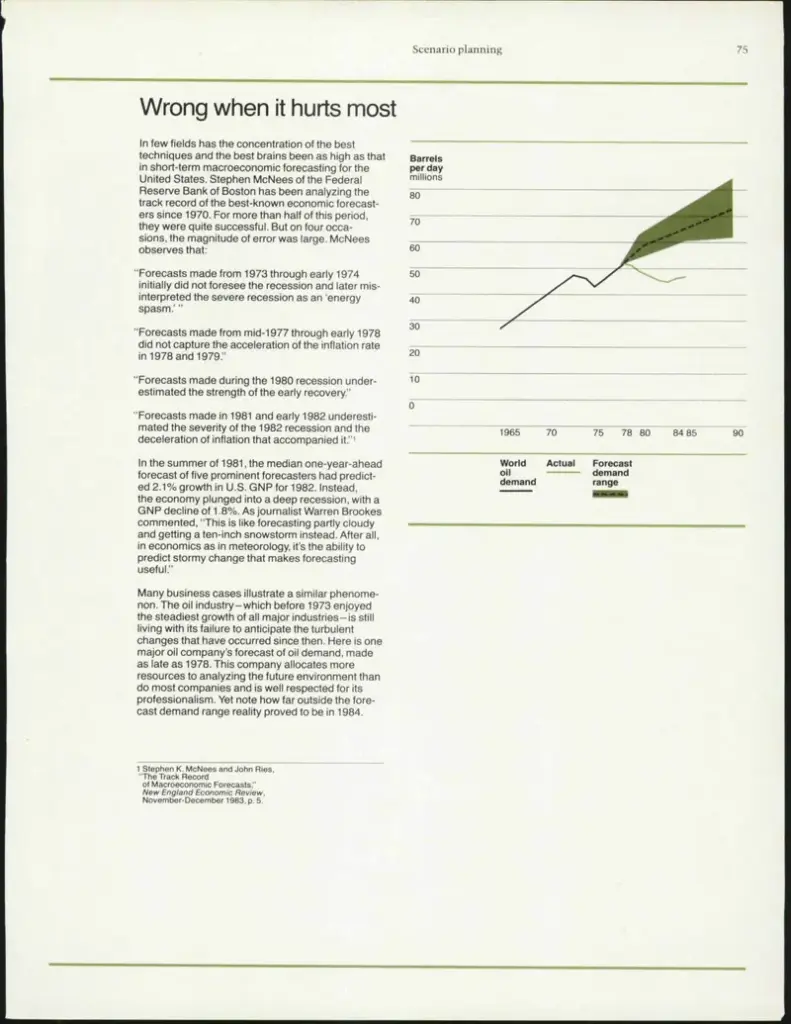
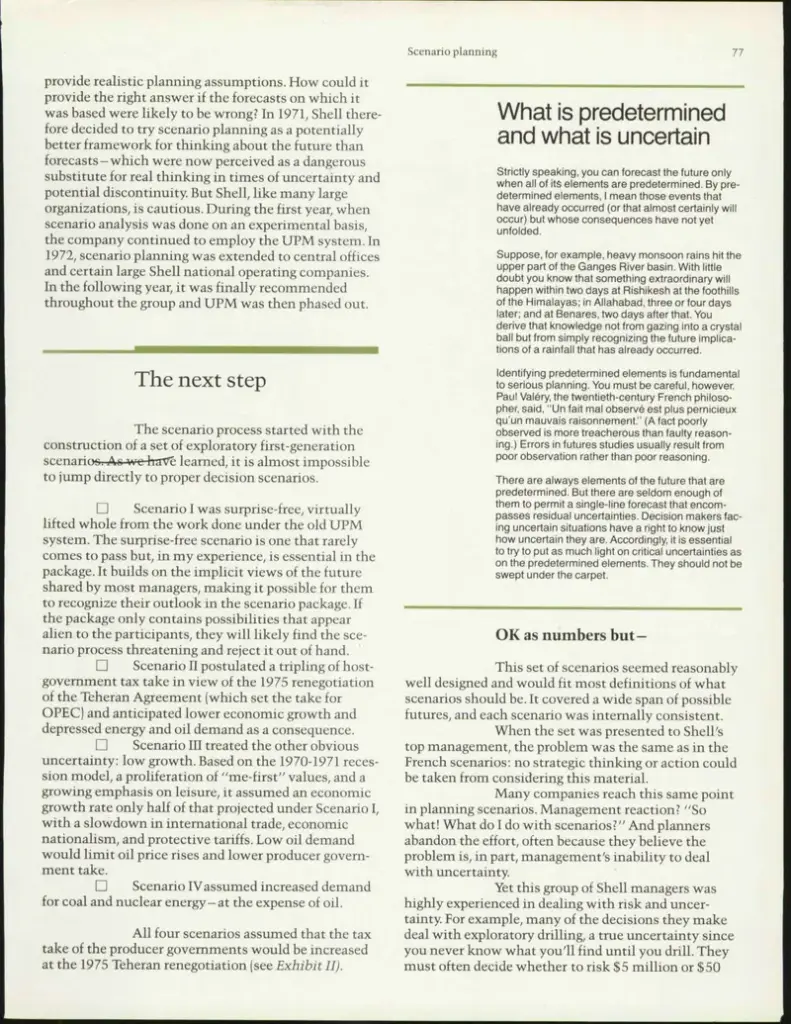
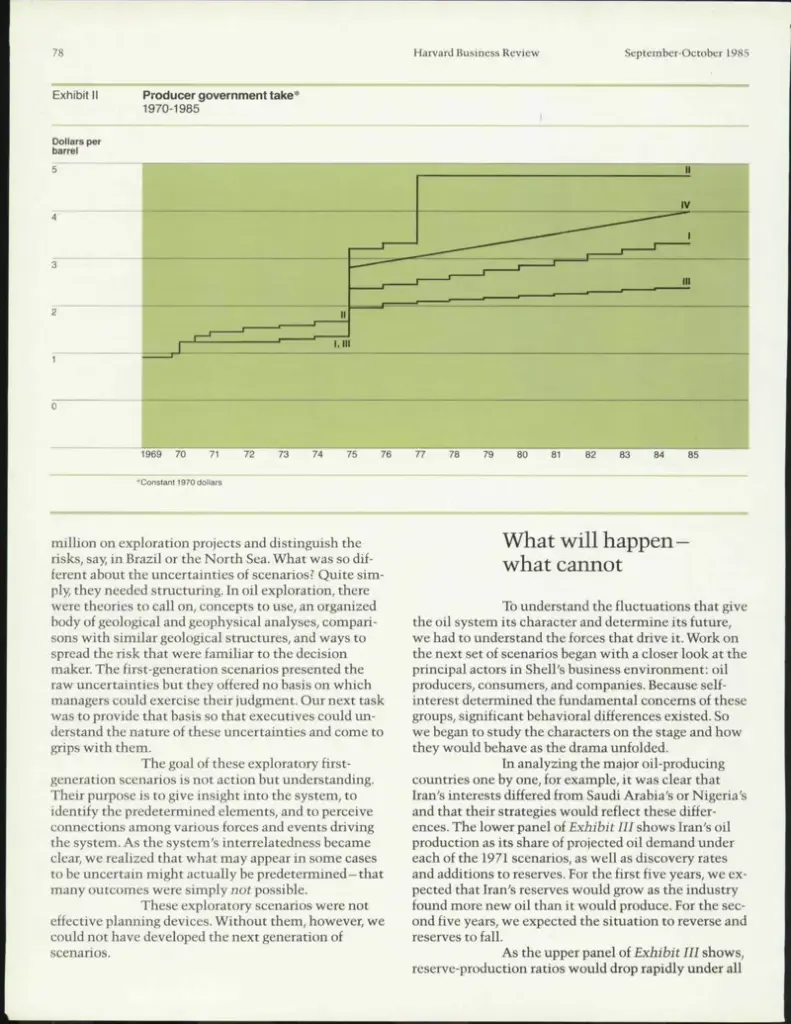
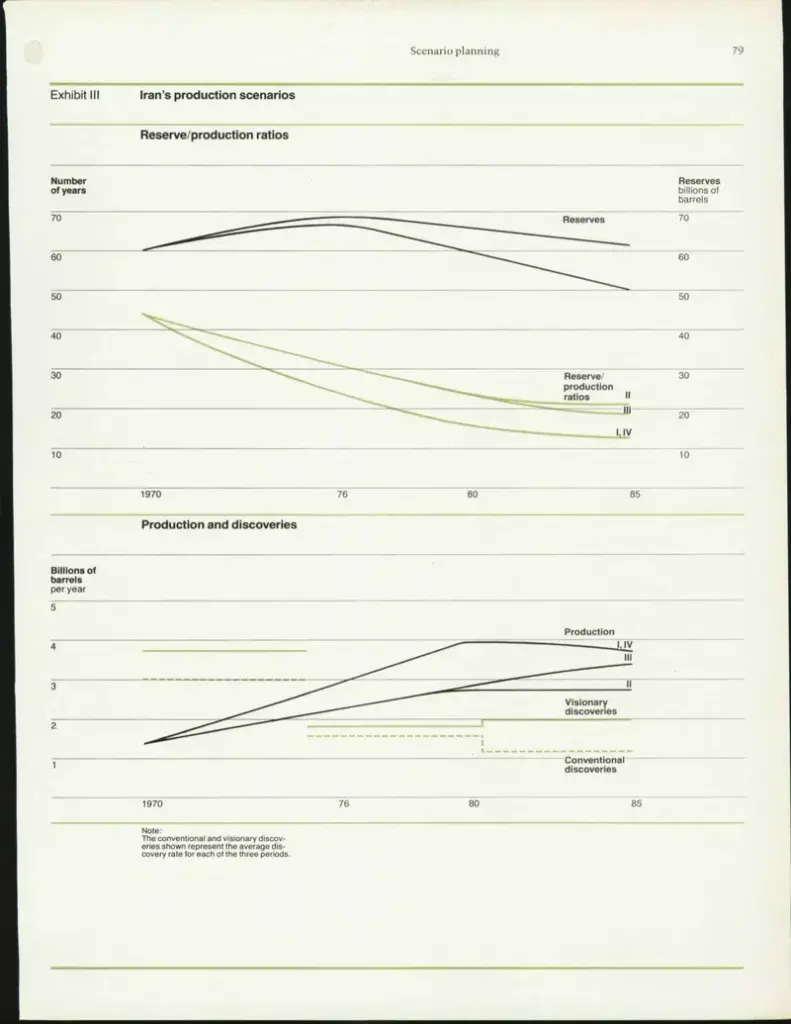
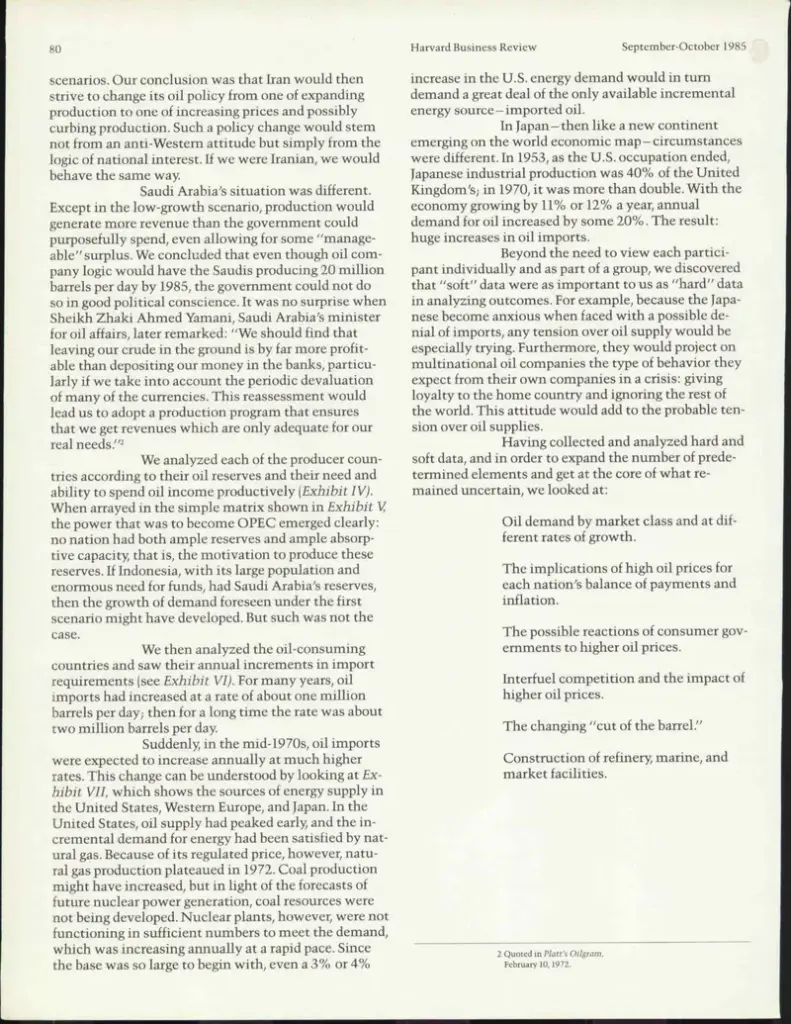
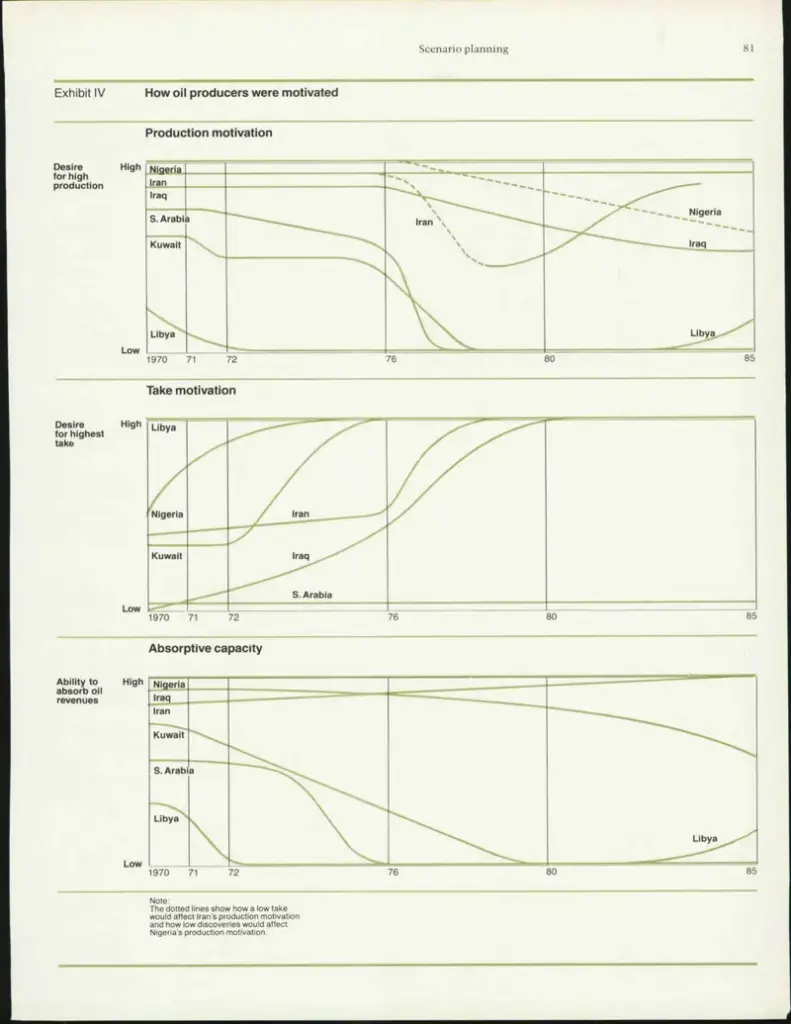
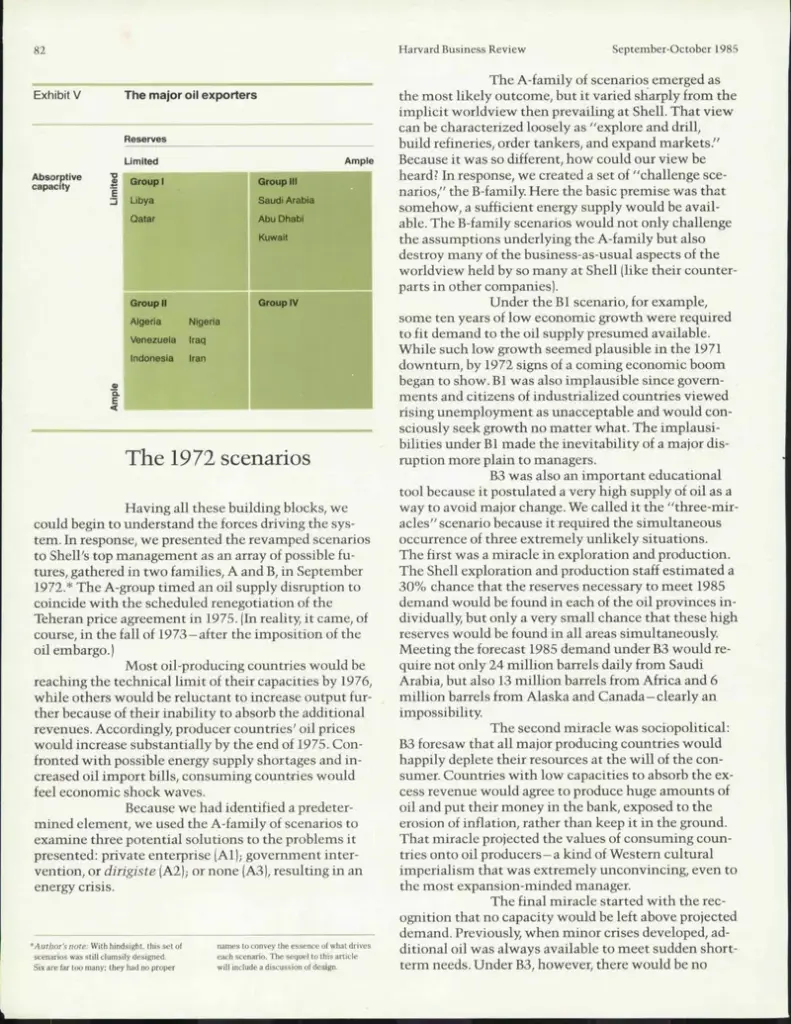
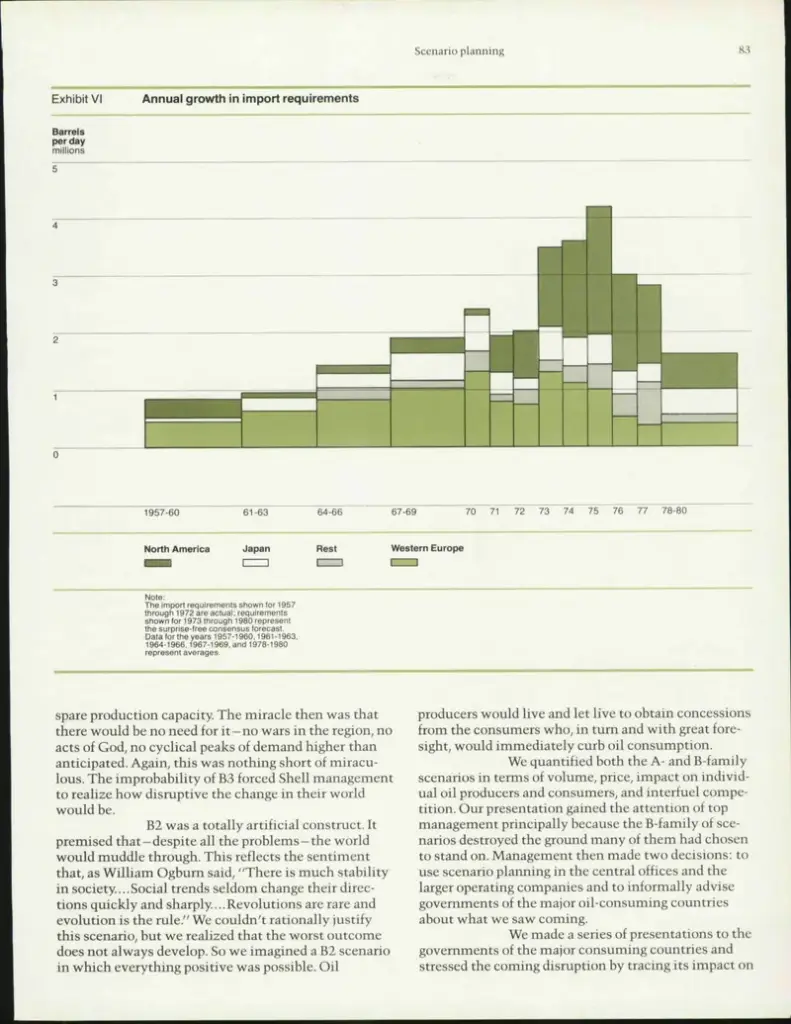
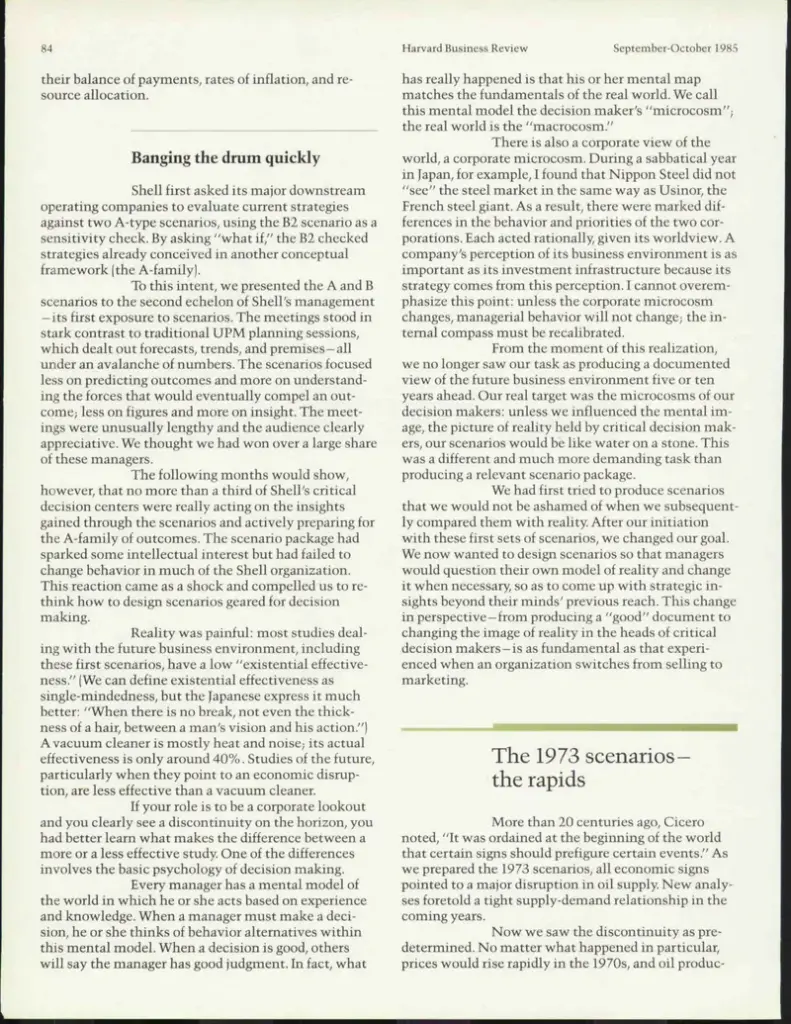
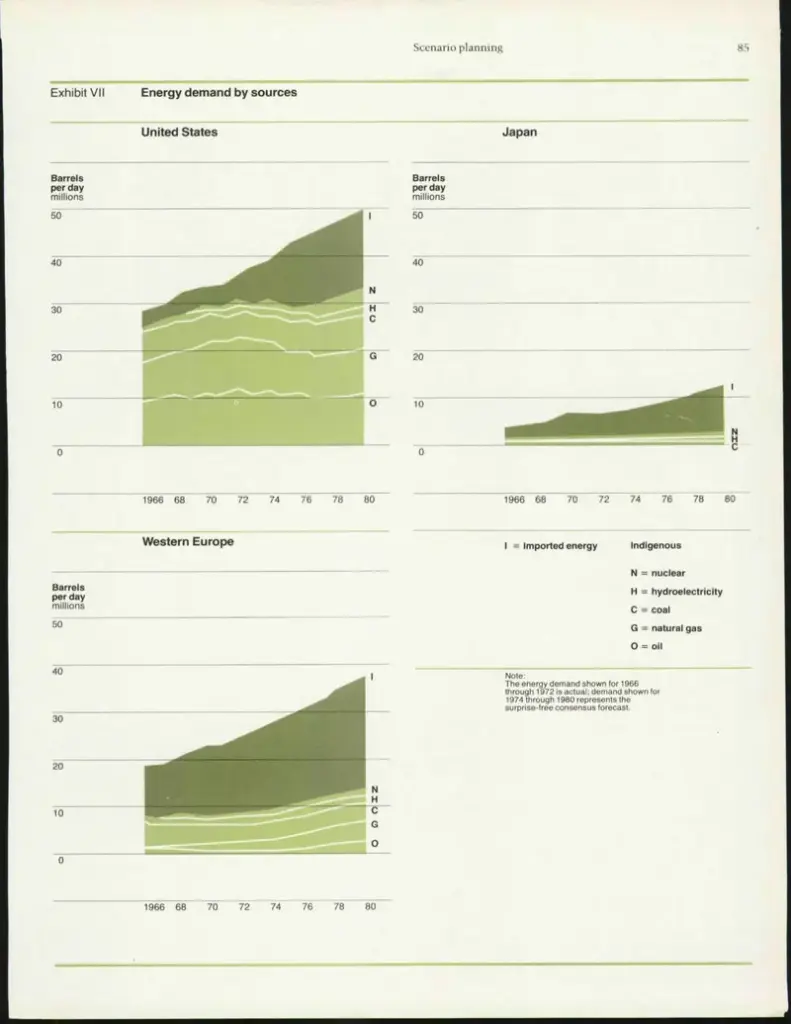
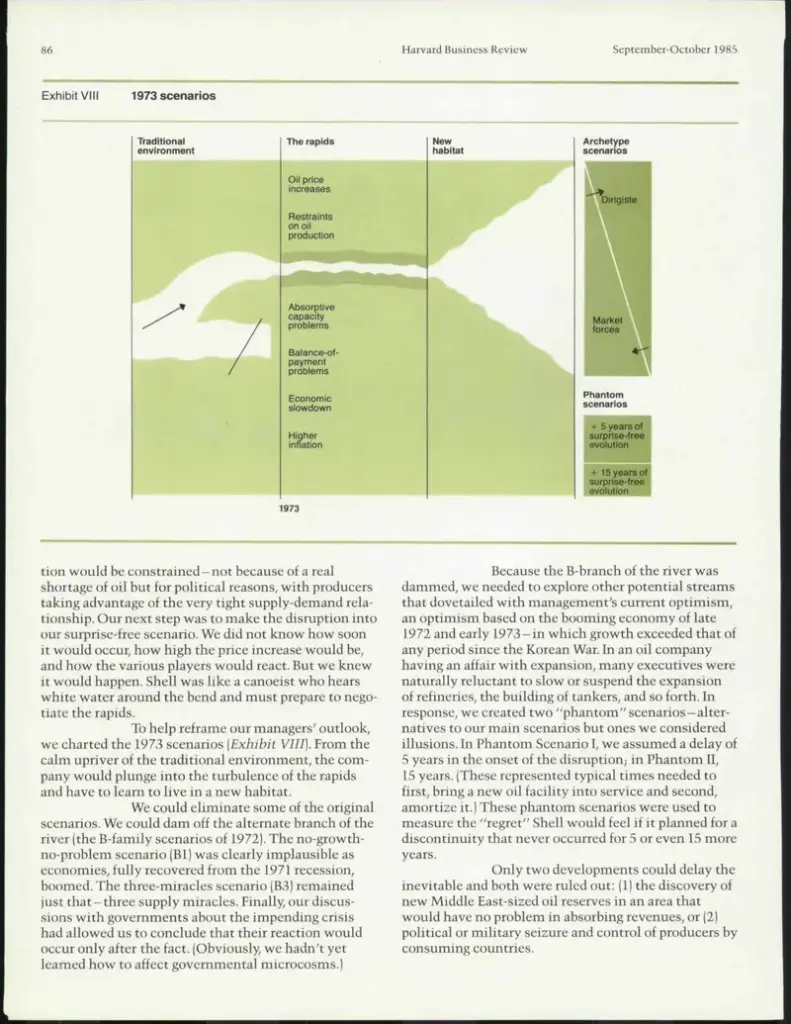
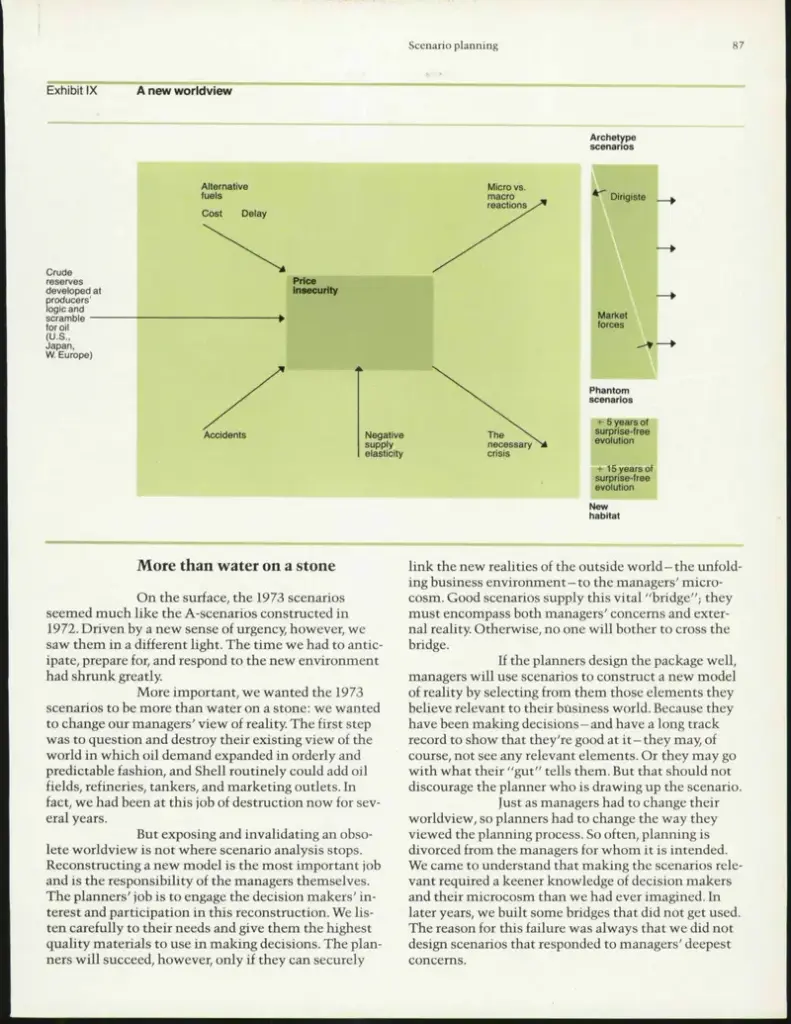
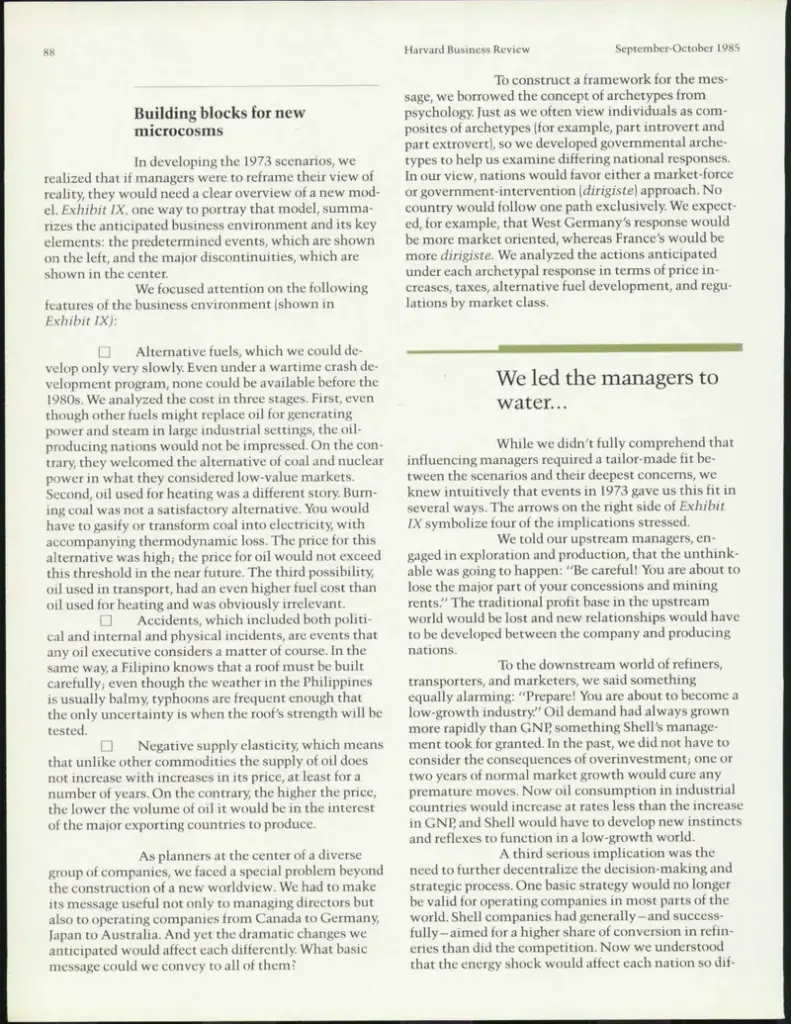
For this reason, it becomes a key area for Speculative Design, which aims to guide change by proposing alternative, inclusive, and sustainable scenarios. To better understand how these scenarios are actually constructed, it is useful to look more closely at what is known as Scenario Building, or Scenario Planning. Scenario Planning originated in the pioneering work of Pierre Wack, a French strategist at Royal Dutch Shell, one of the world’s leading oil companies. His task was to monitor global events that might influence oil prices. Until the Second World War, prices had remained relatively stable and affordable, but from the 1970s onward the situation began to shift dramatically: U.S. oil reserves were declining, global demand was rising, and exporting countries, particularly Arab nations, were gaining increasing negotiating power. This combination of factors posed a serious risk to the company’s economic stability. In response, Wack and his team developed a new planning approach that moved beyond linear forecasting. Rather than searching for a single “correct” prediction, they constructed multiple possible scenarios, each based on different political, economic and social variables. Two main scenarios stood out: a more optimistic one, in which oil prices would remain low and stable, and a more challenging but realistic one, which anticipated a sharp increase in costs. The effectiveness of this approach became clear during the 1973–1974 oil crisis. Shell was the only major company that found itself prepared, as its leadership had already adjusted their strategies according to the most plausible scenario identified by Wack. This foresight allowed the company to navigate the crisis from a position of strength, further consolidating its role in the global market. Building on this legacy, Peter Schwartz, who later succeeded Wack at Shell, defines a scenario in his book The Art of the Long View (1991) as «a tool for ordering one’s perceptions about alternative future environments in which one’s decisions might play out». He goes on to explain that «Scenario Planning is about making choices today with an understanding of how they might turn out». In this sense, Scenario Planning is fundamentally about making informed decisions in the present, with an awareness of their potential future consequences. Within this framework, the role of the designer becomes central. It is no longer just about introducing new products to the market, but about contributing to the creation of more just and sustainable futures. Design can therefore take two different directions: a traditional approach, focused on problem solving, responding to concrete needs through efficiency, aesthetics, and ergonomics and a more critical and speculative one, focused on problem finding, which brings questions to the surface and opens up space for reflection on ethical, environmental and social issues.
Figure 2. Early Royal Dutch Shell scenario planning reports.