When I applied for this master’s degree, I mentioned being interested in projection mapping. This interest was awakened again when I visited the installations of Klanglicht this year. Standing among the lights, sounds, and shifting architectural forms, I felt both inspired and overwhelmed. I realized I had no idea how to approach this topic in my own work; therefore, I will use this blog post to explore and understand projection mapping.
Image Beyond the Screen: Projection Mapping
Projection mapping integrates light, image, and physical space in a way that fundamentally challenges how we perceive visual art. Instead of presenting images on a flat, rectangular screen, artists use the three-dimensional world as their canvas. This approach transforms architecture, sculpture, or even moving objects into dynamic visual surfaces that respond to digital animation, sound, and movement. The result is not merely decorative – it can be immersive, narrative, or conceptual, depending on the artist’s intention.
The conceptual roots of projection mapping can be traced back to pre-modern visual devices such as the camera obscura and the magic lantern. In the 17th century, the magic lantern projected hand-painted images onto walls and screens, enchanting audiences with ghostly apparitions and dreamlike spectacles. These early experiments already contained the essence of projection mapping: the fusion of light, illusion, and physical space. However, what differentiates contemporary projection mapping is its precision, interactivity, and its ability to align perfectly with the contours of real-world objects and to integrate digital media in real time.
The modern term “projection mapping” (sometimes called video mapping) emerged around 2008, paralleling the rapid development of affordable digital projectors and computer-based design tools. This technological accessibility enabled artists, designers, and technologists to experiment with mapping projections onto buildings, sculptures, and performance spaces with previously impossible accuracy.
How Projection Mapping Works
Projection mapping relies on careful alignment between digital imagery and physical surfaces. Although each project is unique, most follow a general workflow:
- Mapping the Space: The physical characteristics of the target surface, for example, a building facade, a sculpture, or a stage, are measured in detail. Techniques such as 3D scanning or photogrammetry help create an accurate digital model, allowing artists to plan how animations will interact with real-world geometry.
- Designing the Visuals: The projected content is then created according to this mapped template. Artists may use software such as MadMapper, TouchDesigner, etc. to design visuals that emphasize the architecture’s textures, edges, and proportions. The imagery might be abstract and rhythmic, narrative and symbolic, or responsive to sound and motion.
- Calibration and Projection: Projectors are positioned and calibrated so that every pixel aligns precisely with the intended part of the surface. Modern systems often use camera-based calibration and structured light to fine-tune accuracy, significantly reducing manual trial and error.
- Performance and Interaction: Finally, the projection is activated – often in synchronization with soundscapes, live performance, or interactive sensors that react to audience movement or environmental conditions. The boundaries between digital image and physical space dissolve, creating a shared, immersive experience.
What distinguishes projection mapping from traditional media is its site-specificity. Each project is uniquely shaped by the architecture, the context, and the audience’s perspective. It is, in a sense, art that cannot exist independently of its environment.
Projects
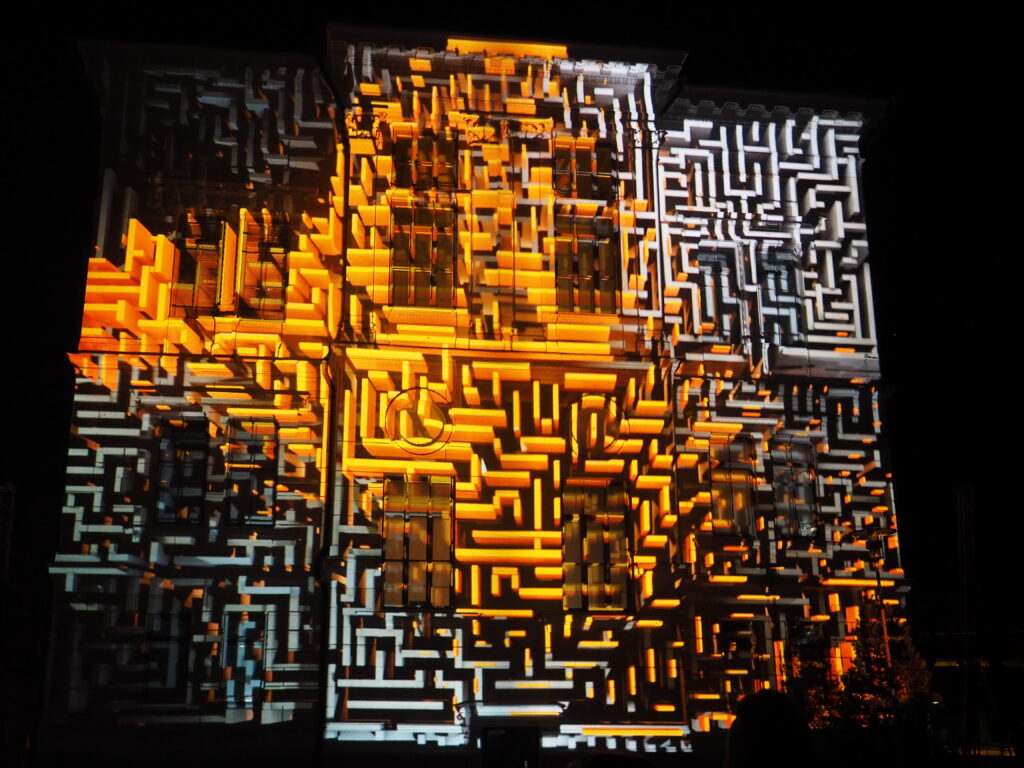
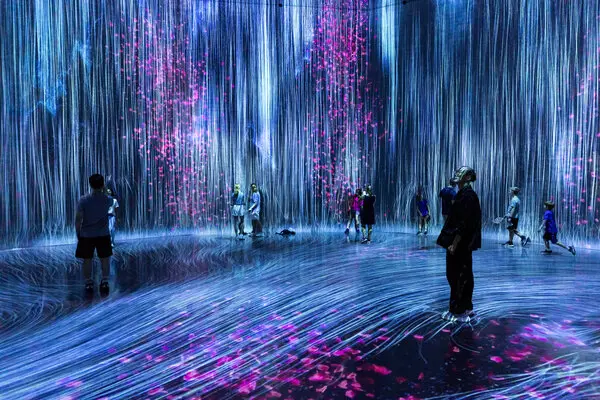
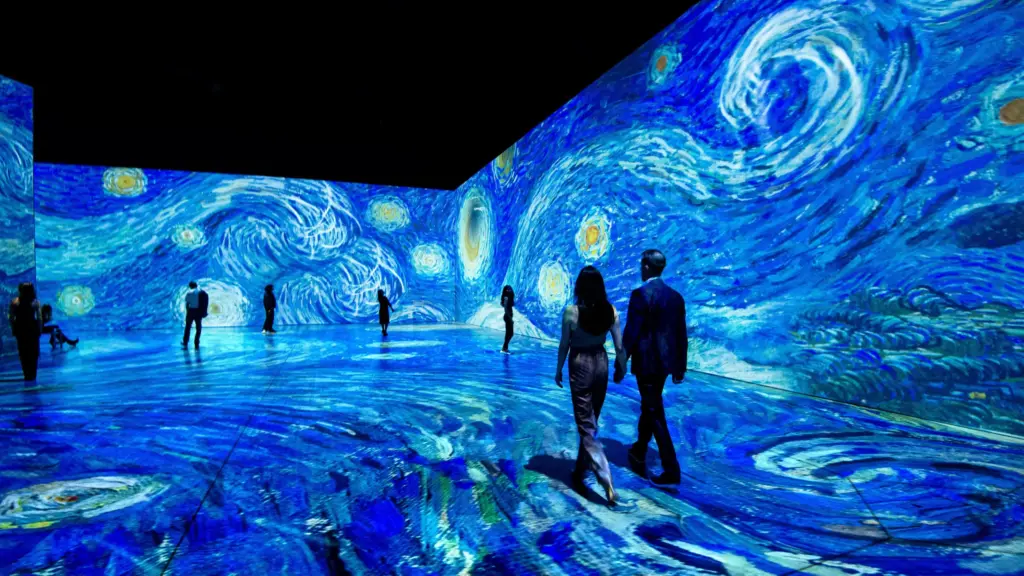
Over the past decade, projection mapping has become a prominent part of contemporary art festivals worldwide. Examples include teamLab’s immersive installations in Tokyo and Singapore, Lux Helsinki’s annual light festival, and the Van Gogh Immersive Experience, where famous paintings are animated and projected onto entire rooms, surrounding visitors with flowing brushstrokes and color.
Klanglicht 2025
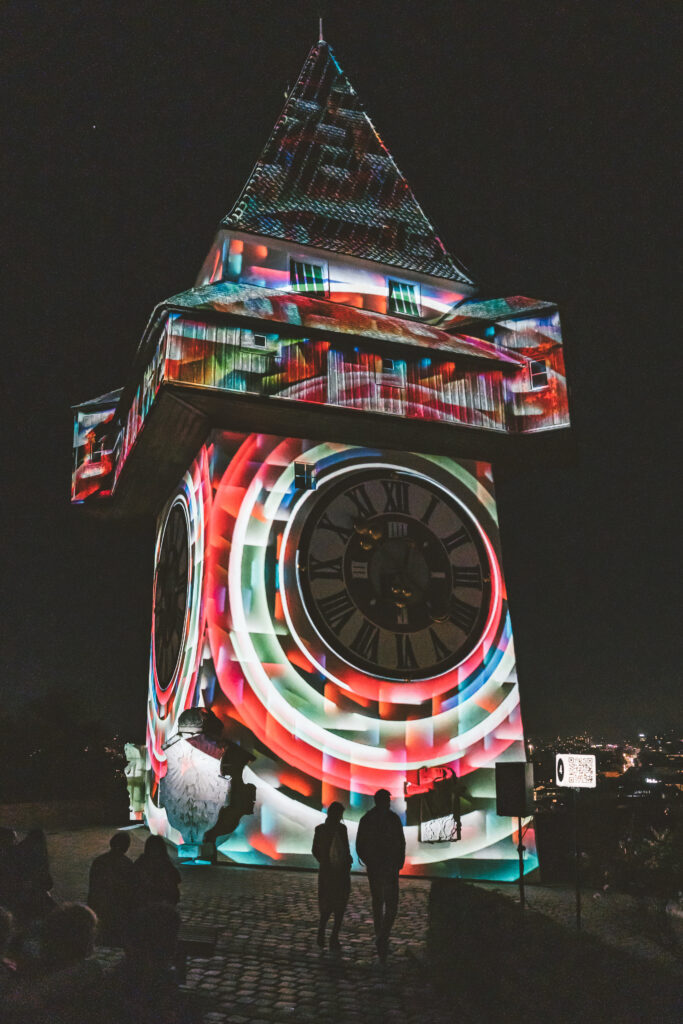
Among these examples, Klanglicht, held annually in Graz, offers a poetic form of light-based art. The festival transforms the city into a vast open-air gallery, merging sound, projection, and public architecture.
One installation that stood out to me was “Pochen” by Julian Hölscher, projected onto the city’s iconic Uhrturm. The work explored the relationship between rhythm and perception – oscillating between speed and stillness, between structured sound and chaotic noise, and between tension and release. I found myself focusing on the methods: how the visuals were mapped, how they corresponded to the tower’s geometry, and how the visuals might have been created. This project is what truly kick-started this blog post.
Another piece, “Vertigo,” while not strictly projection mapping, captivated me differently. It made me realize how much I enjoy visualized music. One of the visualizers (sadly I am unsure which one) resonated deeply – it showed sound the way I see it in my head.
References
Schmitt, D., Thébault, M., & Burczykowski, L. (Eds.). (2020). Image beyond the screen: projection mapping. John Wiley & Sons.
https://ocula.com/magazine/spotlights/teamlab-planets-tokyo-is-a-phenomenon-what-is-it
https://thearchivemagazine.com/teamlab-art-collective-interview-when-art-meets-technology
