Globe at Night project — Testing discoverability and usability

Last week I asked myself “How can interaction design combat light pollution?”. This week I researched one way to raise awareness for the cause, which is citizen science. It involves regular people, who can submit measurements of the night sky brightness. This way, they support scientific projects in an interactive and educational way. I found out that there are several campaigns that deal with this theme, but the majority of people are not aware of them and I wonder why.

To get to the root of the problem, I selected the Globe at Night project and tested its discoverability and usability. According to its website, Globe at Night is the most successful light pollution awareness campaign to date, thanks to over 200,000 measurements from people in 180 countries over the last 14 years.

The research method I used was usability testing. I started out by defining two tasks I would present to each participant:

  1. You want to report data about light pollution in the sky. Find a service on the Internet (app or website) that allows you to send data to scientists.
  2. Report the condition of the sky right now to the Globe at Night project.

I tried to include people of different ages, nationalities and levels of digital competency. Ideally, everyone who has a smartphone or a pc and access to the Internet is part of my target group, but I chose to narrow it down to people interested in science or nature lovers. I was able to find 5 people, who performed the tests on pc and on smartphone.

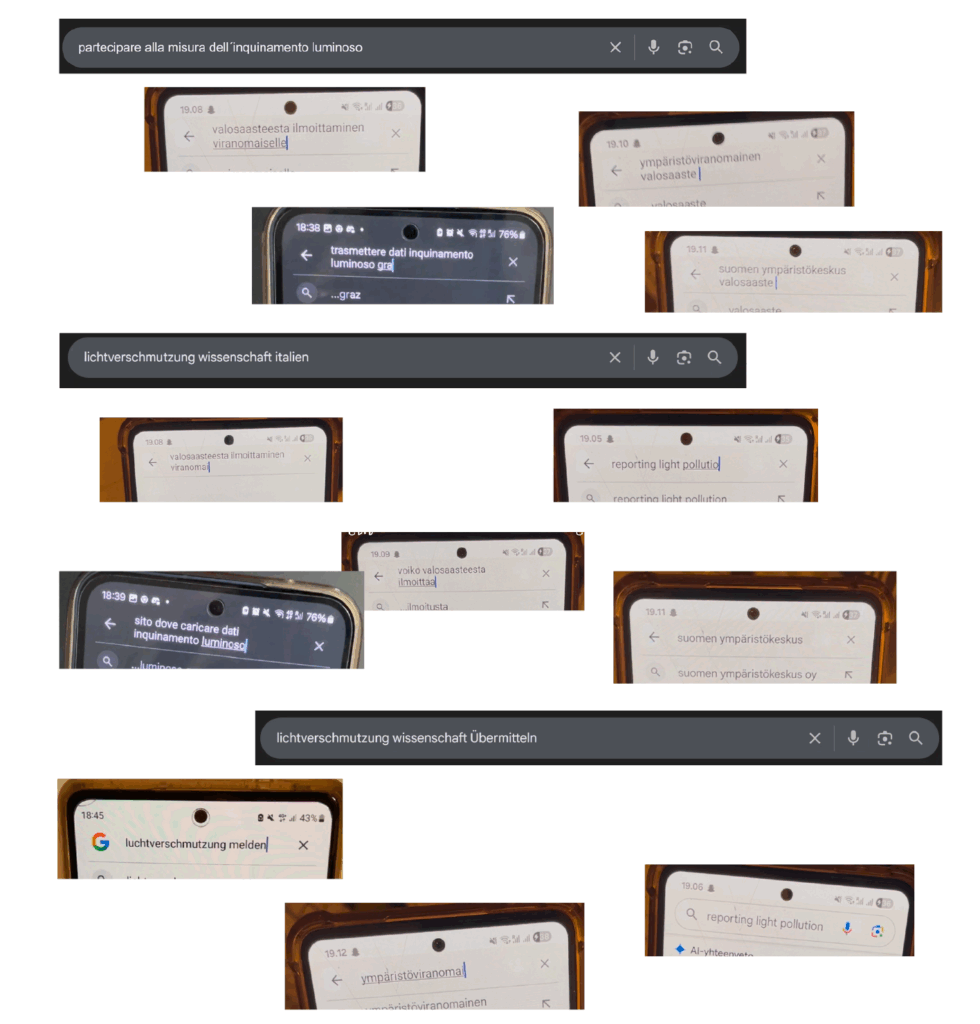
It is not easy to find a service that allows you to report data about light pollution to scientists. People tend to search in their own language for a service in their city and country. Many websites were found but no one was convinced of their result. The Globe at Night project claims to be the biggest of its kind, but it remains hidden by the search engine, even when searching for keywords like “report light pollution”. I think that this problem could be solved by improving the Search engine optimisation and taking into account the internationality of searches.

screenshots of different Google searches
Some Google searches of the participants. Only one found the Globe at Night website.

With respect to the Globe at Night website, I detected various technical issues. While the report form exists in many different languages, the homepage is only in English, making it difficult to find how to report data for non speakers, especially those belonging to older generations.

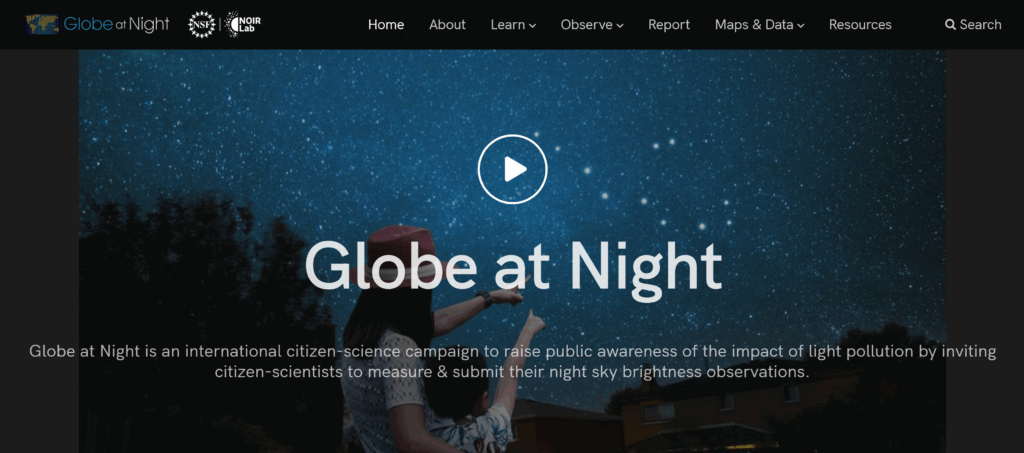
Globe at Night homepage
The homepage is only available in English.

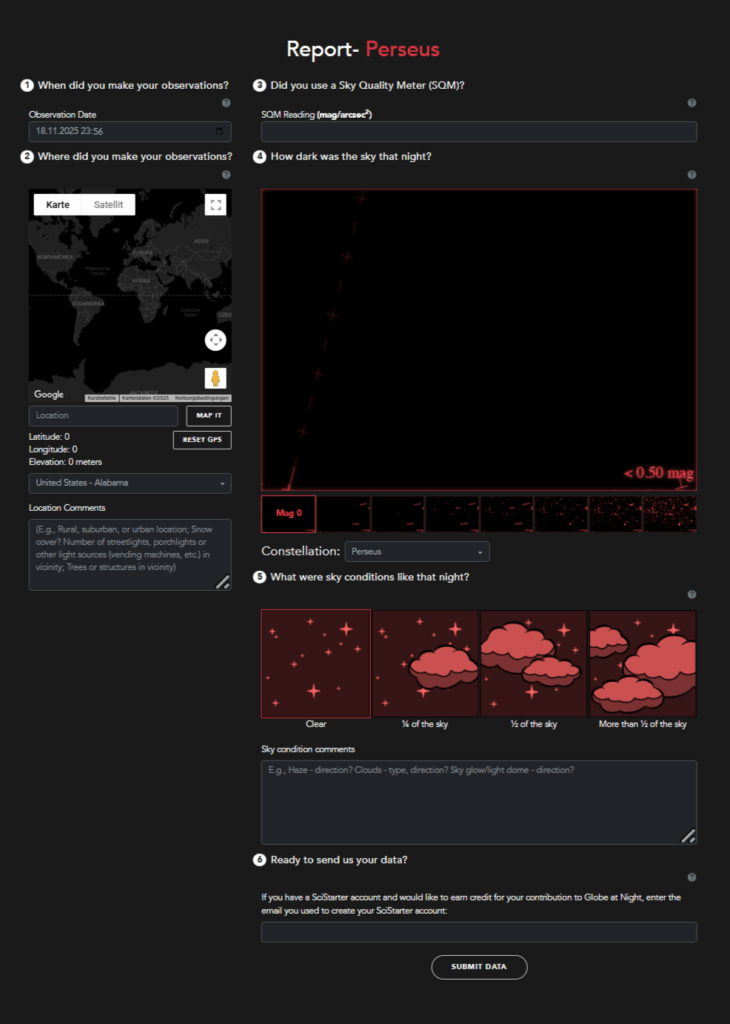
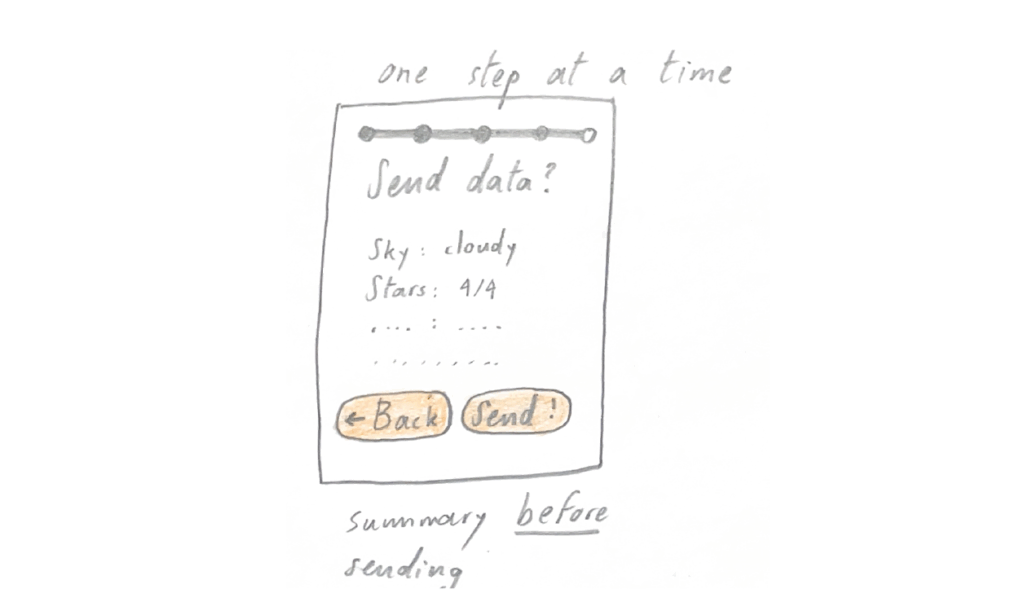
On the desktop version, due to the disposition of the steps in space, some are overseen, while on mobile it was easier to follow them all. Some participants noticed that they forgot to fill out some areas after submitting the results. I believe that the process could be improved by separating the steps or showing them one under the other while scrolling down. A recap should be visible before submitting data, not after.

An aspect that created many issues was the location. Since all of the participants allowed location sharing, they expected the data to be correct, which was not the case.

report form with many questions on two columns
The report form
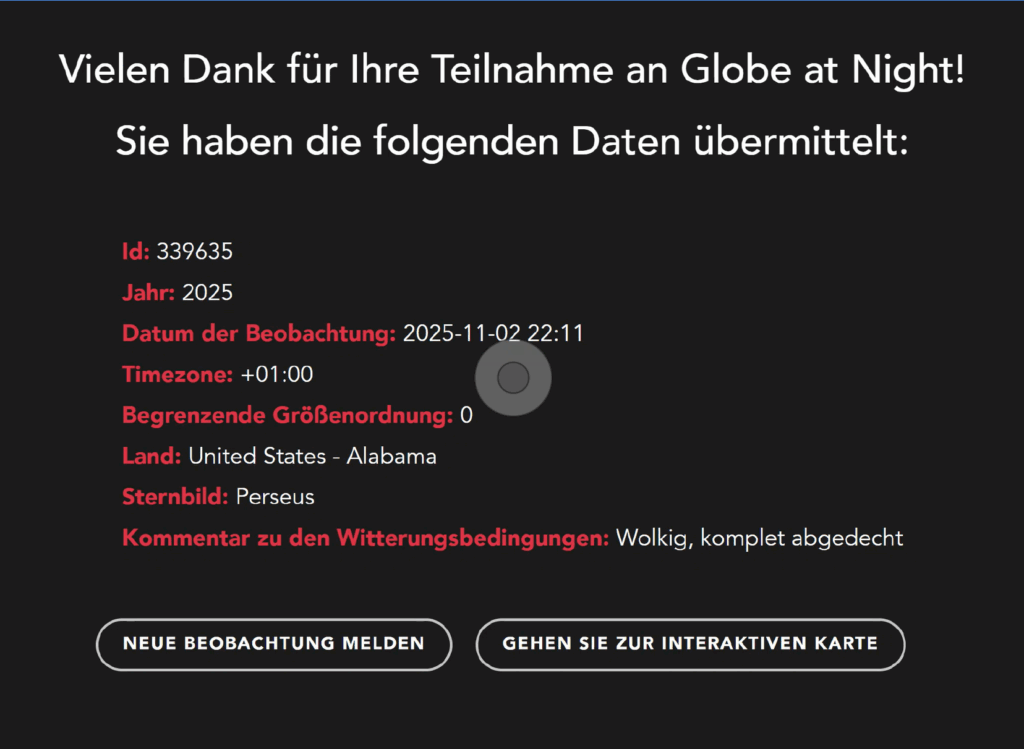
recap after submitting data
A recap is shown after submitting data. At this point it was too late to change the country.
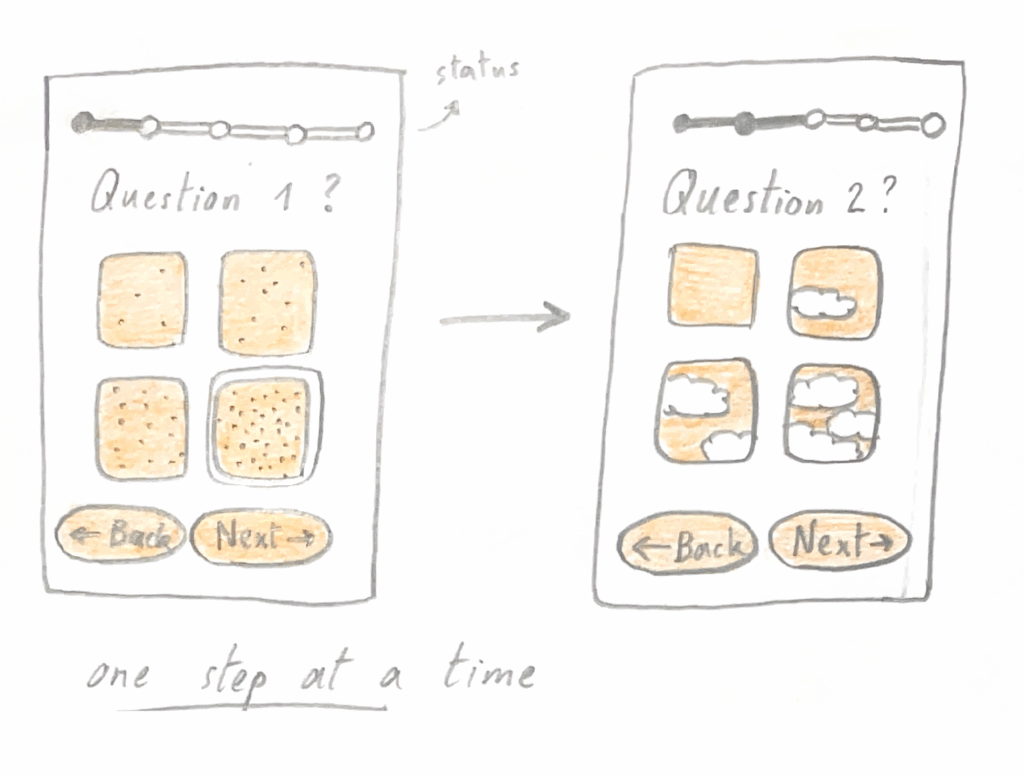
sketch where the questions are separated and not all on the same screen
A suggestion to separate the questions, which could help the users to focus on every step.
sketch where a recap is shown before submitting, as a final step
A recap before submitting data could help prevent mistakes.

Finally, some participants felt overwhelmed when confronted with specific questions. One was whether they used a Sky Quality Meter to measure the brightness of the sky and the other concerned what constellation they were looking at. The project claims to be “citizen science” but these questions are not accessible to people lacking astronomical knowledge. I reckon they should be omitted, explained better or only shown after the user has demonstrated to posess the required knowledge in a previous answer.

There is a chance Globe at Night has never performed usability tests on their website, and this project could help them improve their service. I might consider contacting them, while I research other ways interaction design can help fight light pollution.

1. Design for Neurodiverent Users

https://upload.wikimedia.org/wikipedia/commons/9/91/Neurodiversity_Symbol.svg

Design shapes the way we move, think, work, and connect with our environment and other people. It influences how we navigate often without us even noticing. Yet many design decisions whether in digital products, physical objects or architecture still assume a neurotypical user as the default.

With an estimated 15 to 20 percent of the global population being neurodivergent, this means a significant part of our society is still overlooked. Neuro-inclusive design is not a niche or an add-on. It is a core part of creating accessible, meaningful, and human-centered experiences.

This blog post explores what neurodivergence is, why it matters for design, and how we can start building environments that truly support different ways of thinking, sensing, and being.

Neurodivergence describes people whose brains process information, stimuli, or social cues differently from what is typically expected. It includes ADHD, autism, dyslexia, dyspraxia, Tourette’s, and many other variations. The word itself is not a medical term. It simply acknowledges that not all brains work the same way, and that these differences are valid.

Being neurodivergent is not an illness. It means experiencing the world through a different lens. Along with challenges, many neurodivergent people have exceptional strengths such as creativity, pattern recognition, intense focus, innovative thinking, or strong problem-solving abilities.

But because most environments are designed with neurotypical needs in mind, friction appears where it does not have to.

Noise sensitivity
Busy open offices or loud spaces can feel overwhelming. Many people depend on noise-cancelling headphones to stay focused or simply to get through the day.

Sensory differences
Some individuals are easily overstimulated by bright lights, strong smells, or chaotic visuals. Others seek more input and need tactile or movement-based stimulation to feel regulated.

Attention and focus differences
ADHD can make task switching, organizing, or following long instructions difficult, while at the same time enabling periods of deep hyperfocus.

Social communication differences
Unspoken rules, social cues, or group interactions can be hard to navigate, especially in environments that rely on intuition and context.

Learning differences
Reading, writing, or doing math can be challenging even when intelligence is average or above average.

No neurodivergent person experiences these things in the same way. Neurodiversity is extremely individual. The real problem is not the person, but that many systems and spaces expect only one type of brain.

When design defaults to the “typical,” it unintentionally excludes a large part of the population.

Designing with neurodivergent needs in mind improves:

• comfort
• accessibility
• autonomy
• ease of use
• emotional well-being

And importantly, inclusive design shouldn’t create separate solutions. It focuses on flexibility, options, and environments that adapt to different needs. When we design with neurodivergent users in mind, experiences become better for everyone.

1. Adaptive furnishing in physical spaces
Furniture and spatial layout directly influence sensory comfort and attention. Offering a mix of soft seating, modular furniture, beanbags, standing options, or quiet corners makes a space more welcoming for different nervous systems. These choices allow people to self-regulate, whether they need calm, movement, or a different type of sensory input.

2. Reducing cognitive load in digital design
Digital interfaces can either support or overwhelm. For people with ADHD for example, keeping track of passwords or understanding unclear error messages can be exhausting.
Design can help by offering:
• clear, friendly error messages
• the option to save passwords
• login links via email
Small adjustments like these reduce cognitive load and frustration, improving usability for all users.

3. Reducing working memory load
Designs that minimize what people need to remember make experiences more inclusive.
Checklists, reminders, autofill, tagging systems or saved preferences help users stay organized without relying solely on memory.

4. Multiple ways to absorb or provide information
Neurodivergent people process information differently. Giving users options improves accessibility for everyone.
Examples include text combined with icons use an easy readable font, captions on videos, simple infographics, or voice input for people who struggle with typing.

5. Clear visual structure and predictable layouts
Many neurodivergent users rely on consistent, easy-to-scan interfaces. Predictable layouts reduce cognitive load and help people stay oriented.
Useful design choices include clear headings, simple navigation that stays in the same place, generous whitespace and labels that say exactly what they mean.

6. Sensory-friendly lighting in physical spaces
Lighting can make or break someone’s ability to focus. Adjustable warm lighting, flicker-free LEDs or access to natural light help reduce sensory overwhelm. Offering dimmer switches or “low-stim” areas gives people control over their environment.

The most important principle of neuro-inclusive design is to Design with neurodivergent people, not just for them. This means involving them during the design process and not just in the end. Their lived experience is essential. Their insights reveal real barriers, real needs, and real opportunities for better design.

„Neurodivergence: what it is, symptoms and treatment“. Zugegriffen: 16. November 2025. [Online]. Verfügbar unter: https://www.topdoctors.co.uk/medical-dictionary/neurodivergence/

„Neurodivergent: What It Is, Symptoms & Types“, Cleveland Clinic. Zugegriffen: 16. November 2025. [Online]. Verfügbar unter: https://my.clevelandclinic.org/health/symptoms/23154-neurodivergent

„Inclusive Design for Neurodiversity: Creating Harmonious Spaces for a Diverse Future“, modulyss. Zugegriffen: 16. November 2025. [Online]. Verfügbar unter: https://modulyss.com/en-INT/inclusive-design-for-neurodiversity-creating-harmonious-spaces-for-a-diverse-future

R. East, „How to Design for Neurodiversity“, Showcase PSR. Zugegriffen: 16. November 2025. [Online]. Verfügbar unter: https://showcase-psr.co.uk/how-to-design-for-neurodiversity/

Ryan.Taylor, „How neurodivergent-friendly design transforms modern workplaces“, Support for neurological conditions | The Brain Charity. Zugegriffen: 16. November 2025. [Online]. Verfügbar unter: https://www.thebraincharity.org.uk/neurodivergent-friendly-design/

Australian Psychological Society, Designing Neurodiverse inclusive events: Creating accessible experiences for all. 2024.

Note: This text was developed with the assistance of artificial intelligence for research purposes and to refine the linguistic clarity and flow of the final draft.

Don’t Grab My Attention: Technology that Moves Out of the Way (and Into Life)

Unsere menschliche Aufmerksamkeit ist eine limitierte Ressource. In der modernen Welt wird unsere Aufmerksamkeit durch permanente Benachrichtigungen, Informationsüberflutung und dauerhafte Erreichbarkeit ständig gefordert was zu kognitiver Überlastung und Stress führen kann. Die Interaktion mit Technologie und digitaler Information ist aus unserem Alltag nicht mehr wegzudenken. Dabei wird die Art und Weise, wie wir mit ihr interagieren grundlegend durch die eingesetzten Ein- und Ausgabemedien begrenzt.

Viele moderne Produkte und Technologien nutzen fast ausschließlich grafische Benutzerschnittstellen und sprechen dadurch hauptsächlich den visuellen Sinn des Nutzers an. Grafische Benutzerschnittstellen fordern konstant Aufmerksamkeit vom Nutzer und vernachlässigen die Fähigkeit des Menschen, Informationen im Hintergrund und über andere Sinne zu verarbeiten.

Diese eindimensionale Art der Interaktion hat mich schon während meinem Bachelor beschäftigt und mich dazu bewegt, mich mit alternativen Benutzerschnittstellen auseinanderzusetzen. Mein Fokus lag damals auf den greifbaren Benutzerschnittstellen (Tangible User Interface) durch deren Einsatz ich eine alternative Herangehensweise zeigen wollte, um dem immer stärkeren Verlust der realen Welt in Zeiten digitaler werdenen Lebensumstände entgegenzuwirken. Konkret ging es in meiner Abschlussarbeit um die Kommunikation im virtuellen Raum und wie eine greifbare Benutzerschnittstelle ein Gefühl der Präsenz und physischen Verbundenheit schaffen-, sowie die Informationsübermittlung positiv beeinflussen kann.

Durch diese Arbeit konnte ich bereits feststellen, welchen Einfluss die Wahrnehmung über unterschiedliche Sinne auf die User Experience -und die Fähigkeit Informationen zu verarbeiten haben kann. Anders als in meiner Abschlussarbeit wollte ich mich im Rahmen dieser Blogeinträge aber nicht nur auf greifbare Benutzerschnittstellen beschränken, sondern das Thema zunächst breiter umreißen.

Mit was genau möchte ich mich beschäftigen?

Um mein Thema einzuleiten möchte ich mit diesem Zitat von Mark Weiser beginnen: “The most profound technologies are those that disappear. They weave themselves into the fabric of everyday life until they are indistinguishable from it.”

Diese Zitat beschreibt den Prozess der Integration jeder größeren neuen Technologie. Zunächst ist sie Präsent und im Fokus unserer Aufmerksamkeit. Mit der Zeit wird sie Massentauglich und rückt immer mehr in den Hintergrund, und bereichert unsere Umgebung. Ein Beispiele hierfür ist die Erfindung des Buchdrucks. Zunächst nur für jene verfügbar, die die Fähigkeiten und Mittel hatten, mittlerweile findet sich Schrift überall in unserer physischen Welt wieder und vermittelt uns Informationen wo und wann wir sie brauchen, ohne dass wir aktiv darüber nachdenken müssen.

Die Computertechnologie hat ebenfalls so angefangen. Zunächst nur Unternehmen und Universitäten vorbehalten ist sie heute kleiner, günstiger, leistungsfähiger und so weitflächig verfügbar und wird immer stärker auch in Alltagsgeräten eingesetzt um diese smart zu machen. Beispiele hierfür sind Smart Devices (physische Objekte, die mit Sensoren und Kommunikationstechnologien ausgestattet sind) wie Lichter, Lautsprecher, Küchengeräte und vieles mehr. Dieses Konzept der Technologien, die in unsere Umgebung integriert sind, wird Ubiquitous Computing gennant.

Um nun einen Schritt weiter zu gehen, möchte ich kurz den Ansatz der Calm Technology anreißen. Hier geht es nicht mehr hauptsächlich um die Integration von Computertechnologie in die physische Welt oder die physische Interaktion im Allgemeinen, sondern um die Art und Weise wie Technologie mit uns Menschen kommuniziert. Calm Technologie formuliert Prinzipien, die im Designprozess berücksichtigt werden können, um Technologie so zu gestalten, dass sie nicht ständig die volle Aufmerksamkeit des Nutzers beansprucht. Informationen sollen erst dann übermittelt werden, wenn sie gebraucht werden und den Nutzer nicht in seinem Flow stören, sondern unterstützten indem sich auf die peripheren Sinne konzentriert wird.

Research Fokus

Für meinen Research wird das Prinzip der Calm Technology die grundlegende Richtung vorgeben. Dabei möchte ich mich mit dem Einsatz von alternativen Interaktionskonzepten beschäftigen, welche potentiell die Informationslast für den Nutzer verringern – und die Technologie mehr in den Hintergrund rücken lassen kann.

Auf diese Weise kann unsere Umgebung durch Technologie bereichert werden ohne zu stören oder abzulenken. Meine zentrale Frage wird dabei sein:

Wie können Systeme digitales Feedback an den Nutzer übermitteln, ohne die Aufmerksamkeit unnötig zu belasten?

  • Wie kann die Fähigkeit des Menschen, Informationen im Hintergrund und über andere Sinne zu verarbeiten genutzt werden, um Informationen zu vermitteln?
  • Wie können Interaktionen mit der physischen Welt als Nutzereingaben verwendet werden, um die Interaktion mit einem digitalen System unterschwelliger zu machen und Systemfeedback/Informationen zu den benötigten Zeitpunkten zu vermitteln?
  • Welche Arten der Interaktionsschnittstellen bestehen und wie werden sie aktuell als Eingabemedium und im Hinblick auf Systemfeedback eingesetzt?

Mögliche Einsatzgebiete

Um meinen Research etwas einzuschränken habe ich mir überlegt, in welchen Bereichen ich einen besonderen Mehrwert alternativer bzw. physischer Interaktionsformen sehe.

Zum einen finde ich den Einsatz im Bereich Accessibility interessant, da es dort in einigen Fällen üblich ist, bestehende digitale Anwendungen durch haptische Add-ons zu erweitern oder nach den eigenen Bedürfnissen anzupassen. Zudem ermöglichen physische Interaktionen mehr Nutzern mit einer digitalen Anwendung zu interagieren oder die Interaktion mehr an die persönlichen Fähigkeiten und Präferenzen anzupassen. So ergibt sich eine Vielzahl neuer Interaktionswege. Dies kann nicht nur für Menschen mit Beeinträchtigungen hilfreich sein, sondern die Interaktion zwischen Mensch und Technik im Allgemeinen bereichern. Dies hat sich bereits in der Vergangenheit zum Beispiel mit der Einführung von Untertiteln gezeigt. Diese werden heute auch von hörenden Menschen gerne verwenden.

Zum anderen bietet sich auch der Bereich der Medizintechnik an. Dort ist oft eines der Ziele eine Verhaltensänderung beim Patienten zu erreichen. Diese Art des Designs fällt unter das Konzept des behavioural Designs. Hier könnte untersucht werden, inwiefern sich das Konzept von physischen Interaktionen mit Prinzipien des behavioural Design kombinieren lassen, um eine Verhaltenänderung beim Nutzer hervorzurufen.

Relevanz für Design

Alternative, unkonventionelle Interaktionskonzepte und Ansätze wie das Ubiquitous Computing und Calm Technology können eingesetzt werden, um die Grenzen herkömmlicher Interaktionsweisen aufzubrechen und ein Umdenken zu provizieren. So können neue Lösungen für bestehende Probleme gefunden werden. Die fortschreitende Entwicklung digitaler Systeme muss nicht zwangsläufig zu einem Verlust der interaktion mit der physischen Welt führen, sondern kann durch die Verschmelzung beider Welten zu einer Bereicherung der Mensch-Computer-Interaktion beitragen.

References:
  • Weiser, M. (1991): “The Computer for the 21st Century”, Scientific American.
  • Weiser, M., Seely Brown, J. (1995): “Designing Calm Technology“, Xerox PARC
  • Weiser, M., Seely Brown, J. (1996): “The Coming Age of Calm Technology“, Xerox PARC
  • Ishii, H., & Ullmer, B. (1997): “Tangible Bits: Towards Seamless Interfaces between People, Bits and Atoms
  • Ishii, H. (2008): “Tangible Bits: Beyond Pixels“, New York, NY: ACM.
  • Case, A. (2015): “Calm Technology: Principles and Patterns for Non-Intrusive Design
  • Wickens (2008): “Multiple Resources and Mental Workload
  • Lipp, Lauritz L. (2004): “Interaktion zwischen Mensch und Computer im ubiquitous computing. Alternative Ein- und Ausgabemöglichkiten für allgegenwärtige Informationstechnologien.” 1. Aufl. Münster: Lit Verlag (Publizistik, Bd. 13).
  • https://calmtech.com/about
  • https://www.calmtech.institute/calm-tech-principles
  • https://tangible.media.mit.edu/project/tangible-bits/
  • https://inclusive.microsoft.design

#1 Informal Research

Interview

This week I started working on some research. I talked to a few people, just an informal interview, so I could get a feeling of the topic. I wanted to know if they would do more on their smartphones if they felt it was easier to use and also what makes some digital products hard to use. I also asked if there is a particular app they feel really confident with and why they feel that way.

One example that stood out to me was WhatsApp. Everyone was using WhatsApp. Someone also told me that she felt safe using it because she understands how the app works and that it feels more like a finite system they could oversee. What was more interesting to me was that she mentioned that the app is more understandable and feels more secure to use because it is linked to her phone number. She mentioned that only people who have her number, that are usually people she already met in real life, are able to contact her or see what she posts. This is what makes the app feel more predictable to her.

I found this really interesting, because its not just about usability, it is more about the feeling in control and having a familiar structure that connects to her real world experiences. “Giving someone the your phone number is something she always done, long before smartphones existed.”

Mental Models

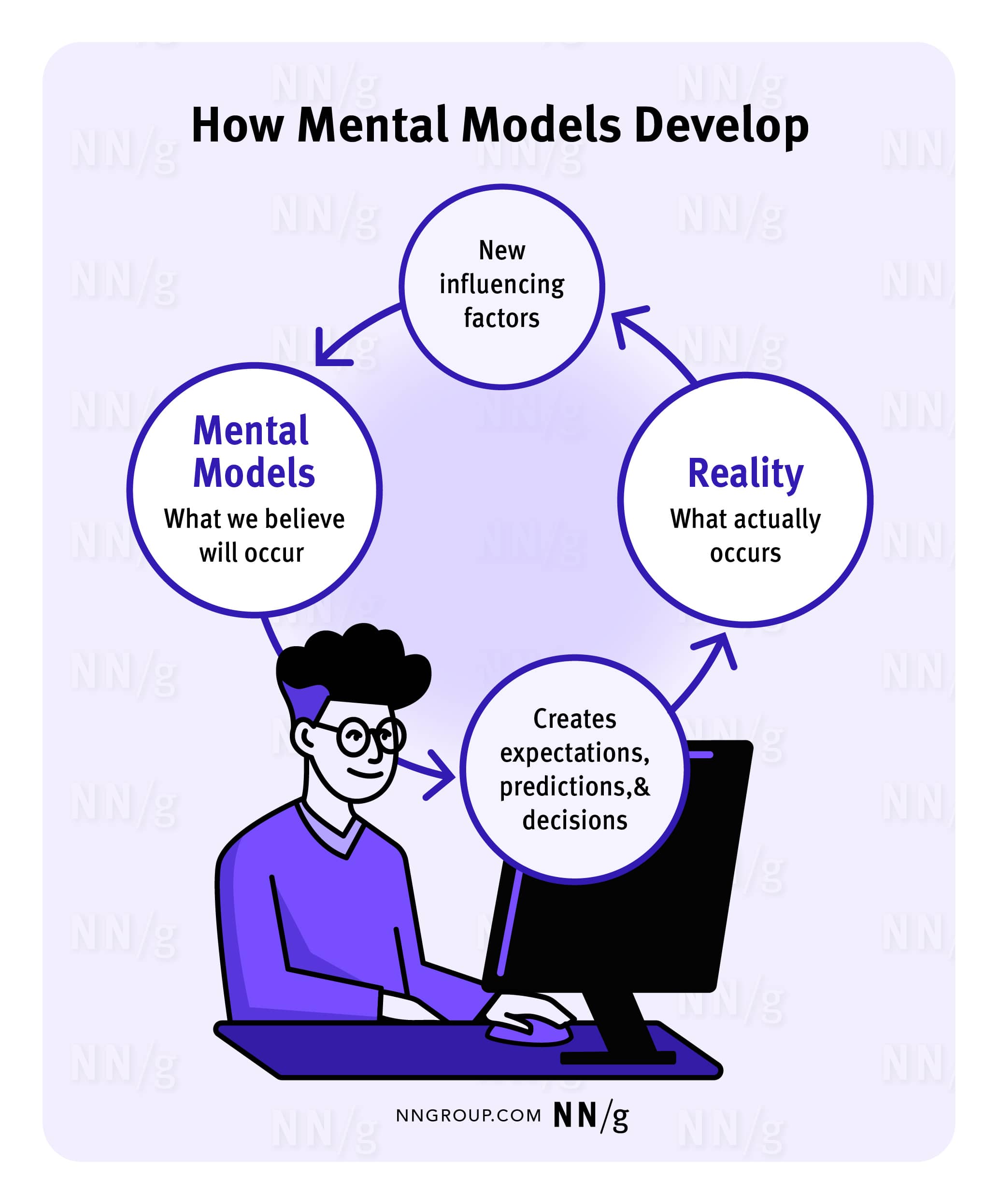
I think this was a great example for mental models. When a digital product works in a way that feels familiar, it’s easier to understand and trust. In this case, WhatsApp builds on an old habit (not sure if on purpose), which helps users feel safe and capable in a digital environment.

A cycle depicting how our mental models shape our expectations, predictions, and decisions, while being simultaneously reshaped by what actually occurs.
Source: nngroup.com: https://www.nngroup.com/articles/mental-models/

After talking to a few people, I noticed that them using digital products depends on how much they trust them. Some felt unsure about what happens in the background or who can see what they do online.

At the same time, I think usability plays an important role. It was mentioned that digital products should be easy to use and that this would encourage them to engage with these products more often. In connection with this, one person said, “I’d use apps more if someone showed me how,” which highlights the idea that either the app itself needs to provide guidance, or a person needs to take on that role.

For my next steps, I would like to explore this concept of ease of use and the guidance aspect further. I want to research what makes a system feel simple enough to use and what kind of support helps people feel confident when trying something new.

References

M. Chan, “Mental Models and User Experience Design,” Nielsen Norman Group, Jan. 26, 2024. https://www.nngroup.com/articles/mental-models/

“Jakob’s Law of Internet User Experience,” www.youtube.com. https://www.youtube.com/watch?v=wzb4mK9DiHM (accessed Apr. 29, 2022).

Person holding their head in pain showing and covering their face in them.

In(visible) disease – migraine: raising awareness and designing solutions for migraine patients

Is this what going blind feels like?

During physical education class in fifth grade I thought I was going blind. From one second to the next, I couldn’t see my friend’s face anymore. I could still hear her talking but some weird lights started appearing in front of my eyes which followed my gaze everywhere I looked and were blocking my sight. They made me feel nauseous and I started panicking. “I can’t see you anymore.” was all I was able to say in that moment. My friend first was confused, then scared and everyone started panicking. I had to sit down and drink water but while everyone was asking me questions I couldn’t answer I realized that even closing my eyes made me feel sick and disoriented. I lost my ability to speak, even think in that moment and could barely express what I was physically and emotionally going through. My mother had to pick me up from school and I spent the rest of that day in pain lying in bed after the “scary lights” and a tremendous head pain had kicked in. Every stimuli even a weak source of light or any kind of noise felt like it directly hurt my brain. I had never felt this senstive and concious of my surroundings. I could only lay in my dark room, cry, vomit and wait for the torture to stop. My mom wasn’t suprised to hear what had happened to me at all but obviously seemed very concerned. This was the day I first heard about migraine. What I had just experienced was called a migraine attack and I am not the first person in my family to suffer from it. My mother, my father and grandmother were affected by them as well – and mine had started at ten years old. And this wouldn’t be the last one to appear out of nowhere.

This was a rather personal story to dive into this topic but as every person describes their suffering from this disease in a different way, I thought it could give an insight into what it feels like to experience a migraine attack (at least how I do).

What is migraine and how many people are affected?

According to the Medical Univertsity of Vienna (2024) one million people in Austria suffer from migraine. It is a primary headache disorder which lasts about 4 to 72 hours. What I experienced with the strange flashing lights is a typical symptom of a certain type of migraine known as “migraine with aura”. Aura referring to the visual elements such as flashes of light, blind spots, zigzag patterns, blurred vision, or seeing spots and wavy lines. In my case I would describe them as blind spots that block your sight and increase so much that you can’t see what is in front of you anymore. The intense sensitivity to light and noises is called photo- and phonofobia. The fact that I couldn’t speak and struggled to find words is also a side-effect of experiencing aura. It can lead to the person loosing their speech and just mumbling or struggling to form a whole sentence. After reading more about this disease I learned that most of my symtoms and the different phases of my attack were already known in science and a pretty typical case.

Lack of awareness and medical treatment

Although lots of people suffer from migraine with or without aura, the neurological disease still remains a topic the majority of society doesn’t know or talk about enough. The lack of awareness and no access to proper treatment is what can lead to frustration and even anxiety or depression. In a world where this disease is treated as a simple headache (don’t get me wrong, I don’t mean that a headache can’t be painful) we need to stop avoiding talking about certain diseases only because it makes us feel unconformtable start being curious instead.

Unfortunately, many patients suffering from headache disorders never receive an appropriate diagnosis and don’t have access to treatment or medications. Receiving an appointment with a neurologist is almost hopeless nowadays.

The cause of migraine attacks is still unkown but is usually treated with specific medication but also by following a healthy diet and regular exercise schedule, staying hydrated and using a migraine headache calender to identify possible triggers.

Relevance for design

But in what way does migraine relate to design? Well, currently there are several migraine tracking-apps in the Google Play Store and Apple Store. Most of these apps are free and their goal is to track details about migraine attacks e.g. the intensity of the migraine so that the user can identify their individual triggers and patterns such as weather changes, sleep problems, caffeine and alcohol intake, etc. Users are supposed to track their daily habits to receive an overview of the disorder’s frequency and eventually improve their understanding of the disease.

Personal motivation

As my neurologist has recommended to keep track of my migraine attacks and recommended an app from the pain clinic in Kiel to use it as a “headache diary” I have made experience with different applications over the years. In the following posts I would like to dive into those experiences and analayze them. From a design point of view but also from the perspective of the targeted user group there are several aspects I perceived that should be improved and tested! I believe that combining both of these perspectives and talking to experts (neurologists, psychologists and patients) could be helpful to create a meaningful solution that is tailored to the user’s needs.

My approach

  1. Initial resarch to gain an essential understanding of the disease and it’s characteristics
    • What is the status quo in science? (cause, treatment,…)
  2. Identify problems considering all pain points e.g. medical treatment and health system
  3. Analyze migraine apps for a state of the art research
  4. Ideate possible solution to found problems
  5. Online survey

References

  • Medical University of Vienna. (2024, May 7). One million people in Austria affected by migraine.
    https://www.meduniwien.ac.at/web/en/ueber-uns/news/2024/news-im-mai-2024/one-million-
    people-in-austria-affected-by-migraine/
  • World Health Organization. (2024, March 5). Migraine and other headache disorders. Retrieved October 19, 2025, from https://www.who.int/news-room/fact-sheets/detail/headache-disorders

Flow, Interruption and Recovery in Interaction Design

Background

In a world where digital tools shape almost every aspect of daily life, uninterrupted attention has become a scarce resource for user experience. Whether working on a document, attending an online lecture or simply watching a video, users are constantly interrupted by notifications, pop-ups and interface prompts. While these features are designed to inform or engage, they often lead to fragmented interaction experiences. Our devices or services demand responsiveness, but rarely provide space for focus.
This tension between engagement and distraction has turned into one of the central design challenges of our time. How can systems sustain the user’s sense of continuity in an age of constant interruption?

The psychological foundation of this issue lies in Flow Theory, introduced by Mihaly Csikszentmihalyi. Flow describes a mental state in which people become fully absorbed in an activity, experiencing deep concentration, clarity and enjoyment. In design contexts, flow translates into seamless user experiences where goals are clear, challenges match skill levels and feedback feels immediate. However, digital systems frequently break this rhythm. A notification arriving at the wrong moment or a forced software update, can instantly push a user out of flow. Even minor interruptions transforms into a cognitive burden, leading to fatigue, frustration and reduced task performance.

The Problem of Digital Interruption

Interruptions are not inherently negative. Some are necessary, such as reminders or alerts that prevent mistakes. Yet, the majority of digital interruptions are poorly timed, irrelevant, or overly demanding. They shift control away from the user, forcing attention to fragment across multiple contexts. Psychologically, every interruption requires cognitive order; the user must pause the primary task, process new information and later recall where they left off. Research in cognitive psychology refers to this as “resumption lag”, the mental cost of re-establishing task focus after being distracted.

The modern work environment amplifies these effects. On average, users switch digital tasks every “47 seconds”, often without completing the previous one. This continuous switching prevents the brain from reaching a deeper state of engagement. When digital systems are designed without regard for cognitive continuity, they silently erode attention over time. Instead of enhancing productivity, they generate anxiety and emotional exhaustion.

In contrast, some interactive systems, especially video games and movies, demonstrate how flow can be protected. Games use adaptive pacing, contextual pausing and clear progress indicators to support immersion. Even when interruptions occur, players can usually recover easily, thanks to consistent feedback and memory cues.

Research Focus

My research project aims to investigate how interaction design can manage interruptions more intelligently. The main question guiding my work is:
How can design strategies preserve user flow and support faster cognitive and emotional recovery after interruptions?

The research focuses on three interrelated aspects:

  1. Understanding the psychological impact of interruptions. How do different types of disruptions: external (like notifications) and internal (like self-interruptions), affect users attention, emotions and sense of control?
  2. Identifying design patterns for recovery. What interface elements, transitions or cues help users focus and continue smoothly after being interrupted?
  3. Comparing domains of experience. What can productivity tools learn from entertainment systems, such as games or movies, which often handle interruptions gracefully?

The project draws from existing studies on attention, cognitive load and media psychology. For instance, Marotta and Acquisti (2018) found that even short digital interruptions can lower task performance by increasing cognitive load and emotional irritation. Similarly, Reinecke (2009) highlighted how interactive media can act as recovery spaces, offering emotional balance after periods of stress. Together, these insights suggest that recovery is not only a technical question but also an ethical and emotional one designers shape how users experience focus, fatigue and relief.

Relevance for Design

From a design perspective, this topic bridges psychology and user experience. Interaction design is not only about aesthetics or usability; it is also about shaping the rhythm of attention. The way we design transitions, notifications, or feedback loops determines whether an experience feels calm or chaotic.
In practical terms, exploring interruption and recovery can influence several design areas:

  • Interface design: crafting non-intrusive, adaptive notifications and context-aware pausing.
  • UX strategy: balancing engagement metrics with respect for user attention and mental well-being.
  • System design: creating recovery cues such as “Continue where you left off” or visual markers that help users recall previous actions.
  • Ethical design: addressing the moral responsibility of designers to avoid exploiting users’ attention for profit.

Recent examples show that large tech companies are beginning to integrate these principles. Apple’s “Focus Mode” and Microsoft’s “Focus Assist” both allow users to filter and schedule interruptions intentionally. These features represent early steps toward a design culture that values user agency and mental clarity. Yet, they remain optional features rather than integrated philosophies. My aim through this research is to understand how such mechanisms could be embedded at the core of interaction design, not just added later as fixes.

References

  • Csikszentmihalyi, M. (1990). Flow: The Psychology of Optimal Experience. Harper & Row.
  • Pattermann, J., Pammer, M., Schlögl, S., & Gstrein, L. (2022). Perceptions of digital device use and accompanying digital interruptions in blended learning. Education Sciences, 12(3), 215.
  • Marotta, V., & Acquisti, A. (2018). Interrupting interruptions: A digital experiment on social media and performance. SSRN Electronic Journal. https://doi.org/10.2139/ssrn.3283951
  • Reinecke, L. (2009). Games and recovery: The use of video and computer games to recuperate from stress and strain. Journal of Media Psychology, 21(3), 126–142. https://doi.org/10.1027/1864-1105.21.3.126
  • Mark, G. (2023). Attention Span: A Groundbreaking Way to Restore Balance, Happiness and Productivity. Hanover Square Press.
  • Nielsen Norman Group. (2022). How Notifications Impact User Attention and Task Focus. https://www.nngroup.com/articles/notifications-user-focus/
  • Adobe Blog. (2024). Designing for Digital Well-being: When Less Screen Time Means Better UX. https://blog.adobe.com/en/publish/2024/01/17/designing-for-digital-wellbeing
  • Medium. (2023). Calm UX: Designing Interfaces That Respect Human Attention. https://uxdesign.cc/calm-ux-designing-for-human-attention


    AI Assistance Disclaimer:
    AI tools were used at certain stages of the research process, primarily for source exploration, grammar refinement and structural editing. All conceptual development, analysis and final writing were made by the author.

User Interfaces in Video Games

User Interfaces in Video GamesThe quest for genre-appropriate and usable game UI

This thesis would explore the relationship between video games, user interfaces and users, in the context of genres and usability. It would place a focus on the history, genres and UI elements and their functions in games, as well as examine accessibility options and overall usability. Some games have interfaces with very small text, which is a result of no standardised guidelines. Some games also have user interfaces that are completely divorced from the style of the game, making them look jarring and potentially taking away from the overall user experience.

At the beginning, UI wasn’t an established field in the game development industry, but has since evolved to slowly include not only UI but also UX [1]. I want to explore how UX/UI manifests itself in this medium while taking a look at the industry, past and present.

  • How can user interfaces in video games harmonise with the aesthetics of the game and to provide a seamless experience? How do they become one with the game?
  • How do genre conventions influence user interface design choices in video games?
  • Should games sacrifice functionality for style and vice versa? Do accessibility options affect the art being made?
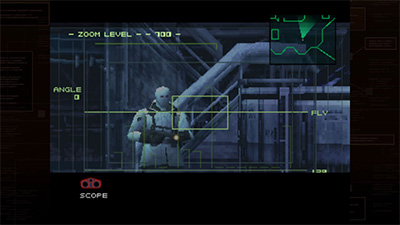
Figure 1: MGS1 Screenshot
Source: [2]
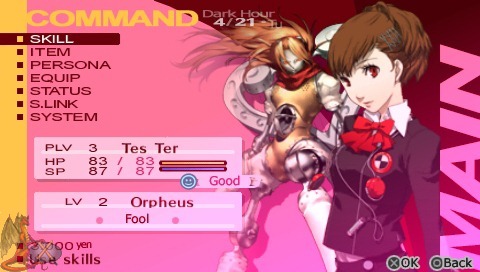
Figure 2: Persona 3 Portable Screenshot
Source: [3]

The relevance of this topic comes down to the different ways UX/UI principles can be reinforced within games, a huge medium that often gets ignored in academic contexts for being too playful.

Human-centered design bases itself on, among other things, existing patterns . These patterns can be hard to grasp in more complex interfaces such as games, where standardisation isn’t reinforced, or expected, in the same way it is with websites. Regulations don’t exist for games like they do for websites, because websites are an essential part of everyday life, but games aren’t. I still think that they are an important everyday medium that should be accessible to anyone and not shut anyone out.

It’s also relevant to examine the aesthetics, personality and style of these interfaces which is the more graphical angle to approaching game user interfaces. Knowing how to ride the line can be difficult. So, should games sacrifice functionality for style and vice versa?

Interaction design could help to deal with these issues by using existing knowledge, guidelines and research about usable interfaces and cross examining them with game interfaces. User experience design would help with making sure the interfaces are usable and clear, while user interface (and general graphic design) would help with making them aesthetic and cohesive.

The biggest challenge I have right now is to narrow down the scope of the project and see a clear path. Theres many things I want to touch upon, and I’m not sure yet how they will come together. Initially, I wanted to also examine the “responsive” angle of video game user interfaces, by exploring desktop, mobile and console games. While I’m still interested in this and the differences in developing interfaces for such varying screen and control schemes, I’m not sure where the focus would lie in the end.

Another challenge would be how to produce qualitative and quantitative data from my analysis efforts, and if I will actually find discrepancies and scientific value. The biggest challenge I will have in the future is deciding on an outcome/workpiece, as I’m not sure how to target this overall research into a design outcome.

In my next steps I would like to:

  • start actual research and try to build my literature collection on the topic
  • gain proper knowledge on the history of games, UI elements and their functions as well as accessibility issues
  • familiarise myself with the current state and find best practice examples
  • maybe even play games and note down experiences

My personal motivation lies in my immense enjoyment of games in the past year. They have improved my quality of life ten-fold, became a part of my routine and, for that reason, I would love to make games a good experience for everyone. I’ve been noticing that games have accessibility options such as subtitles available but then the subtitles are incredibly hard to read due to their size, font choices or contrast. This always bothered me and eventually I started thinking about how most people even play games when the interfaces don’t help but rather distract. I would love to combine my passion for usable user interfaces with games, which are full of interface elements.

Game UI Database – initially, building a database was also part of my probable outcome, but since I have come across this giant database of screenshots of various menus and game states for thousands of games

The future is too bright

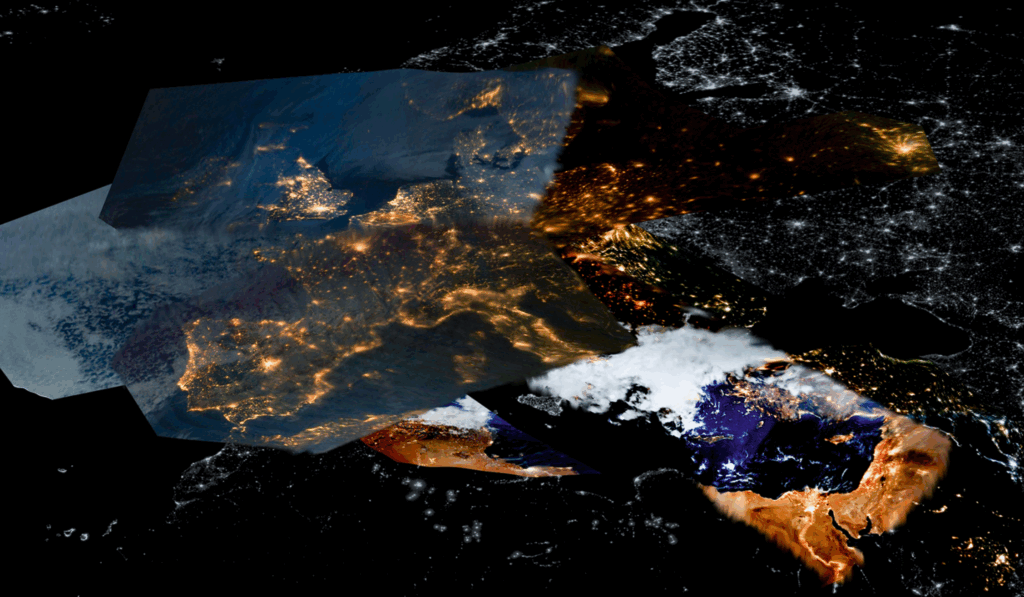
satellite photo of Europe where light pollution can be seen
Artificial light as seen from satellites. Protege Noctem, Mattia Balsamini

83% of the world’s population has never seen the Milky Way, living disconnected from our cosmos. This is due to light pollution, which is the excessive or inappropriate use of artificial outdoor light. Apart from distancing us from nature, it impacts human health and wildlife behaviour.

The invention of light completely changed our society: thanks to artificial illumination, after sunset we can do almost everything we would do during daytime. This revolution has lengthened the workday, allowing economic growth.

But like all great inventions, it comes with a downside. Due to poor design, light reflects in directions other than the intended one: streetlamps, cars, windows, factories and billboards significantly brighten the night sky, especially over urban areas. 

For what concerns health, artificial light confuses the production of melatonin, therefore damaging the human circadian cycle. This results in sleep deprivation, stress, anxiety and according to recent studies it is even linked to cancer.

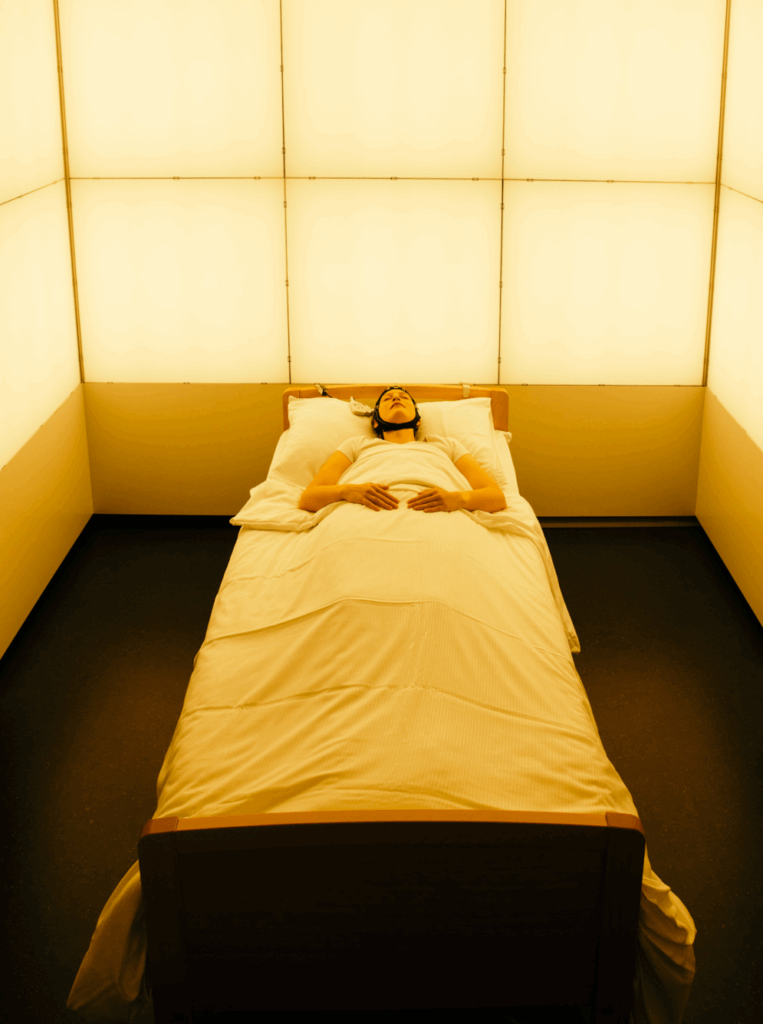
a person lying on a bed with a measuring device attached to their head
Studies show how exposure to artificial light is linked to several health issues. Protege Noctem, Mattia Balsamini

Wildlife is also deeply affected: migration patterns are damaged, wake-sleep habits changed, nocturnal insects are disoriented, plant leaves no longer sense the start of winter. Often the consequence of these anomalies is death.

dead moths
Artificial light causes the death of many small insects. Protege Noctem, Mattia Balsamini

I became passionate about this cause after visiting the photography exhibition Protege Noctem by photographer Mattia Balsamini. In his project, he documents the disappearance of the night and its creatures. Thinking about what humans are doing to nature is frustrating and I often feel powerless about it. I decided to try to contribute by asking myself: “How can interaction design combat light pollution?”. 

I think there are three directions that can be taken: raising awareness, designing eco-friendly products and supporting ways to take action. My aim for the next few weeks is to explore each of these aspects, starting from what already exists in the design field, moving onto what can be implemented and finally figuring out what is missing.

We can raise awareness on the disappearing stars, the health risks of light pollution and its impact on wildlife. In addition, we can draw attention to the importance of preserving darkness. There are several organizations working to reduce light pollution and create dark sky reserves. One of these is the DarkSky International, which fights for dark sky reserves.

Where light is necessary, we can limit it. This is where light design kicks in. Many examples come to my mind: the design of light itself, in private and public settings, its intensity, temperature, duration, disposition, reflection, orientation and its sensors. On the other hand, we can also explore shadows and how to create them: curtains, blinds and shields for instance. Another direction could be exploring light alternatives: is it possible to fulfill certain needs with the help of other means, such as sound, touch or motion? 

different lamp designs from a light pollution perspective
Street light design. © Valeria Montjoy (ArchDaily)

Finally, design can support various ways to take action. These are advocating for changes in schools, workplaces and communities, spreading the word or citizen science. The latter involves regular citizens, who submit measurements of the night sky brightness and support scientific projects, such as the Globe at Night Project.

Light pollution is a broad topic and I am excited to investigate its relation to interaction design. Nevertheless, I fear that any solution I might come up with may be difficult to apply to daily life. I therefore aim to focus on realistic ideas that can actually make a difference during my research.


Sources

Balsamini, M. (2023, December 18). Protege noctem. Mattia Balsamini. https://mattiabalsamini.com/project/protege-noctem/

Light pollution. (n.d.). https://education.nationalgeographic.org/resource/light-pollution/

MapMaker: Light pollution. (n.d.). https://education.nationalgeographic.org/resource/mapmaker-light-pollution/

Gaston, K. J., Davies, T. W., Bennie, J., & Hopkins, J. (2012). REVIEW: Reducing the ecological consequences of night‐time light pollution: options and developments. Journal of Applied Ecology, 49(6), 1256–1266. https://doi.org/10.1111/j.1365-2664.2012.02212.x

Light pollution – artificial sky brightness – science on a sphere. (2016, August 4). Science on a Sphere. https://sos.noaa.gov/catalog/datasets/light-pollution-artificial-sky-brightness/

Designing for Slowness: The Role of Slow Living in Interaction 1/10

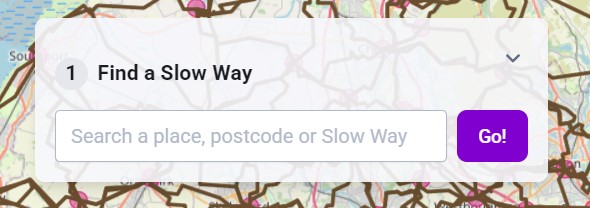
[5] Image source: Slow Ways, a UK-based initiative encouraging slower, more mindful mobility.
1.Delving deeper into the concept of “slowness”

2.Comparing urban contexts

3.Analysis of existing tools and platforms

4.Methods and design experiments

5.Conceptual framework

Positive Design for Homelessness

Growing up I noticed how people saw homeless as an annoyance and inconvenience where they were asking for help outside grocery stores or train stations. I grew up with discussions on the ban of begging and sleeping in public spaces. Movies displayed homelessness as a dystopian, dirty world, fueled with narcotics. In my later years I learned about Hostile Design – where benches are designed in such a way where one can’t comfortably sleep on them. Everywhere homelessness would be seen as a problem. A distance between “us” and “them” was created, a divided community. 

This summer I travelled across the ocean to enjoy Irish folk music, while Cillian sang his heart out on the street to earn enough for today’s meal. I paid to watch a sheepherding demonstration in the Irish countryside, while Molly was begging for money on O’Connell Street to feed her dog. I paid well over a hundred euro to sleep in the dorms of Trinity College, while Dublin is undergoing a shelter crisis. As I am learning to think on my own I am also learning to see everyone for who they are, simply humans trying to get by. I would like to help those that are less privileged, those who make themselves so vulnerable because they have no other option. 

What I wish to focus on in my research is how design can help tighten the local communities – the relationship between the homeless and those who are not, which then also can result in a stronger feeling of dignity and independence for the homeless. Research questions could include:

  • How can Positive Design and Interaction Design be used to create/improve a service/product that …
    • strengthens the local community?
    • creates a stronger sense of dignity and independence for the homeless?

Existing Design 

Several services and products exist or are being developed today to make the days pass by more easily for those who are sleeping rough. Help stations provide services like food stations where meals are prepared or groceries can be picked up. In the United States there is a program called SNAP where homeless are given a card that can be used to buy their own groceries, while also providing other helpful services (United States Department of Agriculture, n.d.). 

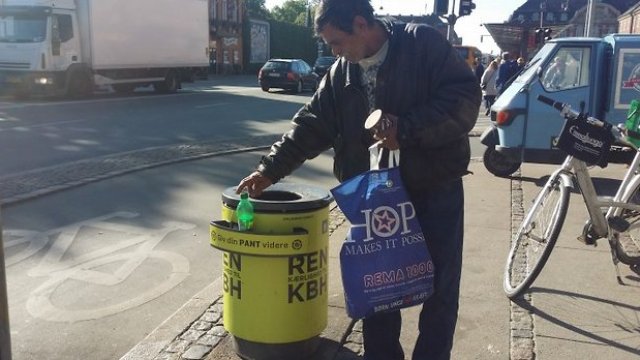
Previous research includes researching and creating UX design for applications aiding the homeless (Burrows et al., 2019) and those working for organizations providing shelters to the homeless (Pratt, 2024). Other various designs that can aid the homeless in their daily life that have been researched are small shelters and lockers to keep them and their belongings safe (Makris, 2024). Maps have been distributed that include an overview of important resources (Kennedy, 2016), and in some countries one can find trash bins with spaces for cans to be placed so that they can more easily collect “pfand” to earn some money to get by.

Image of Hostile Design in Detroit. Bench with no space for lying down.

Figure 1: Example image of Hostile Design (Davison, 2023)

Image of man picking up bottle from "pant"/"pfand" holder on trashbin

Figure 2: Example image of trash can with space for “pfand” (KBH Pant, 2015)

Relevance for the Design Fields

Positive design has a goal to increase the happiness and well being of individuals. It’s about designing for pleasure – to design comforting and joyful experiences, to design for personal significance – to design for goals and aspirations, and design for virtue – to design for good behaviour (Desmet & Pohlmeyer, 2013). These are all qualities that are important to keep in mind when you are designing a service or product for a community that is meant to bring joy, to inspire and promote good behaviour.

When it comes to focusing on the particular target group of the ones sleeping rough I find it important to design fields as one to this day still finds hostile design in our infrastructure, and it can be hard to know where and how to provide the best help. In the light of the topic of inclusivity, the homeless, alongside other groups, have their own specific needs that should be put into consideration when designing for the general population.

Future research process

In the first phase of the research I will have to go deeper into exploring the topic, I will need to gain a better understanding of the different problems and needs of the target groups (both the homeless, and those who are not) and to look at and categorise various approaches. From here I can try to narrow down the problems, and choose an approach to focus on. This might include some changes to the research question and sub-questions. A literature review could also be helpful thereafter to find relevant papers. Eventually I will have a more clear goal and can move to the phase of the research process where I can gather some data. 

When gathering data both qualitative and quantitative information gathering may be useful in order to understand perspectives and outlooks on the problem within a community. This could be done with one to one interviews or surveys with open ended questions (qualitative) or a typical survey with close ended questions (quantitative). As I aim to look at the problem from a community based outlook the target groups include both the homeless and those who are not.

When researching and gathering data there are several institutions that could be helpful to use or get in contact with. Besides looking for research papers through Google Scholar, there are various organizations both in Austria and Norway that could be contact points. Caritas, Red Cross/Røde Kors, Erlik, Asfalt and International Network of Street Papers, could be some.

Research Challenges

As I see it the first challenge will be to limit the research scope and questions. Later comes problems related to data gathering. Here the main challenge will be communication with the target group, the homeless. First of all I do not speak German well which can cause communication barriers. Secondly, it’s a vulnerable group that lacks the safety most of us take for granted and are always exposed to various kinds of exploitation, communication should therefore be done in a space in which they feel safe and comfortable.

Sources