Understanding Flow Theory in User Experience

I first encountered Mihaly Csikszentmihalyi’s work during my second bachelor’s degree in Game Design. We discussed his theories alongside the work of Johan Huizinga on play theory, specifically the idea that serious institutions often start as games or contexts for goal-directed action. Now, revisiting his work for this research, I want to focus on how relevant these psychological concepts are for general user experience (UX) and interaction design.

Defining Optimal Experience

As designers we often talk about “frictionless” experiences or engagement metrics. However, the psychological state we are actually aiming for is what Csikszentmihalyi calls “optimal experience”.3 In his research he defines flow as a state of concentration so focused that it amounts to absolute absorption in an activity.

It is a common misconception that this state is about relaxation or passivity. Flow actually occurs when a person’s body or mind is stretched to its limits in a voluntary effort to accomplish something difficult and worthwhile.4 People in flow typically feel strong, alert, in effortless control and unselfconscious. For interaction design this means we aren’t just trying to make things “easy.” We are trying to facilitate a specific type of intense engagement.

The Architecture of Flow in Design

What makes this theory so useful for my research is that Csikszentmihalyi deconstructs the conditions required to enter this state. He identifies several key elements that generate flow and some of them read almost like a checklist for good interface design:

  • Clear Goals: The user must have a clear understanding of what needs to be done. In a digital system ambiguity is the enemy of flow.3
  • Immediate Feedback: Action and awareness must merge. When a user acts the system must provide immediate feedback to confirm the action was successful.3
  • Balance Between Challenge and Skill: This is perhaps the most critical component for my research. Flow requires a balance between the challenges perceived in a situation and the skills a person brings to it.3

If an interaction is too simple relative to the user’s skill the result is boredom. If the challenge is too high the result is anxiety. In my proposal I noted that games manage this balance well through adaptive difficulty but productivity software often fails here, stucked between boring repetition and frustrating complexity.

The Paradox of Work and Play

One of the most surprising insights I found in the readings is that flow actually happens more often at work than during free time. In an interview Csikszentmihalyi explained that this is because work is structured much more like a game than everyday life is. Work usually has the clear goals, rules and feedback loops that generate flow whereas unstructured leisure time can lead to boredom or apathy.1

This is a crucial realization for my research into interruptions. When we design interactive systems we are essentially building a structure for the user’s attention. If we design these structures poorly or if we allow interruptions to shatter the structure we create “psychic entropy”, a state of disorder in consciousness where the self becomes impaired.3

Attention as a Limited Resource

To understand why interruptions are so damaging to this state we have to look at the biological limits of our attention. Csikszentmihalyi notes that the human nervous system has a limited capacity to process information, estimated at about 126 bits per second.2 This infinite amount of “psychic energy” must be allocated carefully to accomplish any task. When we are in flow our attention is so fully invested in the activity that there is no psychic energy left over for distractions or even for the sense of self. A digital interruption forces the brain to reallocate this scarce resource, breaking the coherent order of consciousness and introducing “noise” into the system.

The Autotelic Nature of Experience

Ultimately the goal of understanding flow in design is to foster what Csikszentmihalyi calls “autotelic” experiences, activities that are worth doing for their own sake. The term comes from the Greek auto (self) and telos (goal), referring to a self-contained activity where the doing itself is the reward.5 In Interaction Design we often focus heavily on the output of a system, such as sending an email or finishing a report. However, Flow theory suggests that the process of interaction is just as important as the result. If we can design interfaces that transform necessary tasks into autotelic experiences we can turn potential sources of frustration into moments of order and enjoyment.

References

  1. Beard, K. S. (2015). Theoretically Speaking: An Interview with Mihaly Csikszentmihalyi on Flow Theory Development and Its Usefulness in Addressing Contemporary Challenges in Education. Educational Psychology Review, 27(2), 353–364.
  2. Cherry, K. (2023, March 23). Mihaly Csikszentmihalyi: The Father of ‘Flow’. PositivePsychology.com. https://positivepsychology.com/mihaly-csikszentmihalyi-father-of-flow/
  3. Csikszentmihalyi, M. (1988). The flow experience and its significance for human psychology. In M. Csikszentmihalyi & I. S. Csikszentmihalyi (Eds.), Optimal experience: Psychological studies of flow in consciousness (pp. 15–35). Cambridge University Press.
  4. Csikszentmihalyi, M. (2000). Flow: The Psychology of Optimal Experience. Harper & Row.
  5. Peifer, C. (2012). Flow theory. In Encyclopedia of human behavior (2nd ed.). Elsevier. https://www.sciencedirect.com/topics/psychology/flow-theory

AI Assistance Disclaimer:
AI tools were used at certain stages of the research process, primarily for source exploration, grammar refinement and structural editing. All conceptual development, analysis and final writing were made by the author.

Blog Post 3: Physical Environment UX

Physical Environment UX

To better understand the challenge of reimagining user experience design in train stations, I wanted to deepen my explorations in the field of physical user experience design, or PUXD. My first step was to examine the origins of UX as a concept and to consider when humans first started intentionally shaping their environments with the user in mind. One of the earliest documented examples of physical user experience design can be traced back to around 4000 B.C. in China, with the emergence of Feng Shui. This philosophy focuses on the spatial organization of objects to create harmony and an optimal flow of energy within a space (Emily Stevens, 2021). Although Feng Shui differs from modern UX methods, it illustrates that the idea of designing environments to enhance human experience has deep historical roots.

Over time, UX gained increasing recognition and gradually became a fundamental part of daily life, influencing how we interact with products, services, and environments. However, as the world becomes increasingly digital and technology-driven, the design of physical spaces is sometimes overlooked. Despite this shift, PUXD remains crucial for creating memorable, meaningful experiences and for ensuring that the environments we use are intuitive, user-centered, and comfortable (Dengiz, 2024).

This is not just a subjective view but a growing societal and political priority. In June 2025, the European Commission enacted the European Accessibility Act, a comprehensive set of regulations aimed at improving accessibility across the European Union. The Act seeks to remove barriers for businesses, elderly individuals, and people with disabilities. It targets key products and services, including public transportation. According to the Act, environments within the EU must prospectively meet four core requirements: perceivability, operability, understandability, and robustness. Furthermore, it promotes a “design-for-all” approach, calling for physical spaces to be created in ways that make them equally accessible to people with and without disabilities (Huertas, 2024).

This legislative development highlights the importance of projects such as this one. Improving the user experience of train stations is not only an opportunity to enhance comfort and efficiency, but is part of a broader shift toward inclusive, accessible, and human-centered public environments. In this context, rethinking the UX of train stations becomes not just valuable, but necessary for the future.

Information Gathered

Through this week’s research, I gathered an even deeper understanding of User Experience in physical spaces. I also learned more about the currency of the chosen topic and how similar approaches might change our physical space in the near future.

Next Steps

In my next step I will explore the ten usability heuristics by Jakob Nielsen and have a look how they can be applied to the problem at hand. After that I plan on focusing more directly on German train stations and platforms.

References

Coughenour, A. (2025). User Experience in Physical Spaces. Von Orbis Cascade Alliance: https://www.orbiscascade.org/programs/dux/documentation/user-experience-in-physical-spaces/ abgerufen

Dengiz, C. (10. February 2024). The power of Physical User Experience Design (PUXD). Von LinkedIn: https://www.linkedin.com/pulse/power-physical-user-experience-design-puxd-cansu-dengiz-zv9pe/ abgerufen

Emily Stevens. (28. July 2021). The Fascinating History of UX Design: A Definitive Timeline. Von CareerFoundry: https://careerfoundry.com/en/blog/ux-design/the-fascinating-history-of-ux-design-a-definitive-timeline/ abgerufen

Huertas, D. M. (23. October 2024). The European Accessibility Act: an overview what’s changing and for whom. Von PwC Legal Germany: https://legal.pwc.de/en/news/articles/the-european-accessibility-act-an-overview-what-s-changing-and-for-whom abgerufen

Kaarwan, T. (18. June 2025). How Does UI-UX Design Transform User Experience in Physical Spaces. Von Kaarwan: https://www.kaarwan.com/blog/ui-ux-design/ui-ux-design-transform-user-experience-in-physical-spaces?id=541 abgerufen

NSW Government. (2025). Sydney Trains environment and sustainability. Von Transport for NSW: https://www.transport.nsw.gov.au/projects/environment-and-safety/sydney-trains-environment-and-sustainability/why-rail-travel-a abgerufen

Drink Smart and Keep Calm: Technology that Stays in the Background – Part II

In my previous blog post, I introduced the concepts of Ubiquitous Computing and Tangible User Interfaces through the example of a smart water glass. When we return to this example and look on the character of the interaction and the information flow, shifting our attention from the what it does to how it communicates, the principles of Calm Technology become visible.

What is Calm Technology?

Calm Technology is a design principle, that aims to keep devices at the periphery of our attention by offering information only when it is contextually relevant, and in a subtle, unobtrusive way. Instead of demanding focus, such technologies blend into the background of daily life and surface only when intervention is needed. In doing so, they seeks to reduce cognitive load, minimize stress, allowing people to remain focused and productive while staying connected with technology without feeling overwhelmed by it. (Weiser, Brown, 1995 & 1996) 

What is Periphery?

I just mentioned calm technologies aim to keep at the periphery – but what exactly does periphery mean? To understand how the principles of Calm Technology work, we first need to look at how interaction engages our attention. We can distinguish between the center of our attention and the periphery. The periphery describes everything that is not in our direct focus, yet still registered in the background.

For visual perception, for instance, the center of attention might be the text we are currently reading, while the surrounding room remains in the periphery. Our center of vision is optimized for detail, color, and object recognition. Peripheral vision, in contrast, detects motion, overall shapes, and spatial layout. It helps us sense changes in our environment and guides our attention when something becomes relevant.

Calm Technology makes intentional use of this dynamic. It works by allowing information to move fluidly between the center of attention and the periphery. The periphery is powerful and informative: it enables us to notice important changes while leaving us free to decide whether something should shift into the center of our attention—or remain quietly in the background.

The Principles of Calm Technology

Now let’s take a look at the eight principles of Calm Technology, which were developed as a framework for designing technology that works with human attention and use them to analyze our smart water glass.

  • 1. Technology should require the smallest possible amount of attention

Our water glass in general embodies this idea: it doesn’t beep, flash aggressively, or require deliberate interaction. Instead, it tracks the amount and frequency of drinking by itself and might glow softly when hydration is low. The glass communicates through presence rather than interruption.

  • 2. Technology should inform and create calm

Information is only given when required, therefore it gives people just the amount of information they need to solve their problem

  • 3. Technology should make use of the periphery

Because the output of our smart water glass is designed to be gentle and ambient, it can be perceived through peripheral attention rather than demanding direct focus. Its cues remain unobtrusive in the background, becoming noticeable only when needed.

  • 4. Technology should amplify the best of technology and the best of humanity

The smart water glass does not force the user to drink through disruptive notifications. Instead, it gently indicates how much time has passed since the last sip, helping the user remember to stay hydrated without imposing strict rules. This approach preserves the user’s autonomy: they remain in control, while the technology quietly supports their goals.

  • 5. Technology can communicate, but doesn’t need to speak

By informing the user peripherally through subtle ambient lighting, the smart water glass communicates its message without the need for sound or explicit verbal cues.

  • 6. Technology should work even when it fails

Even if the smart water glass fails to detect a drinking event, the user can still drink normally. The technology enhances the experience but does not prevent the core activity from occurring.

  • 7. The right amount of technology is the minimum needed to solve the problem

The smart water glass focuses solely on reminding the user to drink, without adding unrelated information or features. By limiting its functions to the immediate goal, it avoids overwhelming or confusing the user.

  • 8. Technology should respect social norms.

By keeping its output subtle and non-disruptive, even in the presence of other people, the smart water glass respects social norms and avoids drawing unwanted attention.

In summary, the smart water glass demonstrates how Calm Technology principles can guide the design of devices that are informative, unobtrusive, and supportive—enhancing human behavior while remaining in the background of daily life.

In the next blog entry, I will take a closer look at the characteristics that make technology truly calm and explore how and why we perceive certain technologies this way. I will also discuss the relationship between Ubiquitous Computing and Calm Technology, and what these ideas mean for the field of User Experience Design.

References:
  • Weiser, M., Seely Brown, J. (1995): “Designing Calm Technology“, Xerox PARC
  • Weiser, M., Seely Brown, J. (1996): “The Coming Age of Calm Technology“, Xerox PARC
  • Case, A. (2015): “Calm Technology: Principles and Patterns for Non-Intrusive Design
  • https://calmtech.com

AI Assistance Disclaimer:

AI tools were used to improve grammar and phrasing. The ideas, examples, and content remain entirely the author’s own.

International Dark Sky Places

picture of the night sky with Milky Way and mountain landscape
The Attersee-Traunsee Nature Park in Upper Austria, photo from their website

DarkSky is a worldwide organisation combating light pollution. It offers certifications for protected areas and facilities that preserve dark skies through responsible lighting policies and public education. The existence of dark areas allows us to stay connected with nature and protect ecologically sensitive zones.

It all started when Flagstaff, Arizona, was named the first International Dark Sky City in 2001. Now there are over 200 places in 22 countries of the world and a total of 160,000 square kilometers of protected land certified by the International Dark Sky Places (IDSP) program.

The certifications DarkSky confers are six: International Dark Sky Parks, International Dark Sky Sanctuaries, International Dark Sky Reserves, Urban Night Sky Places, International Dark Sky Communities and DarkSky Approved Lodging. Additionally, they also have a list of approved luminaires and retailers, together with outdoor sports lighting guidelines.

To request a certification, there is an application process consisting in an initial inquiry, a formal application finally a certification if all criteria are met.

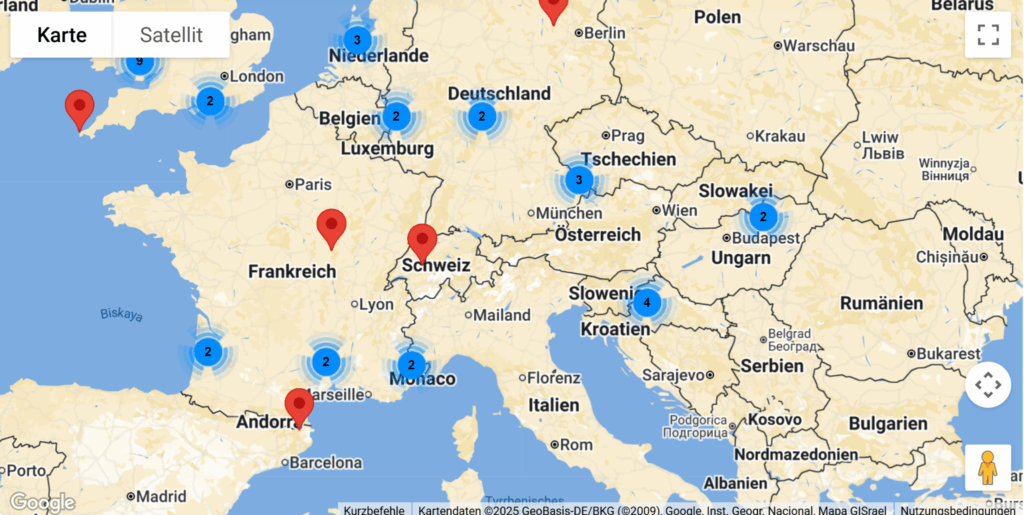
I used DarkSky’s map to find International Dark Sky Places in my countries, Austria and Italy. I found Naturpark Attersee-Traunsee in Upper Austria, but was surprised to find out that there are none in Italy

An overview of International Dark Sky Places in Europe, from DarkSky

In fact, according to an article published in the magazine Science Advances in 2016, Italy and South Korea are some of the countries of G20 with the brightest night skies, with the Pianura Padana being the most polluted Italian area. Efforts have been made to certify dark areas such as South Tyrol, Maremma (Tuscany), and the Saint-Barthélemy valley (Aosta Valley), but without any results.

The Attersee-Traunsee Nature Park is the largest natural park in Upper Austria with some of the darkest night skies remaining in central Europe. With the size of 77 square kilometers, it lies between the lakes Attersee and Traunsee and spans across the eponymous Traun and Atterseer Flysch Mountains. It was certified as International Dark Sky Park in 2021. On its website the certification is not mentioned, but there is a separate one dedicated to the “star park“.

#3 Testing and Research

Background

This week I had a situation that perfectly illustrated why I chose this topic. I was explaining some functionalities of a new app to my grandfather. He has always been very tech-savvy, he still works on his own website but even he struggles with certain concepts from time to time. He often tells me that everything takes him much longer than it used to and even when I show him a quicker or easier way to do something, he still sticks to the method he already knows. I believe this is partly a matter of habit and partly a reluctance to change something that “still works.”

What surprised me most was watching him interact with the app after my explanation. I assumed that once I had shown him how the app worked, it would be straightforward. But when he tried it on his own, he had to stop and ask for help at many points. It made me realize how much prior knowledge and digital literacy designers unconsciously expect from users, even when the interface seems simple to us.

This small moment showed exactly why designing for older adults matters: even motivated users with experience and interest in technology can struggle when interactions are not intuitive, forgiving or aligned with their mental models.

But here comes the real question: Is the problem rooted in the design of digital products or in the mental models that older adults bring with them? In other words, should we focus on improving the interfaces or on helping older people build the conceptual frameworks they need to understand how technology works in the first place?

Research

Problems older adults face with technology usually come from two sides: the design of the technology and the way older people understand and process information. When these two sides don’t match, it leads to confusion and mistakes. [1][3]

Many digital products simply aren’t designed with older adults in mind. This creates barriers that make technology hard to use.

  • Interfaces that feel cluttered or complicated: When apps have too many features or unclear layouts, older adults struggle to find what they need.[3]
  • Physical design that clashes with age-related changes: Small buttons, close-together touch targets or gestures like pinching and swiping can be difficult due to reduced vision, motor skills or dexterity.[3]
  • Unclear icons: Small, abstract or unfamiliar icons can be hard to recognize. Older adults often expect bigger, more descriptive labels instead of symbolic icons. [3]
  • Inconsistent design: If the interface doesn’t behave in predictable ways, it breaks the user’s expectations. This lowers trust and makes people feel unsure about what will happen next. [5]

(Planned) Sources

[1] D. Orzeszek et al., ‘Beyond Participatory Design: Towards a Model for Teaching Seniors Application Design’, arXiv [cs.CY]. 2017.

[2] L. Kane, “Usability for Seniors: Challenges and Changes,” Nielsen Norman Group, Sep. 08, 2019. https://www.nngroup.com/articles/usability-for-senior-citizens/

[3] G. A. Wildenbos, L. Peute, and M. Jaspers, ‘Aging barriers influencing mobile health usability for older adults: A literature based framework (MOLD-US)’, International Journal of Medical Informatics, vol. 114, pp. 66–75, 2018.

[4] J. Nielsen, “Usability for Senior Citizens: Improved, But Still Lacking,” Nielsen Norman Group, May 28, 2013. https://www.nngroup.com/articles/usability-seniors-improvements/

[5] Thefinchdesignagency, “Building User Trust in UX Design: Proven Strategies for Better Engagement,” Medium, Feb. 05, 2025. https://medium.com/@thefinchdesignagency/building-user-trust-in-ux-design-proven-strategies-for-better-engagement-c975aa381516

Research update + Doomscrolling and anxiety

Personal experiments:

Screentime before:  

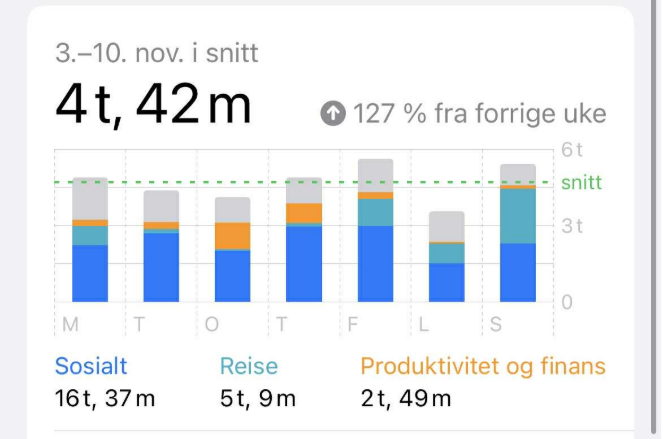
What I spend most of my time on is the category “social”. The second one is “travel” which is just when I have gps on my phone while driving to and from my hiking trips. The third category is “productivity and finance”.  

Screentime after setting a time limit on most used social media apps:  

One week into setting a timelimit on my most used social media apps, my screentime went down by 54 minutes on average. The third of the top three categories changed from “Productivity and finance” to “entertainment”.   

As i mentioned in a previous blog post, I didn’t feel like setting the time limit was working due to it being too easy to ignore. The screentime dropping slightly could be an indicator that even though I ignored the limit, maybe it was a little nudge to a little more conscious use of social media platforms and made me limit my use somewhat.  

The third category being changed to “entertainment” shows that when i met my limit for the social media apps, sometimes i just exited that app and opened up another application used for entertainment.  

I’m still not where I want to be with my screentime and will continue to implement my tools for reducing it and cupdate later on how also following the 30 min scroll time project affects me.

Secondary research

This week I also conducted more secondary research about the reasons why humans tend to doomscroll and some of the side affects it leads to.

Why do we doomscroll?

Why we doomscroll can be explained by how our brains are wired for threat and novelty. As Harvard Health Publishing explains, the brain’s fight-or-flight response pushes us to scan for danger when we perceive uncertainty or risk, and doomscrolling feeds directly into that impulse. Meanwhile, Newsweek notes that, especially for younger people, social media serves like a “digital pacifier”, a convenient distraction from stress, loneliness and boredom. Which makes doomscrolling feel like a quick way to cope even when nothing has really changed. In these situations it works as a quick fix and not as a long term solution. Because news feeds and apps constantly deliver new content at irregular intervals, each swipe can feel like a small “reward”, encouraging us to keep scrolling in search of the next one.  

How can doomscrolling trigger anxiety?

Constant exposure to negative or alarming content through doomscrolling can have serious repercussions for our mental and physical health. According to Harvard experts, doomscrolling overloads our stress response: extended exposure to distressing news can lead to symptoms like trouble speeling, muscle tension, headaches, irritability, or even elevated blood pressure. A 2023-2024 review even links excessive doomscrolling to decrease overall well-being and increases existential anxiety, a sense of dread of panic about life and the future. Moreover, as Newsweek points out, what feels like staying informed or reducing uncertainty often does the opposite, delivering “fleeting relief” but ultimately reinforces worries because each new negative headline renews anxiety instead of easing it.  

Why doomscrolling is most common with younger people

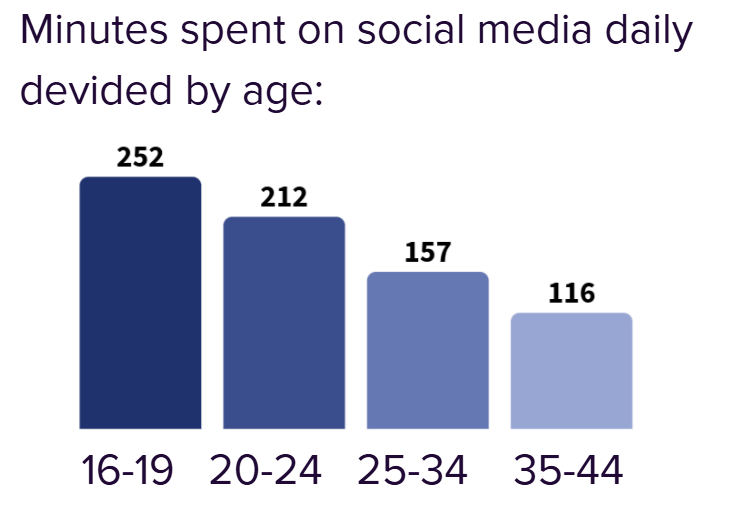
Doomscrolling appears to be especially widespread among younger age groups. In a 2024 survey cited by Newsweek, around 53% of gen Z respondents identified themselves as regular doomscrollers, a far higher rate than the general adult population. The article explains this by noting how deeply intertwined social media is with younger people’s daily lives: manually use their phone for hours, and social platforms often act as distraction from stress, isolation, or uncertainty. Because younger people are more frequently online and more exposed to algorithm driven content cycles, their risk of falling into habitual doomscrolling (and the mental health consequences that come with it) becomes much greater than for older generations.  

“Anxiety among young adults almost tripled between 2019 and 2023 in the U.S. according to Department of Health and Human Services data cited by the report. ”

Sources:

https://www.newsweek.com/gen-z-doomscrolling-problem-2065999

https://www.health.harvard.edu/mind-and-mood/doomscrolling-dangers

https://www.ipsos.com/en/axa-mind-health-report-mental-health-continues-deteriorate-around-world

https://www.ssb.no/kultur-og-fritid/tids-og-mediebruk/statistikk/norsk-mediebarometer/artikler/dette-er-de-mest-populaere-sosiale-mediene?utm_source=chatgpt.com

https://www.southerncross.co.nz/society/info-hub/members-hub/your-toolbox/wellbeing/thinking-well/the-dangers-of-doomscrolling?utm_source=chatgpt.com

https://www.theguardian.com/society/2022/sep/06/doomscrolling-linked-to-poor-physical-and-mental-health-study-finds

Filme und ihr Einfluss auf die Umwelt

Topic: Green Filming

Alle kennen sie, viele lieben sie, aber nur wenigen ist ihr Einfluss auf die Umwelt bewusst: Film-, Fernseh- und Videoproduktionen. Hinter dem schönen Schein des emotional aufgeladenen Storytellings und der akribisch durchdachten Inszenierungen verbergen sich oft Produktionsprozesse, deren ökologischer Fußabdruck sogar Bigfoot Konkurrenz machen könnte.

Der Umwelteinfluss von Filmproduktionen

Die Sustainable Production Alliance (SPA) veröffentlichte 2021 einen Bericht, der sich mit dem durchschnittlichen CO2-Ausstoß von 161 Spielfilmen und 266 Fernsehserien auseinandersetz. Dieser Bericht umfasst den gesamten Bereich zwischen großen Tentpole1 Filmen bis hin zu kleinen Filmproduktionen, welche allesamt den Production Evironmental Accounting Report (PEAR) verwendeten. (vgl. SPA 2021, S.1)

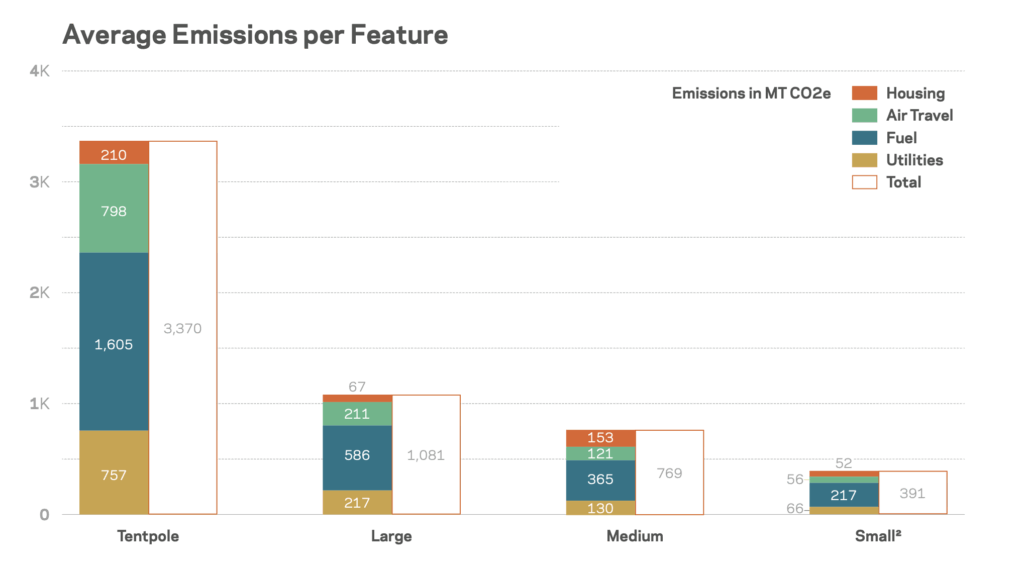
Aus diesem Bericht geht hervor, dass der durchschnittliche CO2-Fußabdruck von Tentpole Produktionen bei 3.370 Tonnen lag. Pro Drehtag sind das in etwa 33 Tonnen. Bei großen Filmproduktionen lag der Wert bei 1.081 Tonnen, bei mittelgroßen Filmen waren es 769 Tonnen und bei kleinen Filmproduktionen ergaben sich 391 Tonnen. (vgl. SPA 2021, S.2)

Chart showing the average emissions per feature film.

Abb. 1: Durchschnittliche Emissionen pro Film. (Quelle: SPA 2021, S.2)

Um diese Zahlen besser einordnen zu können ist hier ein Vergleich: Die durchschnittlichen CO2-Äquivalenten Emissionen in Österreich lagen 2023 pro Kopf bei 7,5 Tonnen. (vgl. Statistik Austria 2025, S. 32) Das bedeutet, dass eine Tentpole Produktion pro Tag in etwa so viel CO2 ausstößt, wie 4,4 Personen in Österreich in einem Jahr. Rechnet man das auf den gesamten Produktionszeitraumes einer Tendpole Produktion auf, so stößt diese ungefähr so viel CO2 aus, wie 449 Österreicher:innen in einem ganzen Jahr. Auch kleine Filmproduktionen verbrauchen in diesem Vergleich bereits eine nennenswerte Anzahl an Emissionen und zwar 391 Tonnen. Das ist in etwa so viel wie 52 Personen in einem Jahr ausstoßen.

Wie diese Beispiele zeigen, haben Filmproduktionen einen signifikanten Einfluss auf die Ausschüttung von CO2 und anderen Treibhausgasen, welche wiederum bekannterweise den Klimawandel beeinflussen. Aus diesem Grund ist es essenziell, dass bei Filmproduktionen vermehrt ein Augenmerk auf nachhaltigere Produktionsabläufe gelegt wird. Aus dieser Überlegung heraus entwickelte sich die Begriffe Green Production und Green Filming.

Was ist „Green Filming“ / „Green Production“?

Das Green Filming hat das Ziel, die Filmproduktion so nachhaltig wie möglich umzusetzen. Dabei sollen vor allem die Kohlenstoff-Emissionen bzw. CO2-Äquivalente maßgeblich verringert werden und ein „[…] schonende[r] Umgang mit Ressourcen, Müllvermeidung, Kreislaufwirtschaft, Umwelt und Naturschutz“ (LAFC o.D.) implementiert werden.

Hierbei werden sowohl ökologische als auch wirtschaftliche und soziale Belange berücksichtigt und es wird ein Augenmerk auf das Treffen von verantwortungsvollen Entscheidungen während aller Phasen der Filmproduktion gelegt.
Das bedeutet, dass sowohl während der Preproduction, der Produktion und der Postproduction die Grundsätze der nachhaltigen Entwicklung eingebunden werden. Beim Green Filming arbeiten im besten Fall alle Abteilungen der Filmproduktion Hand in Hand zusammen, um das Ziel der nachhaltigen Produktion zu erreichen. Das bedeutet, dass von Regie, und Kamera über das Szenen- und Kostümbild bis hin zur gesamten Crew alle Personen eingebunden werden. (vgl. LAFC o.D.)

Aber Green Filming befasst sich nicht nur mit der ökologischen, sondern auch mit der sozialen Komponente der Nachhaltigkeit. Aus diesem Grund wird auch darauf geachtet, dass alle Abläufe der Filmproduktion mit möglichst geringen Auswirkungen auf die betroffenen Personen durchgeführt werden. Hierbei wird nicht nur auf die während des Drehs involvierten Mitwirkenden geachtet, sondern auch auf die Menschen Rücksicht genommen, die in der Nähe der Drehorte leben und direkt oder indirekt von den Dreharbeiten betroffen sind. (vgl. LAFC o.D.)

Conclusio

Es ist erkenntlich, dass die Filmproduktion ein großes Verbesserungspotenzial im Bereich der Nachhaltigkeit hat. Bereits kleine Produktionen stoßen in etwa so viel CO2 aus, wie 52 Österreicher:innen in einem ganzen Jahr. Das Green Filming hat sich zum Ziel gemacht, diese Emissionen maßgeblich zu verringern und die Filmproduktion in Richtung Nachhaltigkeit zu lenken. Es bleibt zu hoffen, dass in Zukunft so viele Filmschafende wie möglich auf die Maßnahmen des Green Filmings umsteigen und somit zur Schadstoffreduzierung und Umweltverschmutzung beitragen. Auf diese Weise können in Zukunft beeindruckende und mitreißende Filme erschaffen werden, ohne dabei die Umwelt in Mitleidenschaft zu ziehen.

1 Der Begriff Tentpole Production beschreibt einen Film, der einen großen Profit erzielen soll. Außerdem ist das Ziel, durch diesen Film weitere Investition für zukünftige Produktionen zu erlangen. (vgl. Cambridge Dictionary o.D.)

Literaturverzeichnis

Cambridge Dictionary o.D.Cambridge Dictionary (o.D.): tentpole. In: Cambridge Dictionary, https://dictionary.cambridge.org/fr/dictionnaire/anglais/tentpole (zuletzt aufgerufen am 24.11.2025)
LAFC o.D.LAFC (o.D.): Wissensschatz Nachhaltigkeit. Was bedeutet Green Filming? In: LAFC Evergreen Prisma, https://www.lafc.at/greenguide/pool.php?ggid=4&aid=1172&cp=0 (zuletzt aufgerufen am 24.11.2025)
Statistik Austria 2025Statistik Austria: Umweltgesamtrechnungen. Modul – Luftemissionsrechnung 1995 bis 2023. Wien: Statistik Austria 2025
SPA 2021Sustainable Production Alliance (01.03.2021): Carbon Emissions of Film and Television Production. In: Sustainable Entertainment Alliance, https://greenproductionguide.com/wp-content/uploads/2021/04/SPA-Carbon-Emissions-Report.pdf (zuletzt aufgerufen am 26.11.2025)

Moving images and their ability to create change

In the landscape of media production, the main focus is often put on the creation of breathtaking visuals, engaging stories and on reaching as many people as possible. In the advertising area all of this is used to help companies promote themselves and their products. In the film industry it is utilized to create the experience for the audience. On social media it is used to influence people to keep watching the video, follow the accounts or buy any kind of product. No matter what part of the media production sector you look at, usually the main goal is to generate a good amount of profit.

But what if profit wasn’t the main goal? What if filmmakers and video producers used their skills to help the society and the environment? What if these breathtaking visuals and engaging stories were used to make a difference for everybody rather than just generating profit for big companies?

There is an answer to these questions, and it is called: Impact Production.

What is Impact Production

The term “Impact Production” is used to describe a certain type of filmmaking, where the centre of attention is the achievement of “[…] social and cultural change that has been driven by a documentary film and its associated campaign strategy.” (Finneran o.D., S.4)

The core thought behind impact production is to create strategies and take advantage of storytelling in movies (especially documentaries) to drive positive change regarding crucial areas like human rights, social justice and the climate crisis. (cf. Loader/Maasdorp 2024, S.41)

With the help of movies, such important topics can be made more accessible for people, information can be provided and most importantly: empathy can be evoked. Liani Maasdorp and Reina-Marie Loader state: “Impact is achieved not just by a film’s own power to make people aware of and care about an issue. It requires thinking strategically about how to channel that emotion into meaningful and measurable change.” (Maasdorp/Loader 2025)

Impact productions want to enlighten certain groups of people about a topic, show them what the problem is and maybe even give them approaches on how to solve these problems. The main goal is to give them a reason to think about the topic and empower them to do something about it. Sometimes the goal is also just to view the issue from another angle and show the audience a new perspective on a topic they might already be familiar with (e.g. climate change).

To achieve this two of the most important questions the filmmakers have to ask themselves is “Who is my target audience?” and “What do they have to do, to create the change?”. The target audience is so important, because depending on who the movie reaches, different effects can be achieved. For example, documentaries targeted to politicians have a different impact than movies targeted to educators. Both are very important groups who can achieve change in different kind of ways. The politicians can influence policies, while the educators can bring the topic to the classroom and shape future generations in this way. And with these different groups of people in mind, the movie or documentary must be created accordingly to the needs and desires of the audience. (cf. docsociety 2019, 1.2 The Power of Film)

Change

What impact producers have to think about is what kind of change they want to reach and how this can be achieved. There are two systems that describe how change can be evoked: Top down and Bottom Up.

Top down change targets the politicians and people who are in charge of lawmaking as well as CEOs, boards and stakeholders of corporations. The underlying concept here is, that the overall system has to be changed, to create a difference for the individual people. (cf. docsociety 2019, 1.4 How Change Happens)

Bottom up change on the other hand works the other way around. It targets the individual people and groups that are affected by the topic to create a movement of many people which eventually lead to achieving the overall desired goal. (cf. docsociety 2019, 1.4 How Change Happens)

Reaching the Audience

No matter which of the two possibilities is chosen, the important thing is, that the documentary or movie matches the needs and desires of the chosen group. Even though the documentary film is the go-to genre when it comes to impact production, sometimes it is not the most effective option to drive change. Thinking about the decreasing attention span, sometimes shorter films and videos might have a bigger impact on some groups of people. This is one of the reasons why some impact producers started to focus on the production of documentary shorts rather than full-length documentaries. (cf. docsociety 2019, 5.1 Why Shorts)

Thinking about this, another field comes to mind where impact production could be implemented to reach a large amount of people: Social Media. By using free Platforms like TikTok, Instagram and YouTube the general public could be reached in a rather easy way. However, since the framework conditions regarding social media contents are different to the conditions in the field of documentaries, the impact producers would have to adjust their workflow accordingly. But even with the need of adjustment, the overall idea of creating impact through film and videos could as well be implemented in the social media sector.

Implementing Impact Production

Whichever medium of contribution is chosen, the important thing is, that, when possible, filmmakers should start to incorporate important social and environmental topics into their work. They should use their skills to create artwork, that does not only look good but also gives the people something to think about.

With the power of filmmaking, the audience can get a new view on important topics and can be moved to take action. That’s why incorporating the idea of impact productions in the filmmaking process is a very crucial step towards creating a better world.

Bibliography

docsociety 2019docsociety (2019): The Impact Field Guide & Toolkit. From Art to Impact. In: Impact Field Guide, https://impactguide.org (zuletzt aufgerufen am 06.10.2025)
Finneran (o.D.)Finneran, Patricia (o.D.): Documentary Impact: Social Change Through Storytelling. In: hotDOCS, http://assets.hotdocs.ca/doc/HD14_Documentary_Impact_Report.PDF
(zuletzt aufgerufen am 06.10.2025) 
Loader/Maasdorp 2024Loader, Reina-Marie/Maasdorp, Liani: Impact production in higher education: shaping future change makers through film education. In: Film Education Journal 7,1 (2024), S. 40-57.< https://doi.org/10.14324/
FEJ.07.1.05.>
Maasdorp/Loader 2025Maasdorp, Liani/Loader, Reina-Marie (19.01.2025): Films can change the world – why universities and film schools should teach impact strategies. In: The Conversation, https://theconversation.com/films-can-change-the-world-why-universities-and-film-schools-should-teach-impact-strategies-242043 (zuletzt aufgerufen am 26.10.2025)

Not All Nature Is the Same: Which Forms Truly Support Our Well-Being?

From physiology to psychology, research points to a clear truth: contact with nature restores us in ways no technology can. A recent article in Frontiers in Public Health by a team of researchers, including Stefan Zerbe, Hannah-Lea Schmid, Claudia Hornberg, Julius Freymüller, and Timothy Mc Call highlights the importance of better understanding how nature, with its elements, qualities, and processes, affects human health and well-being. [3]

The outcomes of the research are clear: different dimensions and scales of nature have distinct impacts on human health and well-being.

Saying “nature is good for us” is far too generic. We need to ask ourselves: which nature, at what scale, in what form?

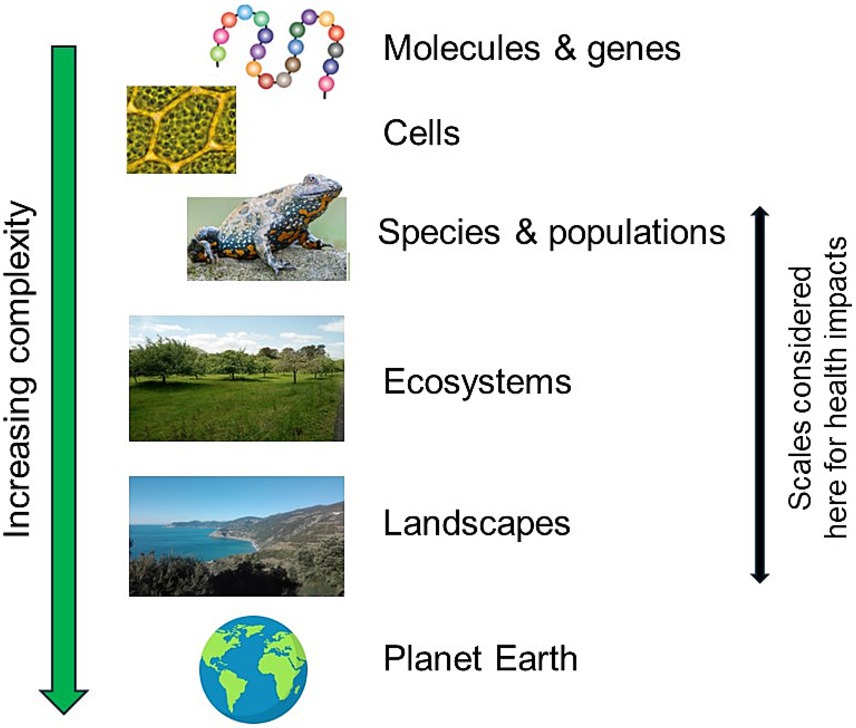
The notion of “scale” here does not refer to the physical size of a space, but to the ecological level at which we observe nature.

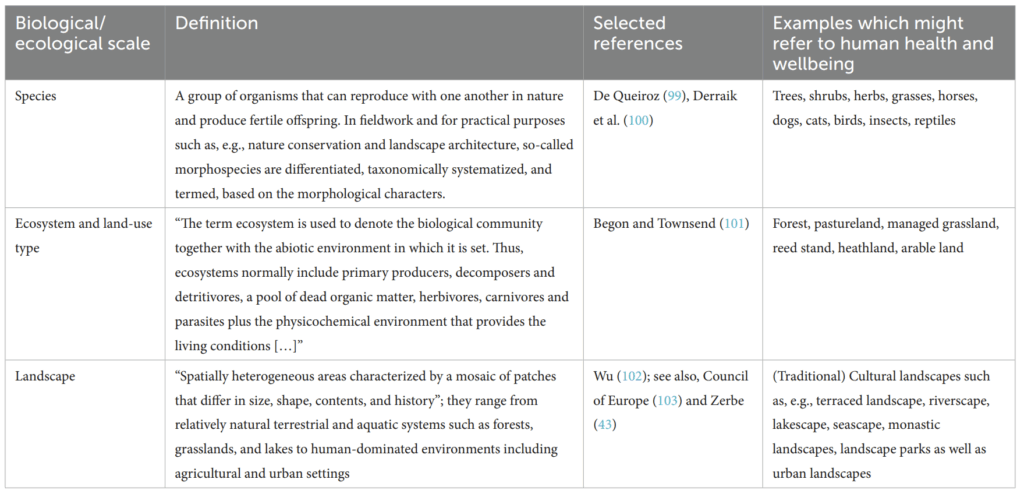
In the study mentioned above, a multidisciplinary team of scholars analyzed primary research, examining key theories, concepts, and nature-based therapeutic approaches. Through iterative discussion, they identified and mapped three distinct scales of nature—species, ecosystems, and landscapes—showing how each of these levels affects human health and offering an overview of the concepts and therapies associated with them.

The results of this research are reported in the table below.

Ecological scales provide a useful way to describe nature in health research, because they help us understand how different levels of natural complexity may influence human well-being in different ways. The authors demonstrate that certain concepts and therapeutic interventions directly correspond to these scales. For example:

  • At the species/individual scale we find interventions such as Animal-Assisted Therapy.
  • At the ecosystem/land-use scale, we encounter Forest Therapy, Green Care, and garden-based therapeutic approaches.
  • At the landscape level, broader conceptual frameworks emerge, including Therapeutic Landscapes, which consider the symbolic, cultural, and spatial dimensions of place.

In the end, nature does not affect us in the same way: its forms, its levels of complexity, and our own individual dispositions shape how we experience it. This variability supports what Zerbe’s team highlights: there is no single, universally beneficial “nature,” but rather a variety of scales and forms. And biophilia—our evolutionary tendency to benefit from the living world—provides the broadest framework for understanding why some natural experiences restore us deeply while others do so much less.

[1] Nejade RM, Grace D, Bowman LR. What is the impact of nature on human health? A scoping review of the literature. J Glob Health. (2022) 12:04099. doi: 10.7189/jogh.12.04099, PMID: 
[Google Scholar]

[2] Aerts R, Honnay O, Van Nieuwenhuyse A. Biodiversity and human health: mechanisms and evidence of the positive health effects of diversity in nature and green spaces. Br Med Bull. (2018) 127:5–22. doi: 10.1093/bmb/ldy021, PMID: [Google Scholar]

[3] Zerbe S, Schmid H-L, Hornberg C, Freymüller J and Mc Call T (2025) Nature’s impact on human health and wellbeing: the scale matters, Front. Public Health 13:1563340, doi: 10.3389/fpubh.2025.1563340


.

To be Hero X – when art styles are part of the plotline

Through the blog posts there are already examples and reasons for an art style change mentioned. Usually not everything is applied at once. The creators and producers tend to only use an art style change on specially occasions. Reasons can be a flashback or past occurrences, to show the characters thoughts and feelings or to separate spaces and universes. What if all of these possibilities are combined? What if the art style changes themselves are a part of the story themselves?

Arguably in the animated Spiderman movies from Sony the art style changes are a part of the story as well. However, they are only used to show separate spaces or universes.

“To be hero X” is an animated series from bilibili and Aniplex. The premise of the world of “To be hero X” is that everyone can be a hero as long as people believe they can be. The more followers a hero has, the stronger their abilities. The abilities themselves are limited to what their believers think they can do or want them to do. Therefore, the life of a hero in this world is limited to their image. The series has 24 episodes. There is no clear main character, but multiple important characters. Some of them get multiple episodes for their stories others get less.

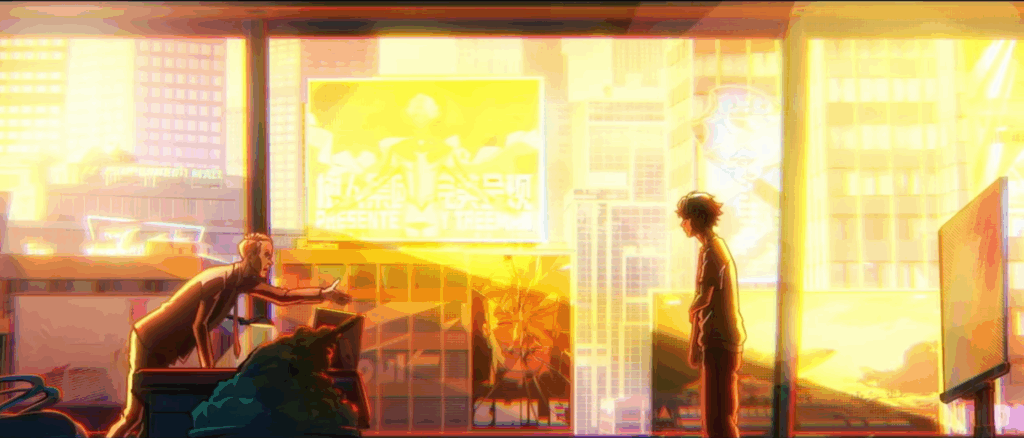
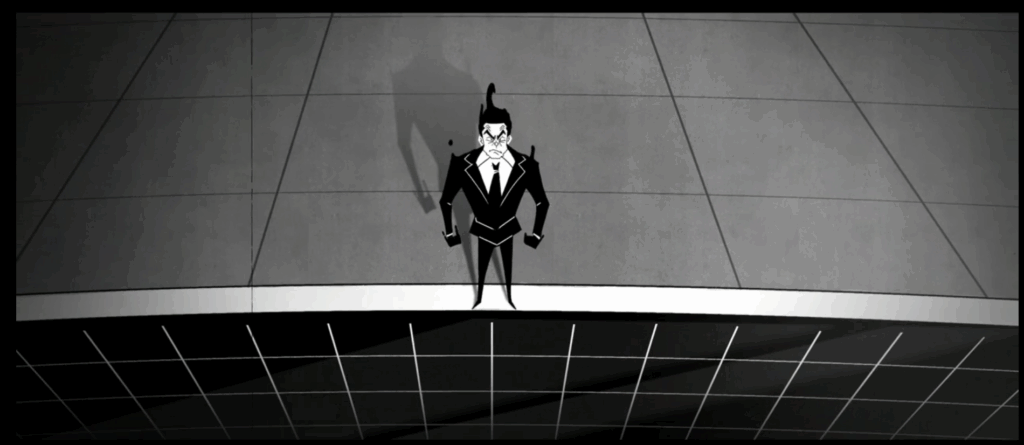
The first episode establishes 3D animation with 2D elements as it’s main art style. This art style remains the dominant one through all of Lin Lings story. Still even the first episode switches between three times between art styles. One switch is for a flashback, another one for a tragic background story of a villain and the last one happens somewhere between reality, a flashback and fantasy.

The second episode includes again multiple style changes. At this point it is clear that each character has a different art style when the viewer dives into their mind or background story, giving the characters another level of personality. All 4 episodes dedicated to Lin Ling stay in a similar fashion.

In episode 5 the main character gets switched to Yang Chen, which at a first watch was slightly confusing, since there was no indication that there would be a new main character now. The art style is in the same 3D animation as before and in flashbacks a change might occur.

With episode 8 however the biggest switch happens. The whole animation style changes to 2D anime animation. During all 3 episodes of Lucky Cyans story there are no art style changes, but also no flashbacks since her whole life is shown. If you follow the story closely the viewers might realize that everything of Lucky Cyan is already playing in the past. In the two stories before Lucky Cyan was mentioned as an already established hero while in her story arc her beginnings were shown. With later episodes the style changes reemerge.

Up until episode 22 the same main 2D animation style is kept, which indicated that all of the stories play in the same timeline. The episode marks also the first real appearance of the mysterious hero X. Fitting to that it is the first time we briefly return to the 3D animation style only to switch in a short period of time between even more styles. It is indicated that X knows of these changes and that in his case they are linked to his powers.

In episode 23 the main style changes again. This time it is still 2D but a lot blockier and less round than before. The reason for this could be the main character who is a dog.

In the last episode X is the main focus, and the style is back to 3D. Since Xs powers are linked to changing art styles there are a lot of switches. Sometimes these switches are even combined. Once X transformed his art style to pixel art, where he can only run along the walls while everything else stays 3D. Whenever he snaps his fingers the art style changes, making the changes more than just a tool to create contrast.

In the case of “To be hero X” the style changes have multiple use cases. They show thoughts, personality, time and a narrative device. For now there is only one season available, which leaves many questions according to the art style and story open. But it is the first series I have seen, where style changes are used this heavily.